My first visit to Greenwich was in 1996 with our son Rob, twelve years old at the time. We travelled from London on the brand new, but very slow, Docklands Light Railway (DLR), which stopped at Canary Wharf on the north side of the Thames. The DLR had been hastily opened to serve Canada Square, newly built as the highest building in the United Kingdom by Canadian developers Olympia and York. Rob and I walked the 1 km through undeveloped Canary Wharf lands to the edge of the Thames to cross the river using the hundred-year old pedestrian tunnel.
There is so much to say about Greenwich, the home, of course, of the zero degree longitude line of Greenwich Mean Time (GMT). We’ll try to start at the beginning.
Greenwich, about 10 kms east (downstream) of London, has been inhabited for centuries, conquered by, among others, the Anglo-Saxons, Vikings, Romans, and Normans. The first substantial building erected there was the Tudor Palace, birthplace of King Henry VIII and two of his daughters, Mary and Elizabeth. Elizabeth’s mother, Anne Boleyn, was tried here and transported to the Tower where she did not fare well.
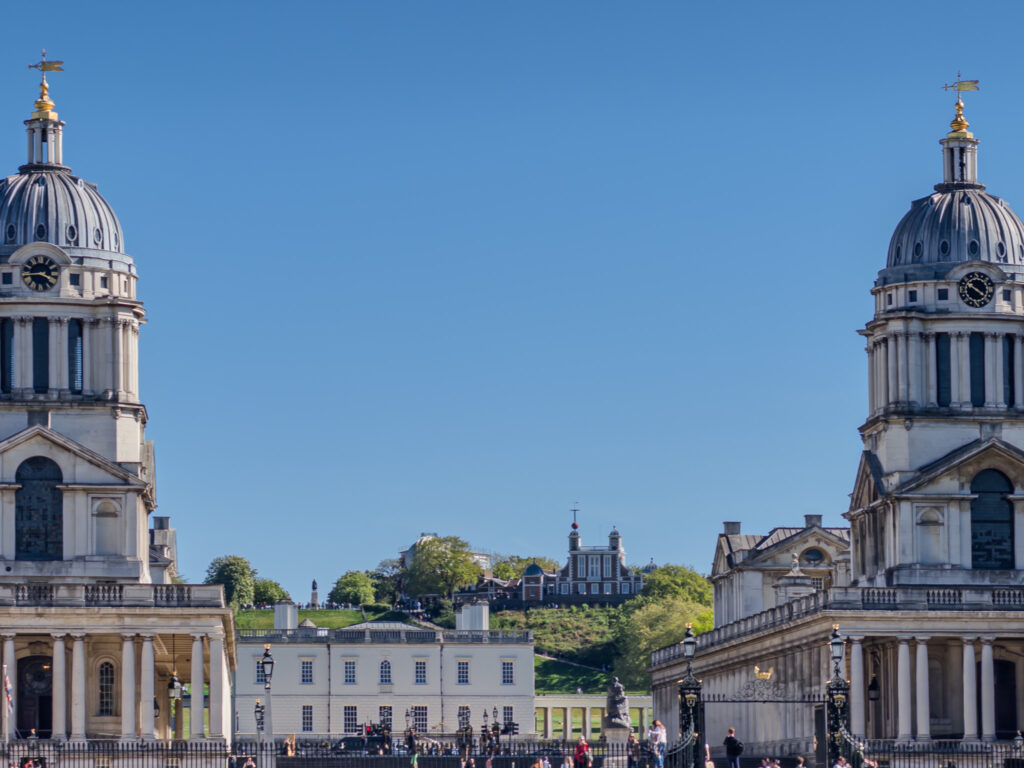
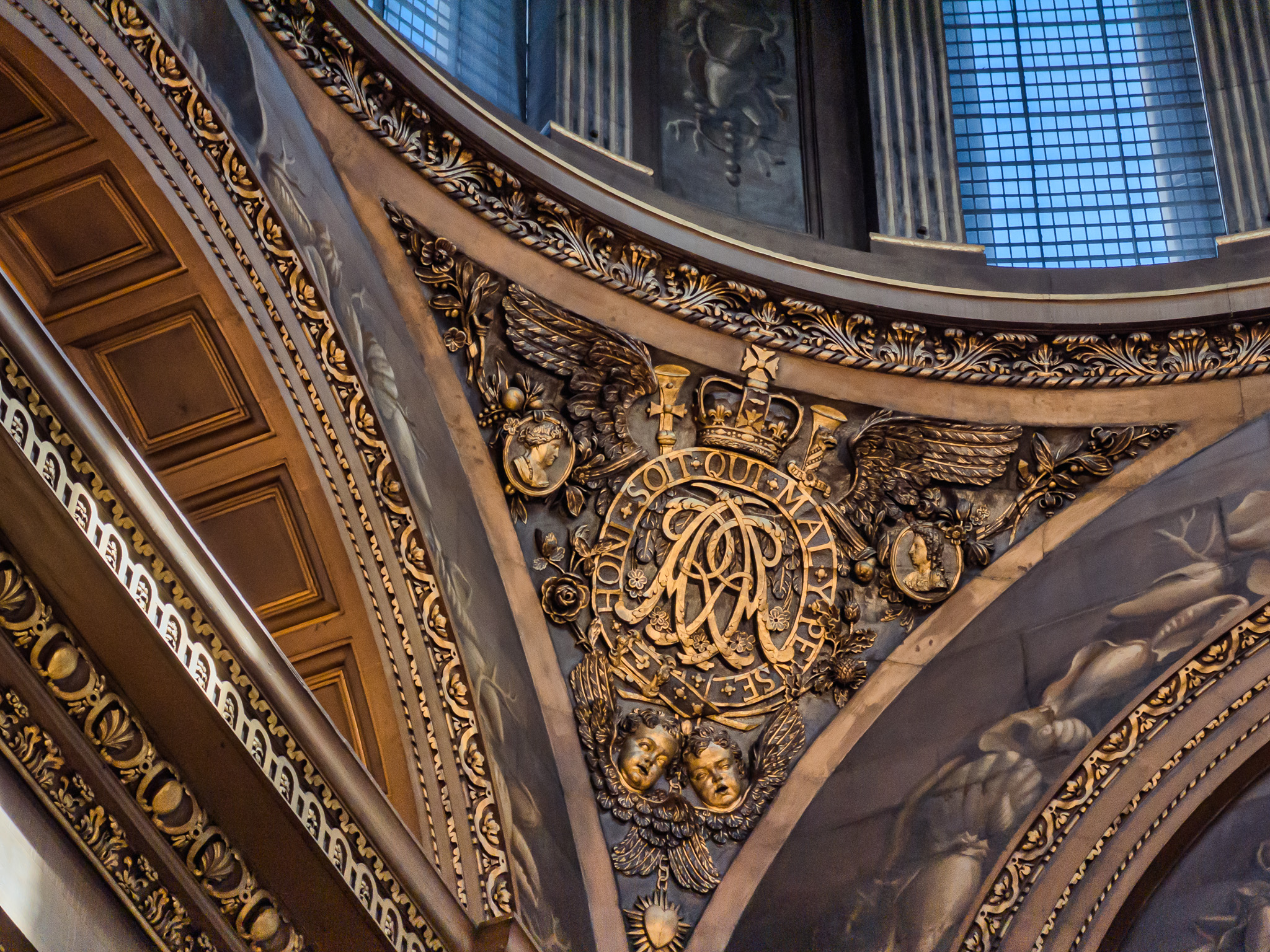
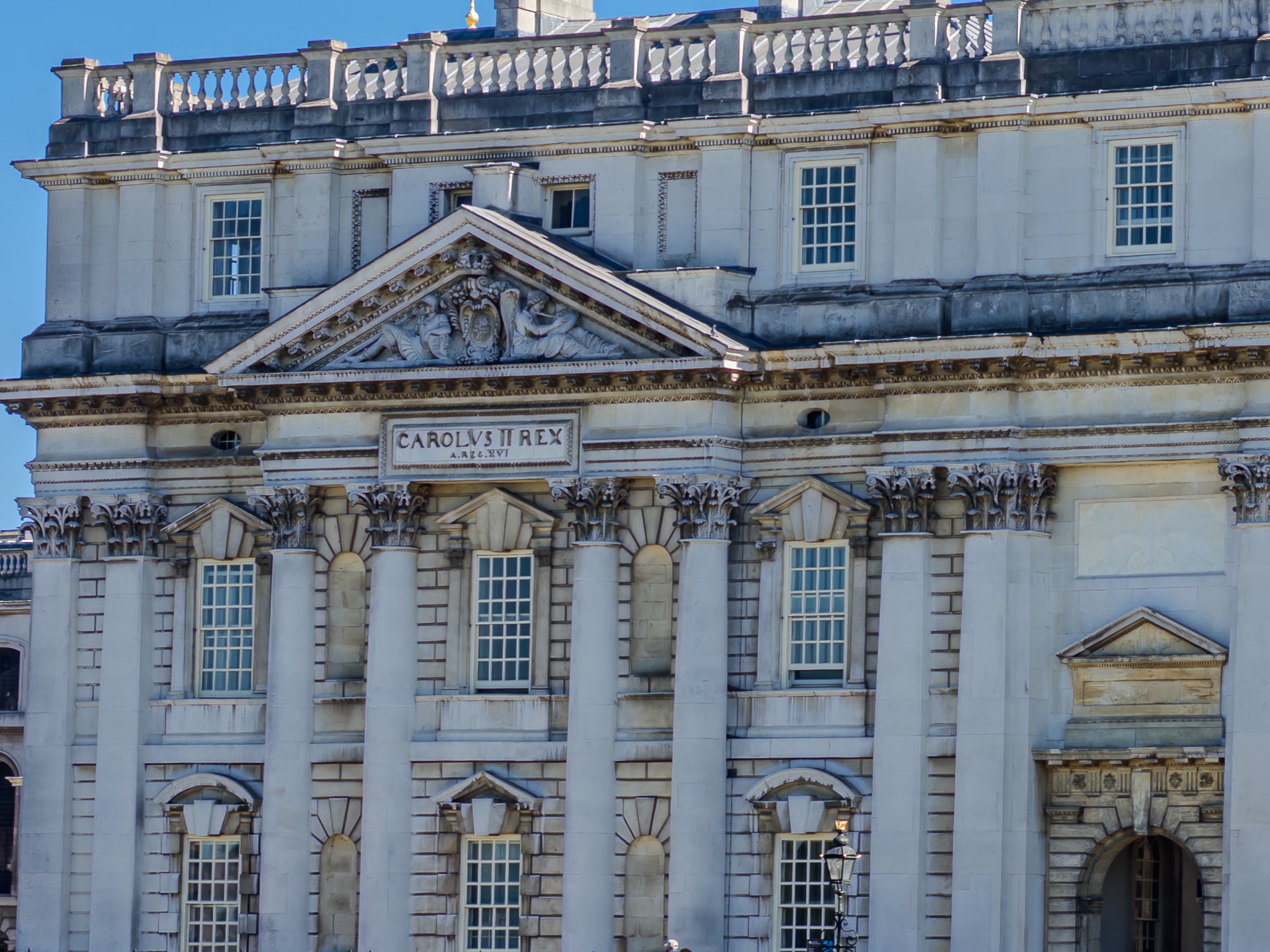
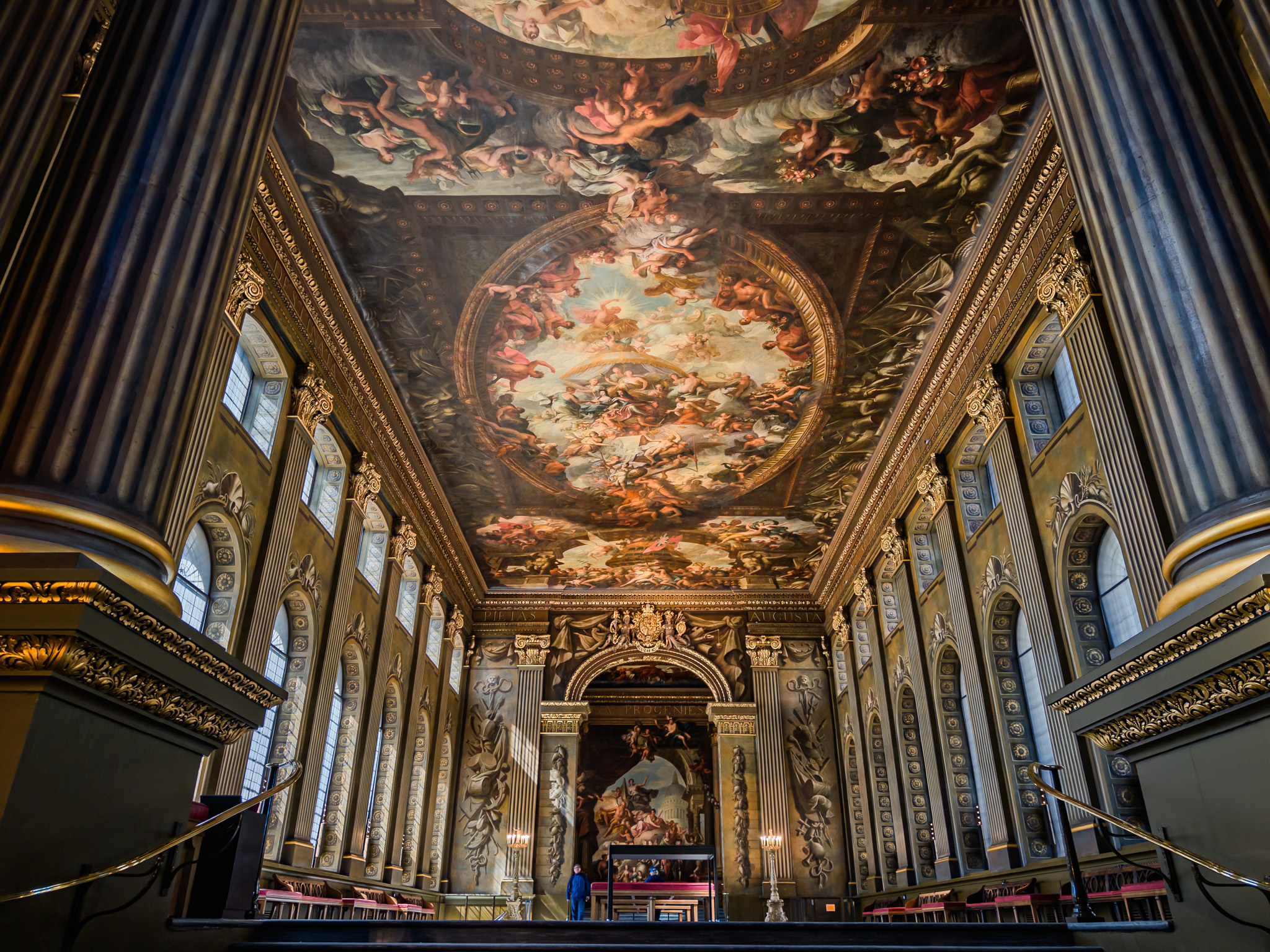
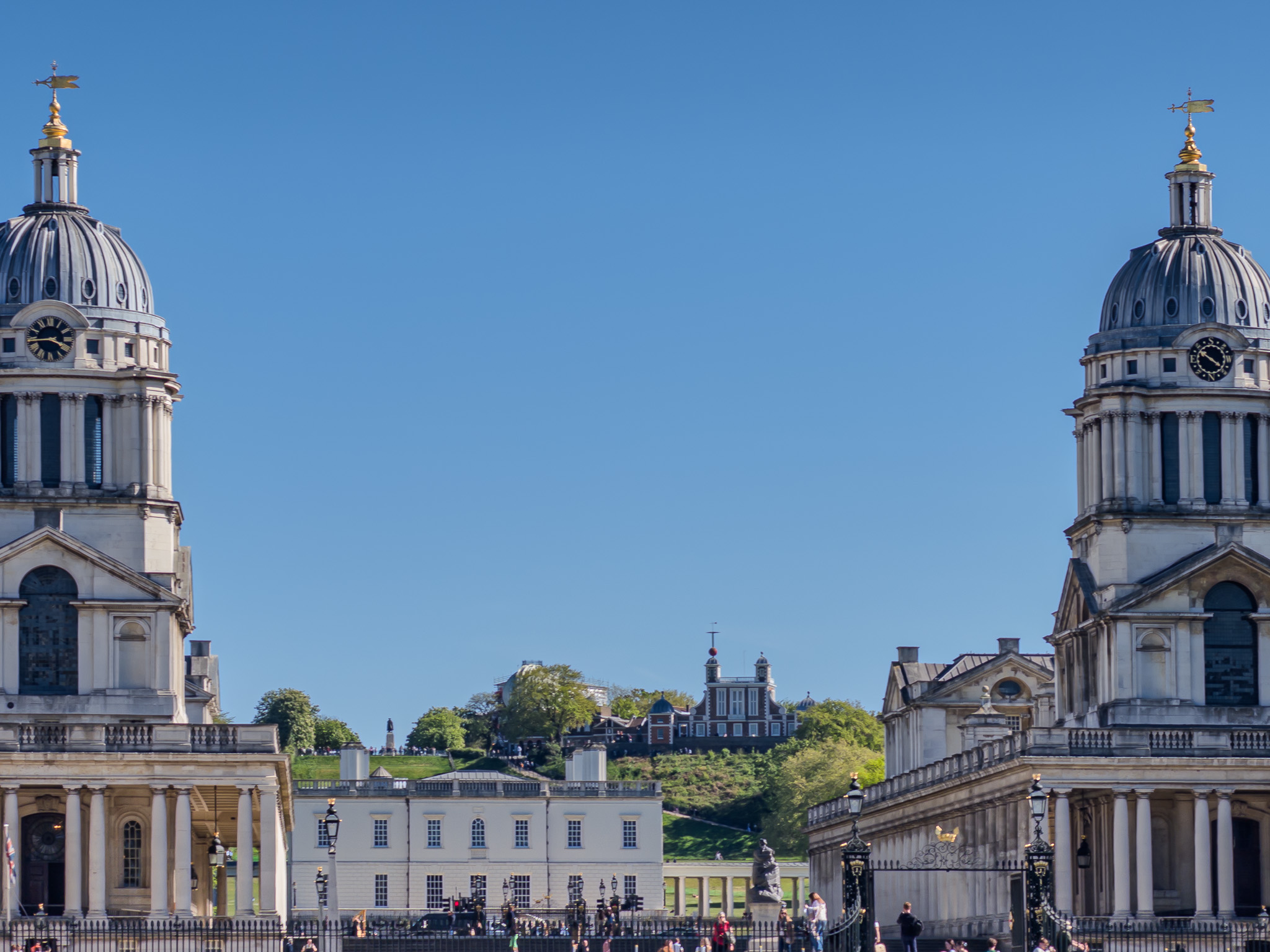
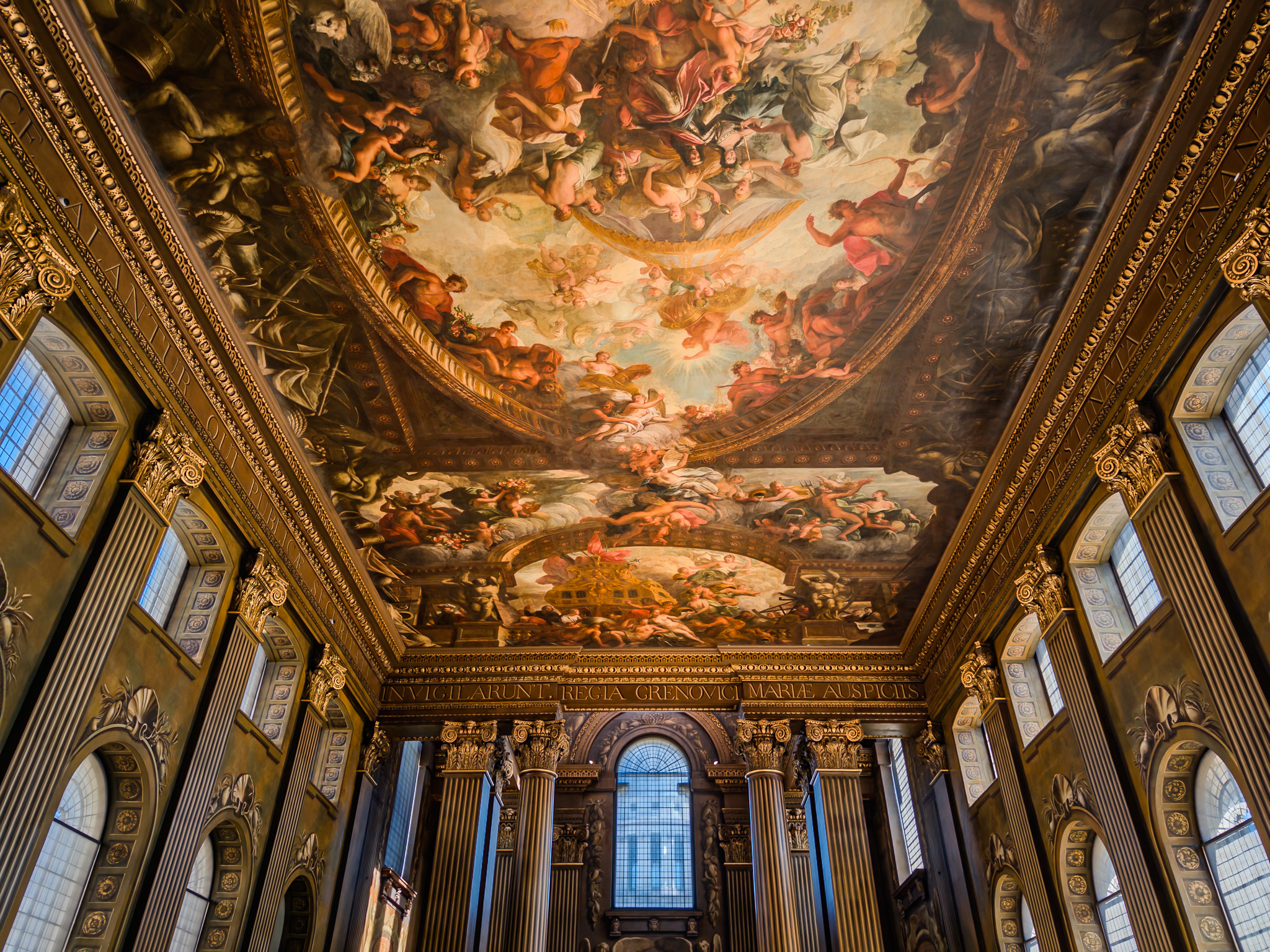
After the reign of Henry VIII, the palace fell into disrepair and was destroyed. King Charles II built a section of a new palace which remains today. Years later, William and Mary hired Christopher Wren to create a Naval Hospital, mirroring the Charles II structure in the shape of a large horseshoe. The centre of the horseshoe was left open to give the Queen’s House (Mary’s residence) clear view of the Thames. The Naval Hospital has been repurposed over the years, and now houses officer training facilities, a Naval museum, and a music faculty. The Painted Hall has one of the most splendid painted ceilings in Europe.
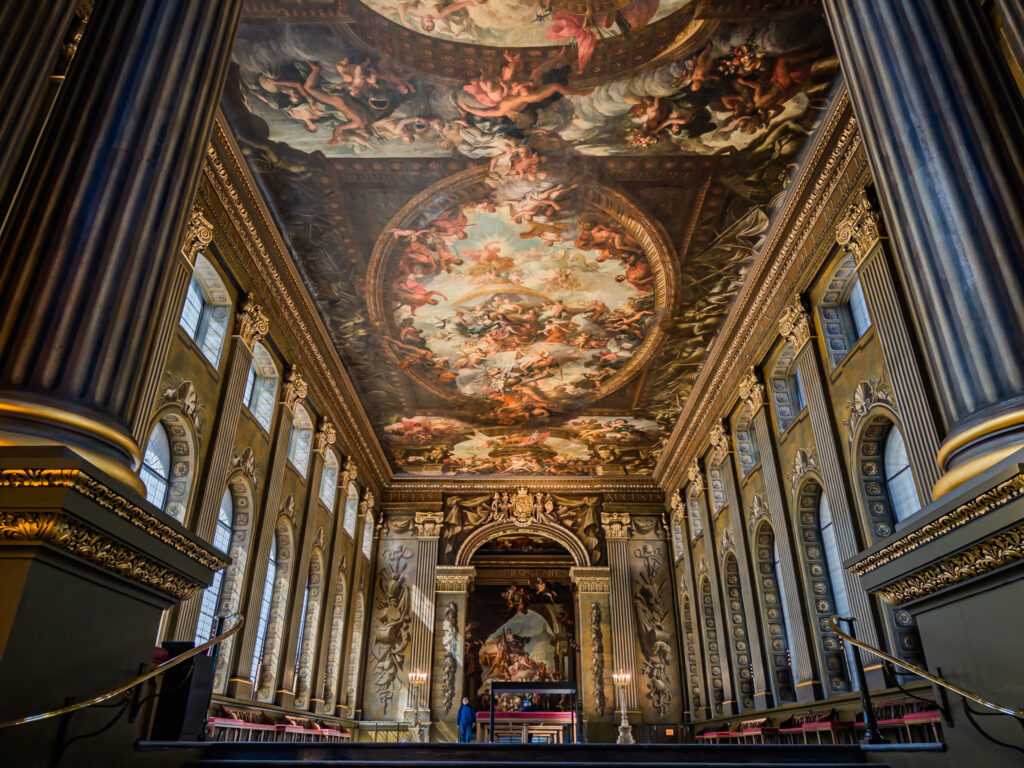
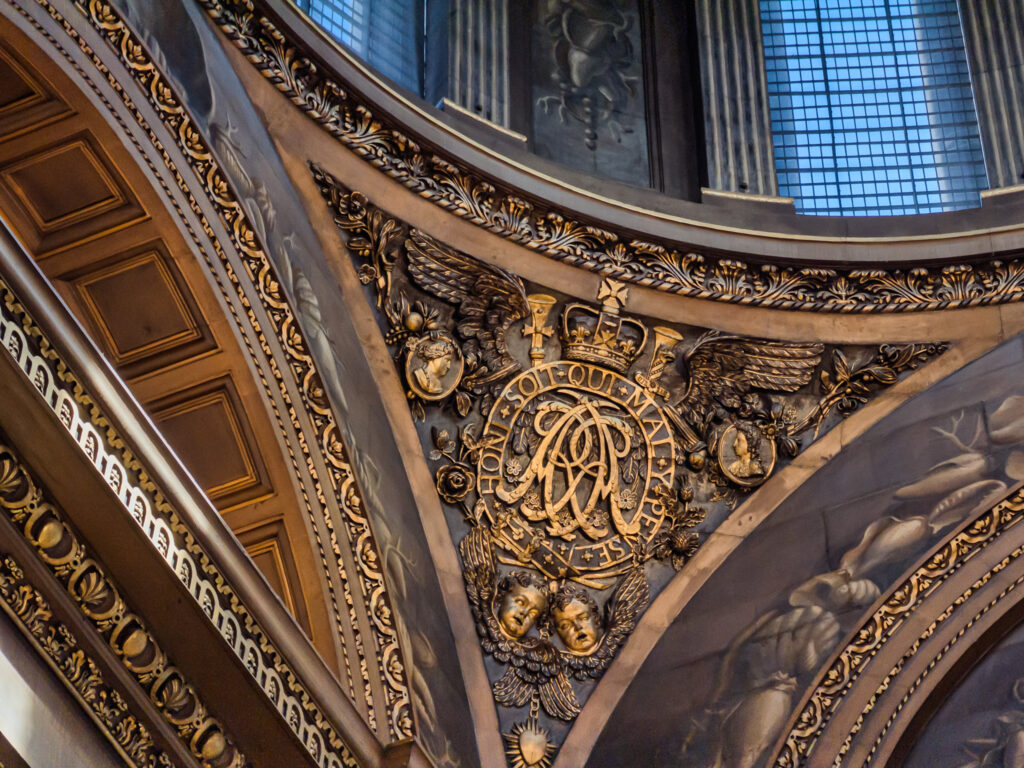
Charles II reigned over the beginnings of the British Empire, with ships starting to travel the world. A sextant allowed sailors to know their position north or south of the equator (latitude), but knowing the distance east and west (longitude) remained imposible. The result was many shipwrecks, costing the Empire many lives and much wealth.
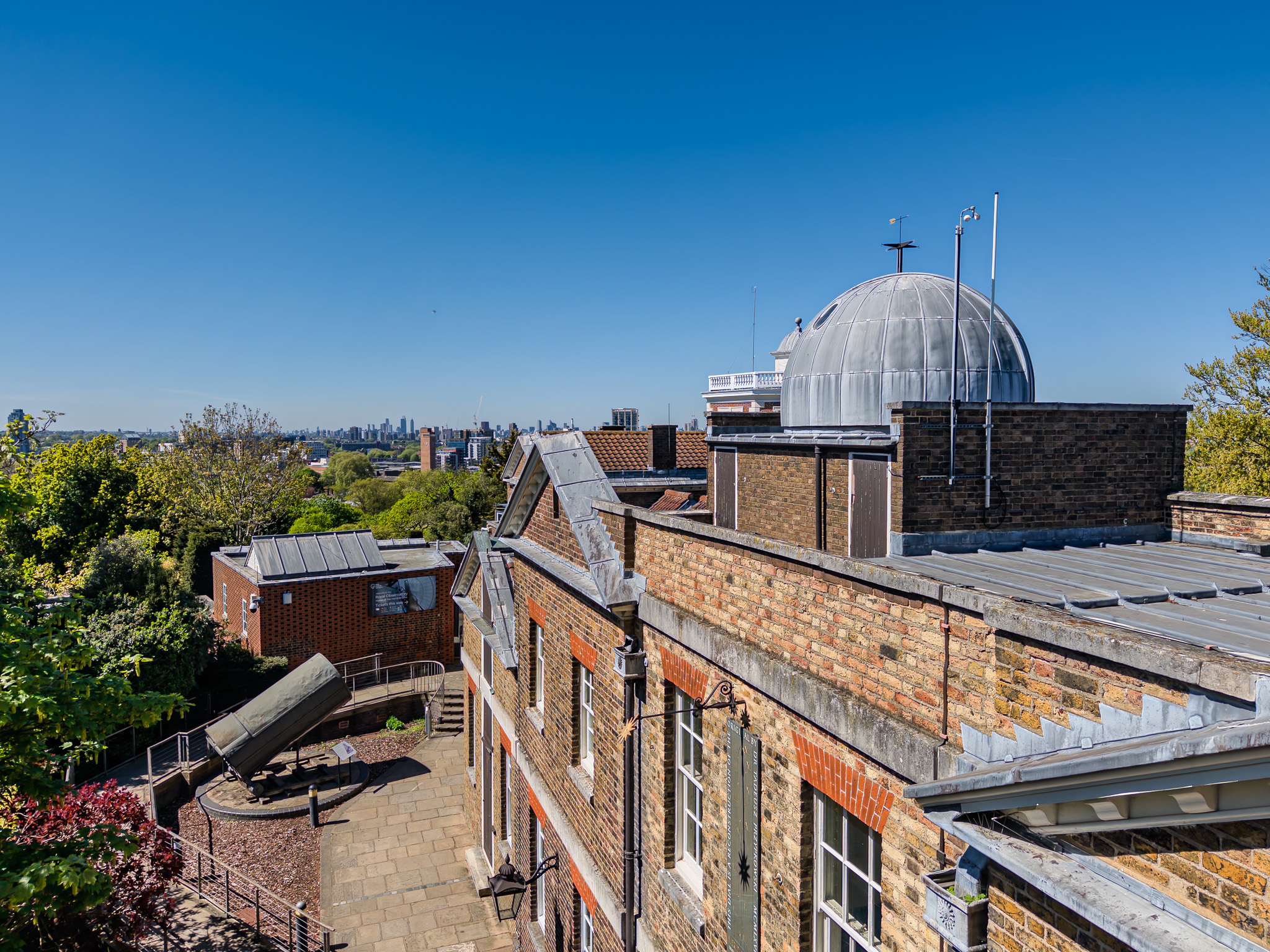
Astronomers convinced Charles that by knowing precisely the positions of the sun, moon and stars sailors could accurately calculate their longitude. Charles hired Christopher Wren to design and build the Royal Observatory at the top of the hill in Greenwich. Observations by over one hundred years of astronomers failed to meet the challenge. Finally the problem was solved. The effect of gravity on the three bodies – Earth, Sun and Moon – caused their positions to be unpredictable until Sir Isaac Newton’s formulae adjusted the results. Sailors then carried large books of tables containing angle positions of the sun, stars and moon, enabling them to determine the time in Greenwich. Comparing Greenwich time to local noon, when the sun was directly overhead, gave them their longitude.
The tables, though, were awkward. If a clock could be carried on board the ship that accurately showed Greenwich time, hours spent poring over tables and measuring celestial angles would no longer be necessary. Swinging pendulums, though, just didn’t work on ships pitching on ocean waves. A large prize was offered to the inventor of a reliable seaworthy clock.
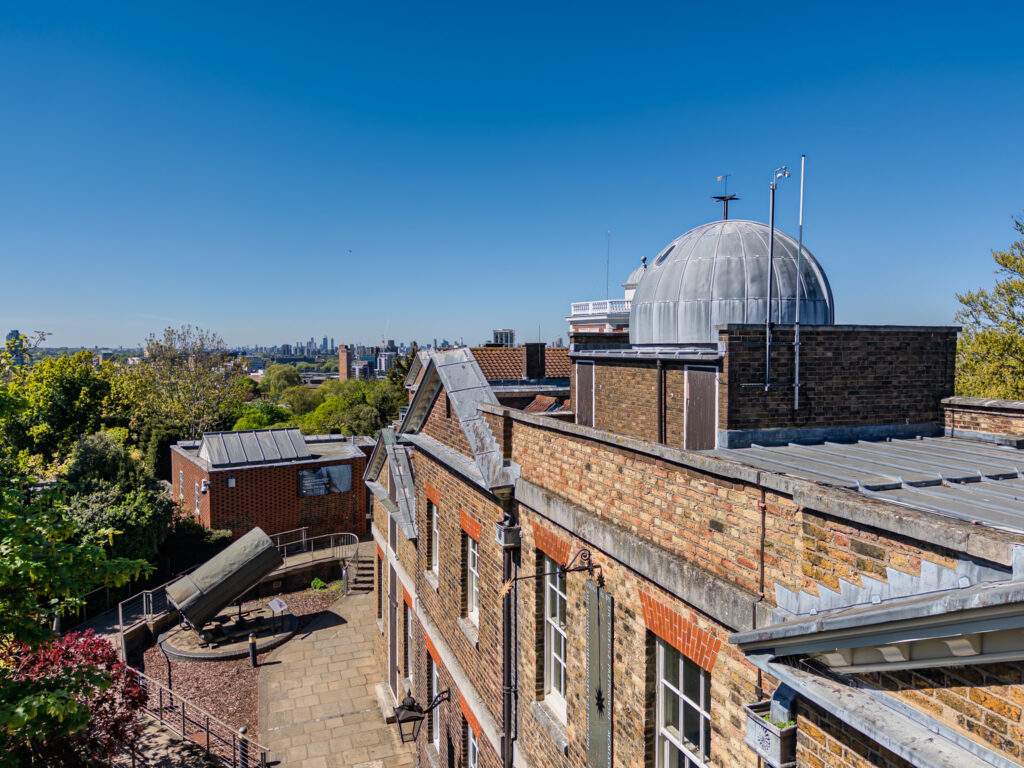
Enter John Harrison, who devoted his life to create this timepiece, His four evolutions of his clock are on display in the Greenwich Observatory Museum, H1, H2, H3 and H4. The first three were expensive, large and cumbersome, but H3 was accepted as the prize winner. Harrison reduced the size of H4 to a bit larger than a hockey puck, and sea navigation changed forever. Now sailors could easily and quickly compare their local noon time with Greenwich time.
OK – now back to my earlier visits to Greenwich. The first with Rob showed me the Naval Hospital, the walking tunnel under the Thames, and the Royal Observatory.
On my second visit, 1998, with our youngest son Ned, again aged twelve, I was fortunate to be taken to the top floor of then completely empty Canada Square tower. The daughter, Cami, of good friends of Patti’s parents worked for the Reichmann family, owners and developers of Canada Square. Canada Square was the only large building in Canary Wharf. Development had been held up by the UK Consevative Government’s dithering on providing a convenient transit service. According to Cami, the Reichmanns were forced to invest heavily in the rather inadequate Docklands Railway just to entice tenants to sign leases.
The result was years of Canada Square being vacant, contributing to Olympia and York’s bankruptcy. After the Jubilee Underground line was extended, years later, and now the new Elizabeth Line, Canary Wharf flourished. Its skyscrapers now completely engulf the original Canada Square tower.
BUT – Ned and I had the priviledge, never to be repeated, of a completely unobscured 360 degree view of London and its surroundings from the empty top floor of Canada Square, then the highest building in the United Kingdom! How lucky we were!!!!
When in London, do not miss a day in Greenwich. Get there with the Elizabeth Line and Docklands Railway, and enjoy a leisurely Thames tourboat back to Westminster. Patti and I enjoyed excellent guided tours by volunteers of the Painted Hall, Naval Hospital and Royal Observatory.
Looks like you had perfect weather ! What a place!!!
0
0
Fantastic I can’t wait to go back.
0
0
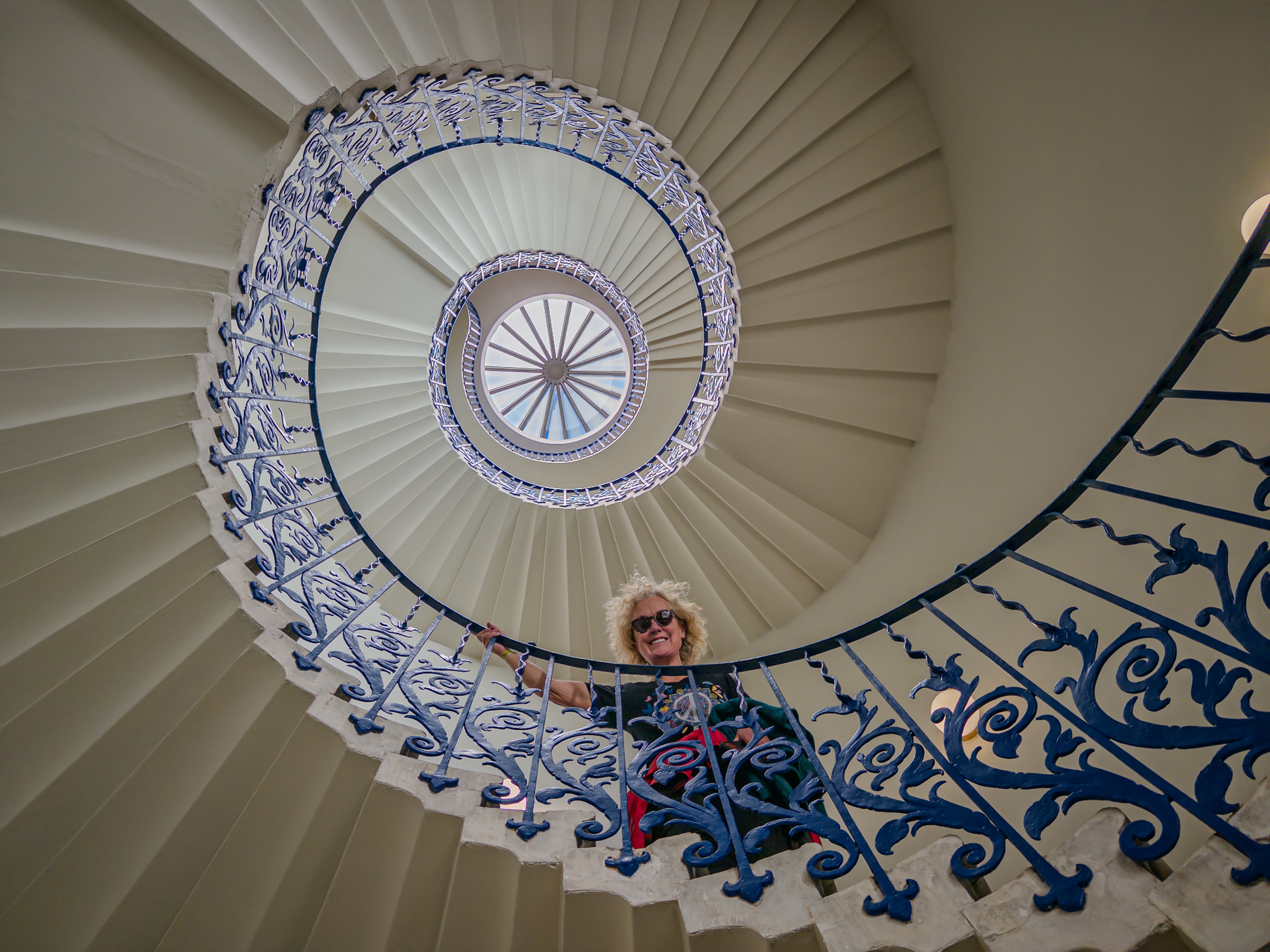
The staircase … I only see one rose, no tulips.
0
0
We LOVED Greenwich. Thanks for the great pics and writing.
0
0
Merci John et Patti pour ces magnifiques photos et renseignements historiques!
That painted ceiling is unbelievable!!!
0
0
Merci John et Patti pour ces magnifiques photos et renseignements historiques!
That painted ceiling is unbelievable!!!
0
0
Greenwich has a very symmetrical look to it that is pleasantly broken by so many curves. It’s a visual treat! The conch-like shot is great…along with the Reichmann story.
0
0