After a good night’s sleep and a decent breakfast, we were to meet our walking tour guide at 11:00. About 9:30 we heard noise from our hotel room window: the street was very busy with students, mostly dressed in black, herds of them heading toward Place Stanislas, three short blocks away. It was peaceful, but… these were kids walking to a protest and we could hear sirens in the distance.
We went outside and headed toward our meet-up point at the Information Bureau (in the square), only to be stopped one block away from it by a young woman who was handing out masks and ampoules of liquid for easing eye discomfort caused by tear gas. (!!!) She explained that not only students go to the protests (in addition to the police, of course) but that concerned adults – teachers/parents/citizens – attend to make sure the students are protected, and to witness the authorities’ behaviour. “We look after our students.”
I texted our guide, who offered to cancel the tour. No way! He suggested we meet inside the Beaux-Arts gallery instead of in front of the tourist office.
We made it into the square which by now was, thankfully, clear (the haze of tear gas had blown away and the herds of students had moved to another location – aided by cell phone communications!)
Loud blasts – pops – came from the street opposite, presumably tear gas cannisters being fired. It was a little unnerving. We met the guide who said he was going to adjust his itinerary to avoid the Art Nouveau quarter of town we had planned to visit. The tour became more historic, less architectural.
“Romain” – our guide – was fantastic. So knowledgeable. He said student protests like these are cyclical in France; he and his classmates had done the same thing when he was in highschool…
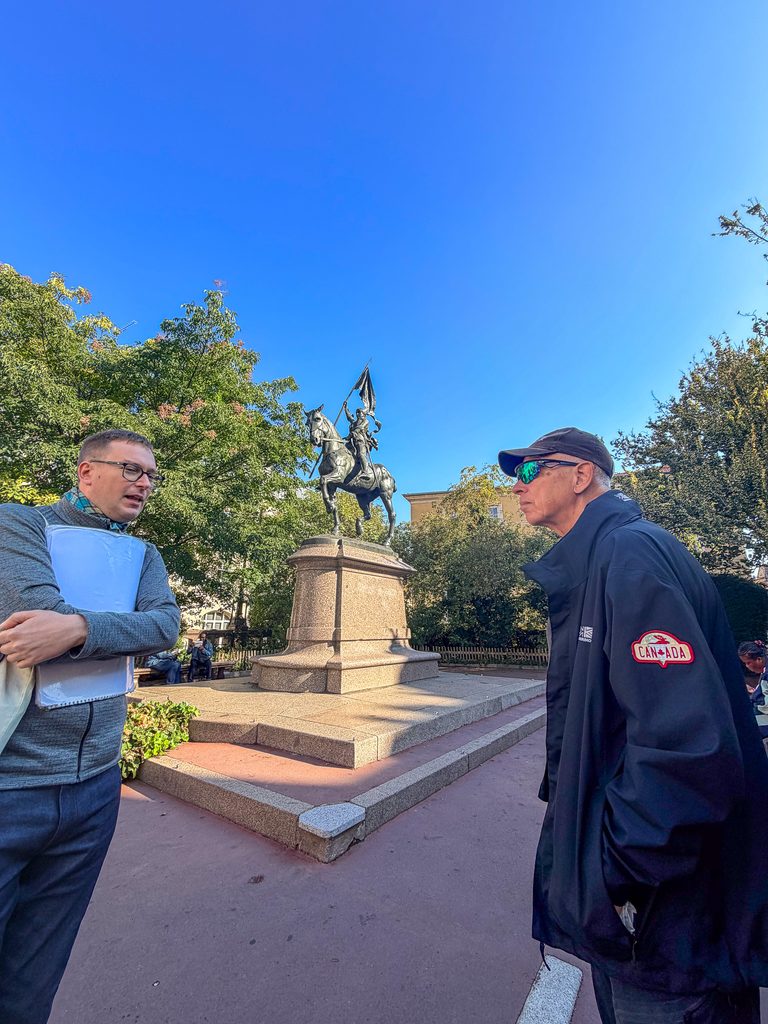
Why “Stanislas” Square in a French city in Lorraine, you ask? Louis XV of France was unhealthy at age 15 and not expected to live much longer, so a frantic search ensued for a wife to provide an heir. The criteria were pretty stringent: she had to be healthy, a virgin, Catholic, not promised to anyone, and not too wealthy, so that the marriage would be a step up the ladder.
A Polish princess, daughter of Stanislaus I King of Poland, fit the bill. Stanislaus* had abdicated the throne, though, and was at this point penniless – until he was named the Duchy of Lorraine. Instantly wealthy, he embarked on a grand scheme to beautify Nancy, in honour of his son-in-law Louis XV.
We took a few pictures that don’t really do the square justice. Please have a look at this page, https://frenchmoments.eu/place-stanislas-nancy/, for more information and better photos. It’s a stunning looking space.
We finished our tour and wanted to see inside the cathedral. We had fresh memories of the spectacular cathedral we had seen in Metz and were keen to see what Nancy’s had to offer. Apparently there is a beautiful painted ceiling, even if its stained glass isn’t as beautiful as it is in Metz. The road was blocked by police (and residual clouds of tear gas) so we went around the block. Unfortunately the cathedral was closed, possibly for repair work, possibly for security?
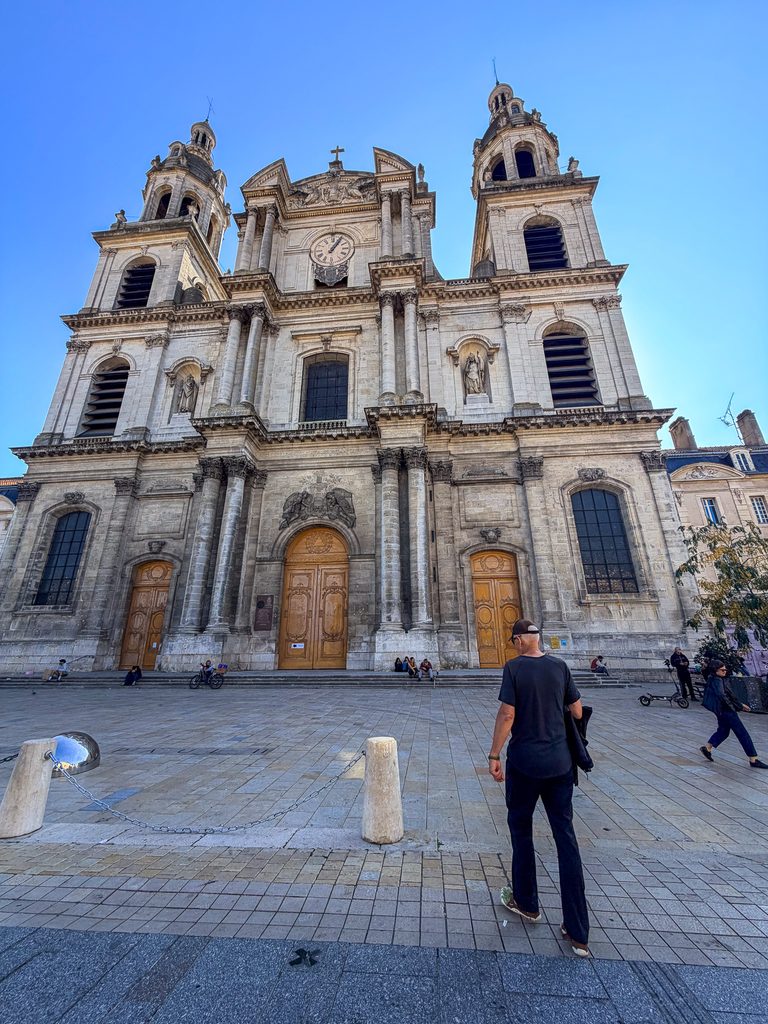
We picked up a bit of lunch at a grocery and returned to the hotel to rest for a few minutes. Also, it was sunny and hot, we needed a break! The noise from the demonstrations was getting louder but… we were leaving Nancy tomorrow, and were running out of time, so we set out to find some Beaux-Arts buildings. Here are a few examples.
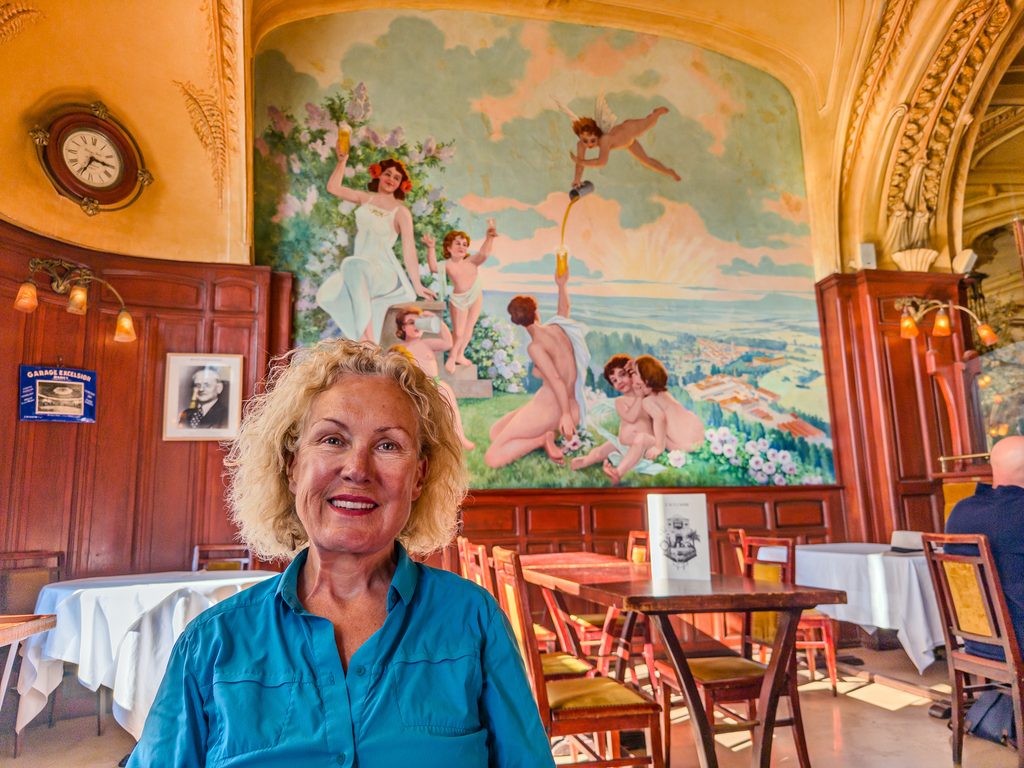
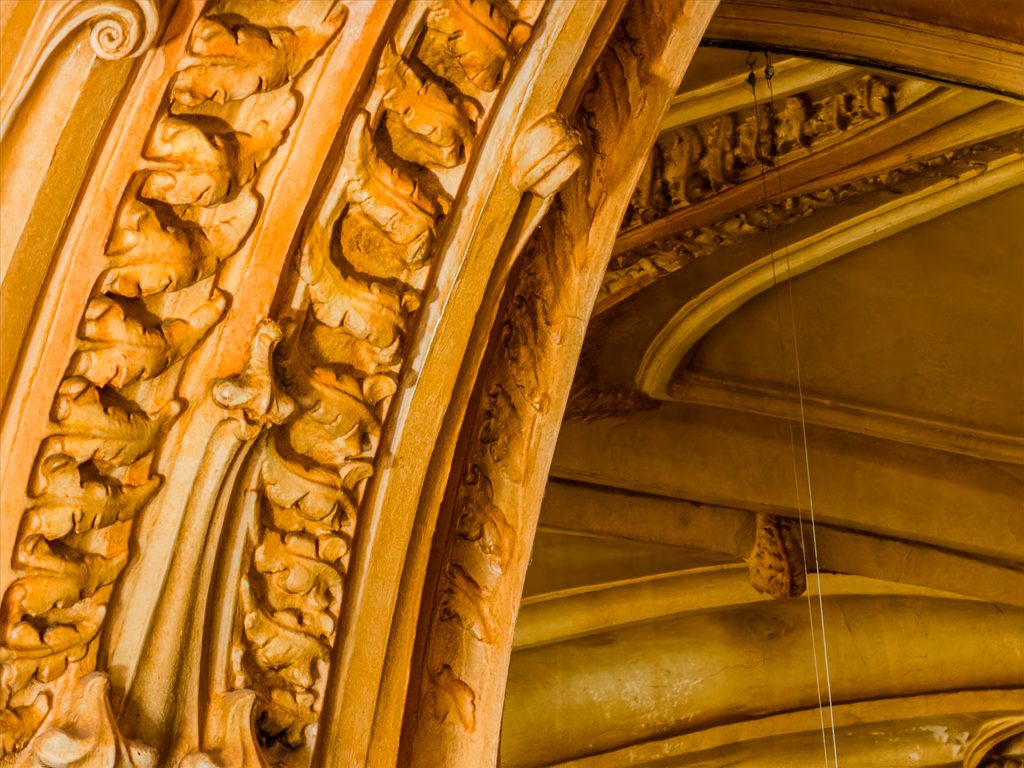
The Excelsior Restaurant is over the top beautiful. And a perfect place to have a little mid-afternoon ice-cream. (A million dollars but what a setting.)
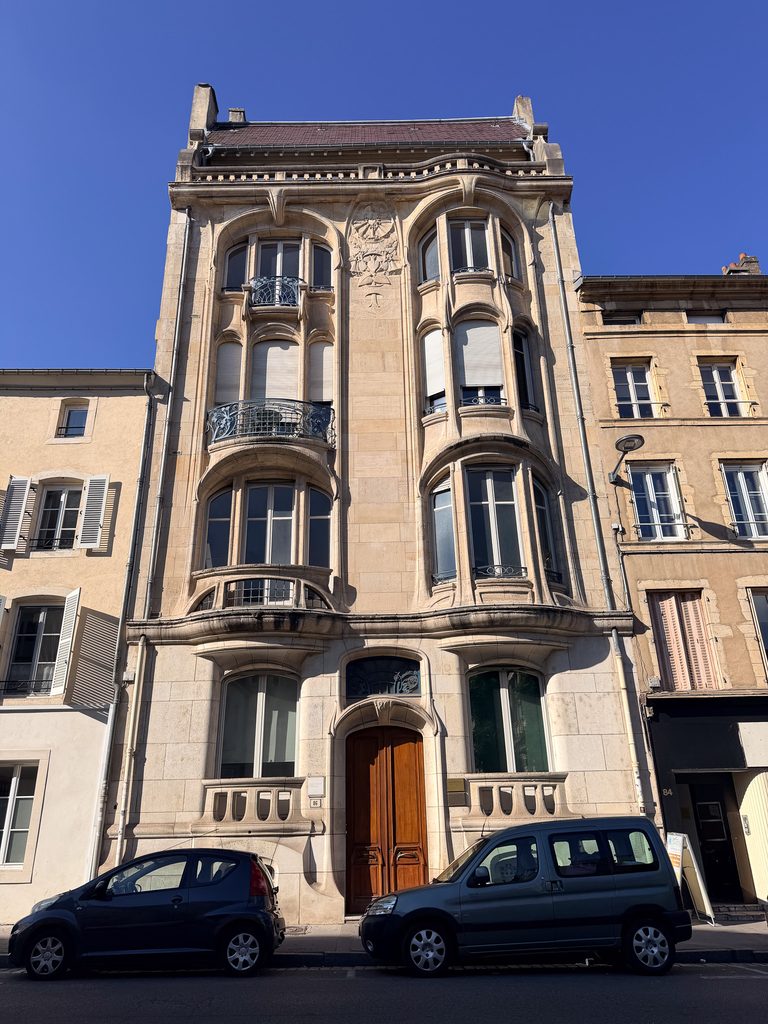
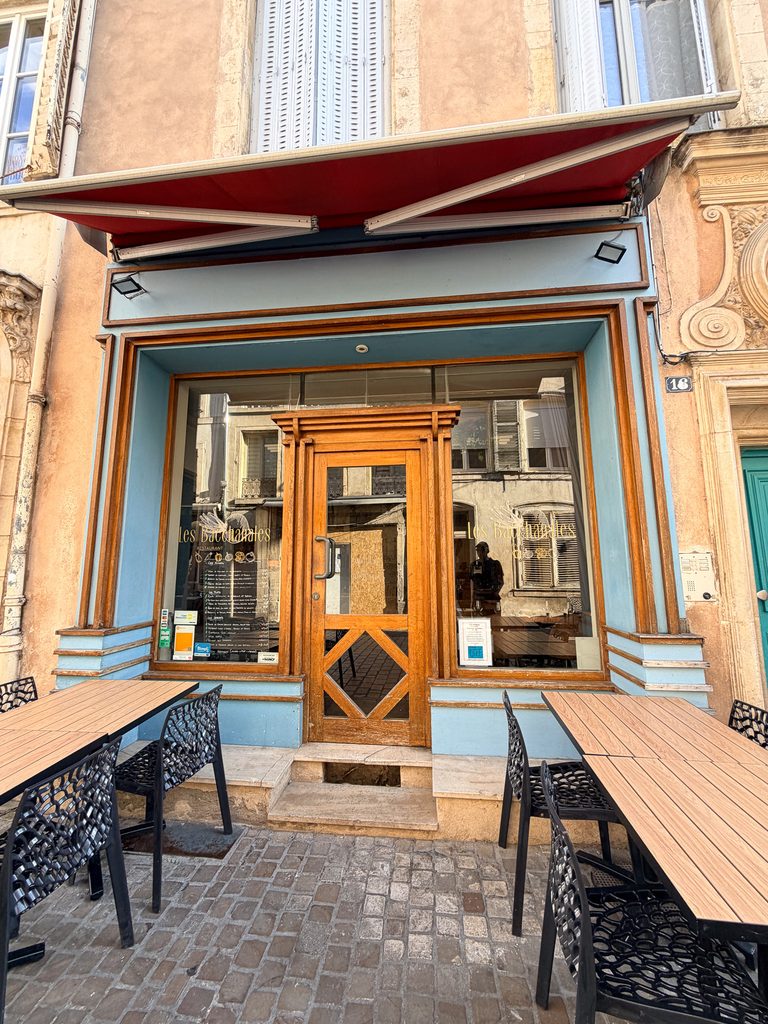
As we headed back to the square the demonstrations were getting uglier. in one block hundreds of students (and many that, suspiciously, looked quite a bit older than students) were jammed onto the street and facing dozens of riot-clad police and police vehicles. The tension seemed high; one thrown rock or bottle could have ignited the situation.
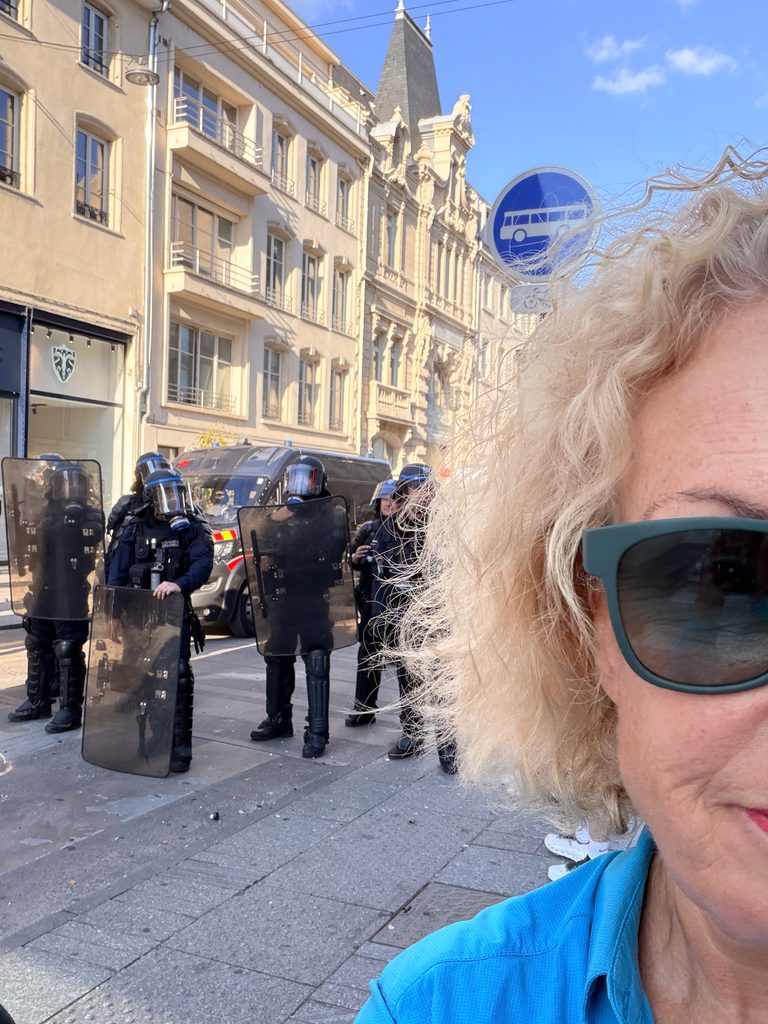
We didn’t hang around. Thankfully things in Nancy never escalated to the state they did in Paris. We tried again, unsuccessfully to visit the cathedral. Ah well.
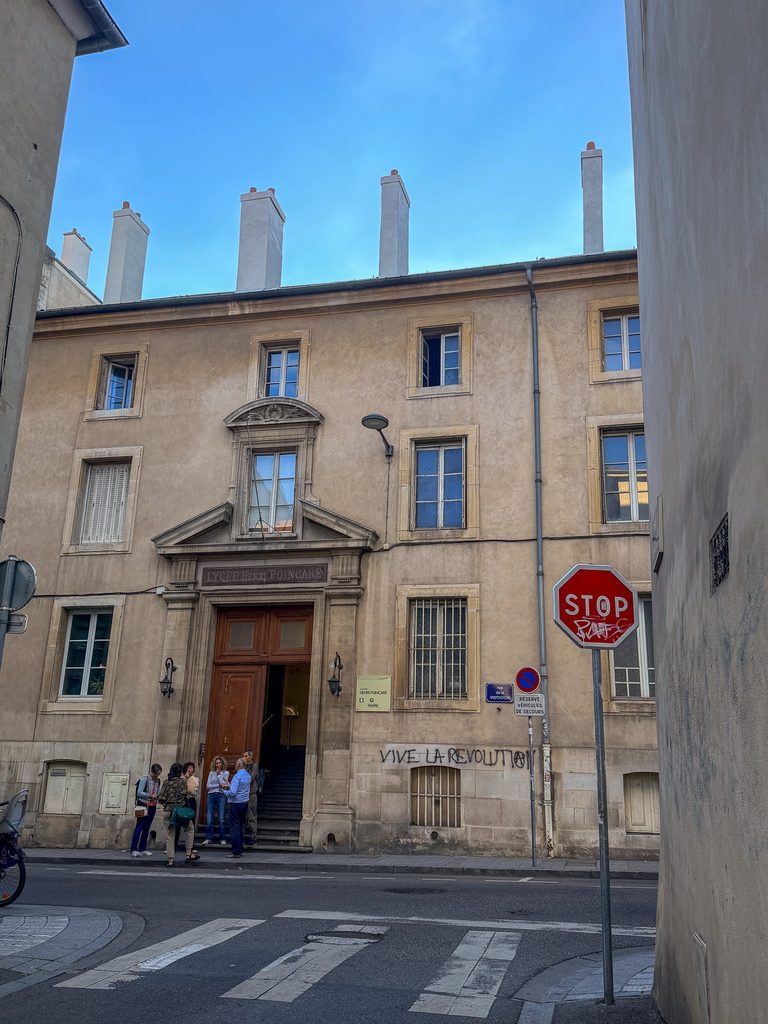
Staff meeting at the end of the day, at the school around the corner from our hotel?
We finished off the day with a pizza and a salad. The next day – Tuesday – would be the first day of our revised route. (After a particularly arduous day of distance + elevation gains last week, we decided not to go to Lyon via Switzerland, and head, instead, to Beaune and Dijon, ending in Lyon as planned.) Tuesday was going to be 74 kilometres of riding, 4-1/2 hours not including stops for Green Doors and photos, with a minimal ascent, culminating in an overnight in “Golbey”.
Thanks for reading! For the real keeners, here is a little more about the square.
*Addendum: Stanilas was quite a guy and he left a very positive mark on Nancy. “Stanislas Leszczyński, the former King of Poland and Duke of Lorraine, transformed Nancy into a modern, enlightened capital by commissioning the construction of the Place Stanislas, Place de la Carrière, and Place d’Alliance, which are now a UNESCO World Heritage Site.
His primary contributions to the citizens included:
Cultural Enrichment: He beautified the city with palaces, public parks, and monuments, turning Nancy into a renowned center of art and Enlightenment philosophy.
Urban Integration: He connected the medieval Old Town and the grid-patterned New Town with a grand royal square, eliminating traffic jams and creating a unified civic center.
Public Infrastructure: He provided a home for administrative offices, including the City Hall and courts of justice, making government accessible and central to daily life.
Civic Spaces: He designed the squares as convivial hubs for citizens to meet, chat, and enjoy cultural events, acting as a “theater of life” for public assemblies and festivals.
Social Welfare: Using his French pension, he established charity workshops to provide employment and income for the poor, reflecting his belief that a sovereign’s happiness depended on that of his people.