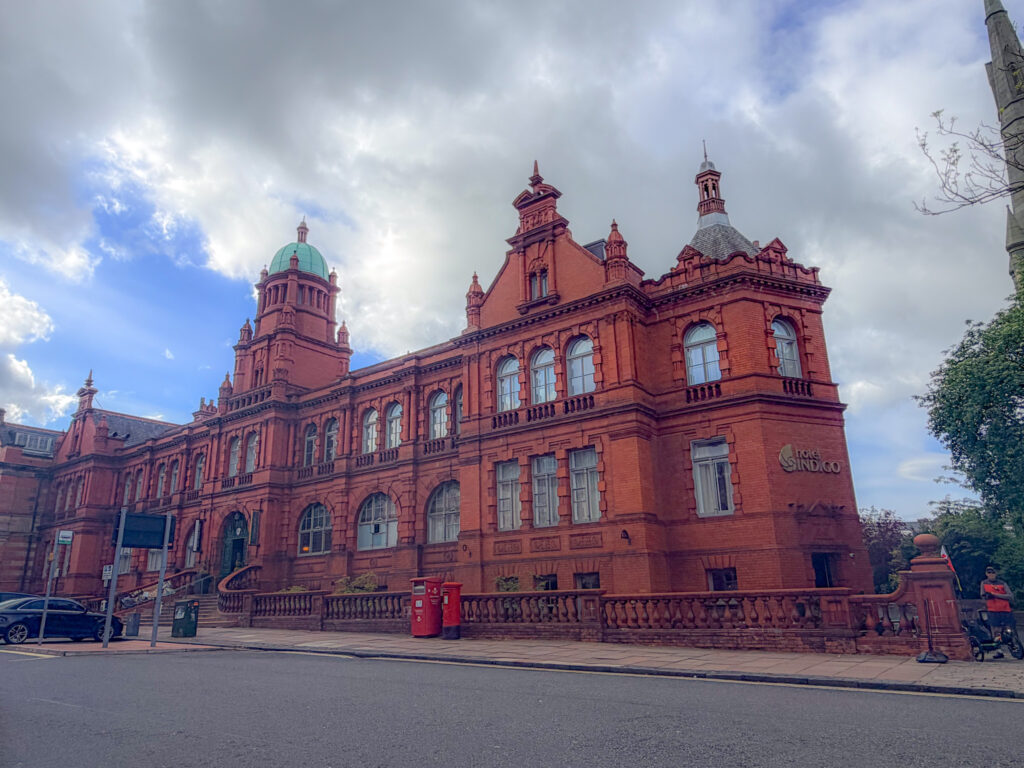
I’m attaching this photo of yesterday’s hotel here, because I’m not sure that I included one in the blog. It was a beauty: Hotel Indigo, Durham. Actually, I really like that chain of hotels: IHG. Highly recommended.
John’s at bottom, right, setting up the bikes for the day’s ride to Tynemouth and Newcastle.
Thanks to the Hadrian’s Cycleway cycle path, we finally arrived in Newcastle, famous for its bridges. A hilly city, it operates on many levels, and our hotel was right at the level of the River Tyne, along the pub and bistro-lined quay. We managed to finagle ourselves a perfect spot to store the bikes for two nights right under the elegant staircase in the lobby of Melia’s Innside Newcastle hotel. (We like the Melia chain, as well, and this hotel was no exception.)
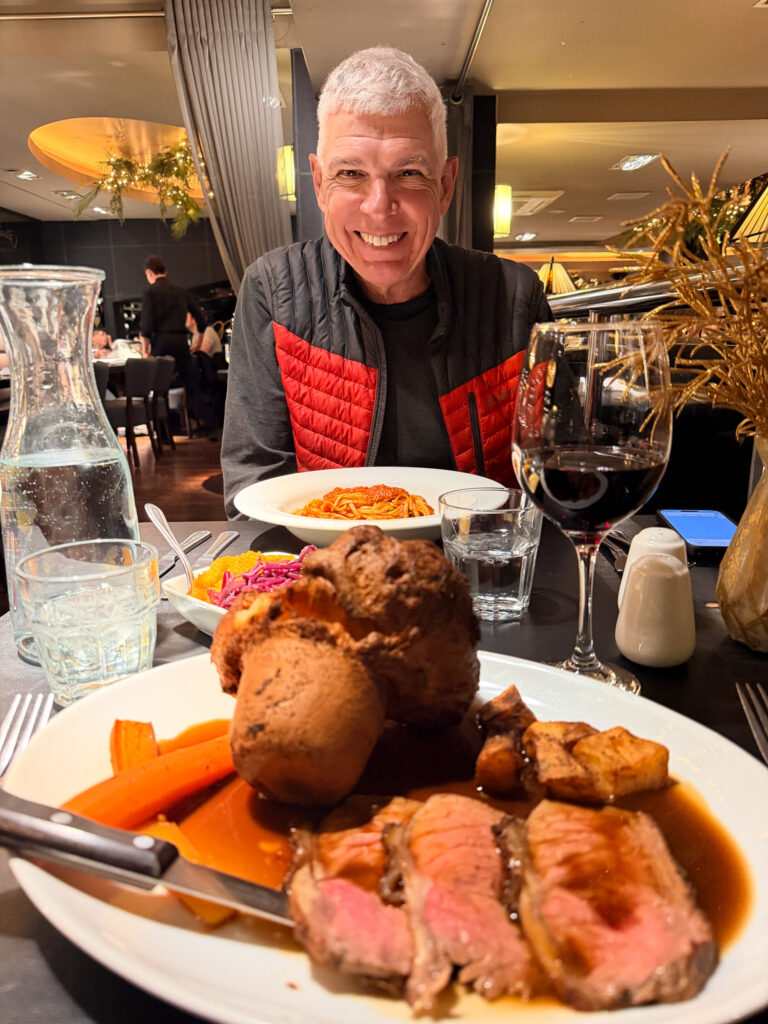
It being Sunday, “Laura-Ann” at reception phoned a local restaurant and arranged a reservation for us at Babucho to satisfy Patti’s craving (requirement) for a Proper Sunday Roast, for 6:00.
Then we went to find our room. We opened the door, and gasped. As John said, “I must have been feeling flush, the day I booked this.” Huge living room and bedroom, two bathroom areas, three sinks, the toilet had its own room, three closets, more than a square foot of counter top for our toothbrushes. So much space!!! Luxury!!!We did the requisite laundry, plugged in all of the hungry batteries, and admired the view of six of the seven famous bridges in Newcastle from our floor-to-ceiling windows.
(The emblem for the city of Newcastle Bridges is primarily represented by the Tyne Bridge, which is an iconic symbol of the city. This steel arch bridge connects Newcastle to Gateshead and is known for its distinctive design and historical significance. Additionally, the Newcastle coat of arms features a silver castle with three towers, symbolizing the city’s historical fortifications and maritime heritage. The Tyne Bridge and the coat of arms together embody the identity and pride of Newcastle upon Tyne.)
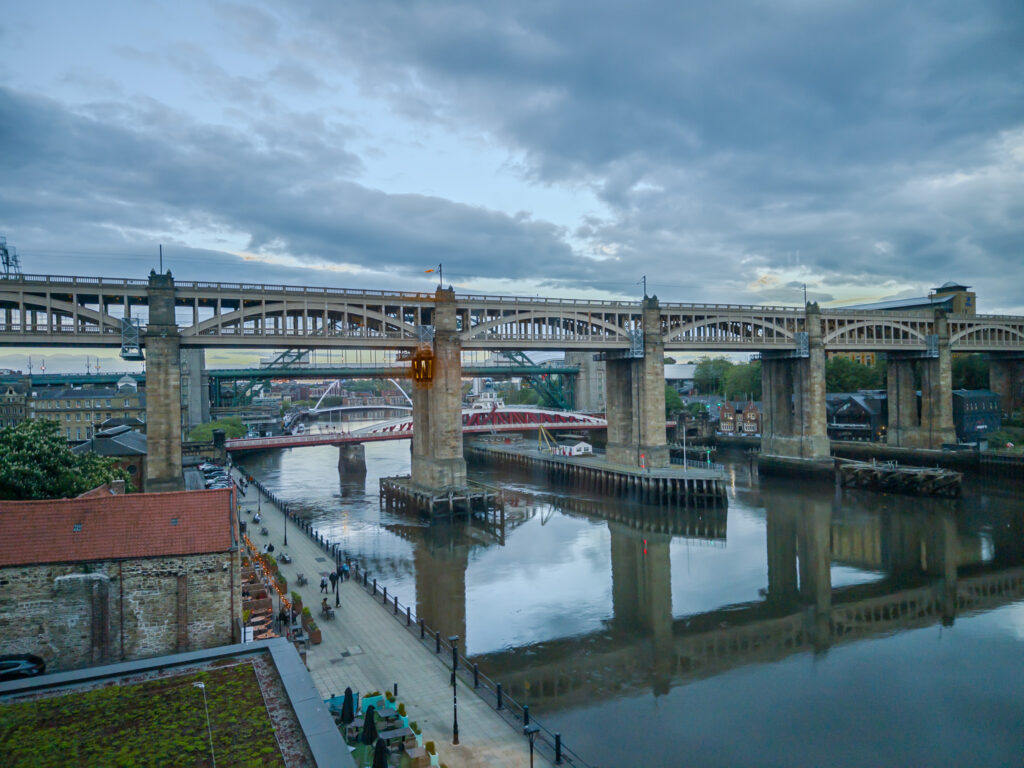
You can see four of the bridges in the photo, below. (The view out of the other window showed two more.) The large green suspension is the Tyne Bridge. The white suspension in the background is the Millenium Bridge. The lower red and white is the Swing Bridge, The double-decker in the foreground is the High Level Bridge.
Sunday Dinner – Yorkshire Pudding, proper, tears-inducing horseradish, roast beef, mashed potatoes, carrots, cabbage and turnip for me, Bolognese for John, finishing with a decadent Brownie – was perfect. We toddled back down the hill to our hotel and called it a night!
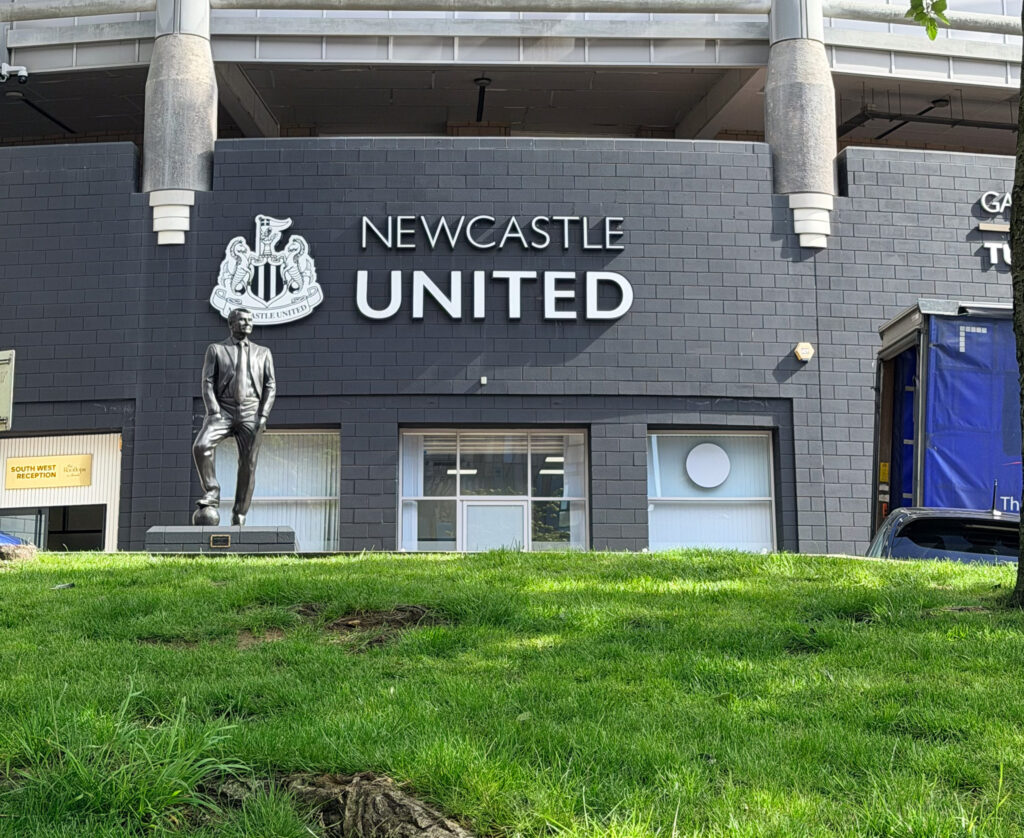
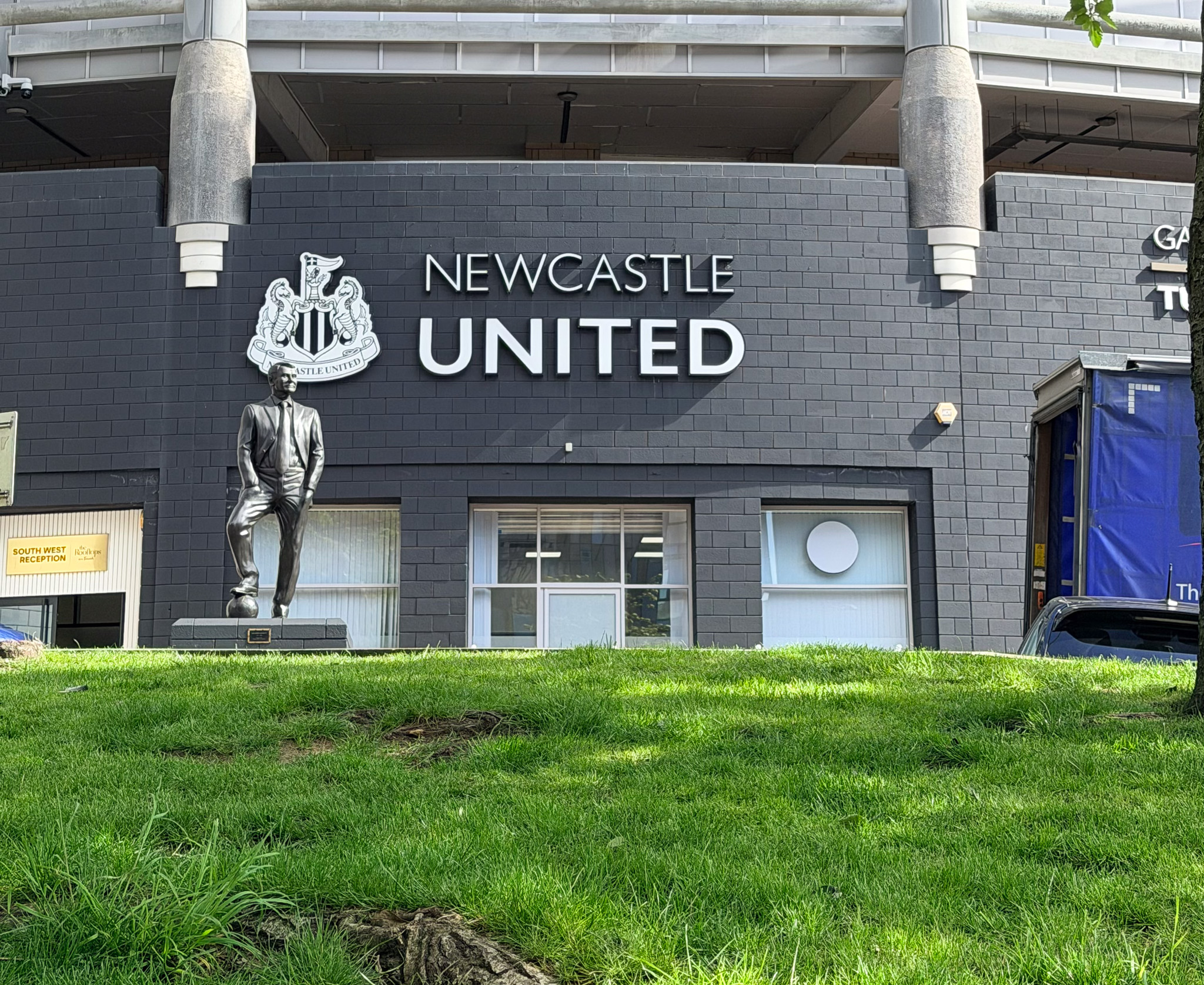
Monday morning, we had a tour booked at 11 a.m. with Rob, “Red Beard Tours” (!!!) a Viator private contractor. We walked up the hill from the riverside, and explored the city first on our own, putting in time, before our tour started. We circumnavigated the stadium for Newcastle United (the footie team), and walked through a horrendous city planning mistake, the Eldon Square, several blocks of an unrelentingly brutal, 70s era, indoor shopping mall.
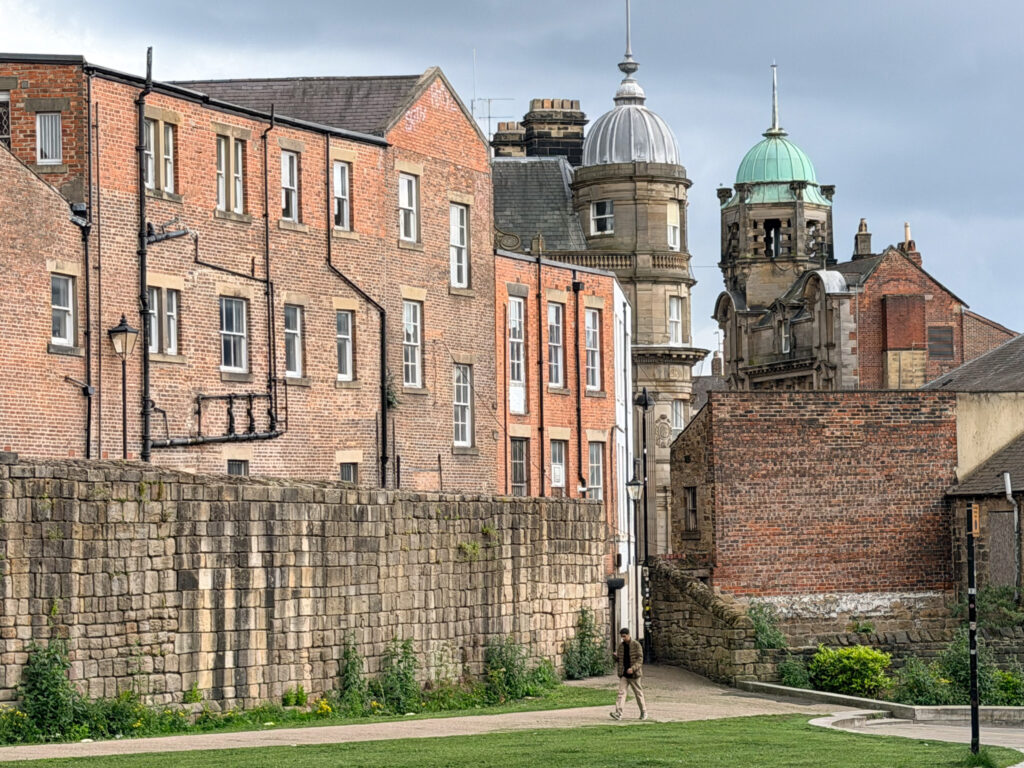
Rob was right on time, and talked us through the required legal safety requirements. (The TLDR version is: try not to trip on Roman ruins.) Then he gave us a fantastic tour of Newcastle. We had done no homework on the city, and we had no ideas about what to expect.
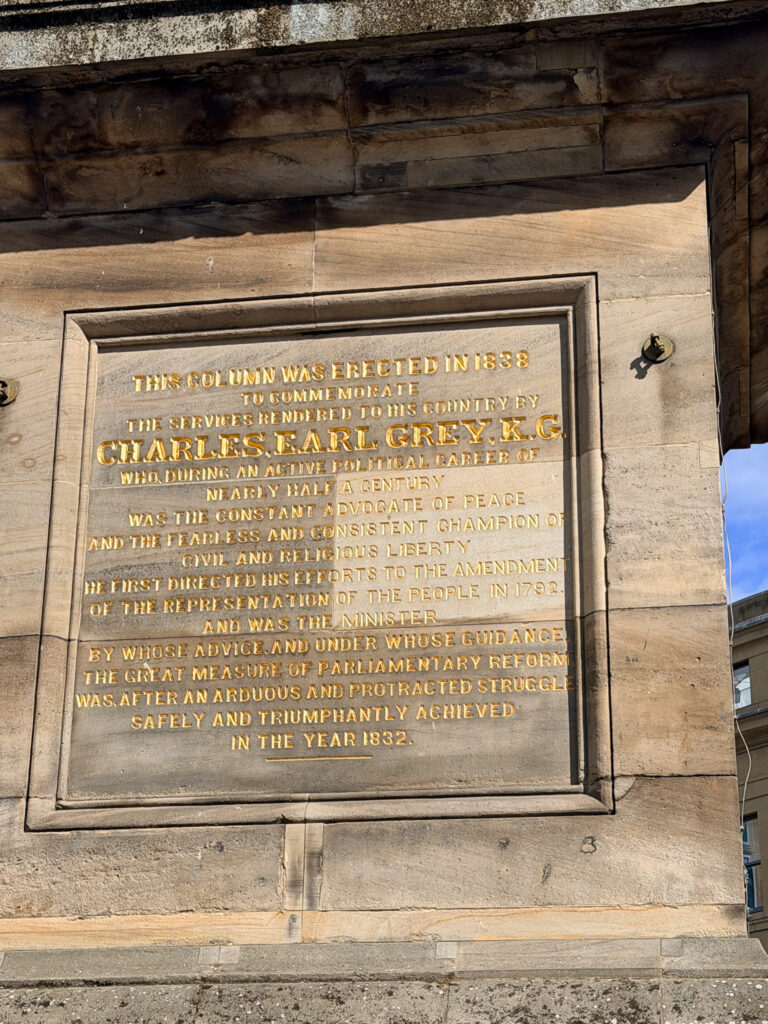
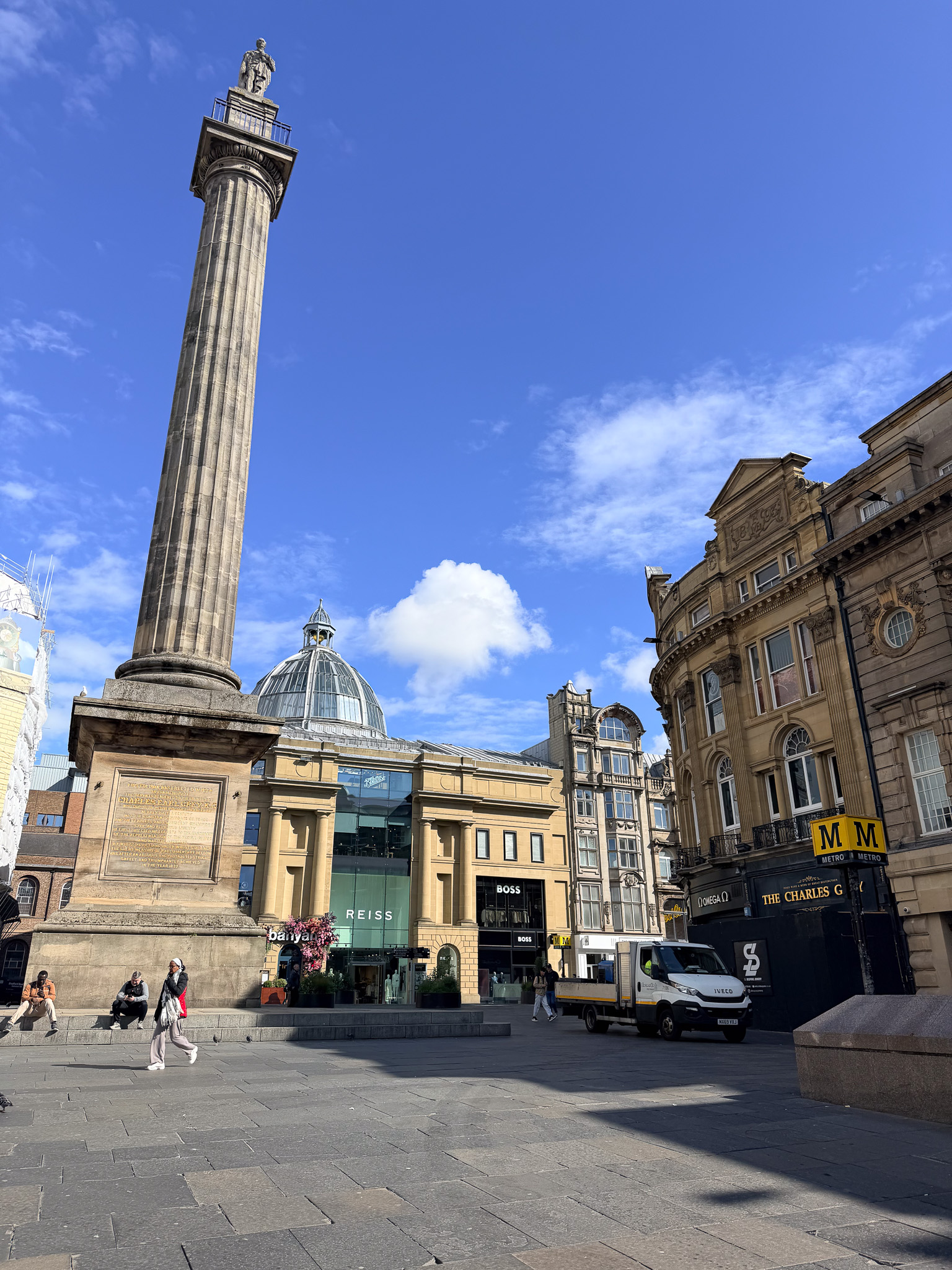
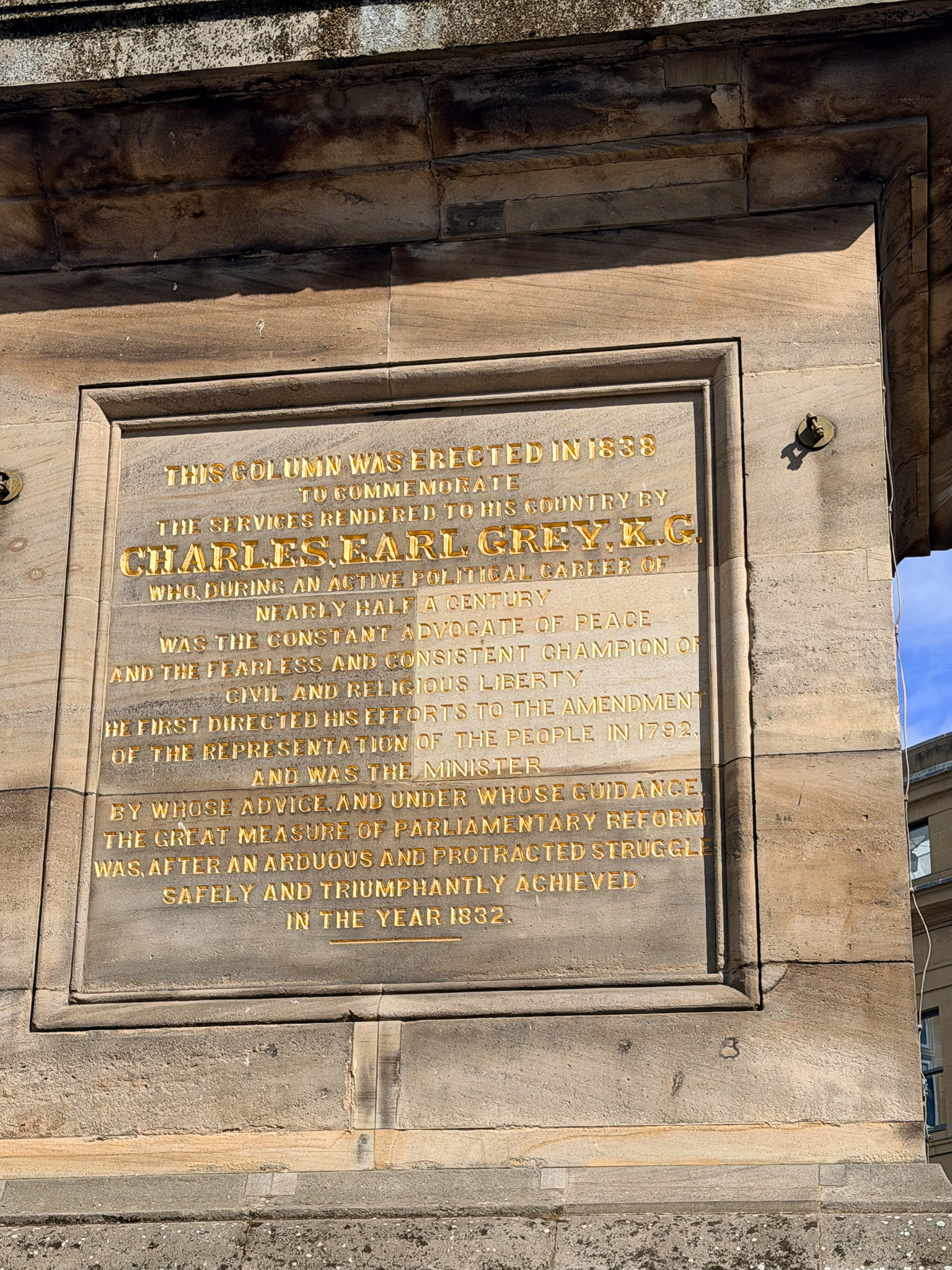
First, the story of the ‘man on the pole’, the statue at the top of the obelisk in the huge square: Charles Grey. Best known as the name behind Earl Grey tea, Grey served as British prime minister from1830 to 1834. His government enacted two very important pieces of legislation: the Reform Act, which redesigned the electoral areas for better representation, and, the Slavery Abolition Act, which abolished slavery in the British Empire. Unfortunately, in order to get the bills passed, he had to agree to no votes for women, and, agreed to compensate slave owners for the value of their slaves. The final reparations to the former slave owners were made in the last decade – !!! – and, of course, no reparations were made to former slaves. We were grateful that we had learned a lot about this dark (but brightening) period in British history when we visited the slavery and abolition museum – Wilberforce House – last week, in Kingston Upon Hull.
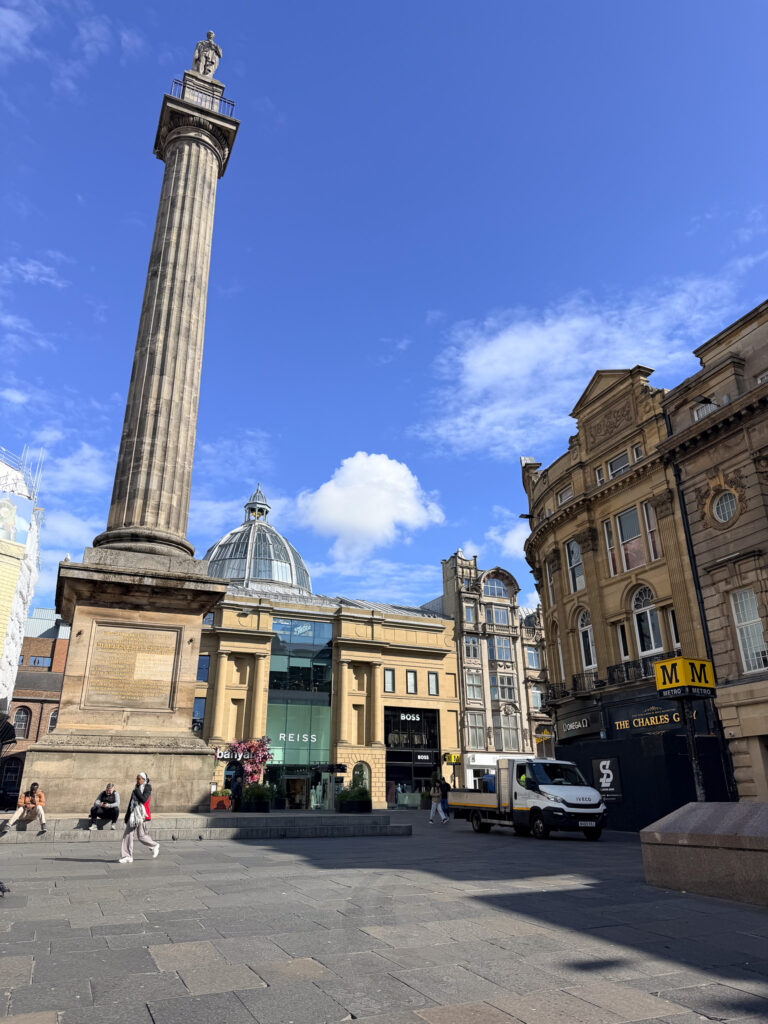
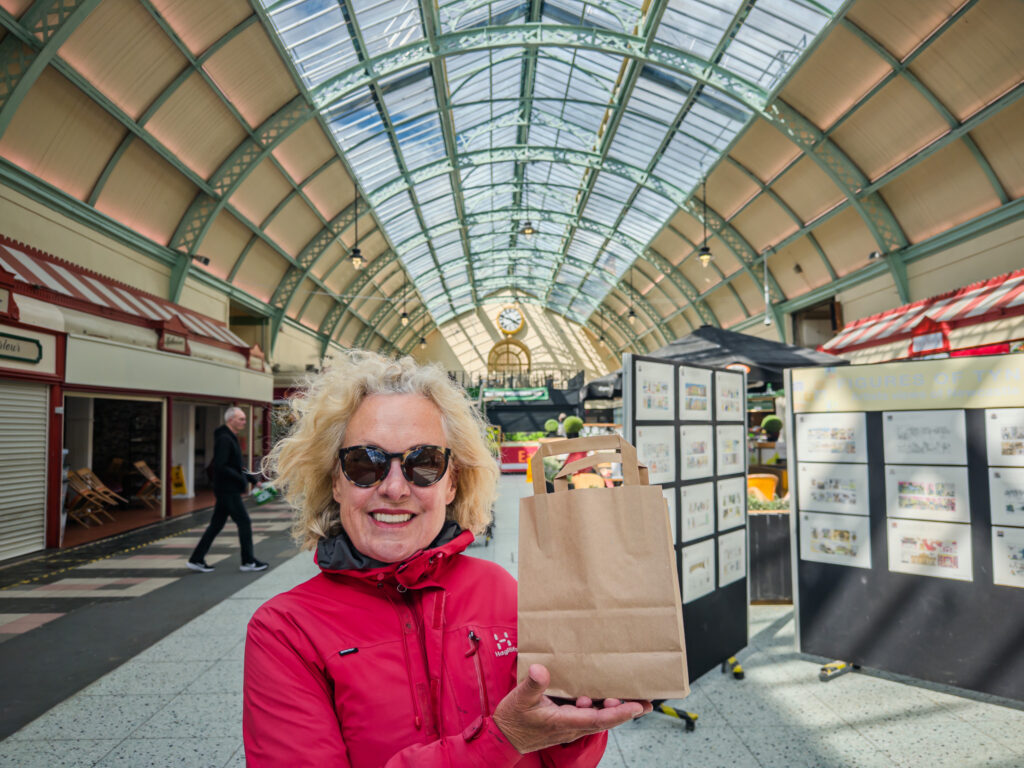
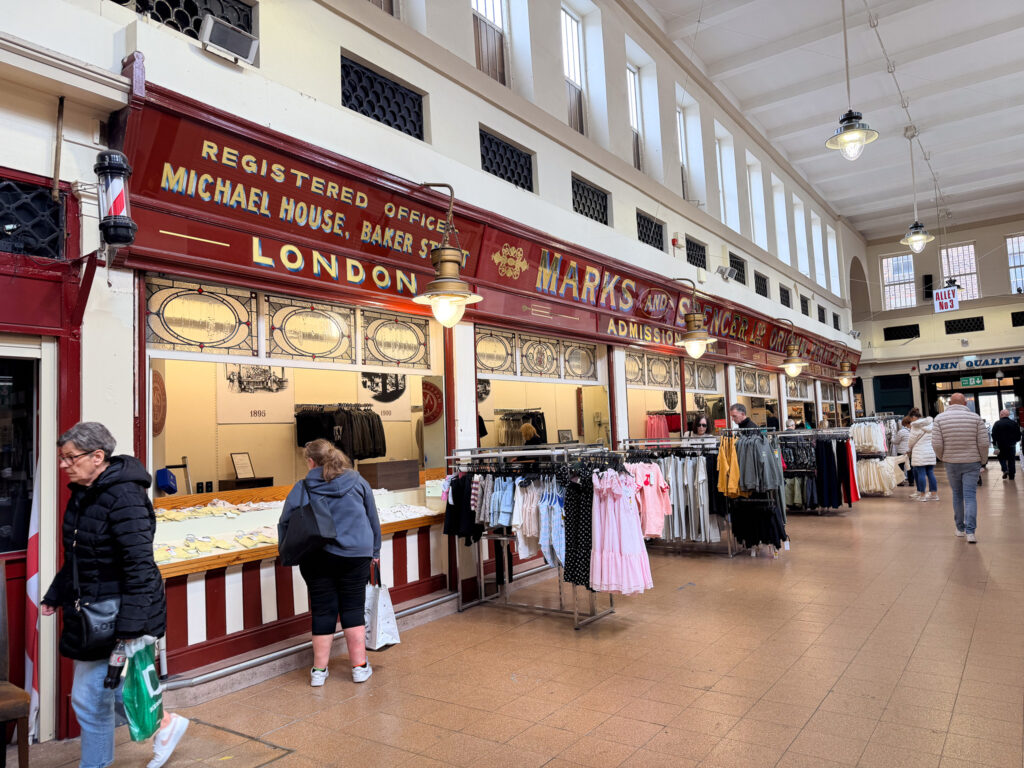
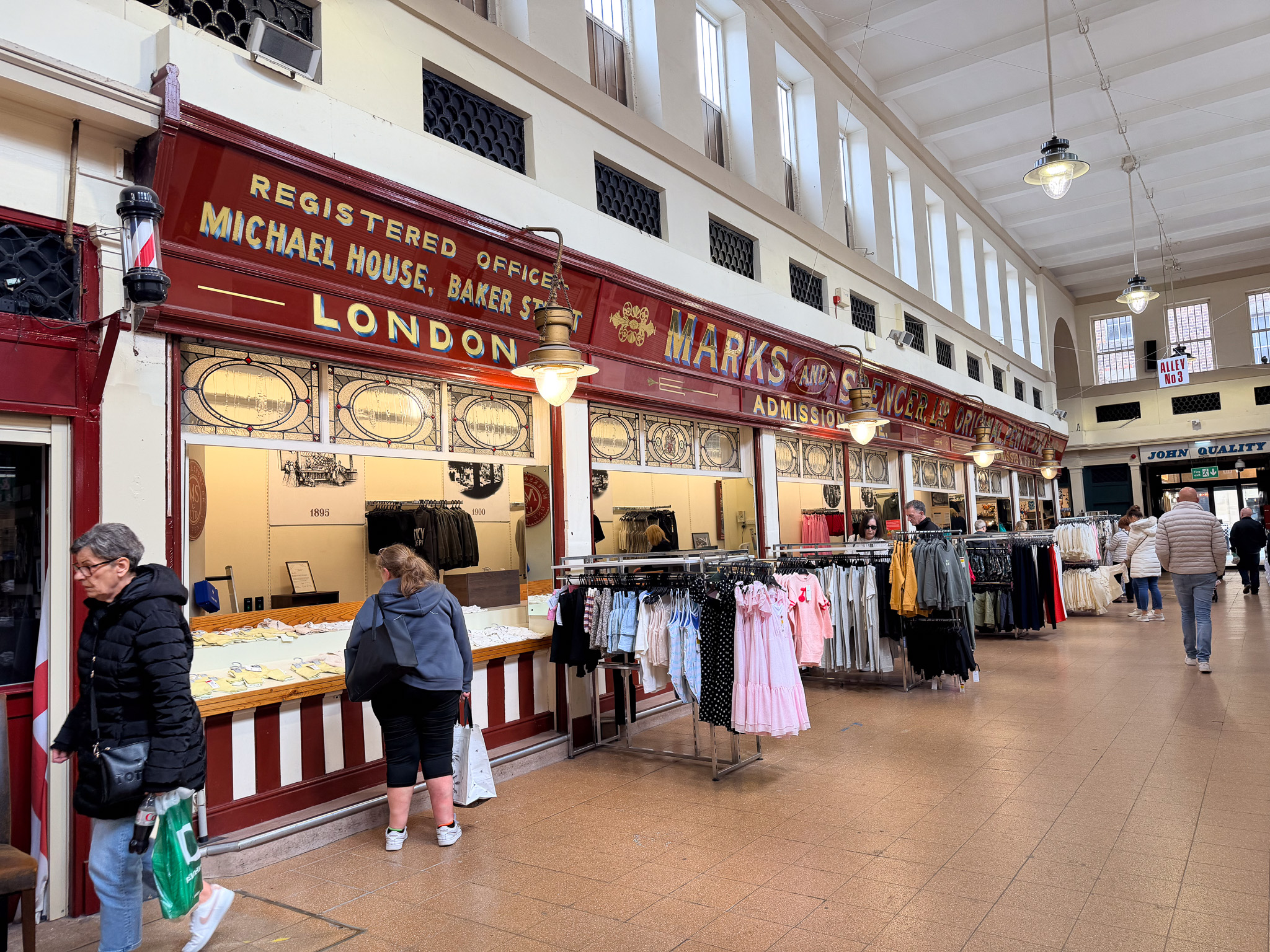
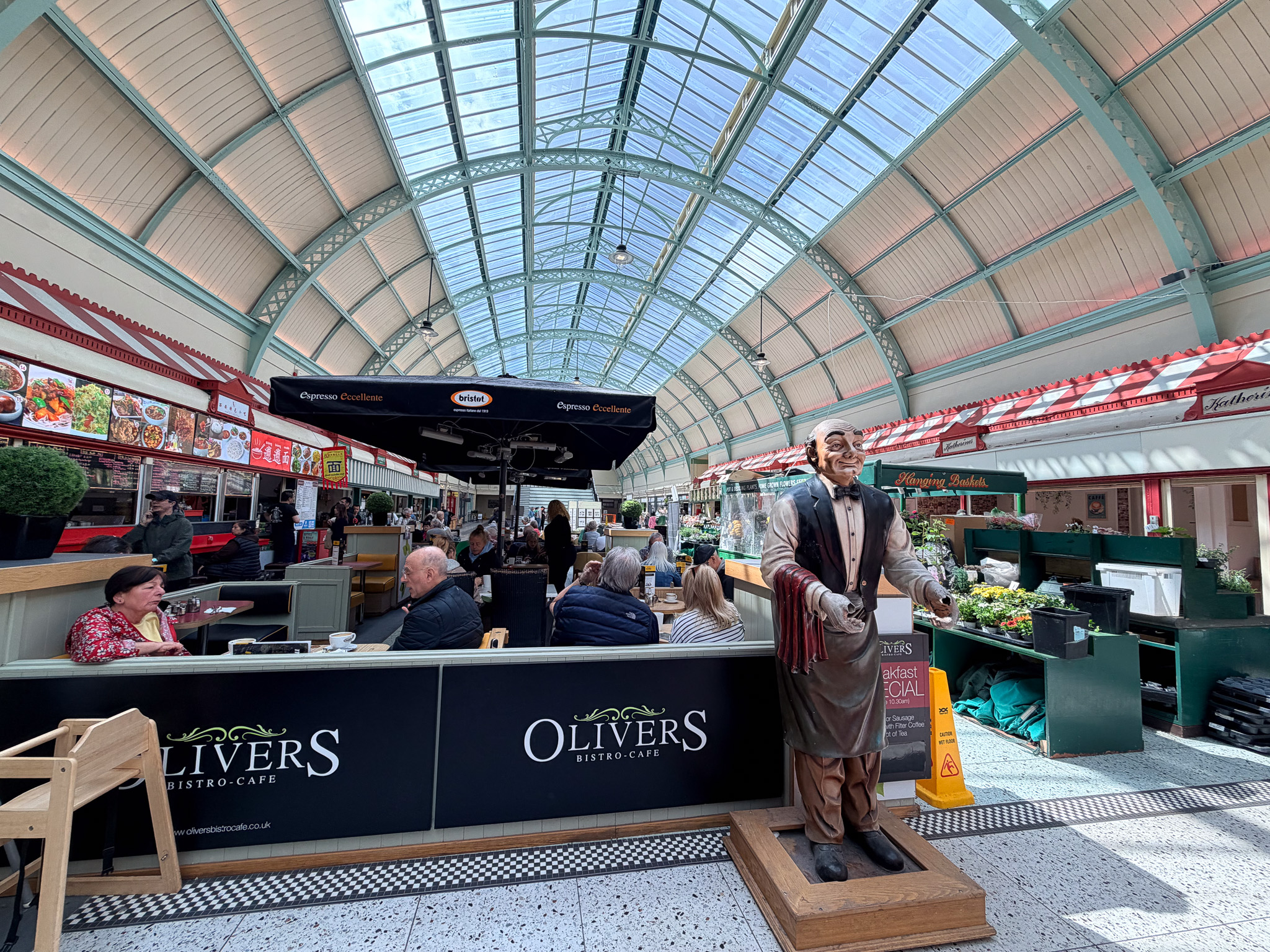
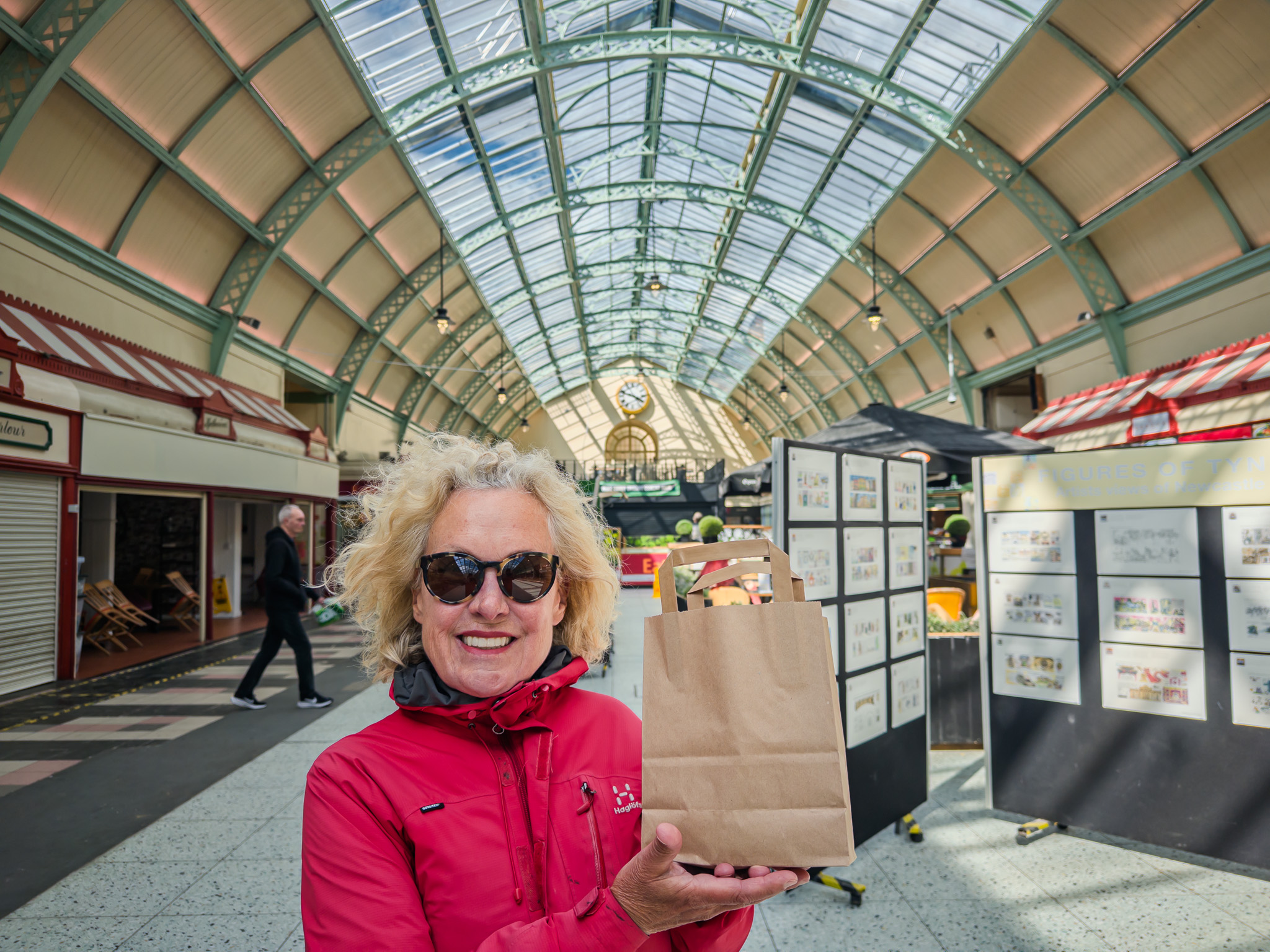
We then walked through the huge indoor Grainger Market, opened in 1835. Among the many meat, vegetable, cheese, coffee, etc, stalls is the only remaining 1895 original Marks and Spencer Penny Bazaar still in operation.
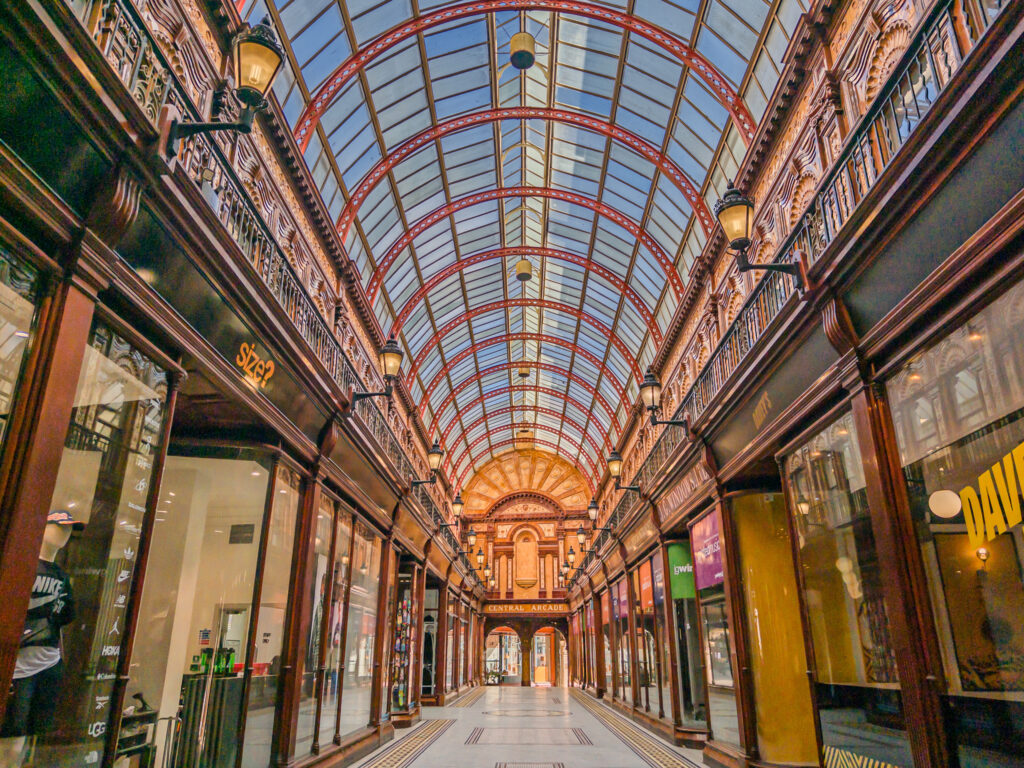
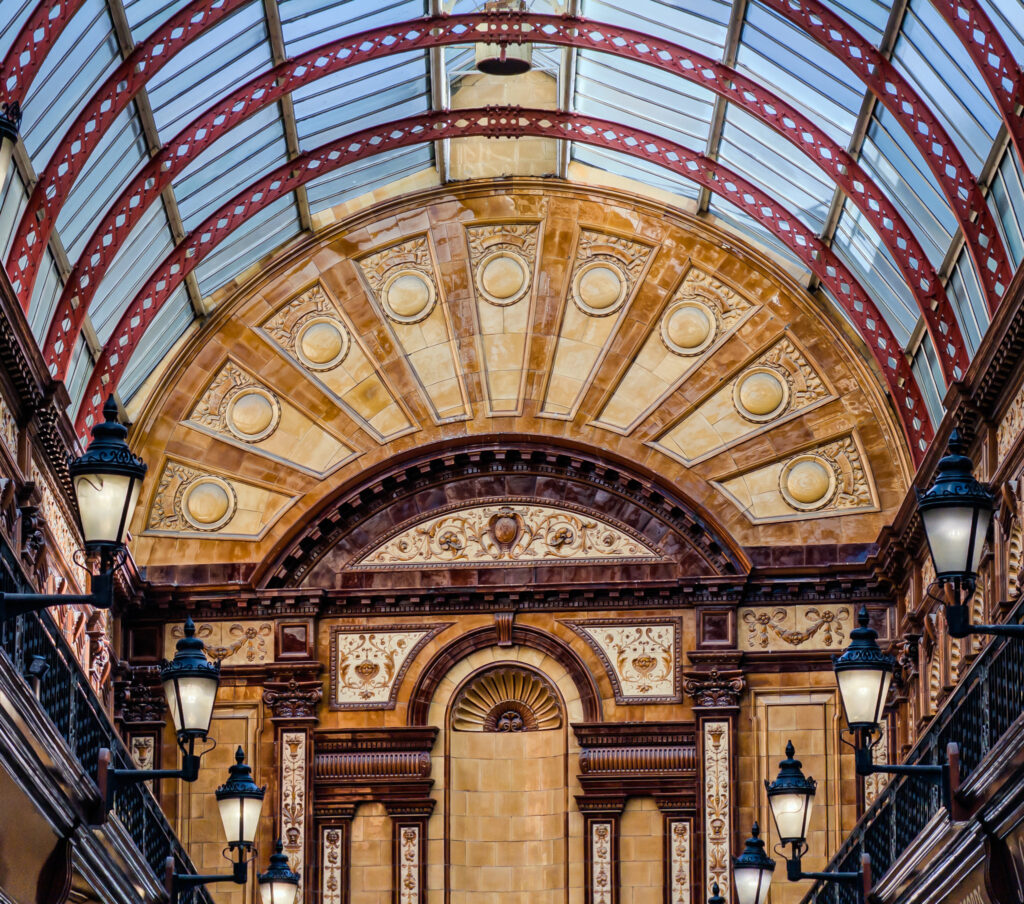
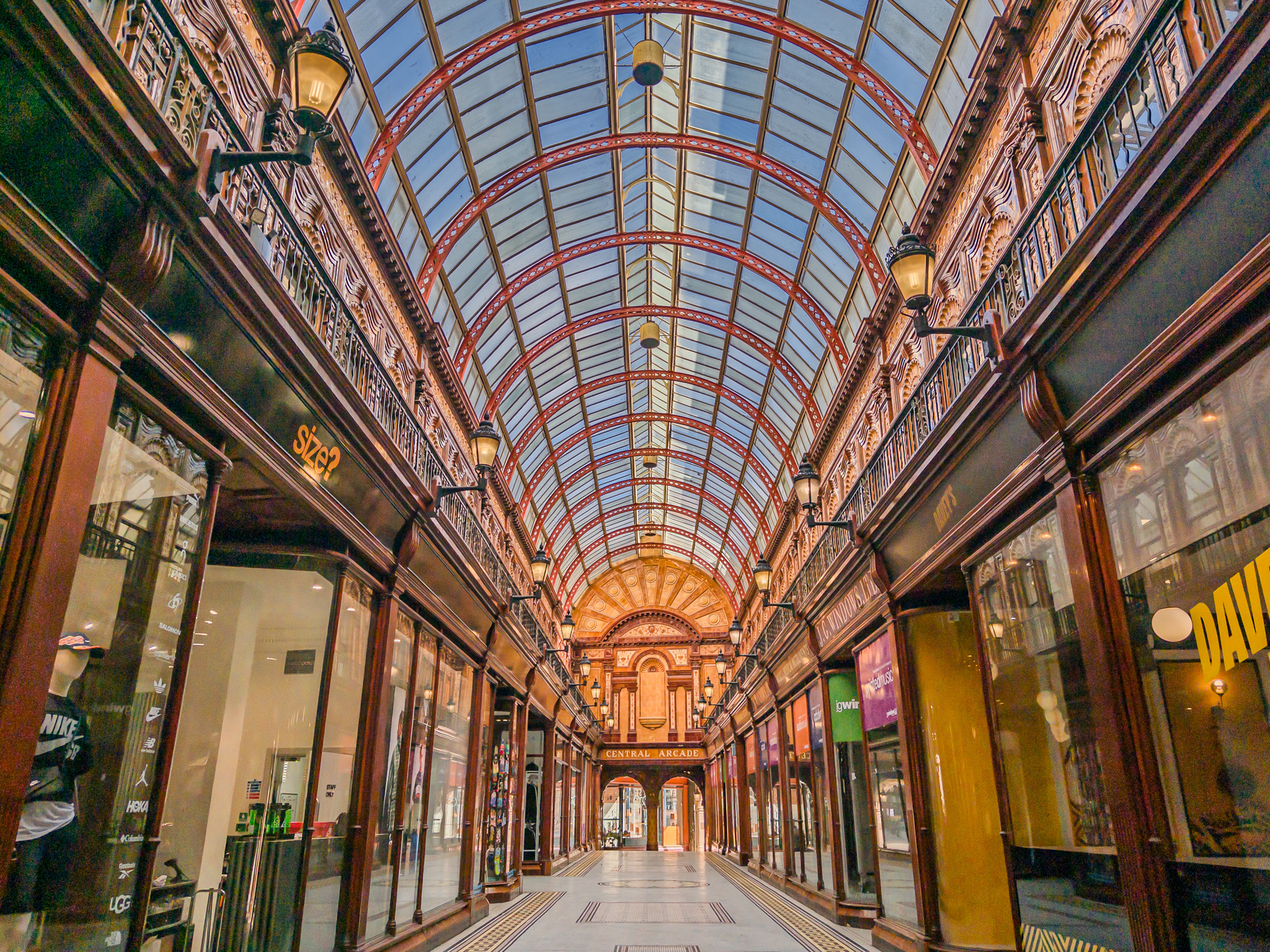
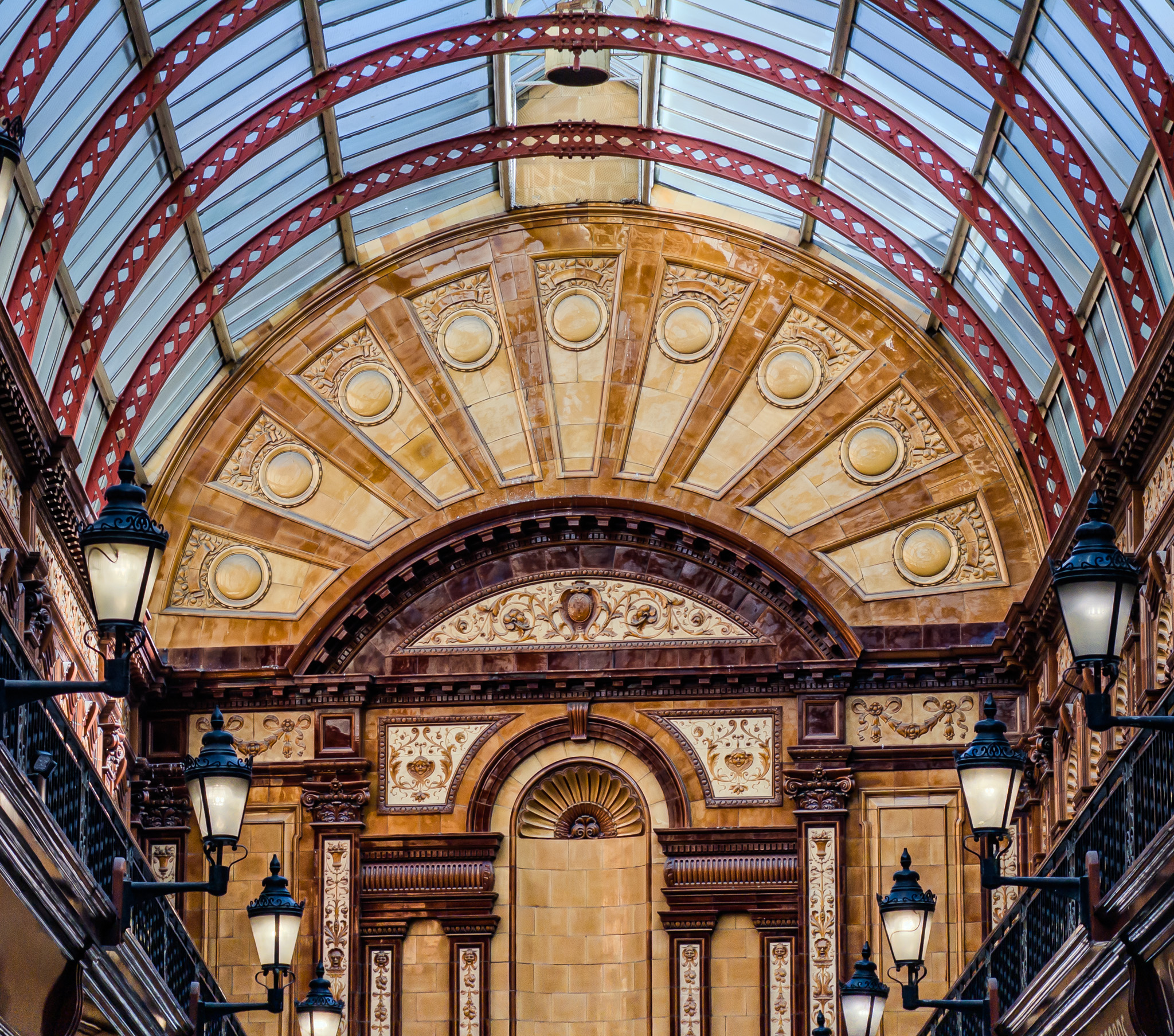
Newcastle’s Central Arcade is stunning, with its fantastic wall tiles and floor mosaic. Built in 1905, from Day One it housed the large JG Windows music store. Sadly closed in 2024, many famous local musicians, such as Sting and Dire Straits – Northumbrian lads – got their musical starts shopping for guitars and records at JG Windows.
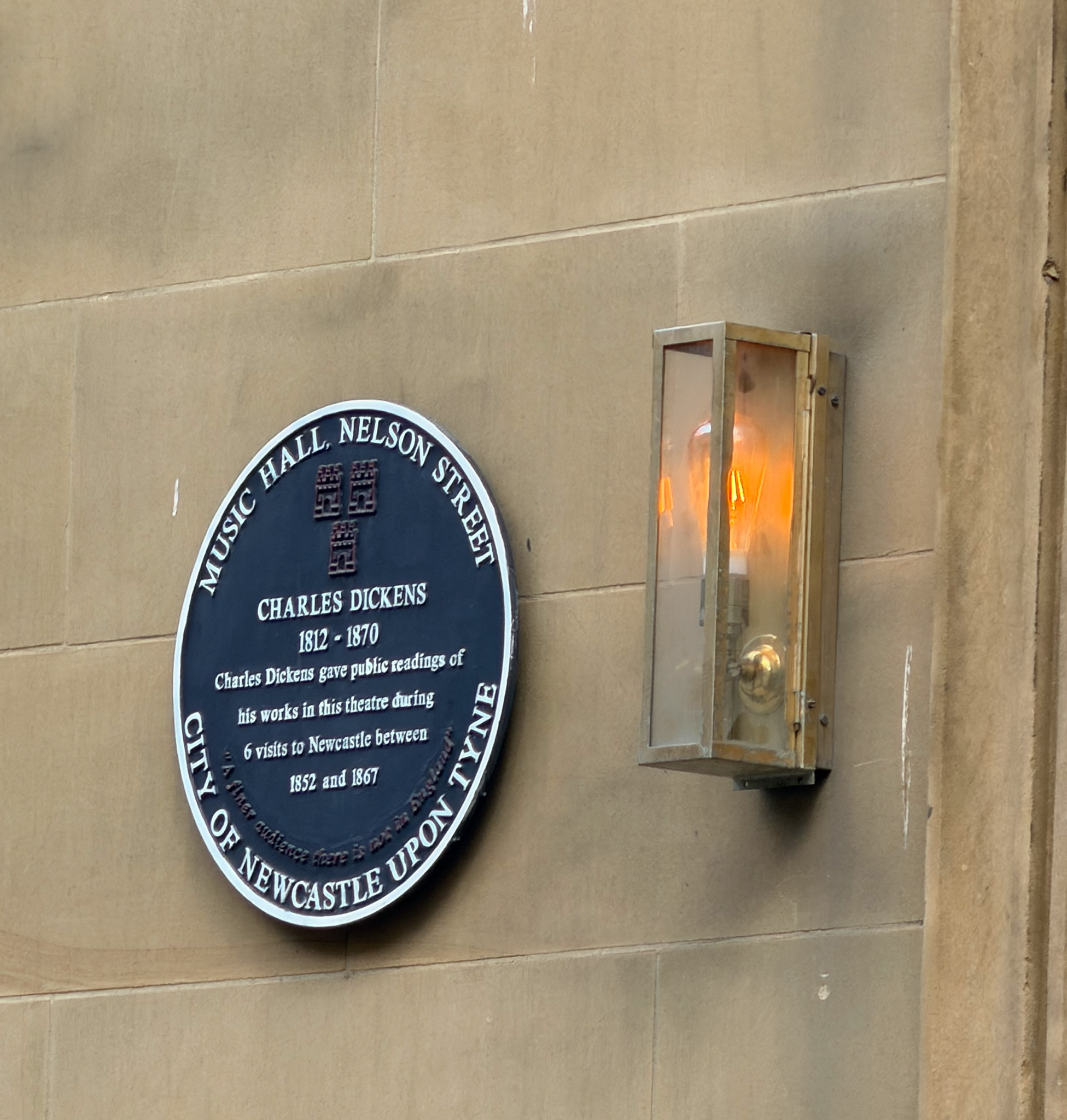
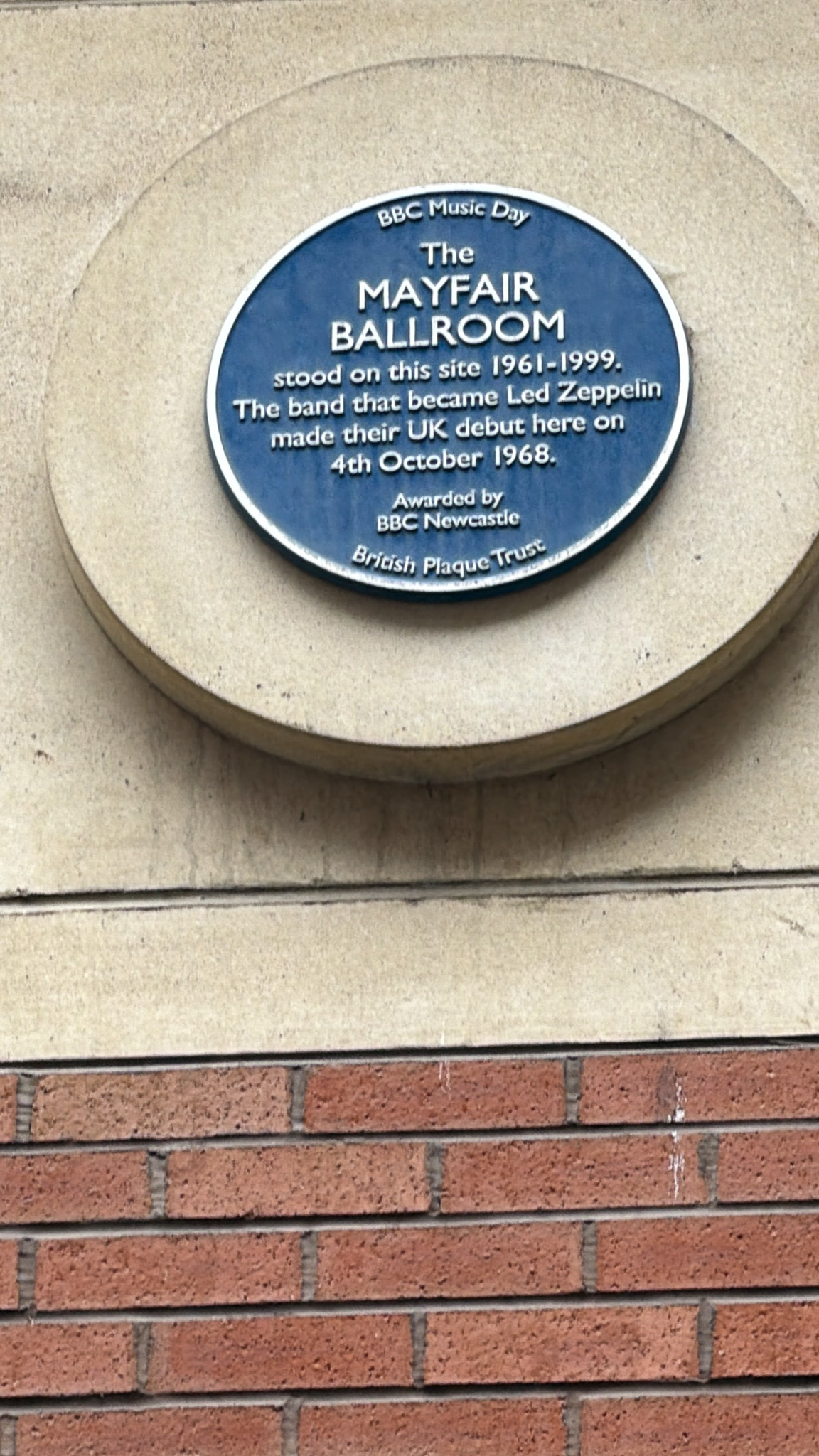
Another bit of music trivia: The Yardbirds were a successful band in the late 1960s. When the final original member of the band was replaced, the band felt it should create a new name for their group. They chose the not-too-creative name, “The New Yardbirds”. The original Yardbird members complained bitterly, so the band came up with a better name for their opening concert in Newcastle: Led Zeppelin.
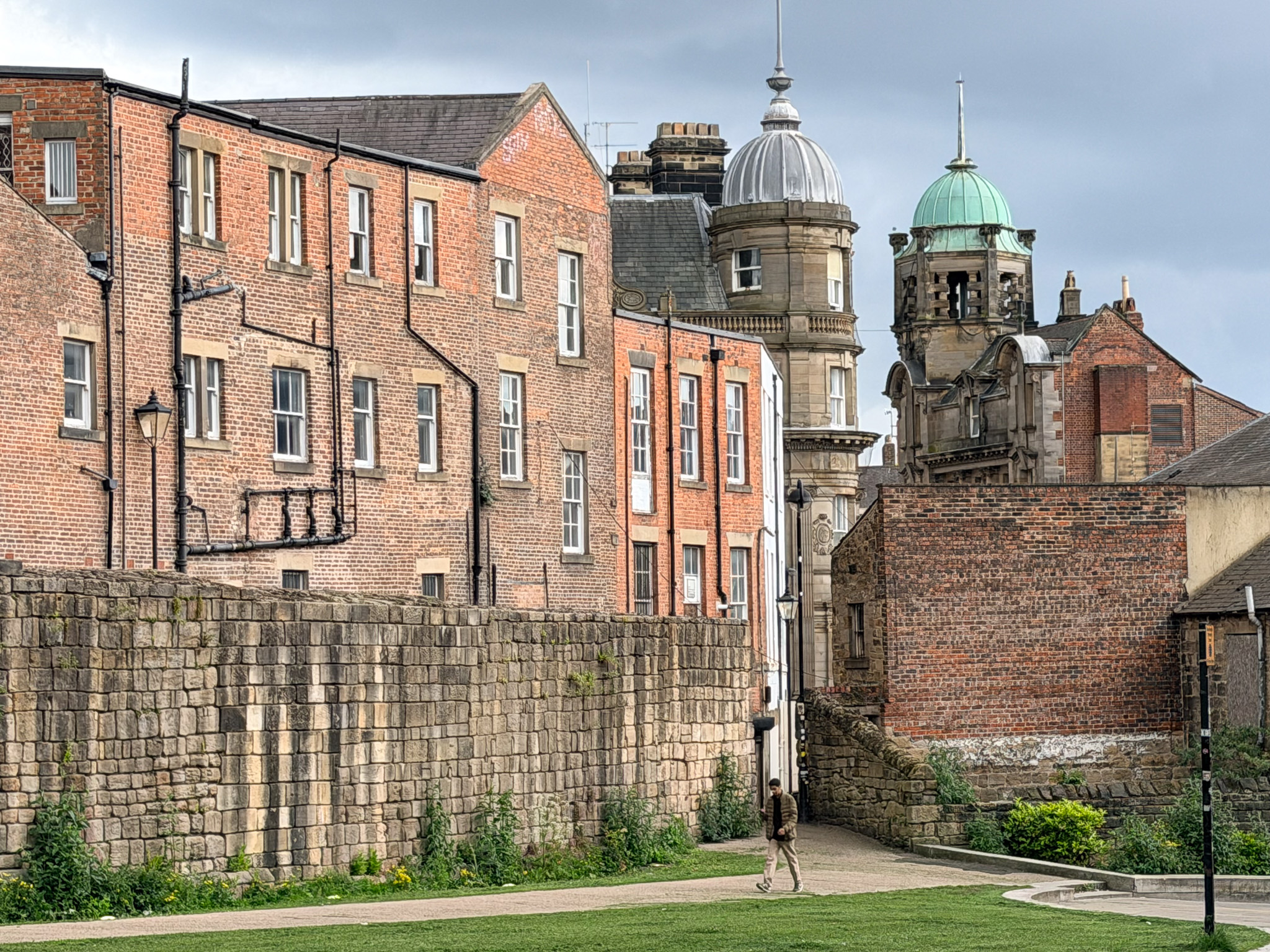
An interesting road in Newcastle is the tiny Pink Street, one of the few very narrow thoroughfares that escaped Grainger’s Georgian urban redesign. The street is only two very short blocks long, running diagonally across the Georgian grid. Although many believe ‘Pink’ refers to the colour of the local ladies’ undergarments, the name more likely describes the hue of the Norman wall which ran just behind. Pink Street now has a few popular shops, including the best bakery in town selling its famous ‘stottie cakes’.
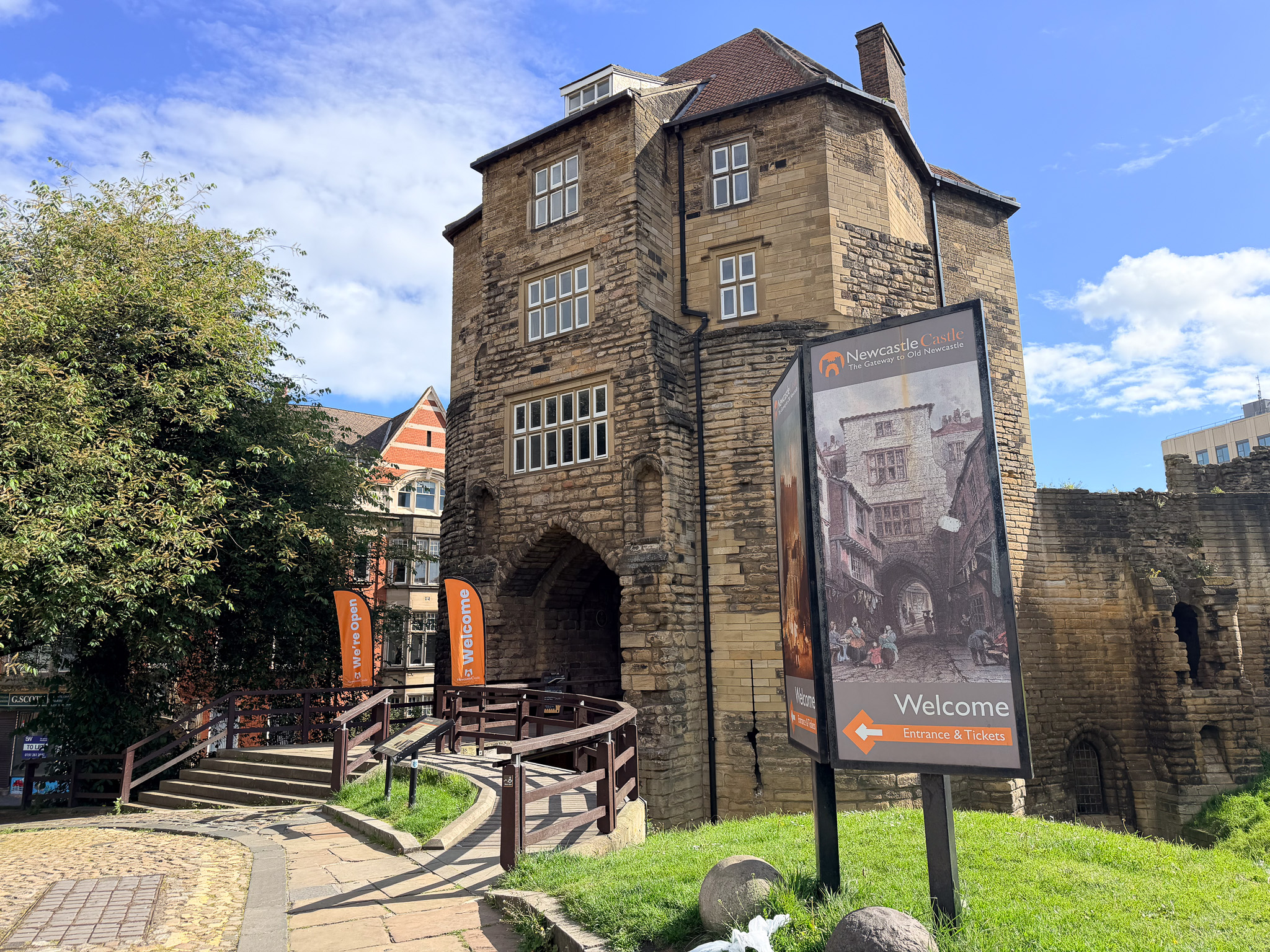
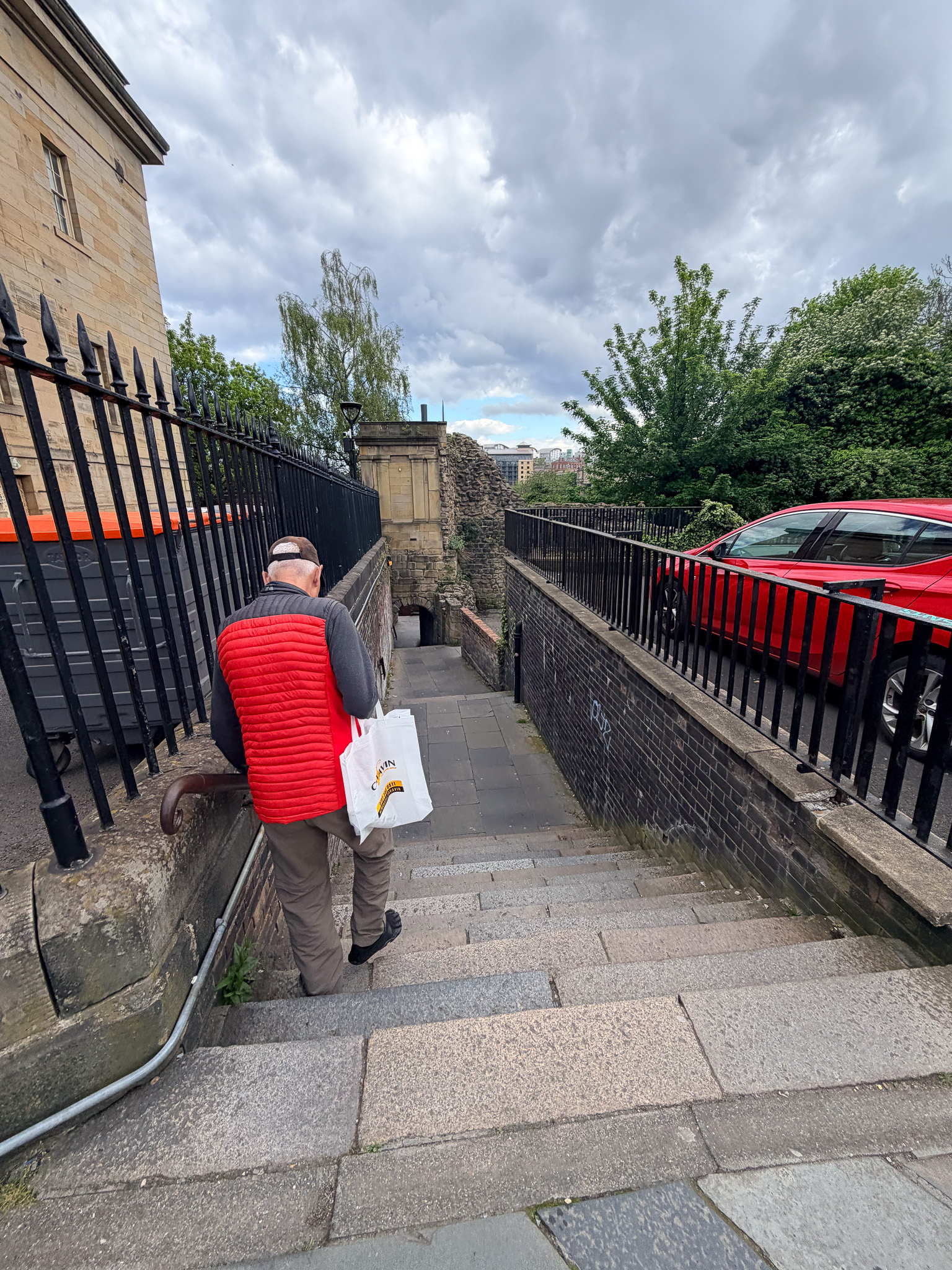
Newcastle’s castle (yes – there is one) sits on the site of a Roman fort, high above the River Tyne, built to guard the Roman bridge far below. When the Romans left, Anglo-Saxons occupied the site until the Normans, led by William the Conqueror, needed to protect their new lands from invaders, particularly the Scots. A large fortification was built, of which little remains today. The present ruined castle was built by Henry II. The Victorians in the mid 1800s demolished the middle of the old castle to make way for their huge railway project. Many many layers of history in this site.
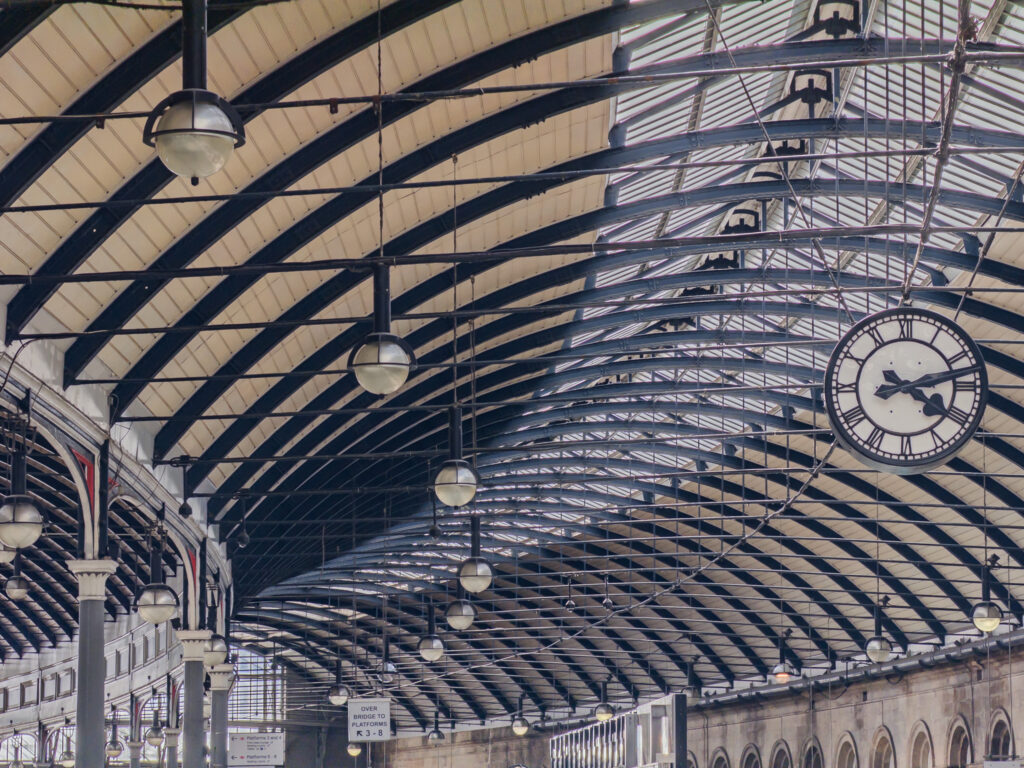
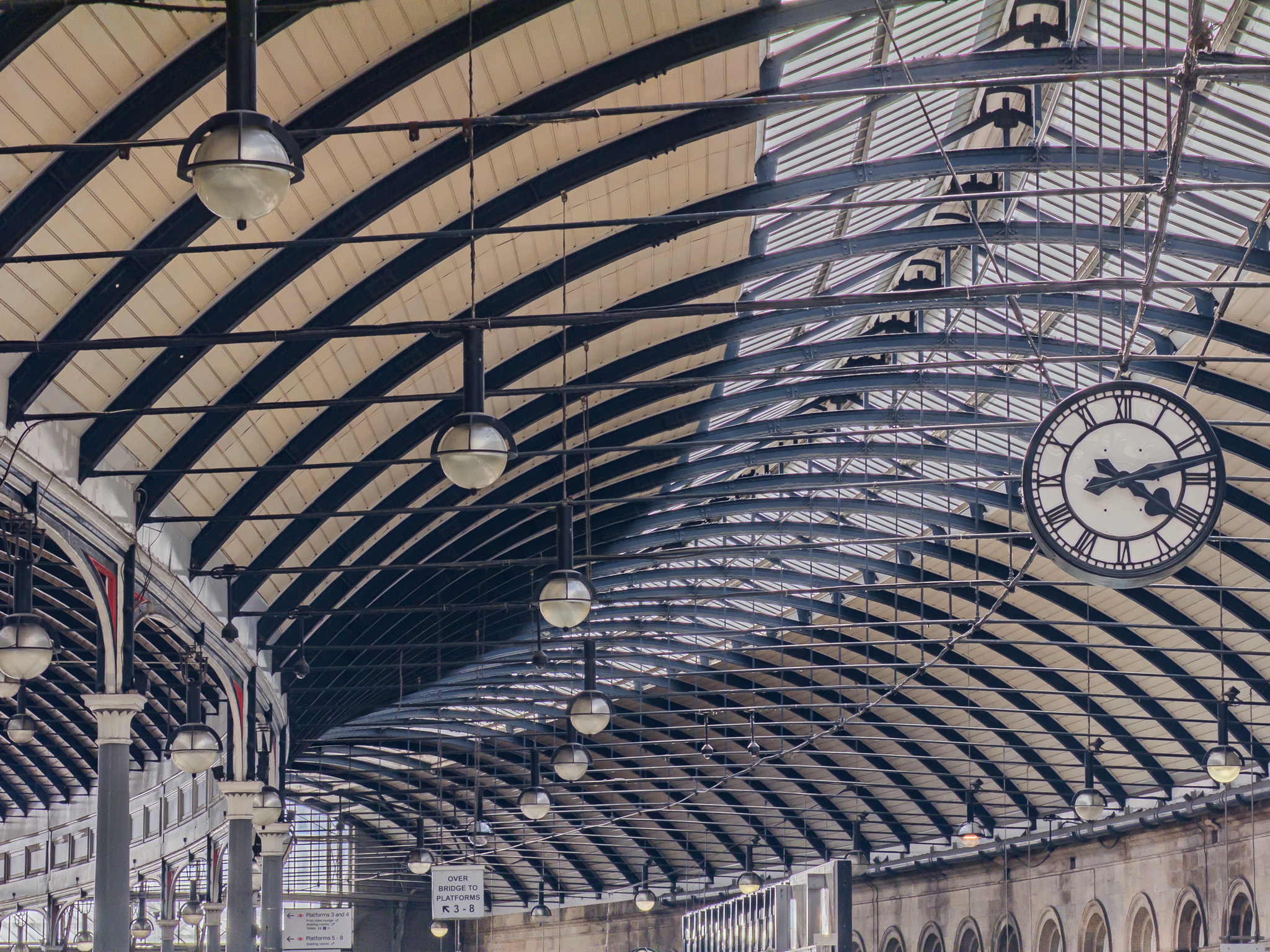
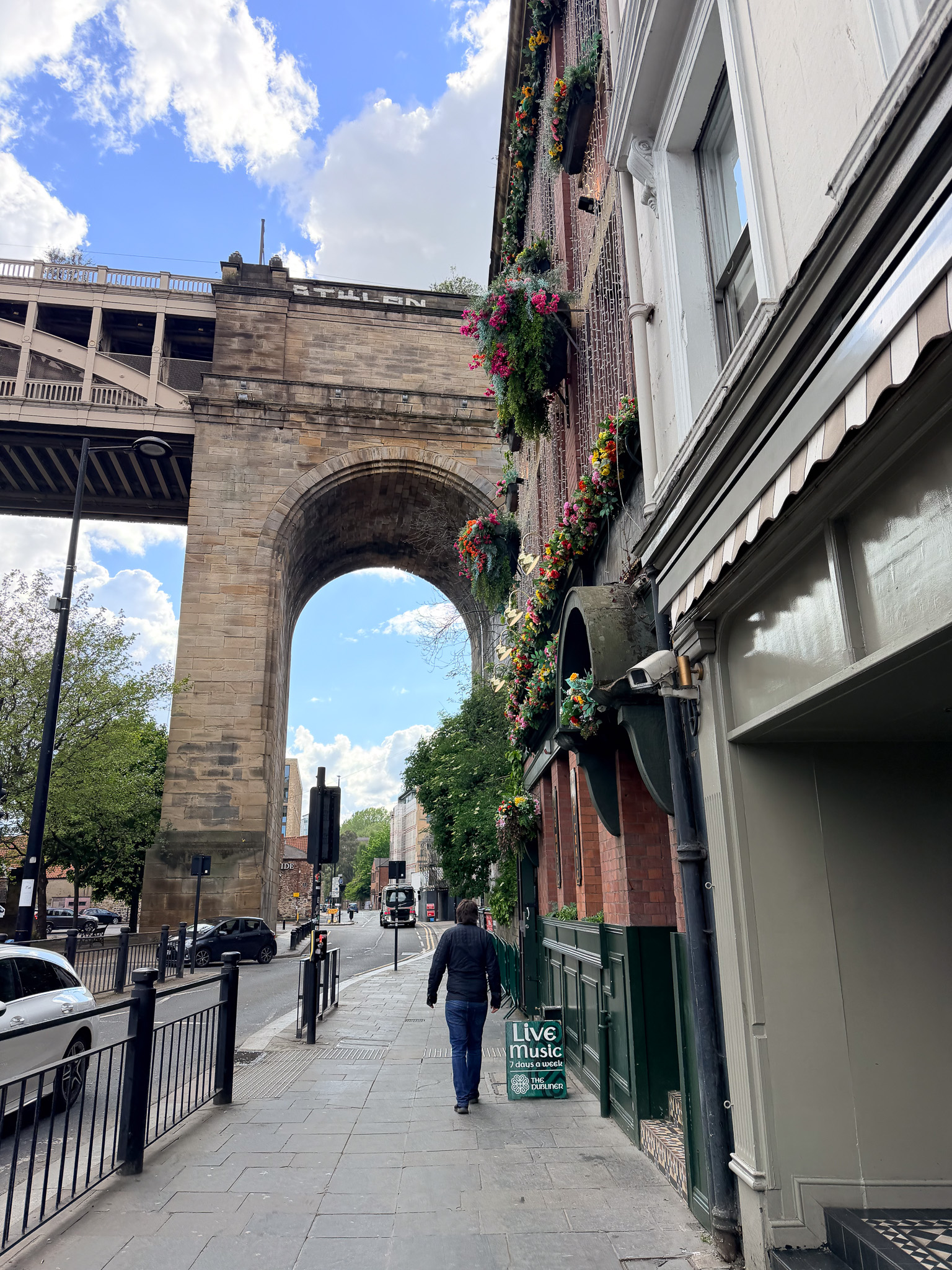
Which brings us back to Newcastle’s bridges. The River Tyne is in a deep gorge, with Newcastle on the north bank and Gateshead on the south. In the early 1800s railways were being built, but the river was a big obstacle. The majestic train station, built by railway entrepreur Robert Stevenson, needed a bridge for easy access to southern markets. The railways didn’t want to pay for the project, so they designed a double-decked structure, with tracks on top and a roadway underneath. Then they managed to get the city to pay for it, citing its great benefit to the citizenry. Still in use today, it carries all of Newcastle’s rail traffic, and pedestrians, bicycles and southbound-only vehicles. As Geordies would say, “canny“.
Newcastle now has seven bridges. The most famous, the Tyne Bridge, inspired the beautiful bridge in Sydney’s harbour. The most recent, the Millenium, is a an elegant tilted suspension design, which can pivot up like an eyelid to allow large boat traffic through.
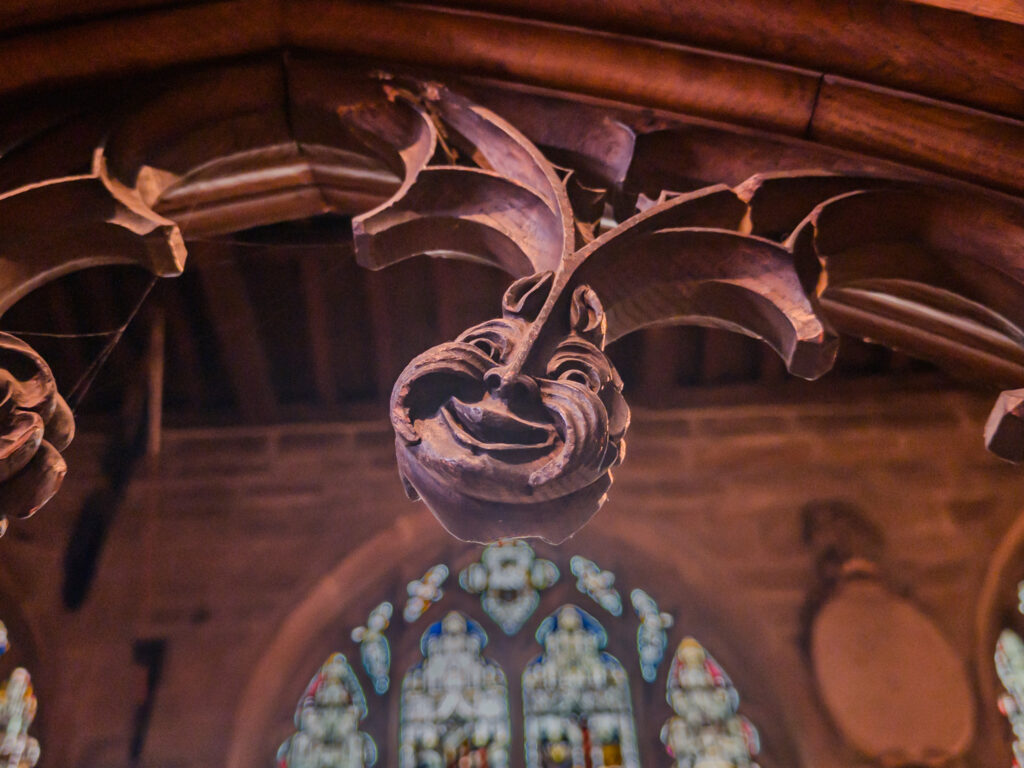
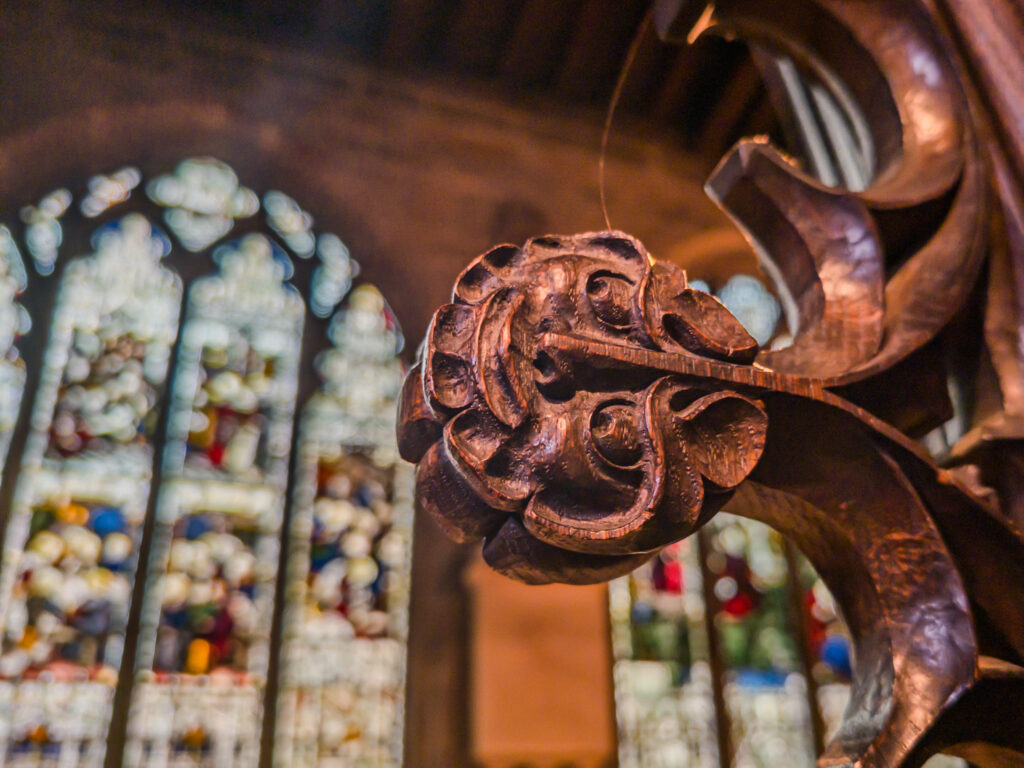
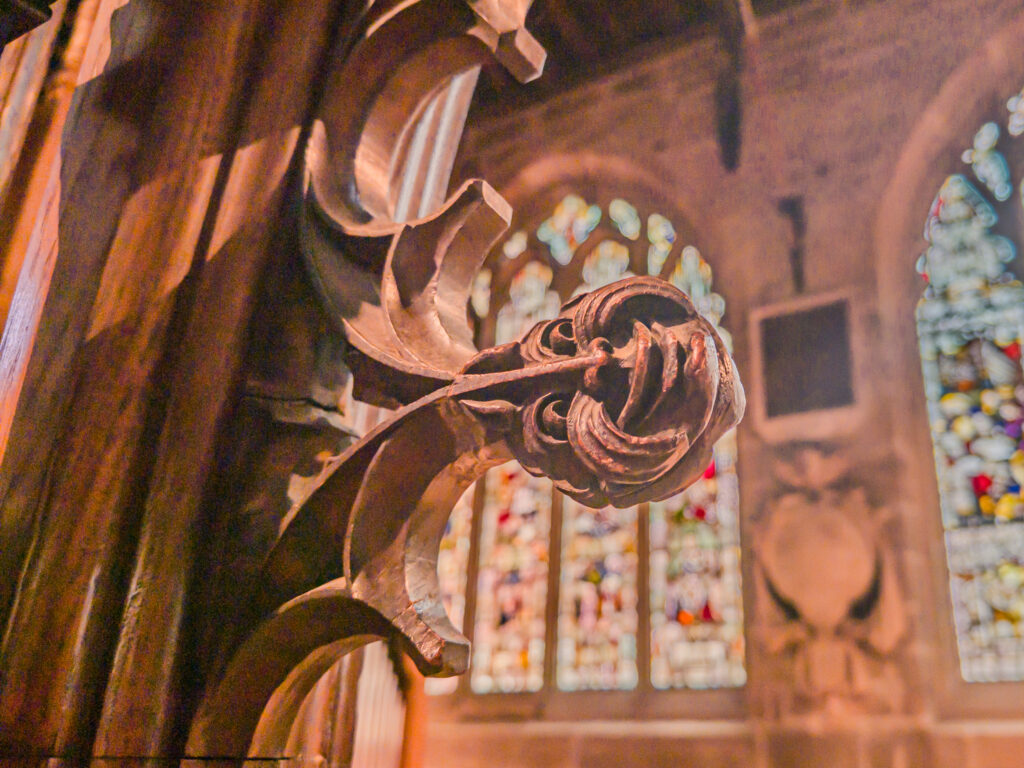
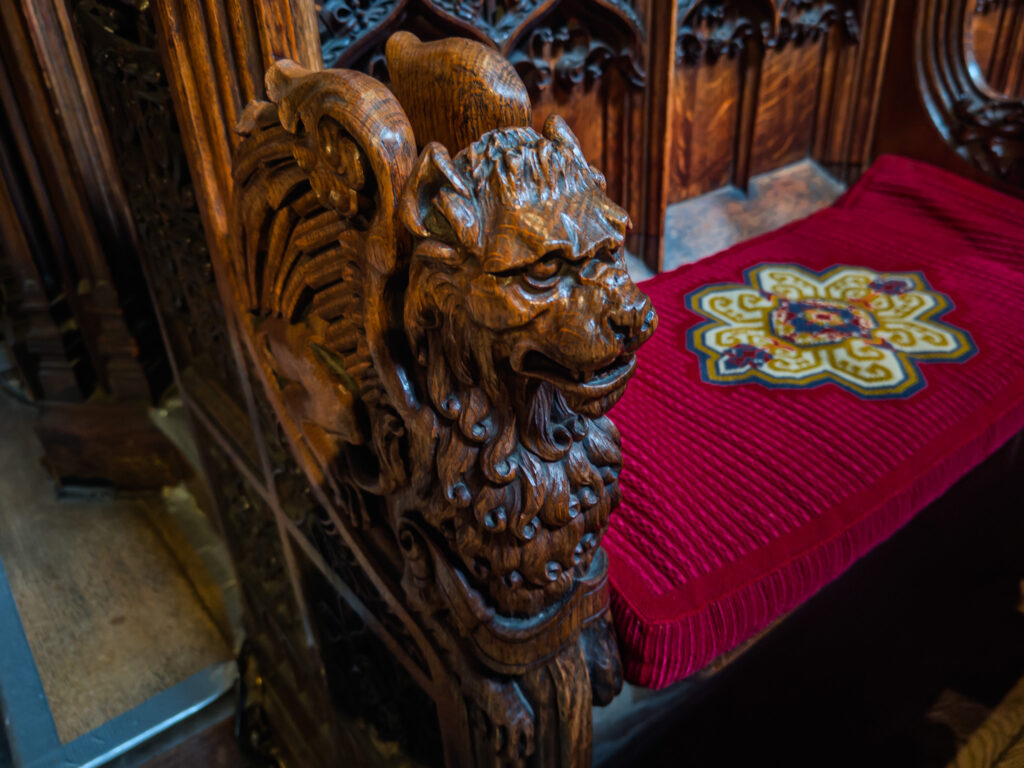
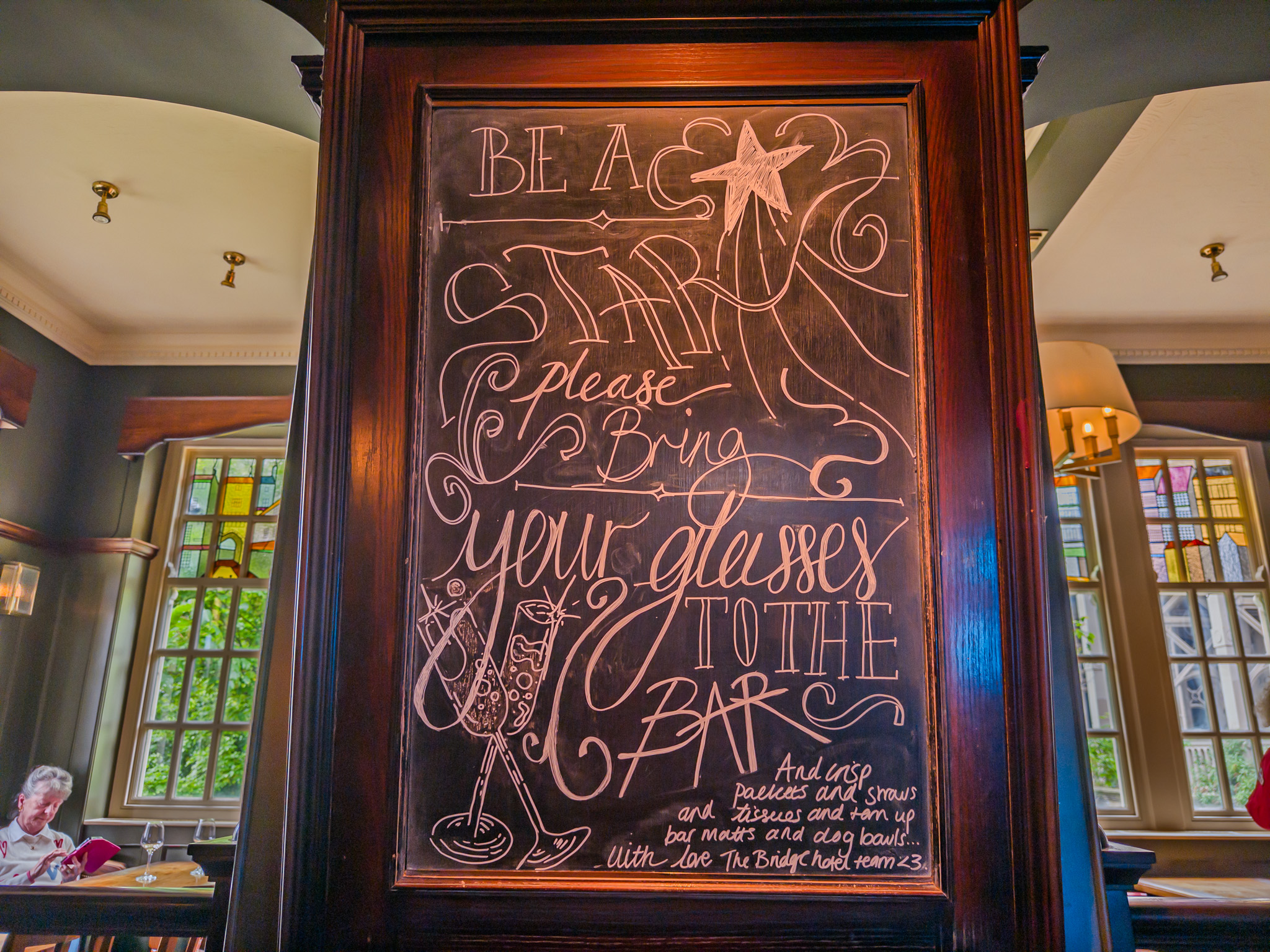
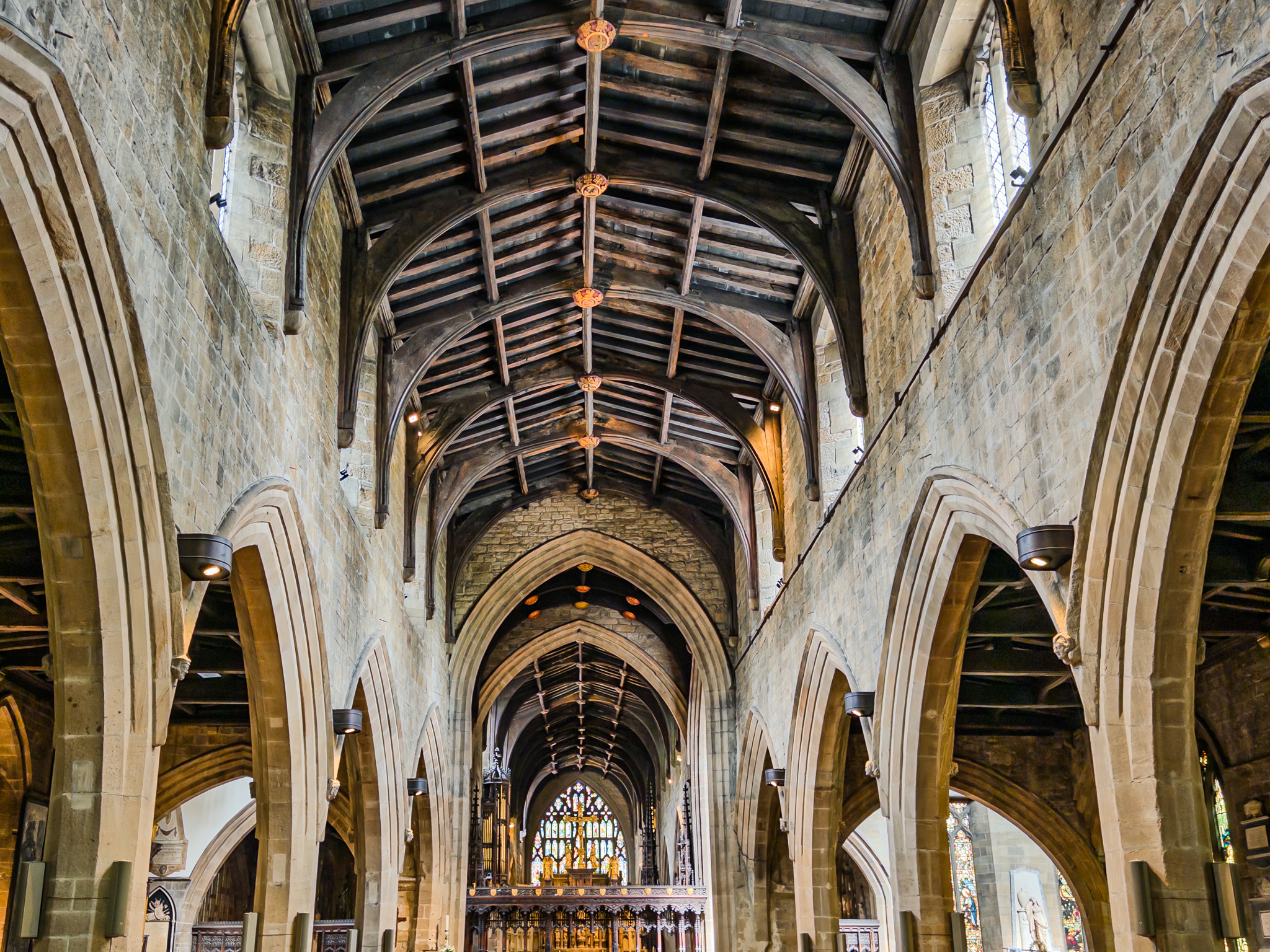
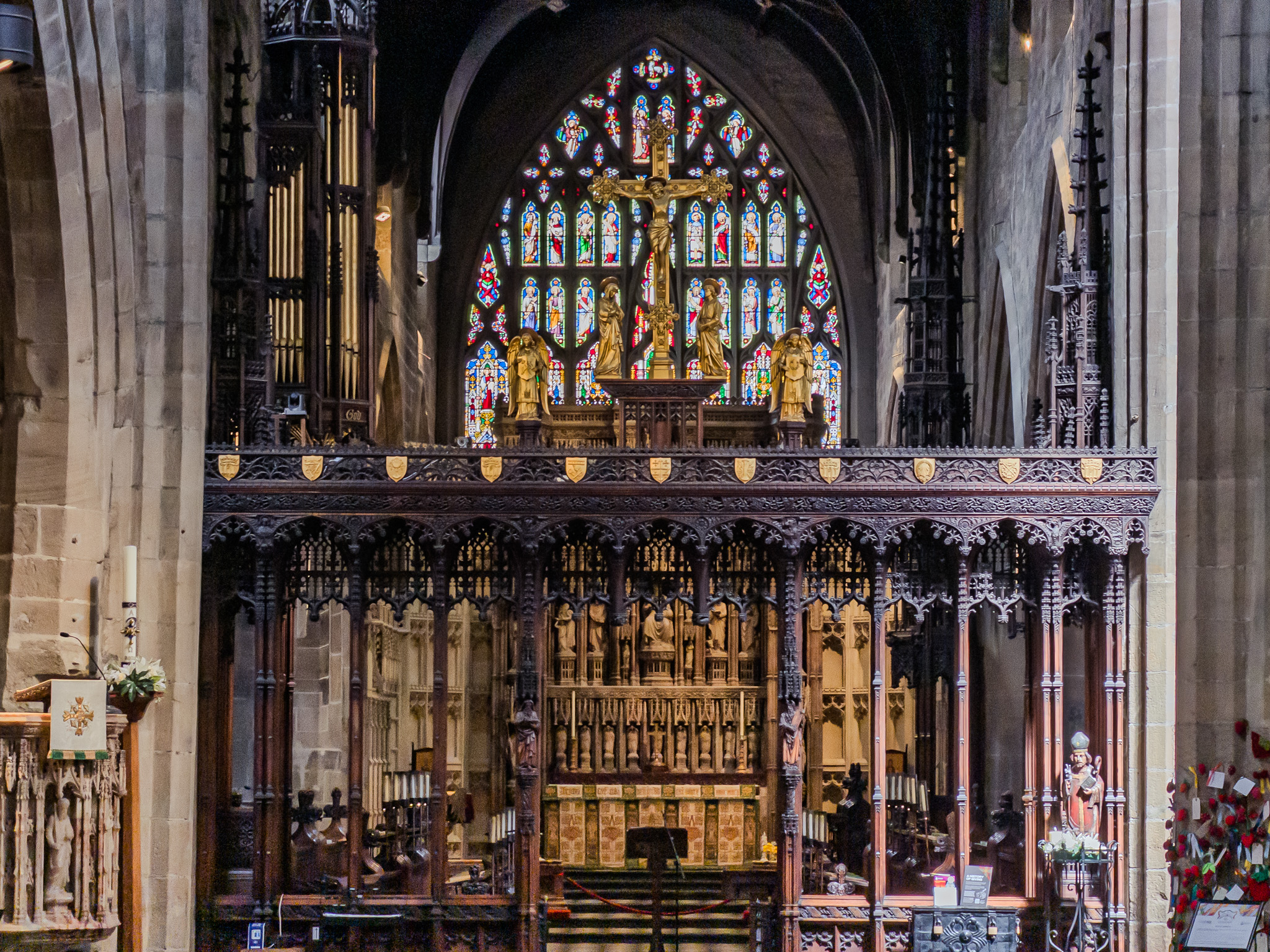
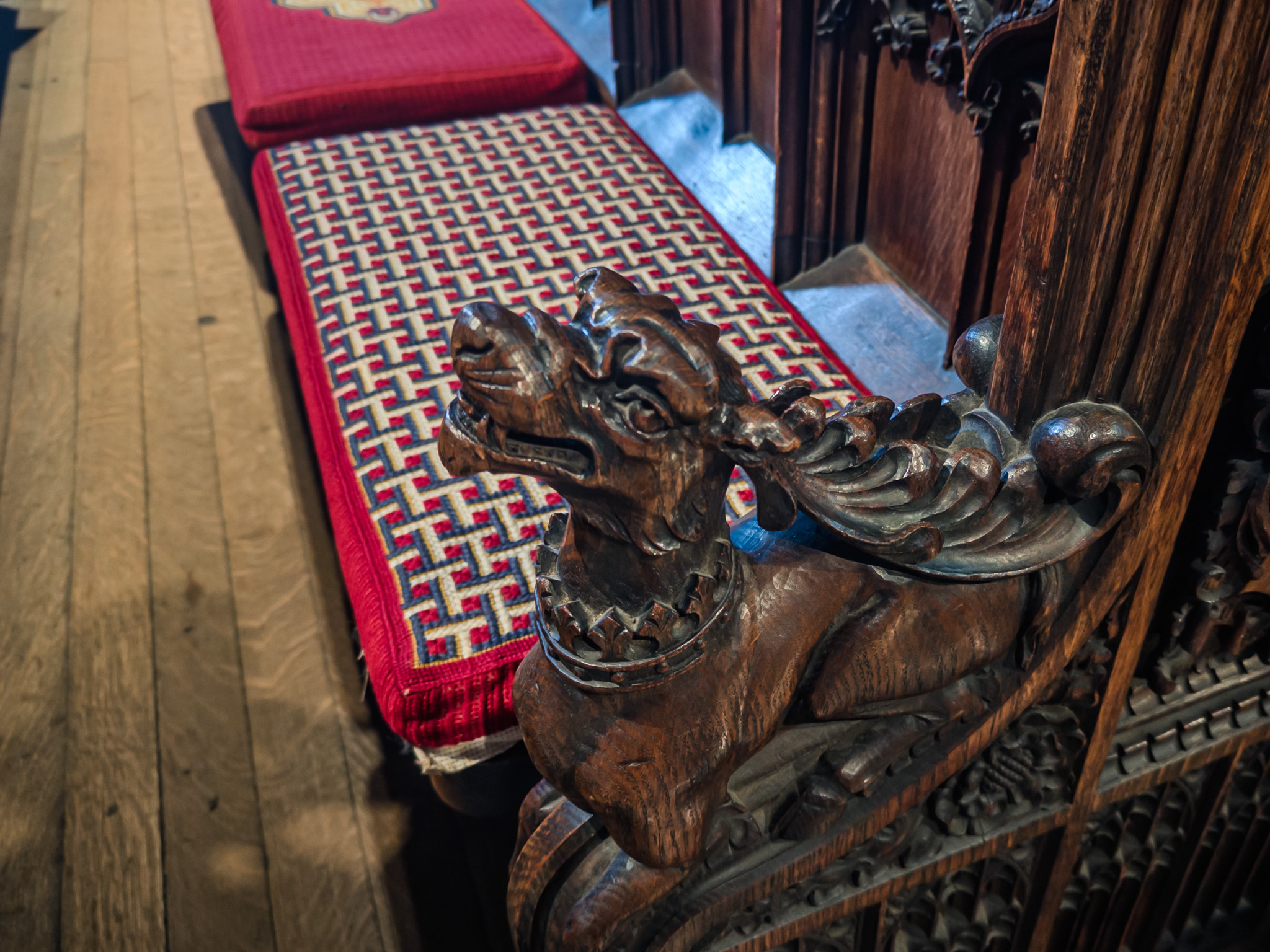
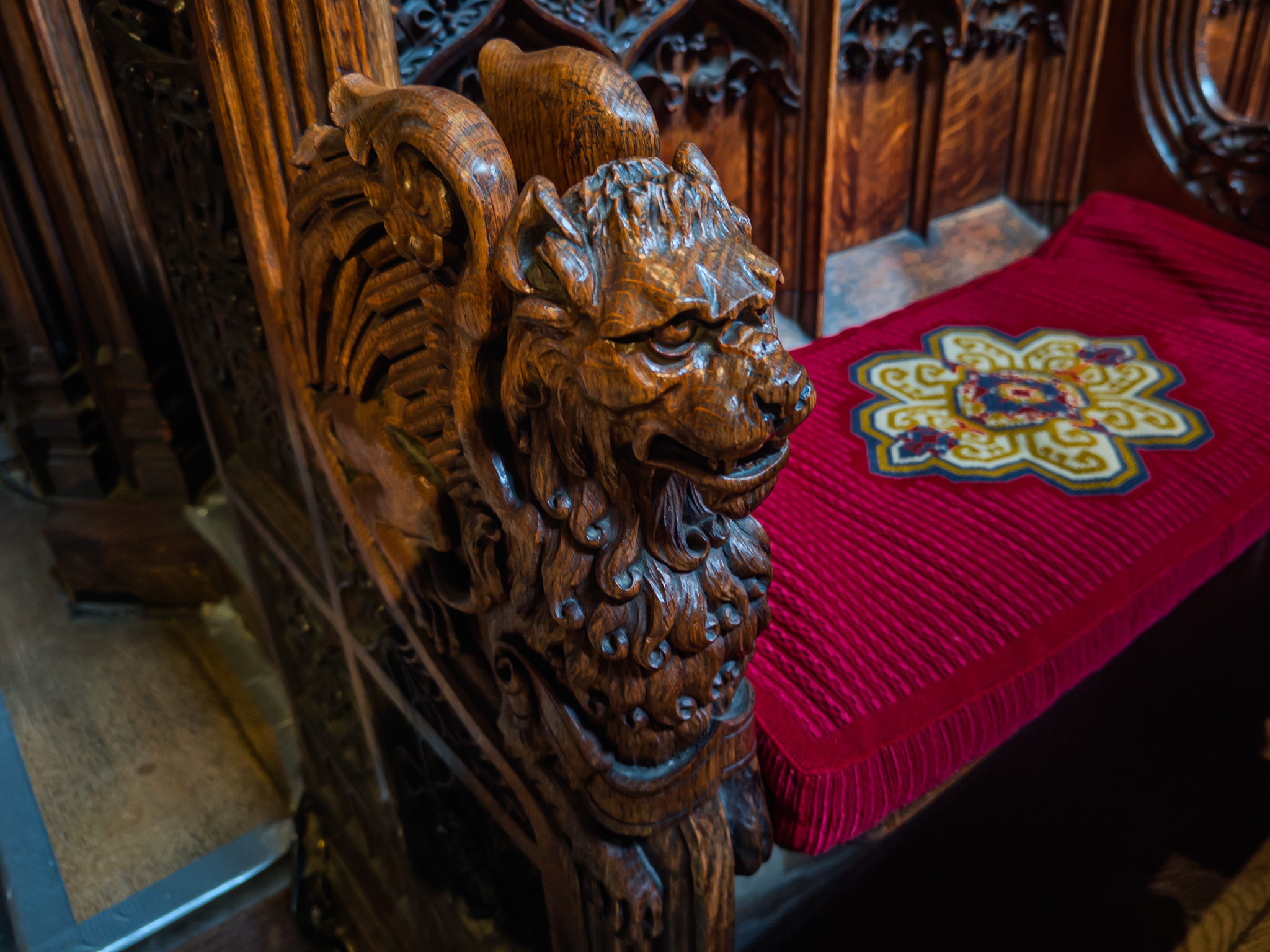
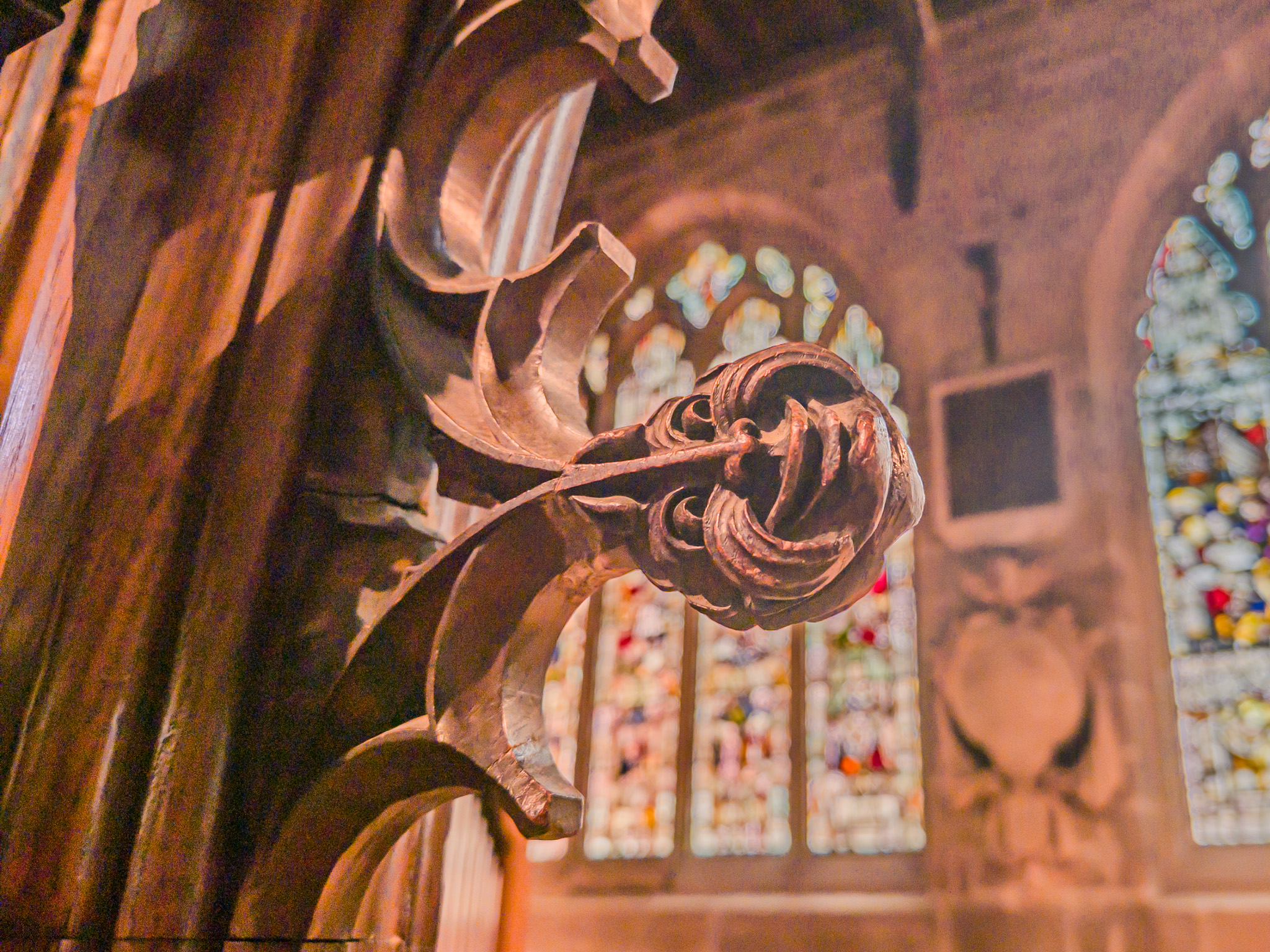
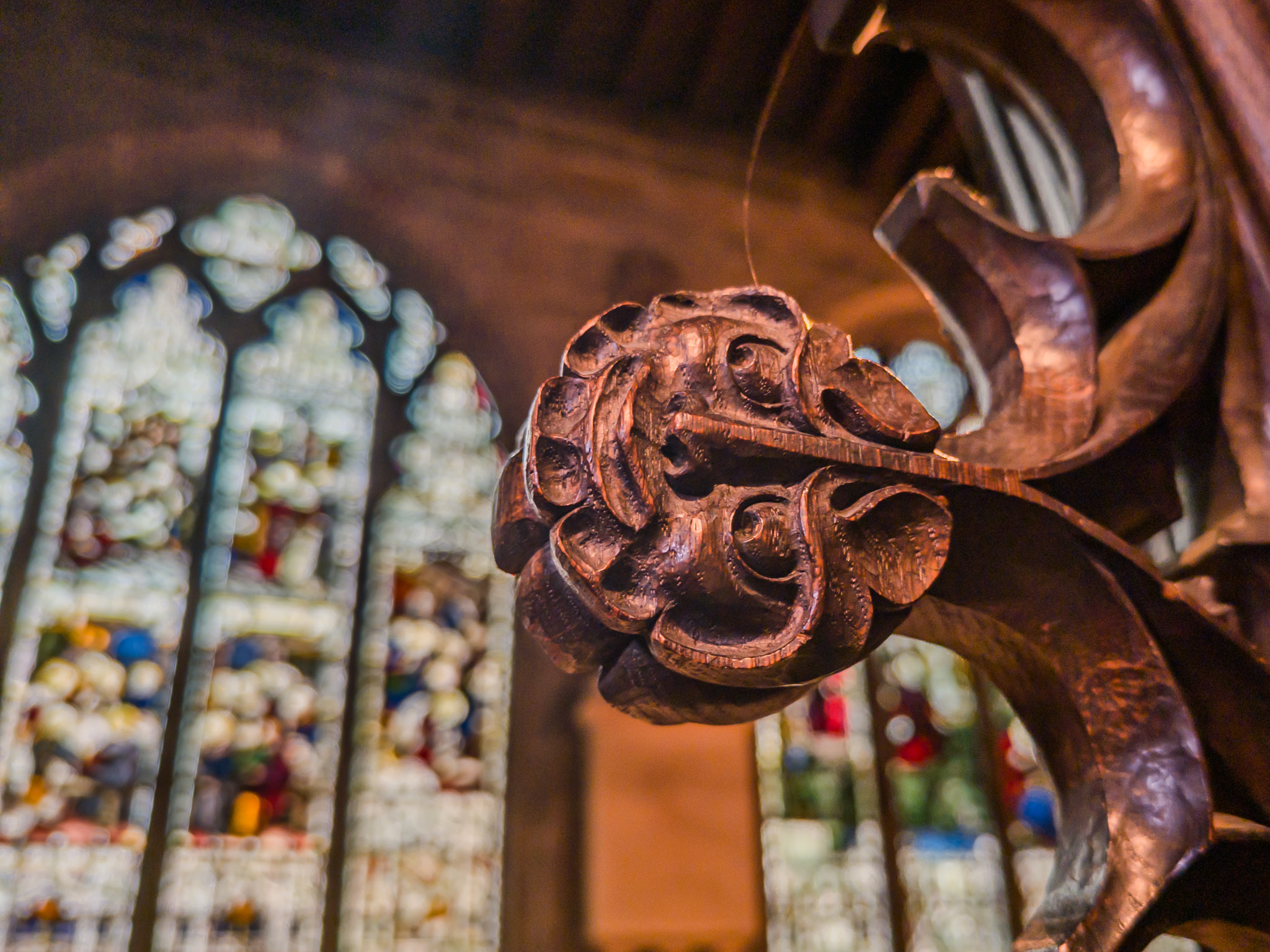
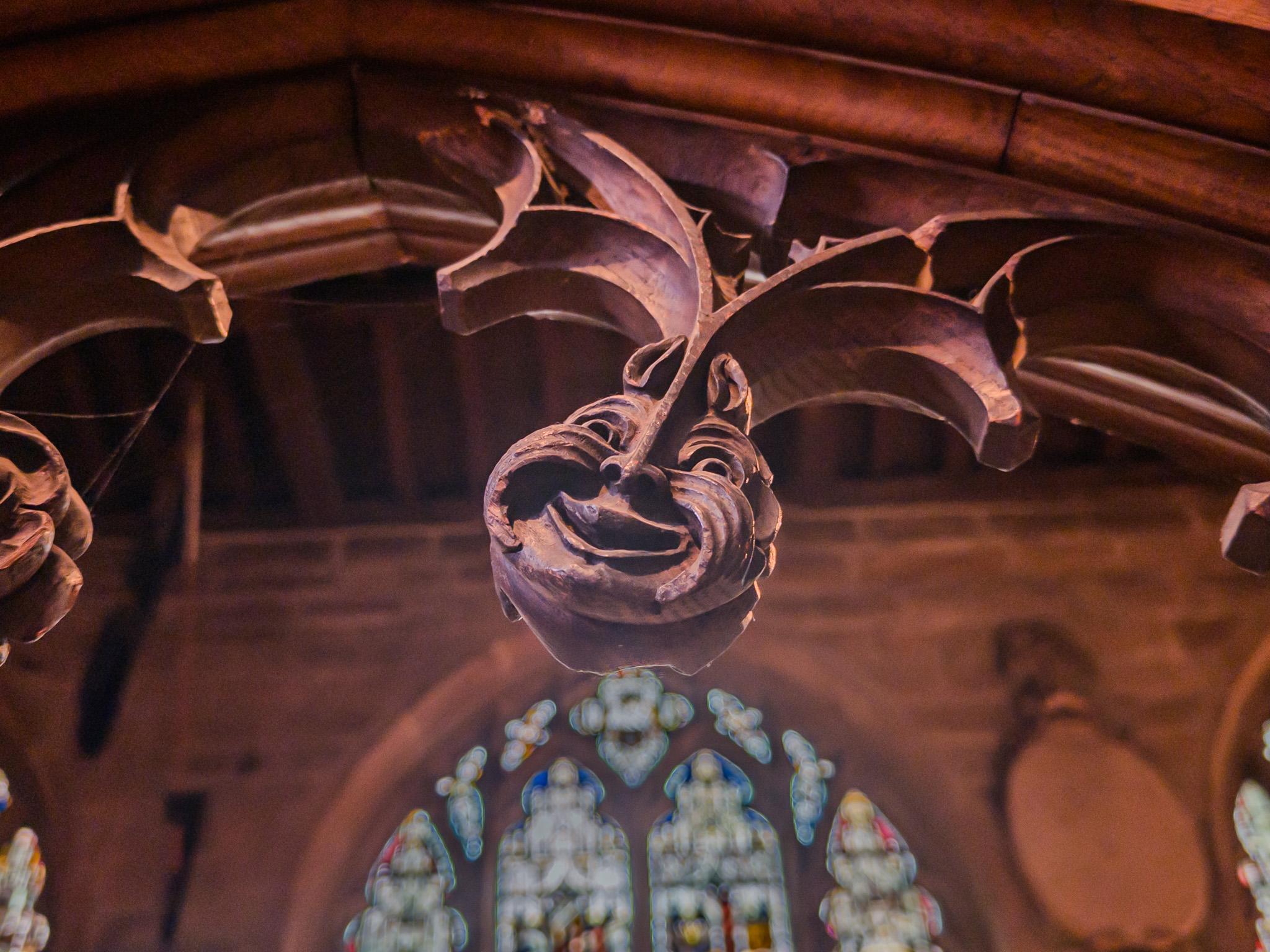
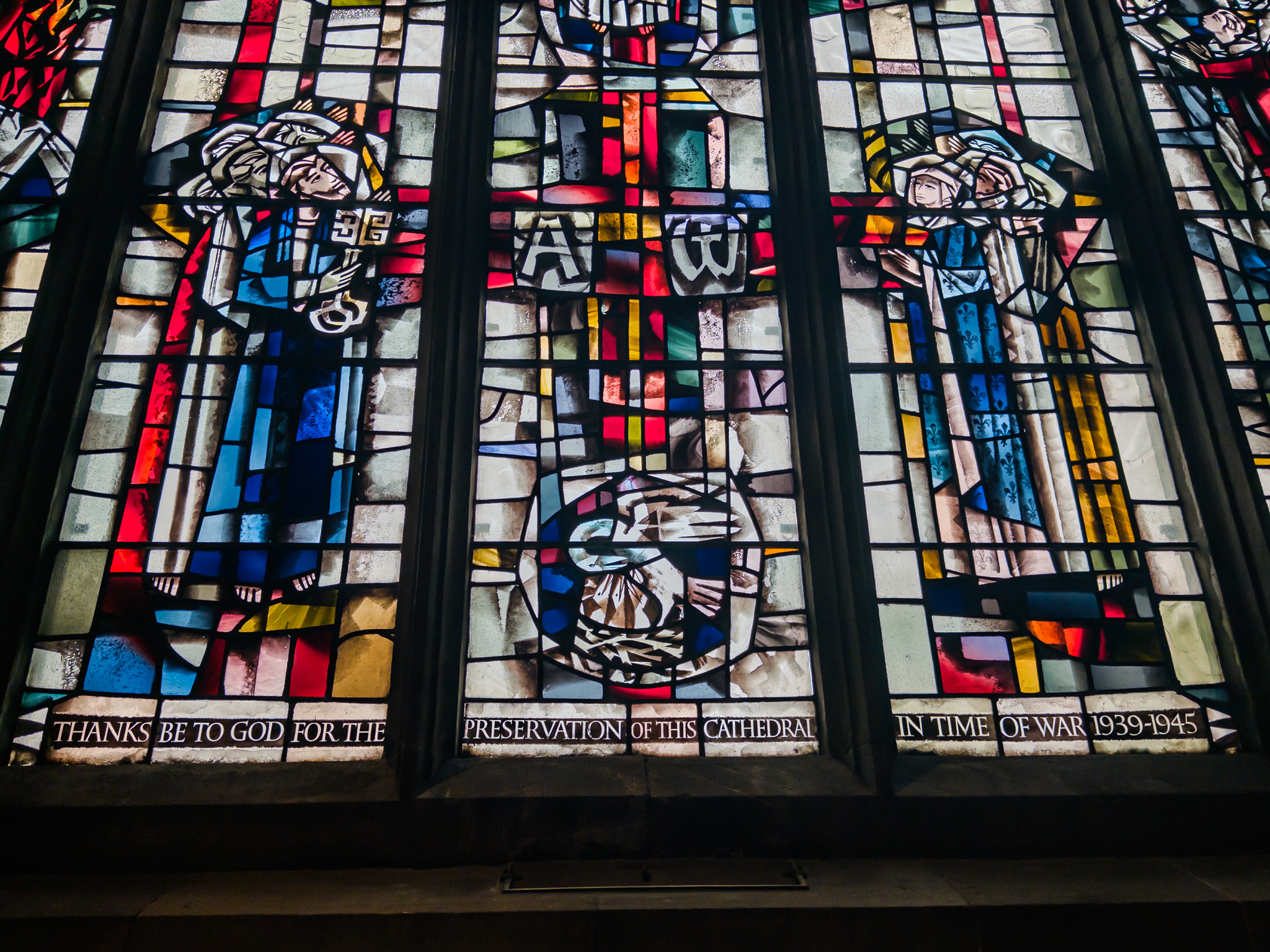
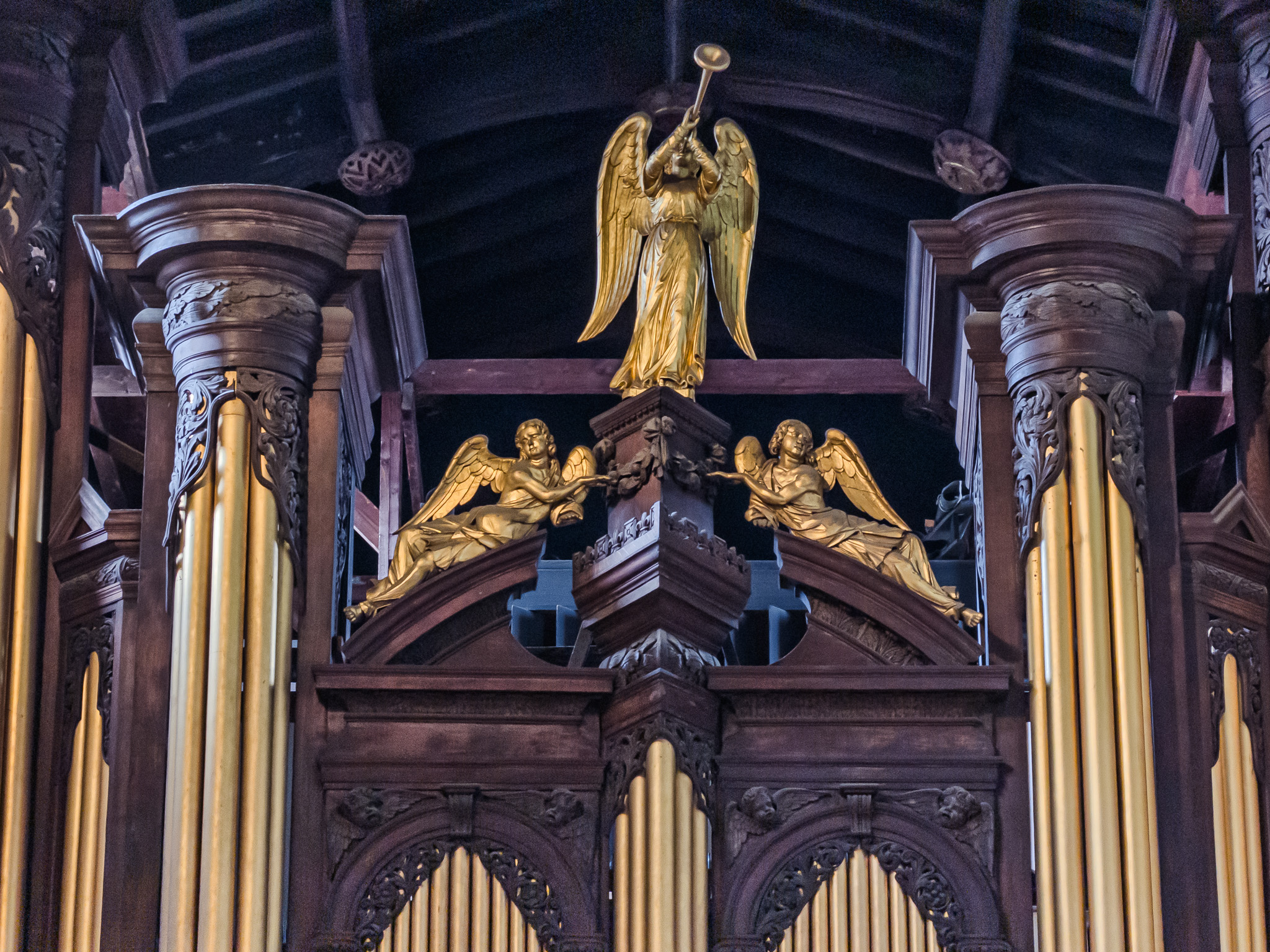
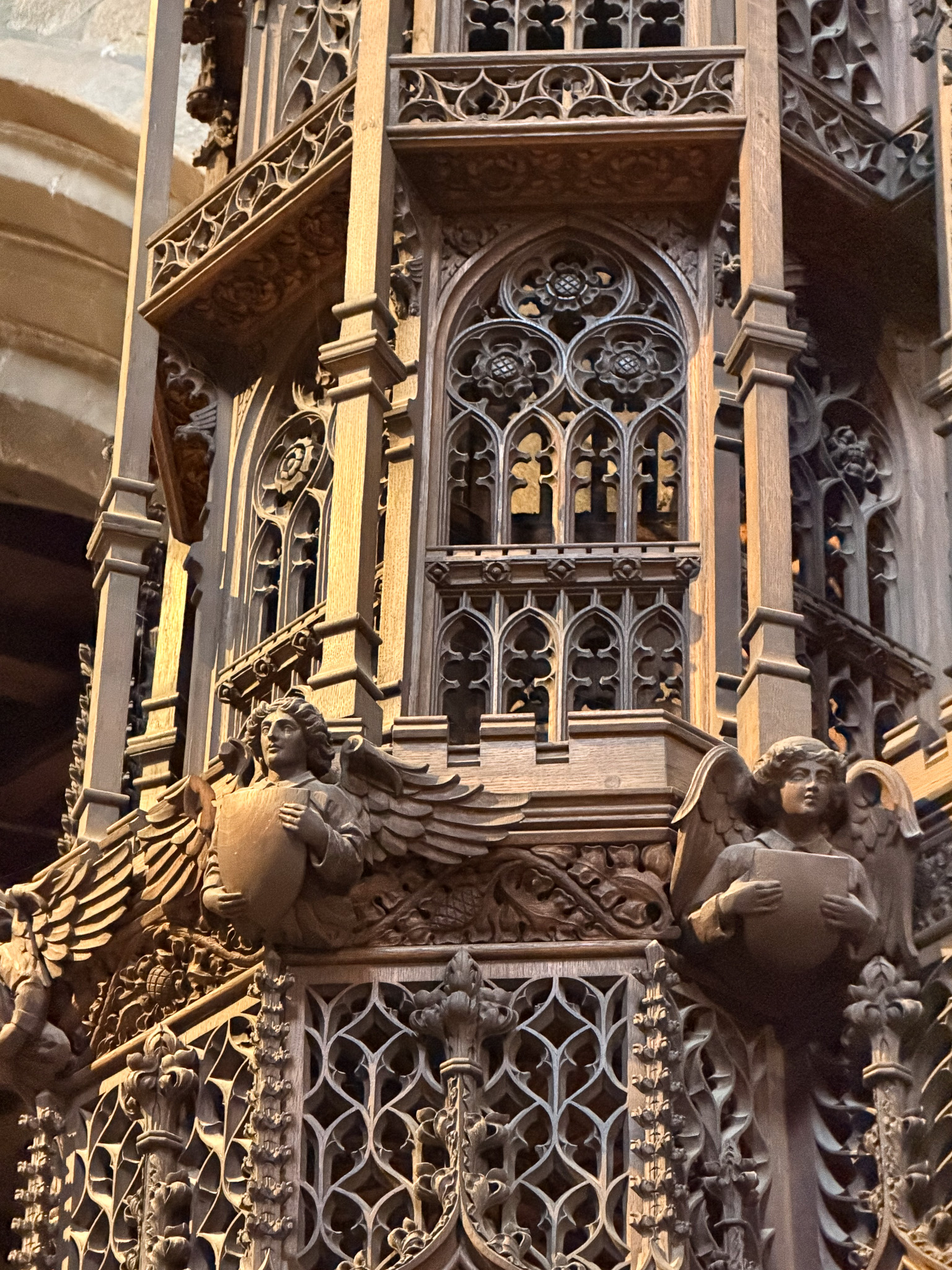
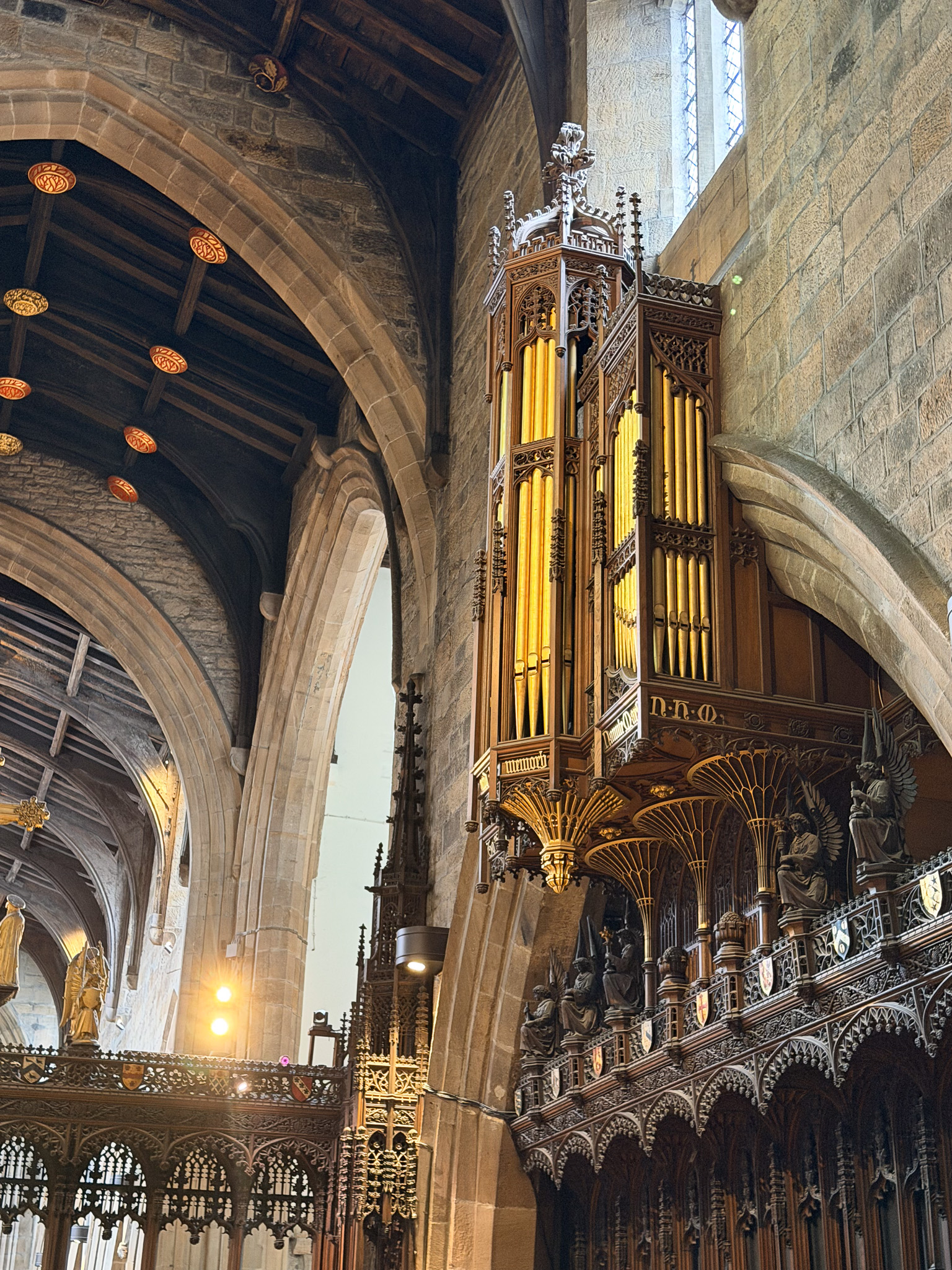
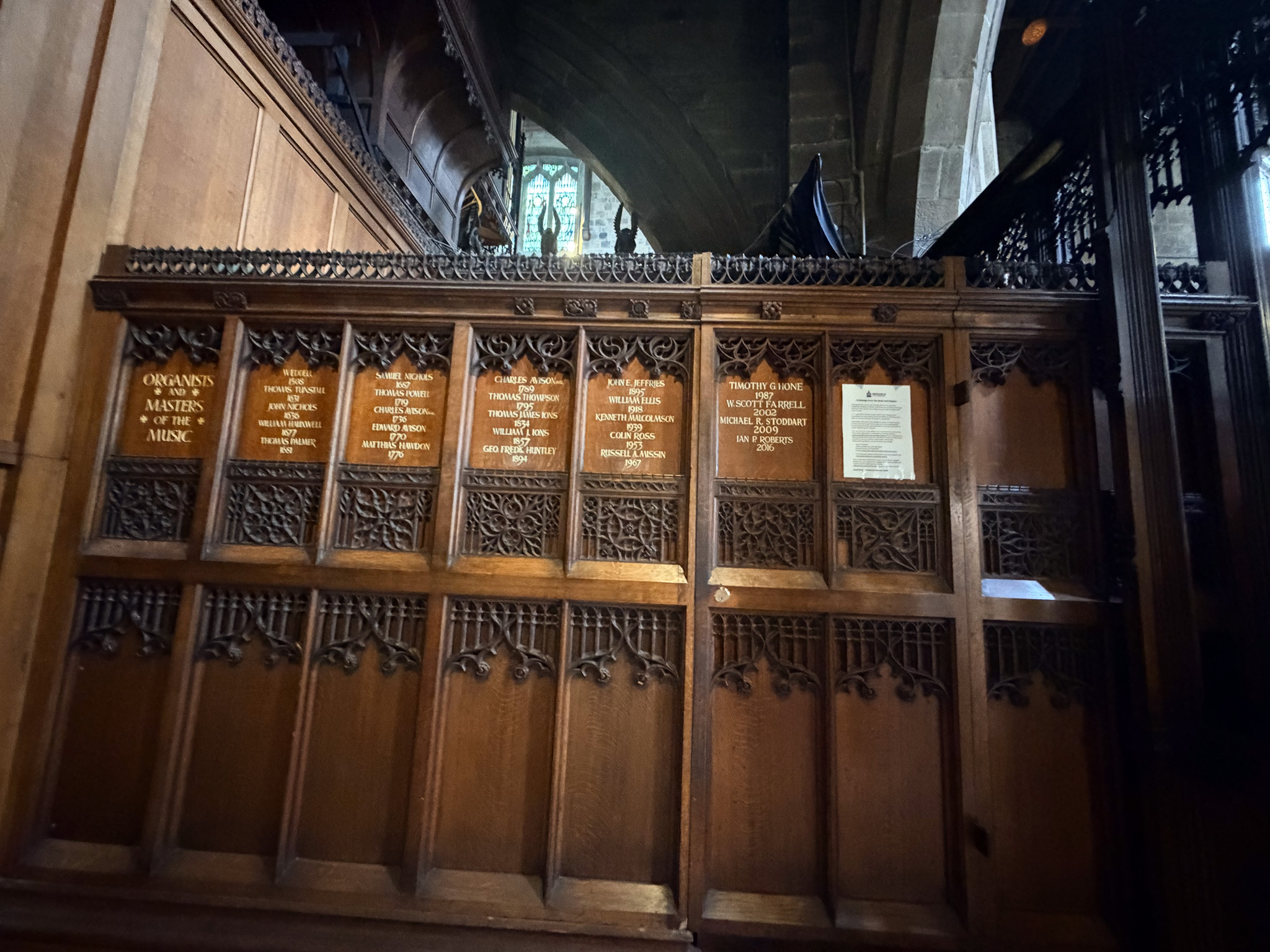
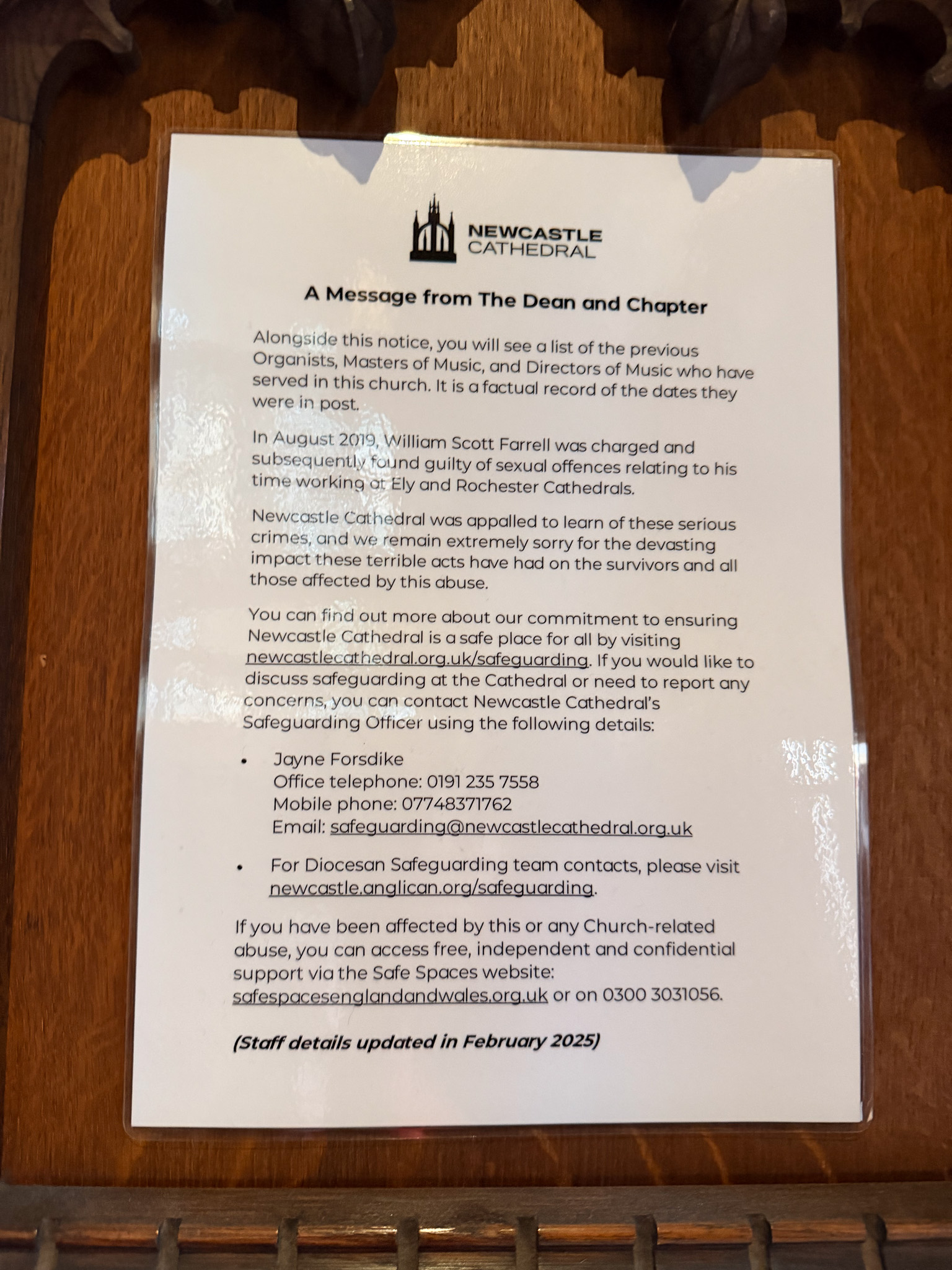
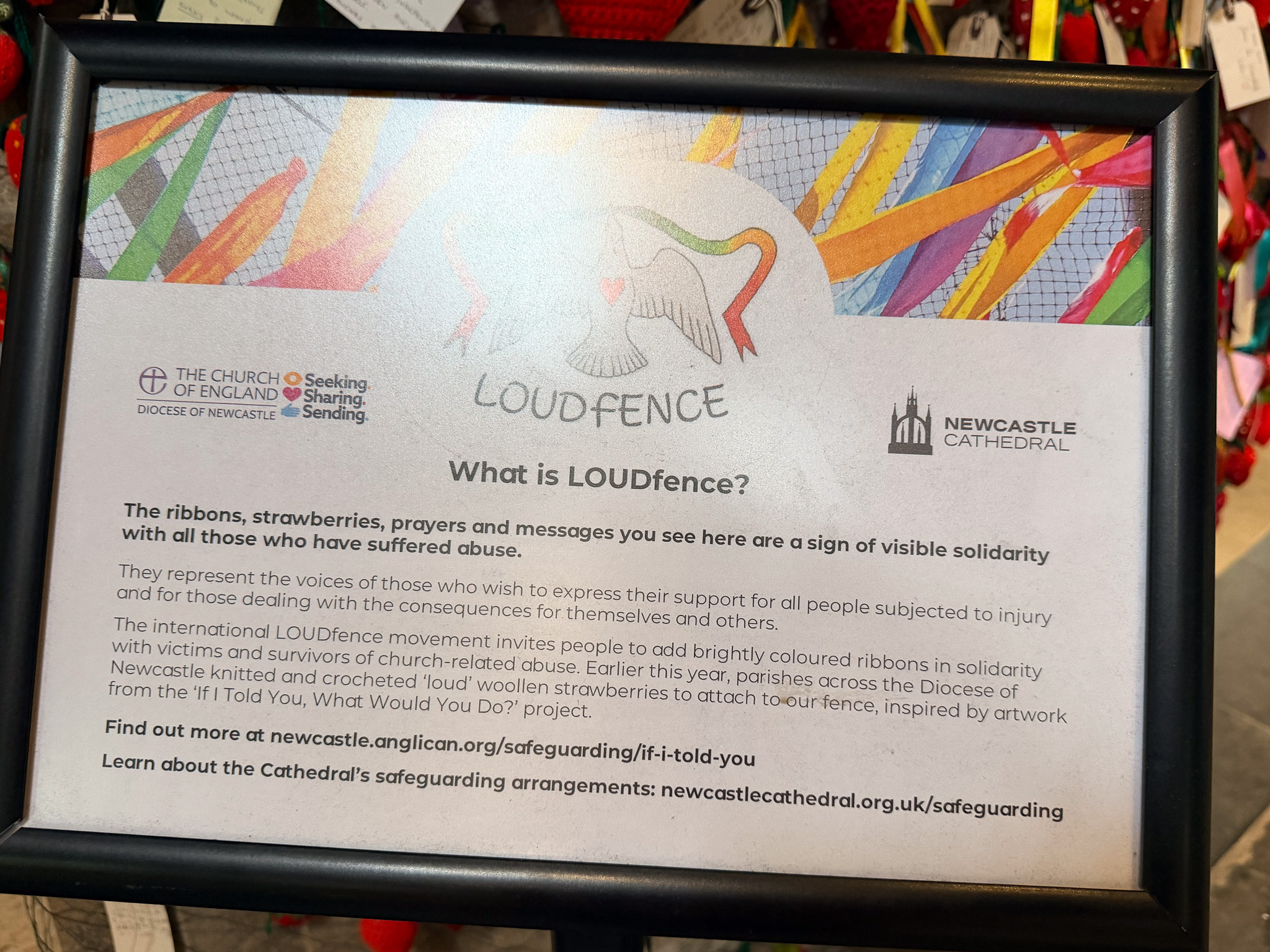
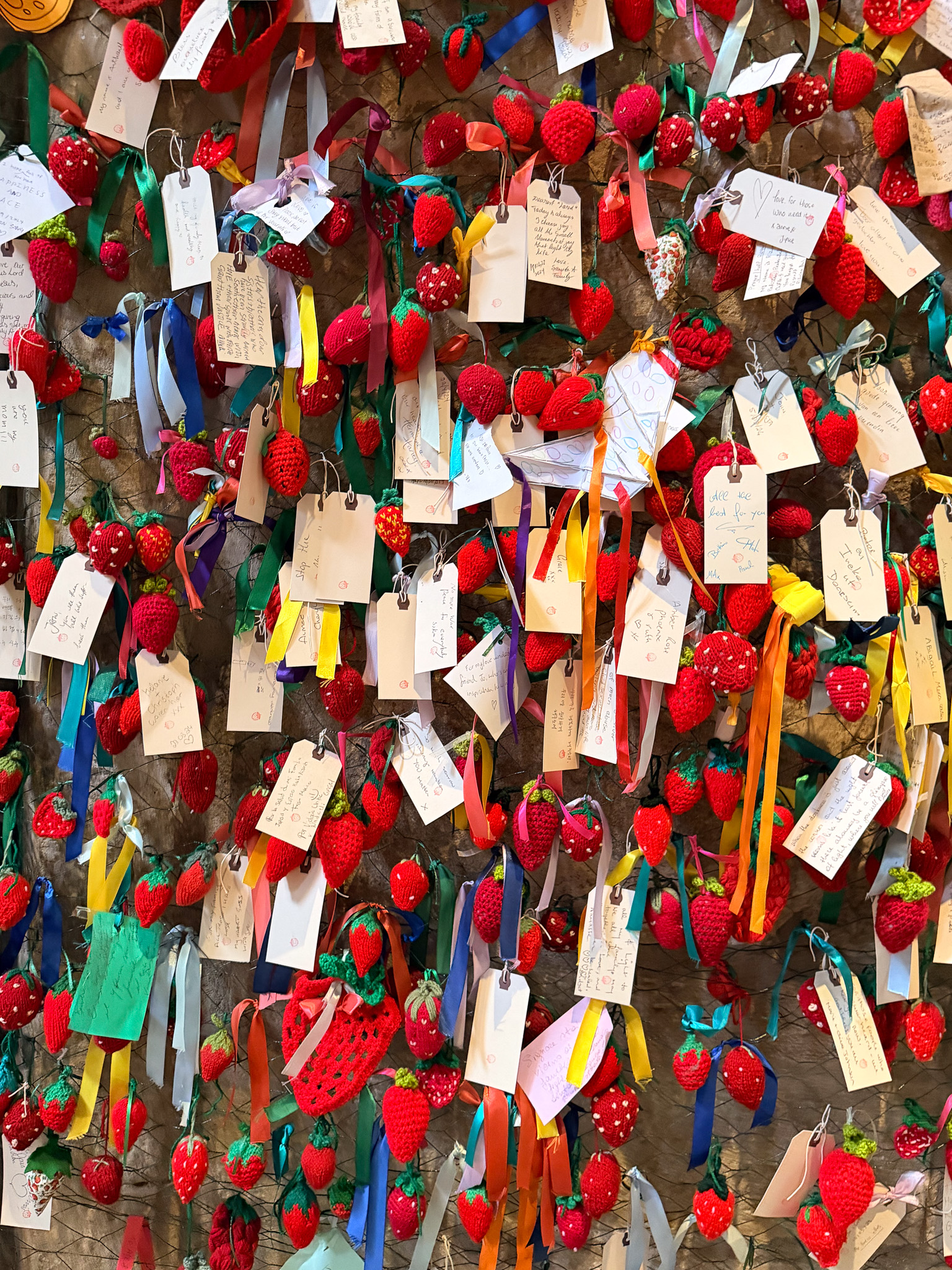
We had a look around Newcastle’s Church of England cathedral, the most northerly cathedral in England. Beautiful, of course, but we did notice some amusing carvings on choir stalls and door frames. We’ve learned this trip to watch for these. The artisans way-back-when had good senses of humour. Also, to be commended, the cathedral acknowledges abuses by staff (clergy, or in this case, acknowledging sexual abuses by an organist at another church in England) and is very public about its intentions to make amends. See photos, below.
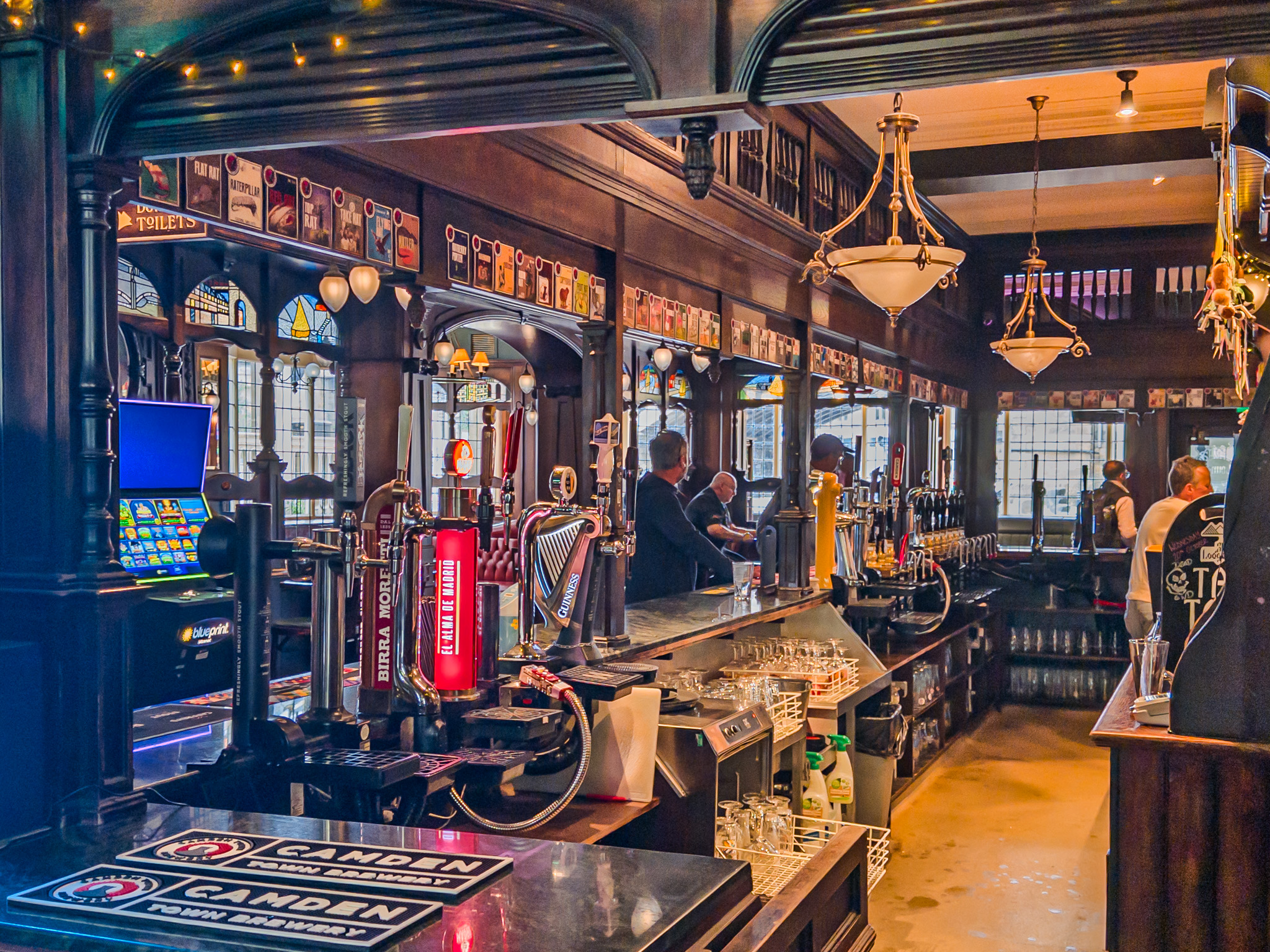
We really enjoyed Rob – “Red Beard’s” – tour, said our gratetful goodbyes to him, headed back to the Grainger Market to pick up some oat cakes and fine, British cheeses including, of course, some Wensleydale, used the loo in the beautifully restored train station bar, The Centurion (when they renovated they discovered priceless British made tiles under the plywood walls) (Muther always told me hotels and train stations had loos), had a supper-picnic in our room (staring at the beautiful bridges and the activity on the pier, below), and called it a day.
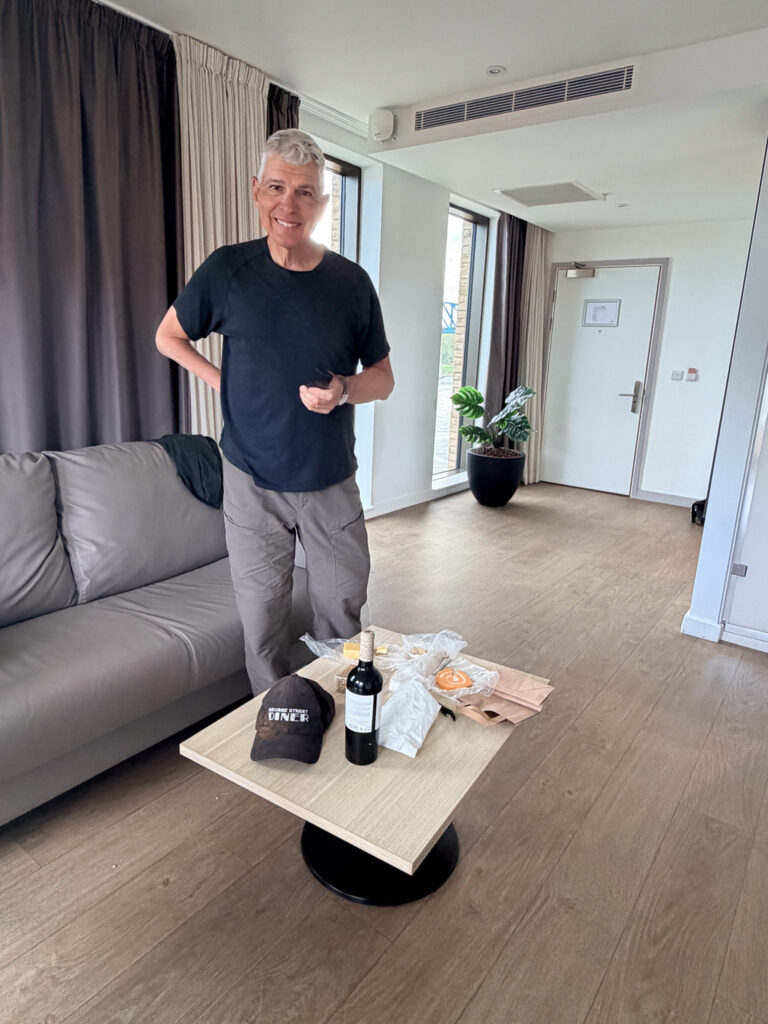
(We were also pretty chilled, it had been cool and windy the whole day and we’d been outside for a very long time.) The next day, i.e. Tuesday, we plan to ride from Newcastle to Warkworth, just under 60 kilometres, half of it along the coast. Time to rest up.
Newcastle: HIGHLY recommended. I loved the city, I loved the gritty, take me or leave me energy. There’s a sense of integrity about this place. I hope we return.
Durham to Tynemouth to Newcastle: 61 kilometres. 20,000 very hilly, chilly steps in Newcastle over two days.
Battery running low. Your escapades are so interesting. I guess I must plug in while in use. It’s great you were so pleased with Newcastle. Your accommodations looked really ujpscale. Well done. Stay warm and safe and “off you go”❤️
0
0
Great hotel. The bridges look like they are set in Continental Europe more than in Great Britain. Same goes for some of the arched, glassed in venues. Milan.
0
0