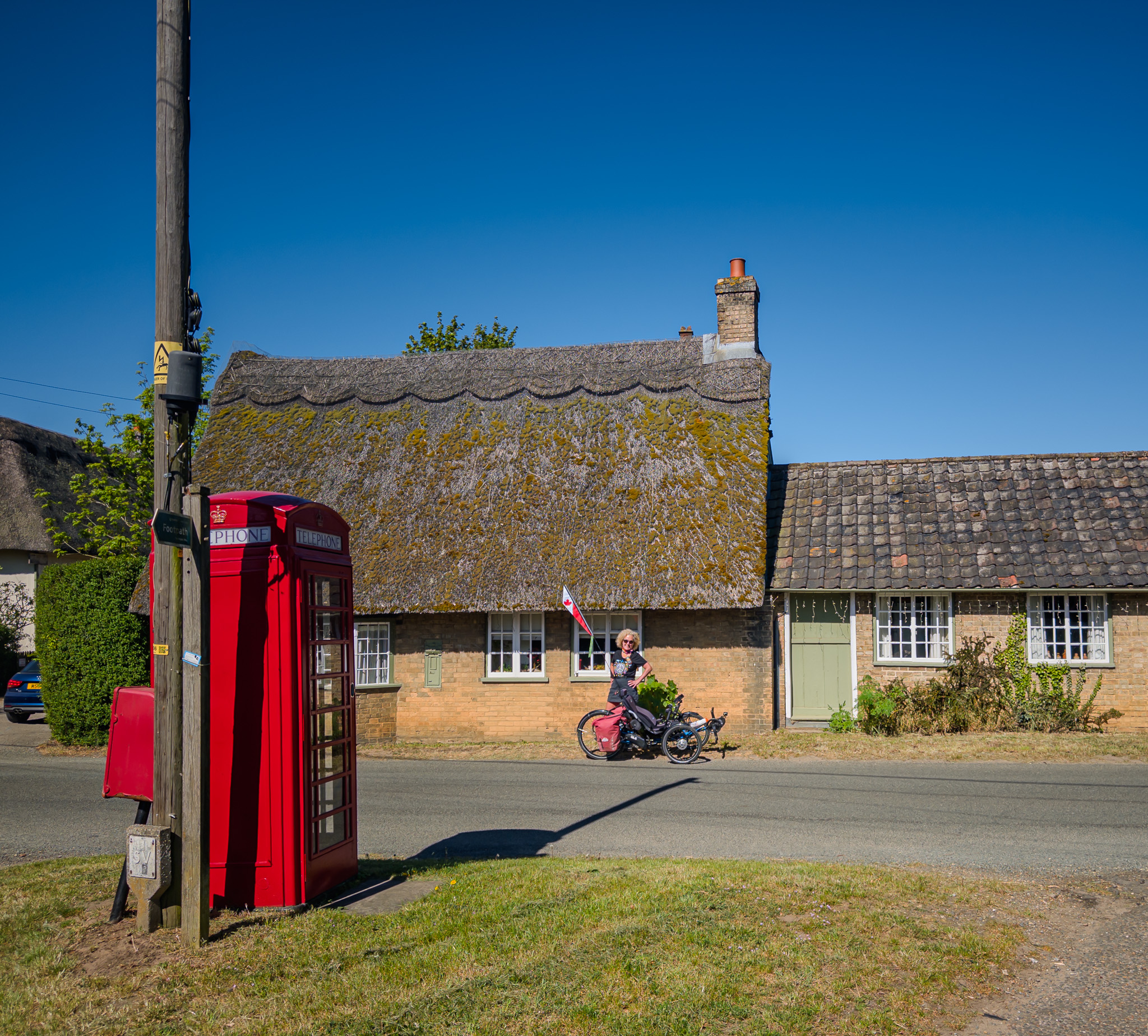
Friday May 1st was a gorgeous clear morning and we absolutely loved our ride out of Bury St. Edmund along bike paths populated by parents walking their young children to school. We’d left early – 8:30 – because we had a long ride (73 km) ahead of us. A few hours into the ride we stopped at a bakery in Attleborough and talked to a number of people who were very curious about the bikes. Fortified by cheese buns and Empire cookies, we pushed on. We stopped to mail a postcard in the most British of locations (see photo) when we finally saw a mailbox. N.B. there are fewer and fewer mailboxes, and we’re sure we’re not seeing as many Post Office red vans tootling around, anymore. Small wonder, that: to mail a postcard internationally is about 3 pounds ($5CDN!!!)
About 20 km outside of Norwich we ended up on a super safe bike path designed to be the approach to town. No complaints there, except it went on for an awfully long time (well, 20 km, as I said) and it was right beside a very busy highway. Noisy and boring. Harrumph.
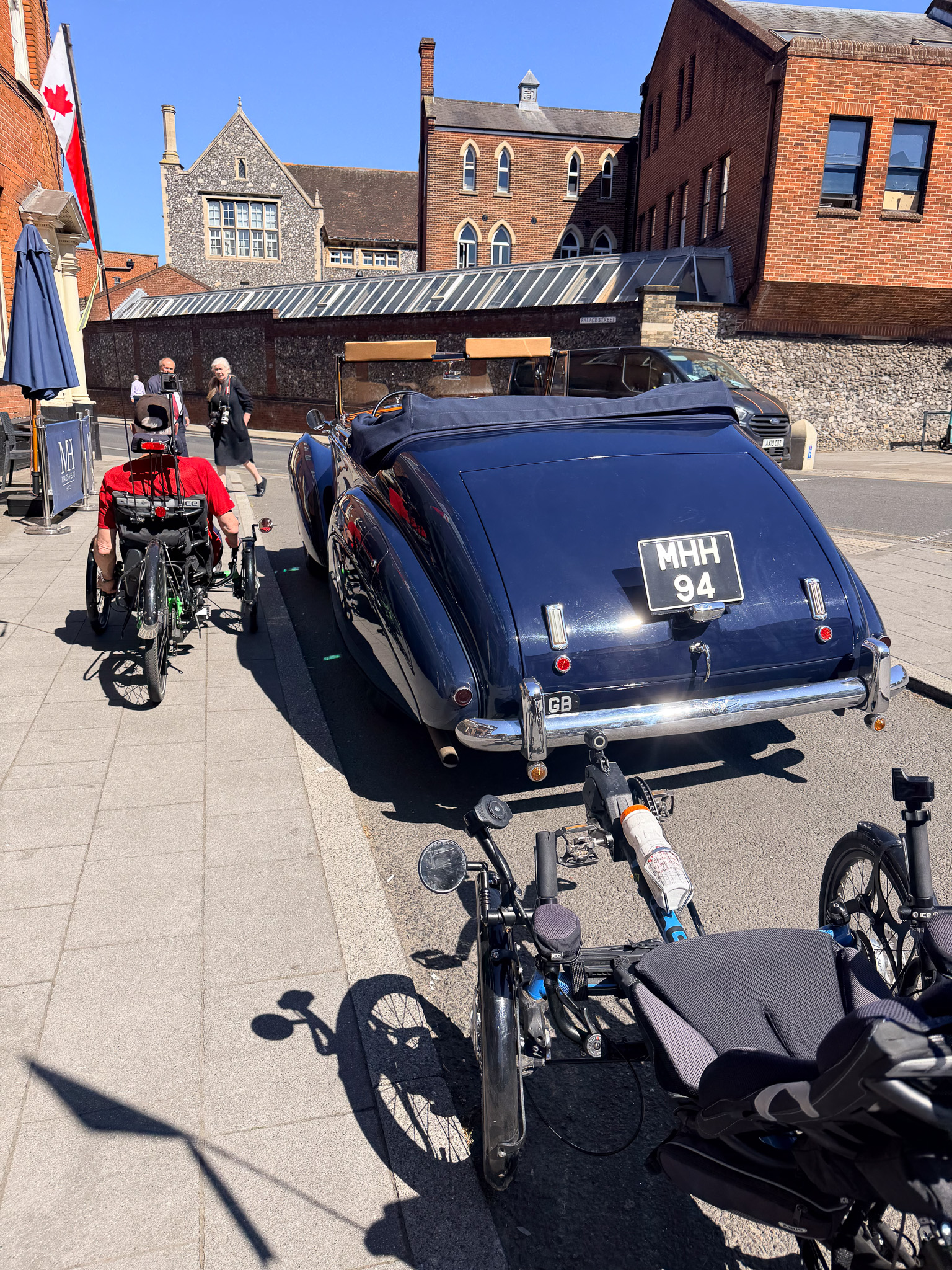
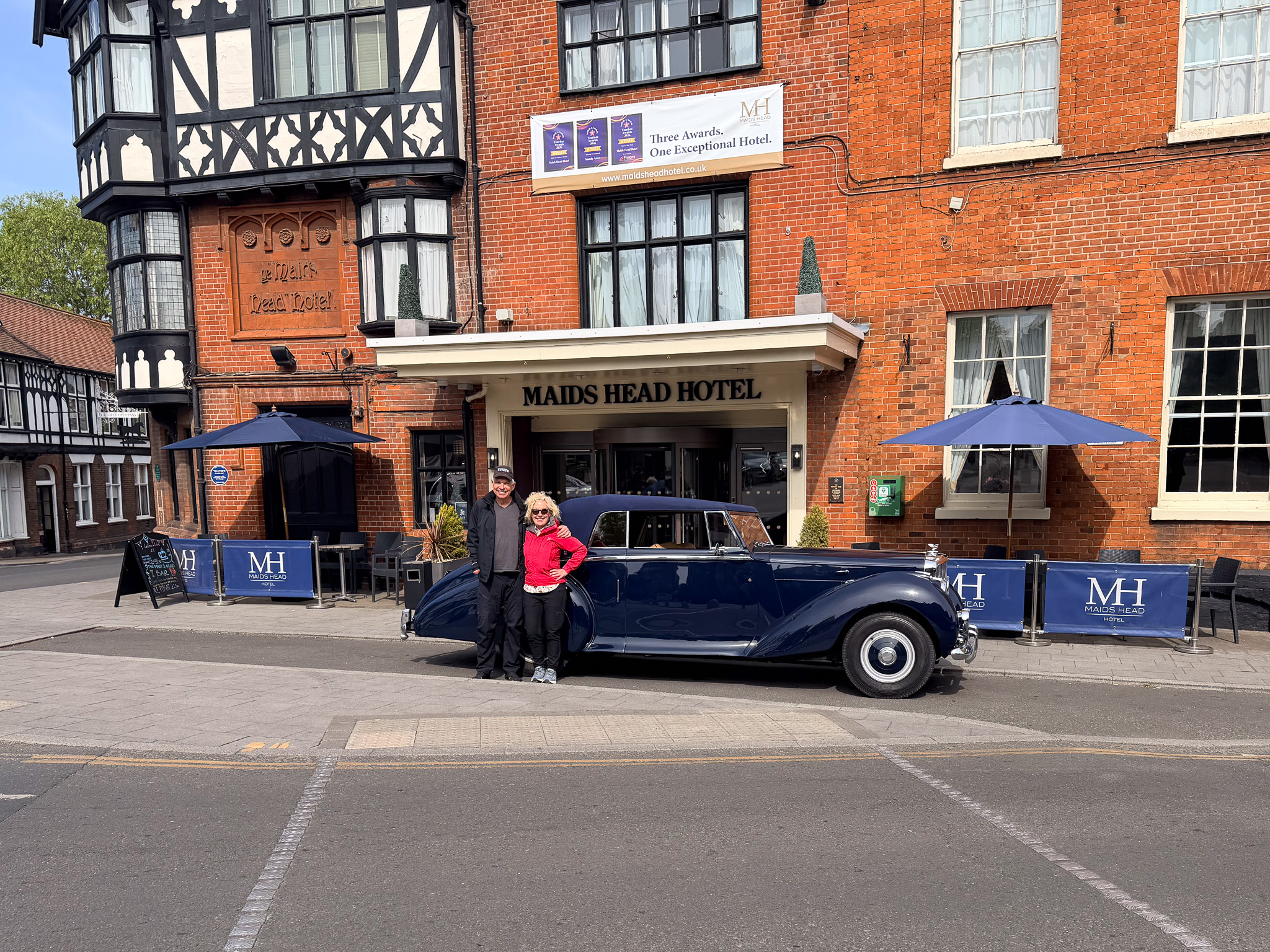
We knew we’d arrived at our hotel – the “Maid’s Head” – because their (advertised) Bentley was lurking out front. The owner of the hotel owns 3 of these beauties in Norwich, and 2 at his hotel in Cambridge, and guests at those hotels can enjoy complimentary rides around town in them so we booked ourselves a ride with “Nick” – the Bentley driver – for Saturday morning.
But, first things first. We’d just ridden 73 km in hot sunshine. We took our offending clothes, stuffed them into a hotel laundry bag and dropped them at the front desk, with promises from them that they’d be ready in 24 hours. (They were!) (Don’t ask how much that cost.)
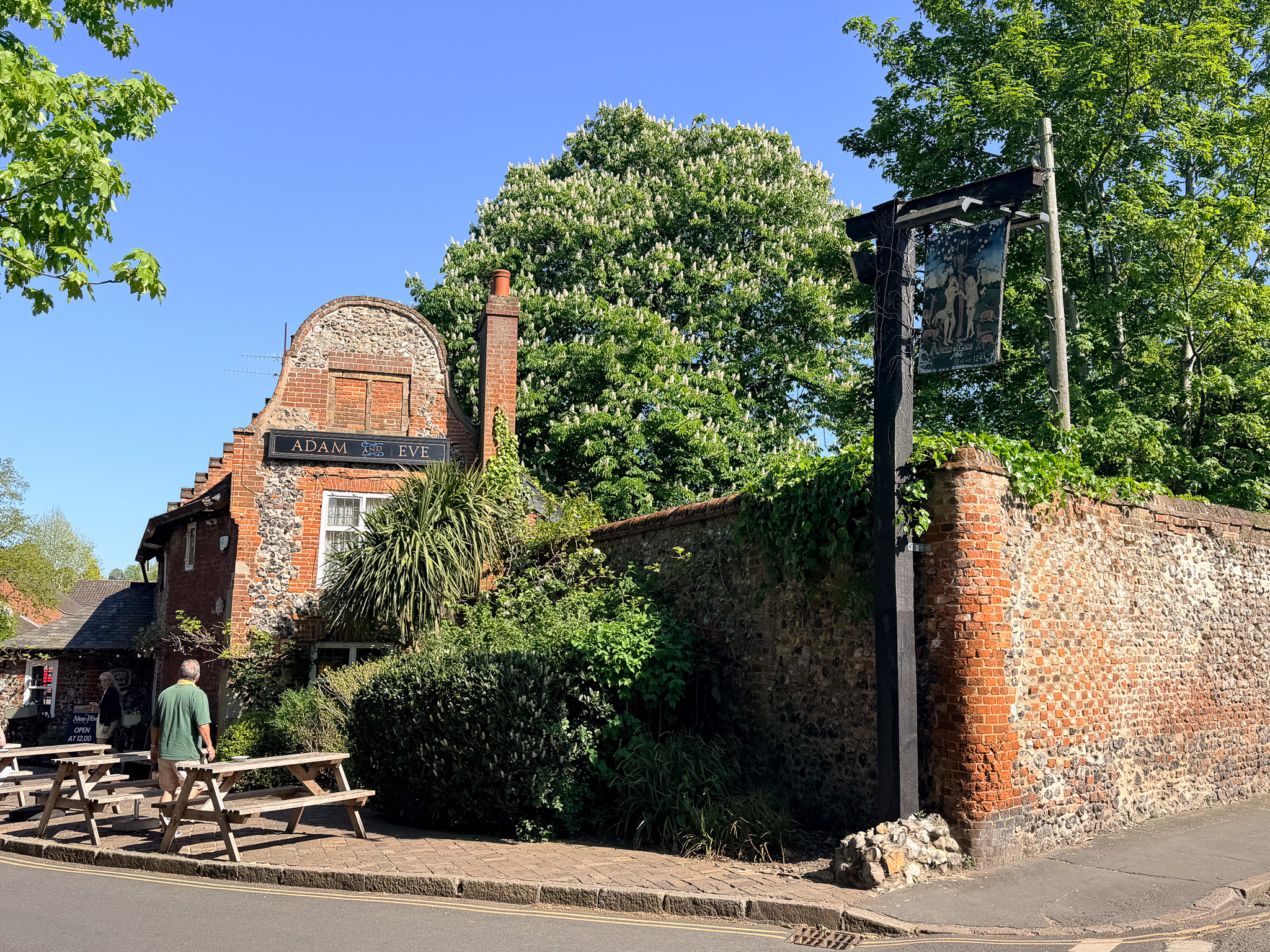
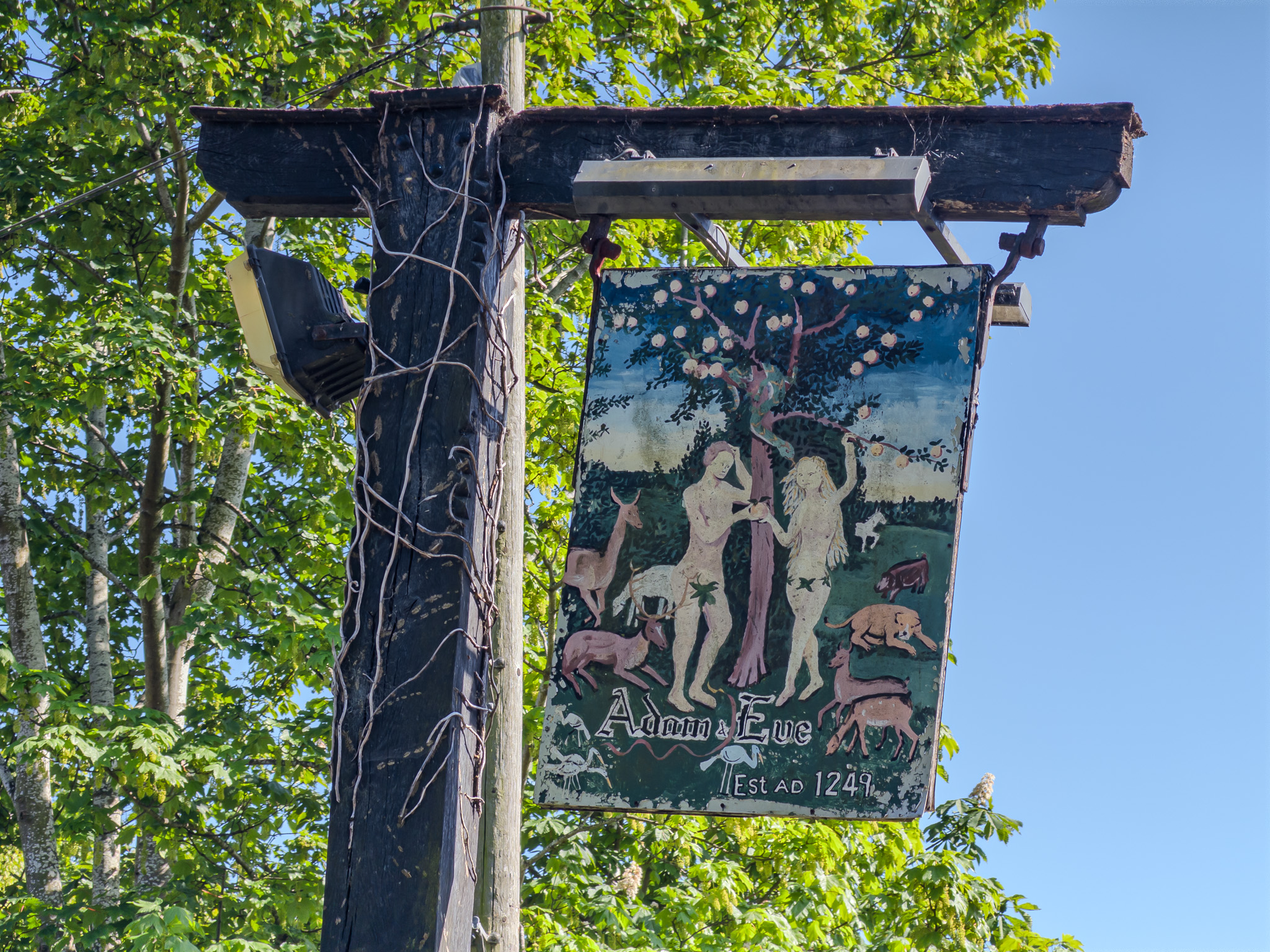
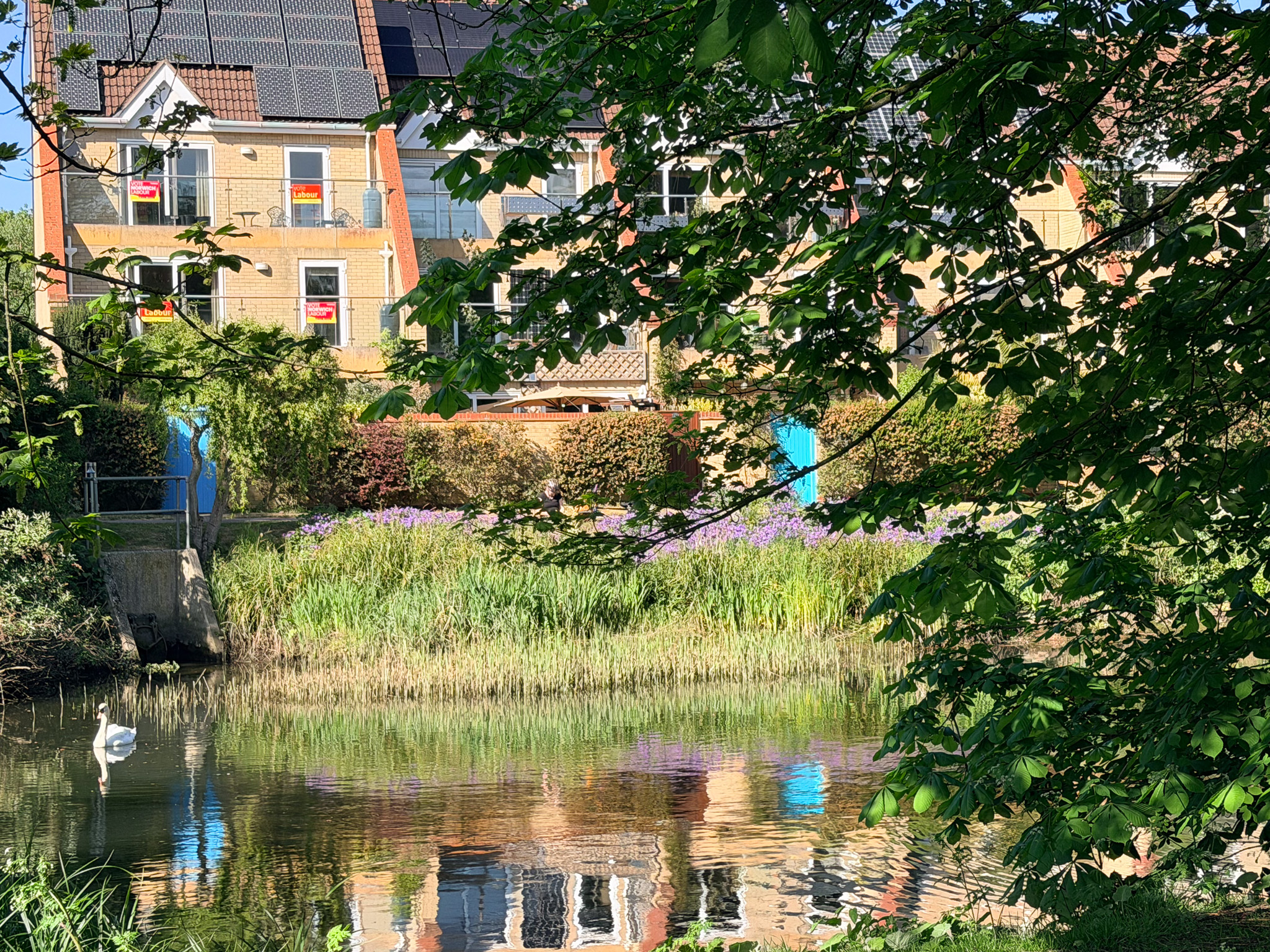
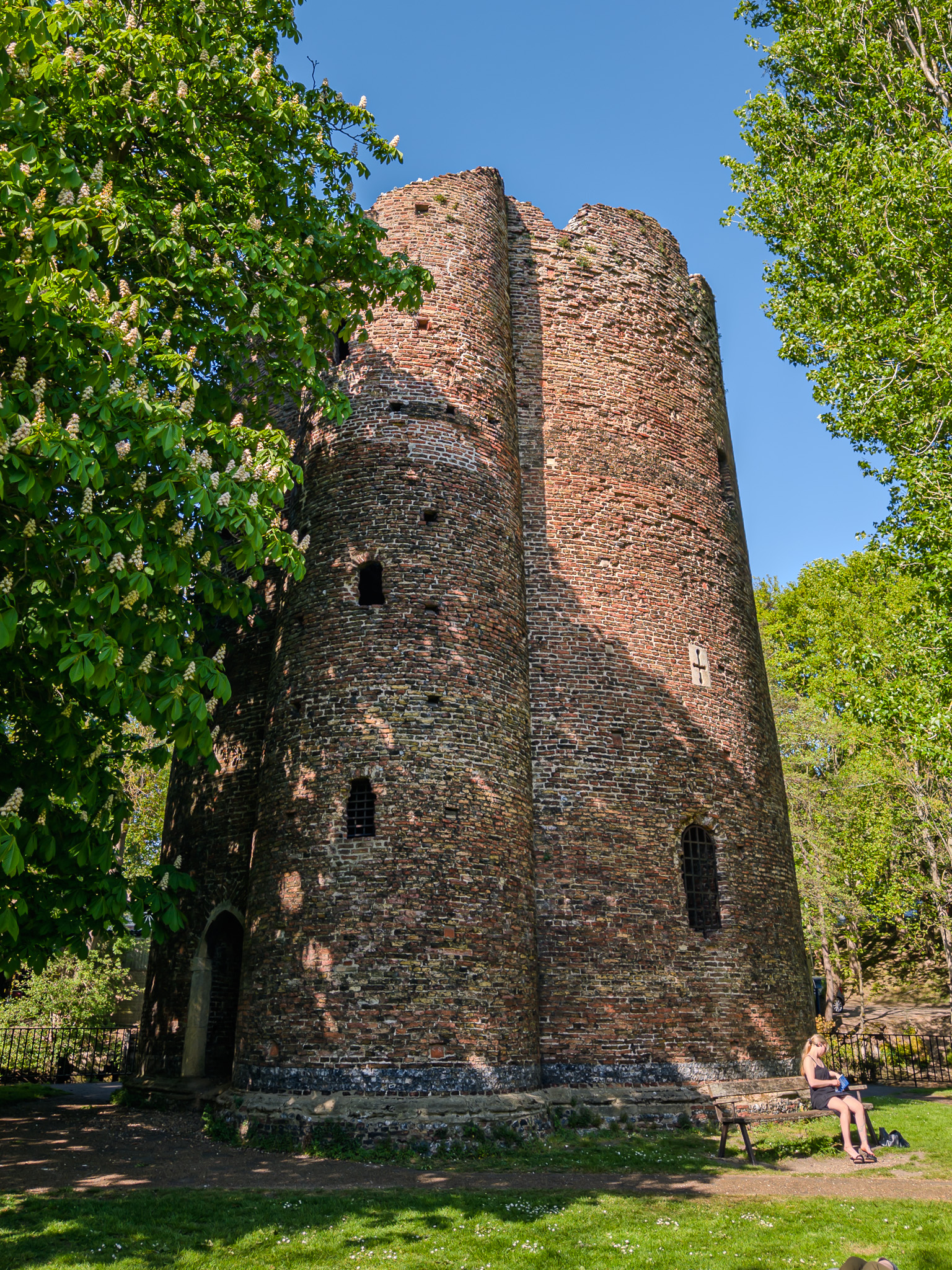
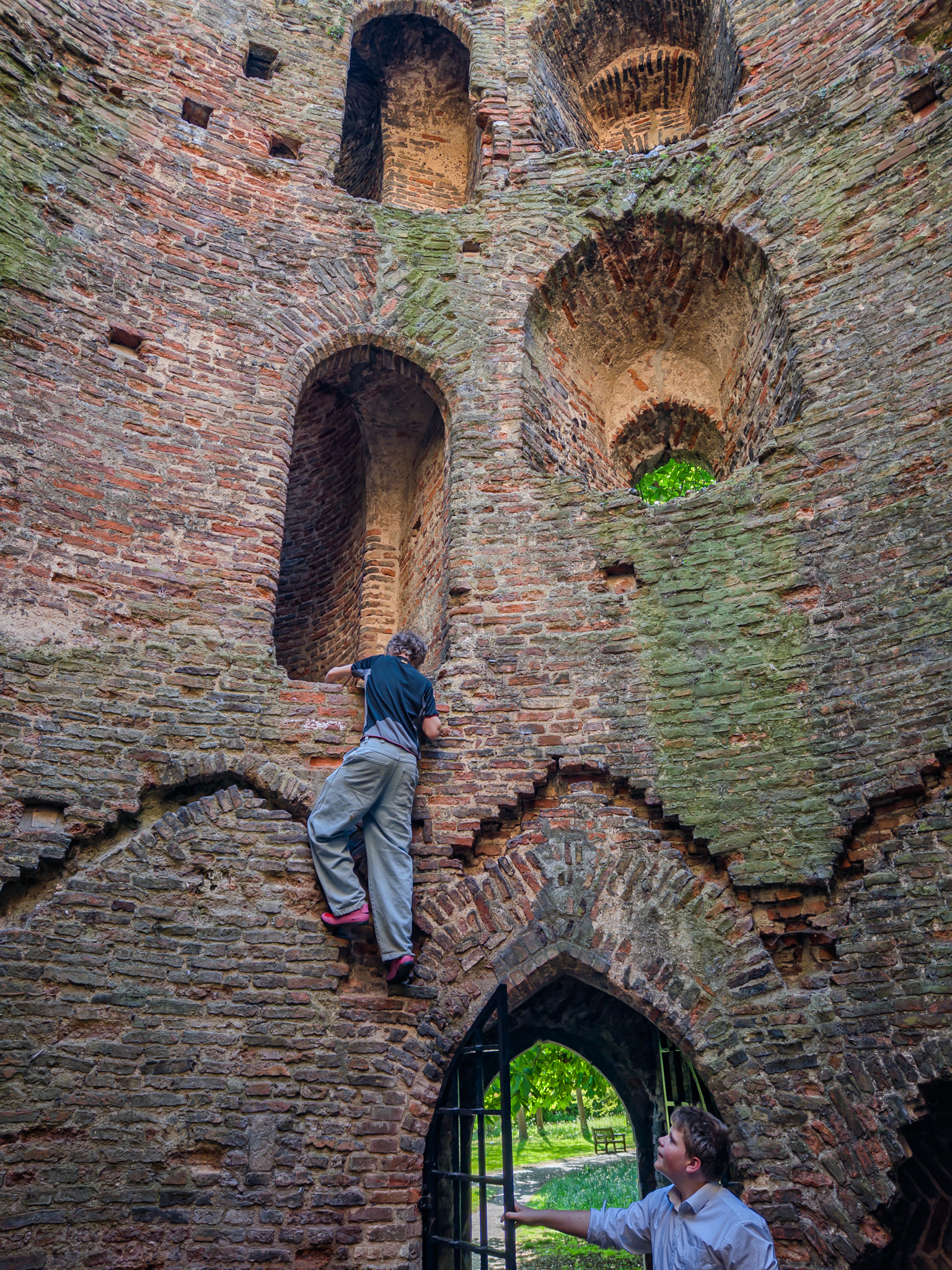
On the advice of Nick (the driver) we walked to the Adam and Eve Pub, the “oldest pub in England” (aren’t they all…), walked the beautiful RiverWalk, and happened upon the “Cow Tower” (a purpose-built artillery tower). Inside, we met a couple of 16-year-old boys who were (illegally) climbing its decaying walls. Once they figured out that we weren’t going to arrest them, they were happy to show us their secret handholds in the crumbling walls and how quickly they could scale the bricks, and when we were leaving they volunteered to share some “climbable roof tops in town” if we were interested. LOL.
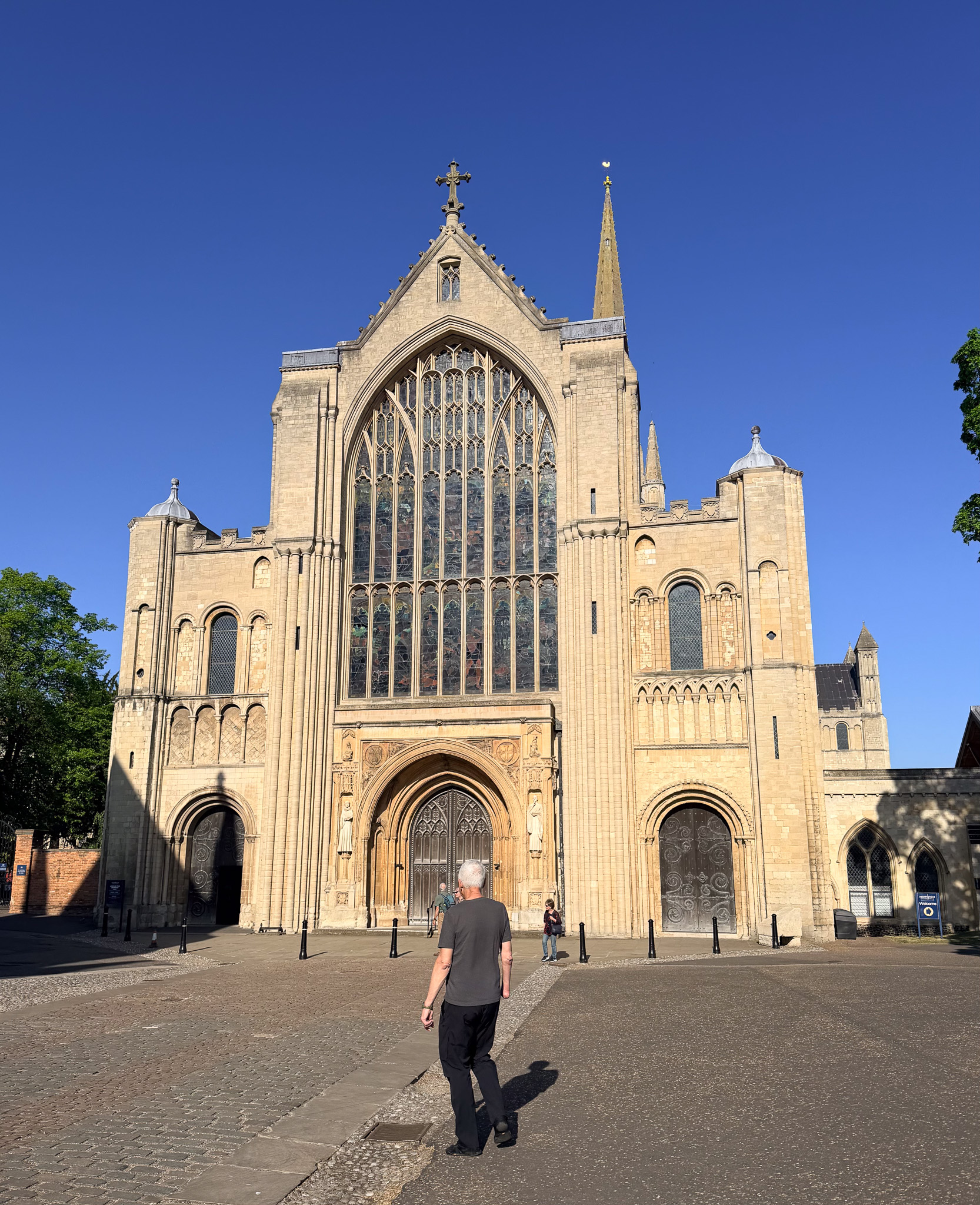
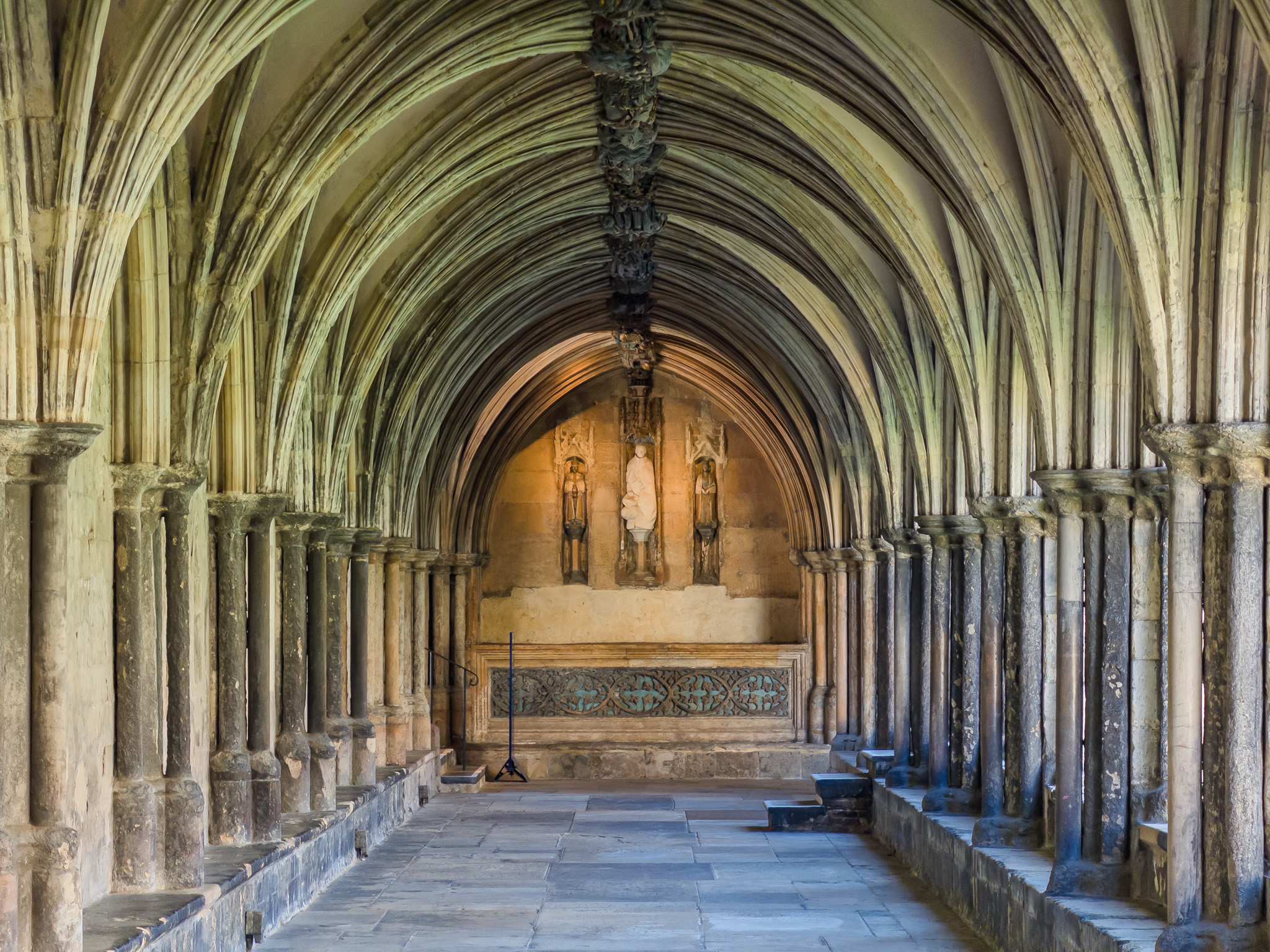
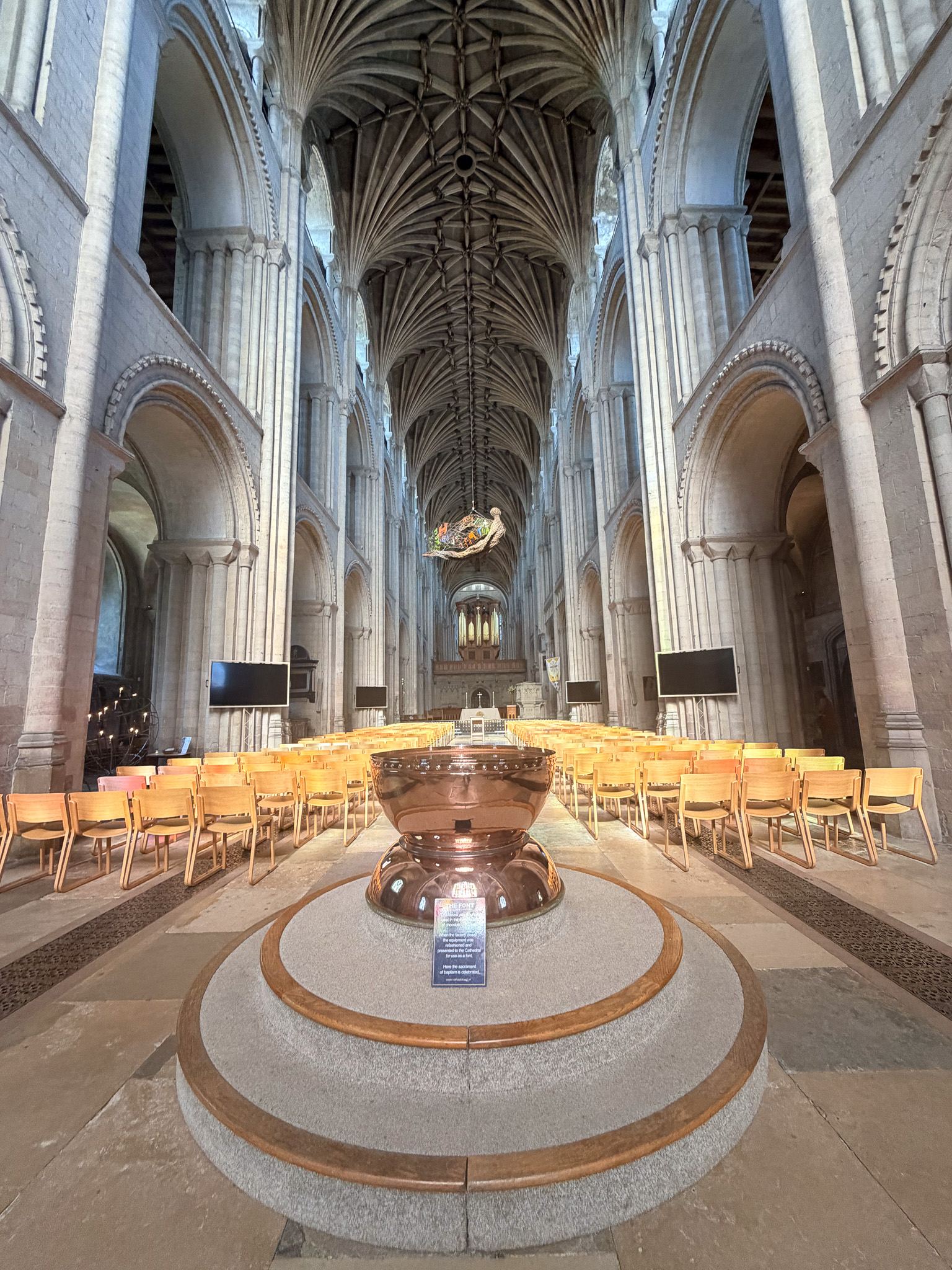
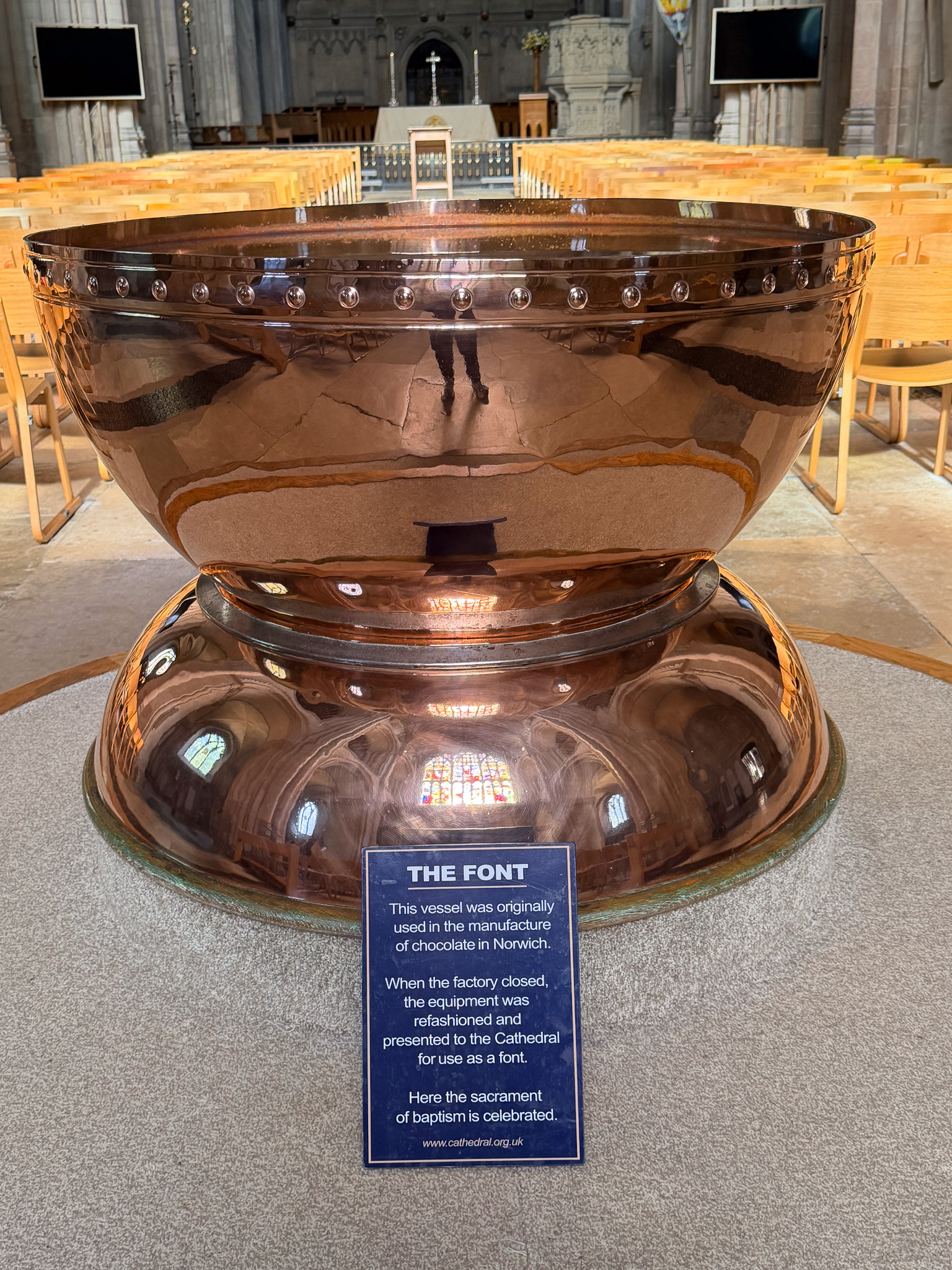
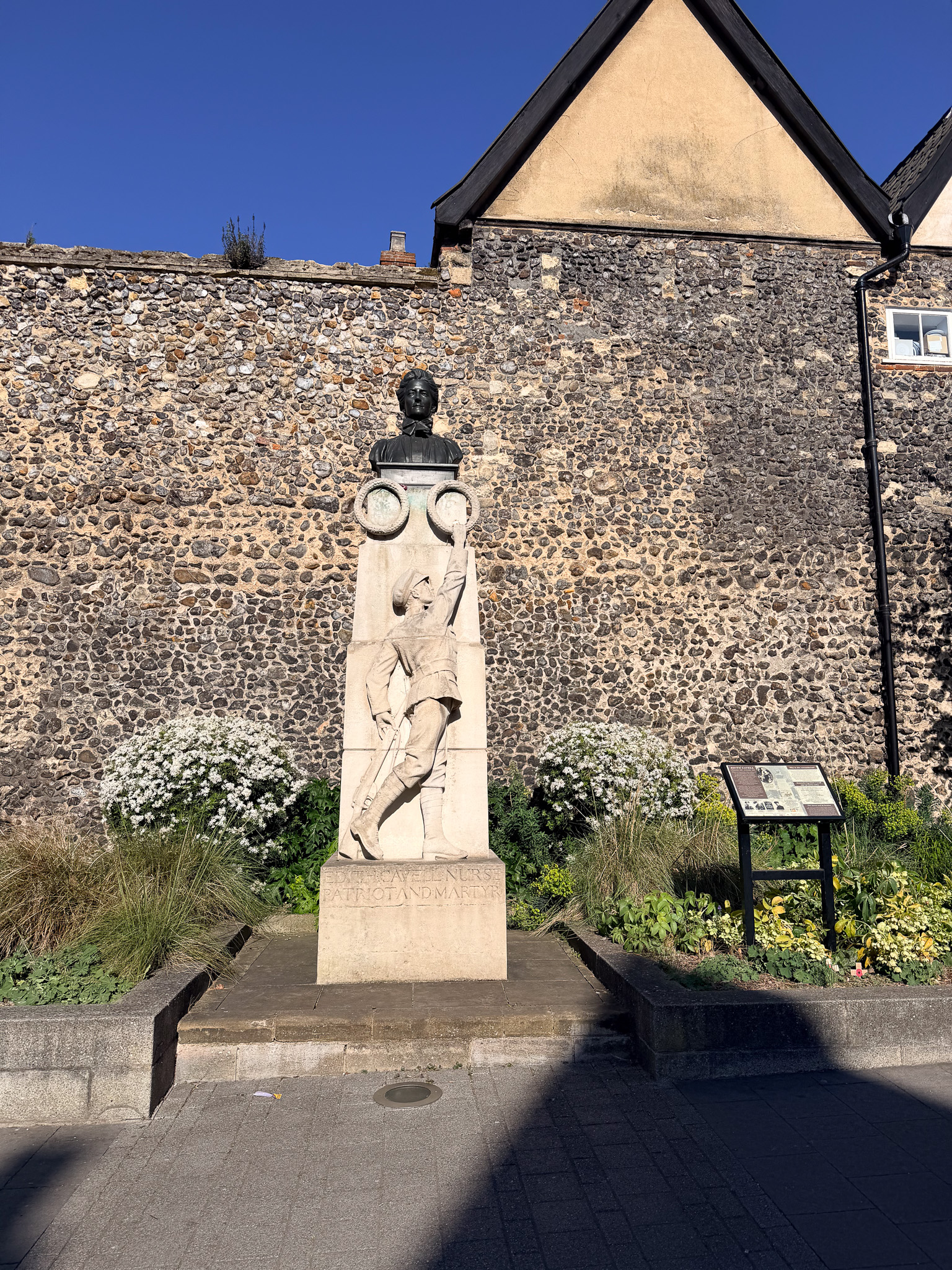
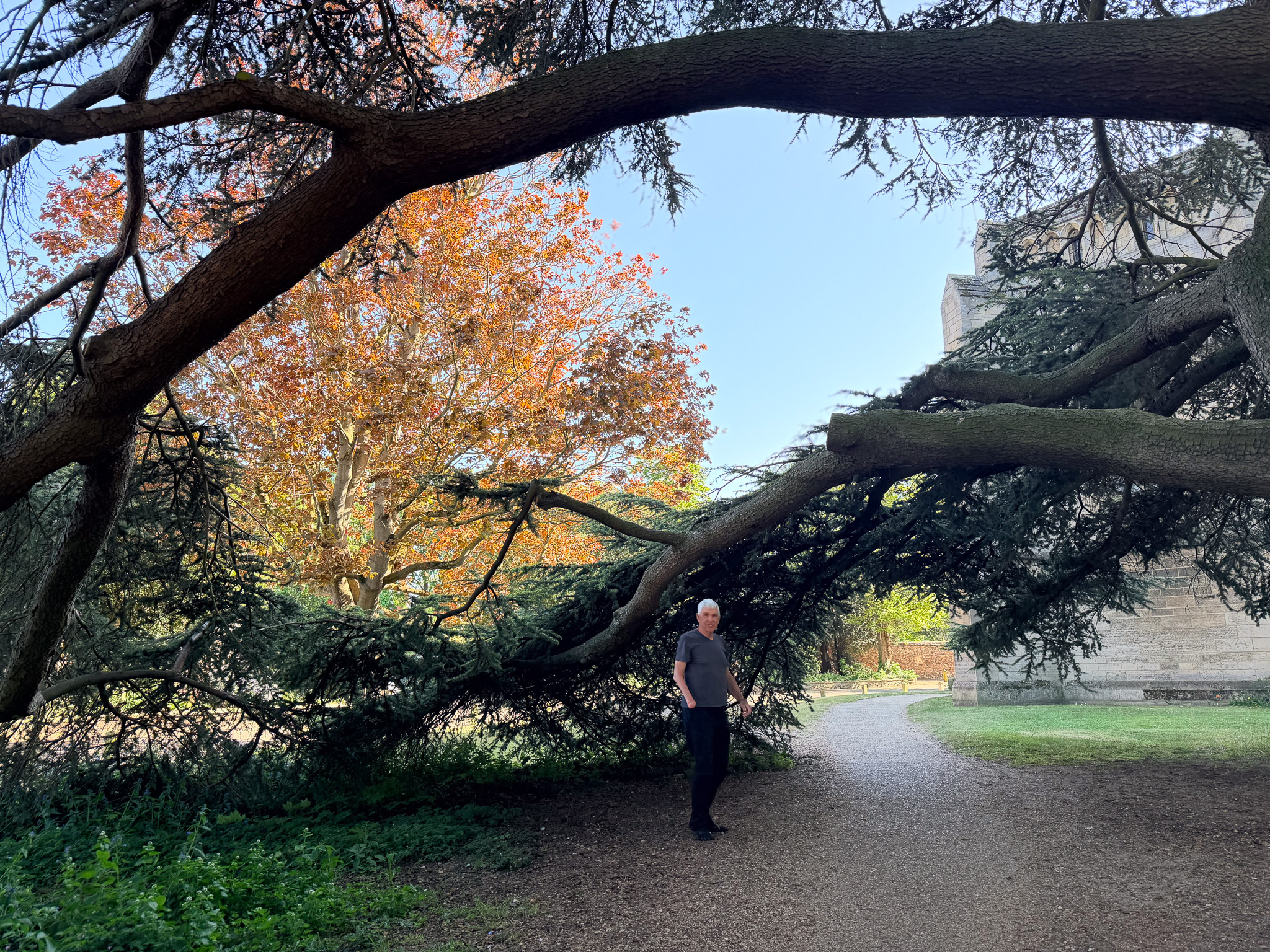
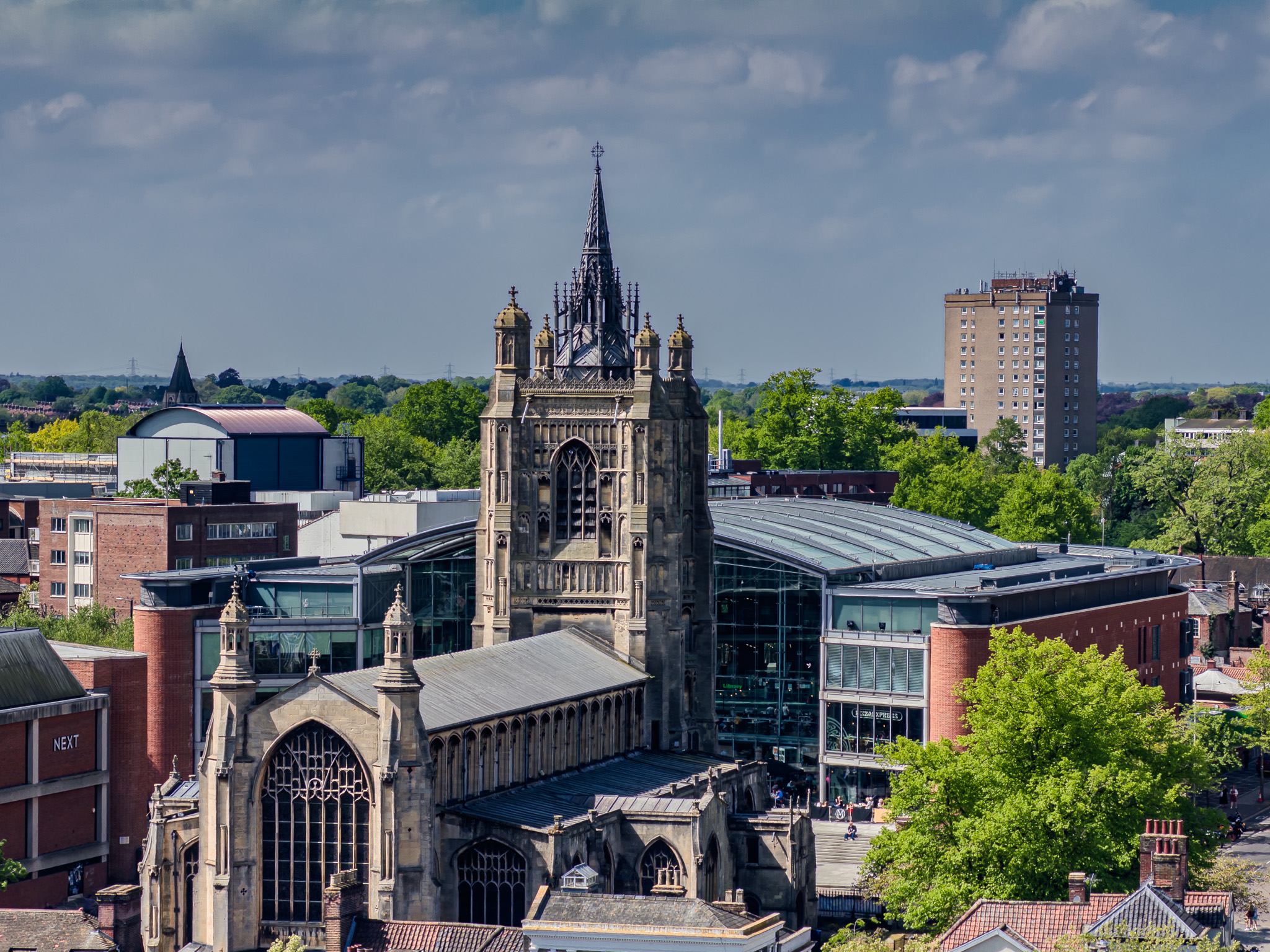
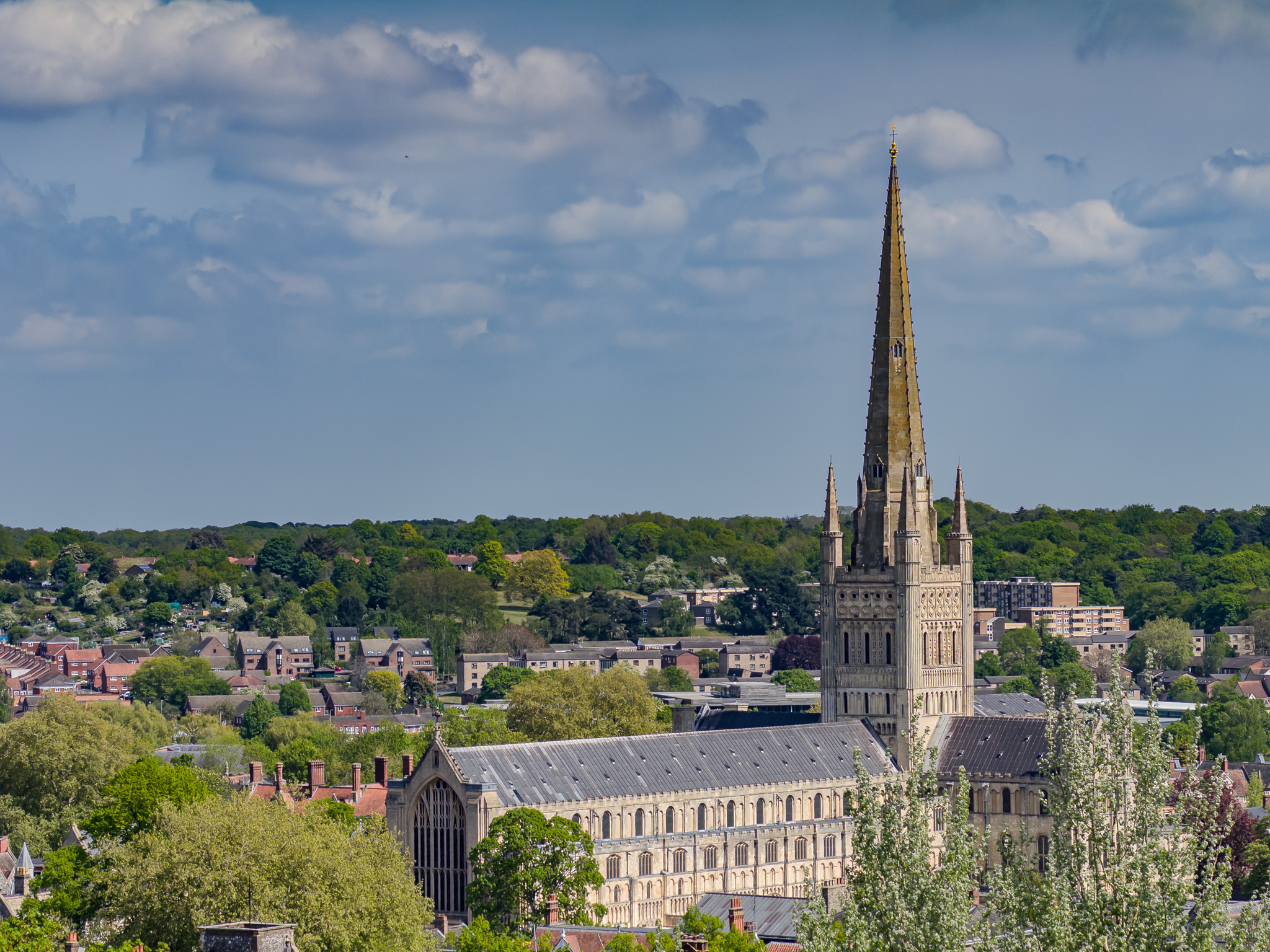
On to Evensong at Norwich’s Cathedral. In the narthex is a baptismal font that is a donated, repurposed copper kettle from anow shut-down Rowntree chocolate factory. Of the four tallest spires in the UK, Norwich is 96 metres. (Liverpool, 101 metres. St. Paul’s, 111 metres. Salisbury, 123 metres.) It is tall. Edith Cavell is buried in the cathedral. (1st World War nurse, hero, born in Norwich.)
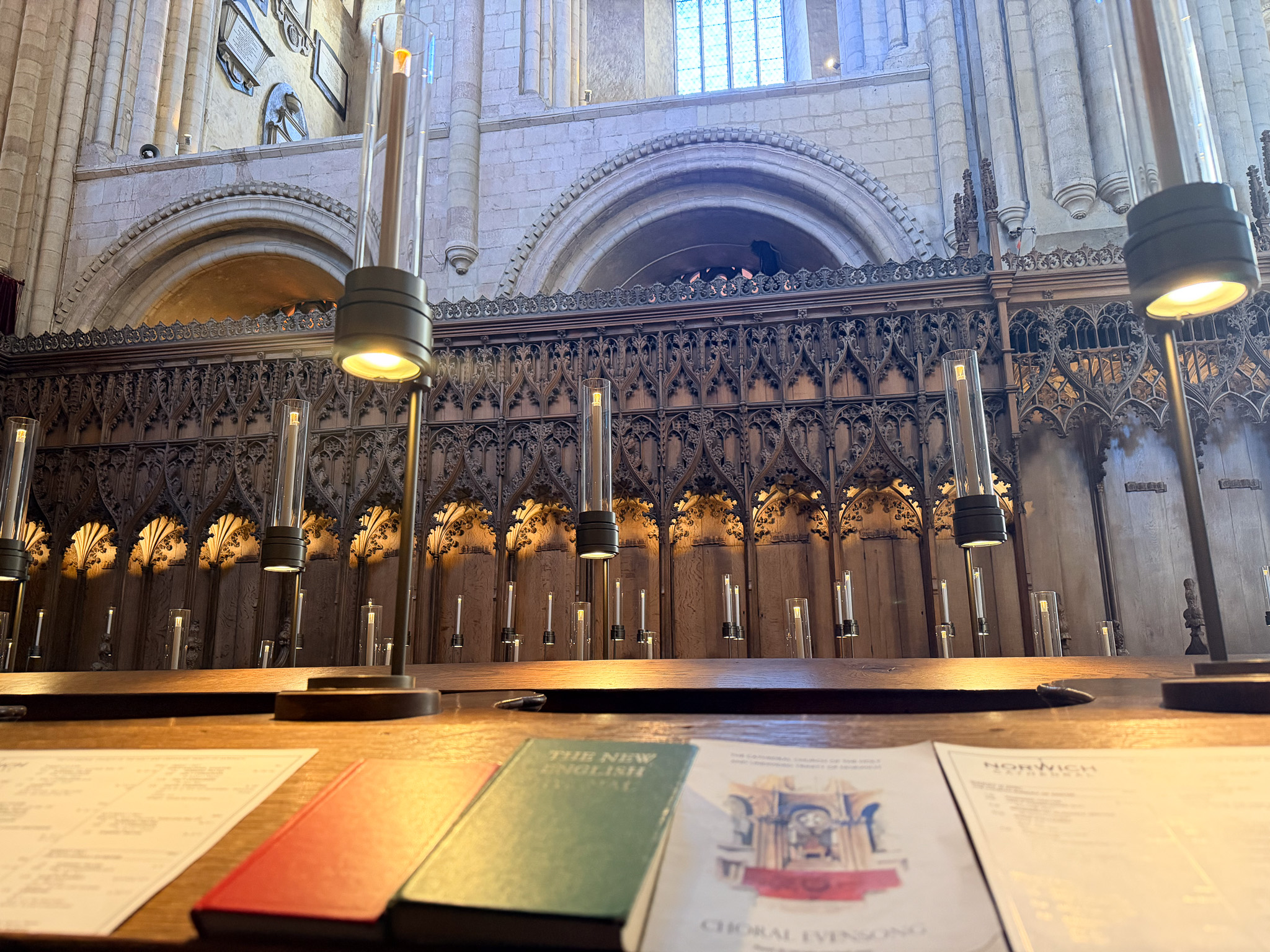
We heard the absolute best Evensong we have ever heard – it was a true pinnacle of choral excellence – and the organist played a mindblowing postlude. (For the choir nerds among you: the anthem – O Praise God in his Holiness – was by Millington. The organist was Ashley Grote.)
Early to bed, obviously!
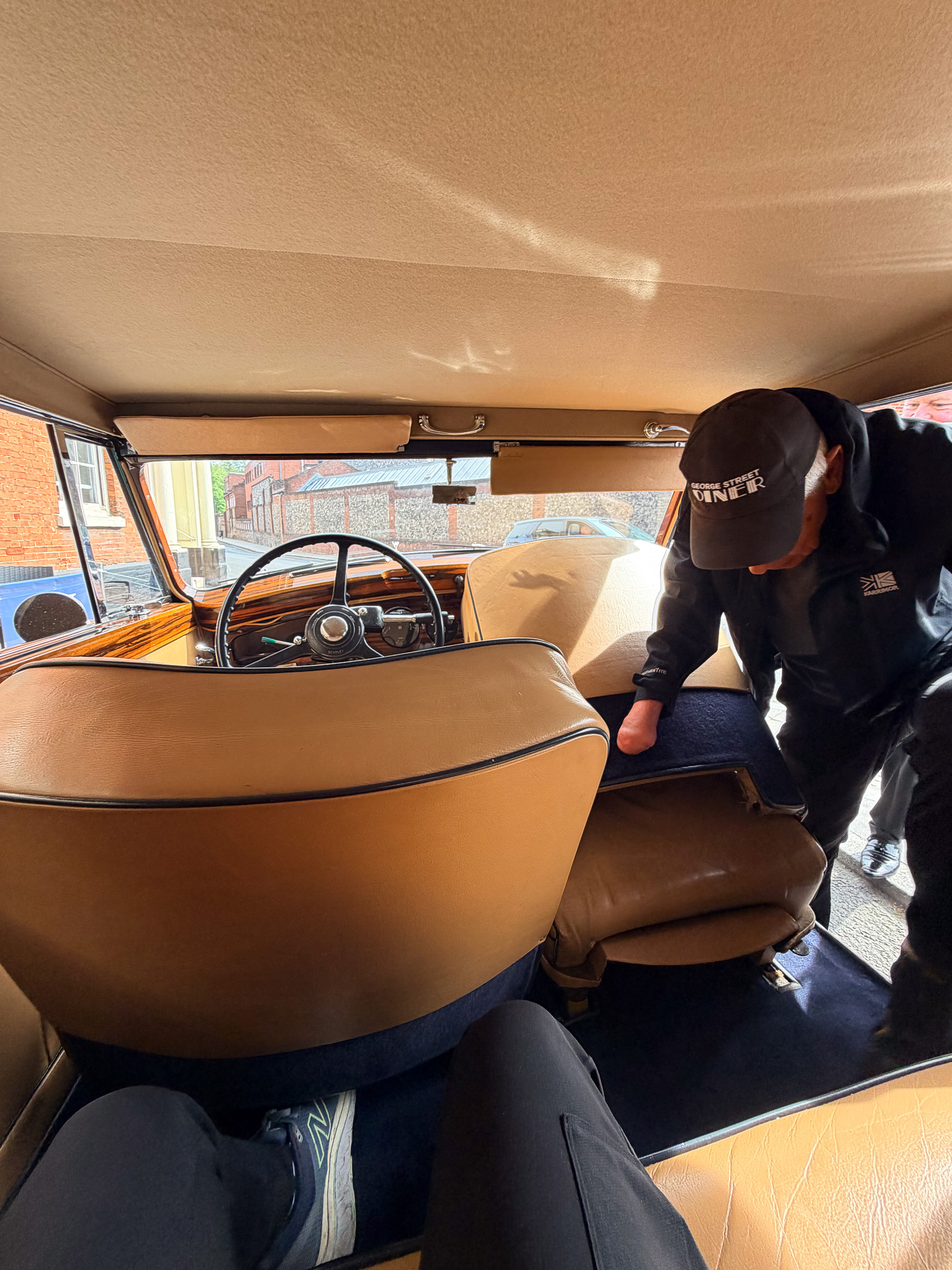
John here (apologies to our blog fan, “Raymond Luxury-Yacht)”. Next morning, our driver Nick welcomed us at the front door and inserted us into the back seat of a lovely early 70’s, ultra-marine blue Bentley, complete with on-the-column shifter, left-hand drive (imported second hand from the Colonies), roll-back top (closed for our ride), and no-draft side windows. The front passenger seat was occupied by driver-in-training, Jim, also, like Nick, at least seventy years old. (See photos.)
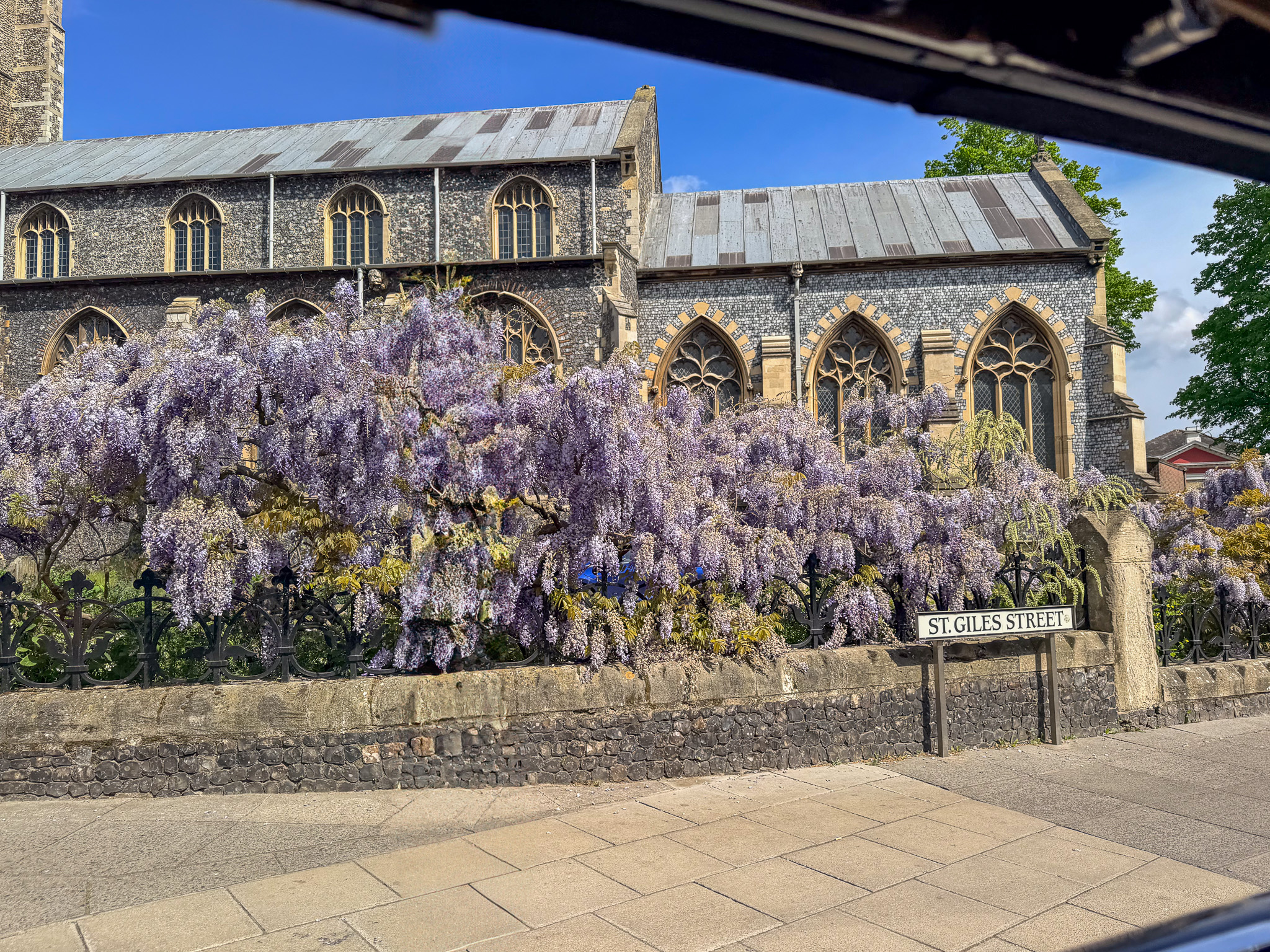
And they gave us an absolutely wonderful tour – two long-time Norwich residents, both previously cabbies, chatting away about Norwich in the old days, gliding gracefully through narrow winding streets, Nick smoothly coaxing the gears up and down, continuously showing Jim how to touch the gas just-so before engaging the clutch. Norwich is very hilly, so we marvelled at Nick’s dexterity with the on-the-column gear shift while never breaking stride with his gentlemanly narrative.
Nick and Jim told us that for most of its two thousand year history, Norwich was one of the largest and most prosperous towns in England, second only to London. Like most cities in the area, tribes were followed by Anglo-Saxons, Vikings, Normans, French, and Tudors. A great many Dutch and Flemish ‘Strangers’ were welcomed as they fled Catholic persecution in the mid-1500s. In the late-1700s the lucrative wool business faced competition from the new cotton and silk traders and Norwich’s prominence as an industrial centre diminished. Today, Norwich is home to large insurance and health-care companies.
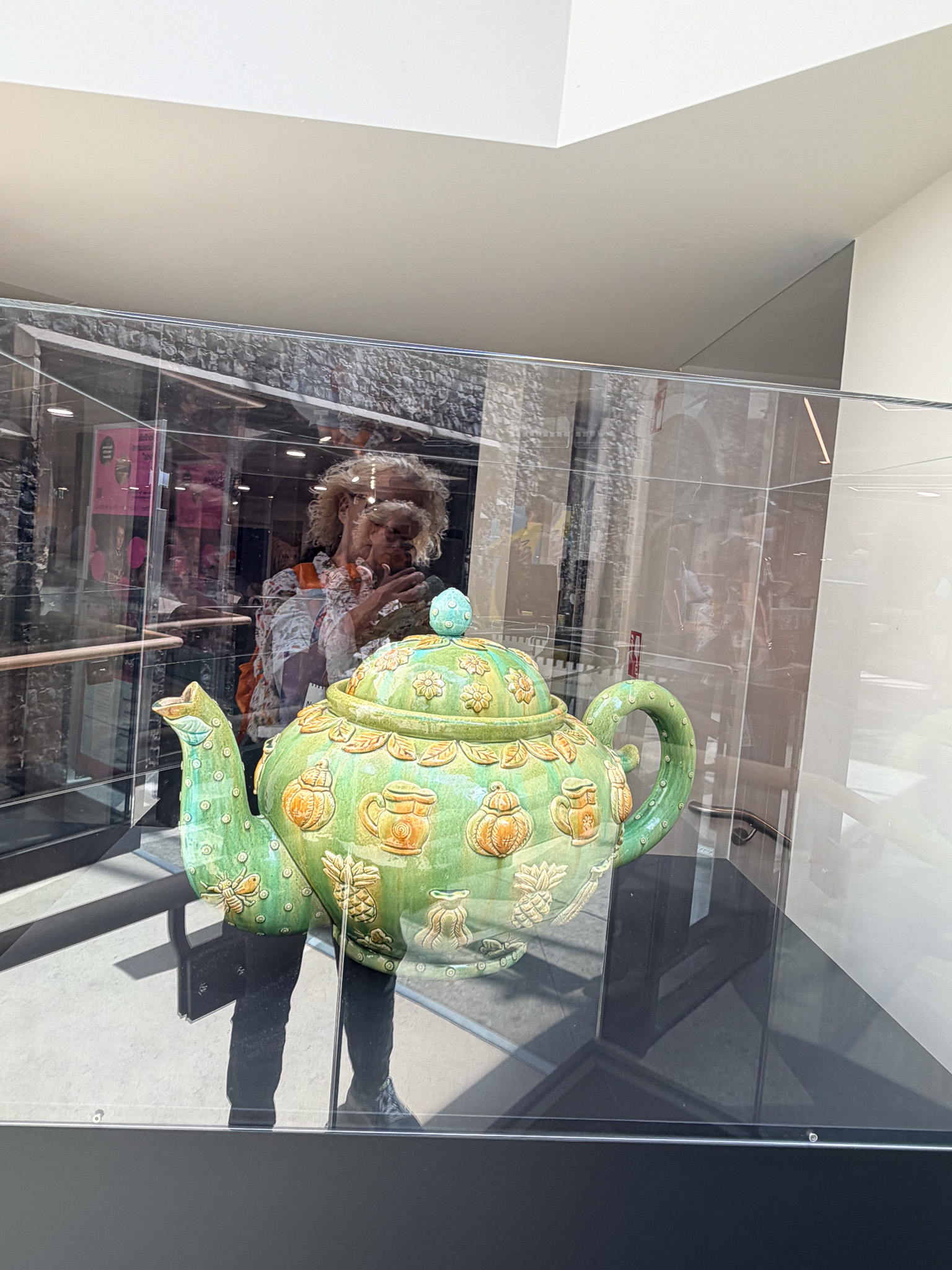
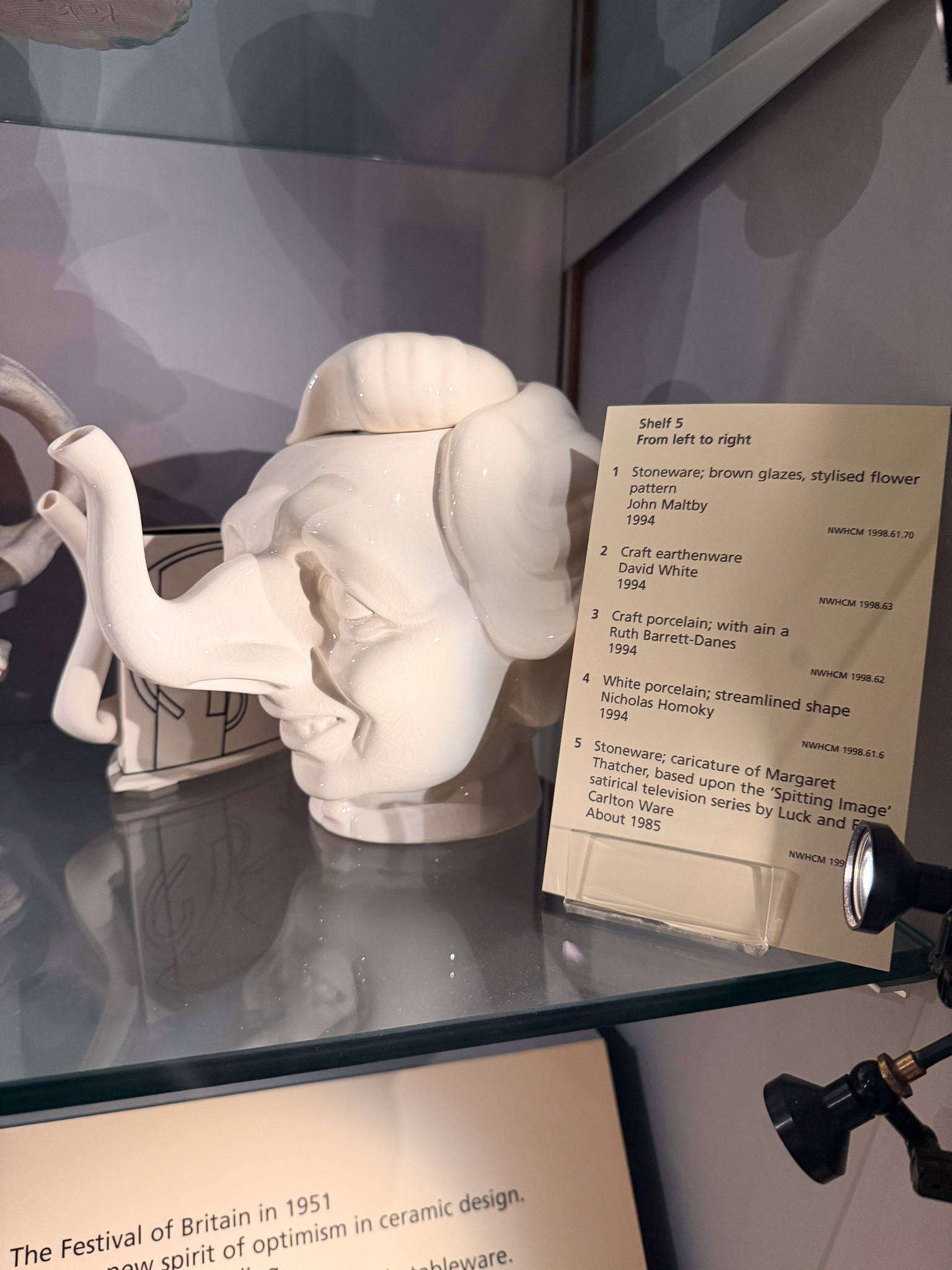
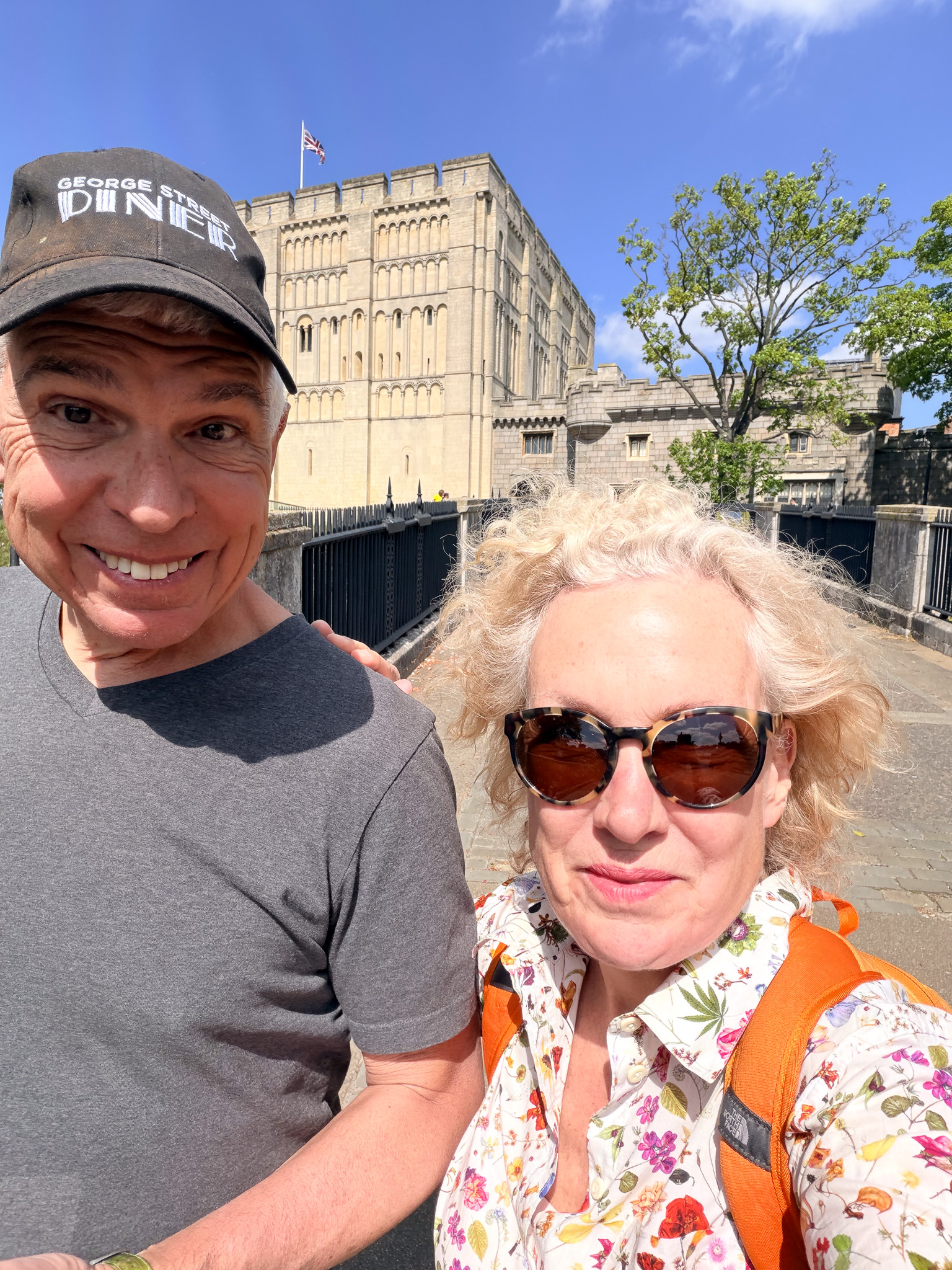
After our Bentley experience, we walked to Norwich Castle, a medieval fortification built by William the Conqueror around 1060 AD. Recently restored, it now houses an excellent museum allowing easy access to its multiple floors and spaces. N.B. There is a huge collection of teapots in that museum. It was very entertaining. (See photos.)
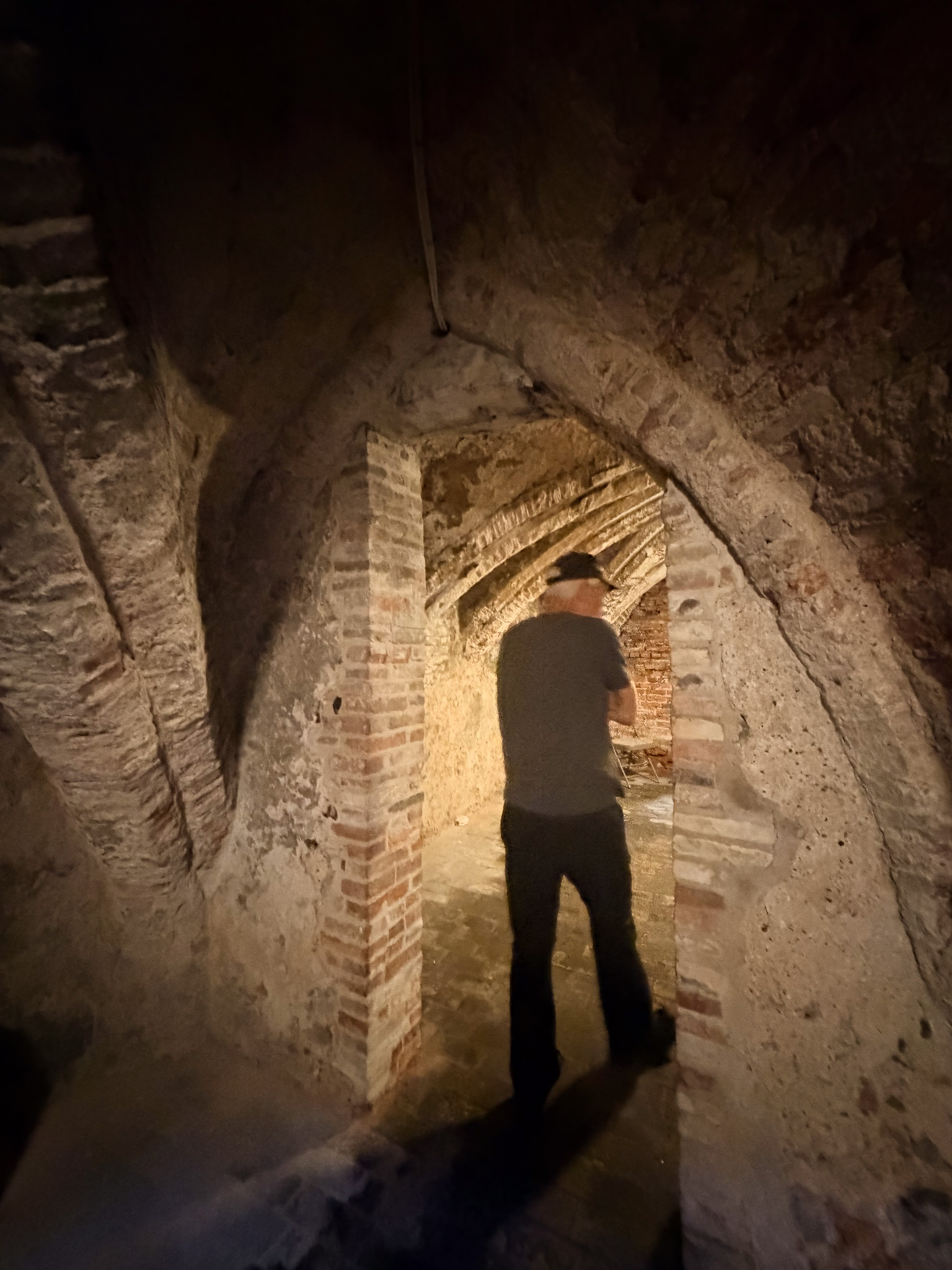
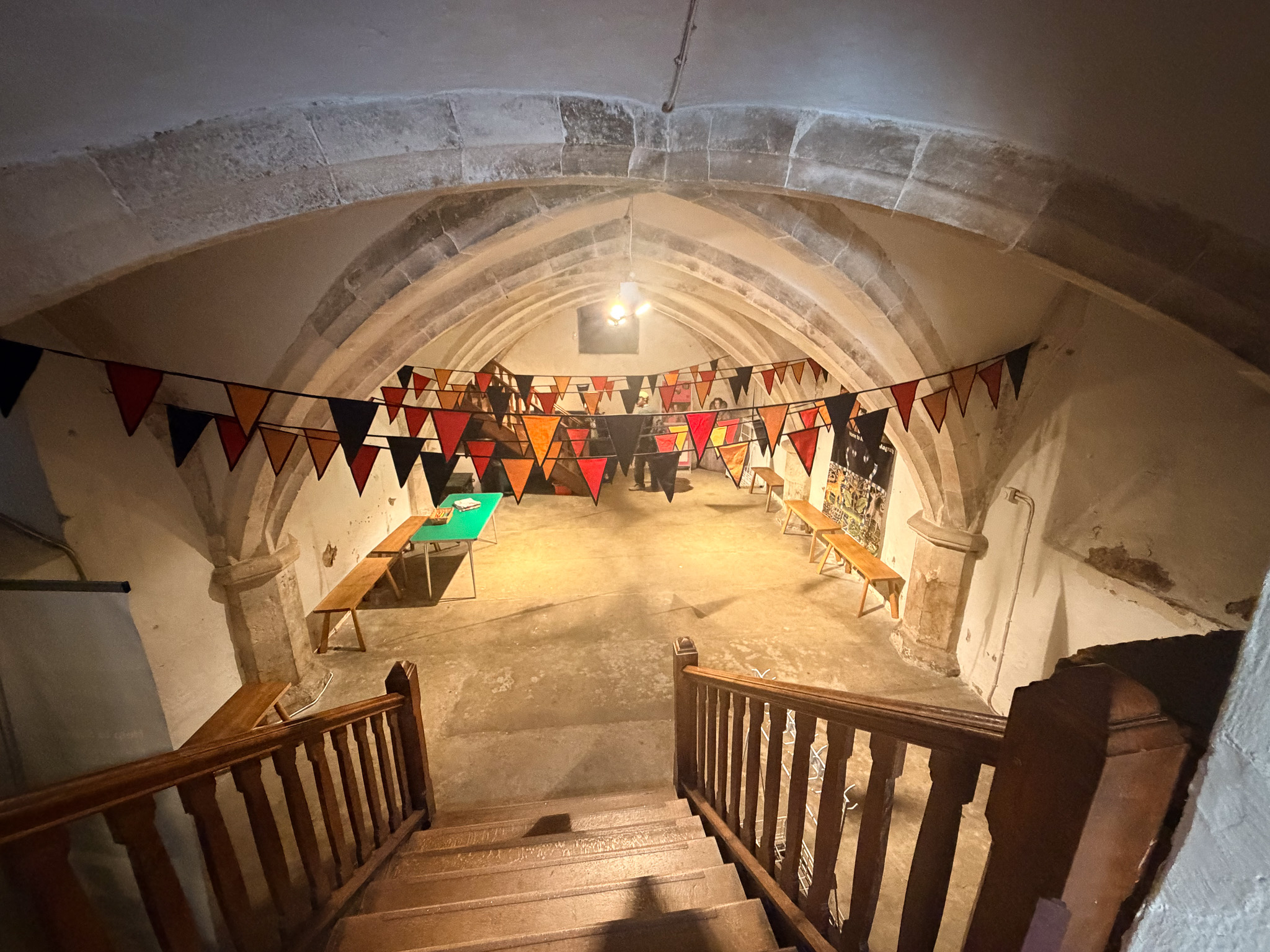
We (er, I) then enjoyed an ice cream cone from the multiple pedestrianized shopping streets (maybe some day Toronto??) and Patti bought a cheap backup pair of running shoes. We visited the Museum of Norwich at the Bridewell. Along with the regular items from town history, the museum featured its ‘undercroft’, the largest vaulted undercroft (or basement) in the city. Built in the early 1300s to support the building above, over the centuries it served as a prison, storage space, market stalls, and coal bins.
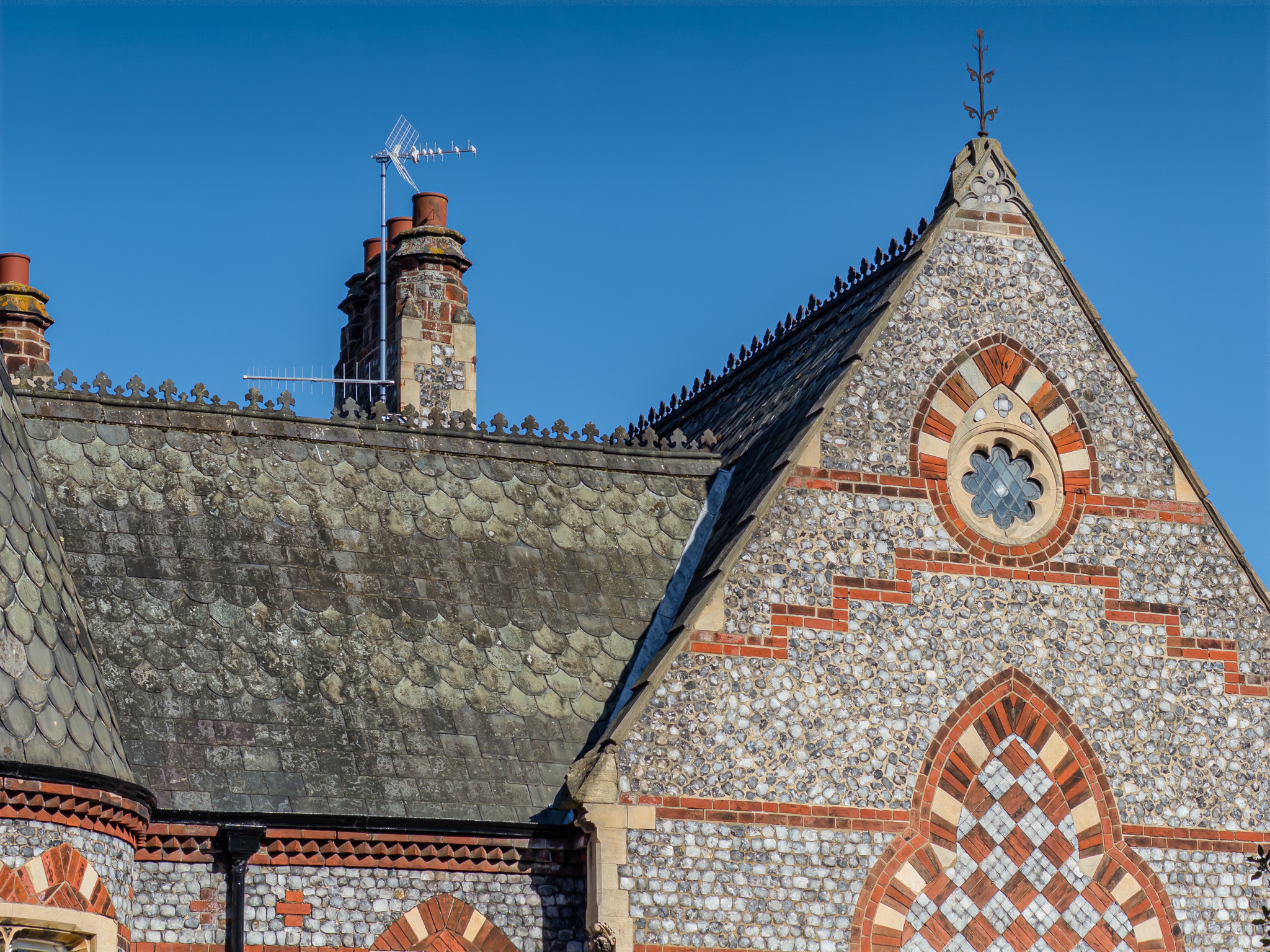
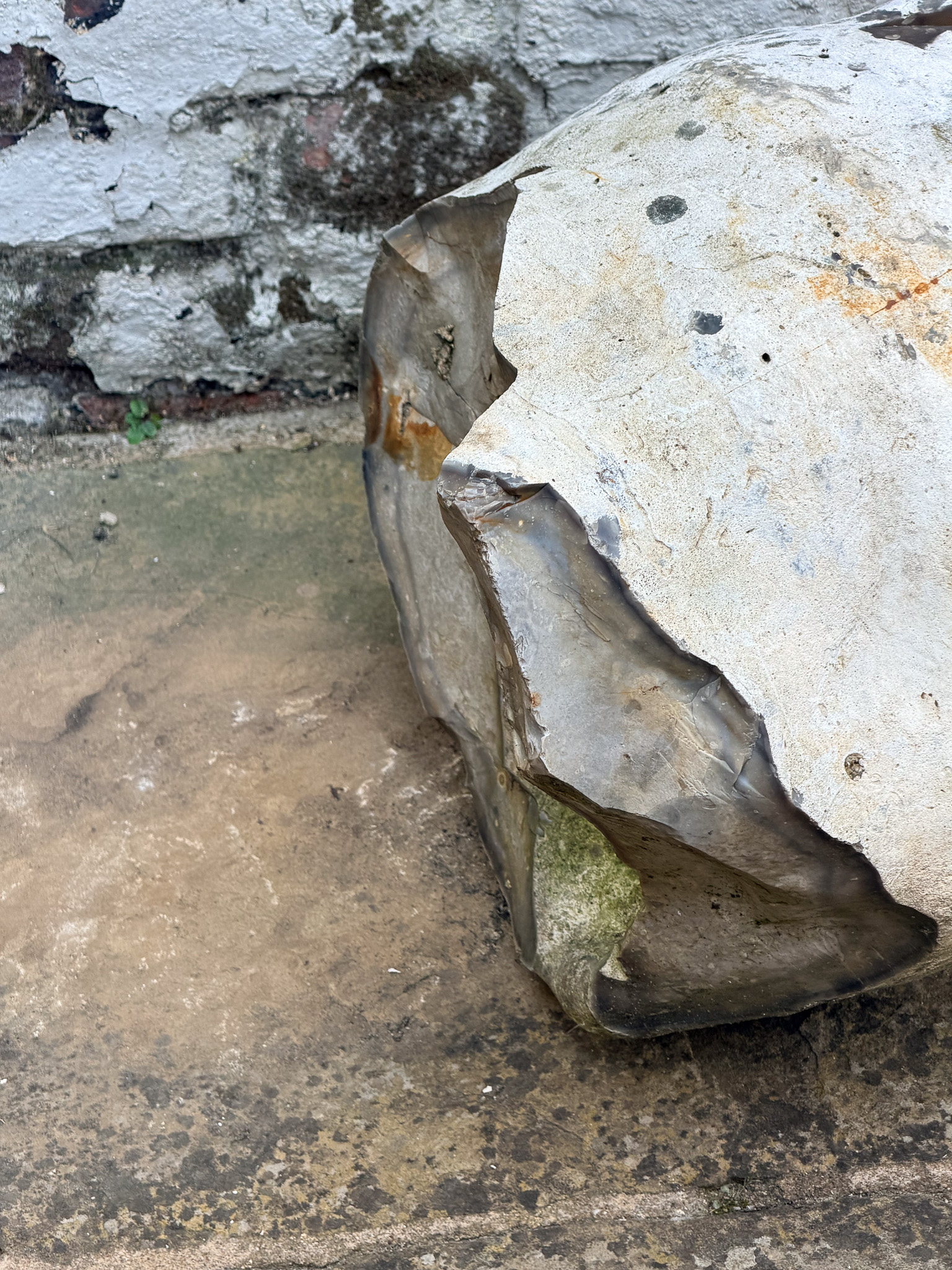
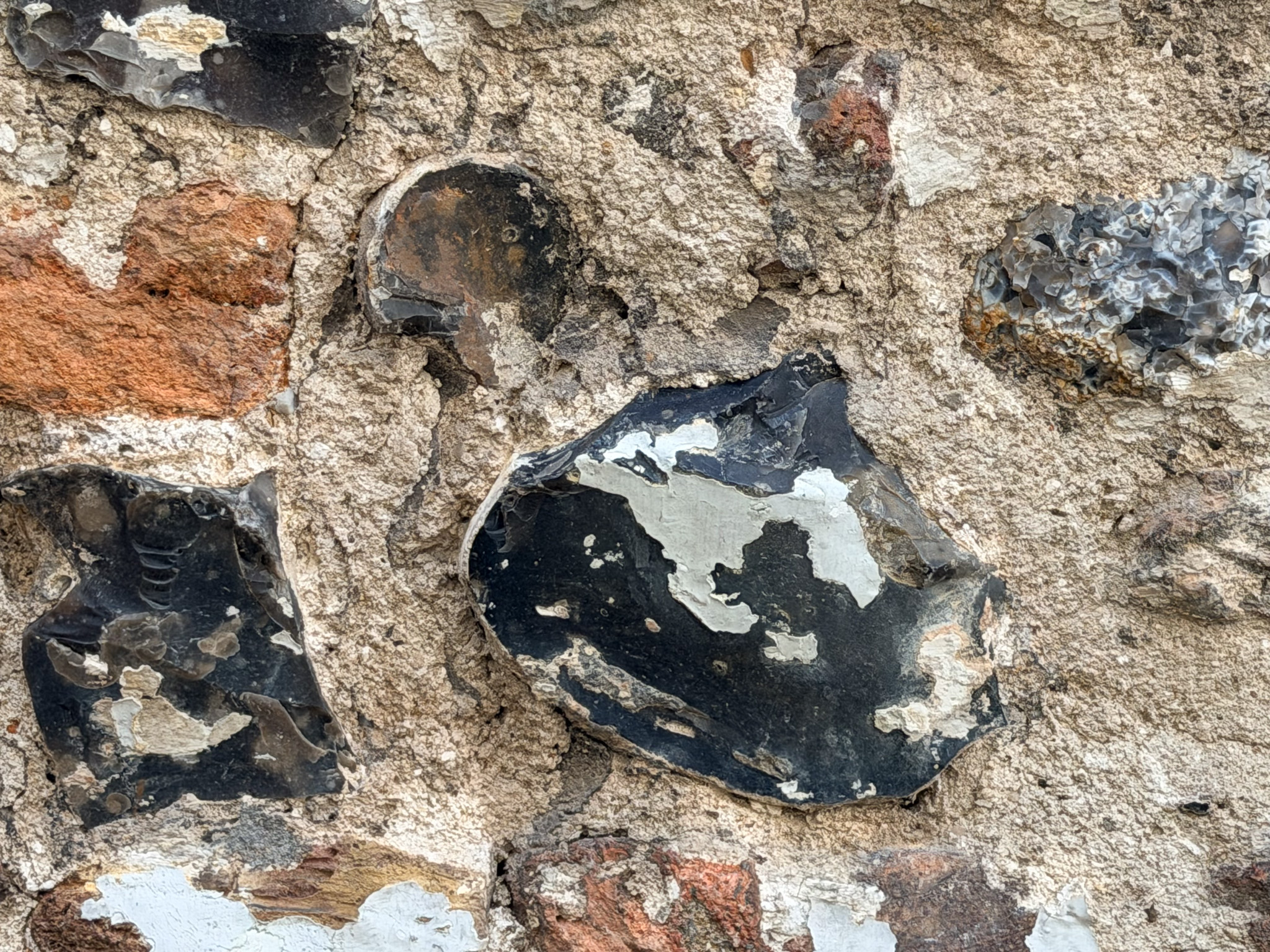
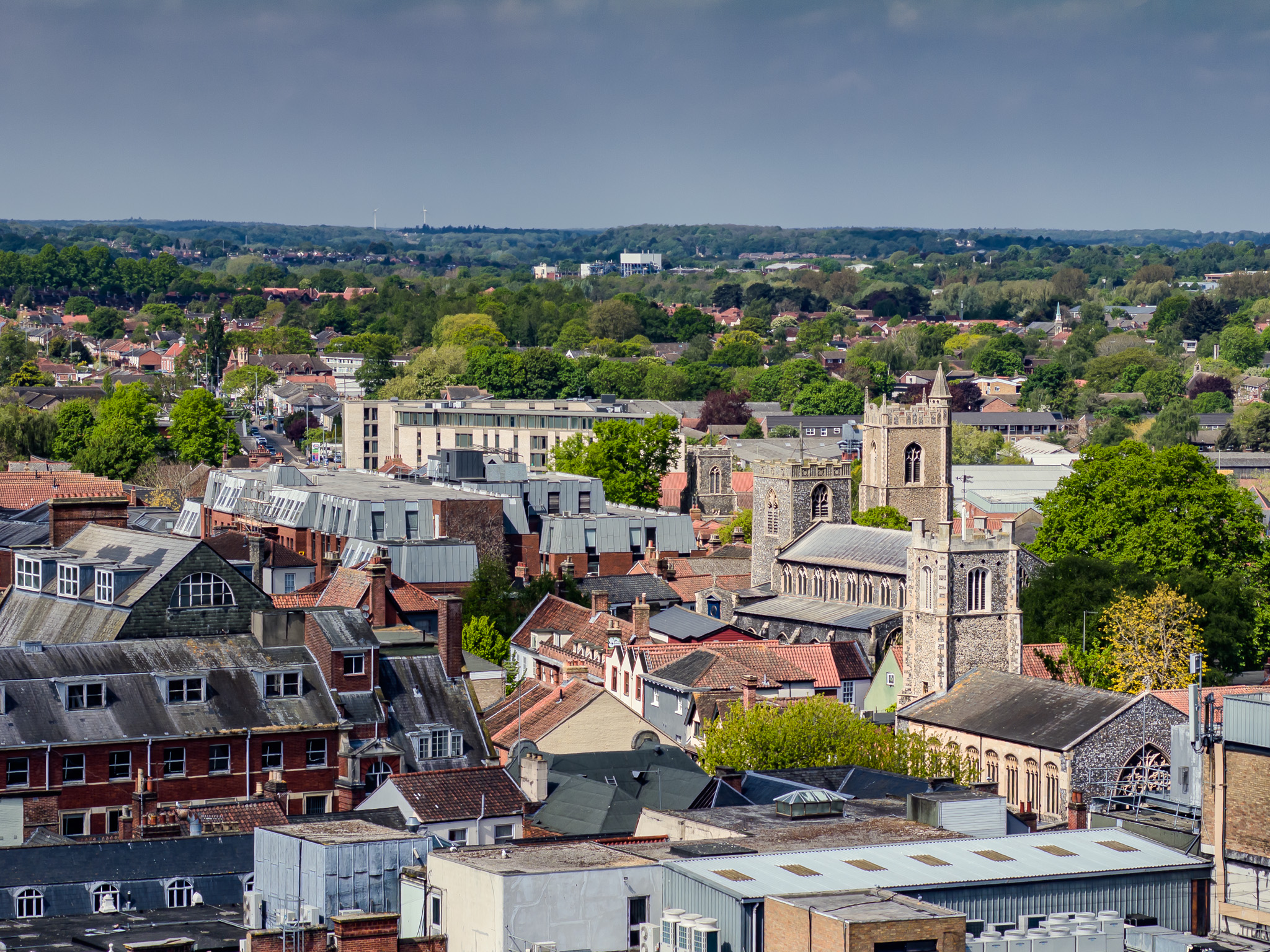
We learned about flint, the dominant contruction material in the area. Formed in spaces left behind by prehistoric animals, flint is a very hard and brittle glass-like material. It is broken into pieces like small bricks and mortered together into walls. The white coating, or ‘skin’ on the natural flint is chipped off to reveal an attractive shiny black surface.
An interesting note – the builder pays tradesmen to chip off the flint’s ‘skin’ prior to erecting a wall. If the owner of the building can’t afford to have the skin removed he becomes known as cheap, or a ‘skin-flint’. See flint photos. Its a primary building material in much of the construction in this area, giving buildings a very distinctive look (in contrast to, for example, red brick.)
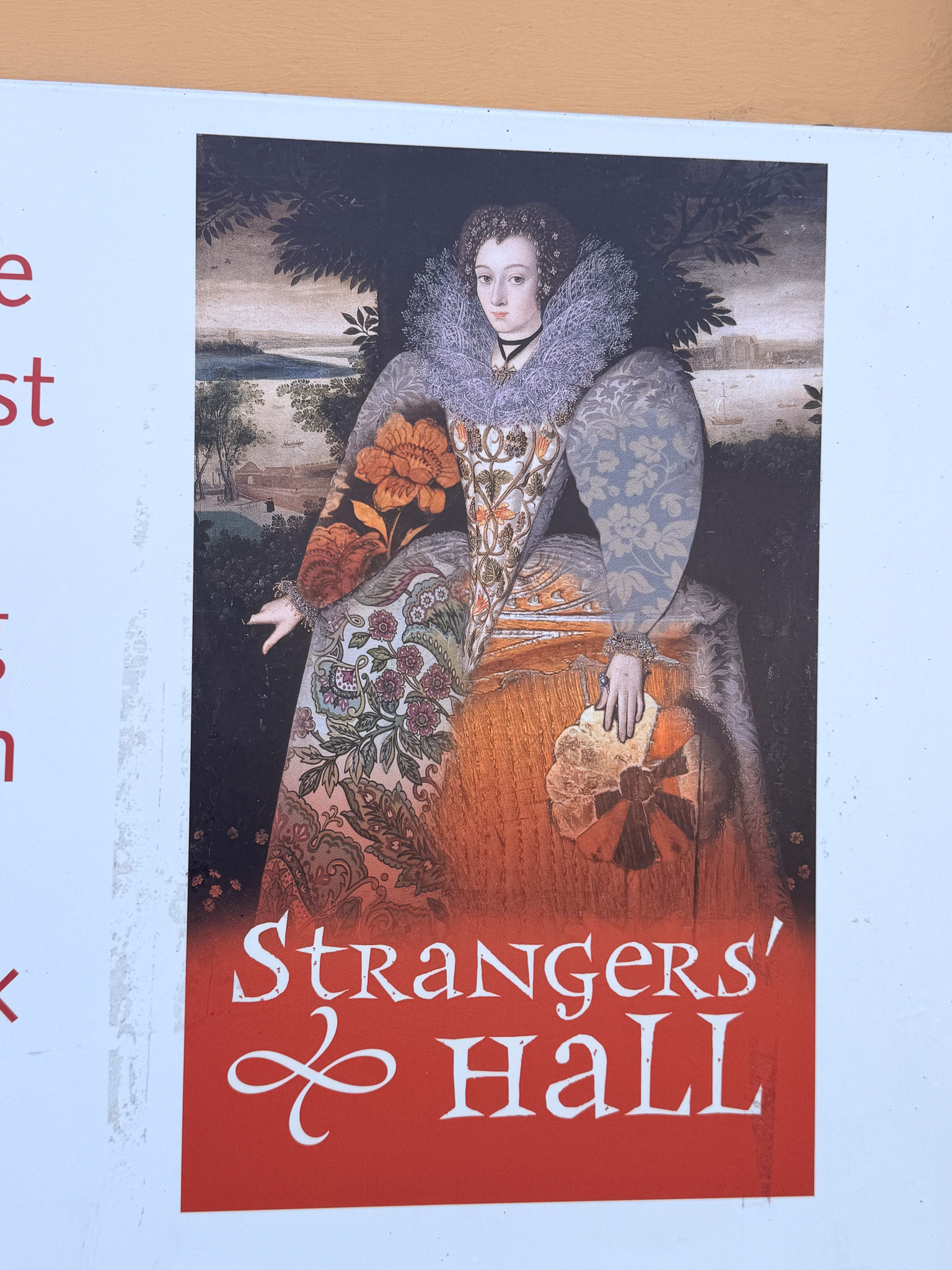
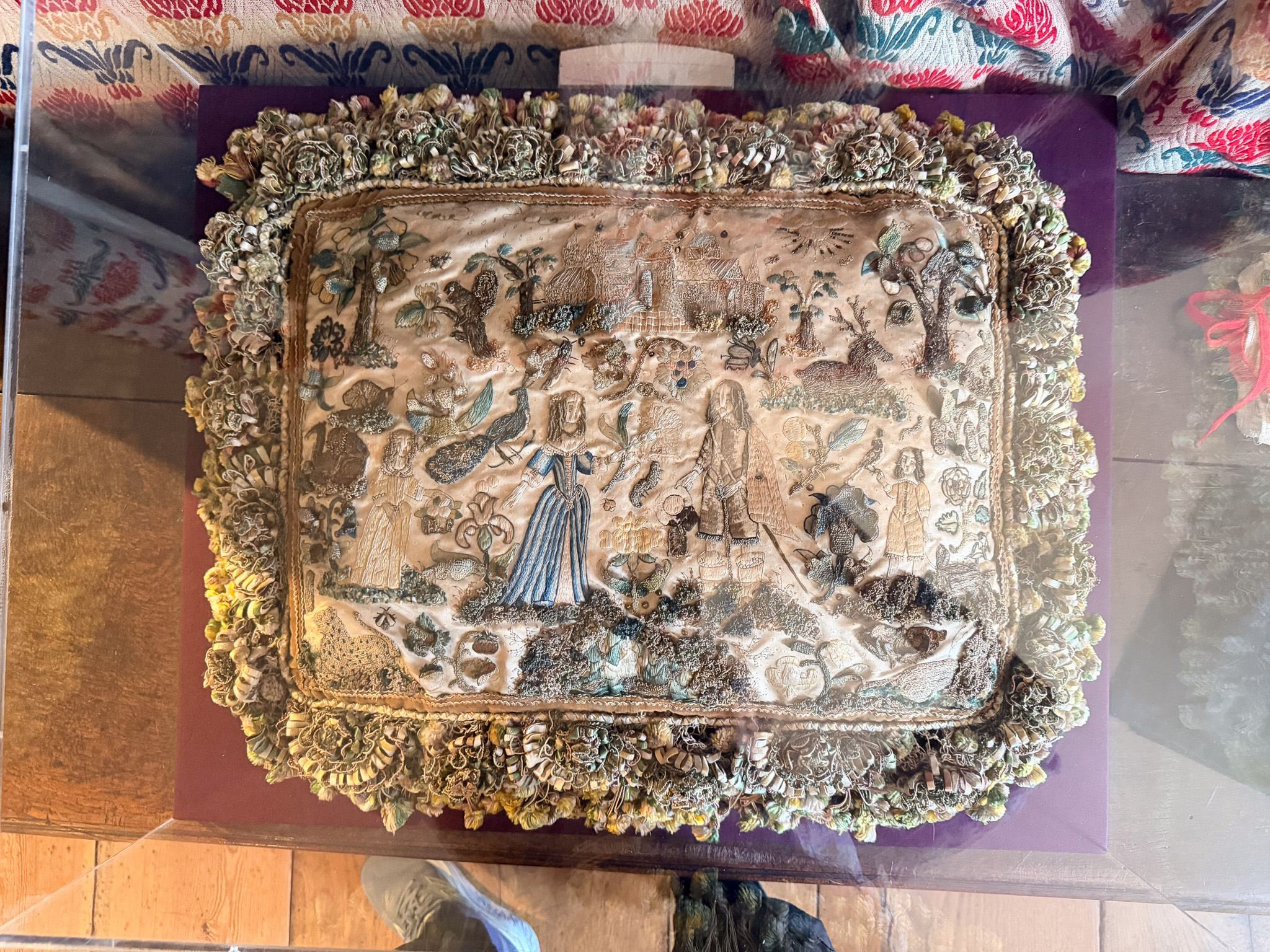
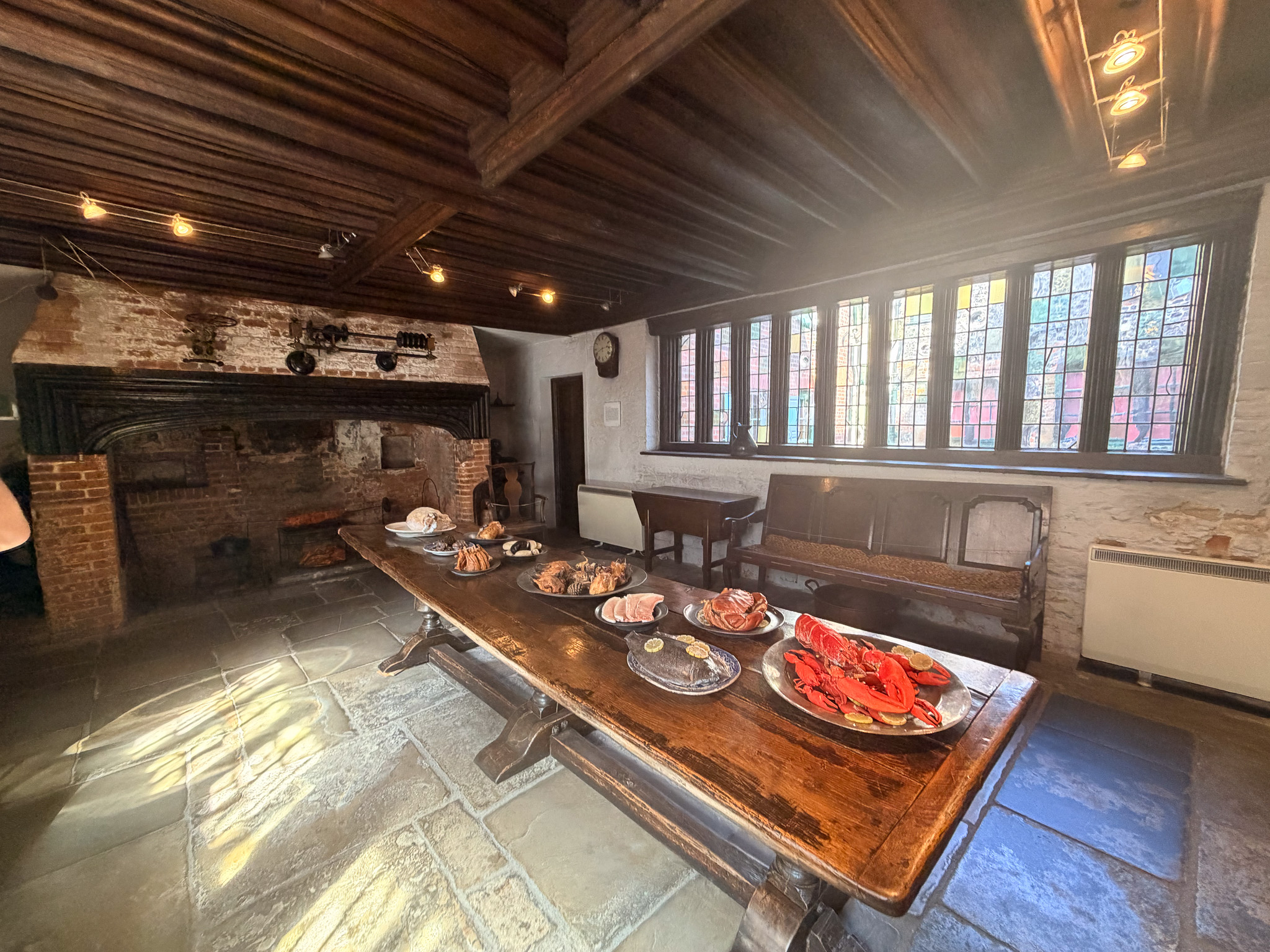
Our third museum of the day was the ‘Strangers’ museum, dedicated to the Protestants escaping persecution from Belgium and the Netherlands. Luckily an industrialist in 1920 saved the heritage building from destruction and donated it to the city.
We ate dinner and hit the sack to rest up for the next morning’s 65 km ride to Wells Next-The-Sea, a seaside town on the North coast of Norfolk.
Bury St. Edmund to Norwich, 73 km. 6600 and 9100 steps that included lots of flights of stairs. Norwich was hillier than anticipated.
Btw. St James Toronto 92.9. Too bad you’re not here for doors open; you could climb up and ring a bell or two.
0
0