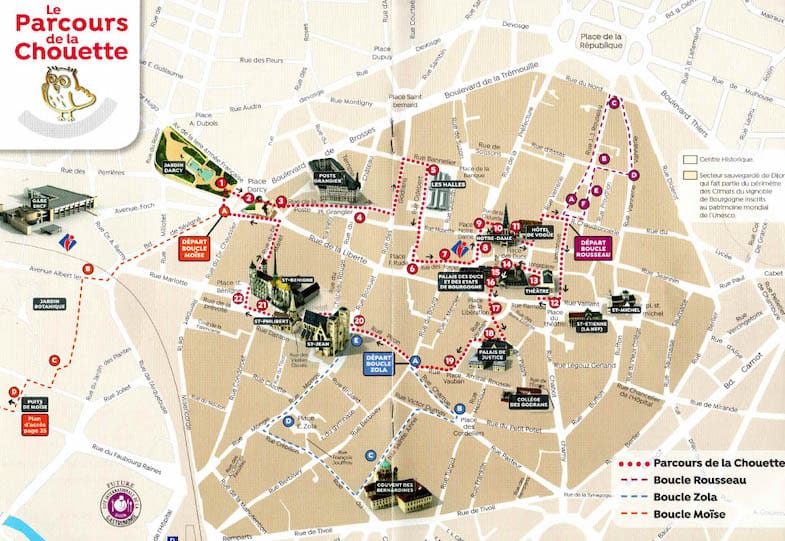
Addendum to yesterday’s post: I forgot to mention the Parcours de la Chouette, a great tourism directive whereby you follow little brass markers in the sidewalks to various sites around the city, well described on a map from the tourism office. The owl is the symbol of the city of Dijon. More about that later.
Back to Sunday’s plans. We were blessed with absolutely spectacular sunshine!
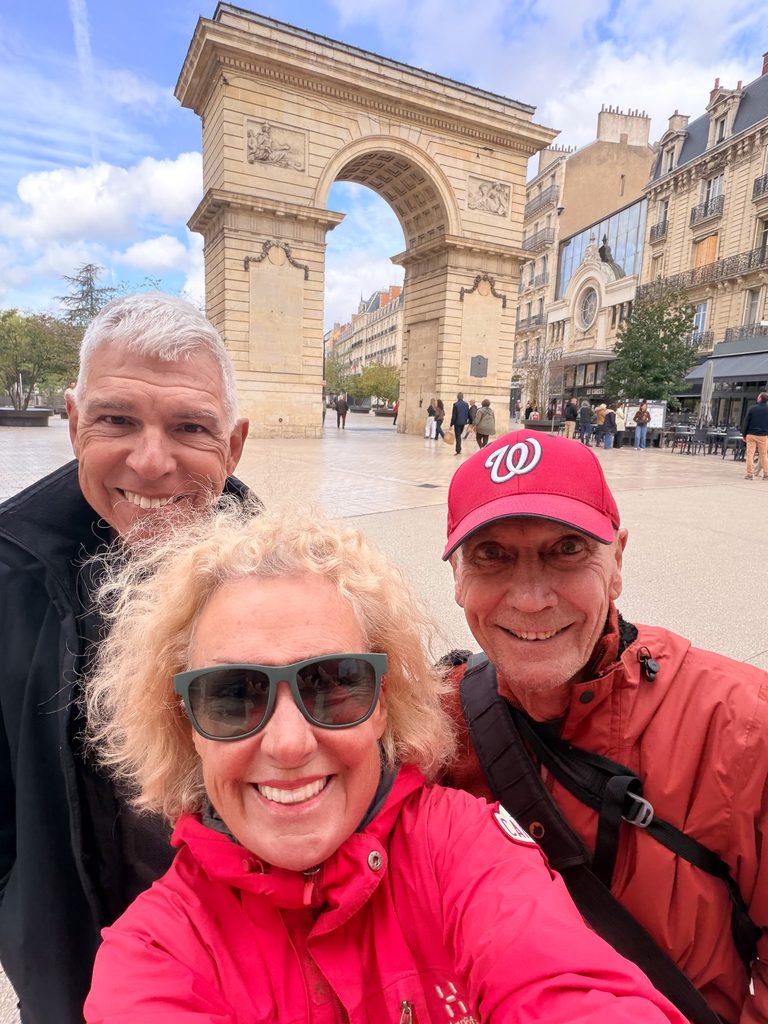
After our hotel breakfast we set out to meet Tony (our very moderately-priced, private tour guide from Viator – a “photographer’s tour of Dijon”) in front of the Porte Guillaume, an 18th C arched gate toward the west end of the old city. (Dijon is a small city. In truth it took us only 15 minutes to walk to that beautiful square.) Tony let us know he’d be wearing a red cap. He was very easy to find (not many people carry big cameras anymore!)
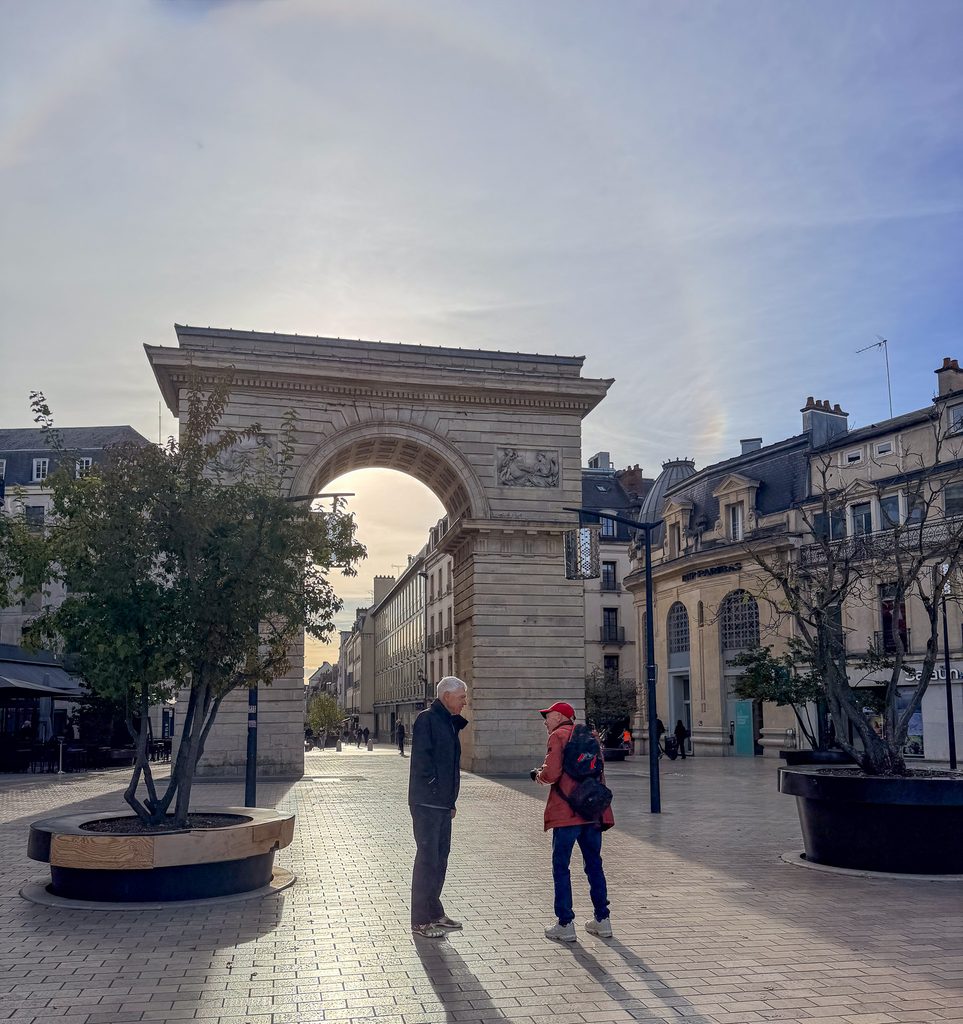
Also, it was Sunday morning, a very slow morning in the Dijon despite the fact that a marathon/half-marathon was being run.
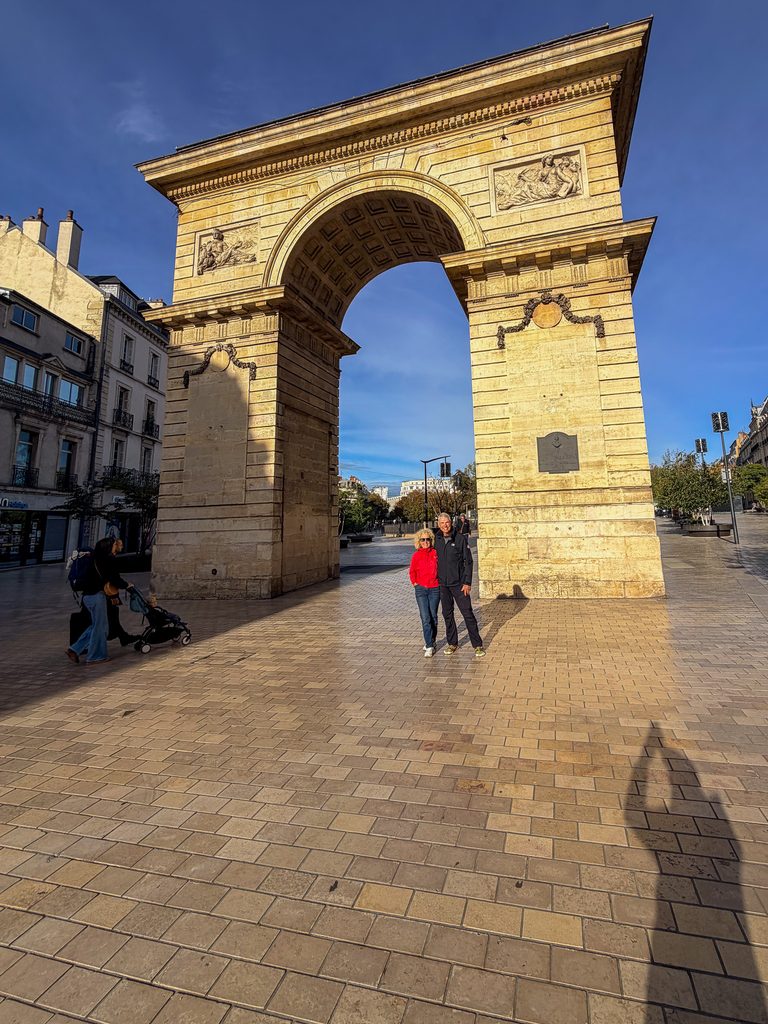
The gate is in Place D’Arcy, named after a town planner who engineered the water system of Dijon, piping water from the nearby river and ensuring that water fountains would be no more than 50m apart throughout the city.
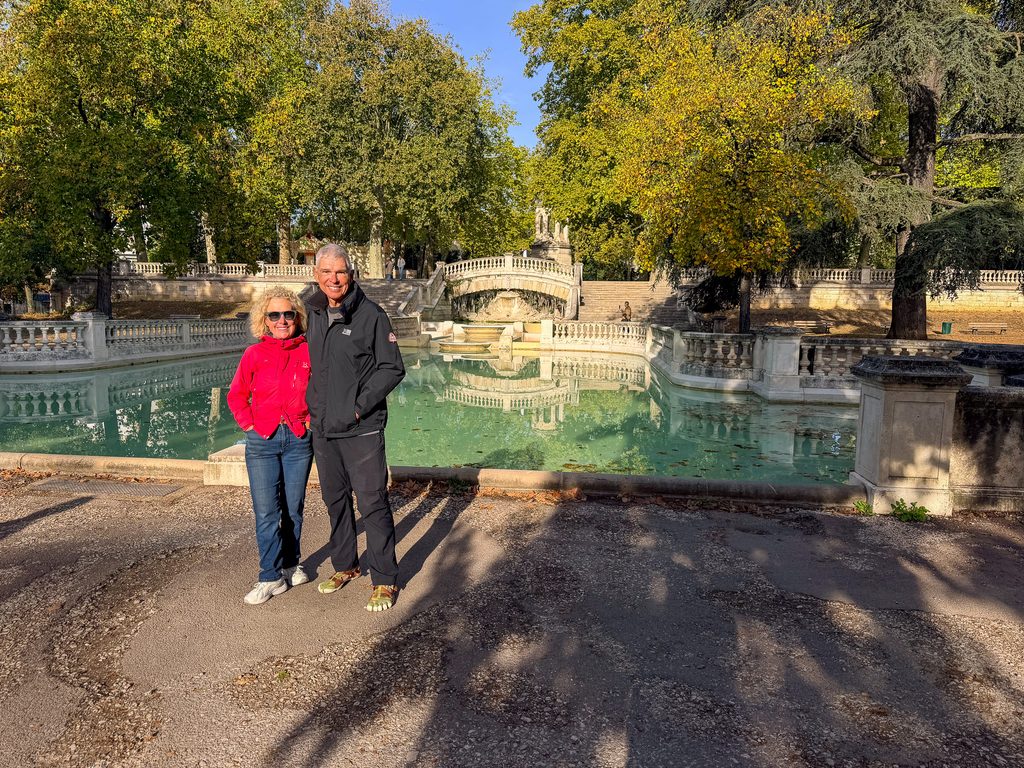
Thanks to D’Arcy, citizens of Dijon had access to fresh water. And effluent was ‘purged’ from the city’s core. These are huge contributions to a city’s health. Merci, M. D’Arcy.
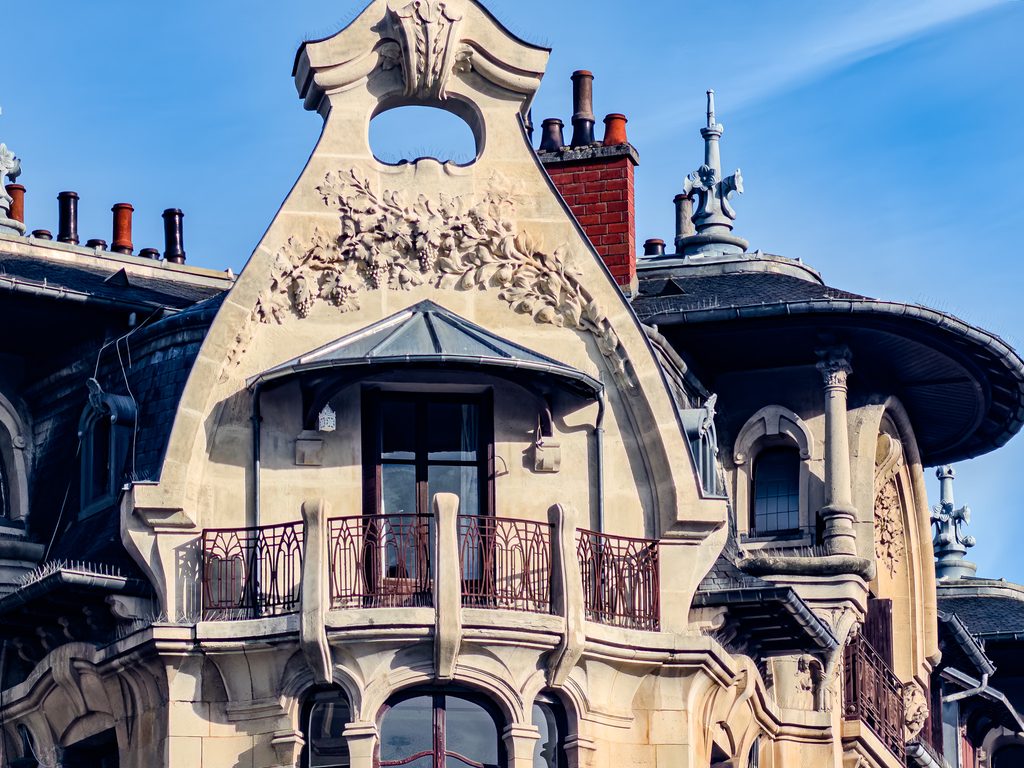
Our guide, Tony Stamp (a Manchester native who met and fell in love with a woman from Dijon), was informative and entertaining, taking us all around Dijon and pointing out interesting architectural details. (For example, contrasting old buildings with new builds.)
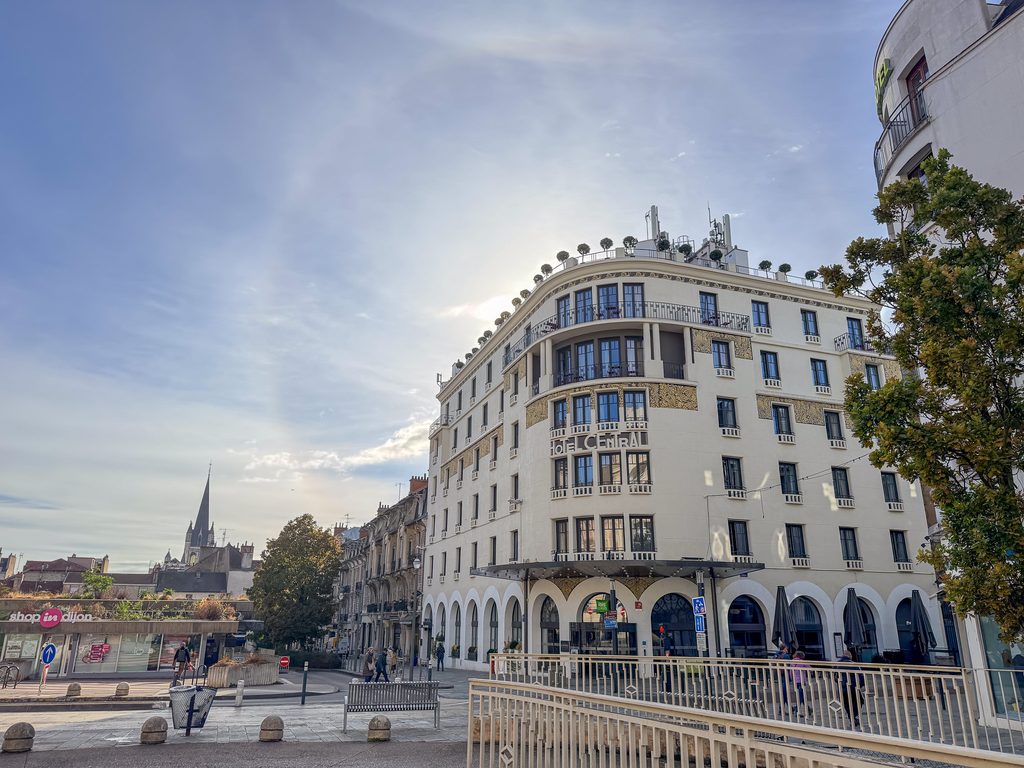
Or buildings that were almost evocative of Gaudi!
He is a photographer who is in interested in history rather than a historian who is interested in photography. Being a photographer, his eye caught many things that we would definitely have missed.
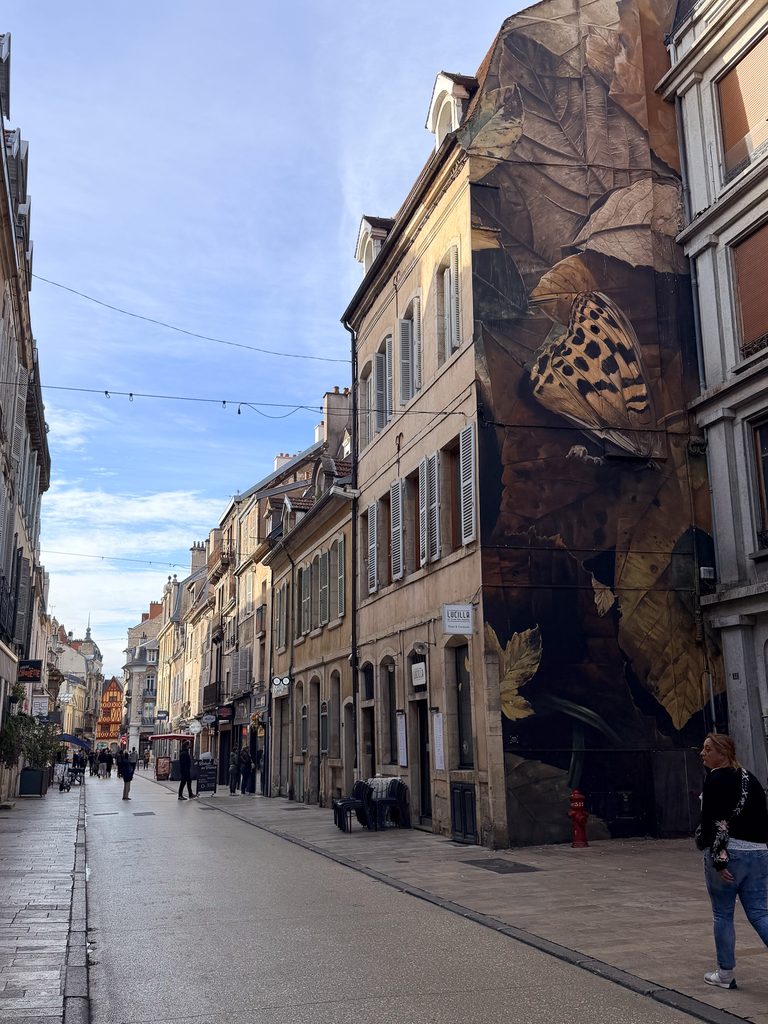
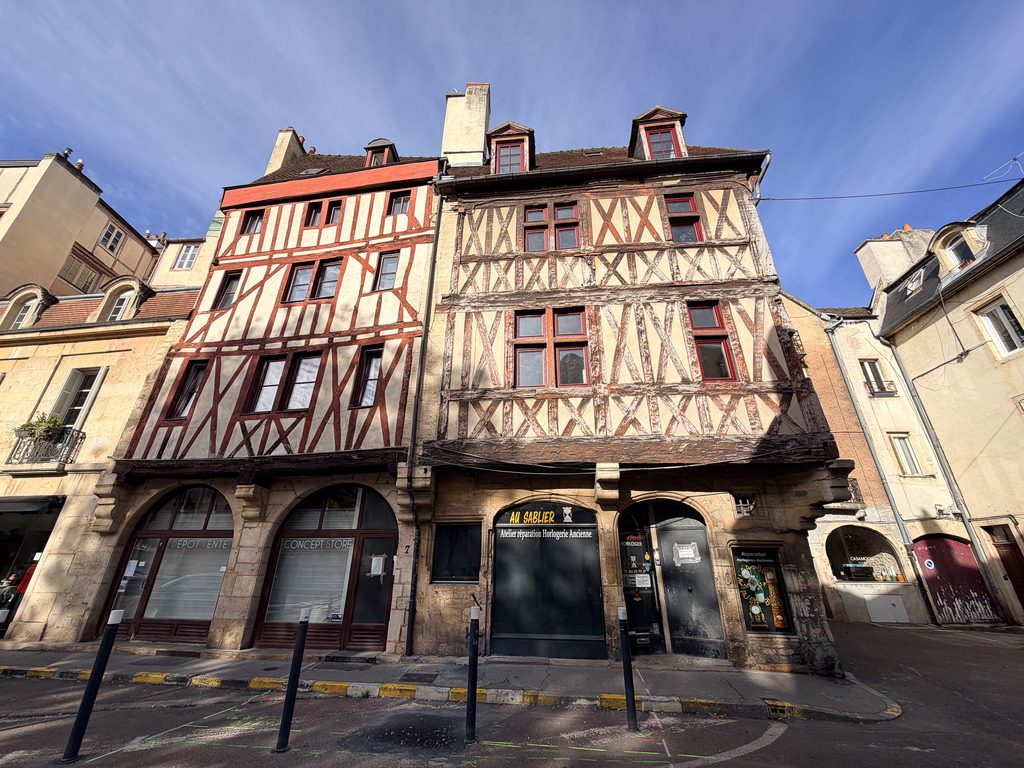
For example, this mural, and the contrasting medieval building down the street.
More medieval buildings.
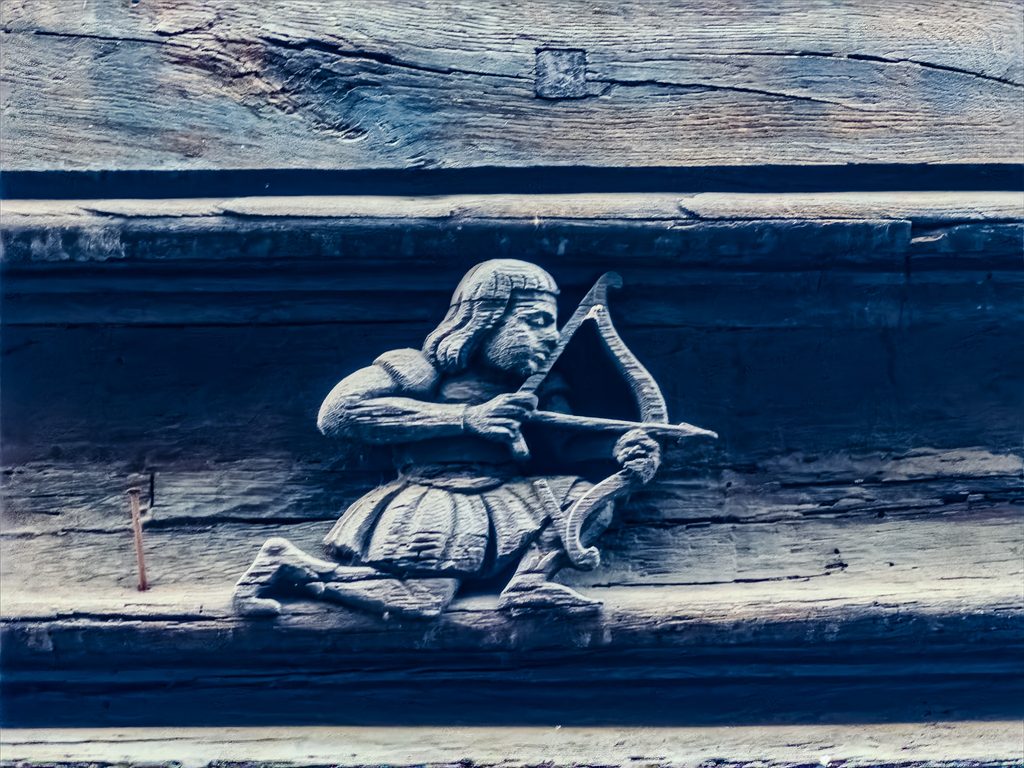
Details above doorways.
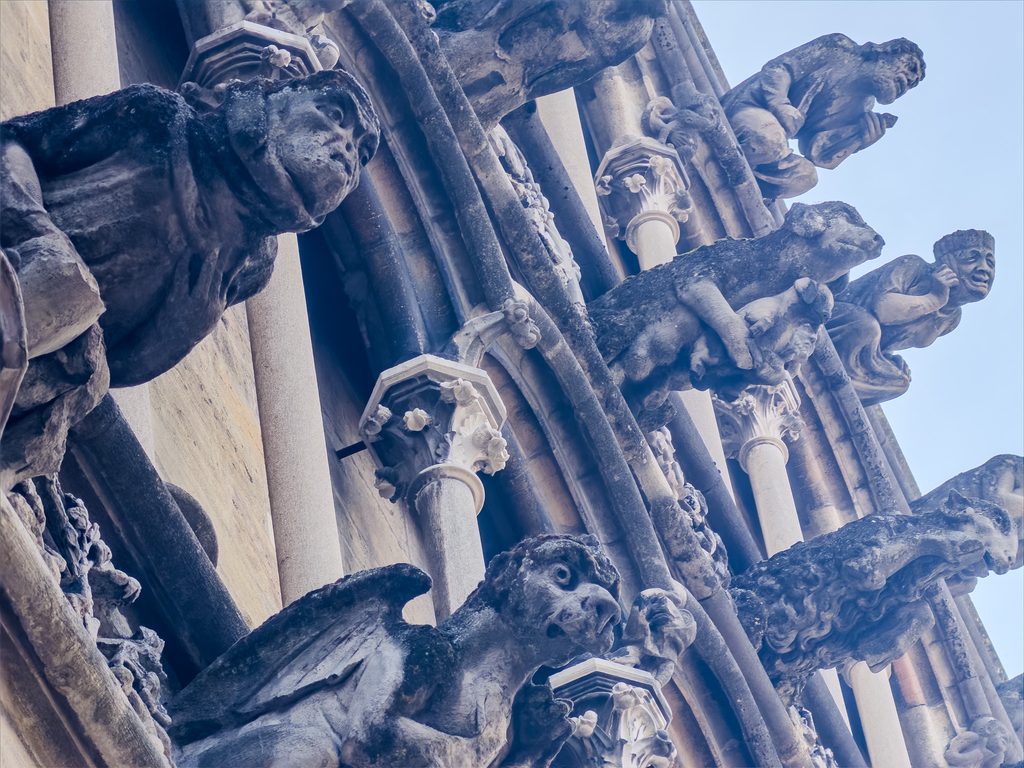
Don’t forget to look up! These are “grotesques” on the front of Notre Dame de Dijon. BTW, grotesques are decorative. Gargoyles function as drain spouts, grotesques do not. (Thanks to our buddy Richard to teaching us that!) However, there are functional gargoyles on the lateral walls of the church and the walls of the apse, serving their traditional purpose of directing rainwater away from the building.
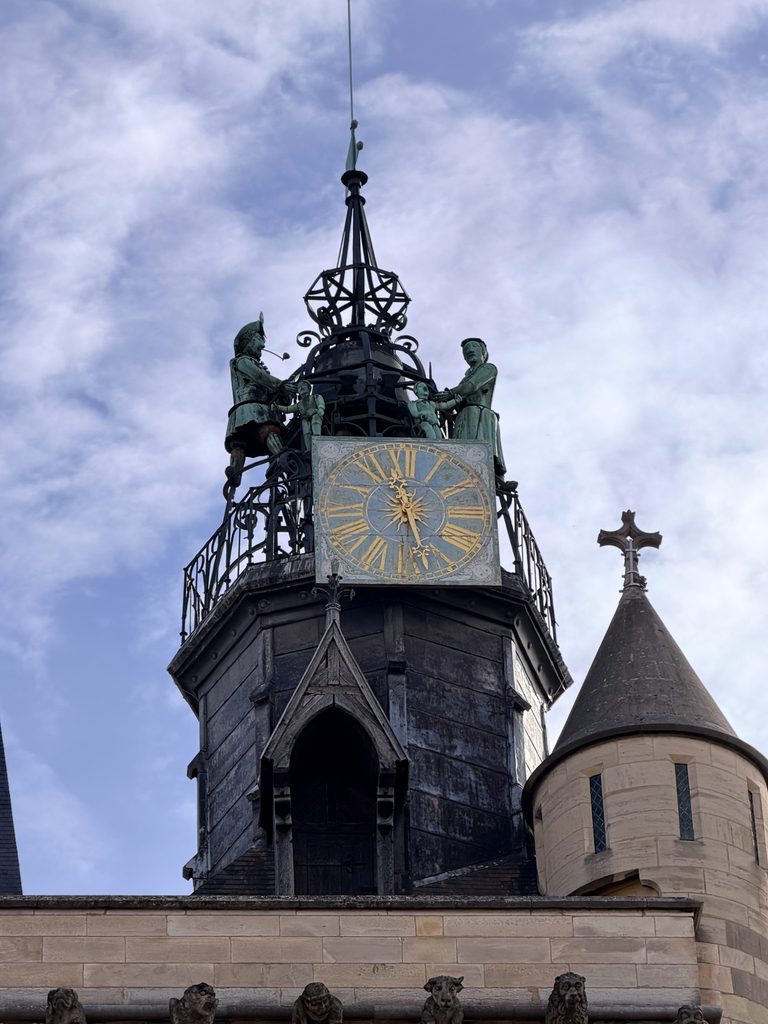
At the very top of Notre Dame de Dijon, an interesting statue, completely secular in nature. “The clock with its jacquemart sits on a campanile rising from the base of the unbuilt south tower of the western façade. It has four metal automatons. Two of them, called Jacquemart and Jacqueline, sound the hours by striking a large bell with a hammer. The other two, their “children”, Jacquelinet and Jacquelinette, strike the quarter hours, each on a small bell.
A second automaton, depicting a woman, was added in 1651 to alternate with Jacquemart in sounding the hours. The people of Dijon called this new automaton Jacqueline.
In 1714, the Dijon poet Aimé Piron asked the municipality to provide the couple with children. In that year, or thereabouts, an automaton child, dubbed Jacquelinet, was added to sound the half-hours, and finally in 1884 a second automaton child, Jacquelinette, was added to strike the quarter hours with her brother.” (Wikipedia.)
“On the north side of the church is a chapel bordering on rue de la Chouette (Owl Street), a pedestrian way. A corner of a buttress of this chapel bears a sculpted bird thought to represent an owl. The ornament could possibly be the personal mark of a stonemason. It cannot be the signature of the original church’s architect, as is sometimes suggested, for the chapel was built in the late 15th or early 16th century—several centuries after the original church. The owl became worn over the centuries because of a superstition that luck would accompany anyone who stroked the bird with their left hand while making a wish. As a result, the sculpture lacks detail.” (Wikipedia.)
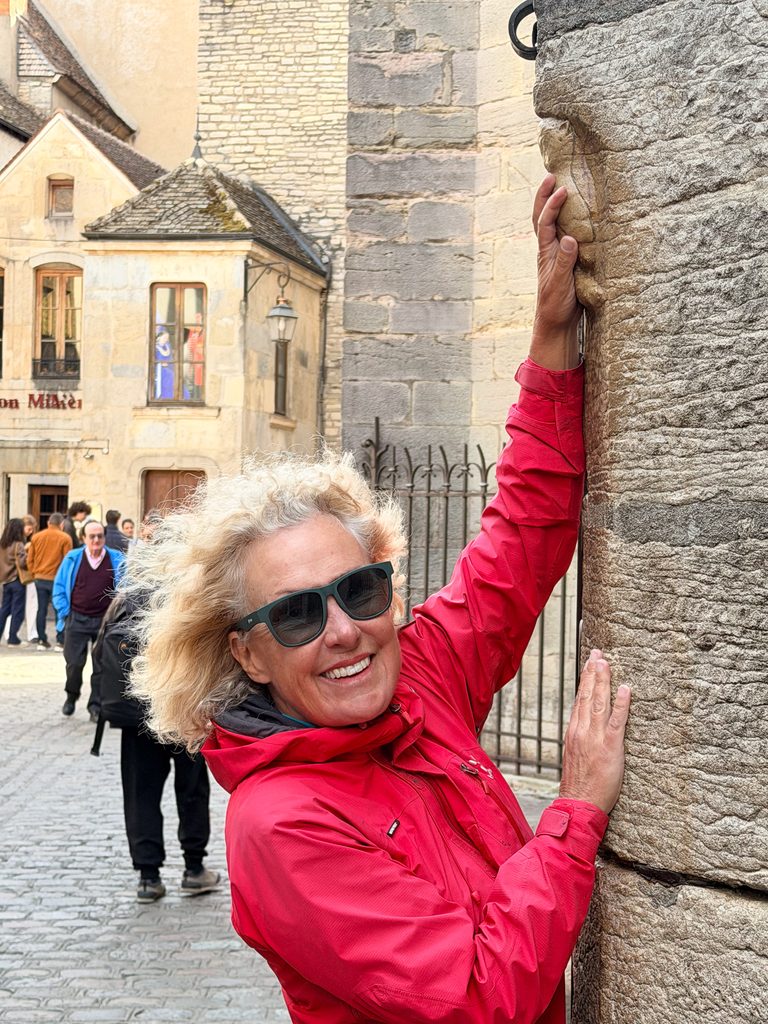
“On 5 January 2001 a vandal damaged the owl with several blows of a hammer. A mould of the owl, made in 1988 by an expert from the Louvre, served as a model for the repair completed in February 2001. The restored owl, now under video surveillance, was officially inaugurated on 12 May 2001.
The sculpture continues to serve as a symbol of the city. The office of tourism chose the owl in 2001 as its symbol for the Parcours de la Chouette (Owl Walk), a tourist trail around the historic centre. 22 square plaques mark out the walk, each one bearing the image of an owl. The city’s football club, Dijon Football Côte d’Or, has long used an owl as its emblem.” Wikipedia
There are also surprises built into the sidewalk: mosaics by Fanny Pitoiset, a mosaicist based in Dijon. Since 2023, she has transformed damaged sidewalks and potholes into colorful public artworks using a technique often called “flacking” or street mending.
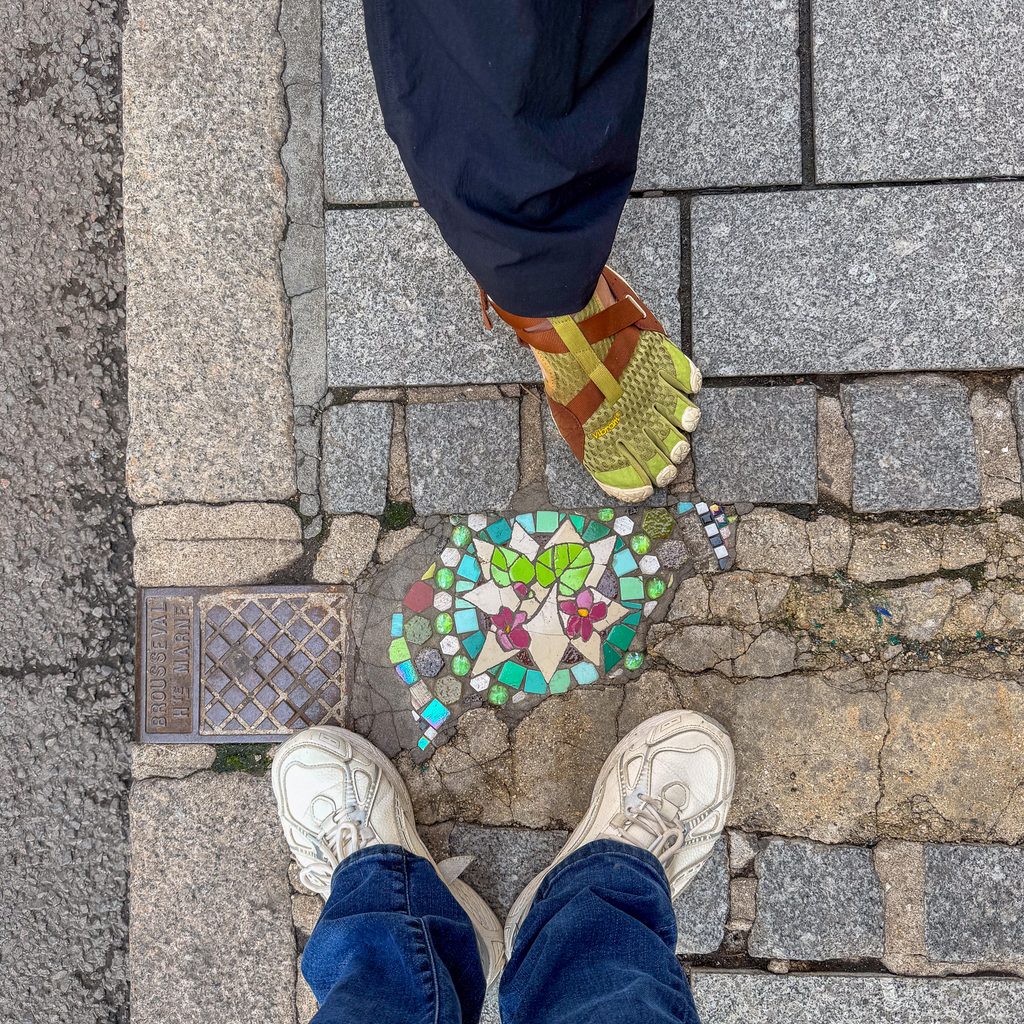
Her work involves filling concrete voids with ceramics, marbles, beads, and patterned plate fragments sourced from local dumps and donations. Pitoiset’s signature style blends geometric patterns with figurative elements, particularly floral designs framed by black-and-white borders. She selected potholes that are deep and clearly defined to ensure the mosaic sits securely without protruding, creating durable art that withstands foot traffic.
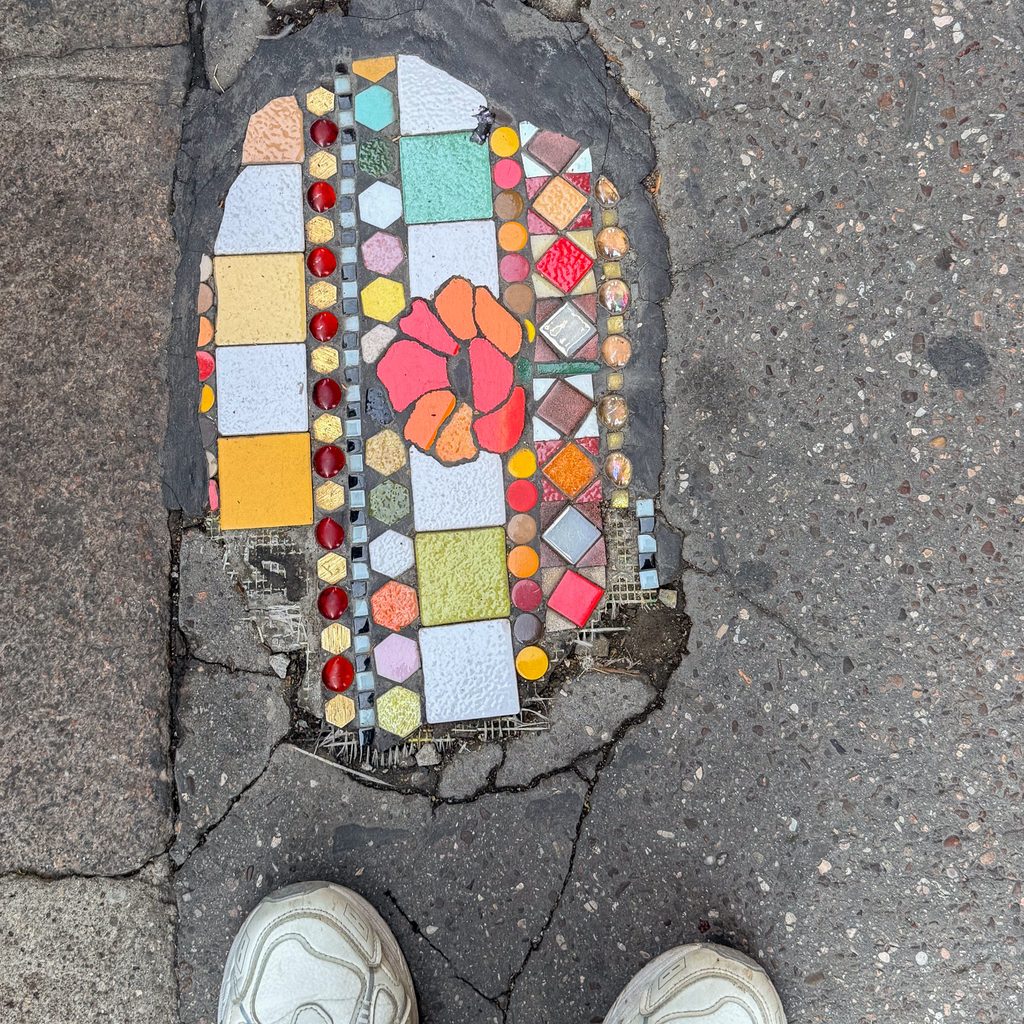
- Pitoiset was inspired by fellow French artist Ememem and began her own sidewalk mosaics after planting a flower mosaic with her eight-year-old daughter in a pothole near her home.
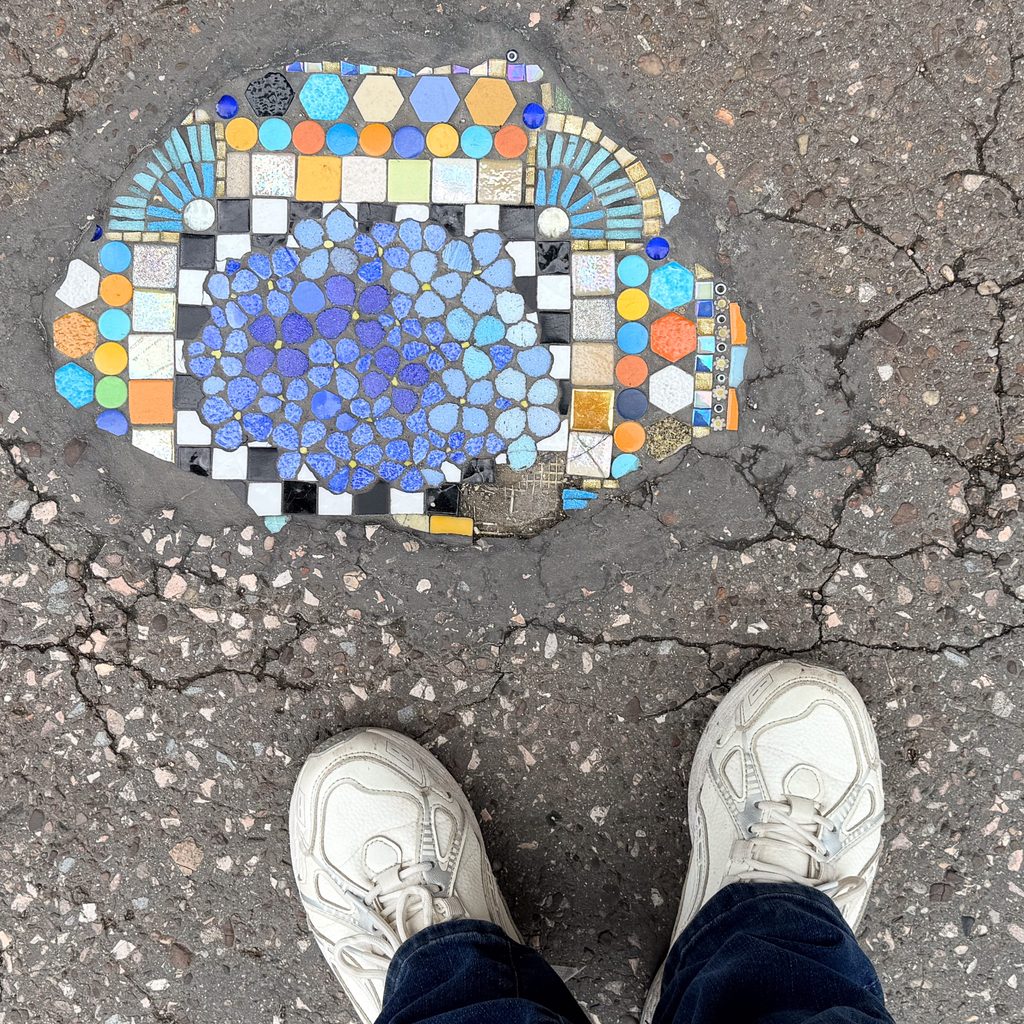
- Philosophy: Her slogan is “May flowers grow on asphalt!” (French: “Que les fleurs poussent sur le goudron!”), aiming to inject fantasy, poetry, and color into everyday urban life.
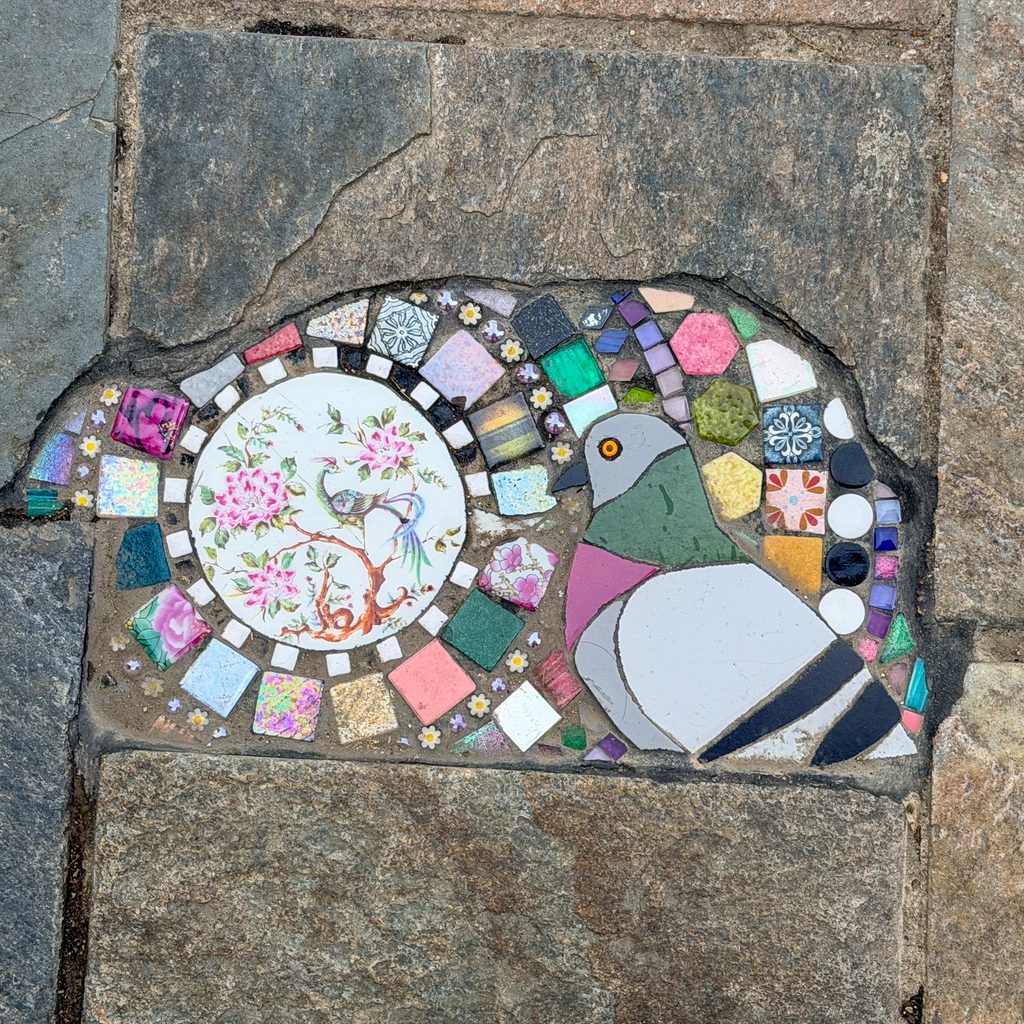
- Community Impact: The mosaics have become a local treasure hunt, with residents, children, and even homeless individuals expressing enthusiasm for the bright additions to the city.
- Volume: As of late 2026, she has created approximately 35 mosaics across Dijon, with locations tracked on her Instagram account.
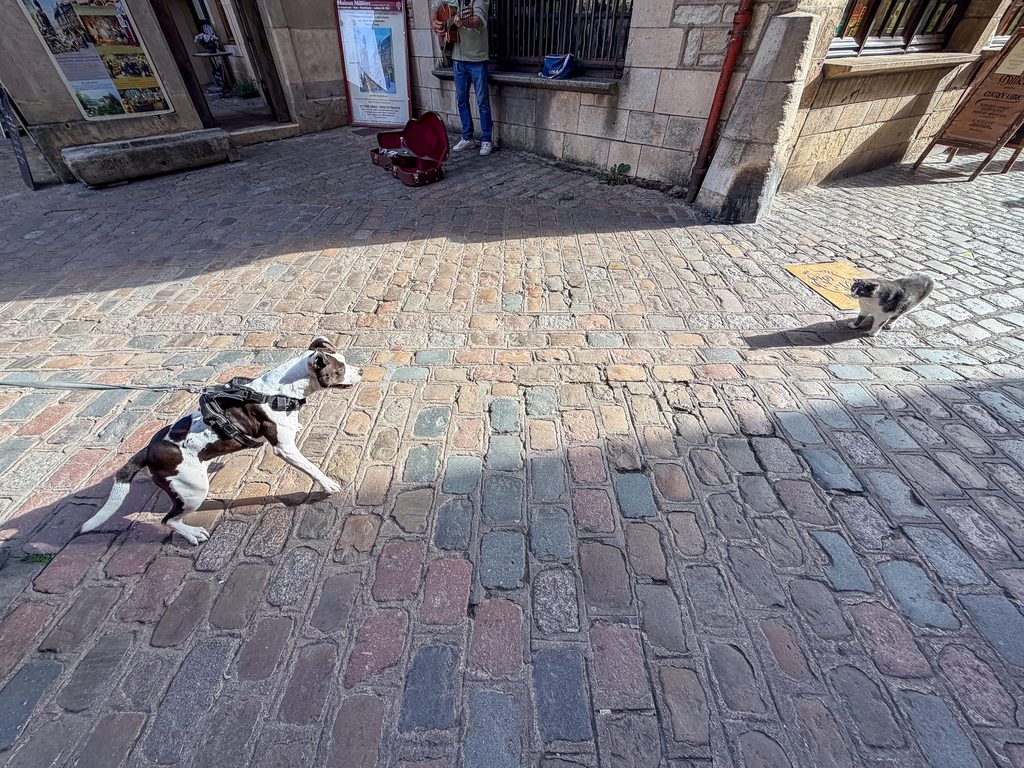
There are lots of dogs in Dijon, indeed, in most cities and towns. Not all of them are appreciated by the feline population.
I picked up a bottle of Bordeaux, basing my choice entirely on its name. (“Roy” was the name of John’s dad.)

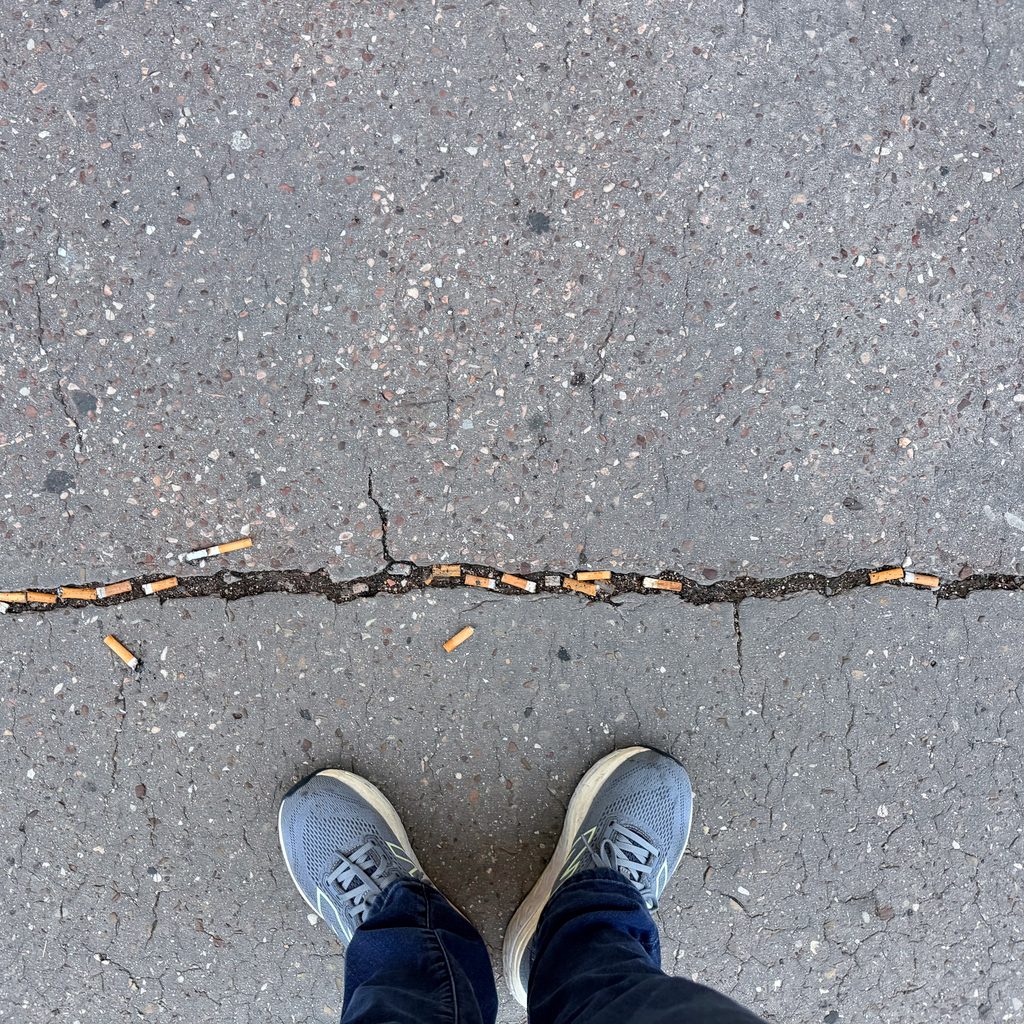
Speaking of vices, there are lots of people (still) smoking in Dijon.
We finished our tour with Tony and bade him farewell! That was time well-spent.
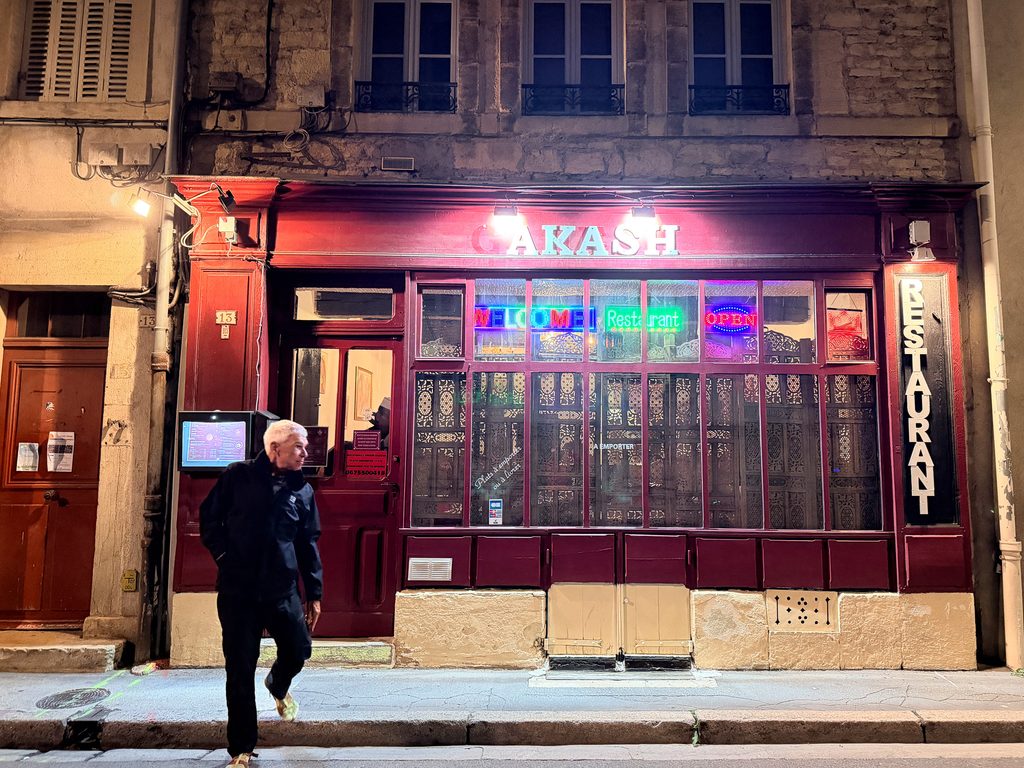
After a short rest (and red wine for me, d’accord, in the chambre) we headed out to see if we could find an open restaurant. (Sunday night. It can be a crap shoot.)
We managed to end up in this absolute gem of an Indian food restaurant. It was a one-man-show in there, the host took our order, then went in to cook our dinners to order. The food was spectacular. I can’t speak highly enough of this place which reminds me, we’ll definitely drop a great review on any social media we can find for “Ganesh Akash“.
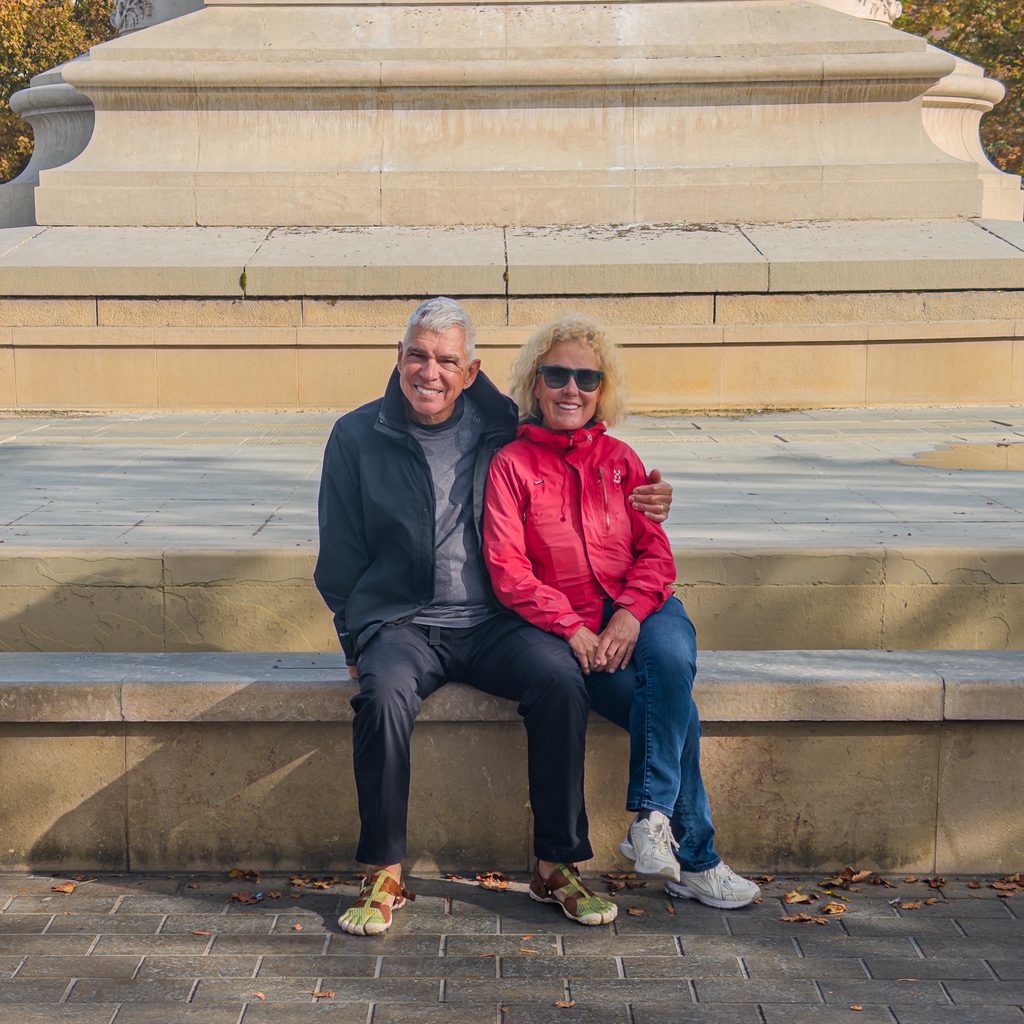
In summary: we had a fabulous time in Dijon even though we missed out on the Fallot (Dijon) mustard. Thanks to Tony the photographer/guide we have some nice photos to remind us of how much fun we had.
Tomorrow, Beaune. Serious wine country awaited.
Now this is more like! Love the gargoyles. Great you a guide to hit the hot spots The mosaics are beautiful. When you get home get Doug and Olivia on the pot hole mosaics. Toronto would just love that 😂. For me they are too beautiful to cover a pot hole. I would love to see them hanging in my living room windows when the morning sun hits them. Stay safe and keep on enjoying yourselves. 🩷
0
0
We loved Beaune. The hospital is a must! I went for the roof but the museum is fascinating. Dianne
0
0
Yes! The hospital was fantastic. I enjoyed the old medical tools. Blood-letting!
0
0