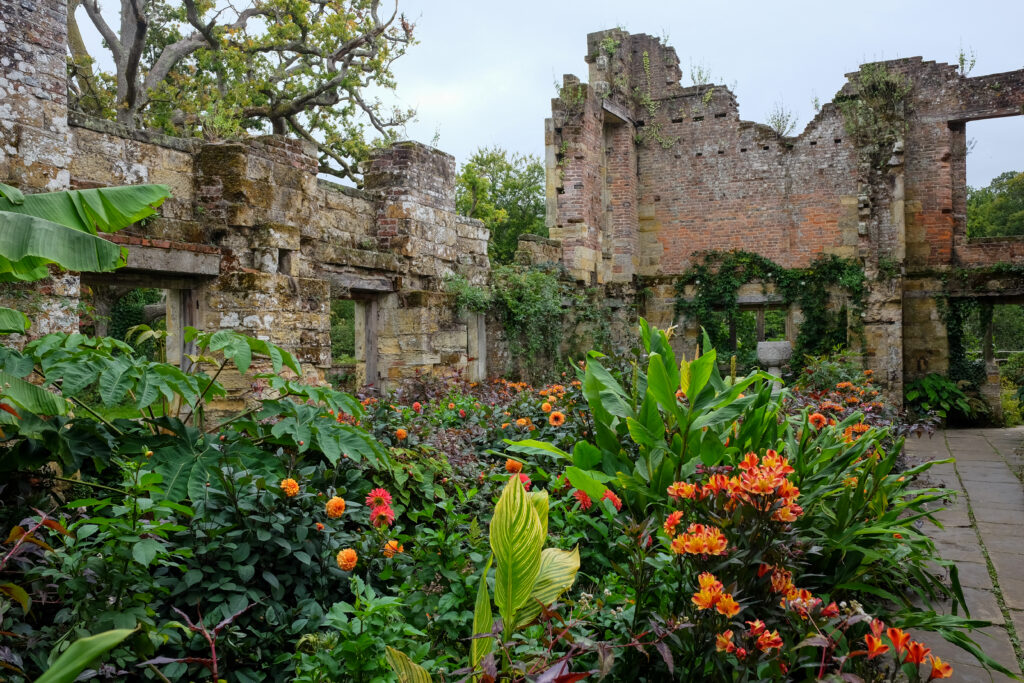
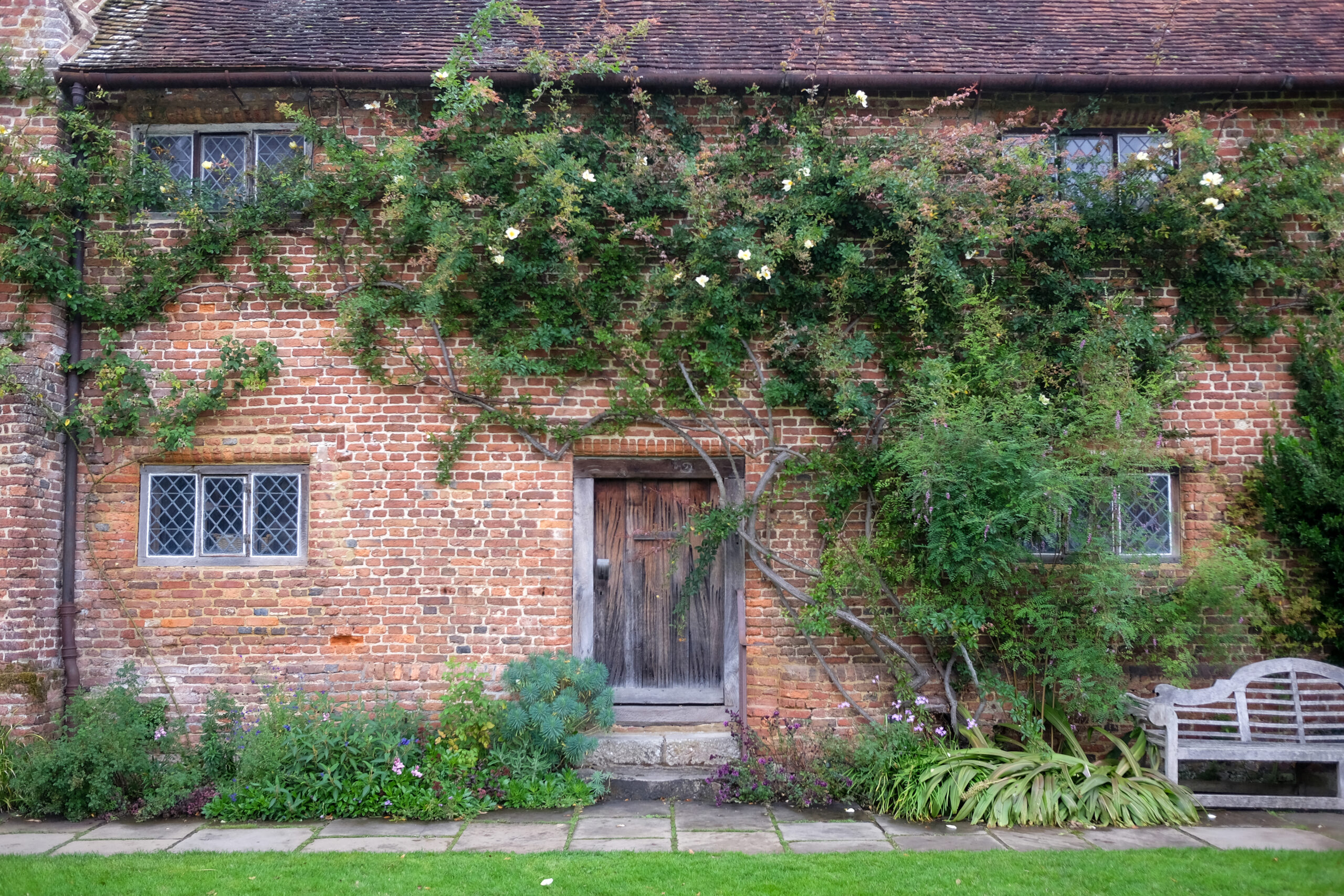
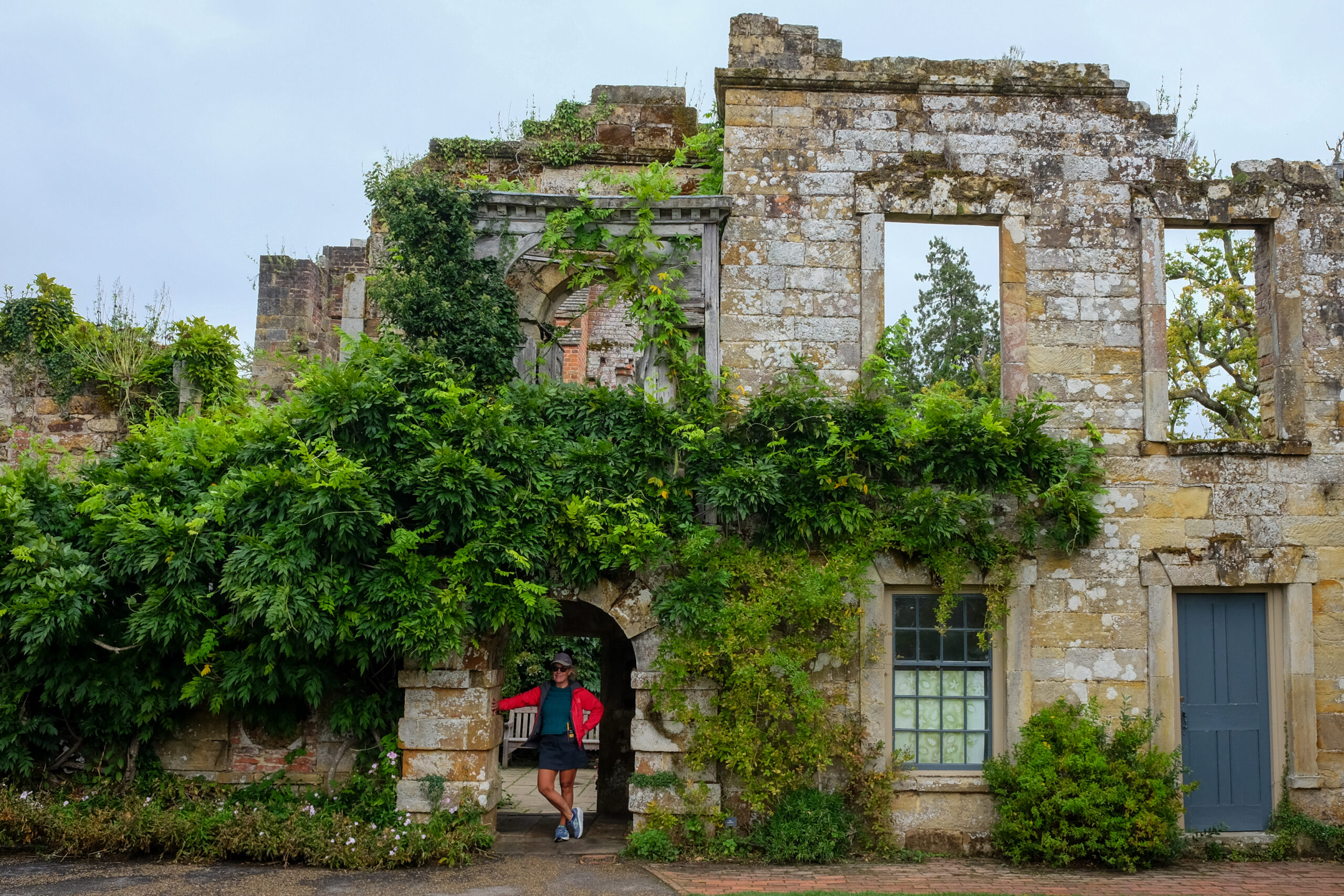
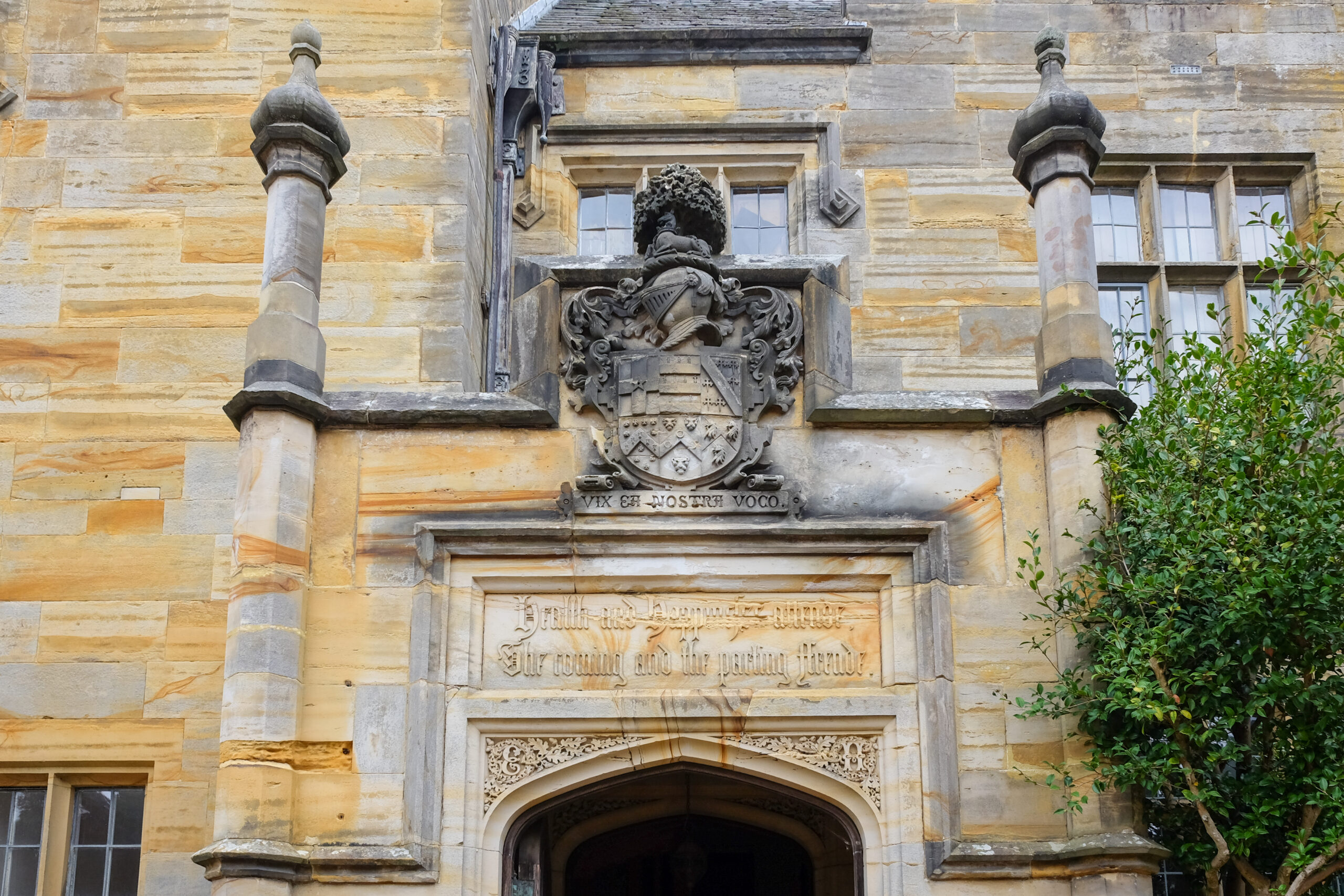
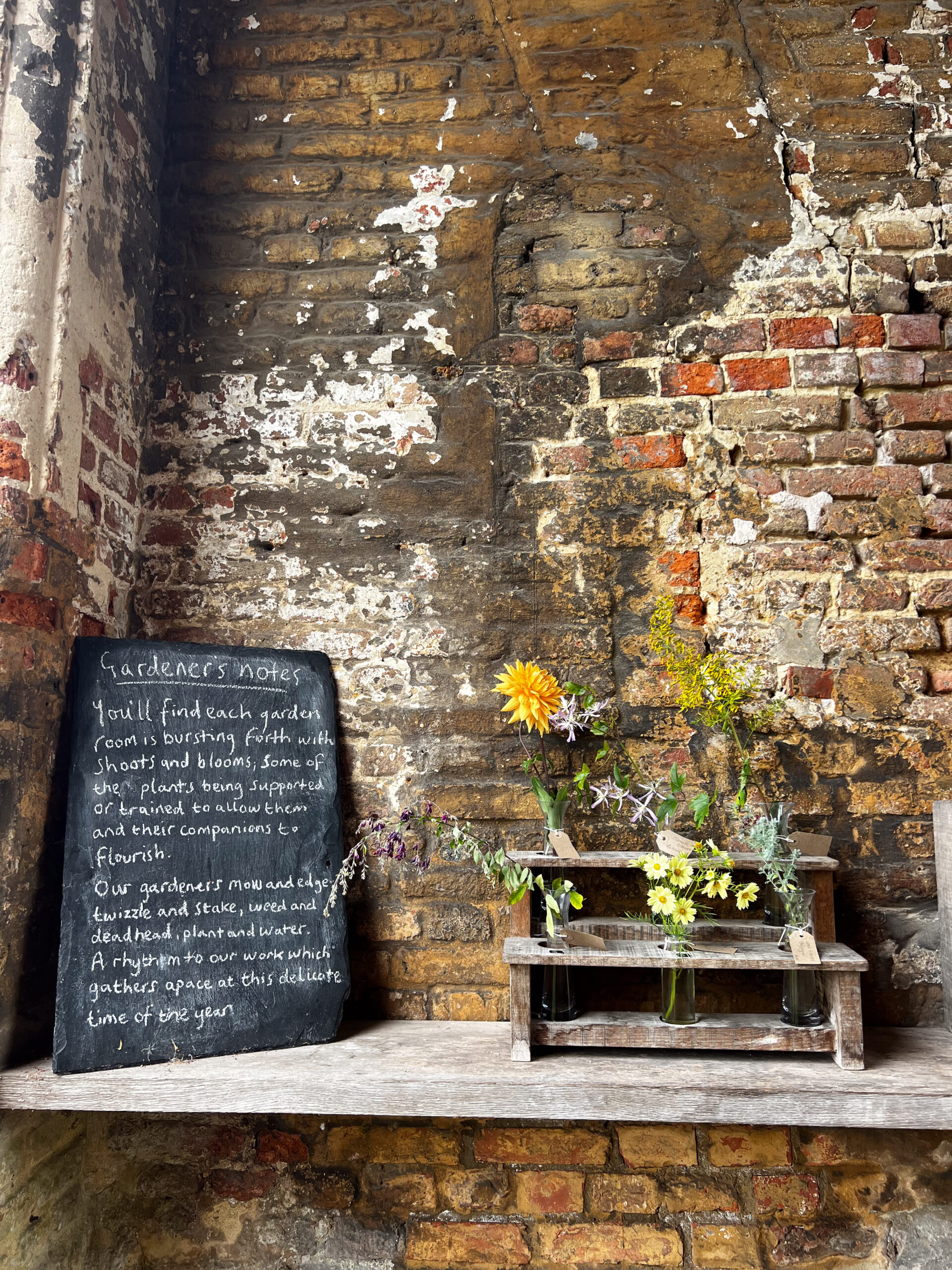
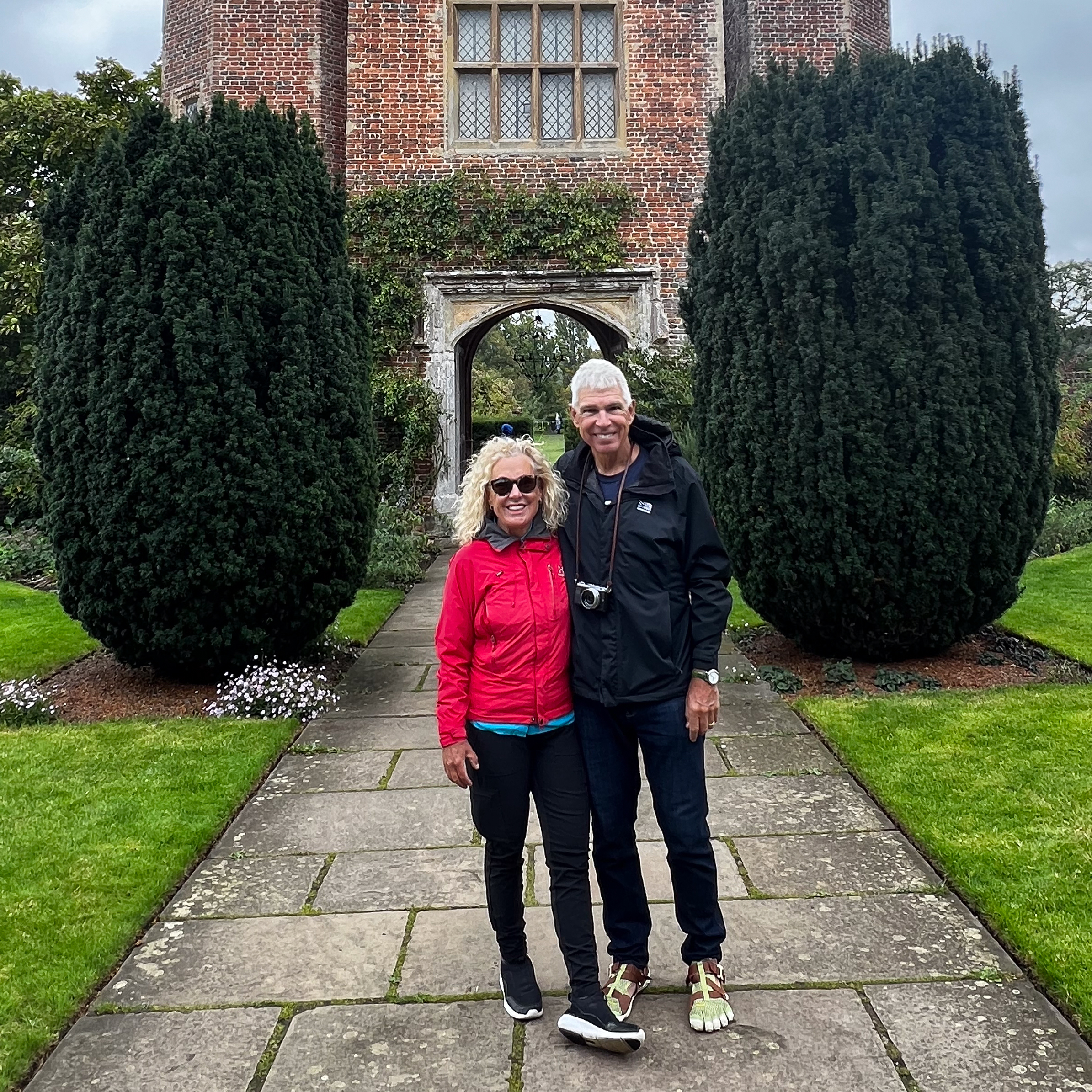
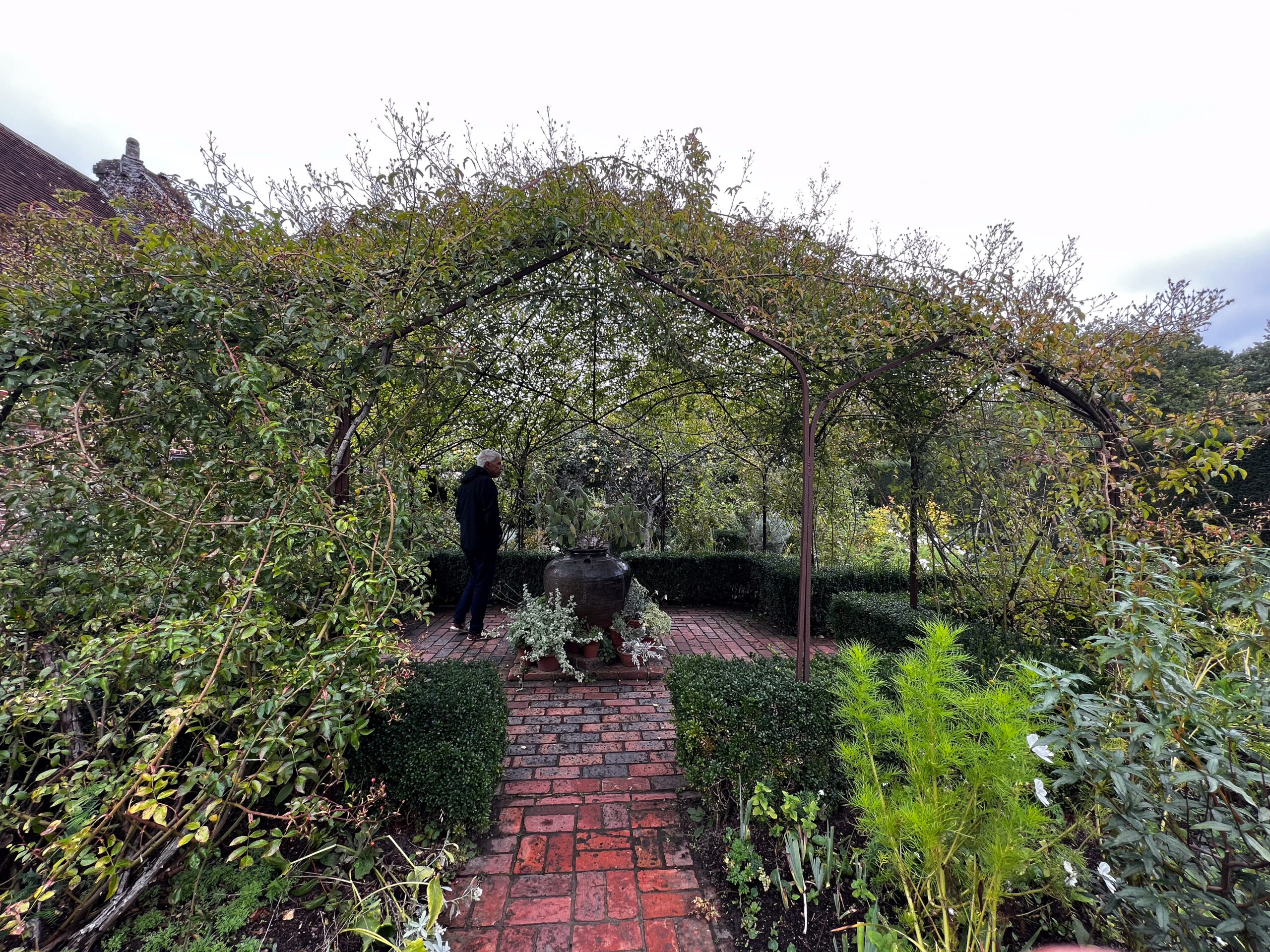
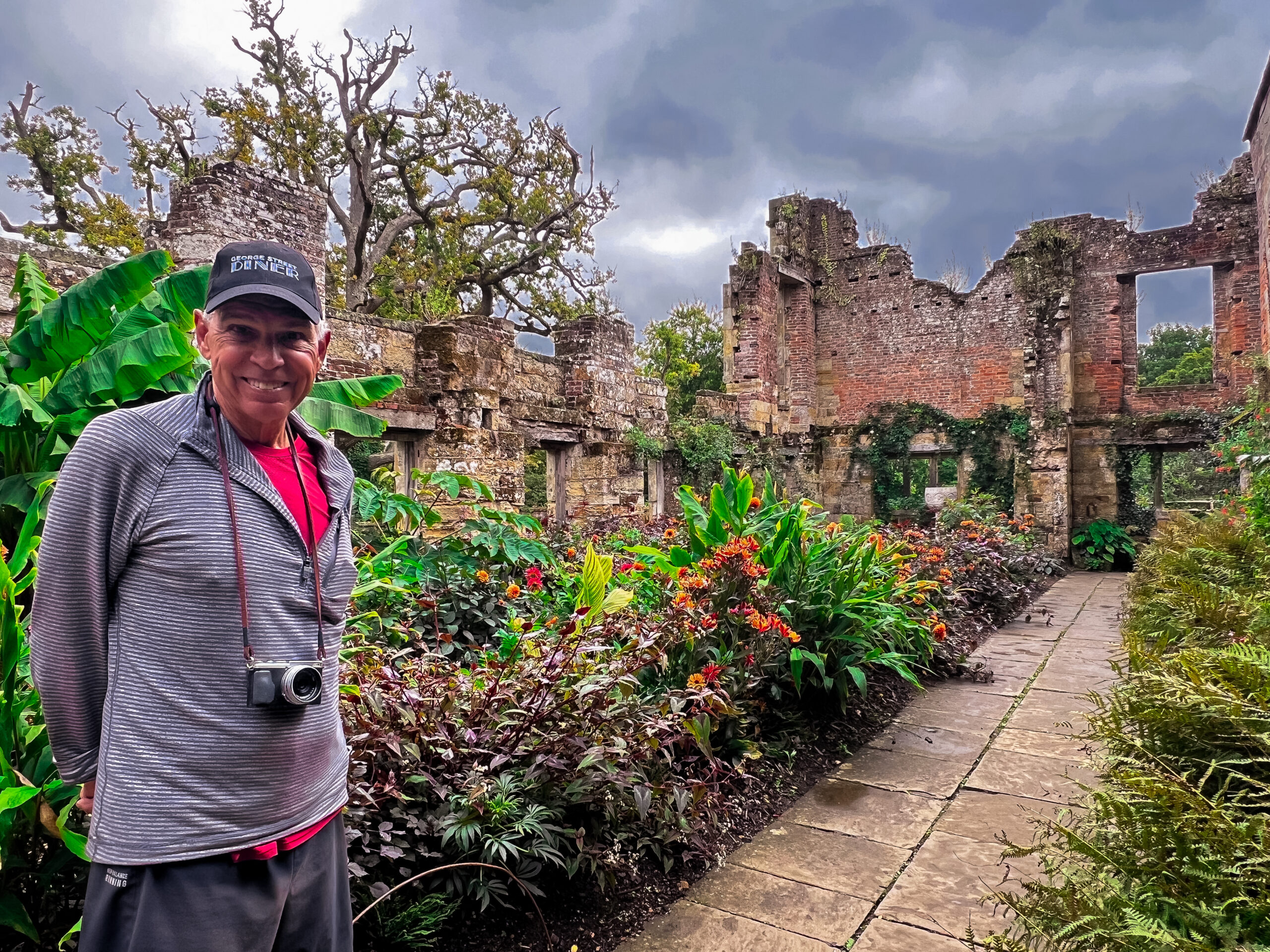
Wednesday the 17th of September we left Canterbury (and more of its recent uni graduates) in the drizzle in front of the cathedral and headed roughly southwest, destination National Trust’s property, “Sissinghurst Castle”, the home of author-gardener Vita Sackville-West and her husband, politician-writer-broadcaster and gardener, Harold Nicolson.
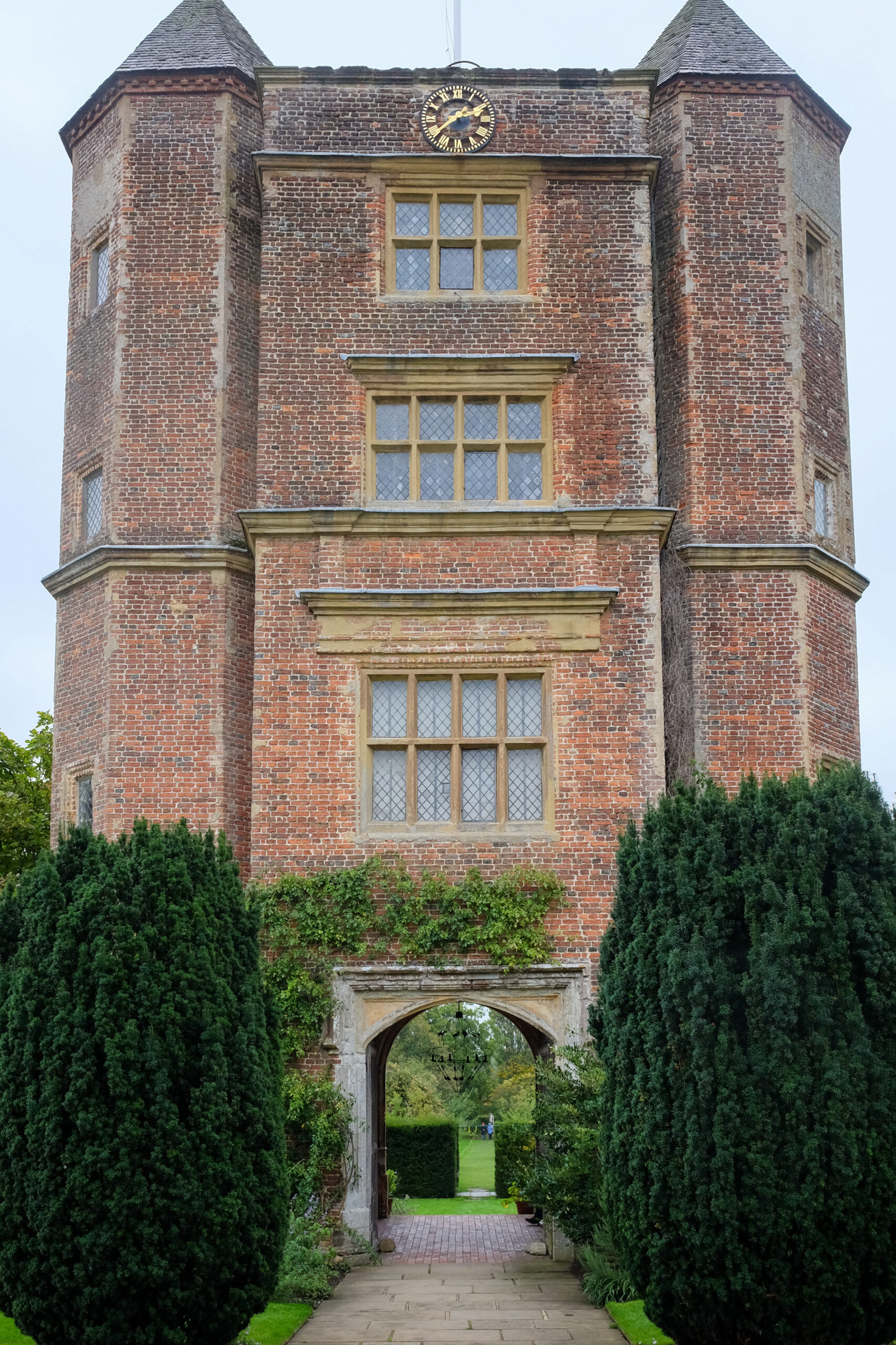
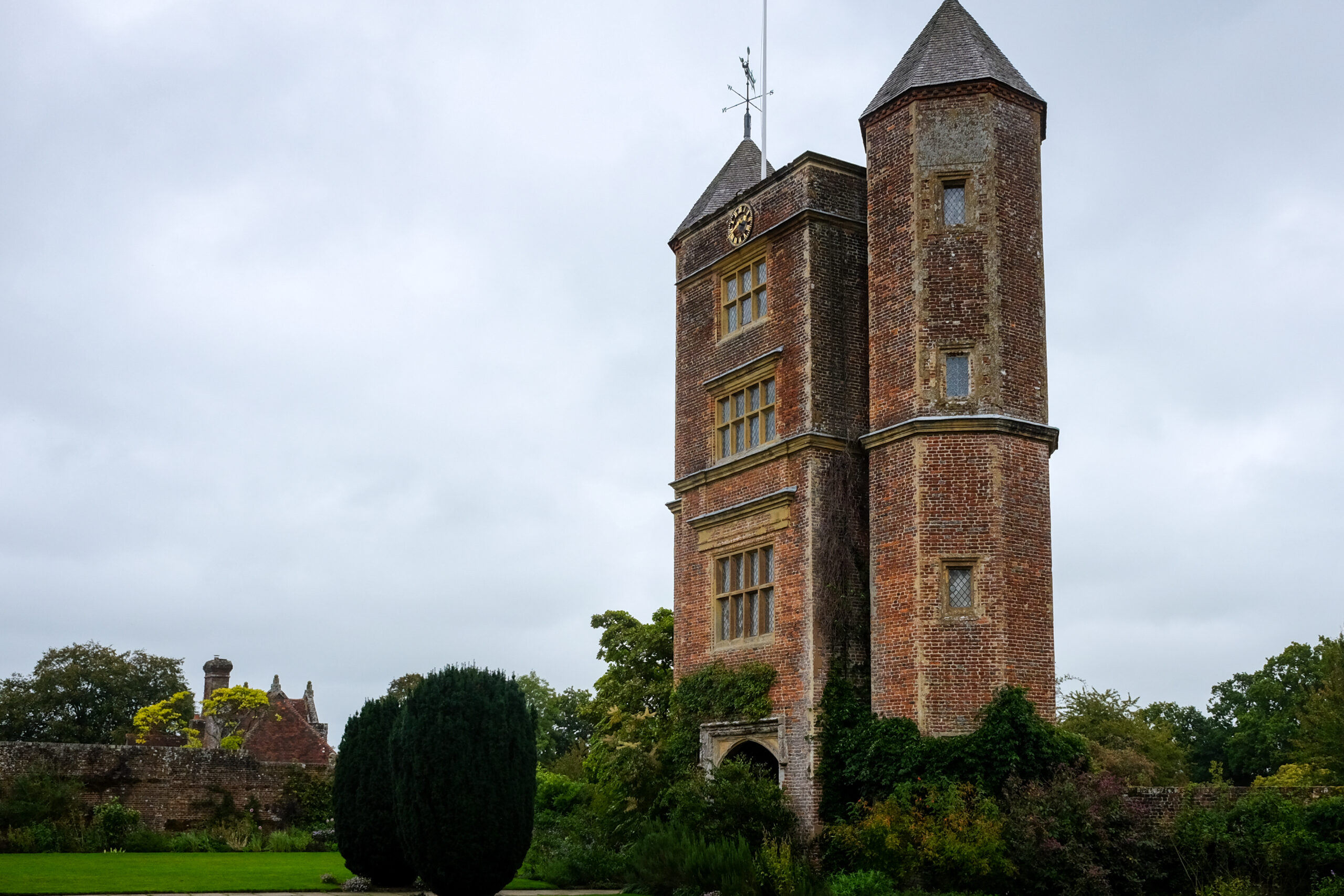
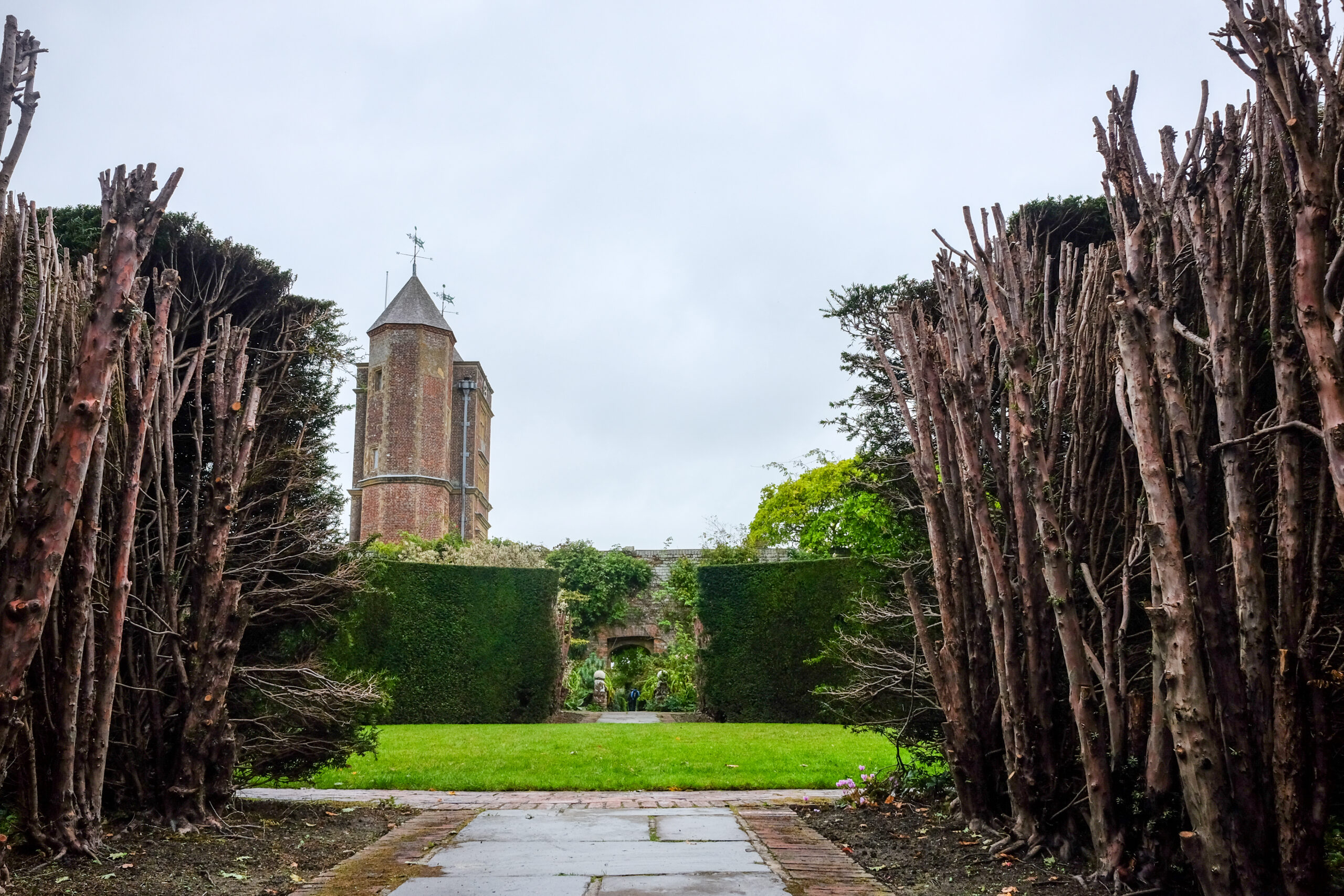
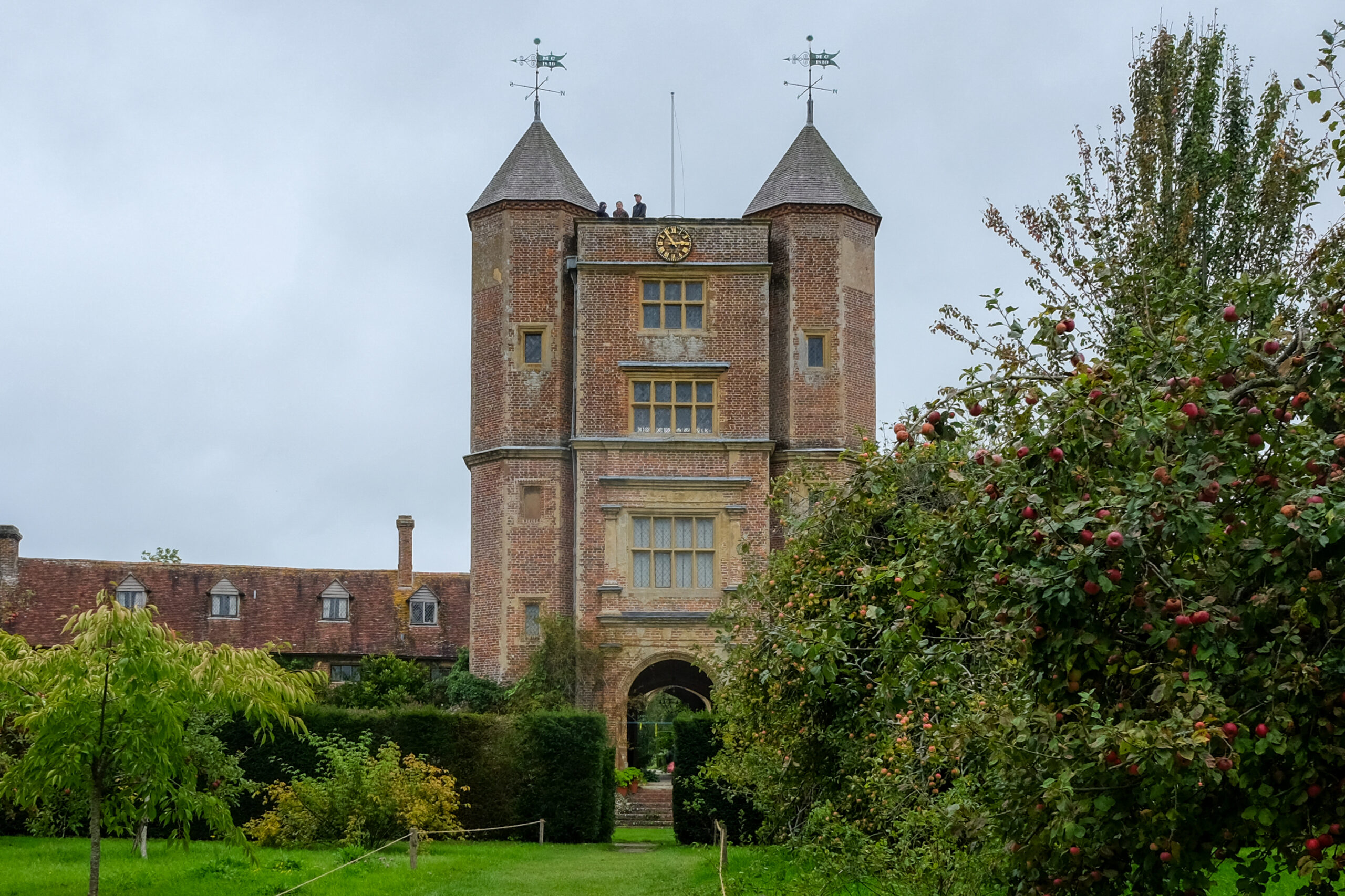
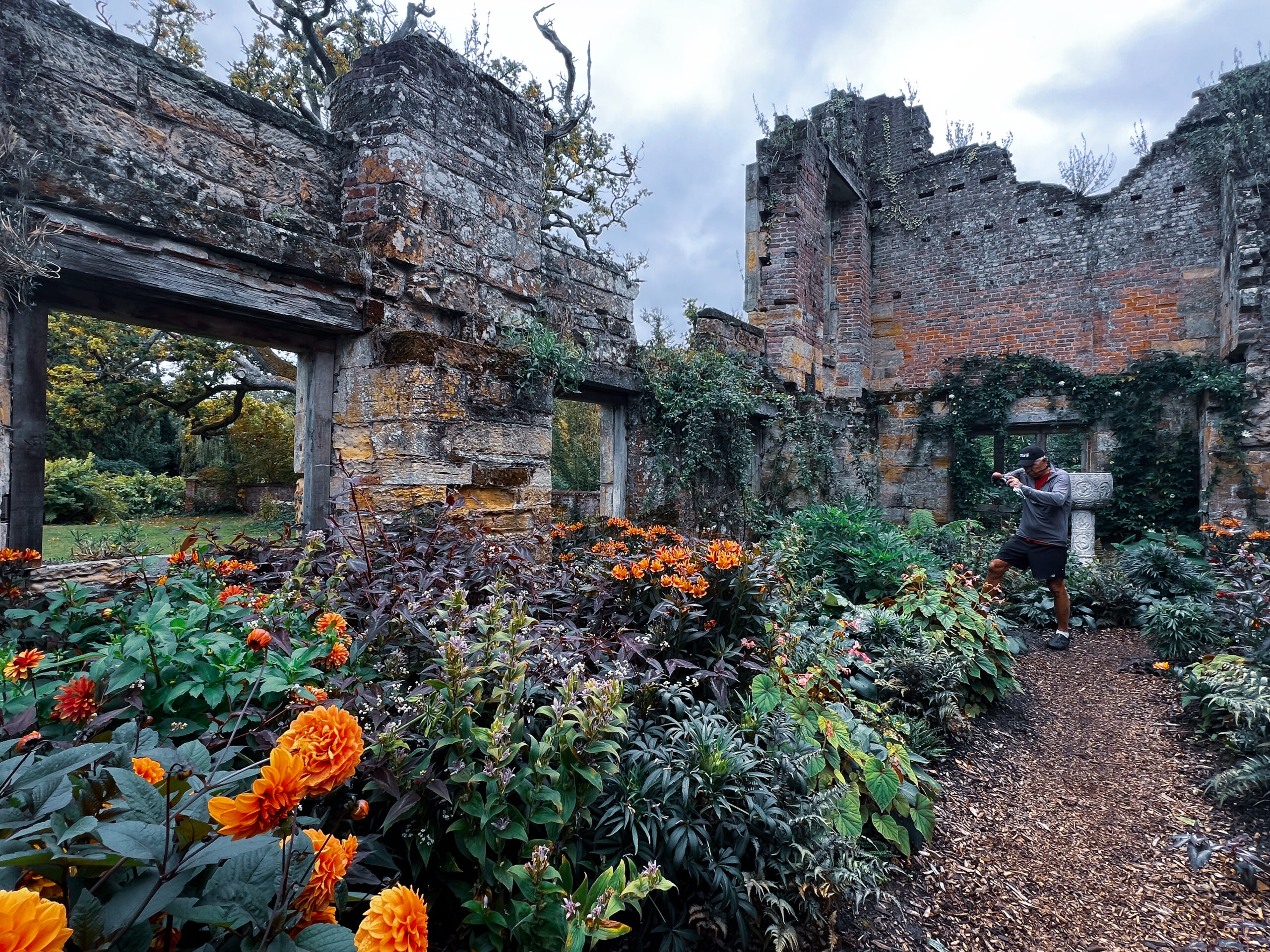
Both of these characters led interesting lives and rather than try to recapture that here, I encourage you to follow smart links and be amazed. Suffice it to say, I was extremely happy to finally see a longtime bucket list item of mine: VS-W’s famous “white garden” (just one in a series of gardens that are very purposefully set up like a series of rooms), and the tower in which she wrote (and, presumably, entertained her lovers, most notably, Virginia Woolf. In fact, according to Wikipedia, the ten years that VS-W and VW were ‘together’ – or, as ‘together’ as same sex couples could be in the ’20s and ’30s – were the artistic peaks of both women’s careers.)

In a few days (we’re so behind in blogging!), John and I are going to Knole House which is the majestic estate where VS-W was raised, or, specifically, the estate that she loved and should have inherited, but, alas, she was female so it went to her uncle and then, upon his death, to her male cousin.
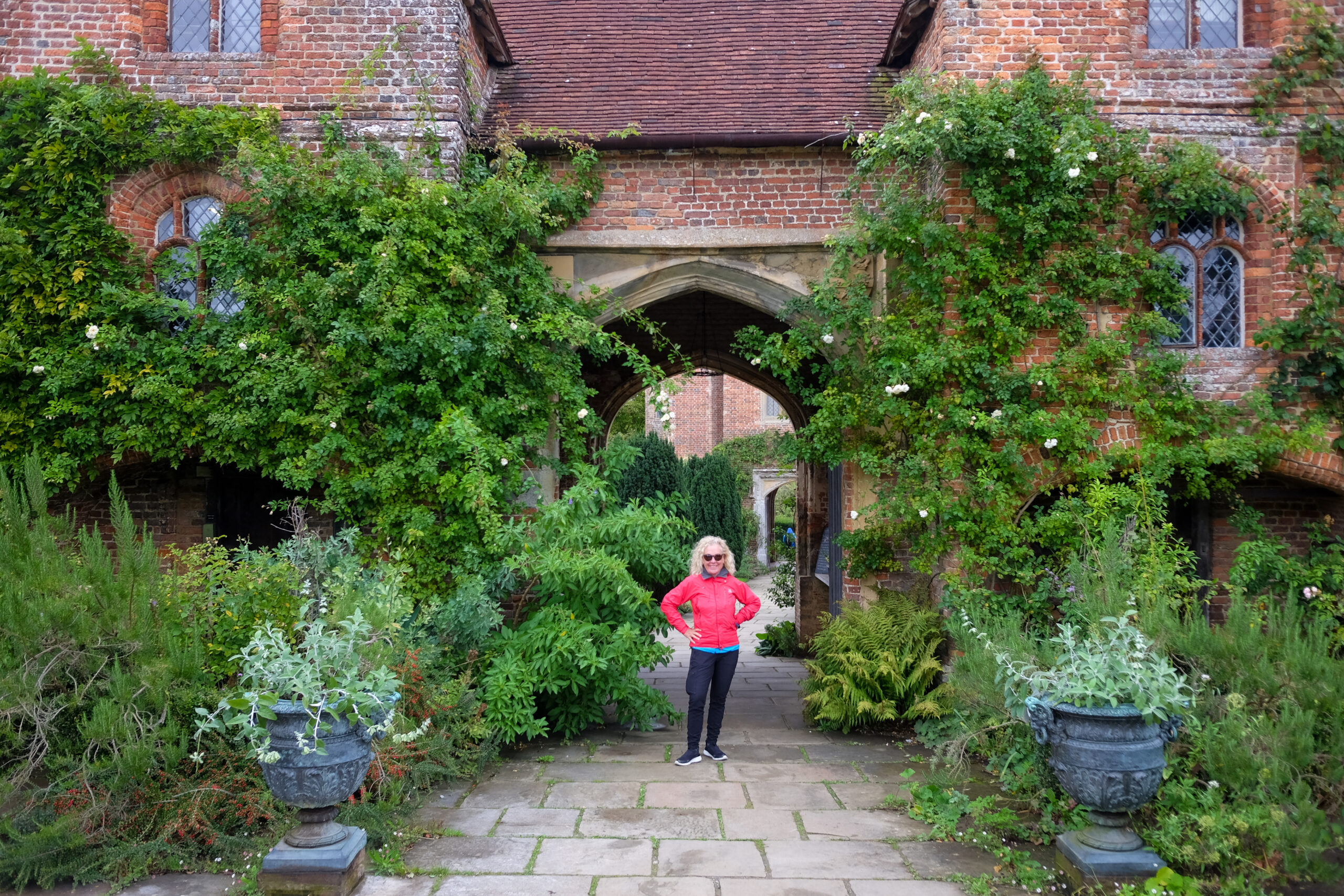
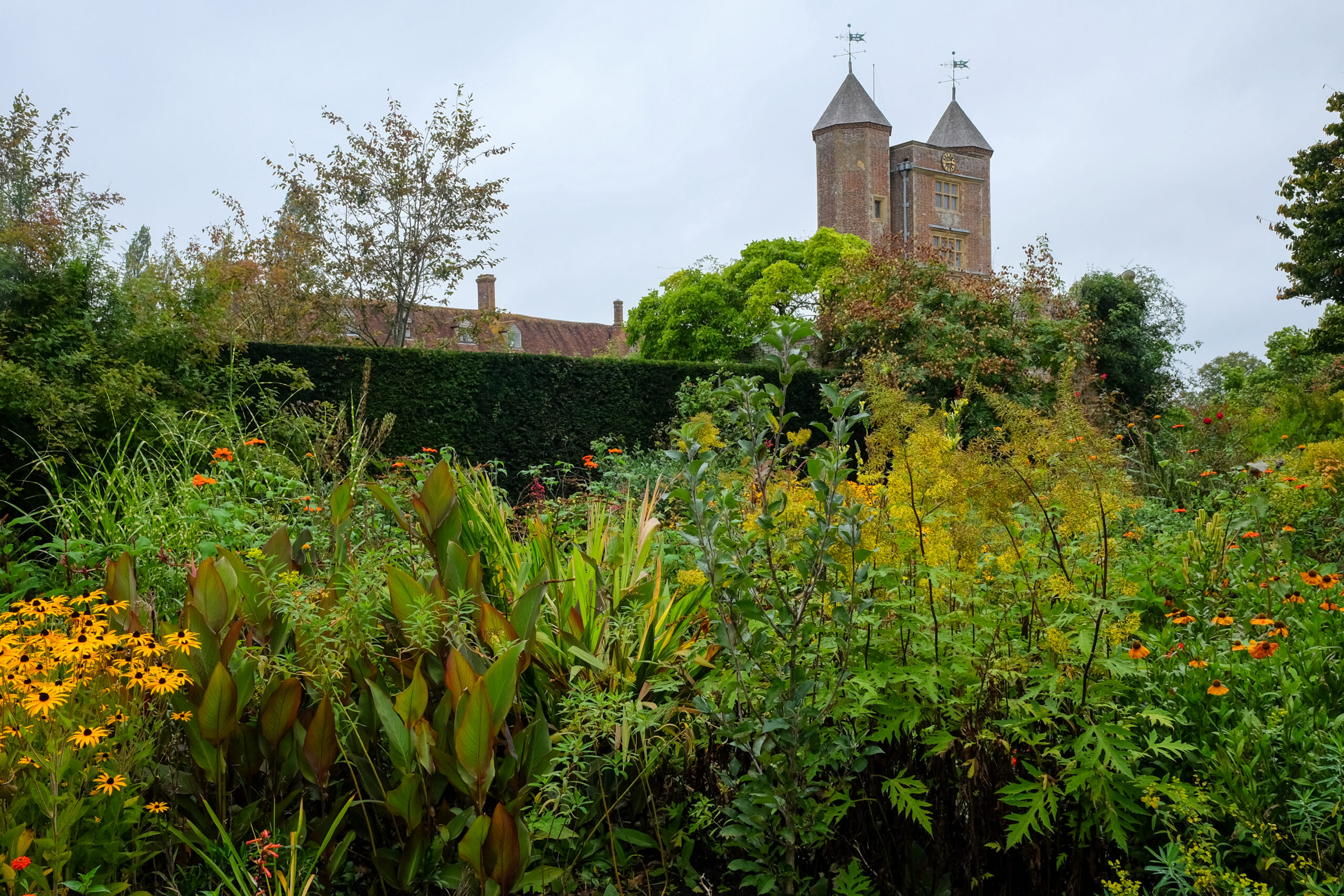
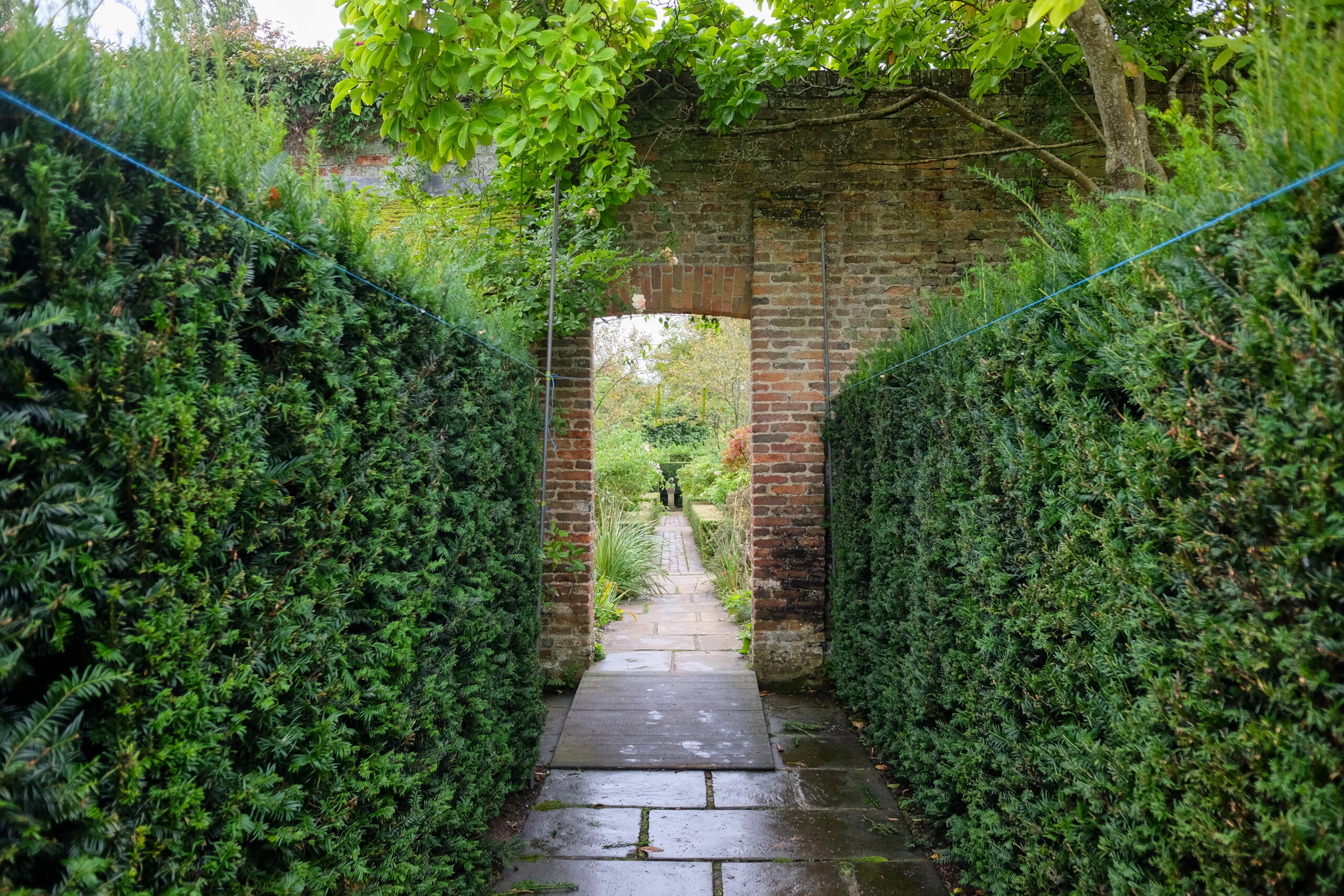
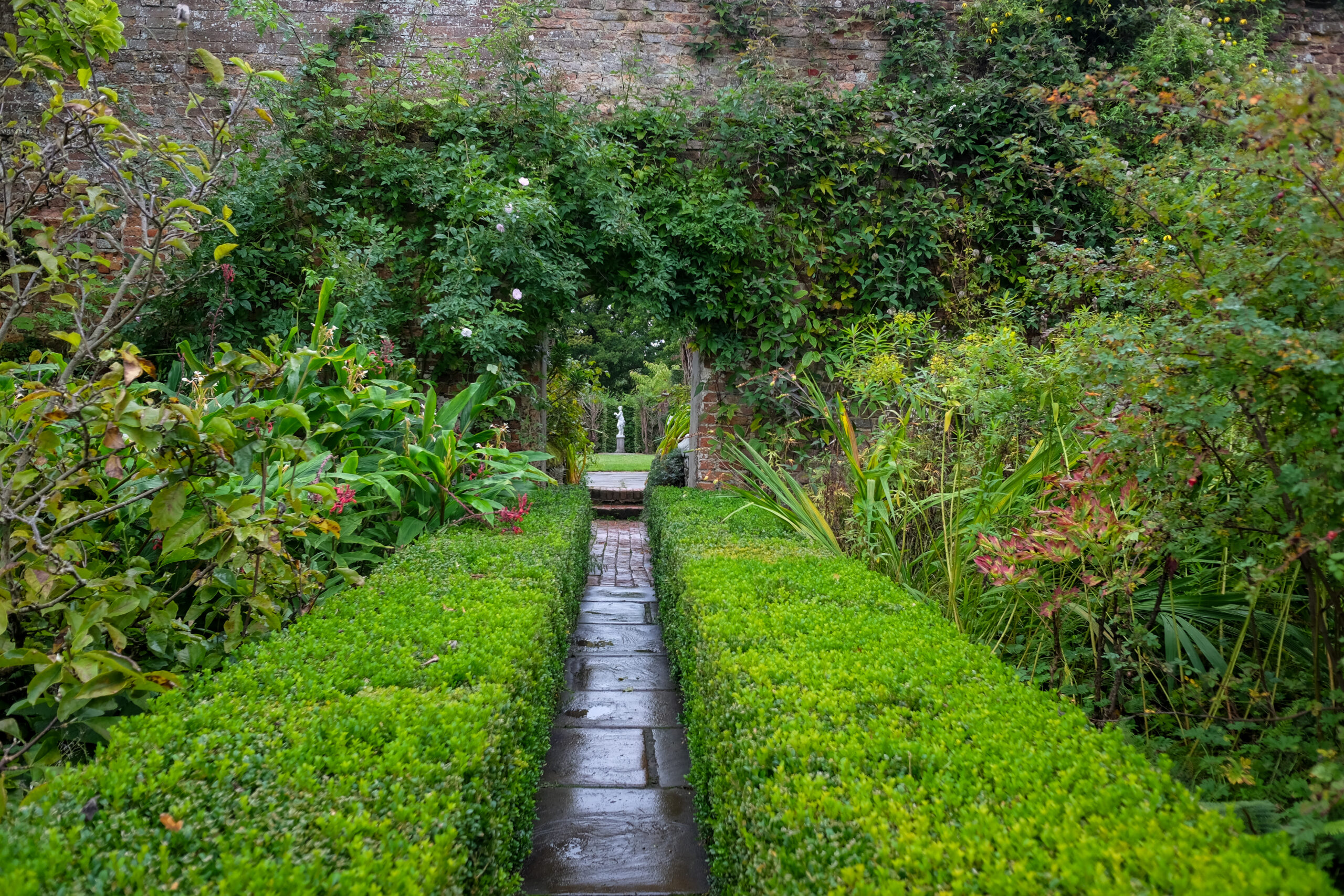
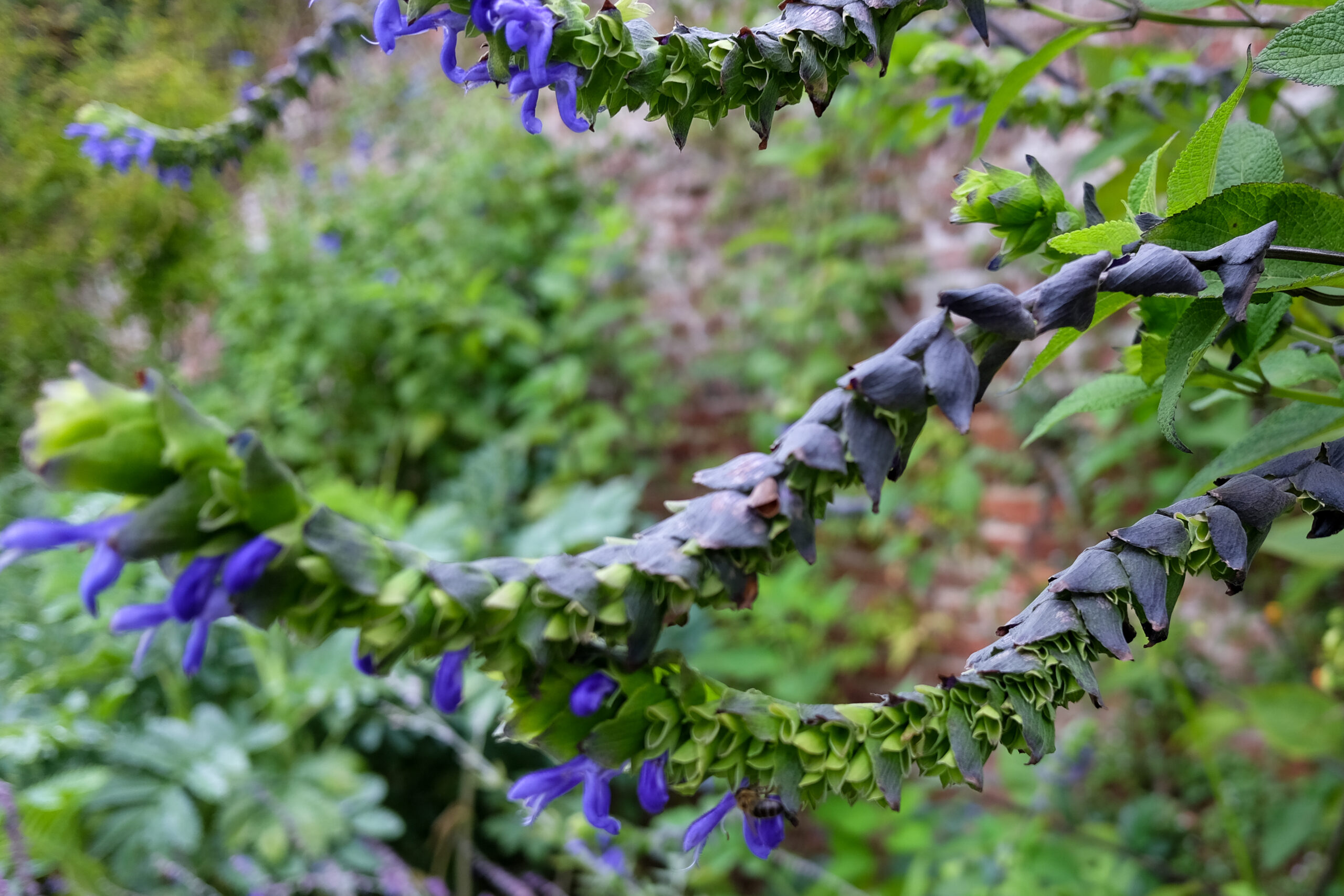
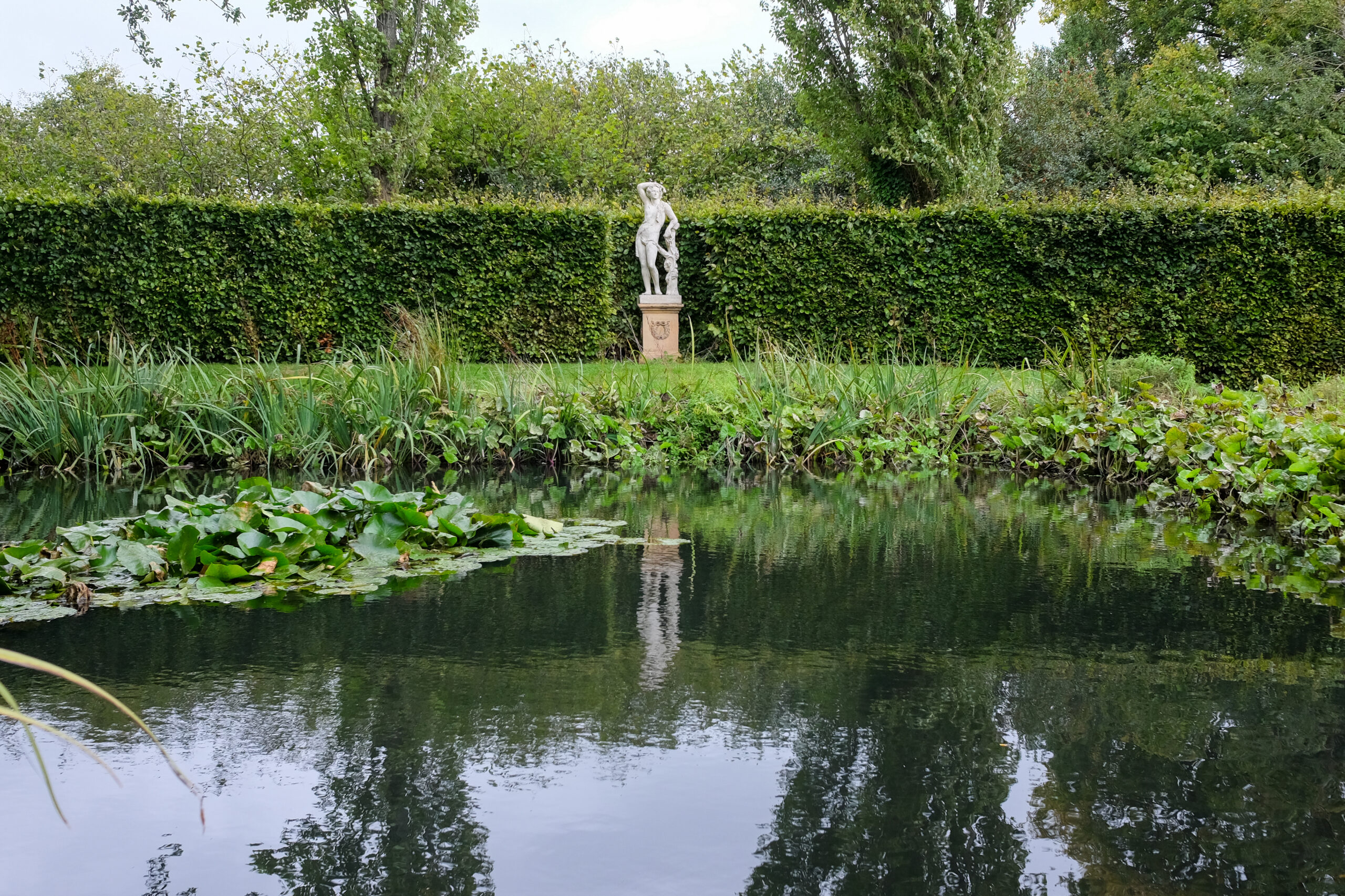
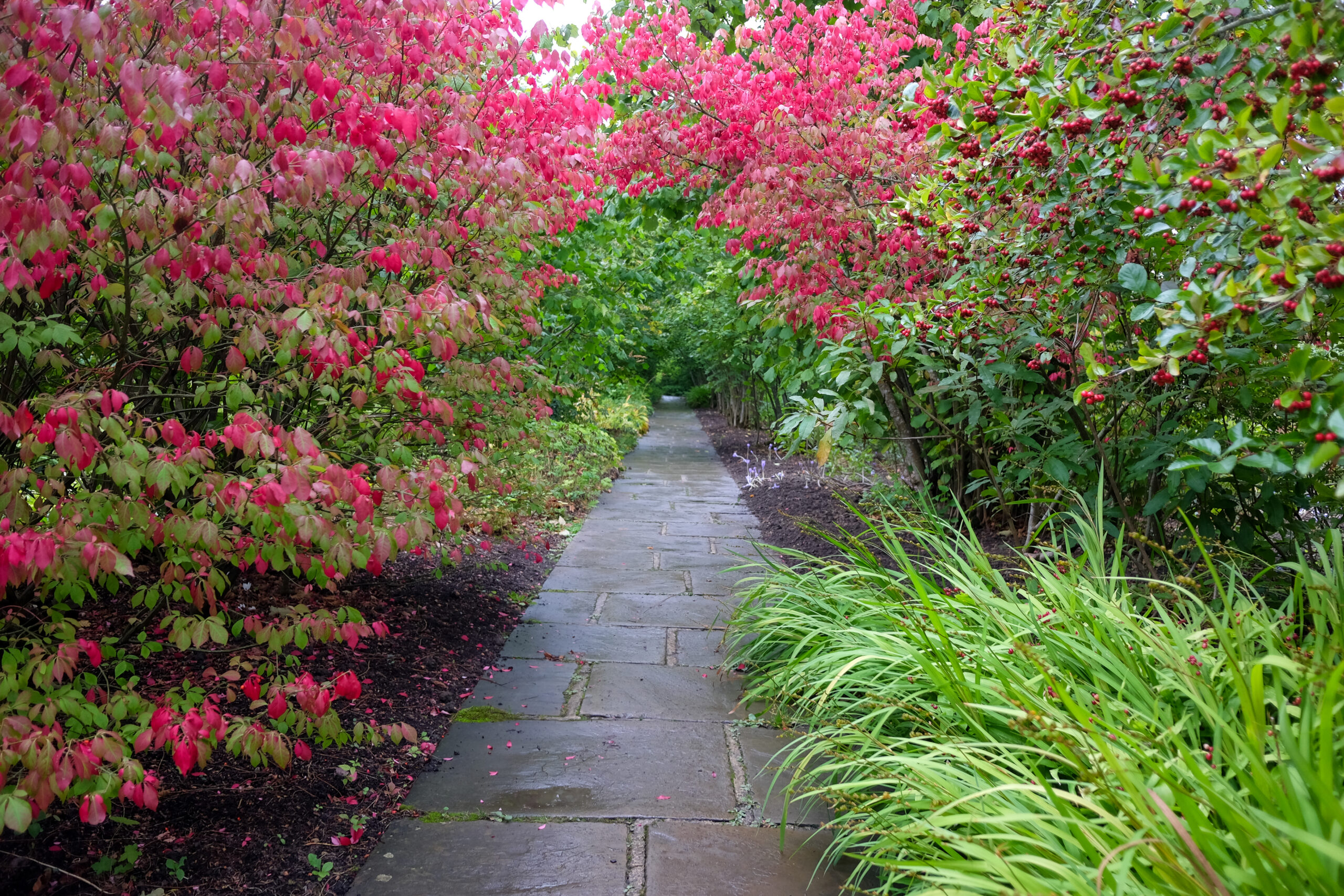
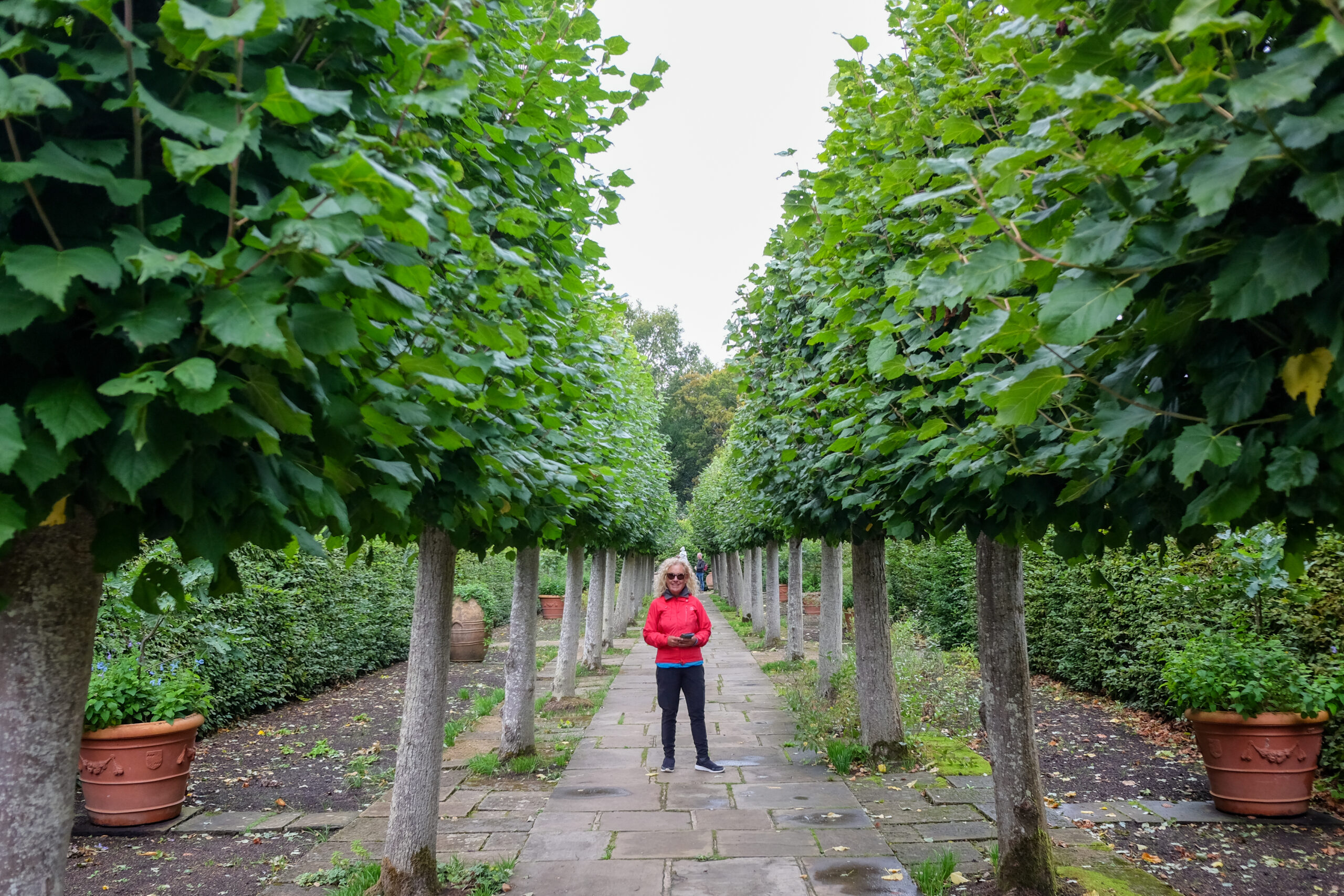
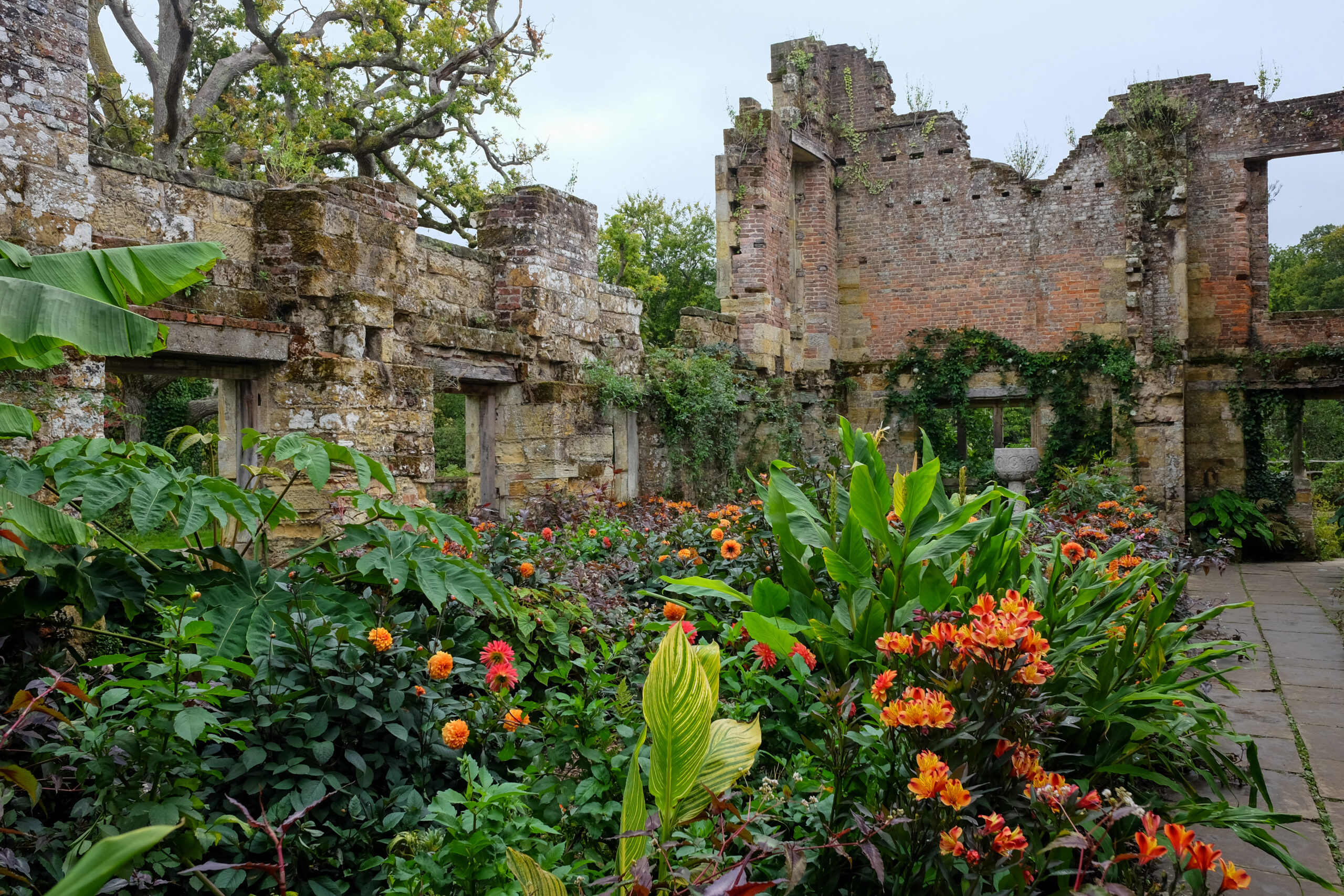
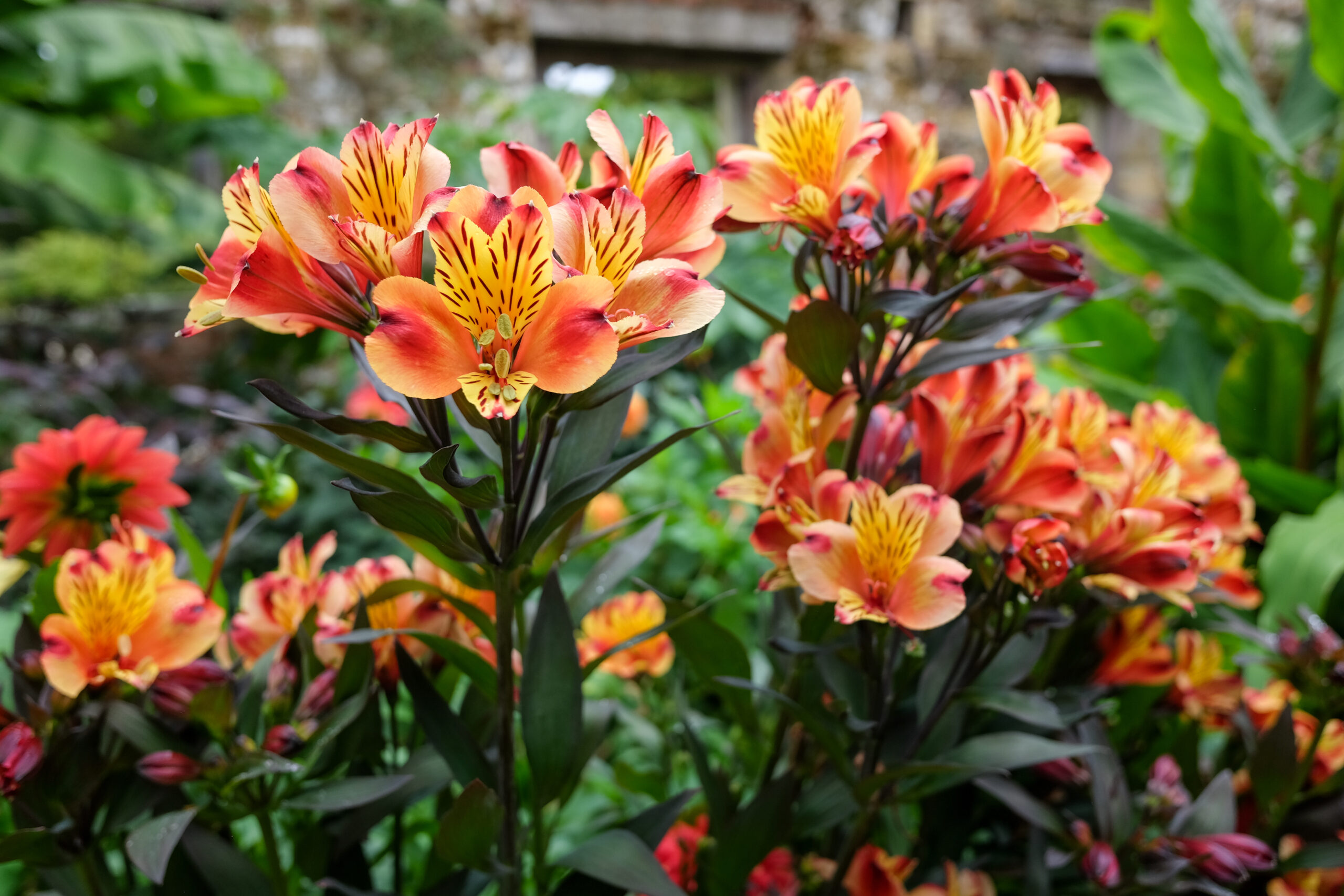
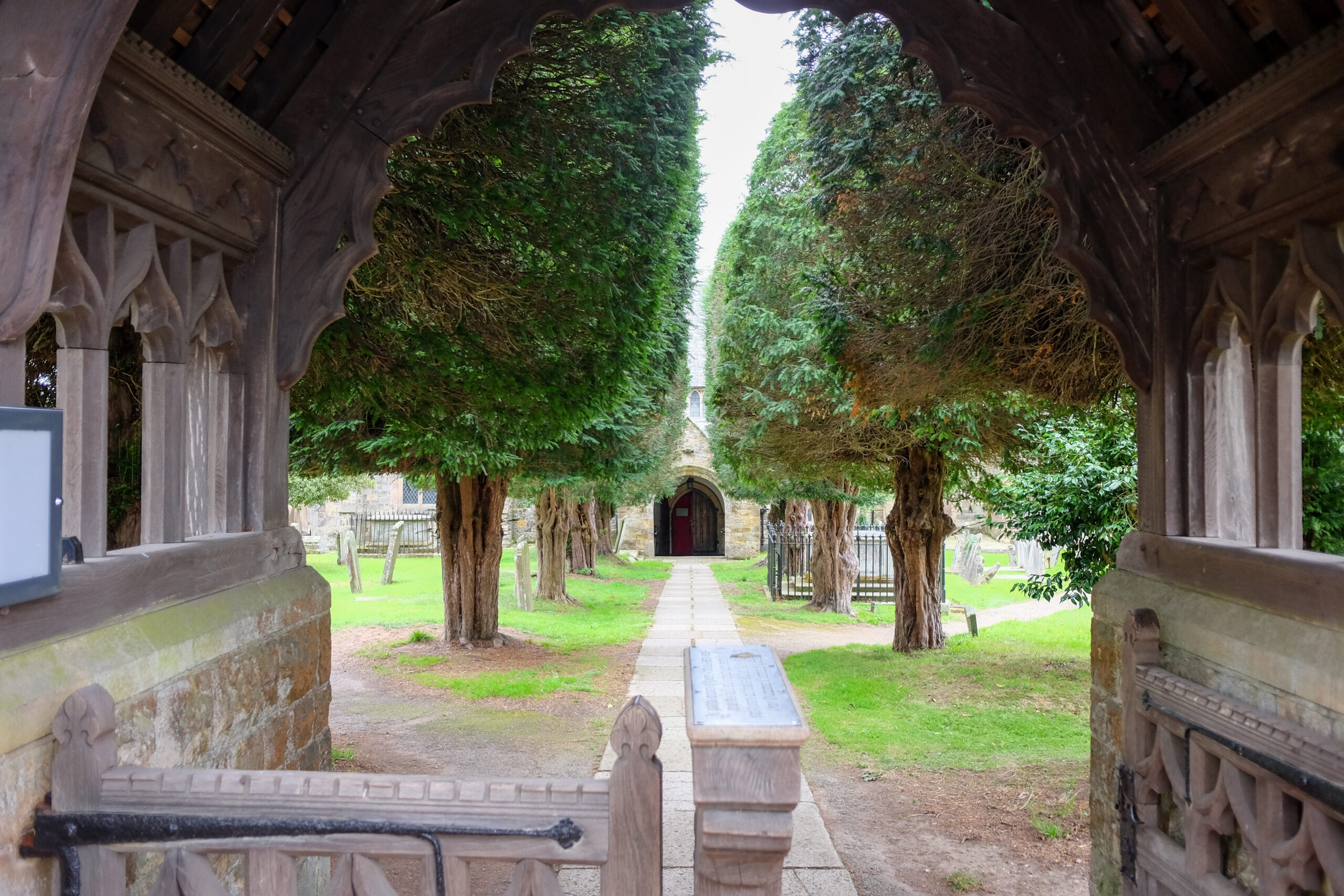
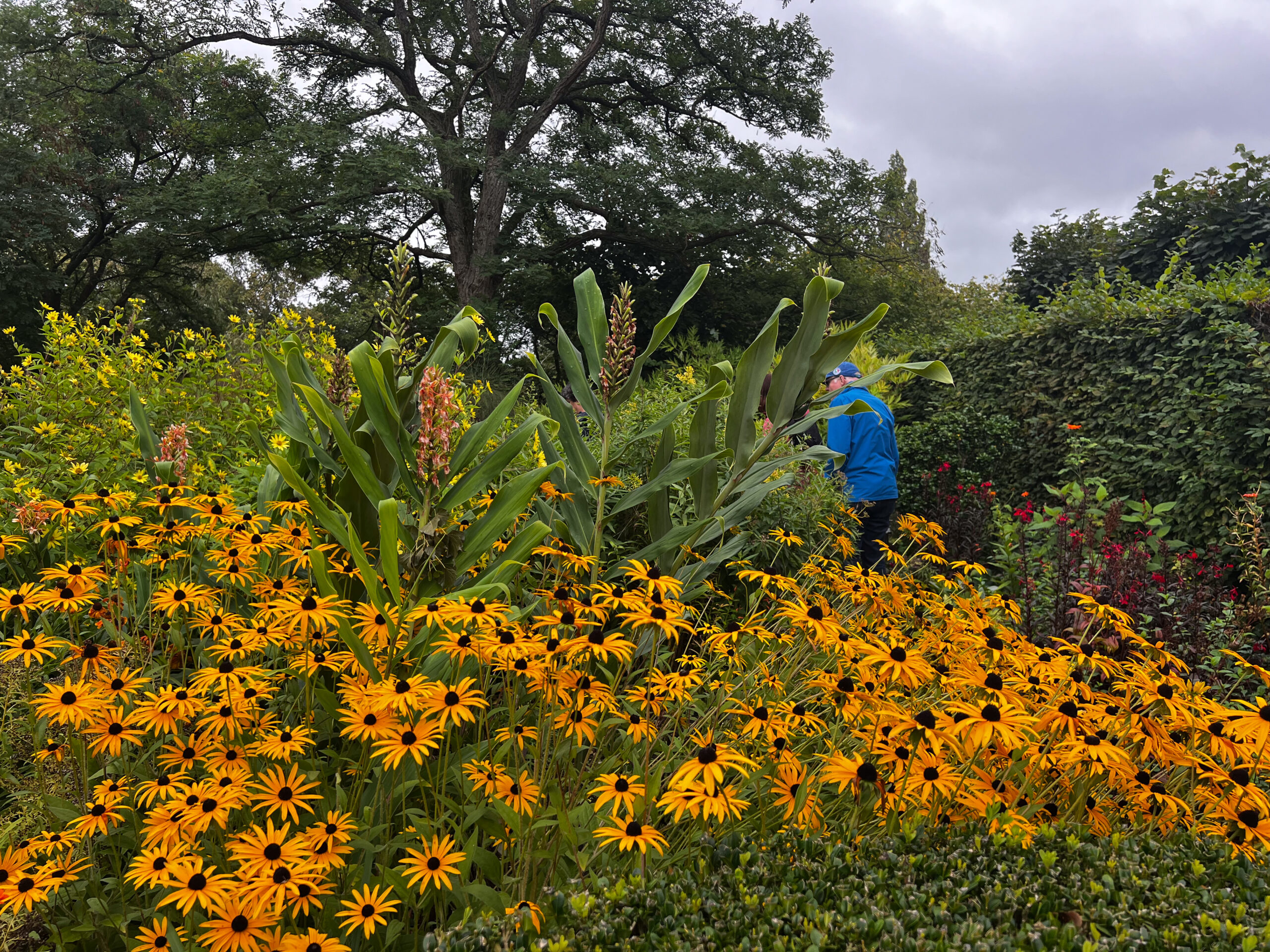
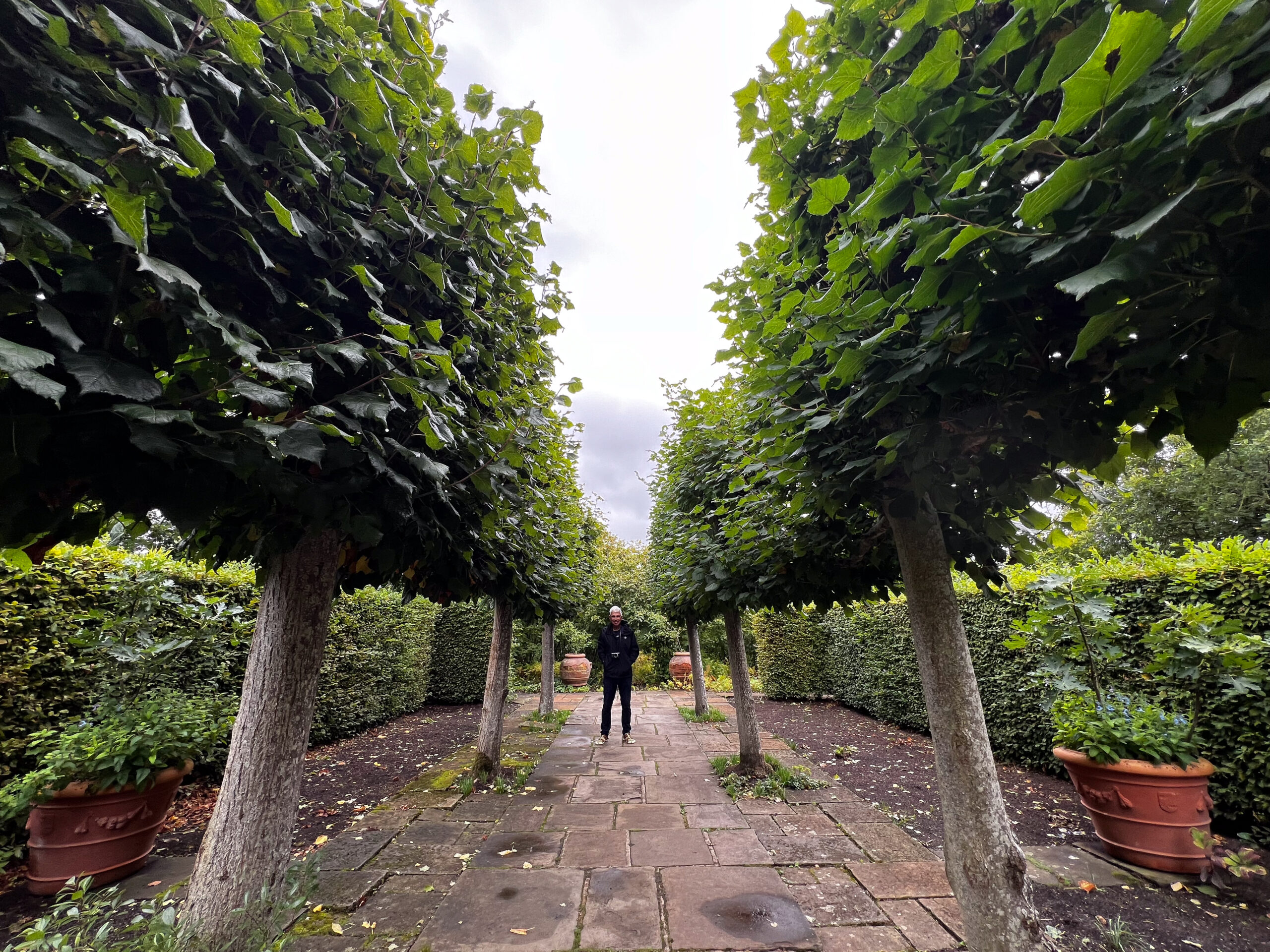
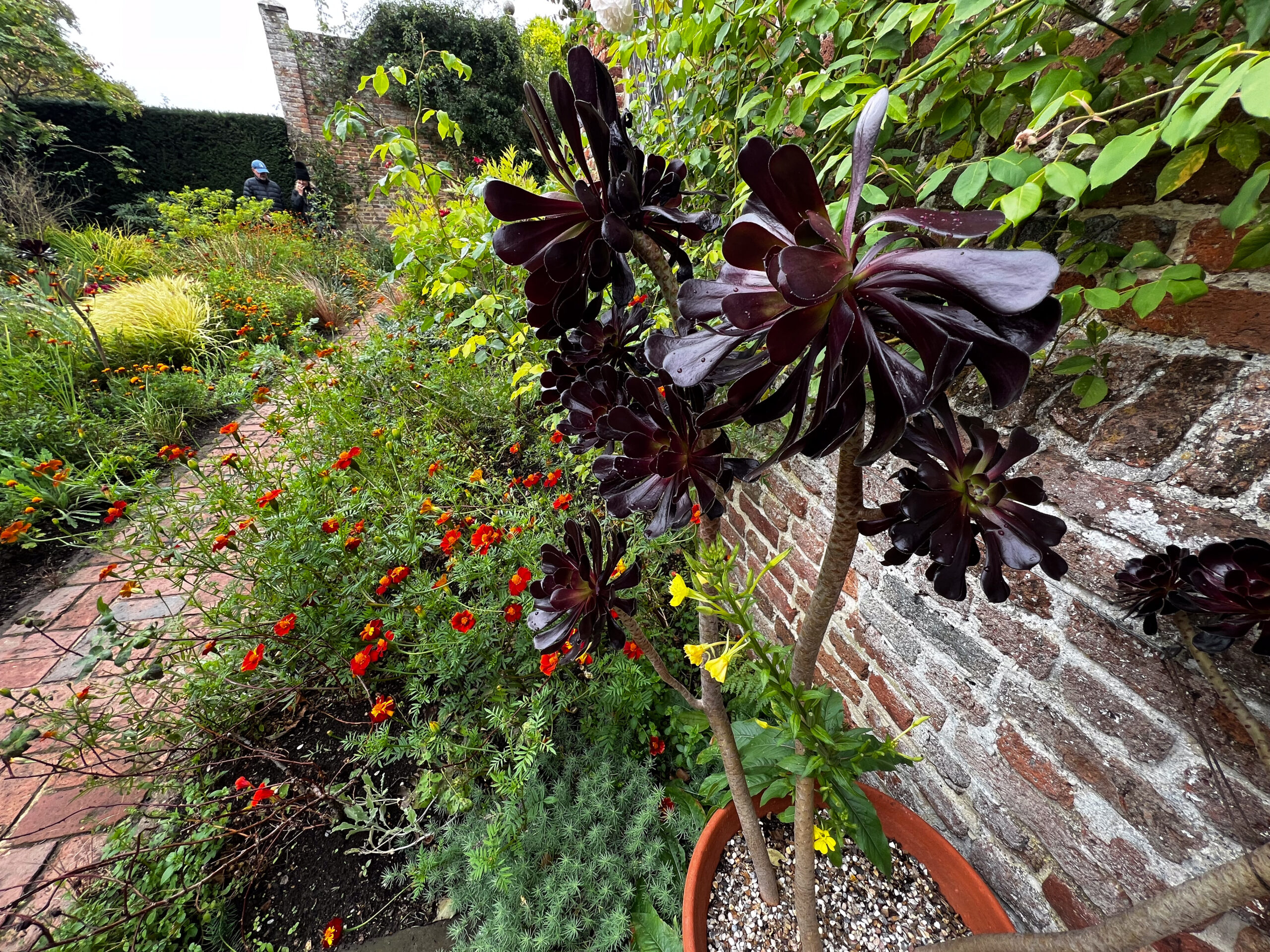
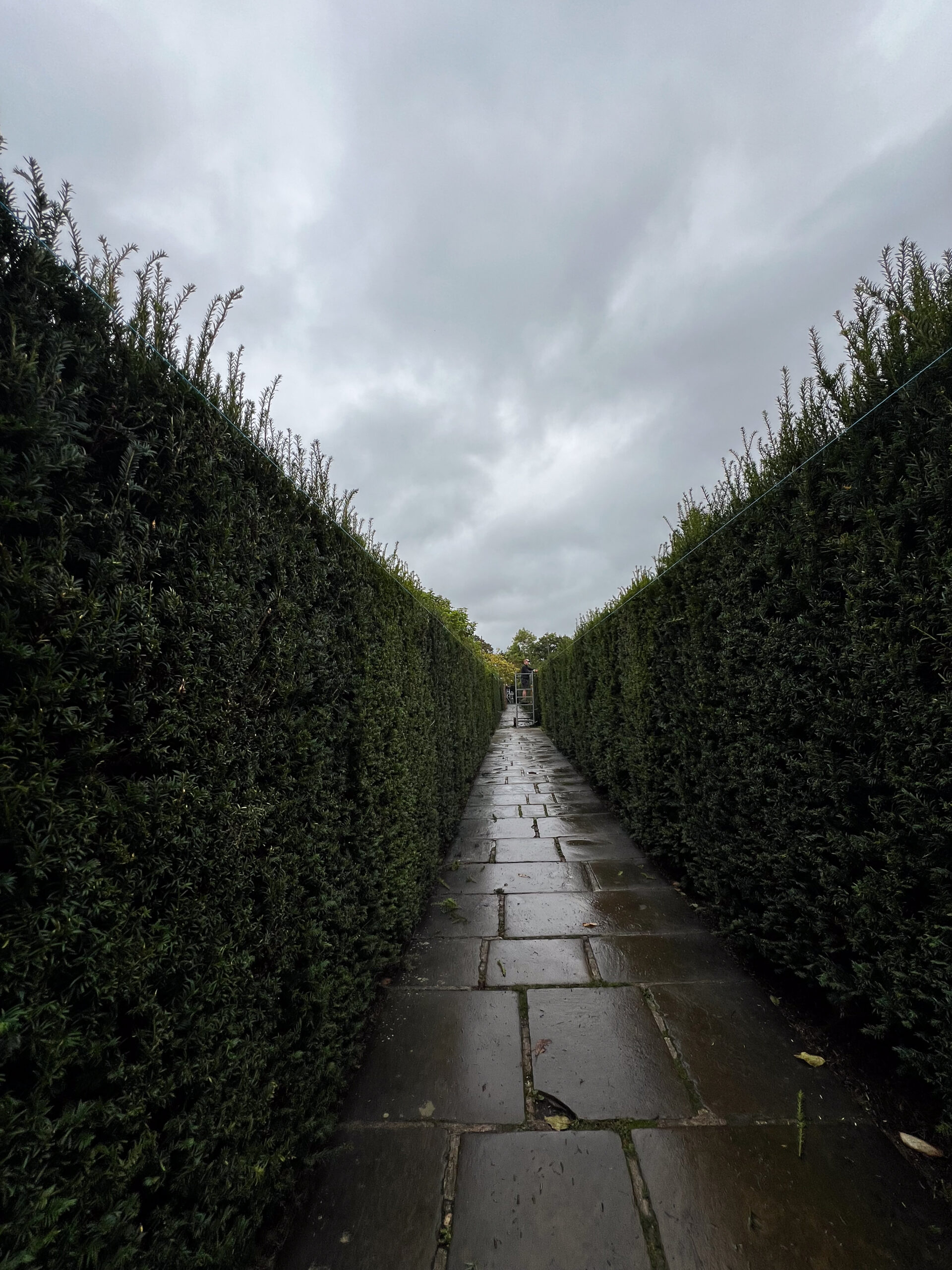
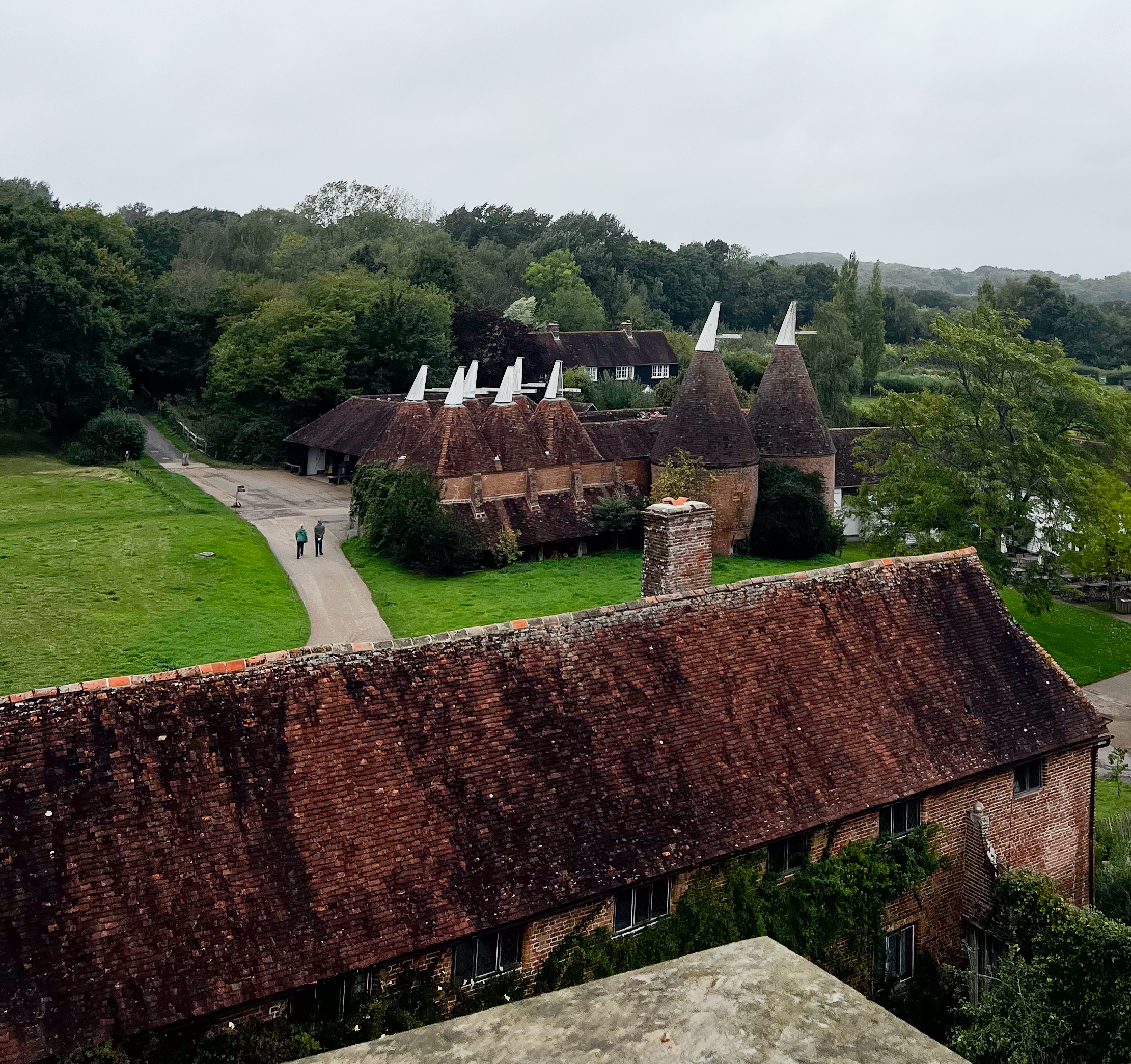
The gardens at Sissinghurst were brilliant and well attended on Wednesday morning, even in the persistent drizzle, as you will see from the photos, below. They are one of the most famous and visited gardens in all of England. We spent the night at a really nice inn, nearby, The Milk House. Highly recommended.

Note to self: see if we can find a way to watch “Vita & Virginia”.
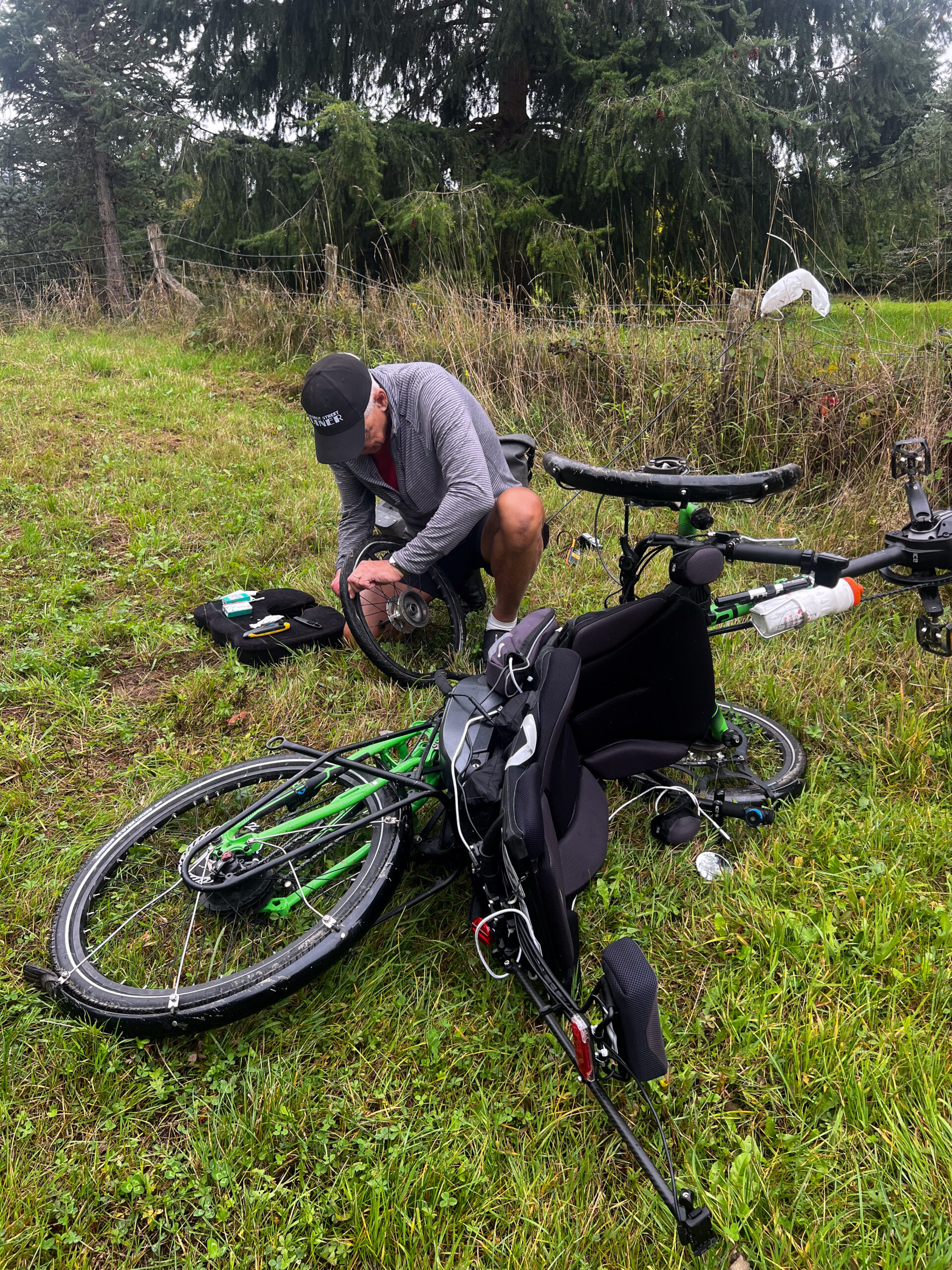
The morning of Thursday the 18th it was drizzling, again, and our makeshift white-plastic-bag flag looked particularly pathetic. We had only 32 kms to ride, but there was a troubling section on our Ride With GPS route that indicated that there would be an ‘unpaved’ section. We arrived at an alarming signpost that alerted us to hospital and emergency numbers right before we were to go off-road and into the woods, and ran into a Dutch couple, our age, whom we would meet later. Later, that is, when, on a wet ascent out of the dirt and woods, John discovered that he had a flat tire, the first puncture of the trip!!! Finally we found the source: not a thistle, not glass, just a wee chip of stone, probably flint.
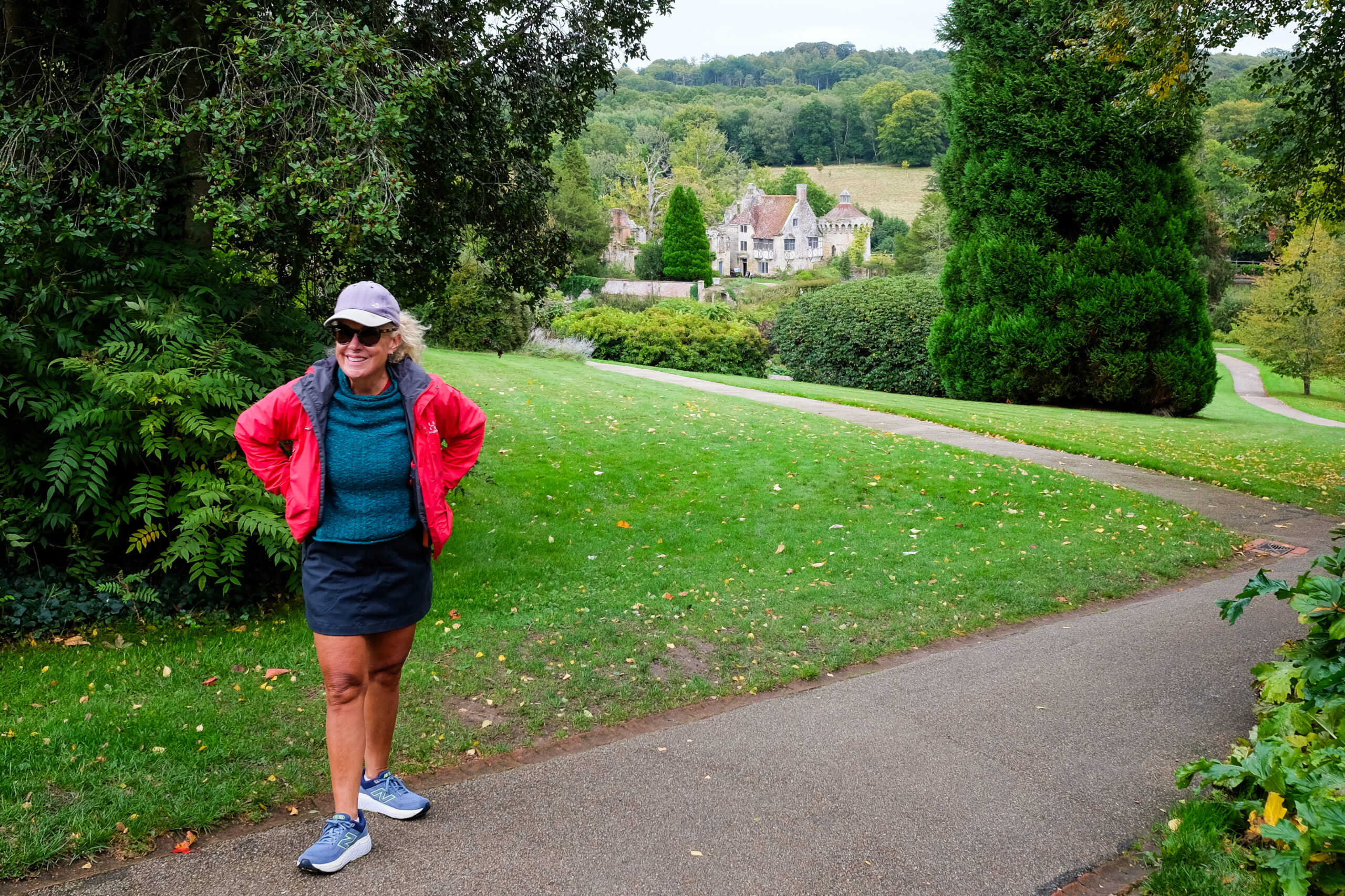
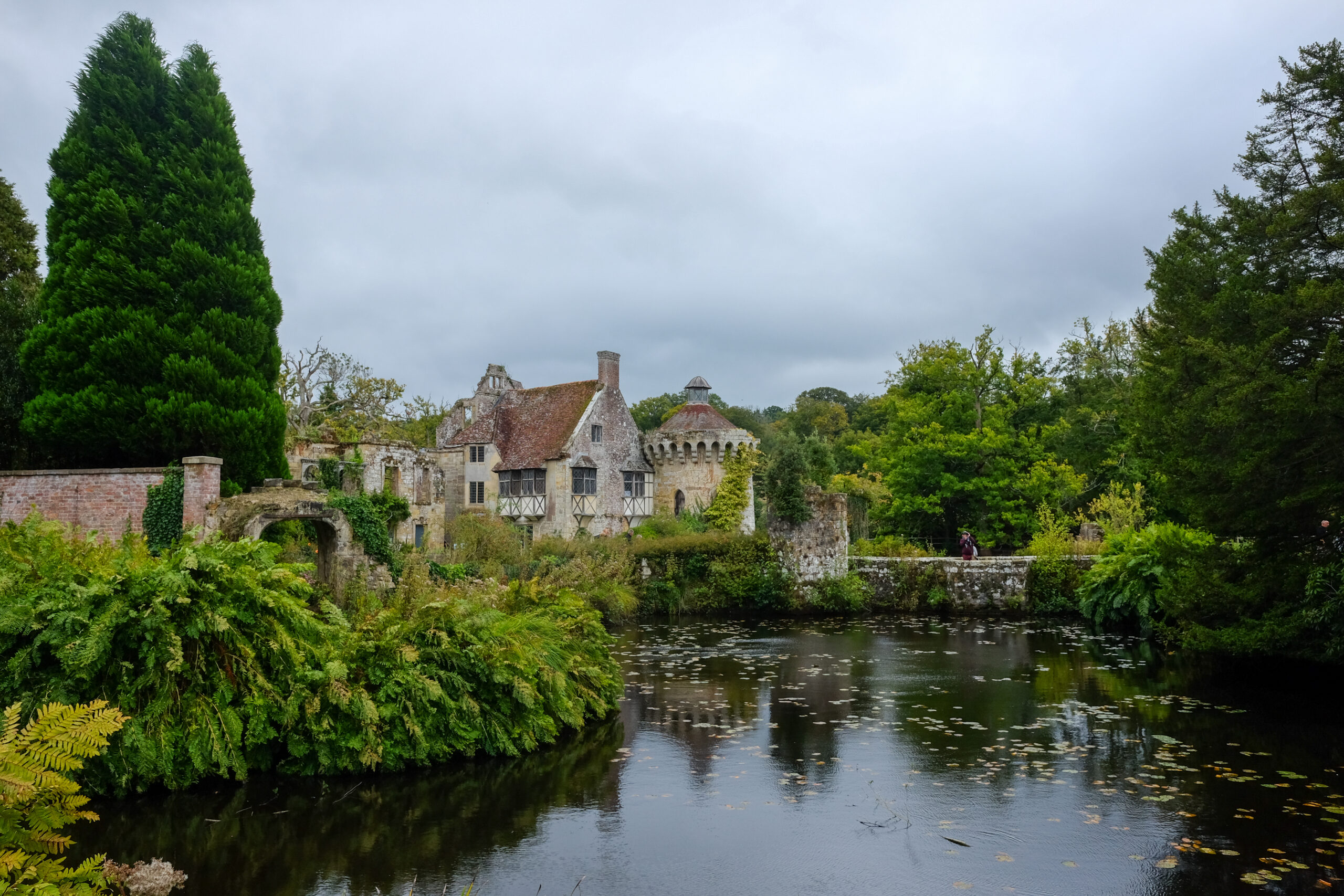
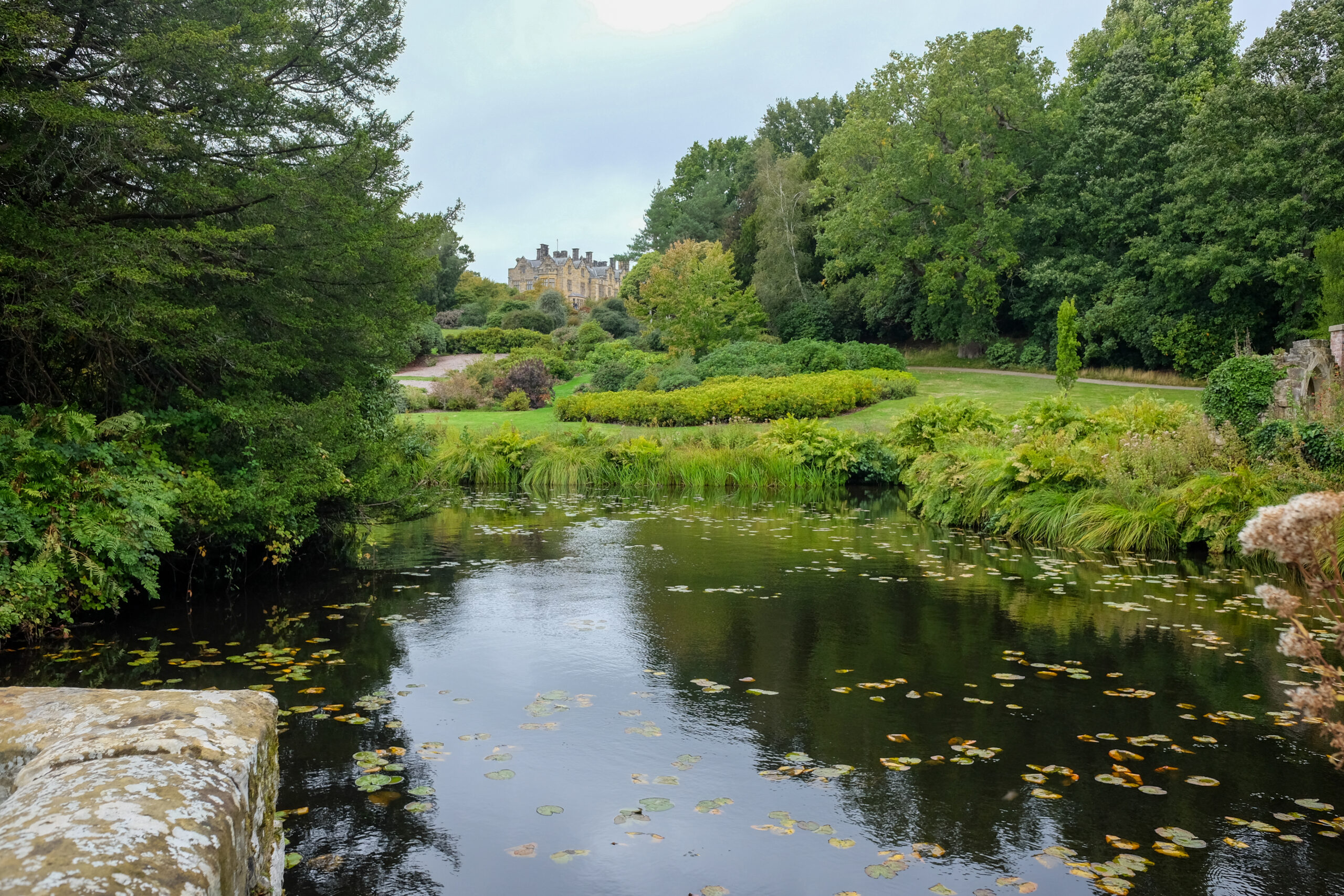
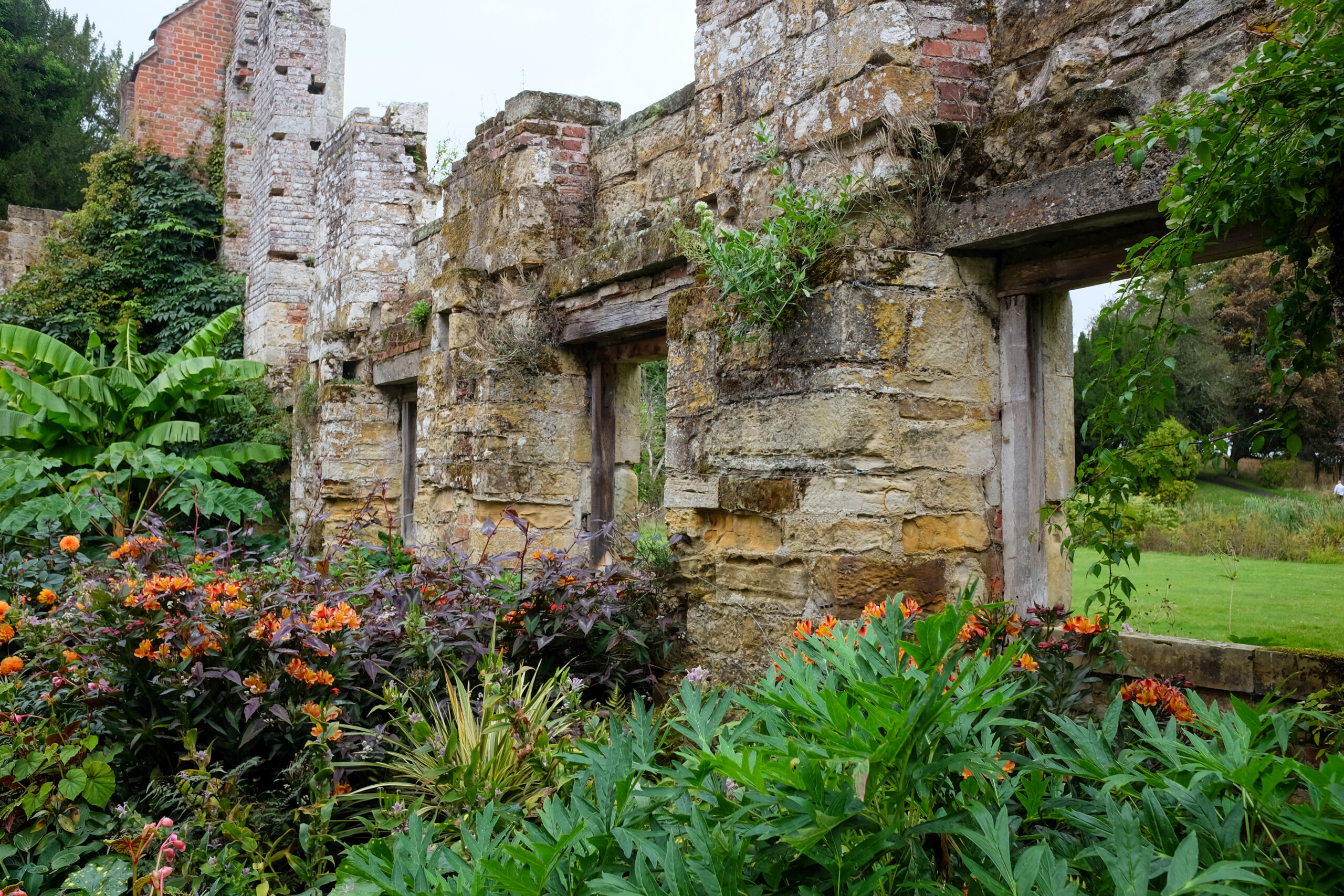
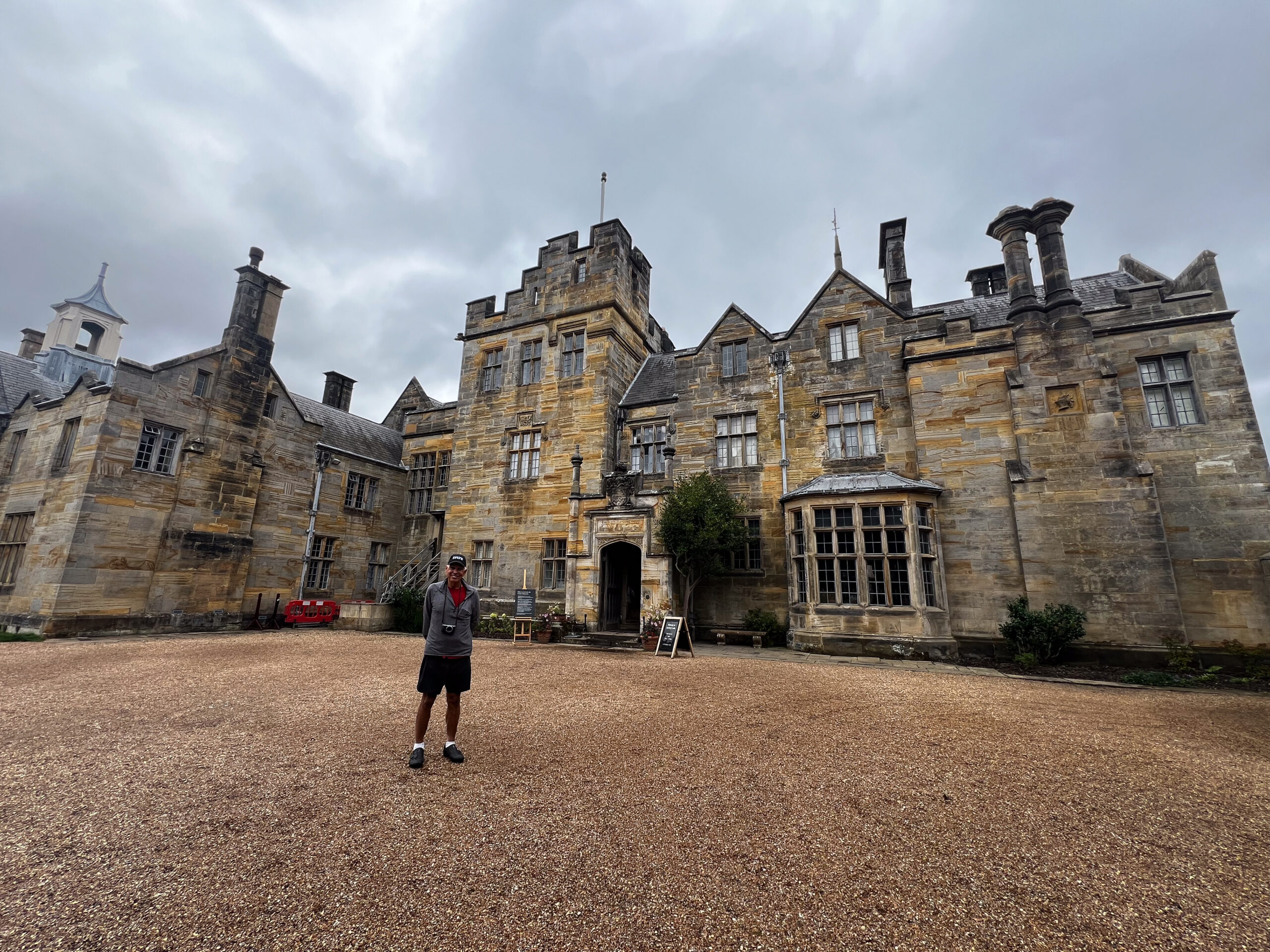
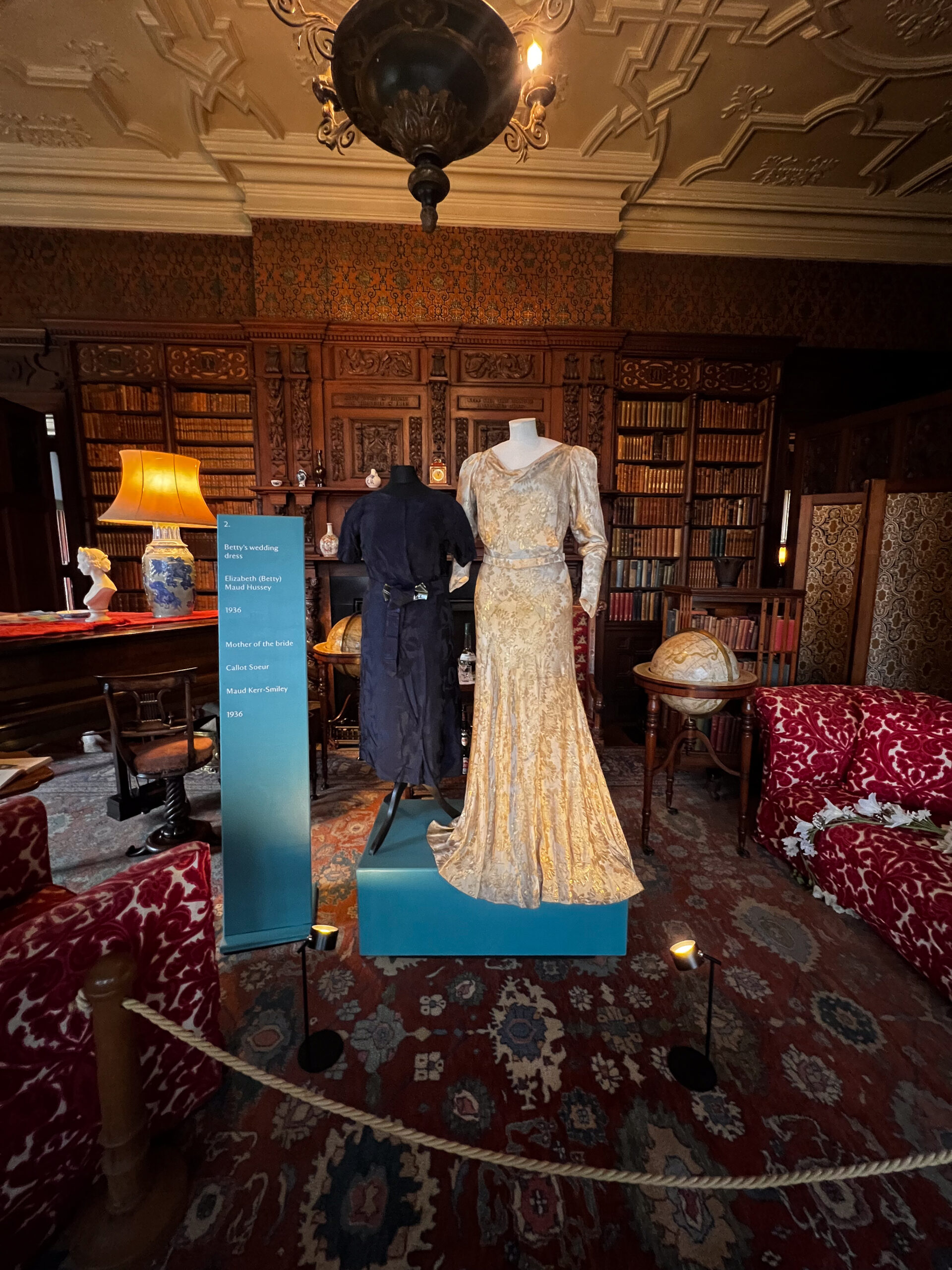
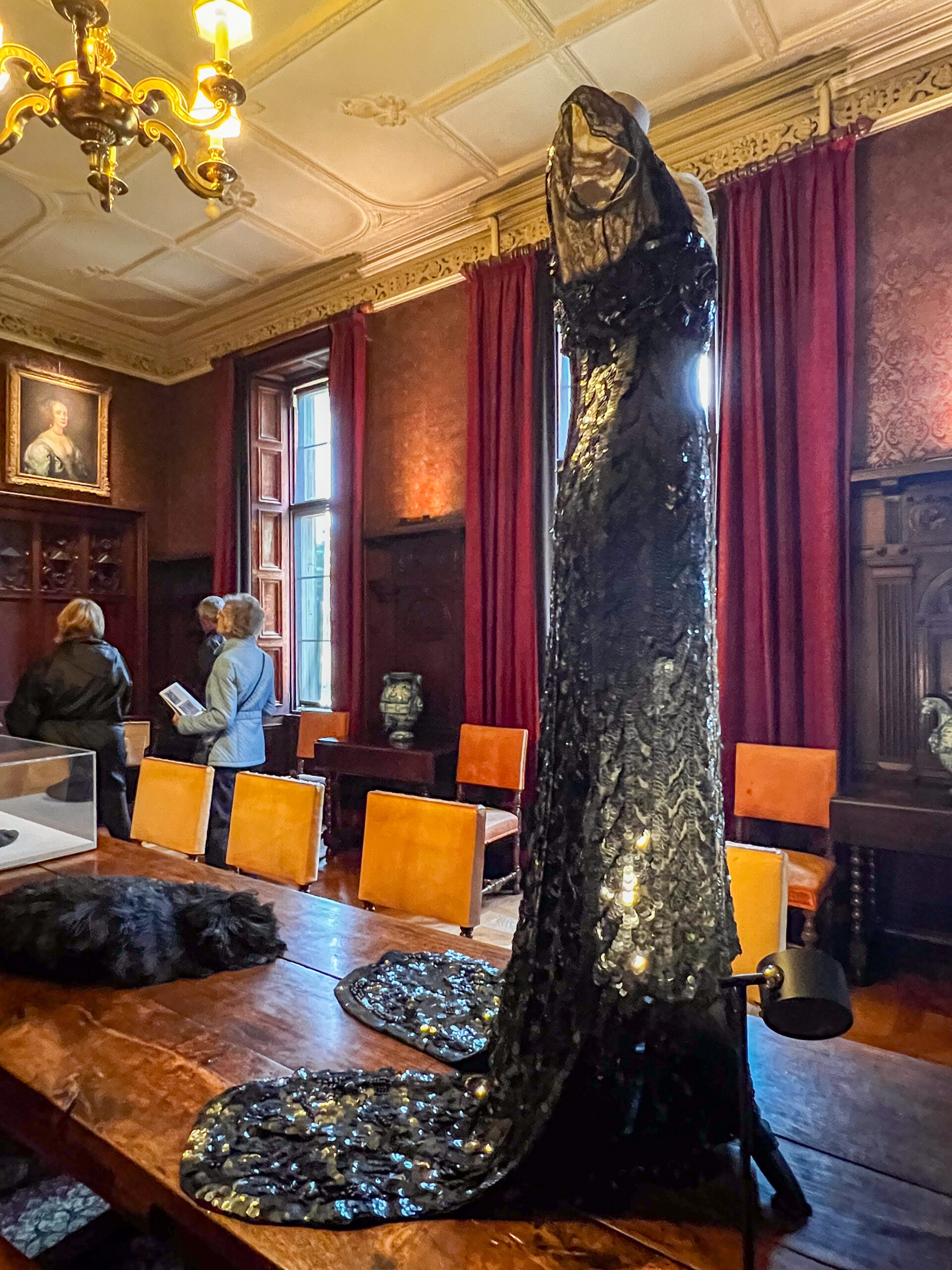
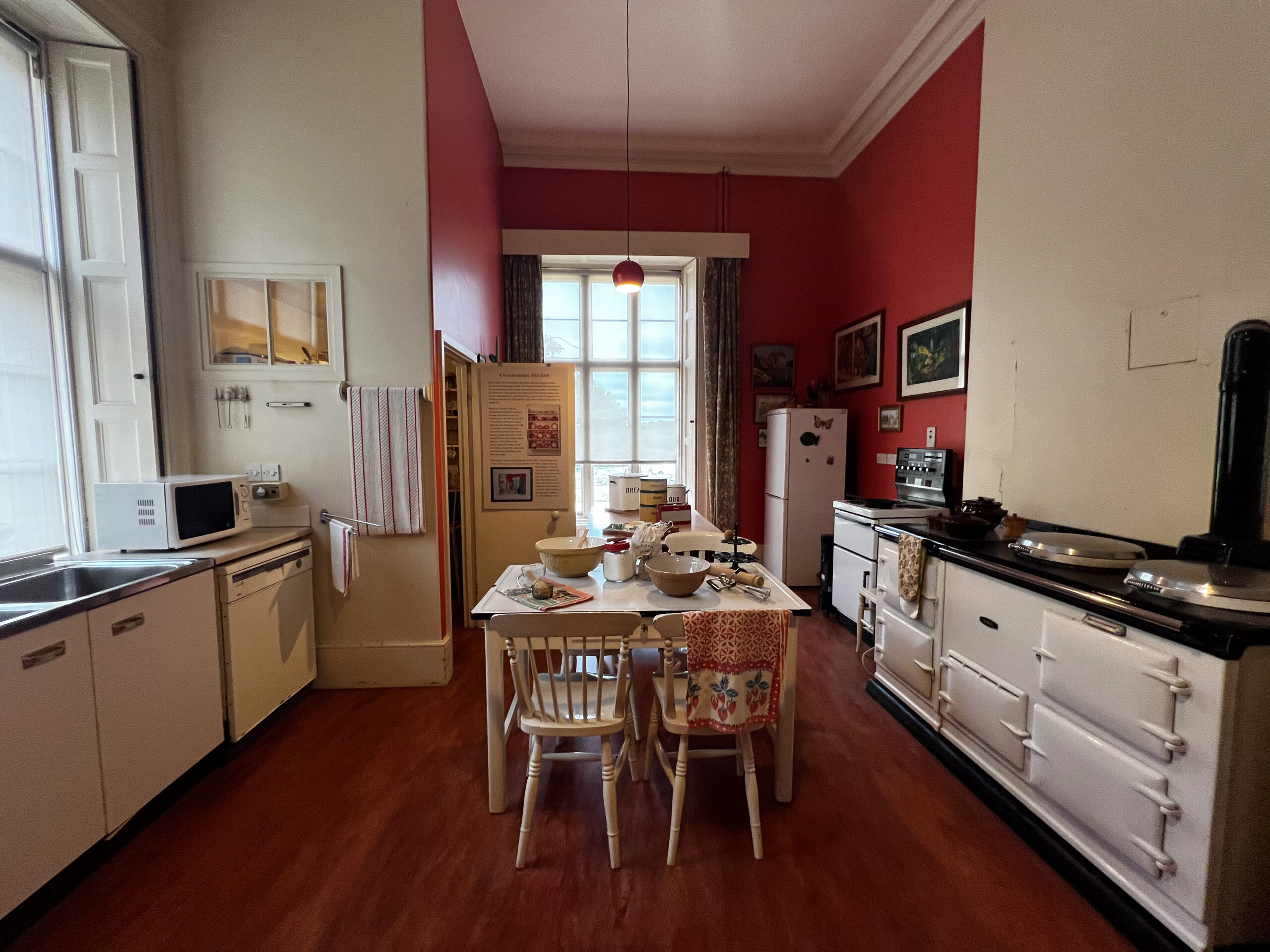
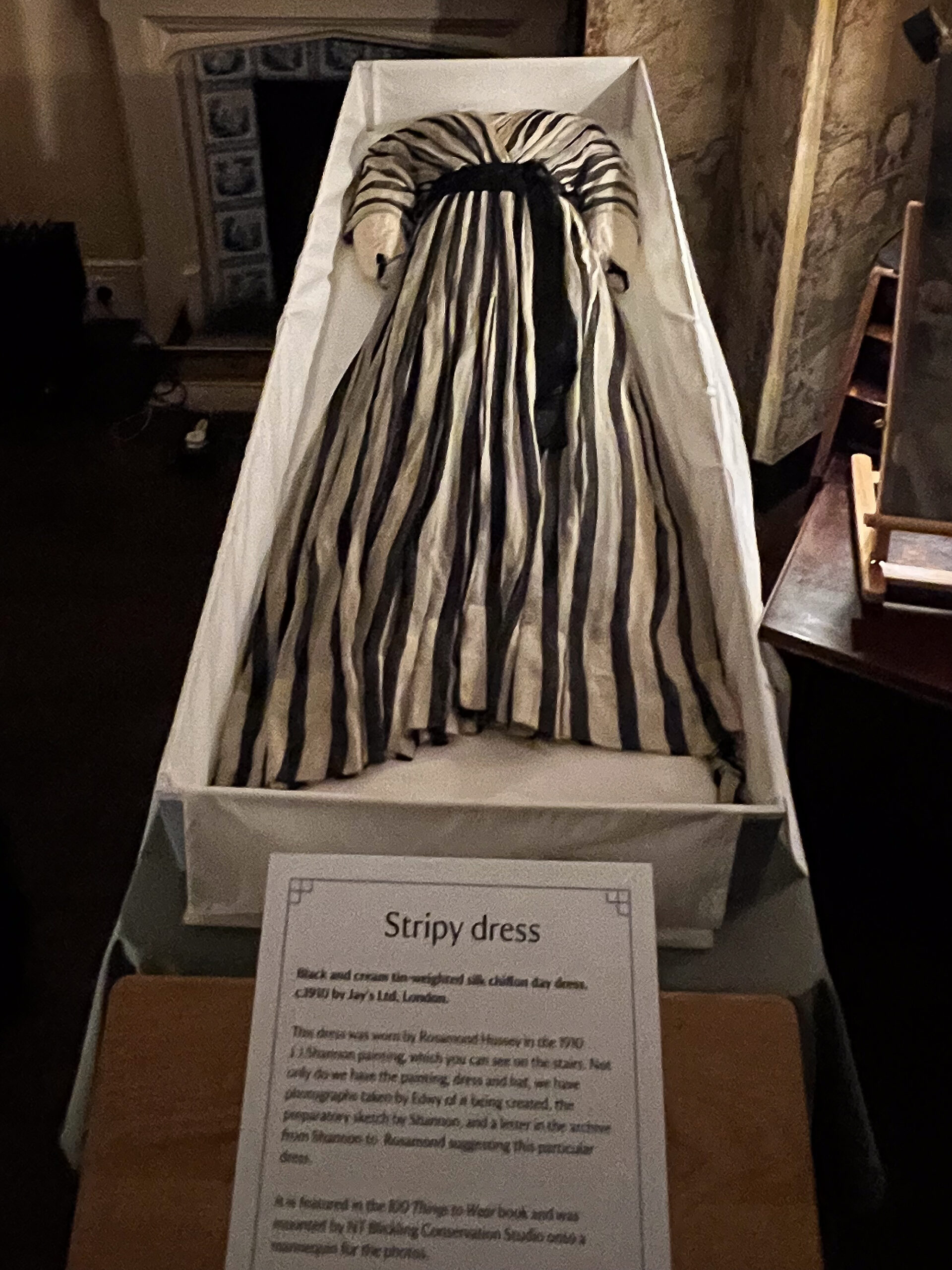
Puncture repaired, we soldiered on to Scotney Castle , a gorgeous, hilly estate where we witnessed an absolute army of gardeners tending to unruly borders and stone patios and hedges. Scotney was the labour of love of Christopher and Betty Hussey. Right now there is an additional feature of the sharing of some of Betty Hussey’s stunning wardrobe pieces, and, according to the National Trust volunteer we spoke with, they are “still discovering” more items in the attic of the house!!! At any rate, Scotney Castle was well worth the visit, and the Husseys were key figures in the early health of the National Trust. Betty Hussey lived at Scotney until her death in 2006. (Her wardrobe was fabulous, I am happy to have seen this temporary exhibit.)
After we left the castle, we pushed on to (Royal) Tunbridge Wells, and, after riding through town and not really being impressed, we basically checked ourselves into the Hotel Du Vin & Bistro Tunbridge Wells and didn’t re-emerge until the morning. (It’s my favorite chain of British hotels, so thank-you, John. It’s a luxury and they never disappoint. Their restaurants are top notch, too.)
Our experience with the “not-paved” section of the route on Ride With GPS was a red flag for John. He started to look very critically at all of our proposed routes and, in fact, by the time we woke up on Friday the 19th (he’d had a sleepless night, it happens), he was fairly certain that what we should do is turn around at one of our next stops, and head back east and north. Rationale? Cornwall, in the far west of England is a long way to return from, if we were to ride our original route to St. Ives, and then start there in Spring 2026.
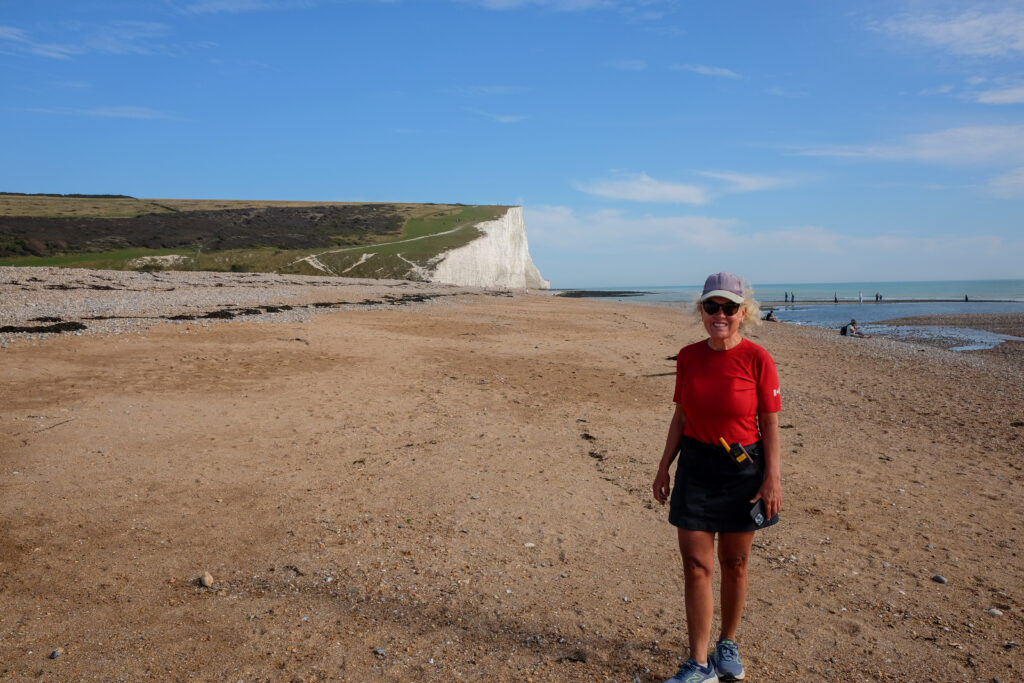
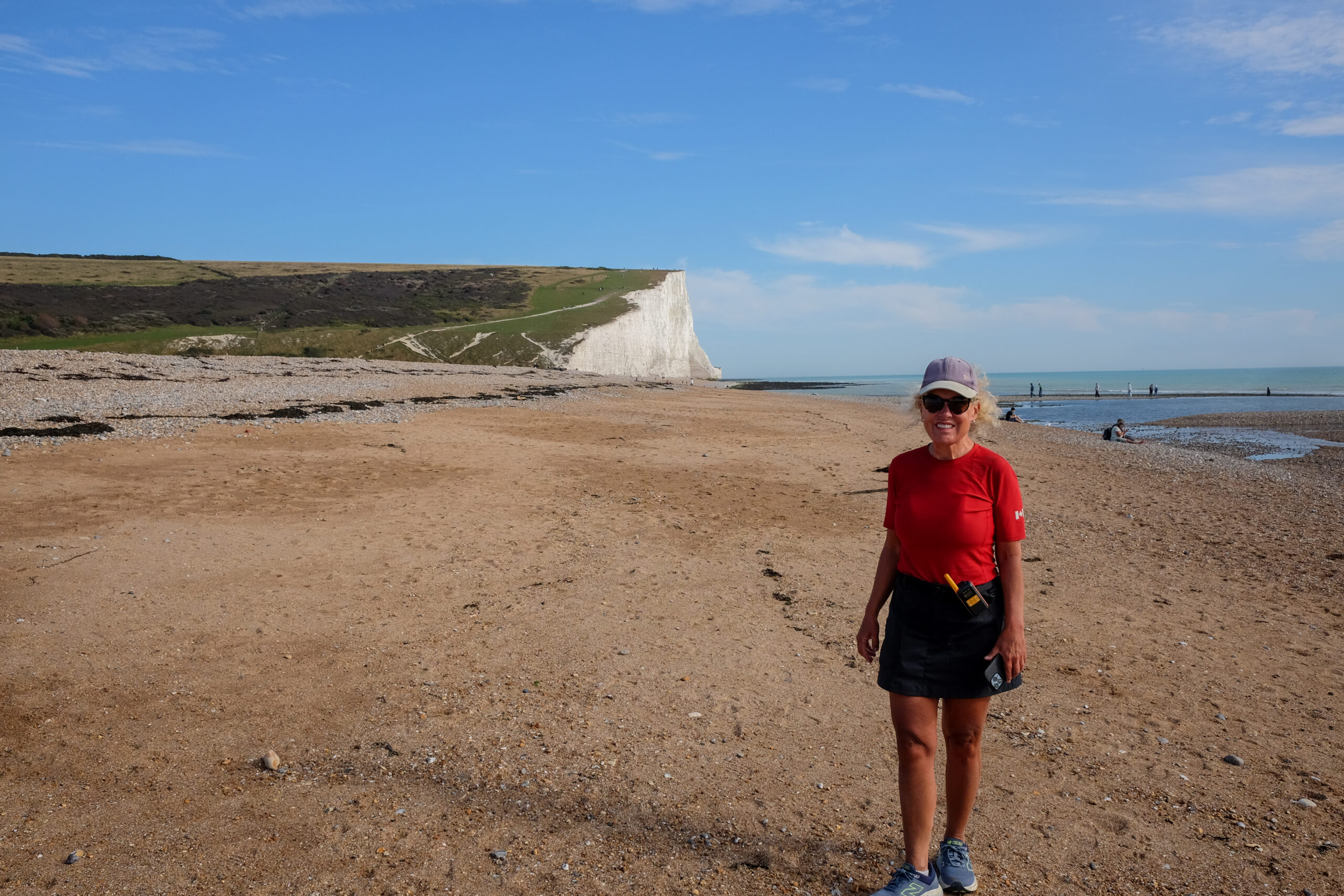
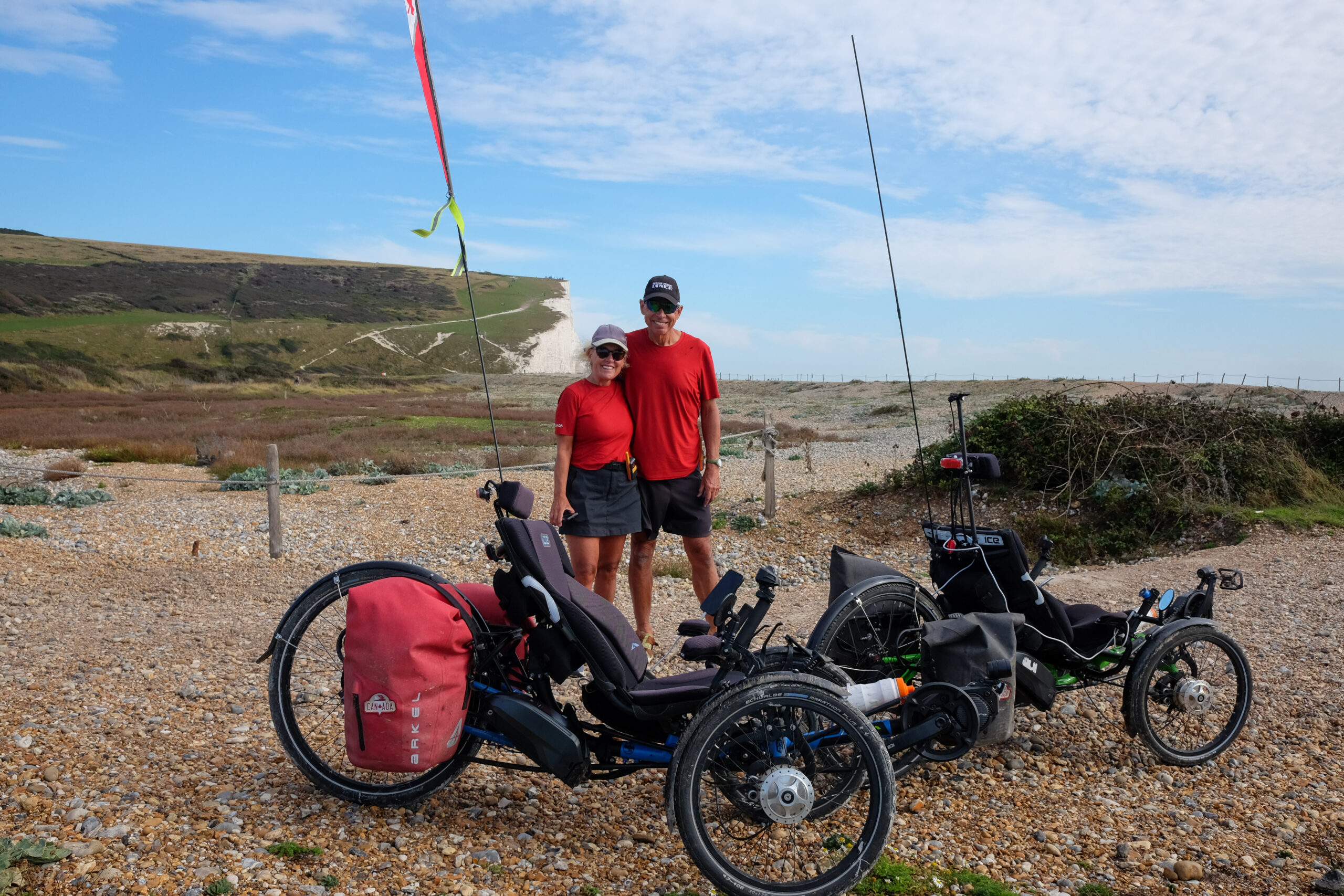
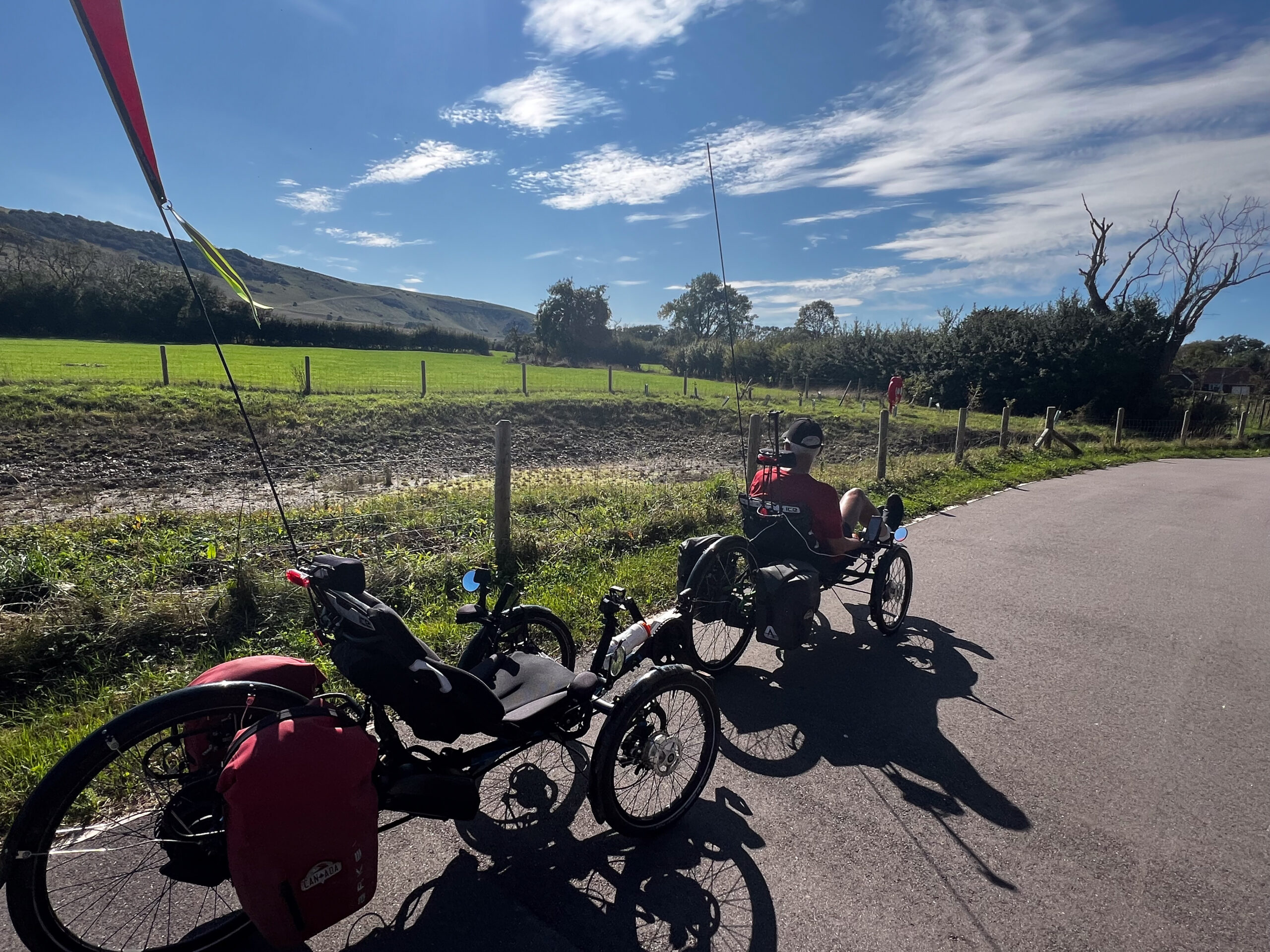
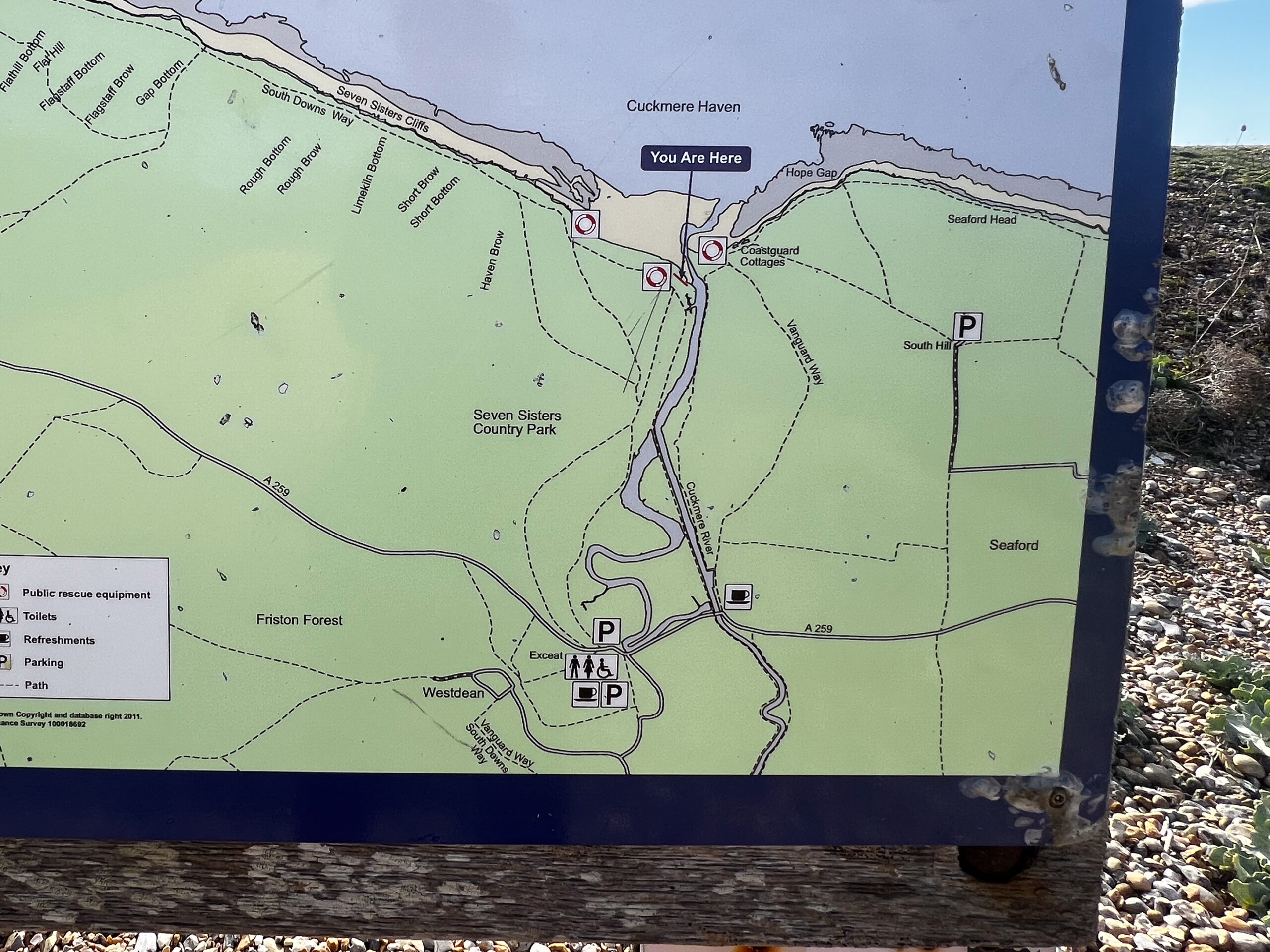
On the morning of the 19th – Friday – we had a beautiful, long 72 km long ride planned: from Royal Tunbridge Wells due south, basically, to Seaford, East Sussex, on the south coast of England, via the famous set of chalk cliffs, the Seven Sisters, and then a check in to the “Wellington” in Seaford.
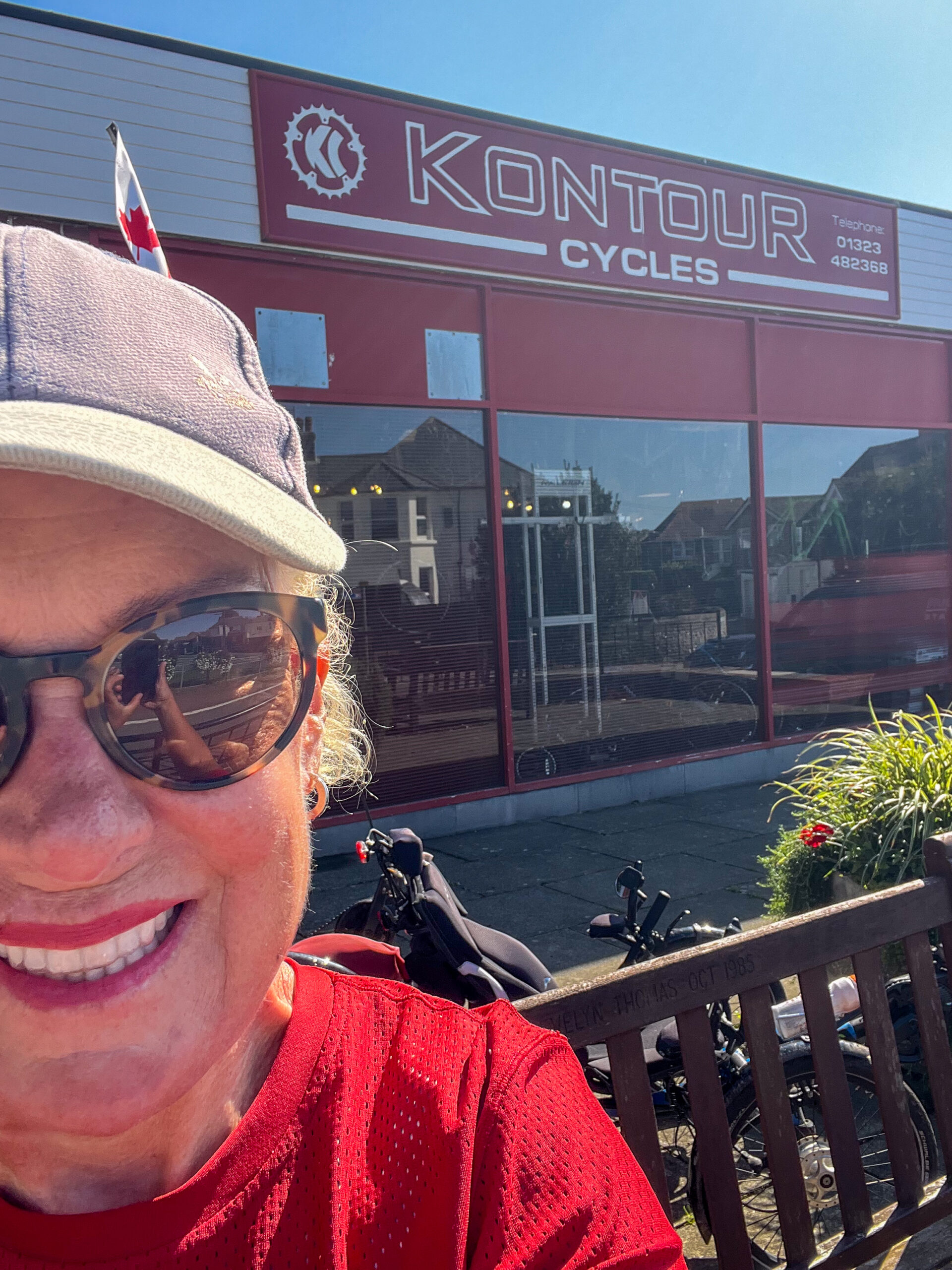
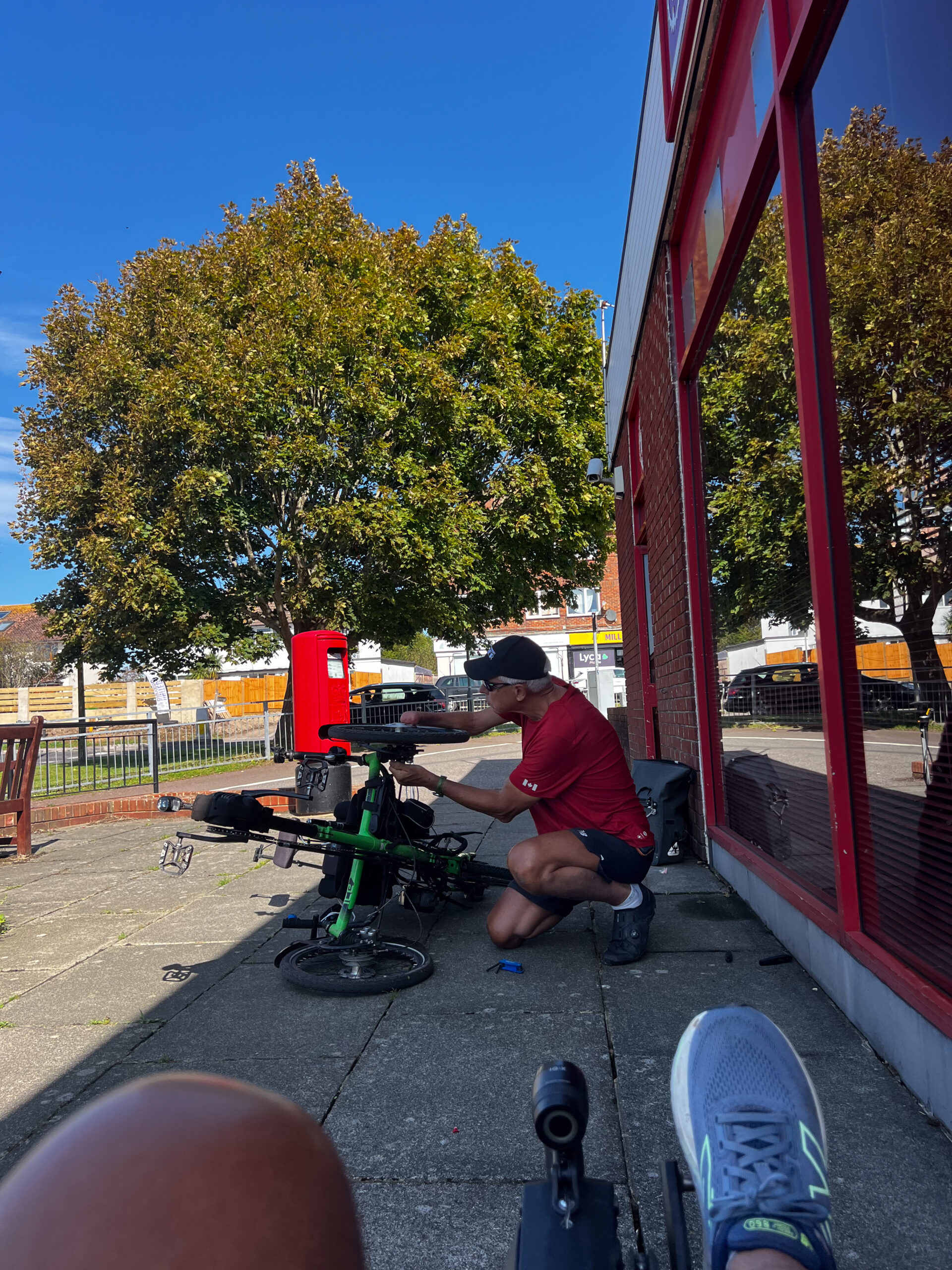
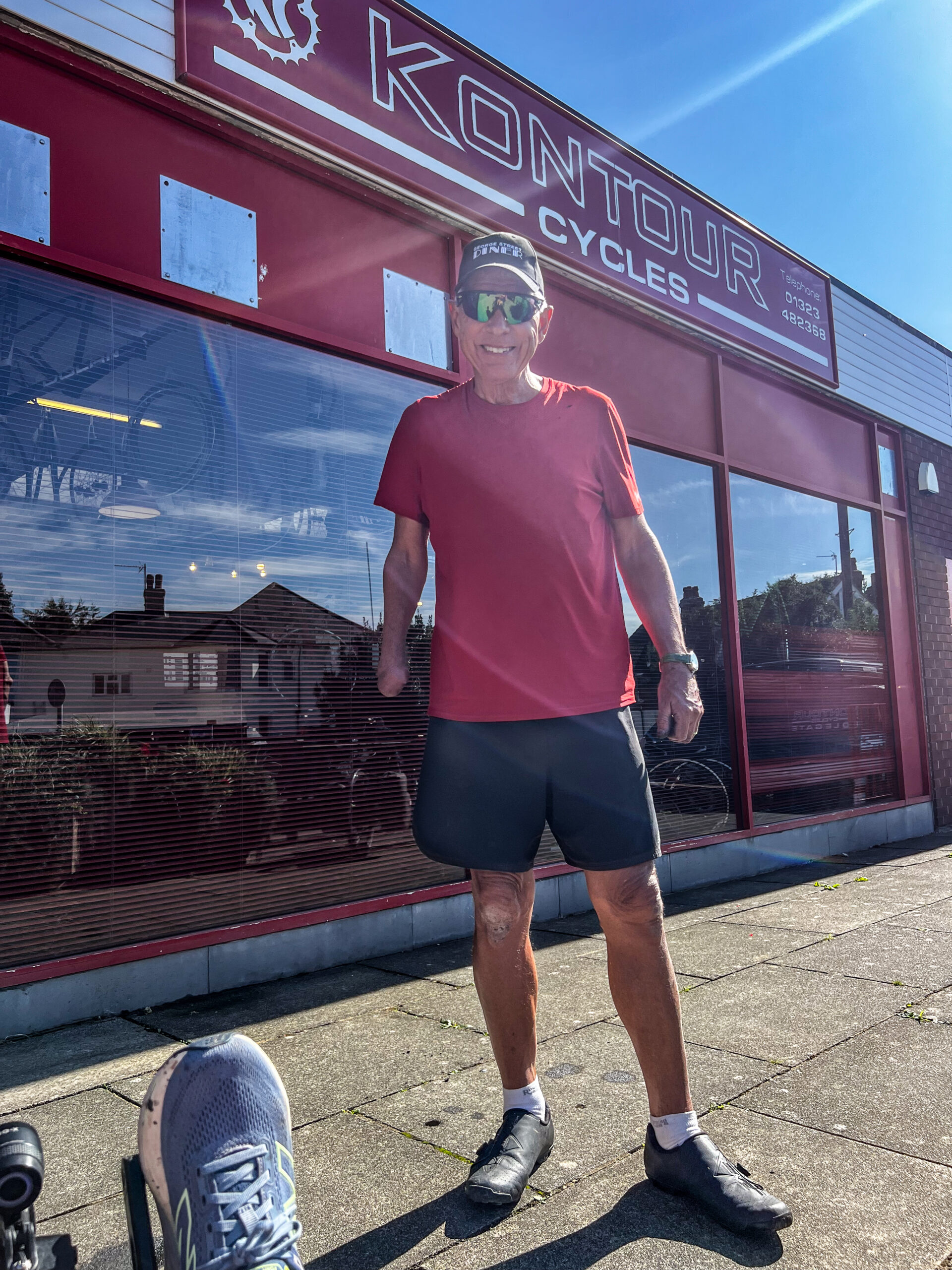
We wended our way through various roads until we ended upon a brilliant bike path, “the Cuckoo Trail”, for miles! There had been some nagging technical issues with the bikes, so we were always on high alert for a serious, no BS bike shop. And there it was: “Kontour“, which we were lucky enough to espy in Polegate.
John bought extra tubes, a replacement tire, a bike chain cleaning device, and, thanks to the largesse of the owner of the shop, we decamped to the patio in front, where John commenced a thorough tuning-up of the bikes (with multiple paper towels, a.k.a. “a Blue Roll”, to handle the ensuing grime). We both had black, greasy hands by the end of that endeavour, but it was worth it.
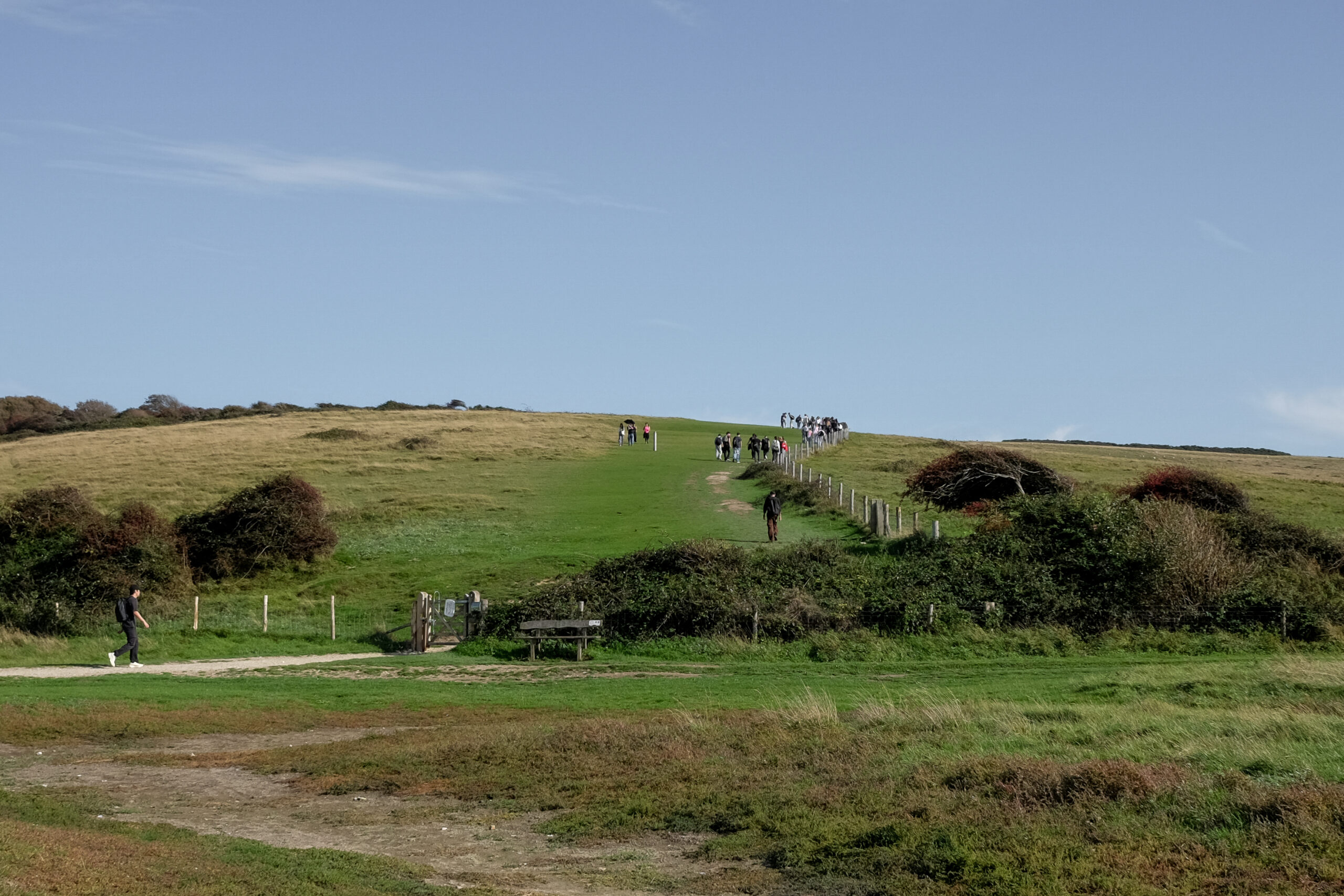
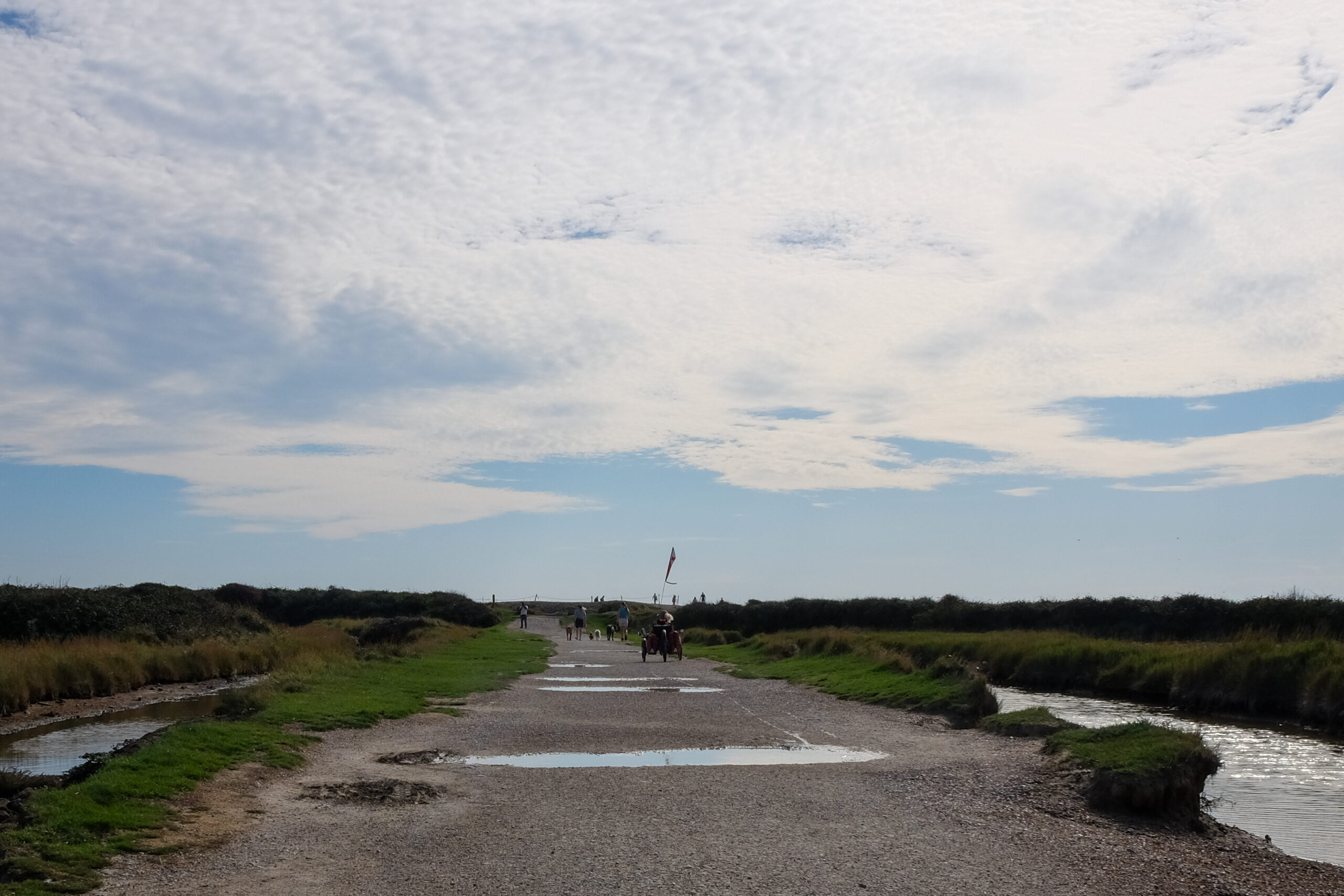
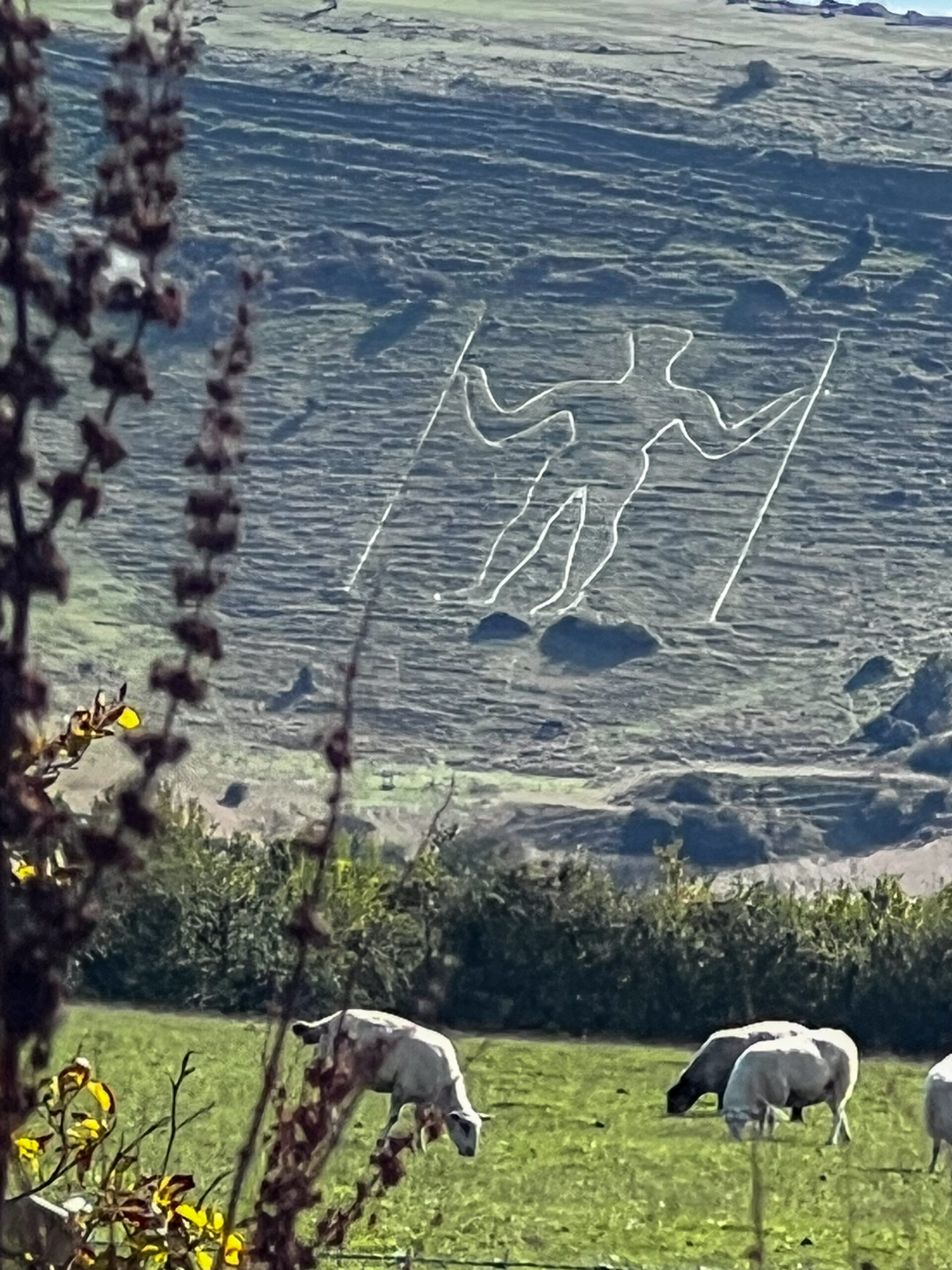
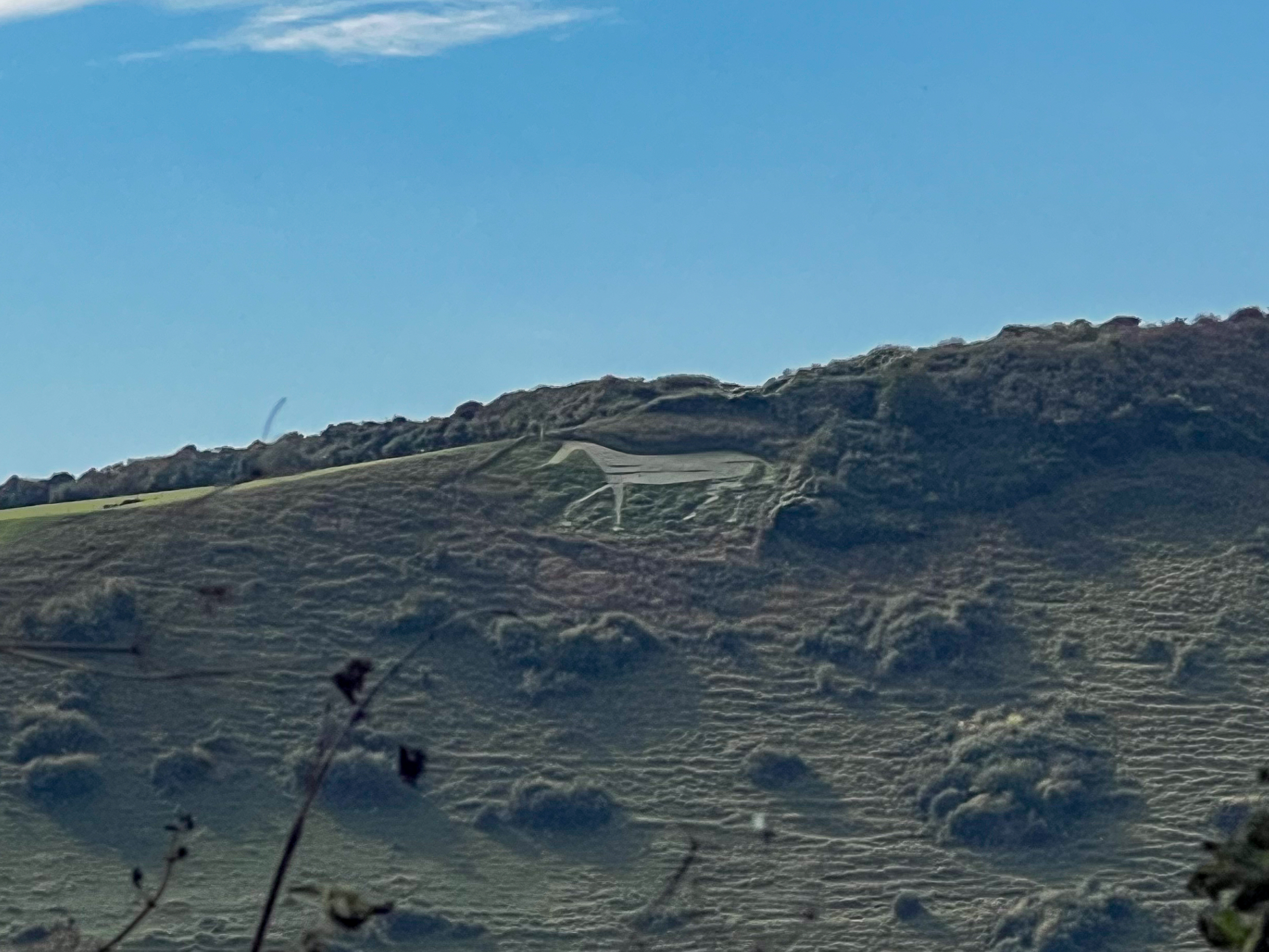
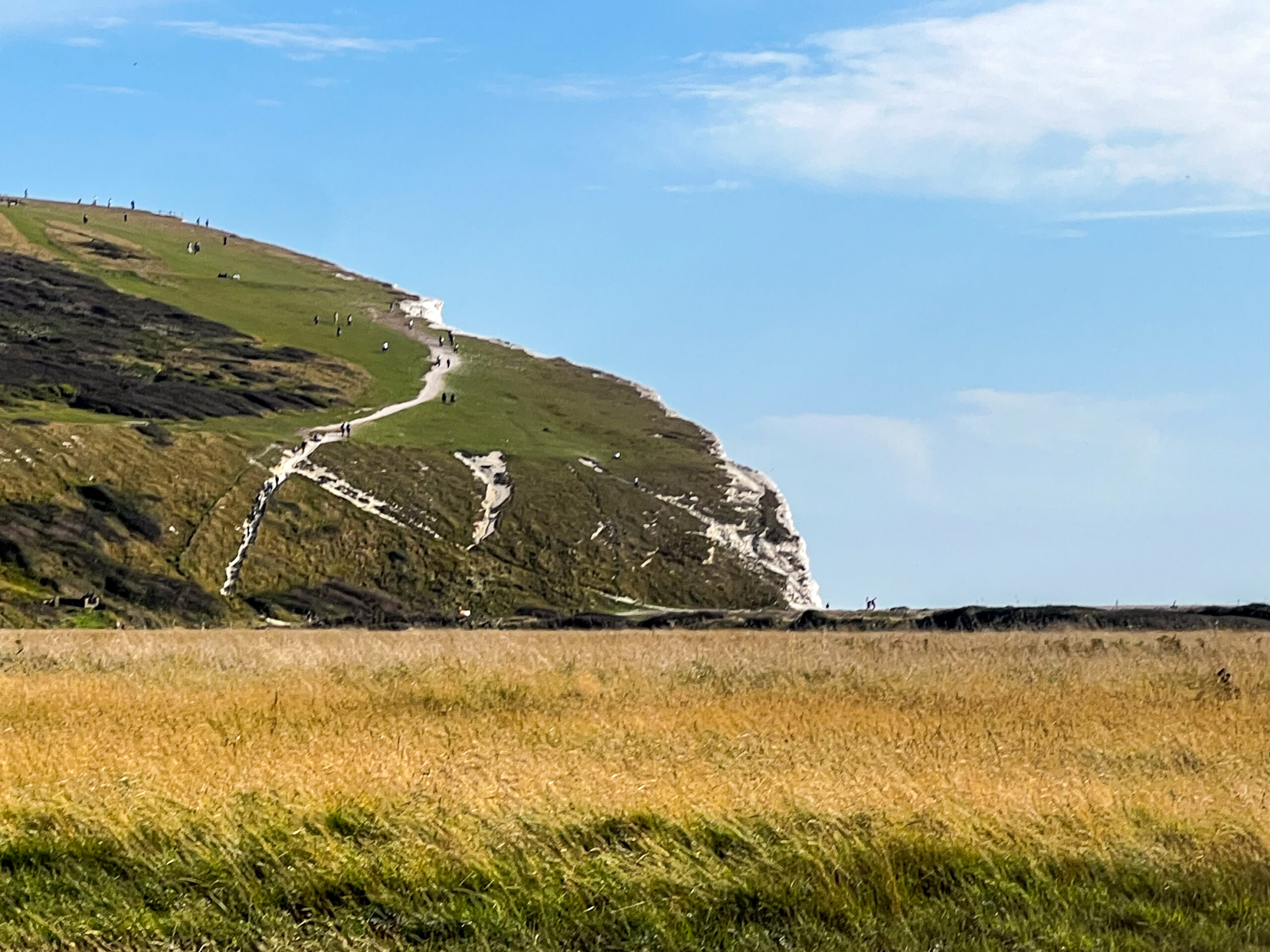
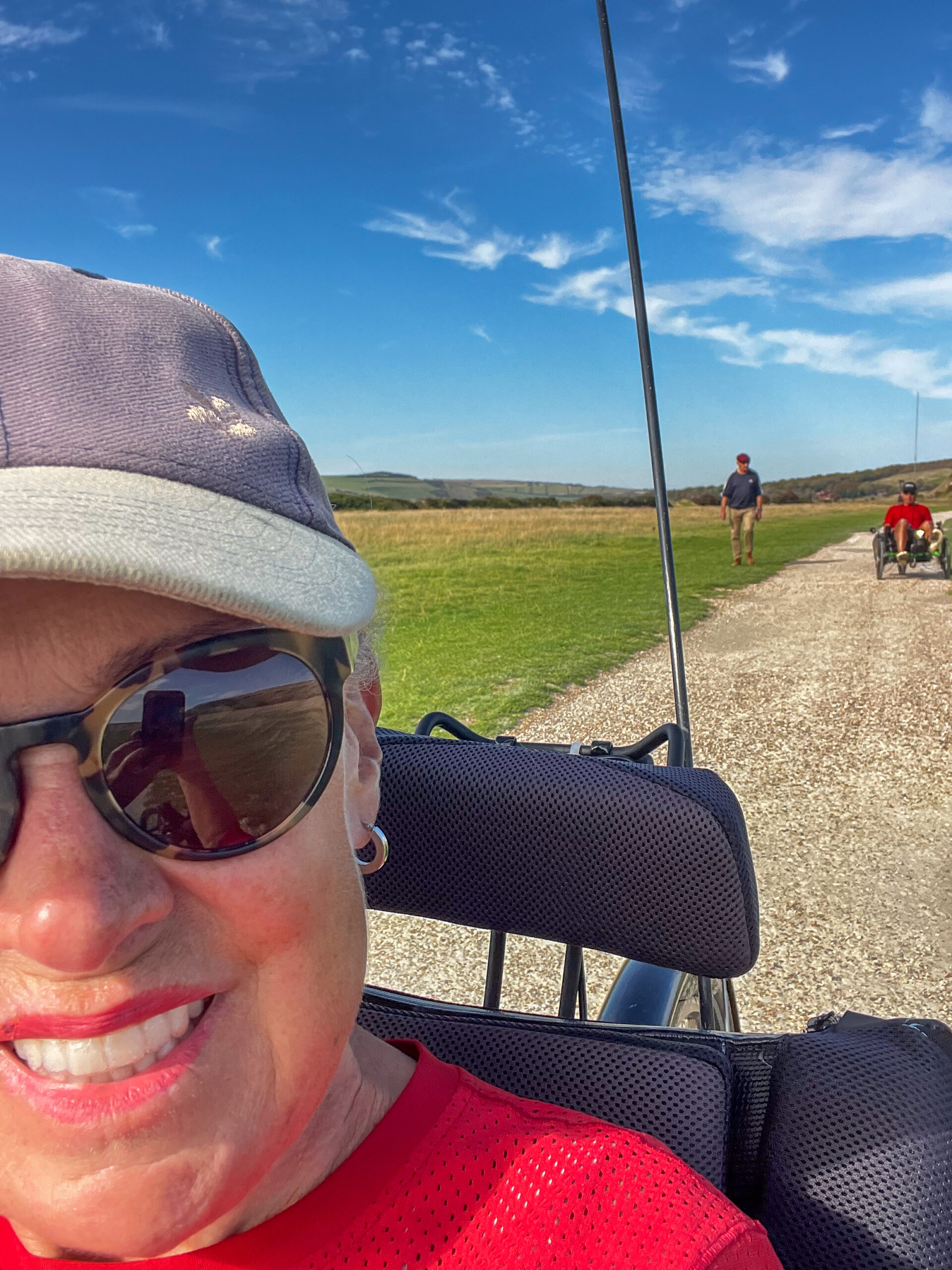
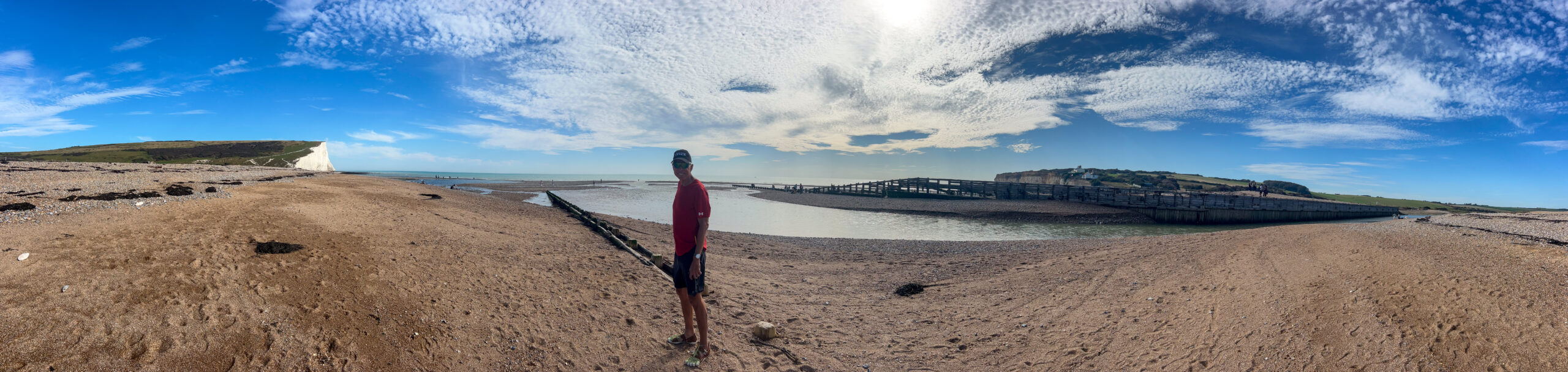
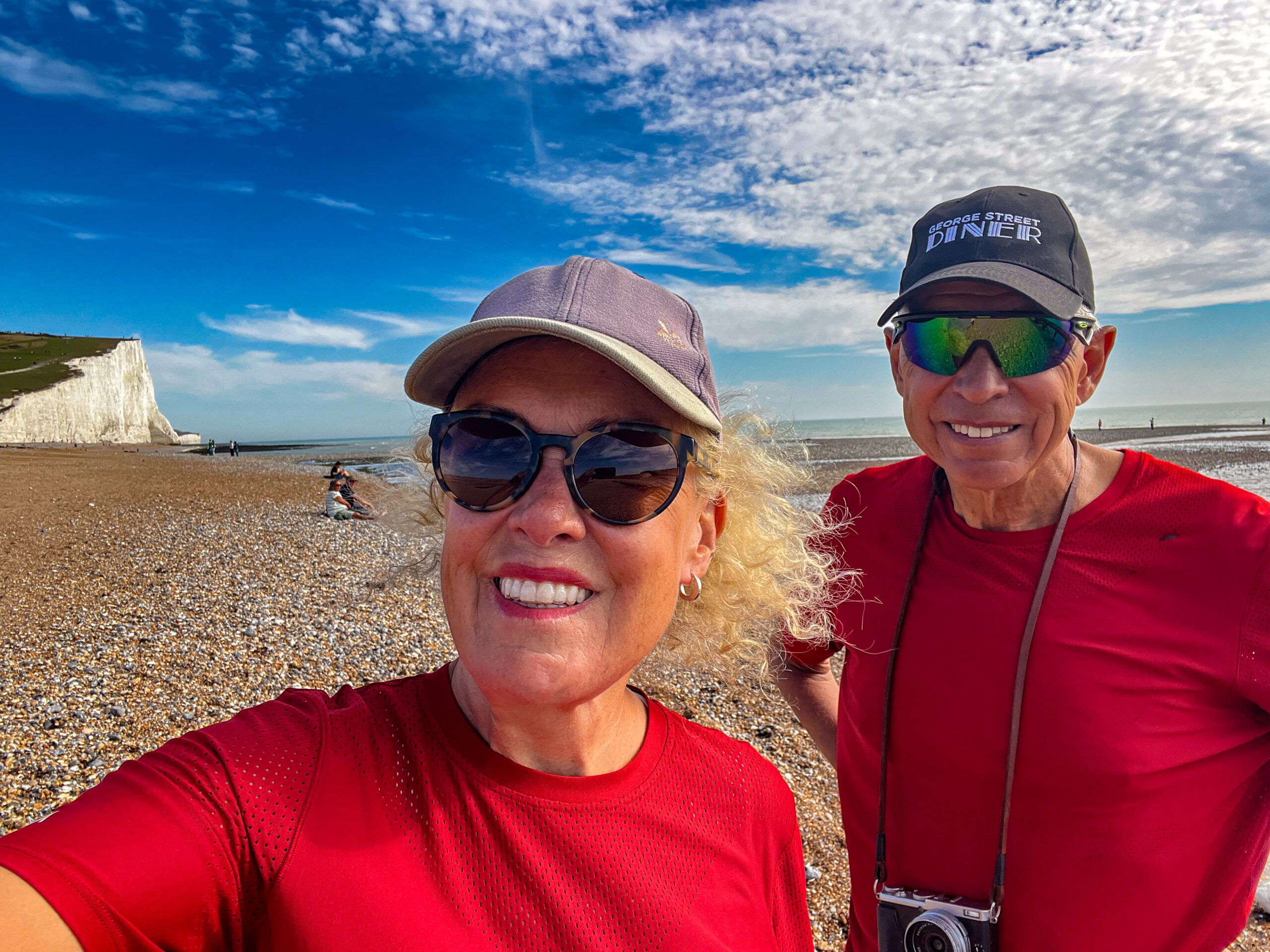
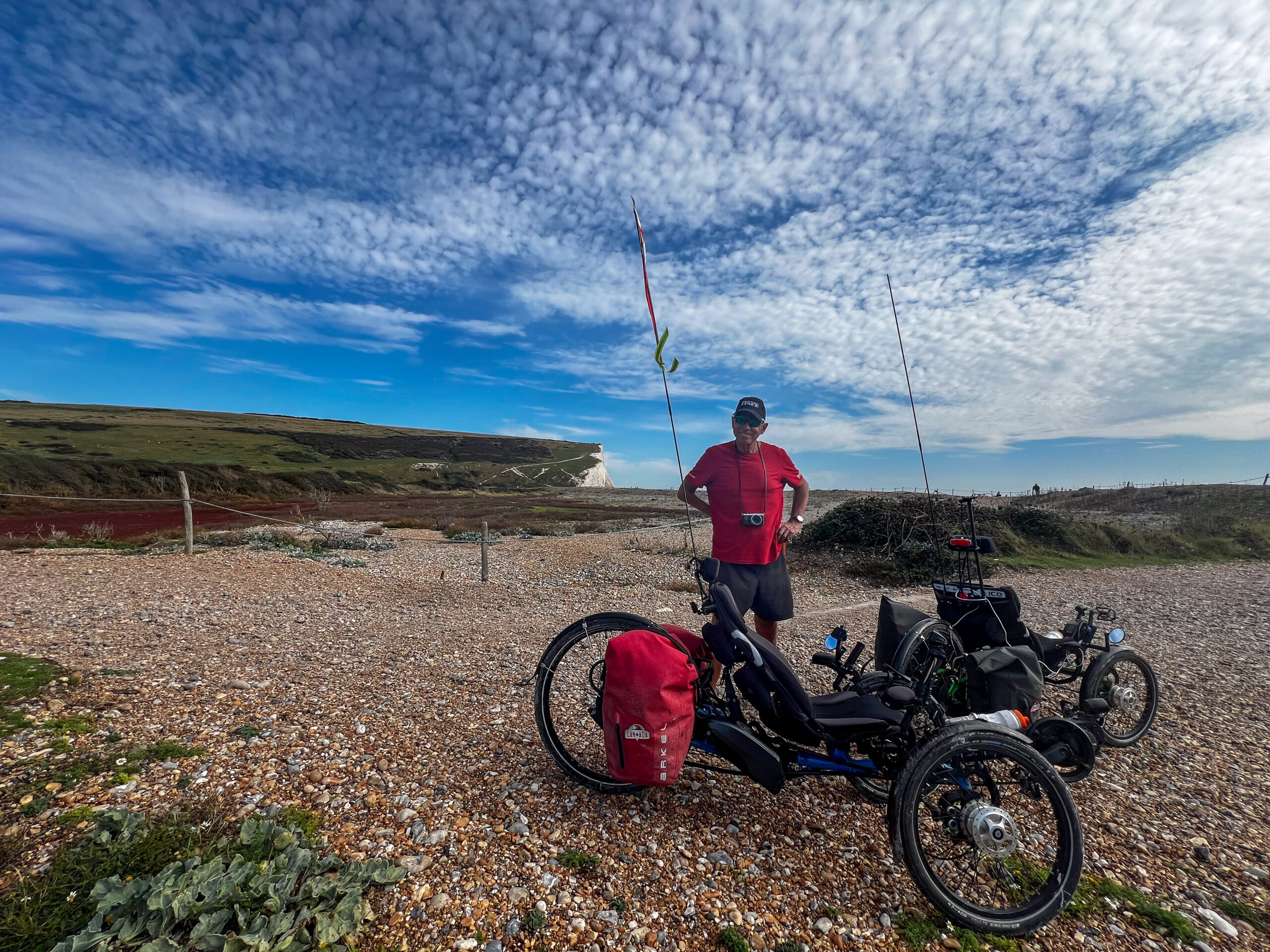
An hour or two later, we were on our way (happy to notice the chalk figures carved into hills on the trail, see photos) and ended up at the coast in a gorgeous (astonishingly free!!!) National Park where throngs of walkers, hikers, cyclists, were making their way to the ocean, and on to the majestic seven cliffs. We weren’t in climbing mode on this day (not after 70 km of cycling, thanks), but that site is worth a visit. Seriously: have a look.
After chatting with multiple crowds of people, we pushed on to Seaford and checked in to our pub/hotel: the Wellington Pub.
Folks had obviously been drinking and revelling in the welcome sunshine of a Friday afternoon: there was joviality and hilariousness all-round when the pub’s owner insisted on having a trial ride on John’s bike. He then treated us to beers, we installed ourselves into our rooms, enjoyed dinner – ginormous burgers stacked high with onion rings – we were starved!!! – and then fell into our beds, exhausted! It was a great, great day. Productive. Silly. Sunshine. And spectacular scenery.
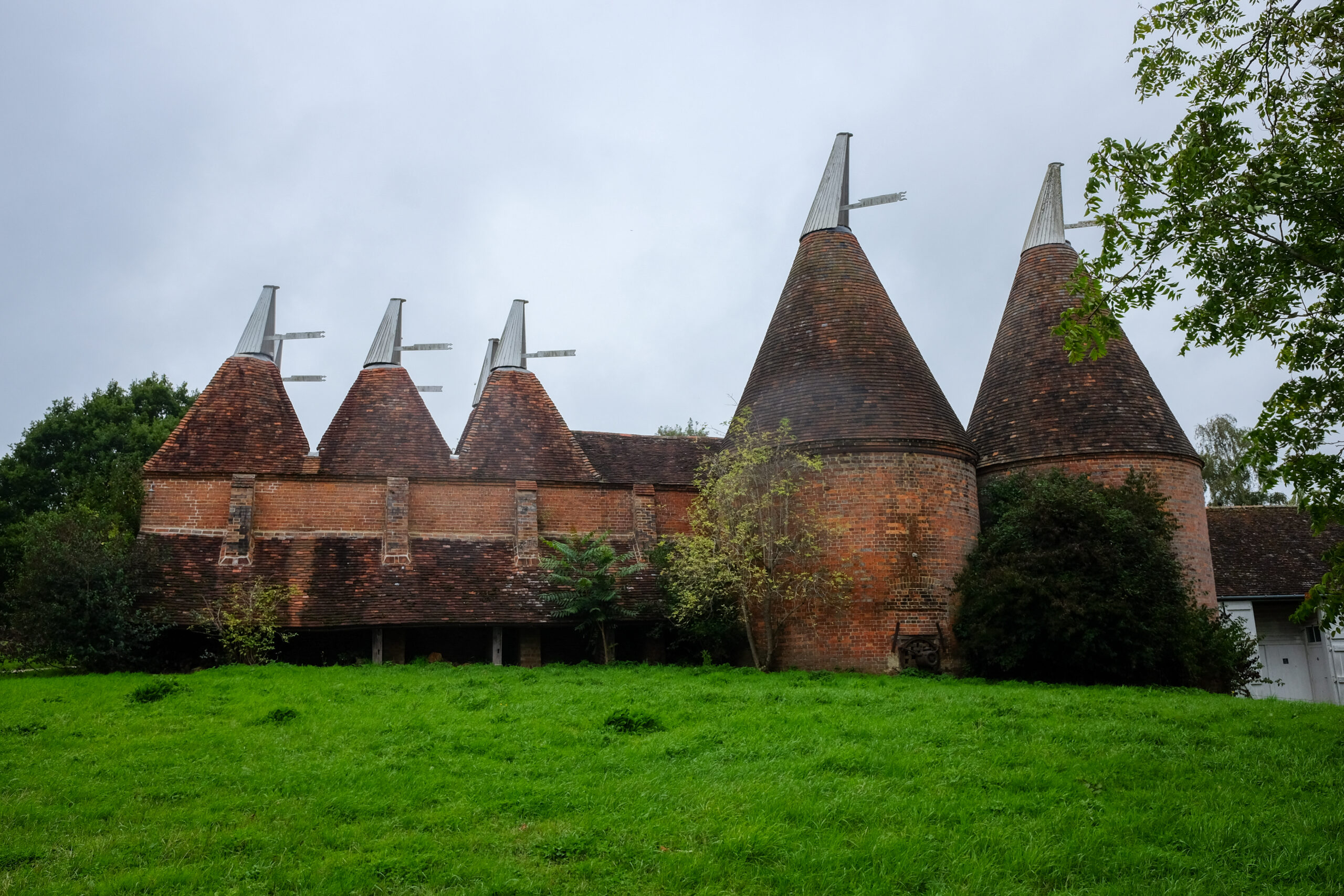
Addendum: in the photos below you will notice weird ‘chimney’s or stacks on some of the roofs. They’re actually drying vents for hops which are/were a principal crop in Kent. You see them everywhere. Ingenious.





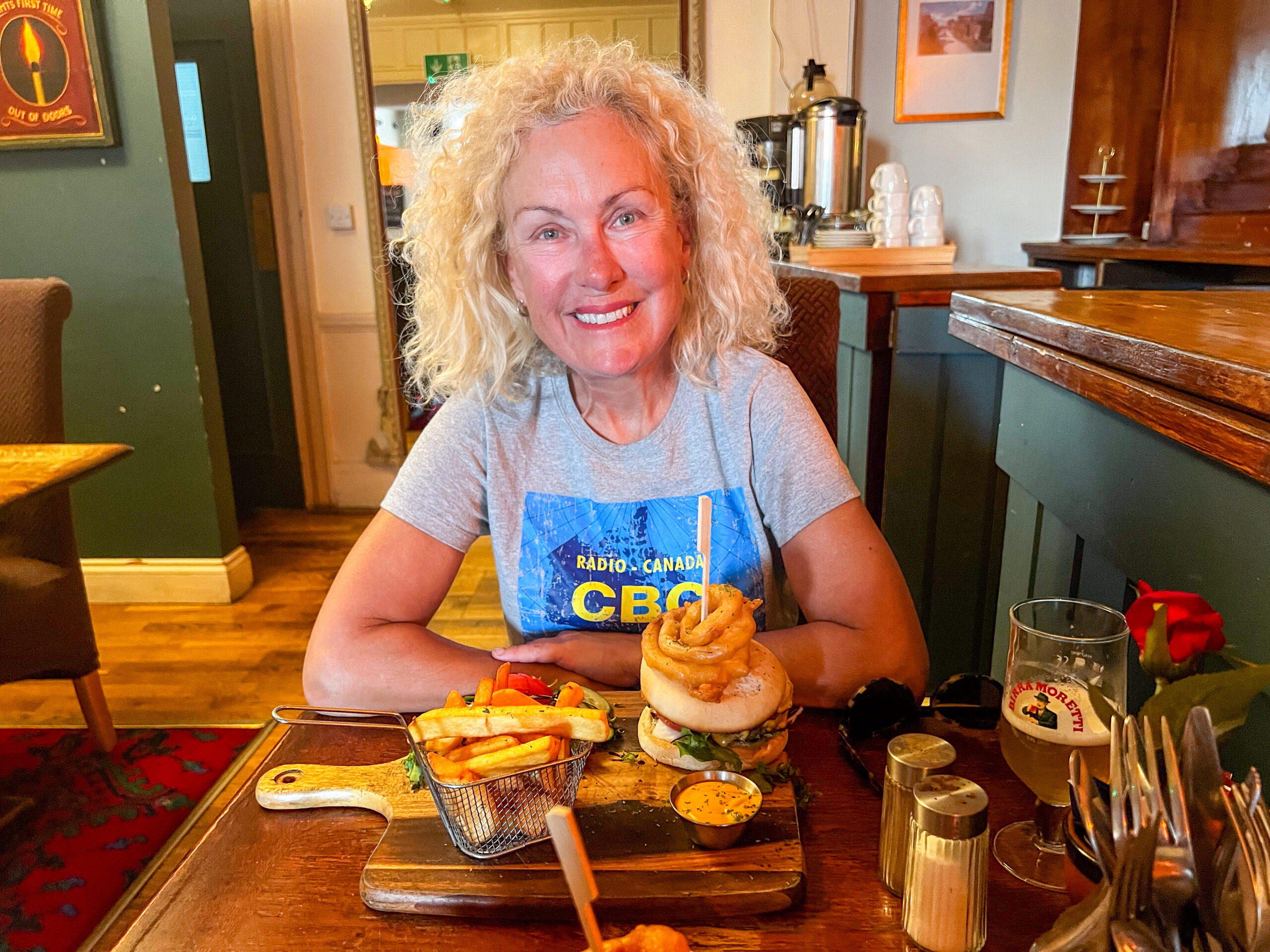
Omg. That burger.
0
0