Ben arrived in Warsaw, travelling from Amersfoort, Netherlands to Berlin, overnight, and then Berlin to Warsaw. Over 1,100 kms on a Eurail Pass in two half-days of travel. The European rail network is fantastic. We had a lovely lunch near the train station, and boarded for Suwalki, Poland, near the Lithuanian border.
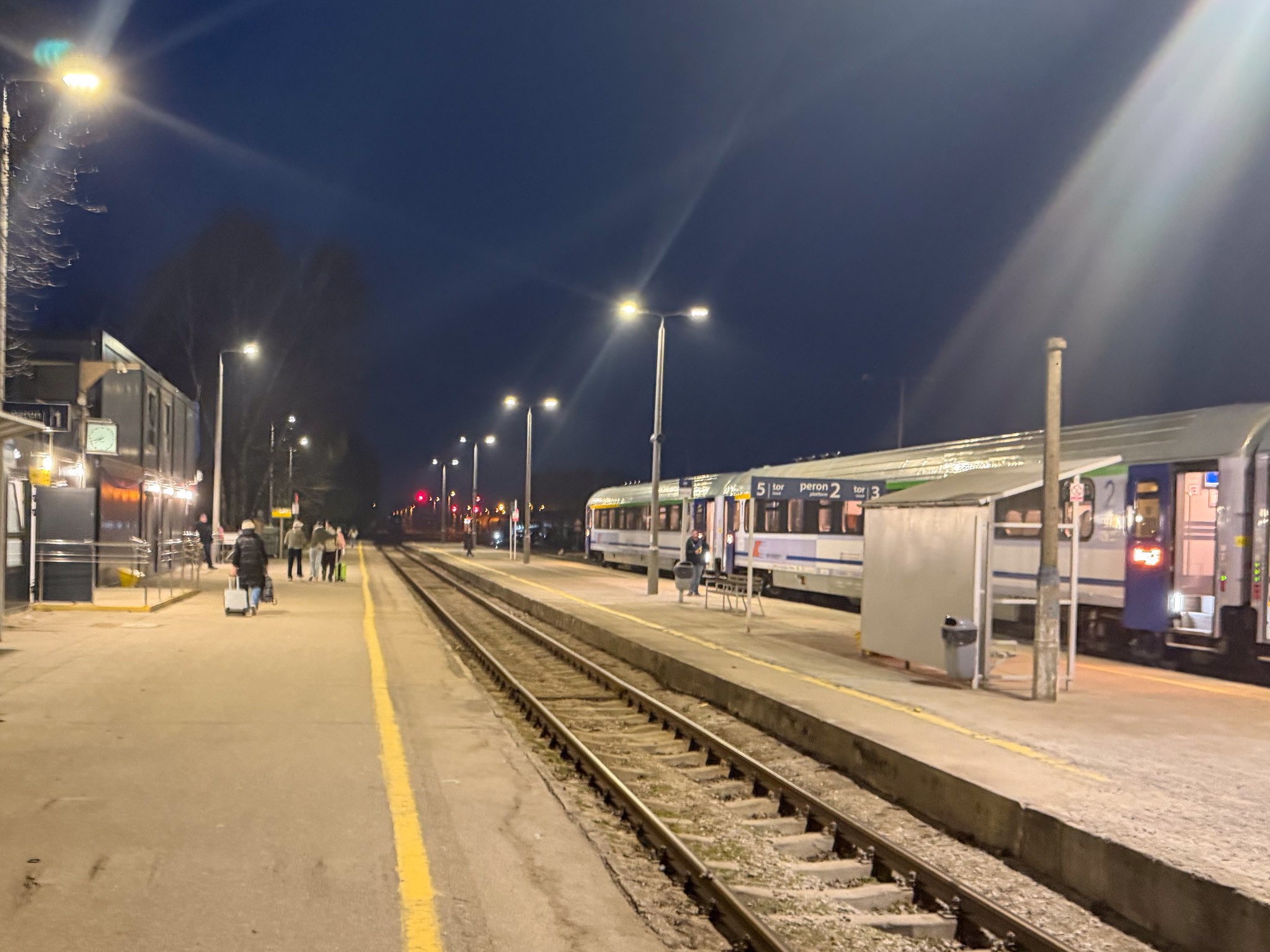
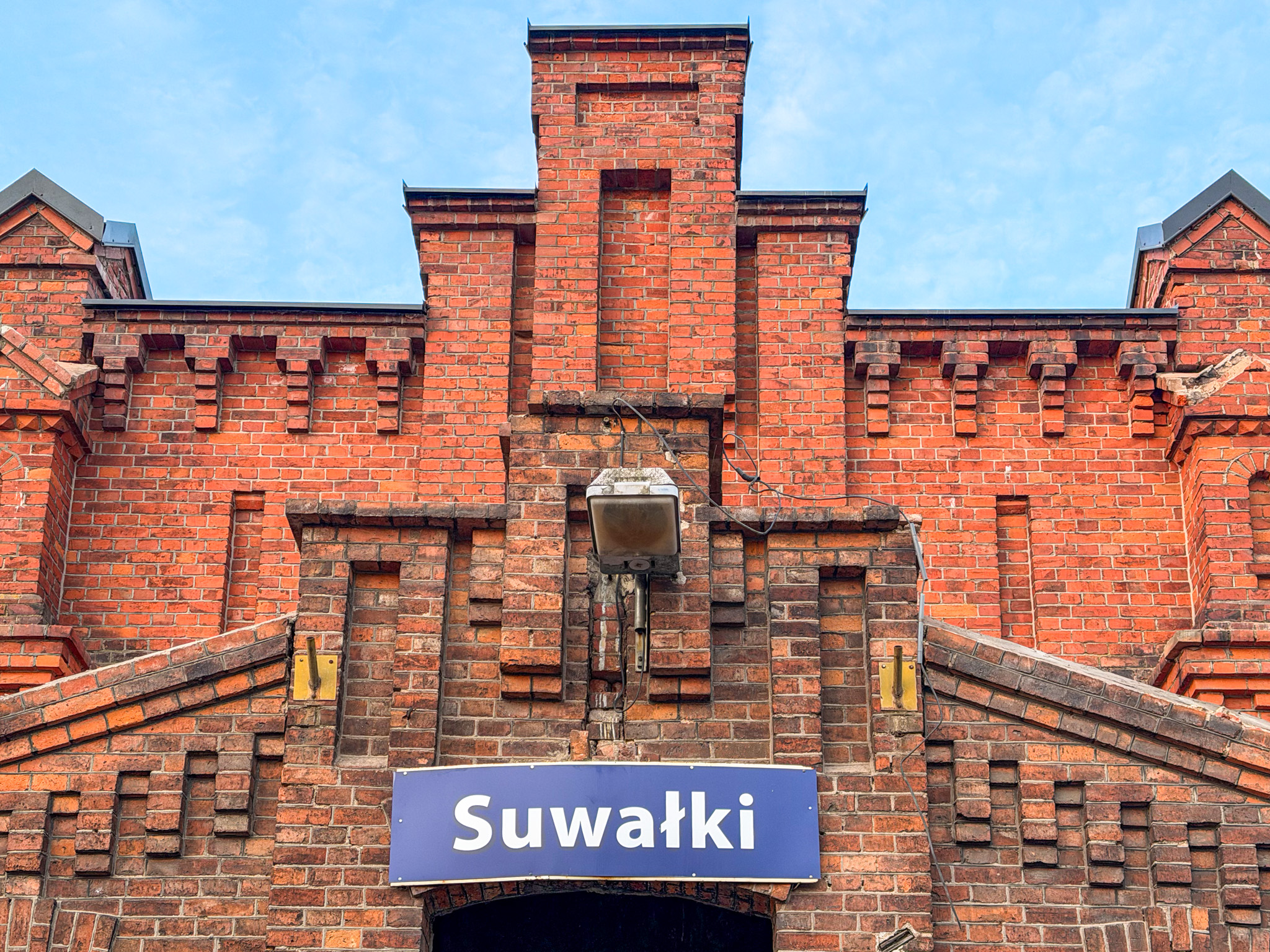
We arrived in the dark, about 7:30pm, and walked the kilometre or so to the hotel. Suwalki is a town of about 60,000. Unfortunately we didn’t see the town centre, but read about the ‘Suwalki Gap’. Suwalki sits between Belarus and Kaliningrad, the isolated piece of Russia on the Baltic Sea. The ‘Gap’ is hence a strategic strip of land. Should Russia decide to invade the Baltic States, their first move would likely be to close the ‘Gap’, preventing NATO forces to move from Poland to Lithuania. The Baltics States would then be cutoff.
Let’s hope this never happens.
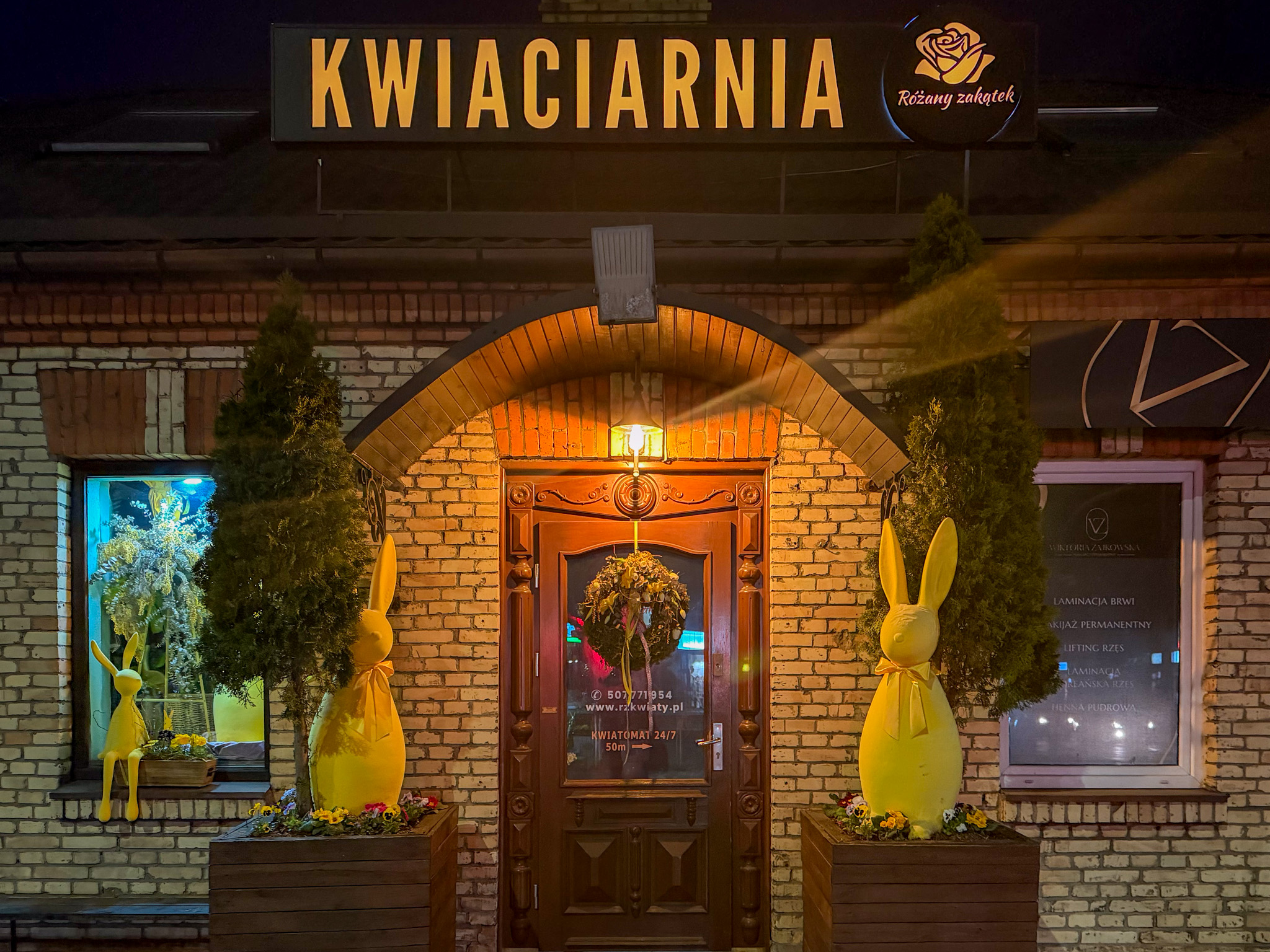
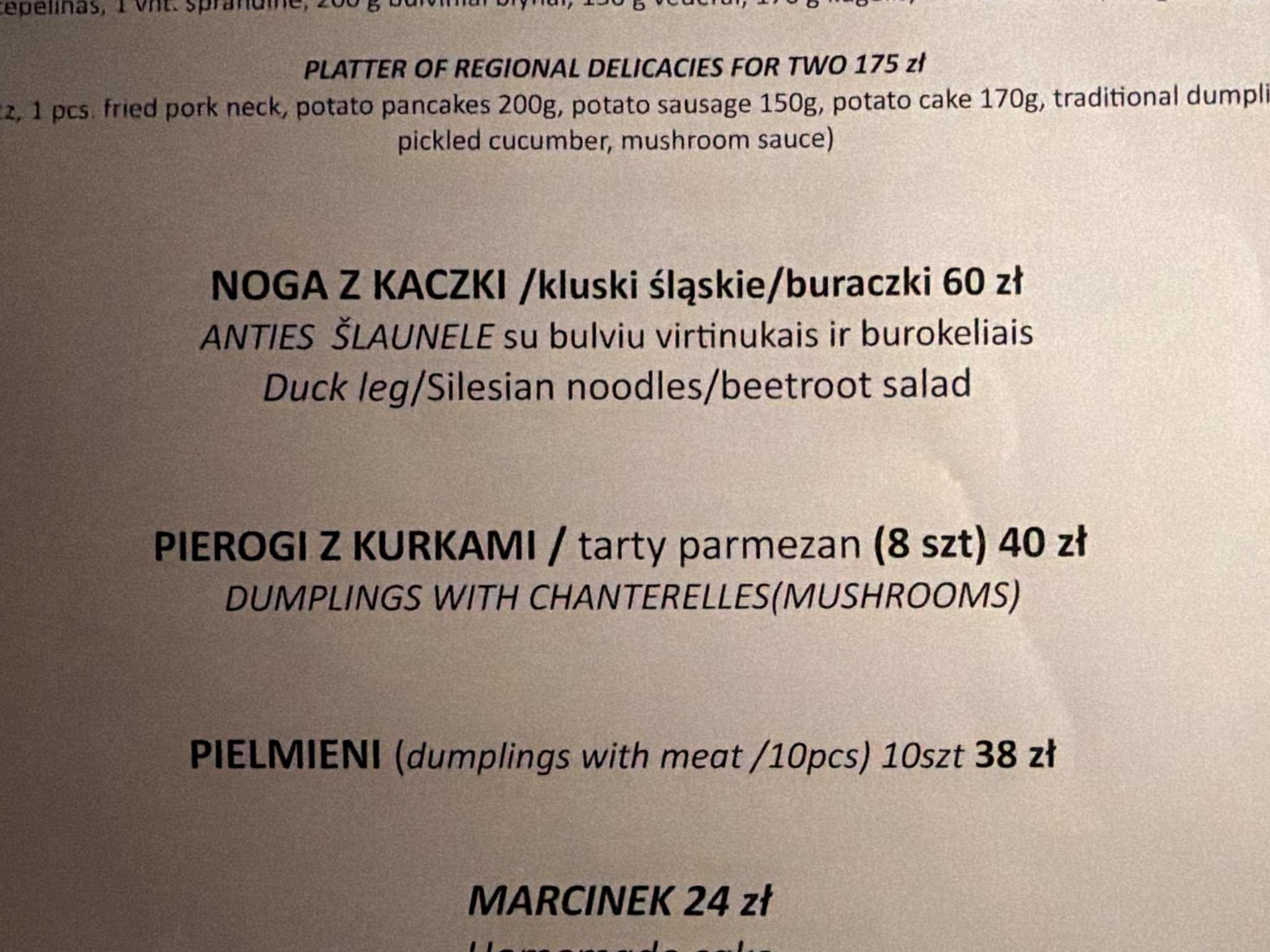
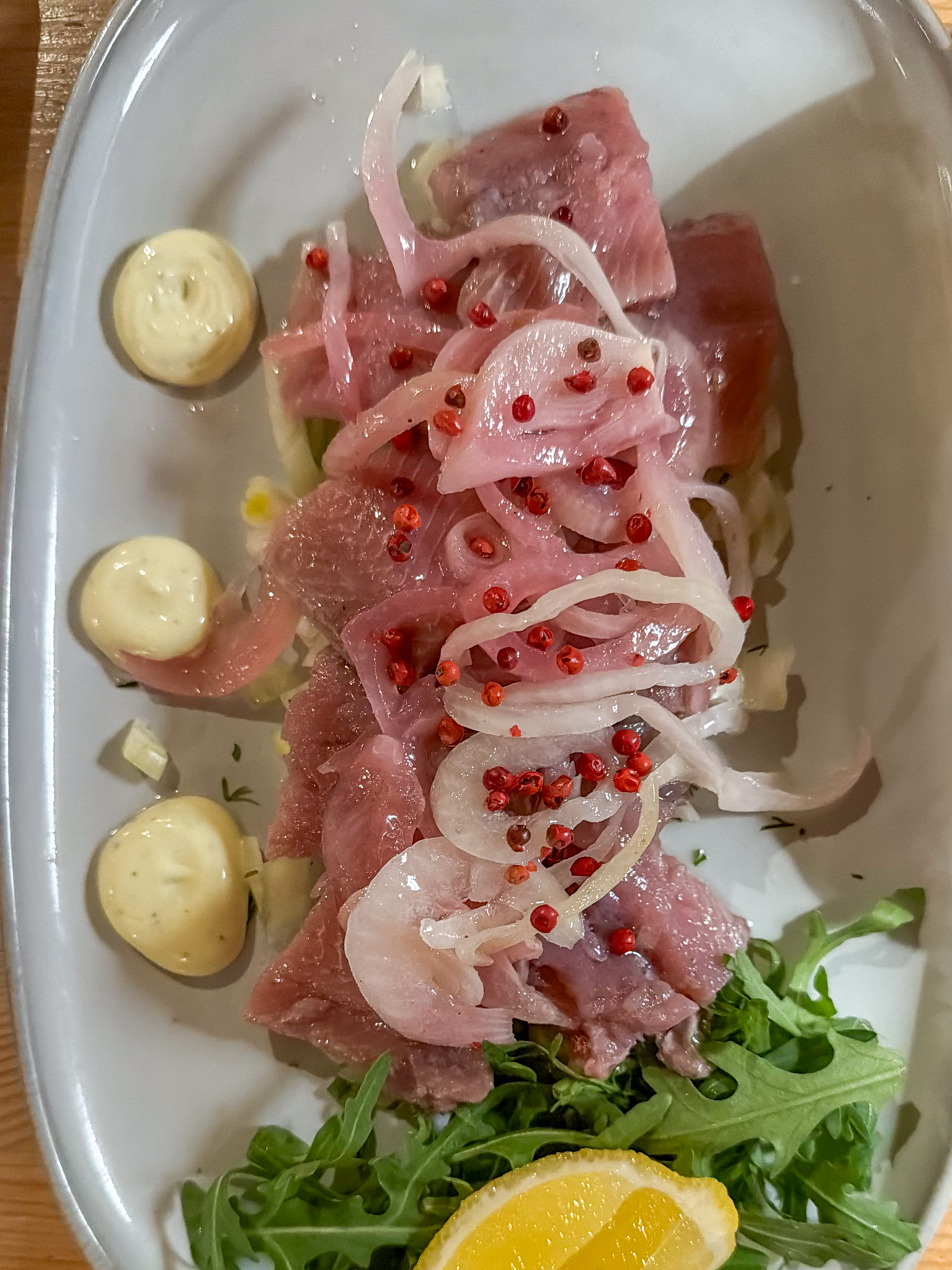
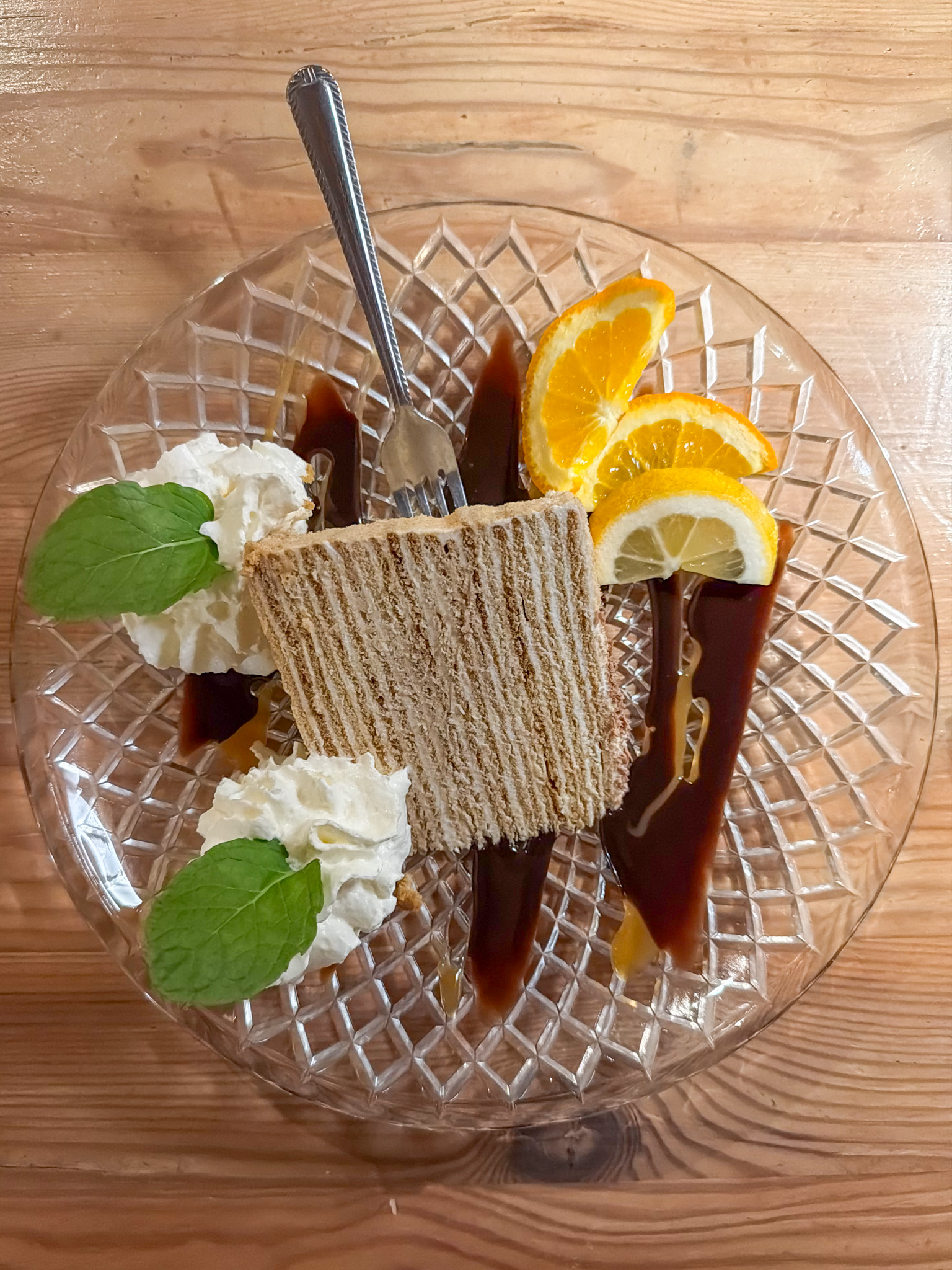
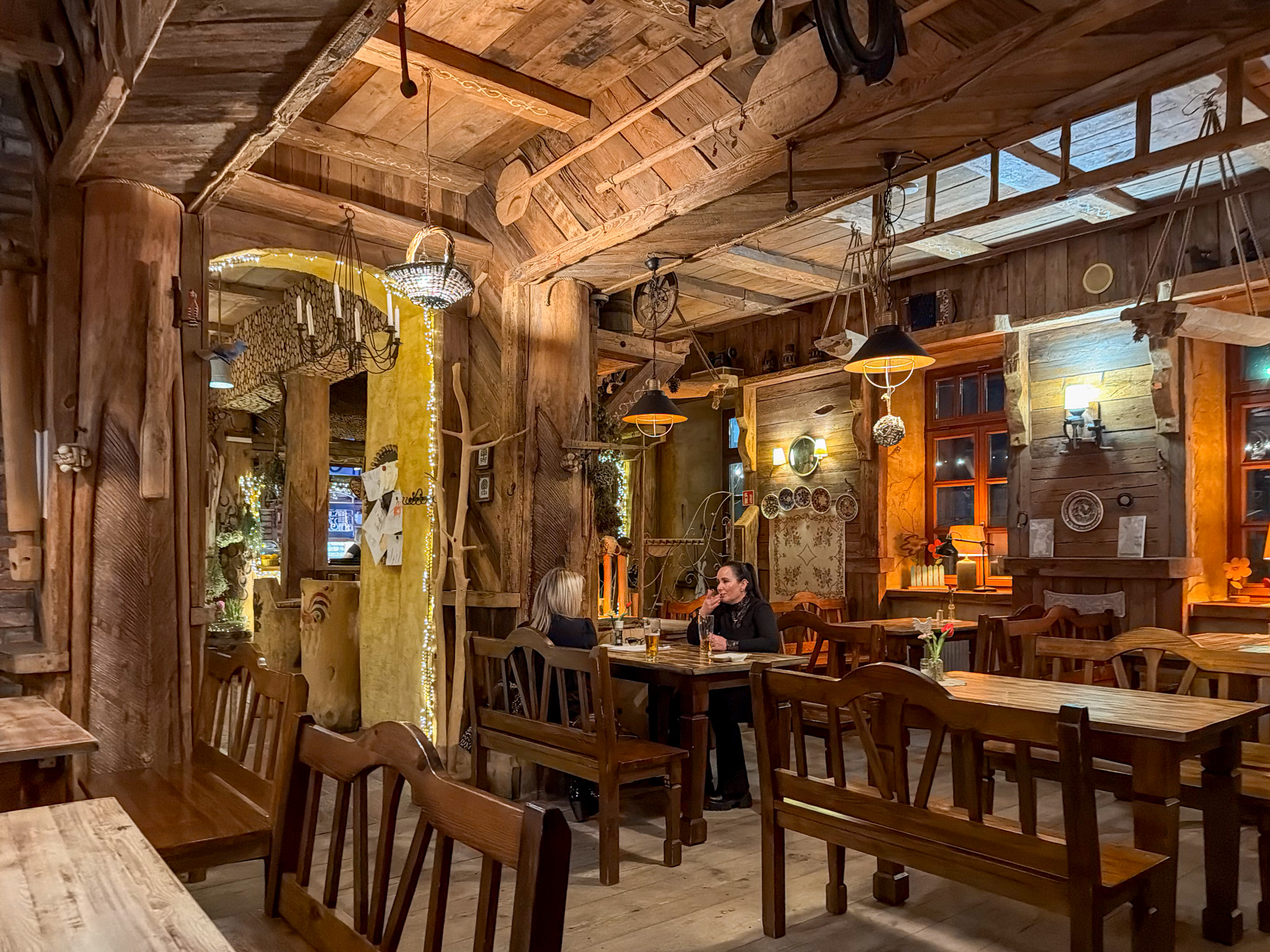
The hotel receptionist recommended a restaurant around the corner for authentic northern Poland fare. Well – not disappointed to say the least. The herring was extraordinary – certainly not the blocks of fish dug out of jars we are used to. So tender and subtle. And the pierogies, stuffed with mushrooms. Wow! Not doughy or sticky. And a twenty layer piece of cake, with whipped sour cream and berries. Unbelievable.
Then off to bed, with an overnight loss of one hour for daylight savings time. To make matters worse, we will lose another hour tomorrow when crossing from Poland to Lithuania.
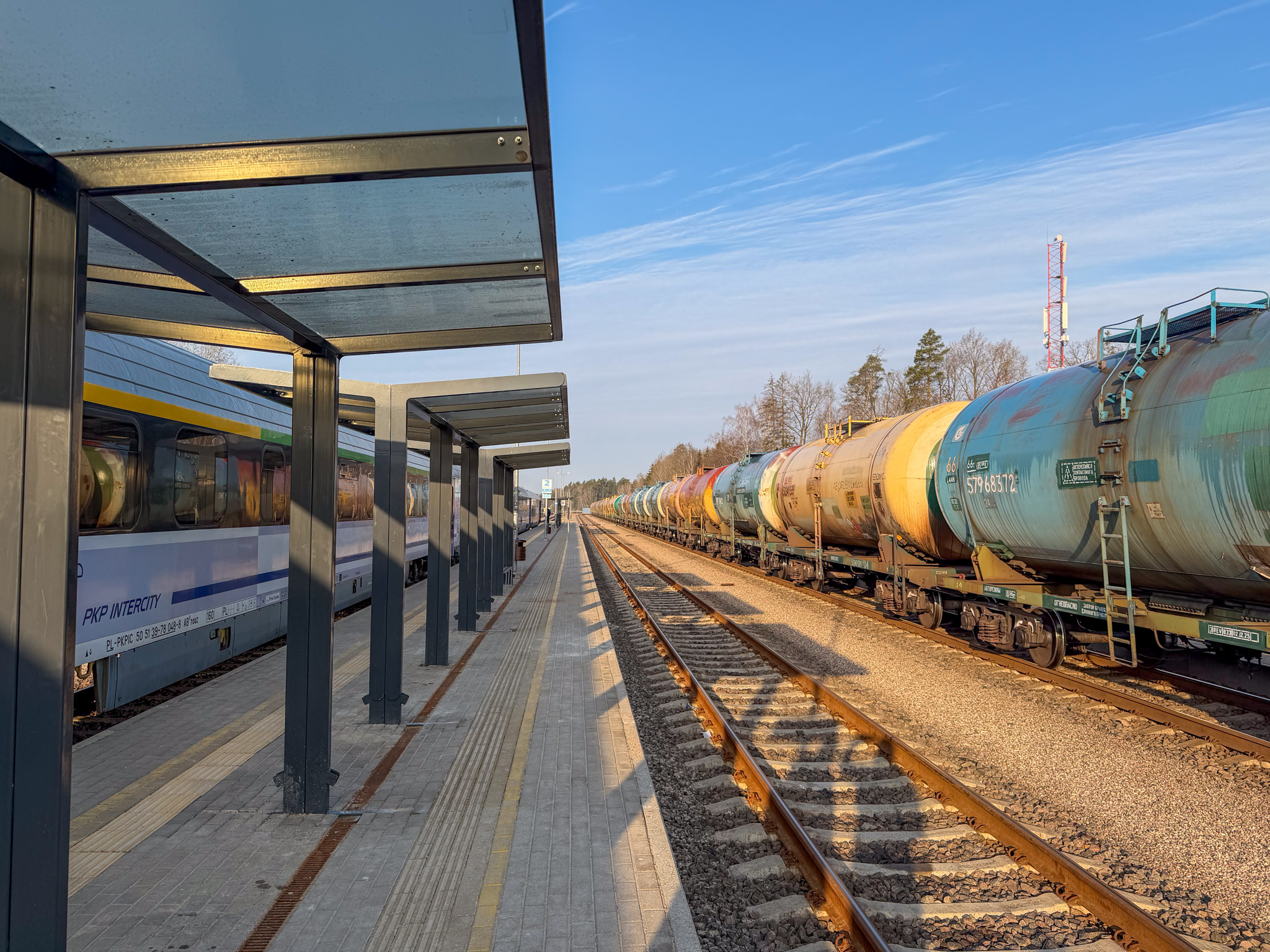
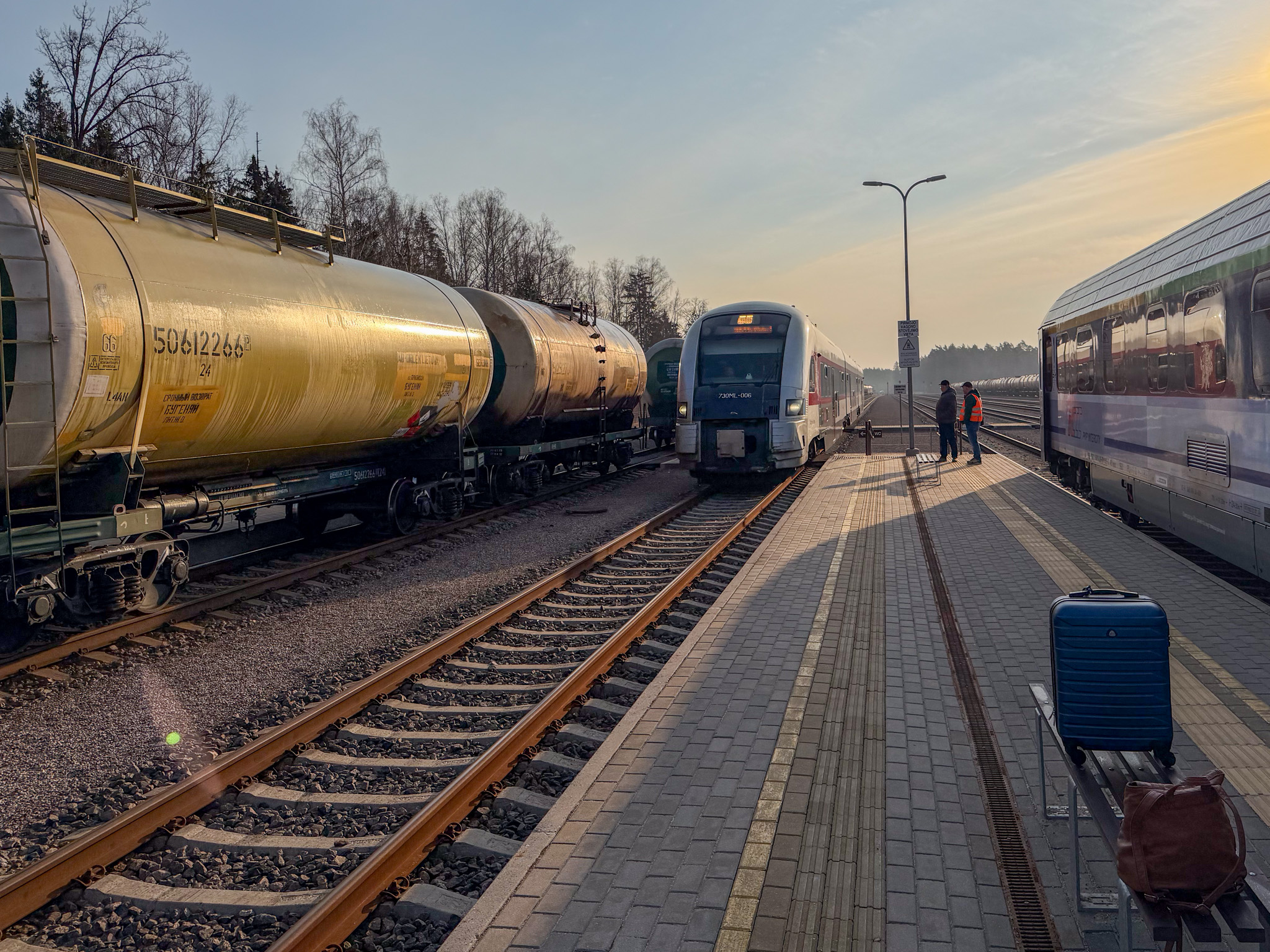
The hotel made us a substantial box breakfast and we headed out to catch our 7:00 AM train north and east. We had to change trains in Mockawa, Lithuania, because the width between the rails (rail gauge) increased by a few centimetres from the European standard width to the old Russian standard. Then a pleasant three hour ride to the capital of Lithuania, Vilnius.
Vilnius is in the south-east corner of Lithuania, on the Neris River. It was settled in the early 14th Century, with the nearby Poles sharing language and culture. In 1795 Vilnius became part of the Russian Empire, and many of the Christain churches converted to Orthodox. As well, almost half of the population was Jewish. Lithuania, and the other two Baltic States, Latvia and Estonia, eventually fell under the control of the USSR.
World War Two saw German rule, and with it the establishment of two large Jewish Ghettos. By war’s end, most of the city’s 150,000 Jewish people had either been killed or sent to concentration camps. Today, sadly, only one synagogue remains in Vilnius.
The Baltic States are now free, and members of NATO and the European Union.
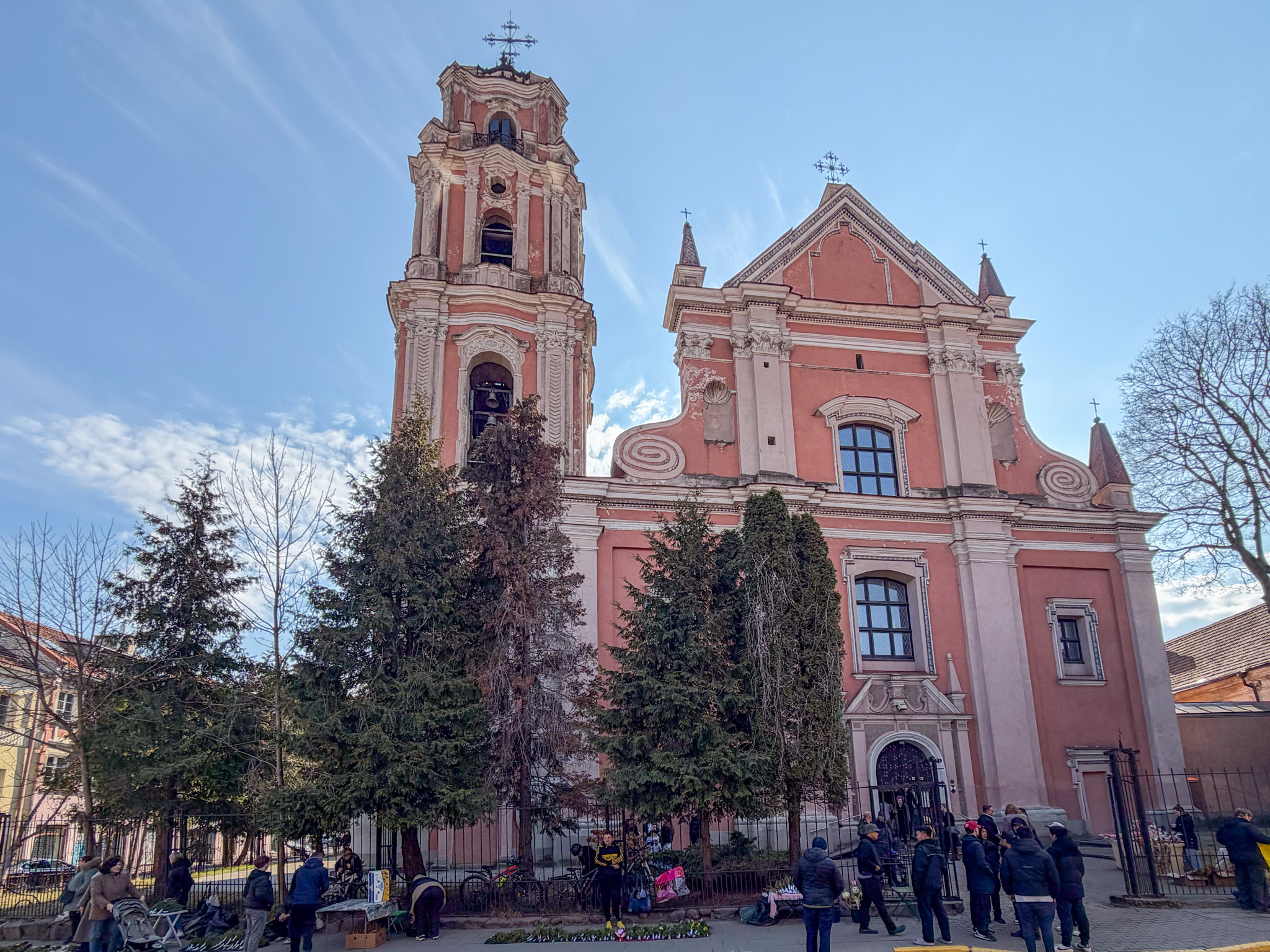
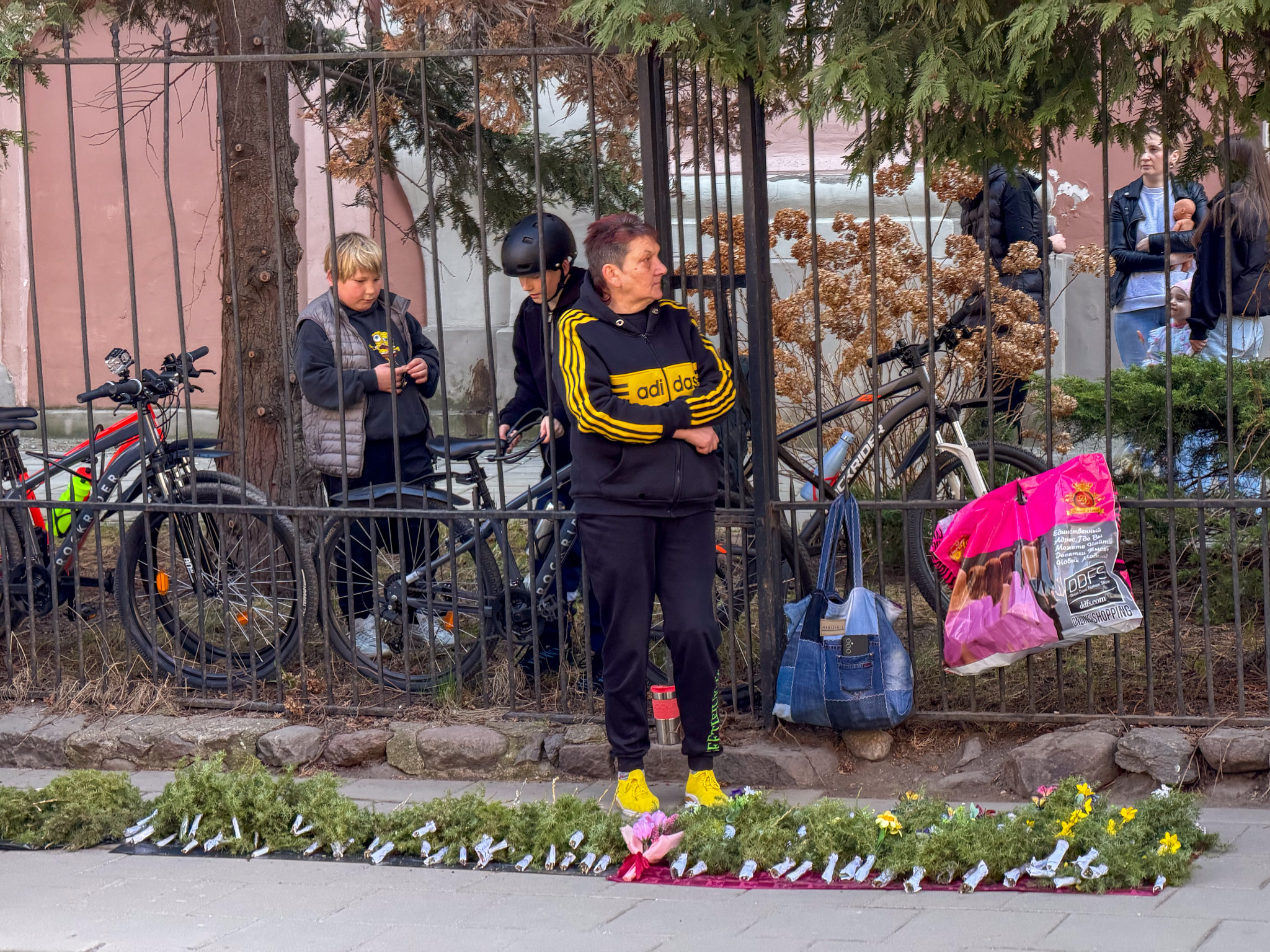
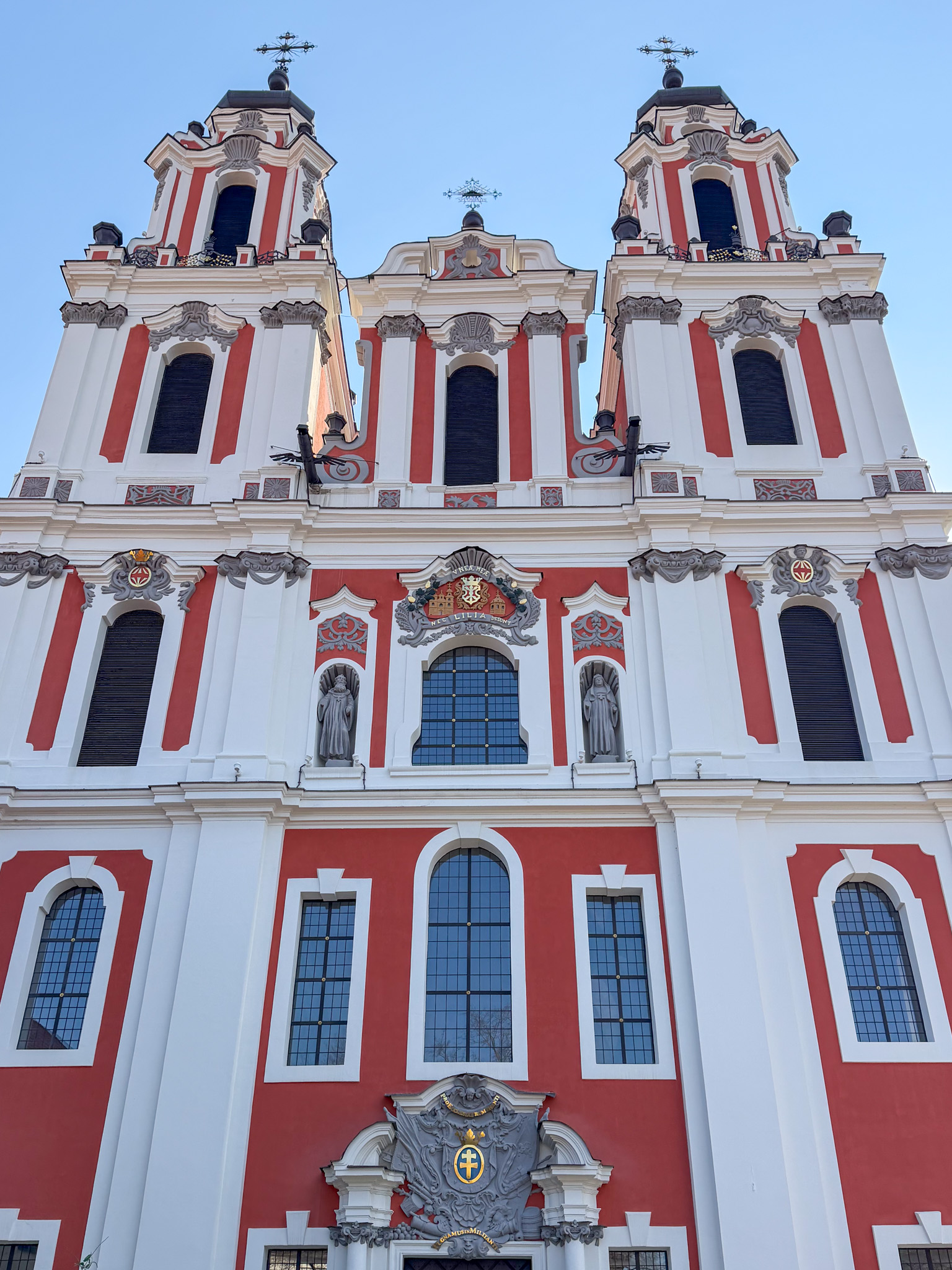
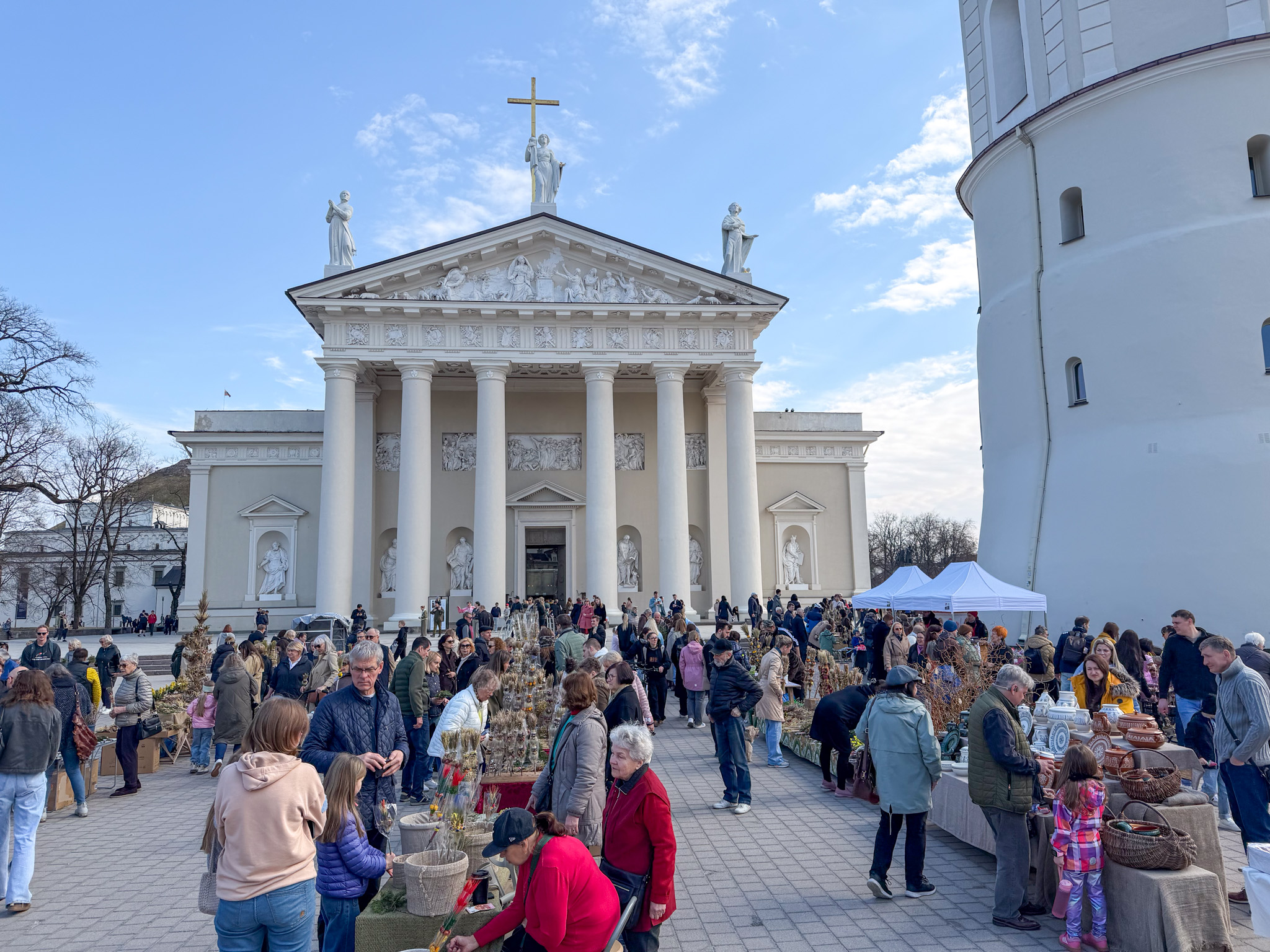
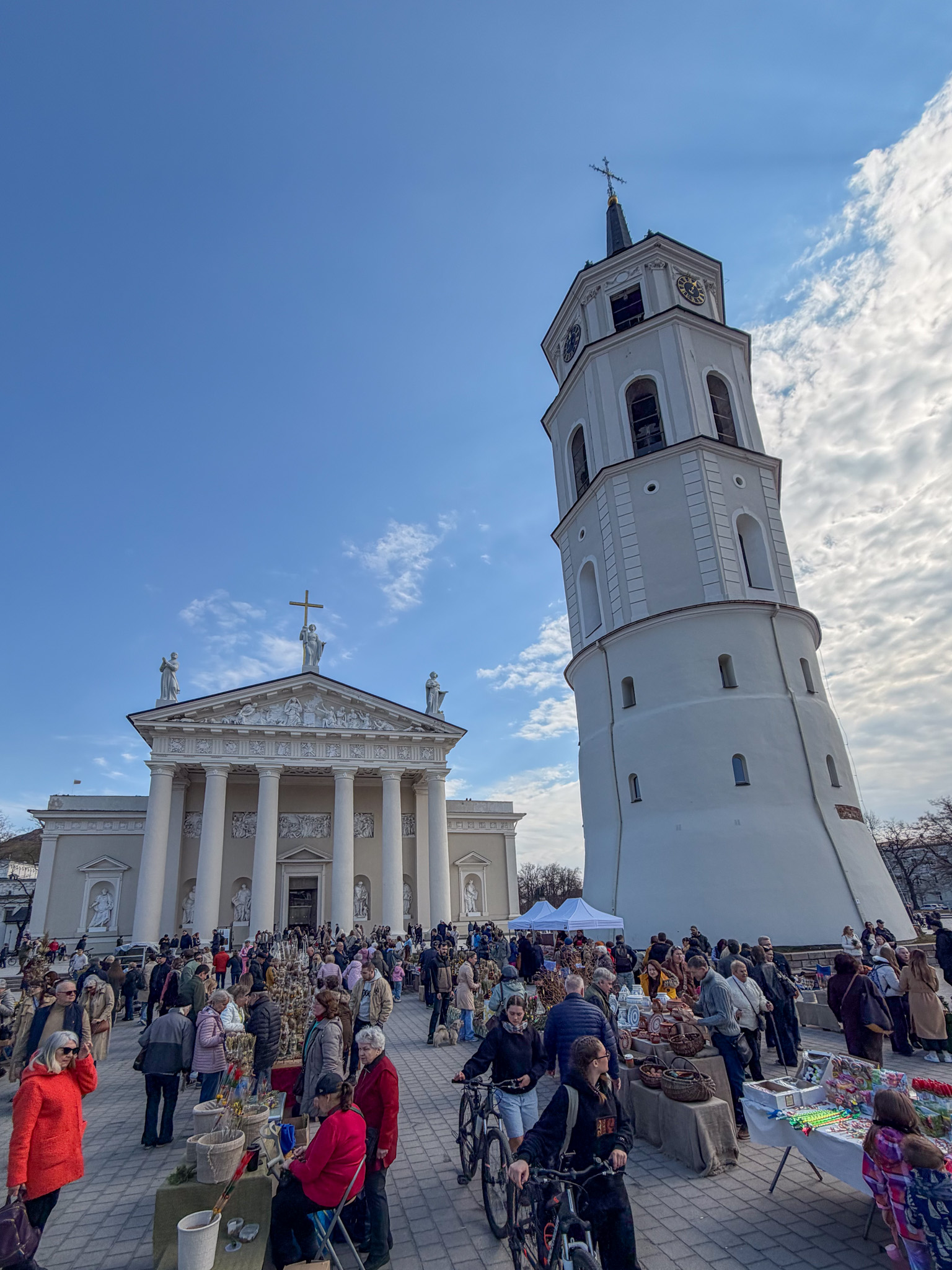
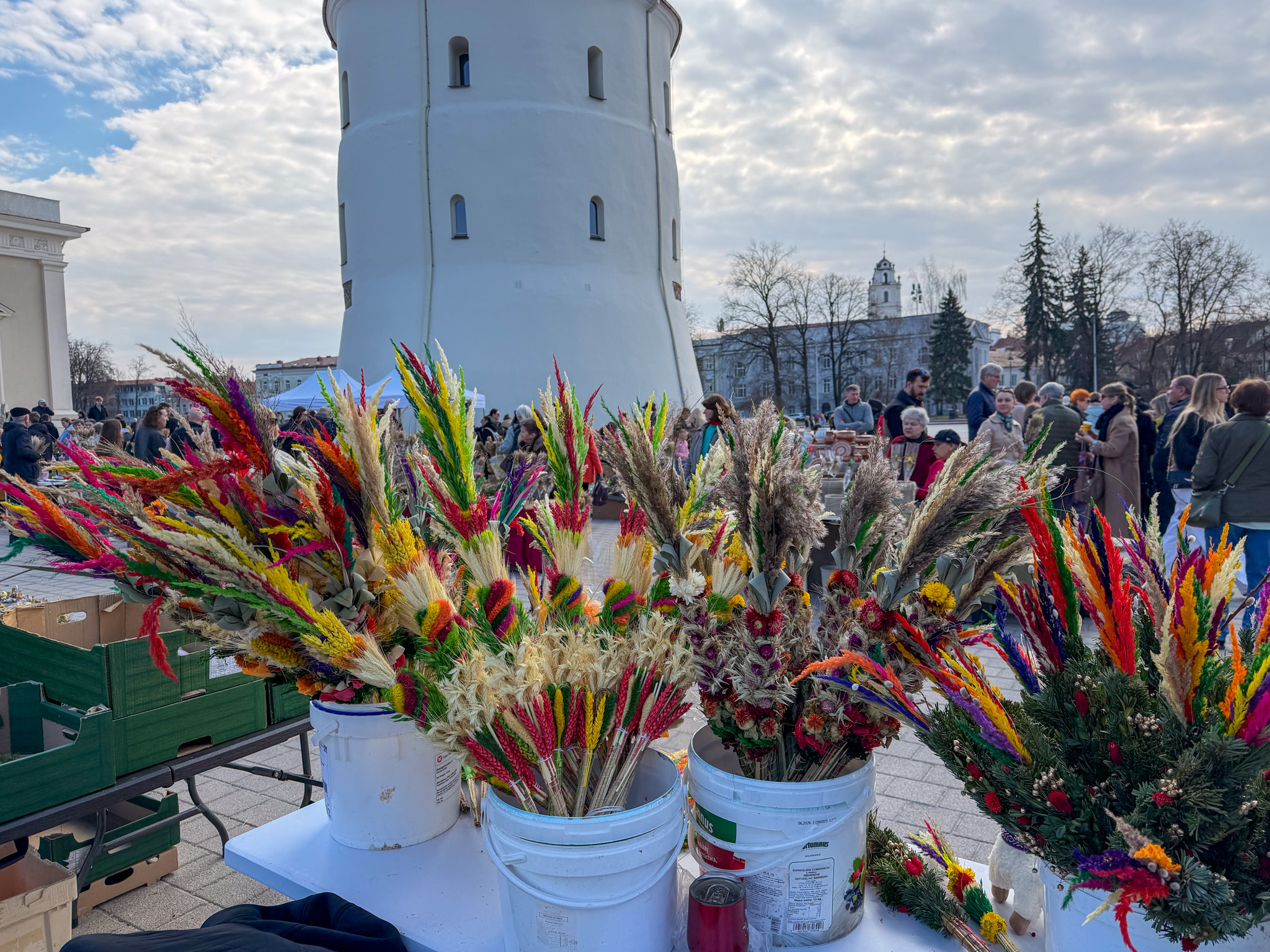
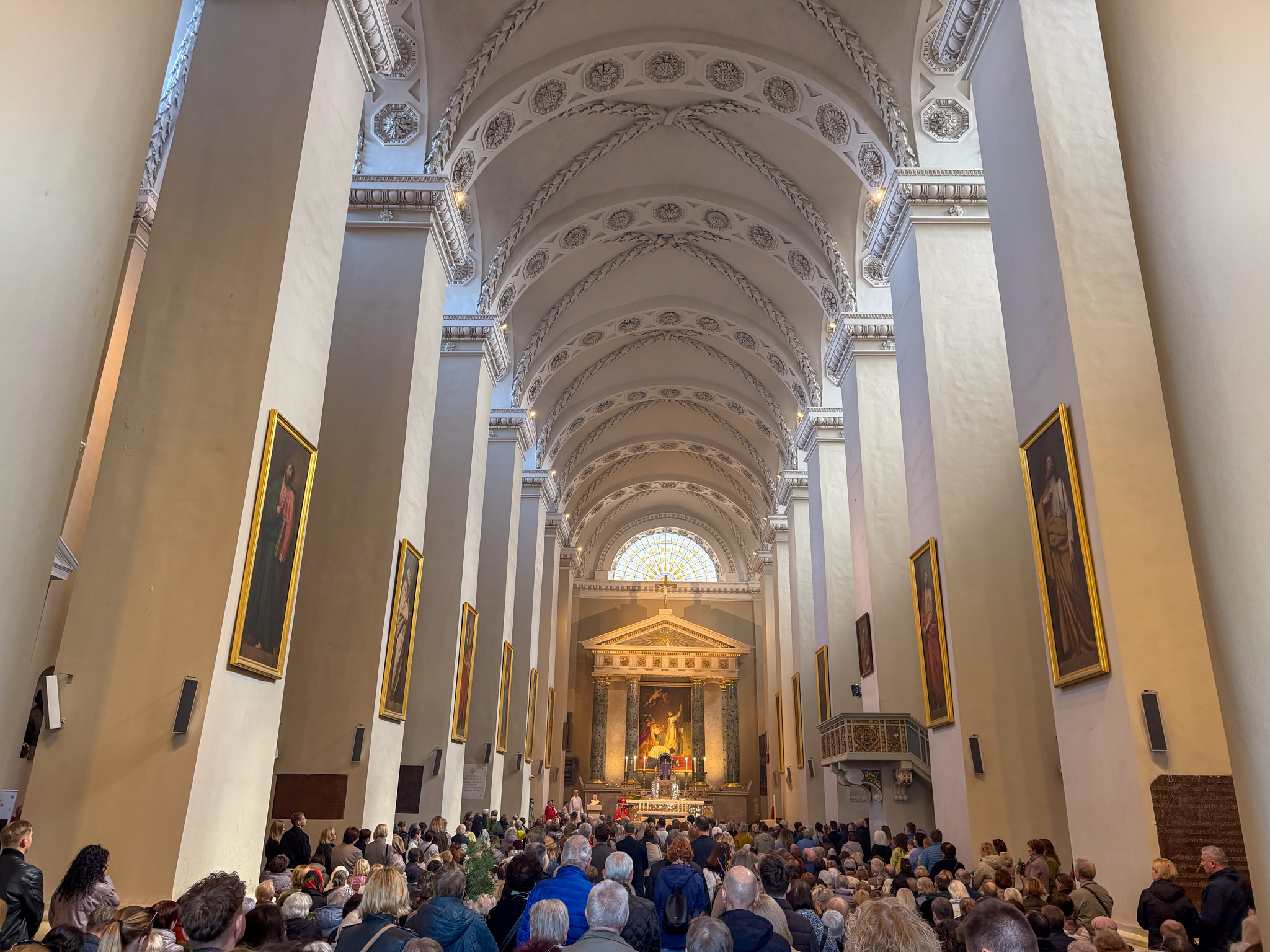
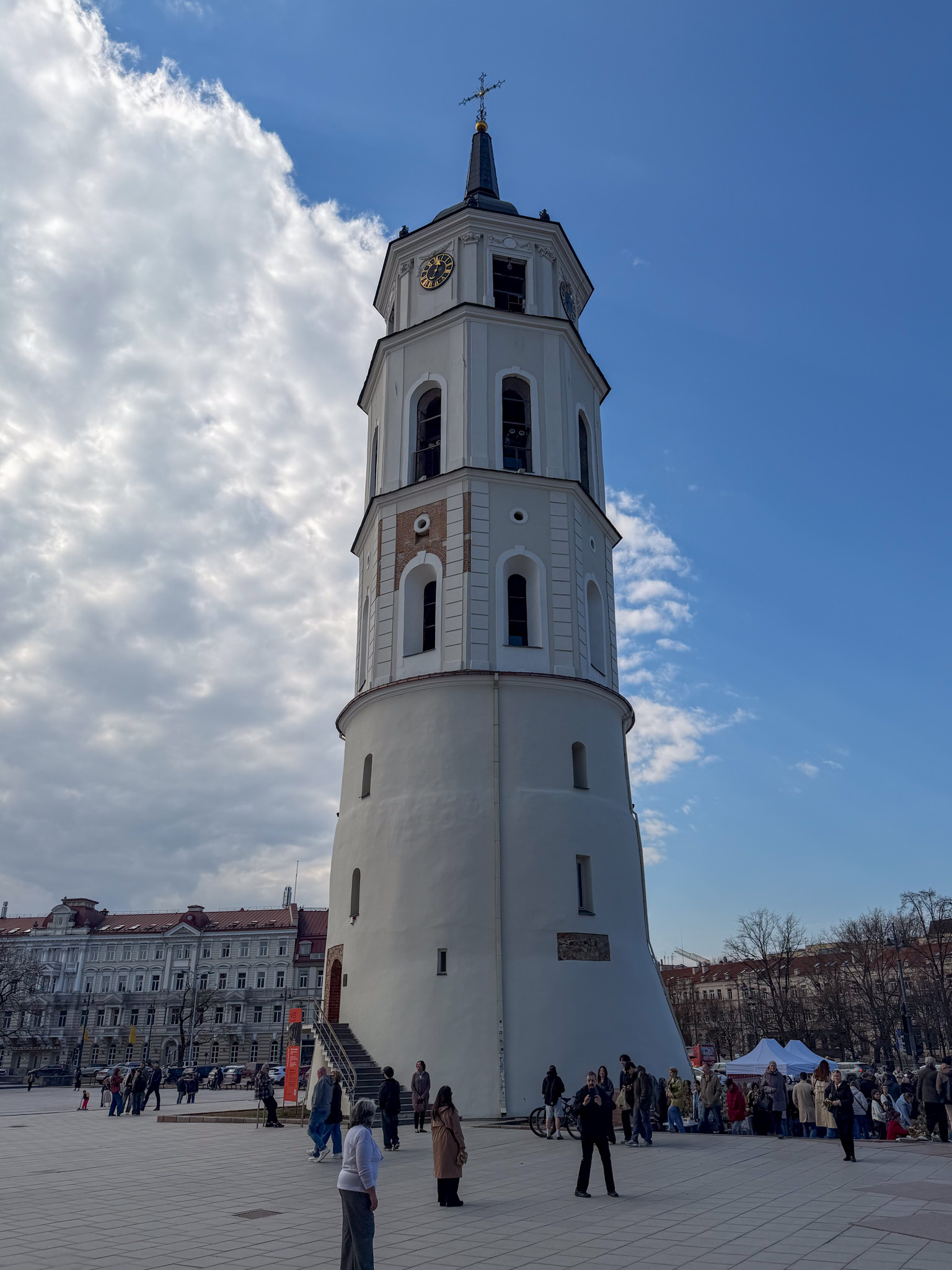
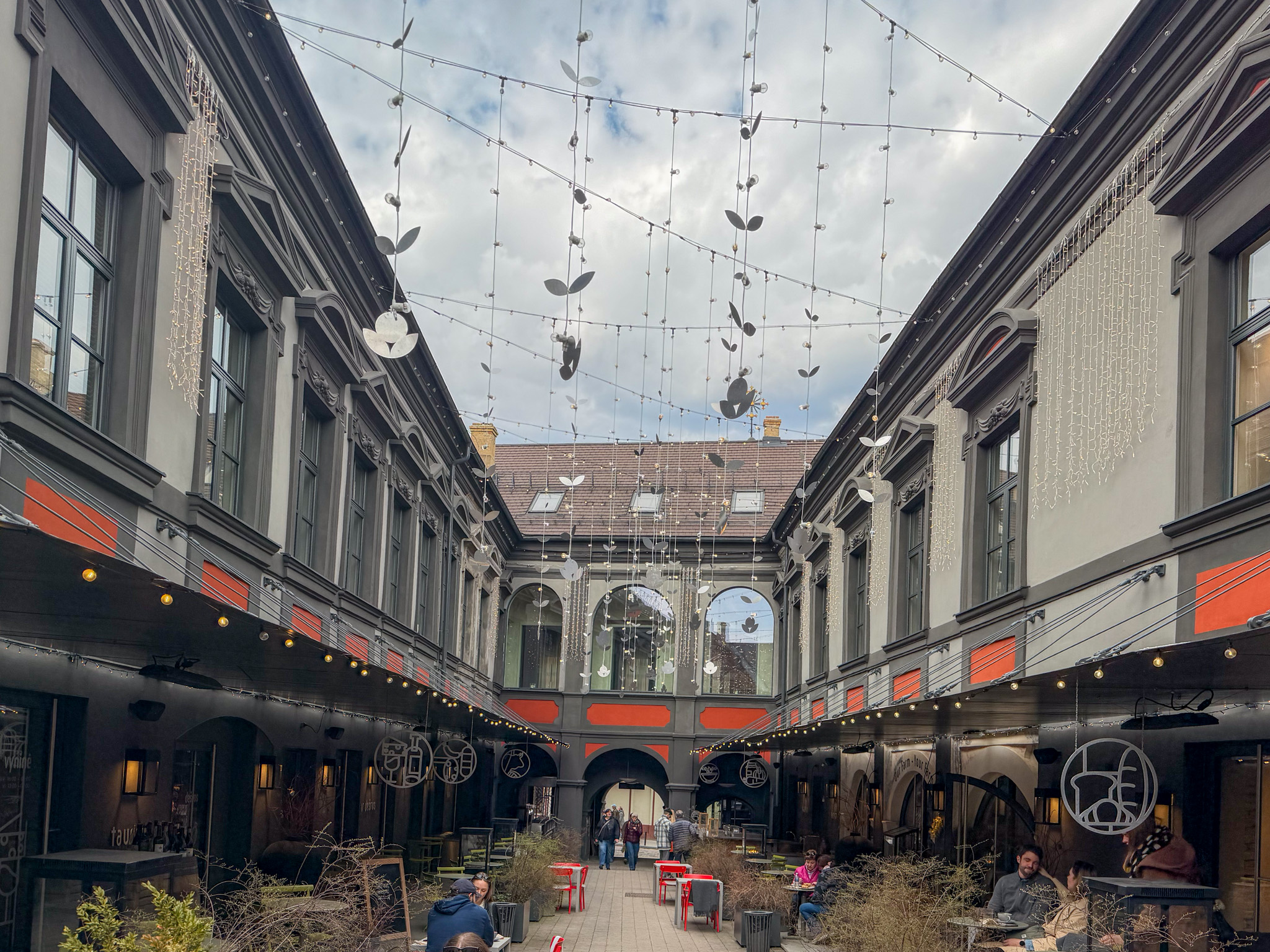
Our first impression of Vilnius is CHURCHES. They are everywhere, and we were lucky to be walking around the old town on Palm Sunday, the Sunday before Easter. The churches and streets were full, and people carried the local version of a palm – a pine frond. Street vendors were selling brightly coloured fronds everywhere. Every turn of a corner in Vilnius reveals another large impressive church face. Most of the old town is car-free, so walking is a very pleasant, quiet and safe activity.
We poked our heads into many churches, some packed with worshippers attending services, others quiet with a few people lighting candles and praying.
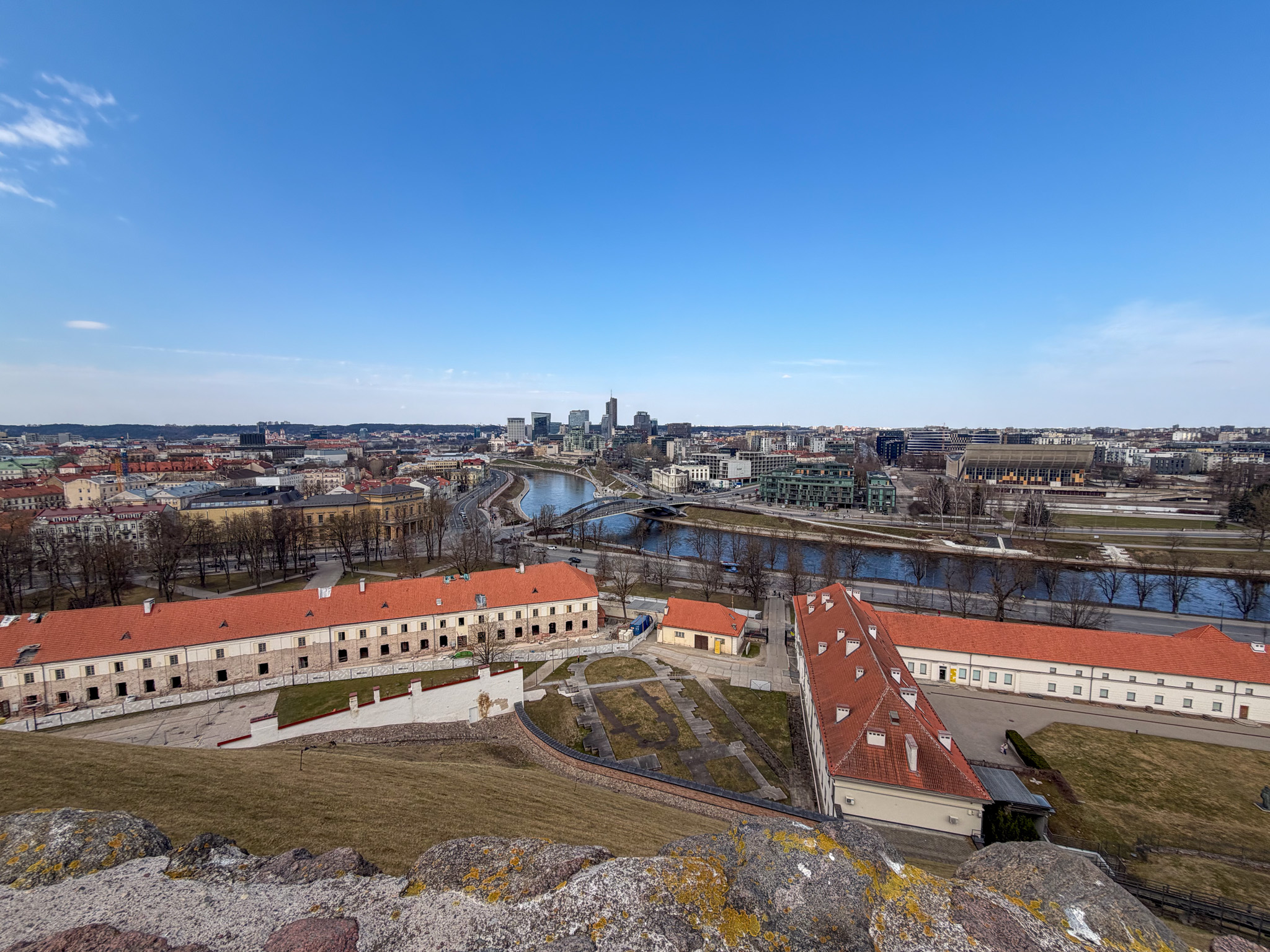
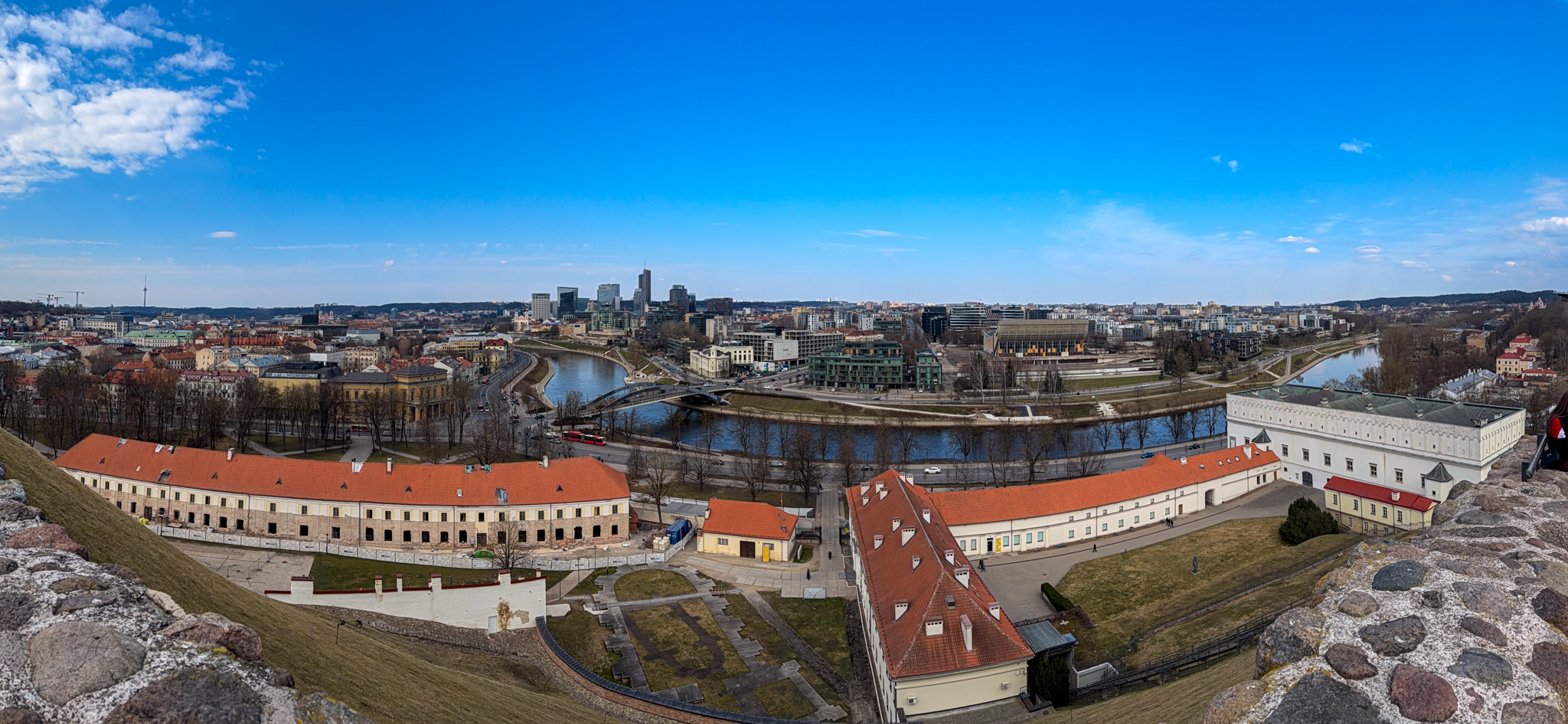
We climbed the Castle Hill for a panoramic view of the city and river. The tower at the top of the hill was built during the late 1200’s.
We returned to the hotel and prepared for dinner, a good night’s sleep, and a 7:00 AM train to Riga, Latvia.
Oh John you are so lucky to see all that history. The builds are beautiful. I am so surprised that they are still standing today . Weather here is still cloudy. You just want to curl up and go too sleep.
0
0