Tip: if you hover your cursor over the photos in the galley at the bottom of the page, you will see the captions.
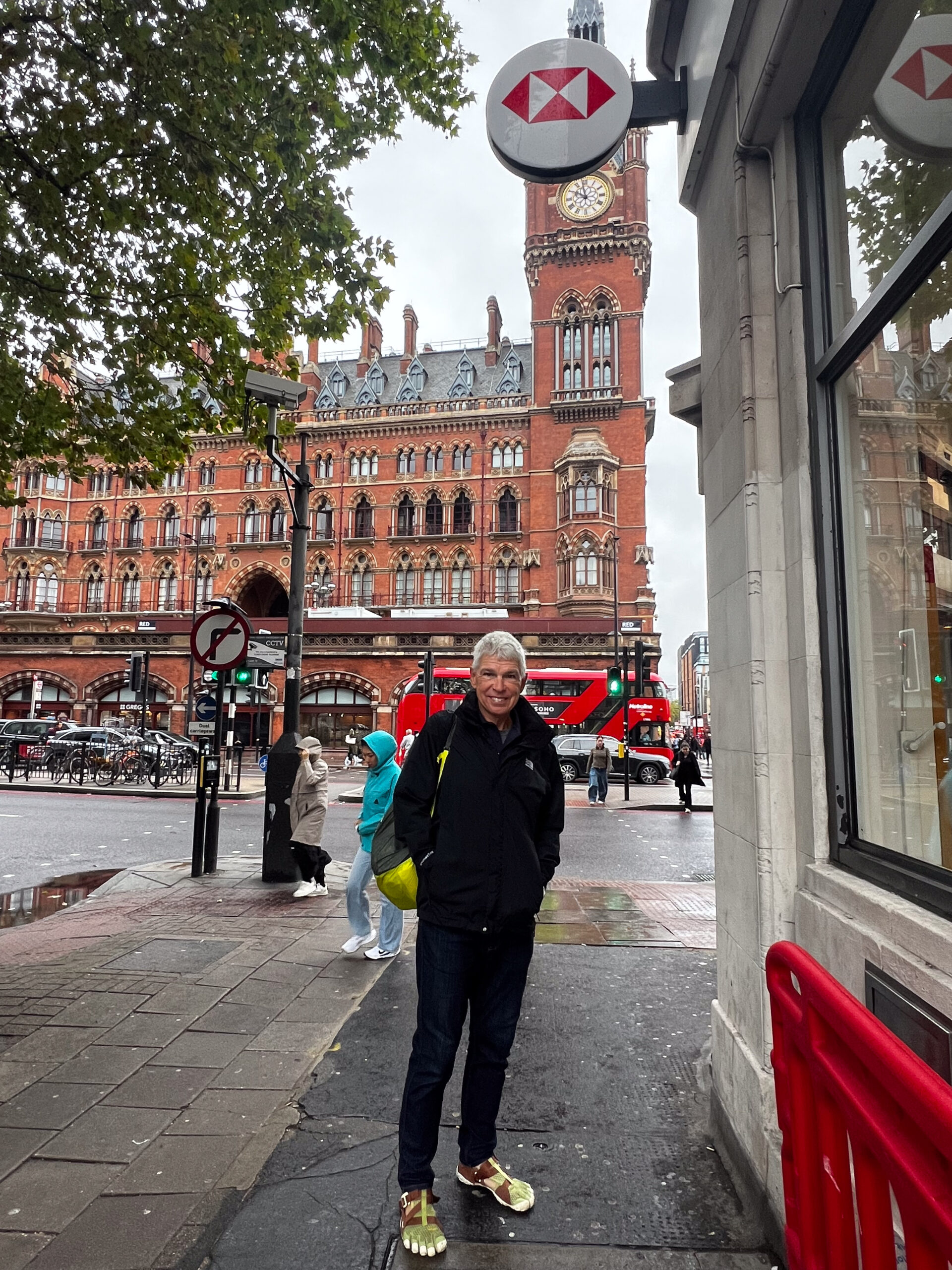
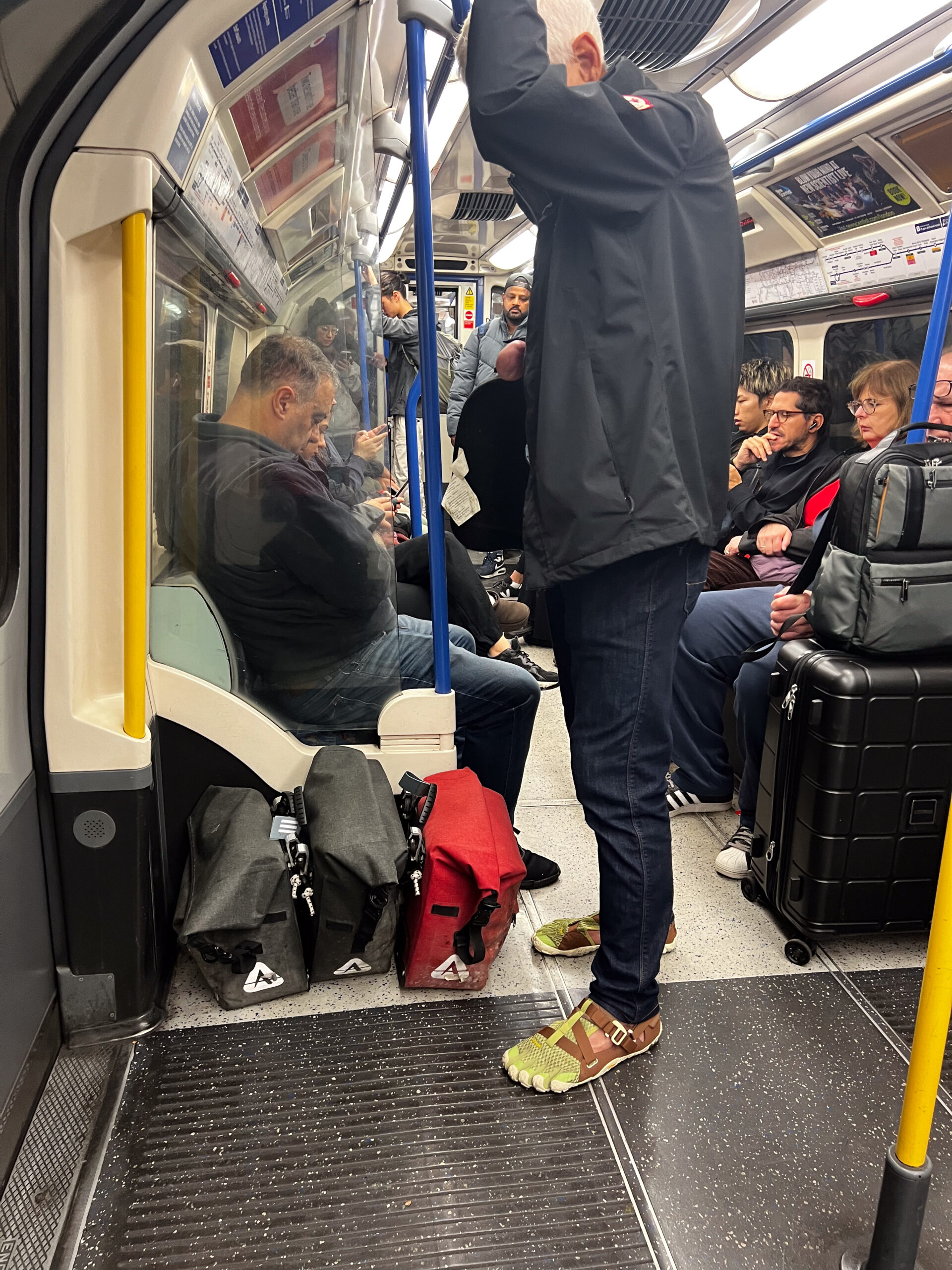
Wednesday October 1st. We left the not-so-premier Premier Inn in St. Albans (not recommended), panniers (and John’s coccyx-injury cushion, see photo) in hand, and walked a quick half hour to the train station where we hopped on the twice-hourly train to the very beautiful St. Pancras Station in London. Honestly, train travel is so civilized and so easy: it was a 30 minute train ride into the city, and The Gyle Hotel (where we had stayed in 2022 and 2023!, highly recommended) was an easy 8 minute walk from the station. (See photos, below.)
We budgeted for 2-1/2 days in London to see some sights and catch a couple of plays, especially since Patti won’t be heading anywhere close to Broadway in the near future. (I blame Trump.)
After checking in we made a beeline to the Victoria and Albert Museum, South Kensington location. (There are other V&A locations, I’ll talk about another, later in this blog. I think the V&A is probably my most favorite museum in the entire world.)
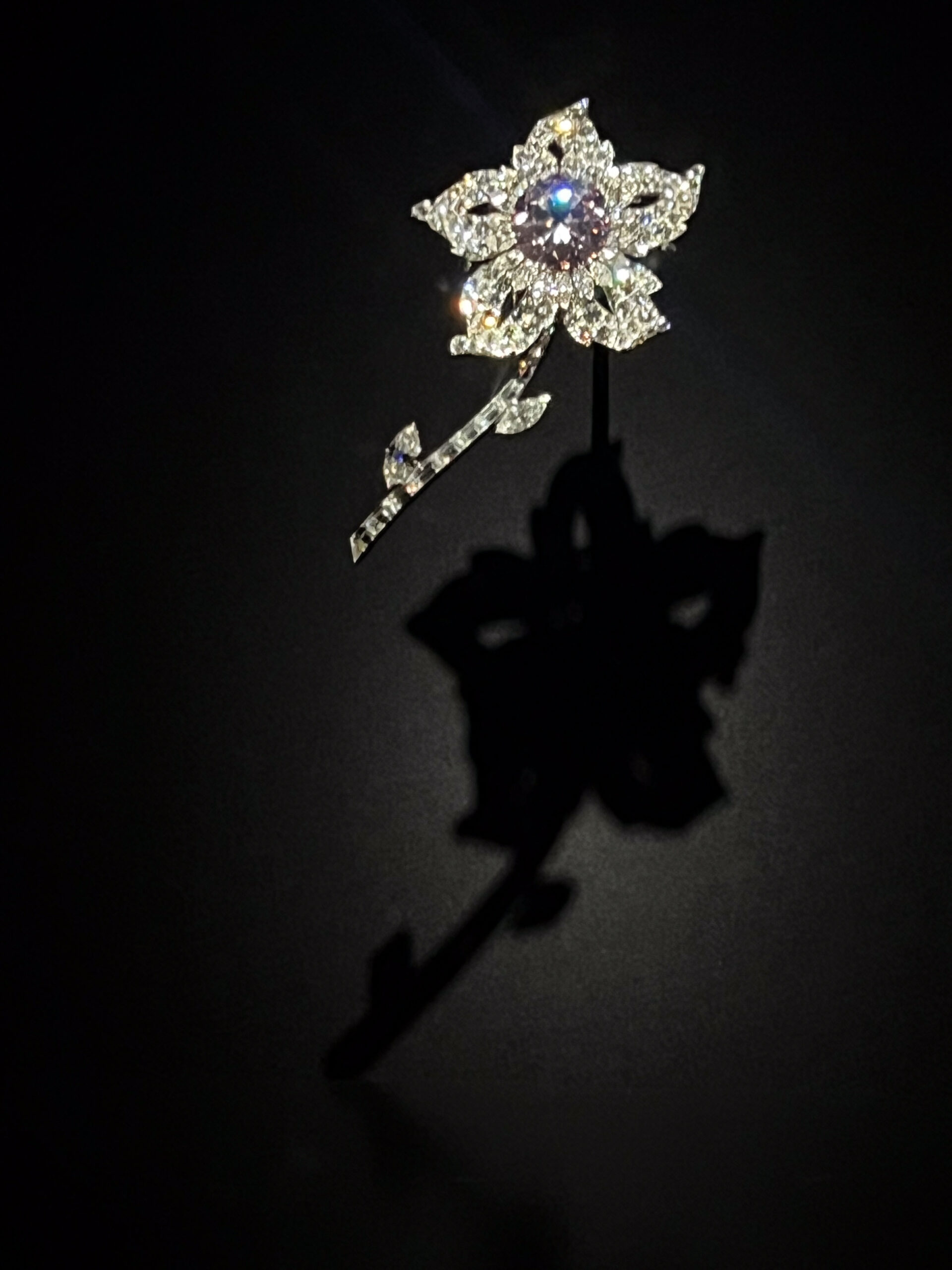
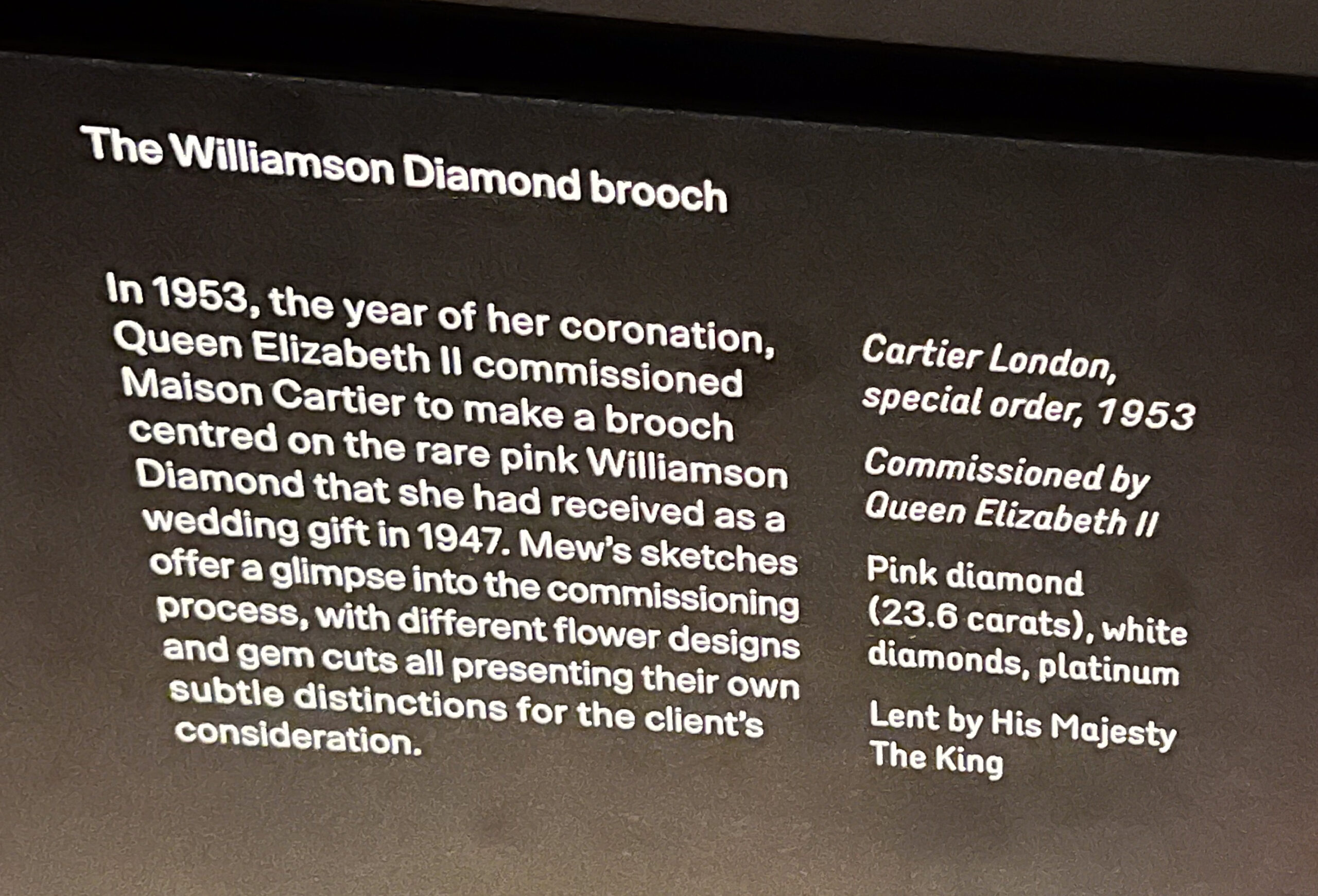
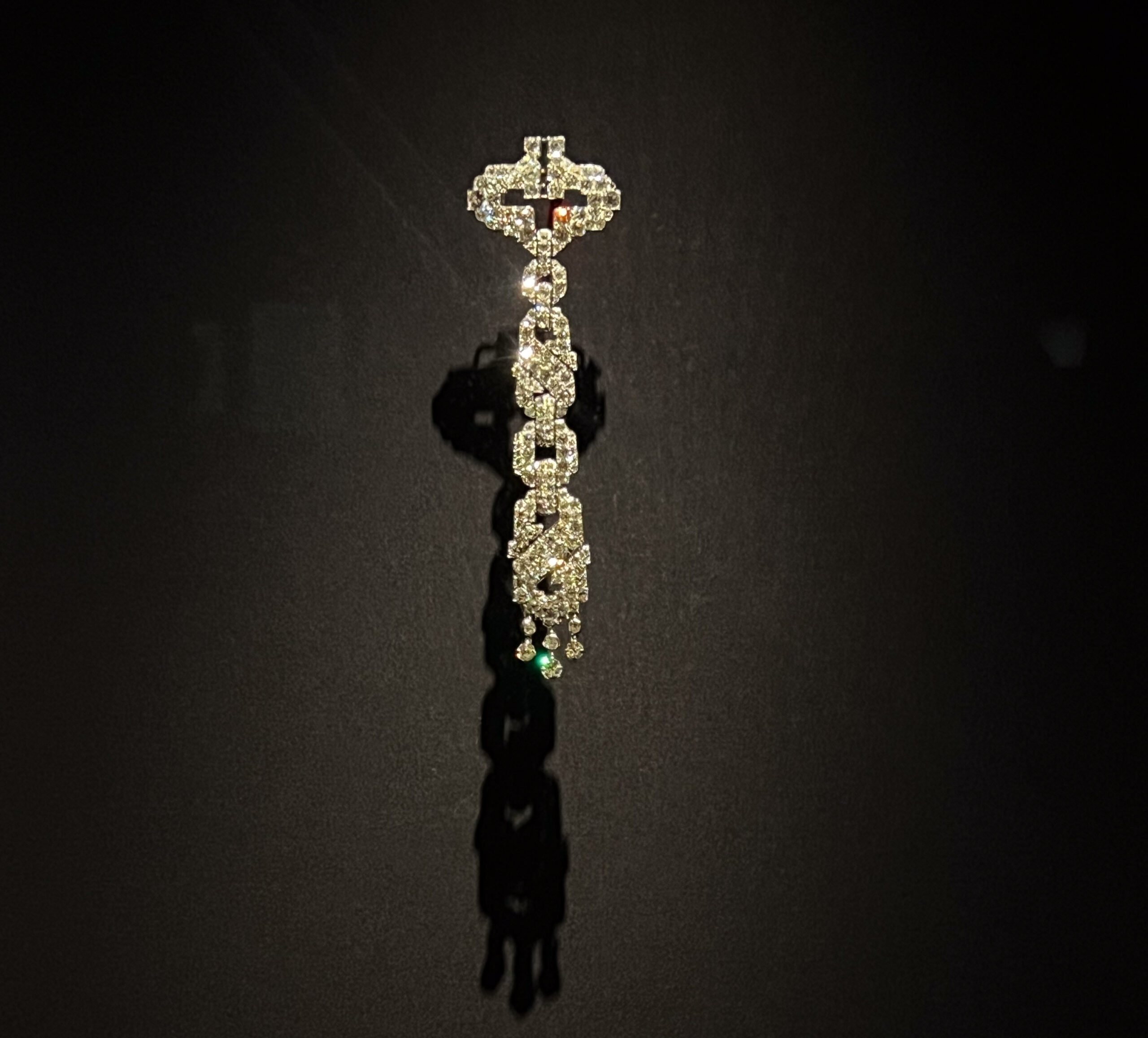
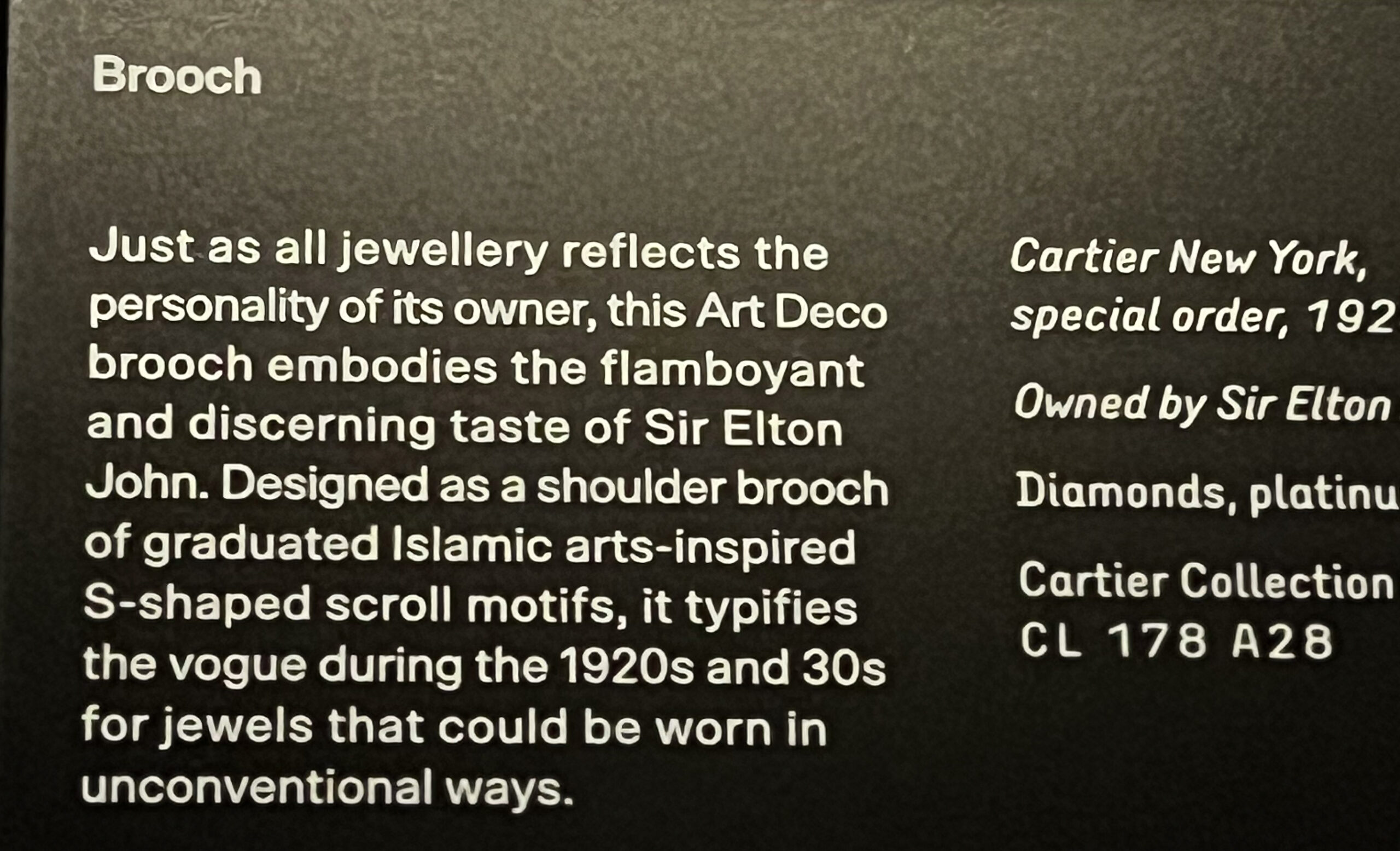
Admission is free to all major museums’ collections in London, but, additionally, we wanted to see two very special shows that are at the V&A right now: the Cartier (April 12 – November 16, 2025) and “Marie Antoinette Style” (September 20, 2025 – March 22, 2026).
Upon our arrival at the museum we were disappointed to learn that both of those shows were sold out, but, if you bought a membership… So, of course we bought a membership (thank-you John, you are an indulgent travel companion), good for one member (Patti) plus guest. £122. We’re happy to support museums, and happy to have the membership. It’s good until October 1, 2026.
We were lucky enough to run into one of the museum’s fabulous volunteers who told us that she would be conducting a tour at 11:30 a.m. called “Designing the V&A” which was all about the genesis of the museum. Obviously, we jumped onto that tour. I mean, think about it. How do you create a museum? Who makes that happen?
Travellers’ observation: volunteers make tourism run. They are the heart of the National Trust, Heritage Homes, and all of the galleries and museums not only in Britain but in Europe and around the world, including here in North America. Whenever I see a volunteer – a docent – at any of these institutions, whether he/she is conducting a tour, handling queries, manning the coat-check, overseeing a particular room in a mansion or castle or a building in an open air museum – people like Helen, in Chichester – I make a special point of thanking them, and asking them what they like best about the property where they volunteer. They know.
THANK-YOU, volunteers.
But I digress. Back to our “Designing the V&A tour”.
“Sir Henry Cole was the first director of the Victoria and Albert Museum and a pivotal figure in its founding (1852) and early development, envisioning it as a ‘schoolroom’ to improve British industry and public taste through the education of designers, manufacturers, and consumers in art and science.” Its basic premise was egalitarian. “His role was instrumental in establishing the museum, which now houses extensive collections of human creativity spanning 5,000 years, and his legacy continues in many aspects of everyday life and other great institutions.” (Thank-you, AI.)
The museum itself was funded by money that was generated by the Great Exhibition, a.k.a. the “Crystal Palace Exhibition”, a huge event that had been organised by the aforementioned Henry Cole, and Prince Albert, husband of Queen Victoria. It was an international exhibition that took place in Hyde Park, London, from 1 May to 15 October 1851, the first in a series of world’s fairs, exhibitions of culture and industry that became popular in the 19th century. (There was a similarly influential exhibition in Chicago in 1893.)
Contrary to original expectations from the critics, the exhibition was an astounding financial success, and the outcome was this wonderful institution that celebrates the vital union of arts and science/technology: the V and A. You can see this union celebrated literally on the majolica tiles that border the “West Staircase”: on the first floor are the names of scientists and philosophers central to the history of science (Aristotle, Galileo, Newton, Linnaeus and Priestley), and on the second floor are the names of artists (Phidius, Raphael, Titian, Rembrandt, and, of course, Britain’s beloved Turner.) See photos, in the gallery below.
Highlights of our V and A Kensington visit (see photos in the gallery at the bottom of the page):
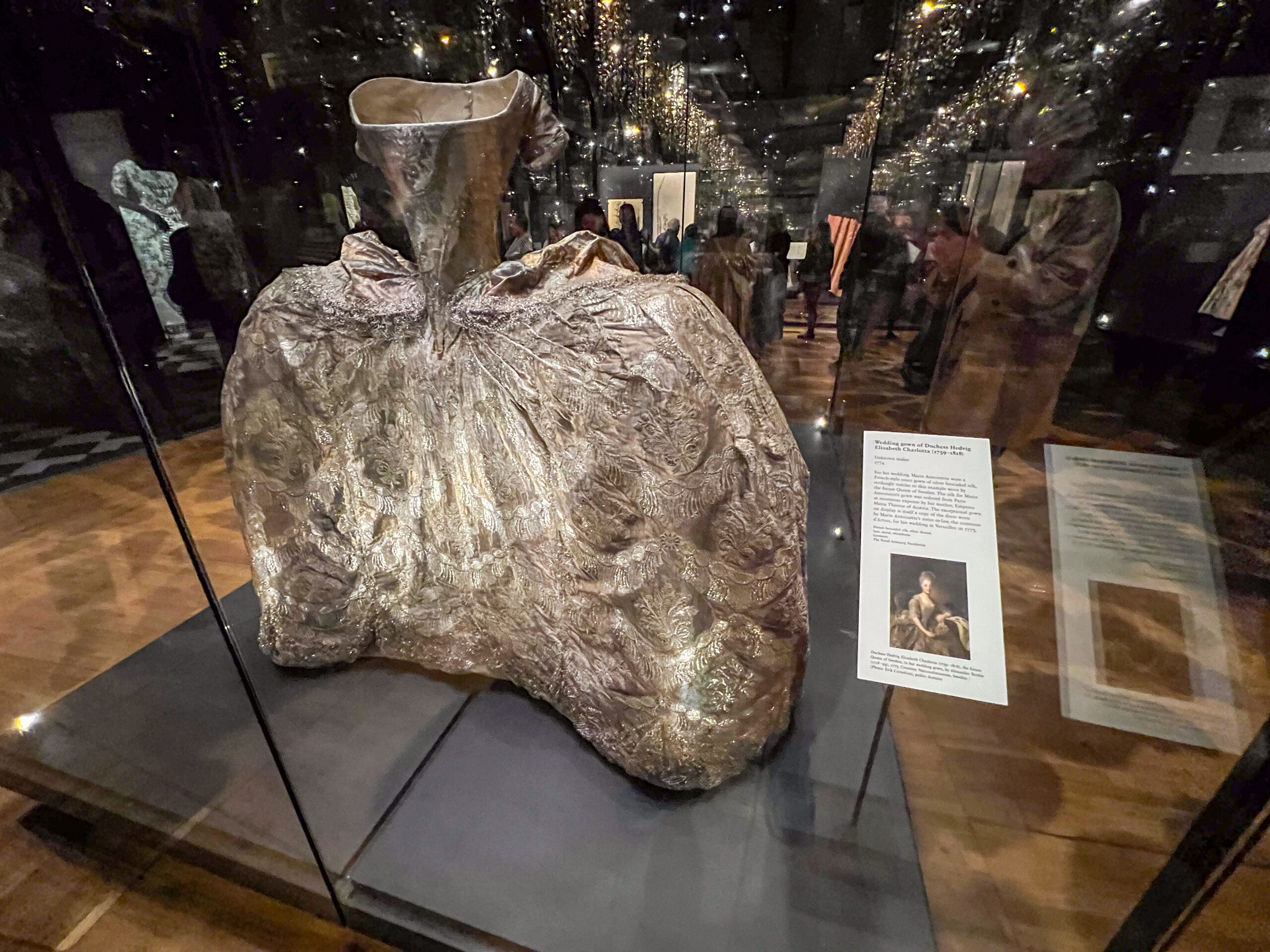
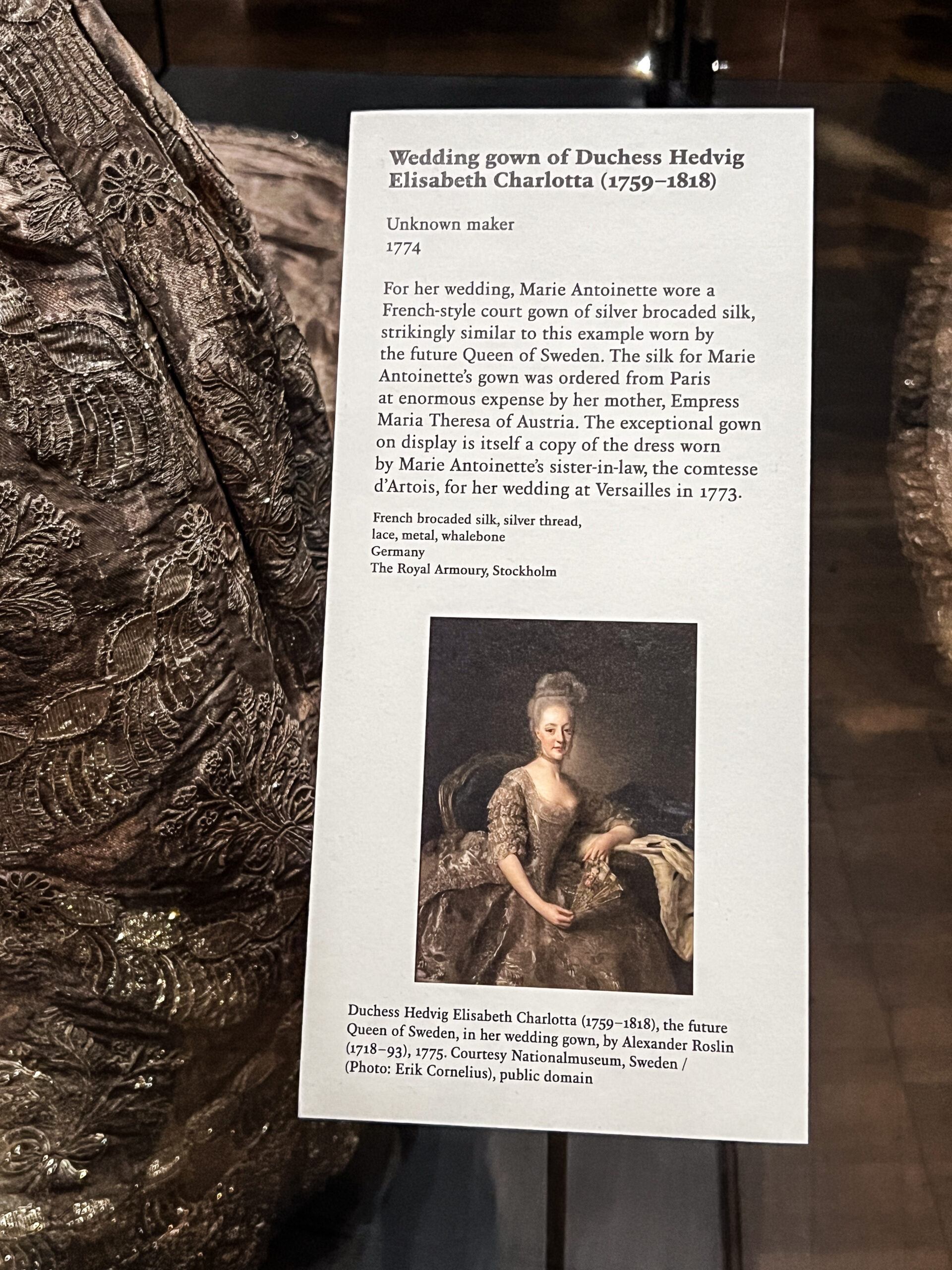
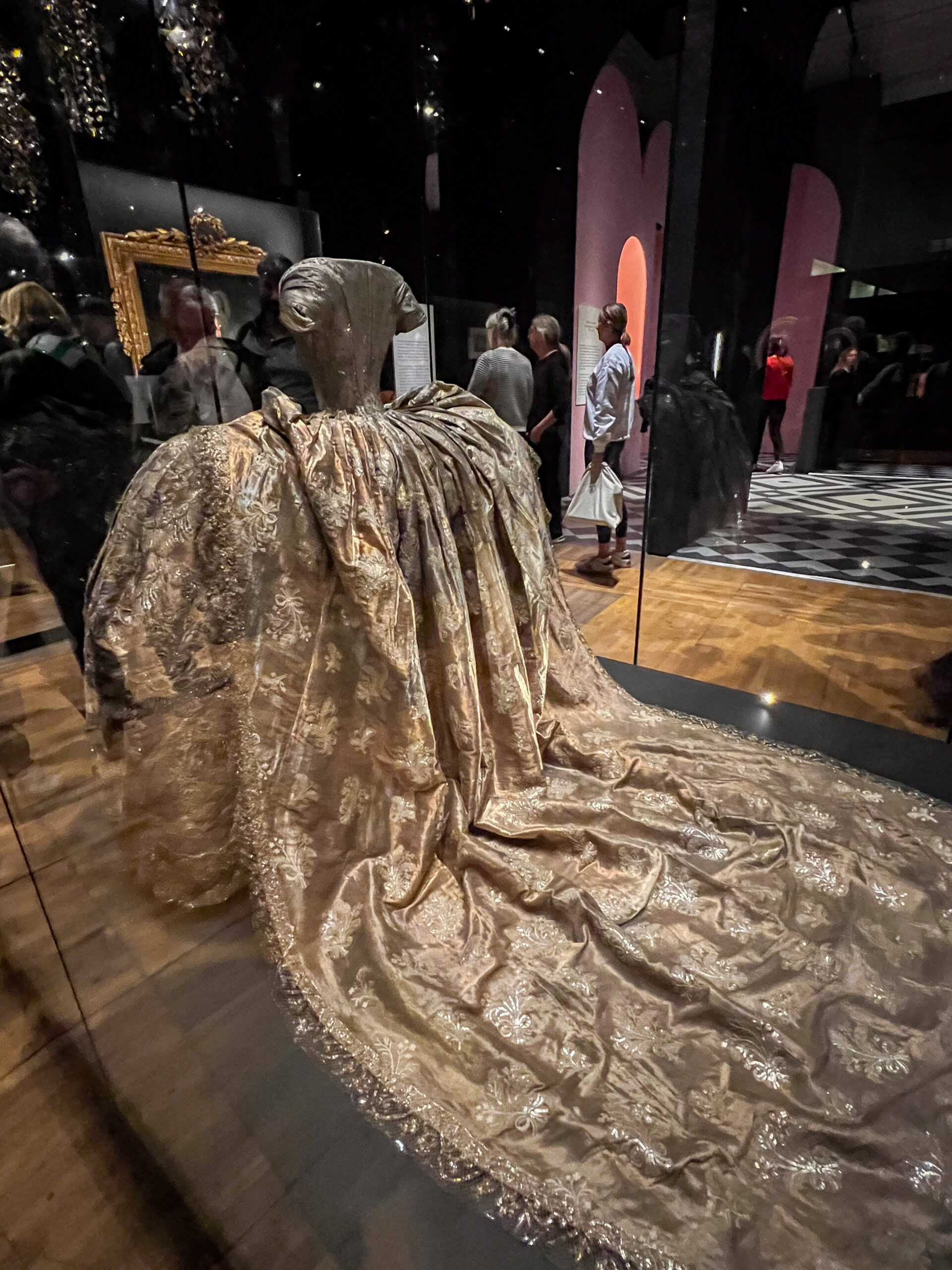
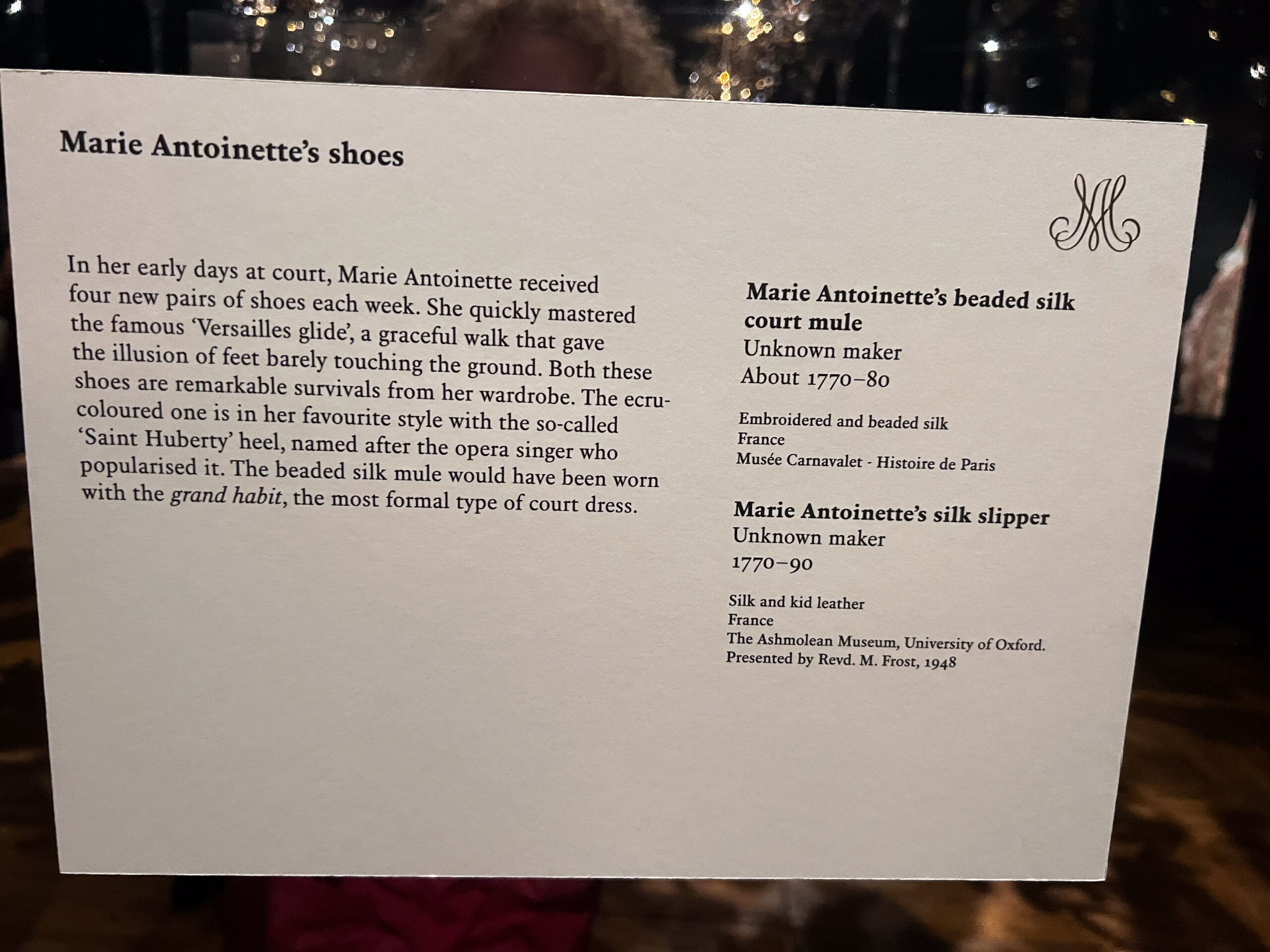
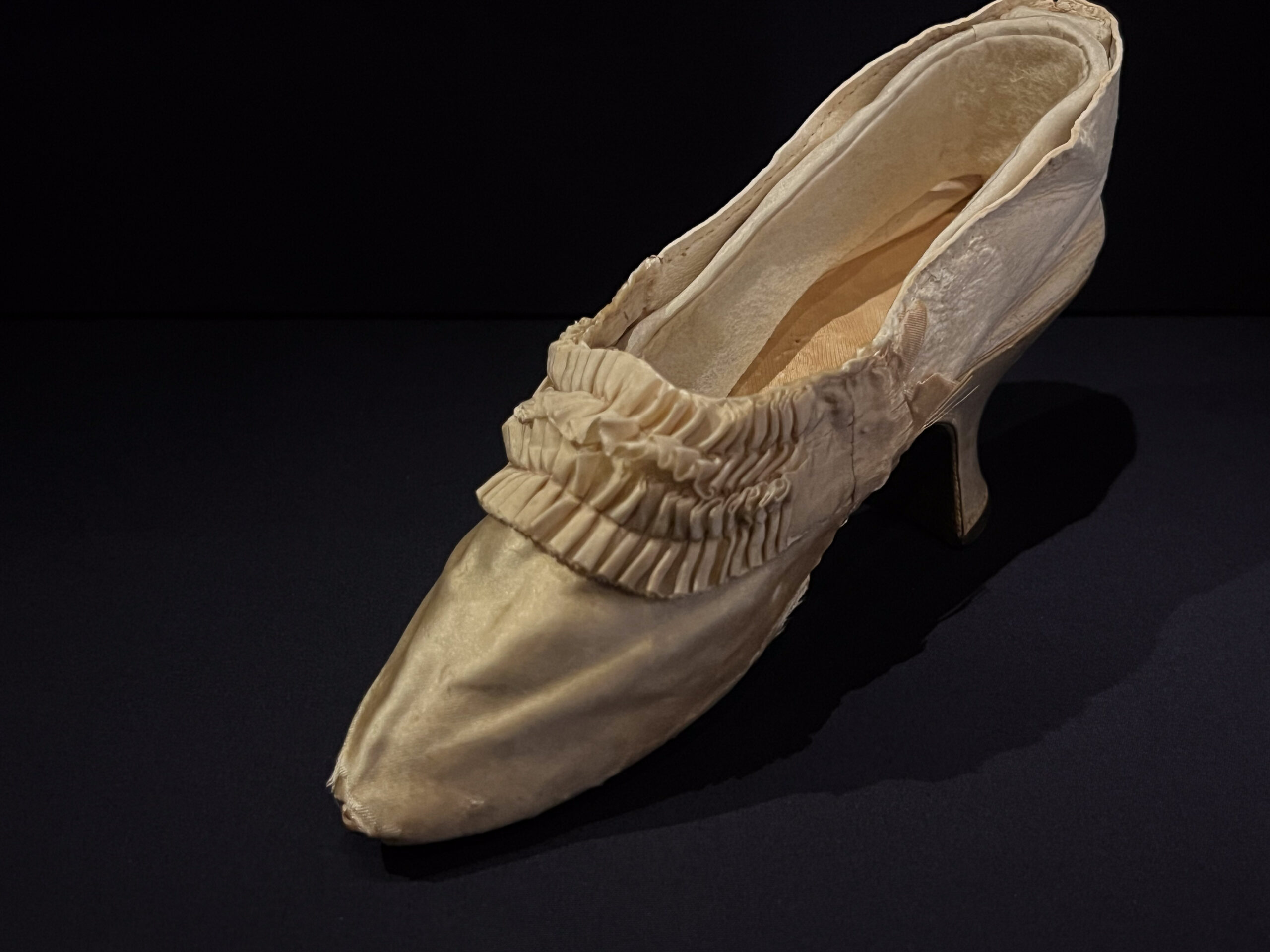
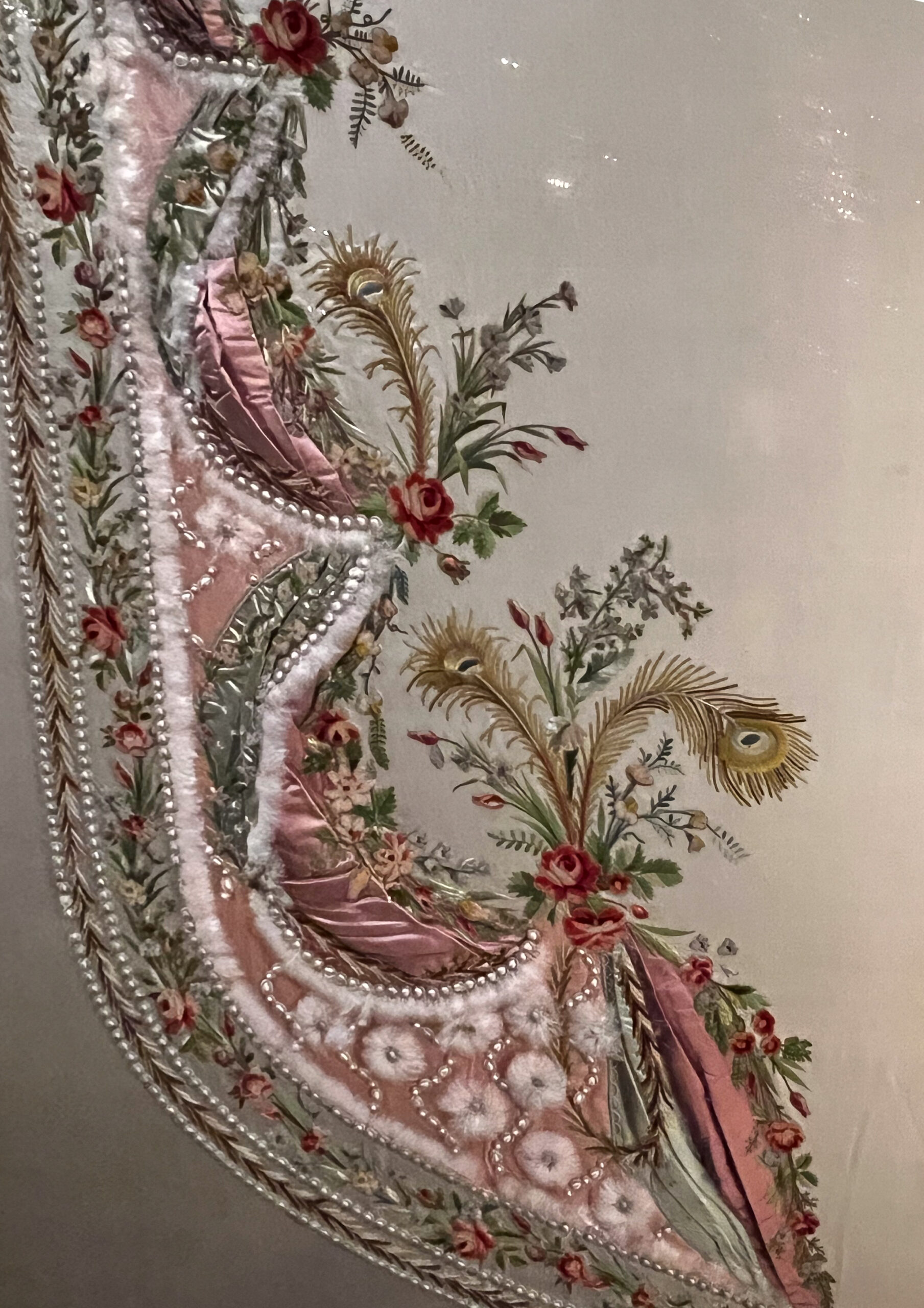
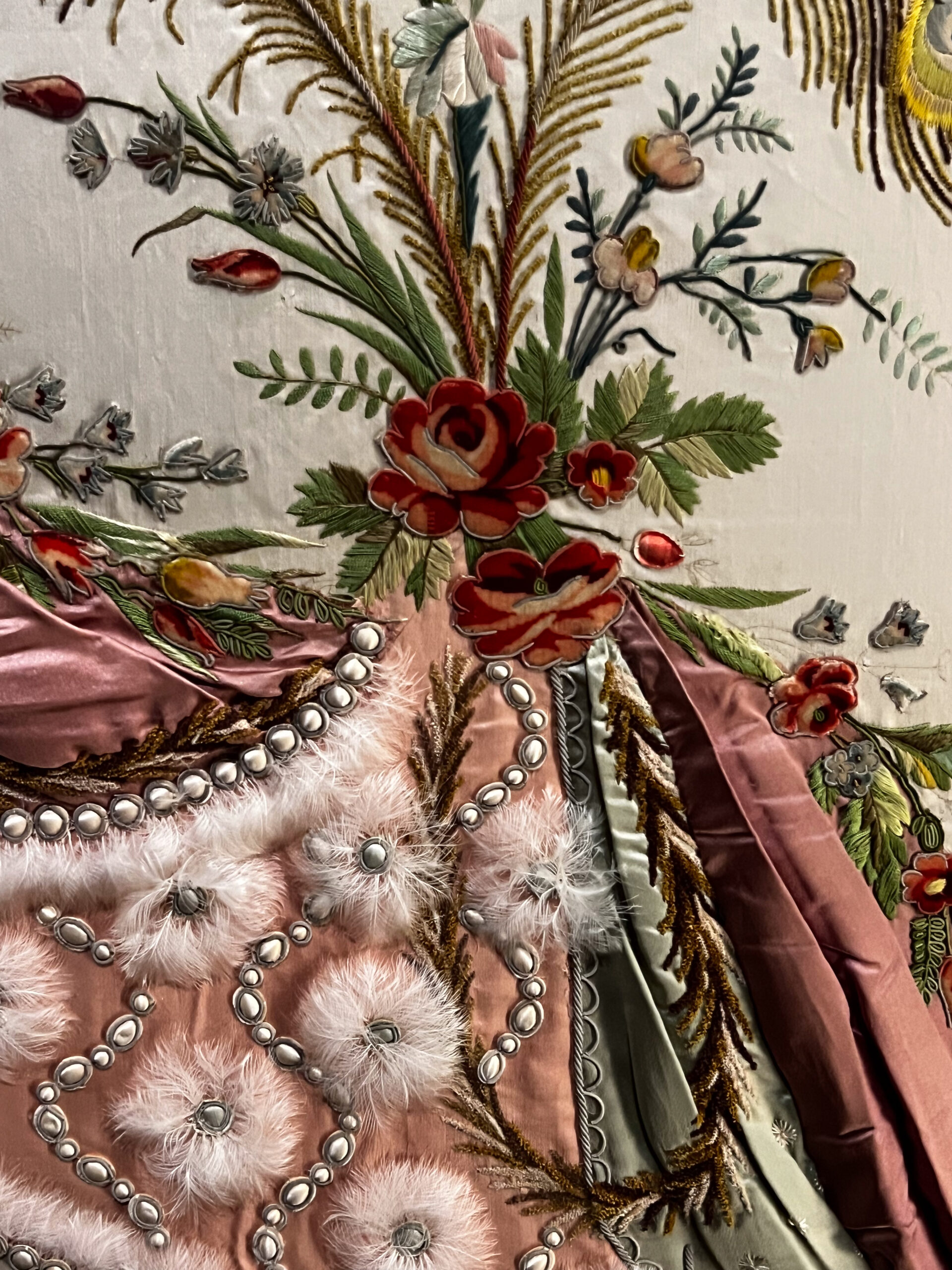
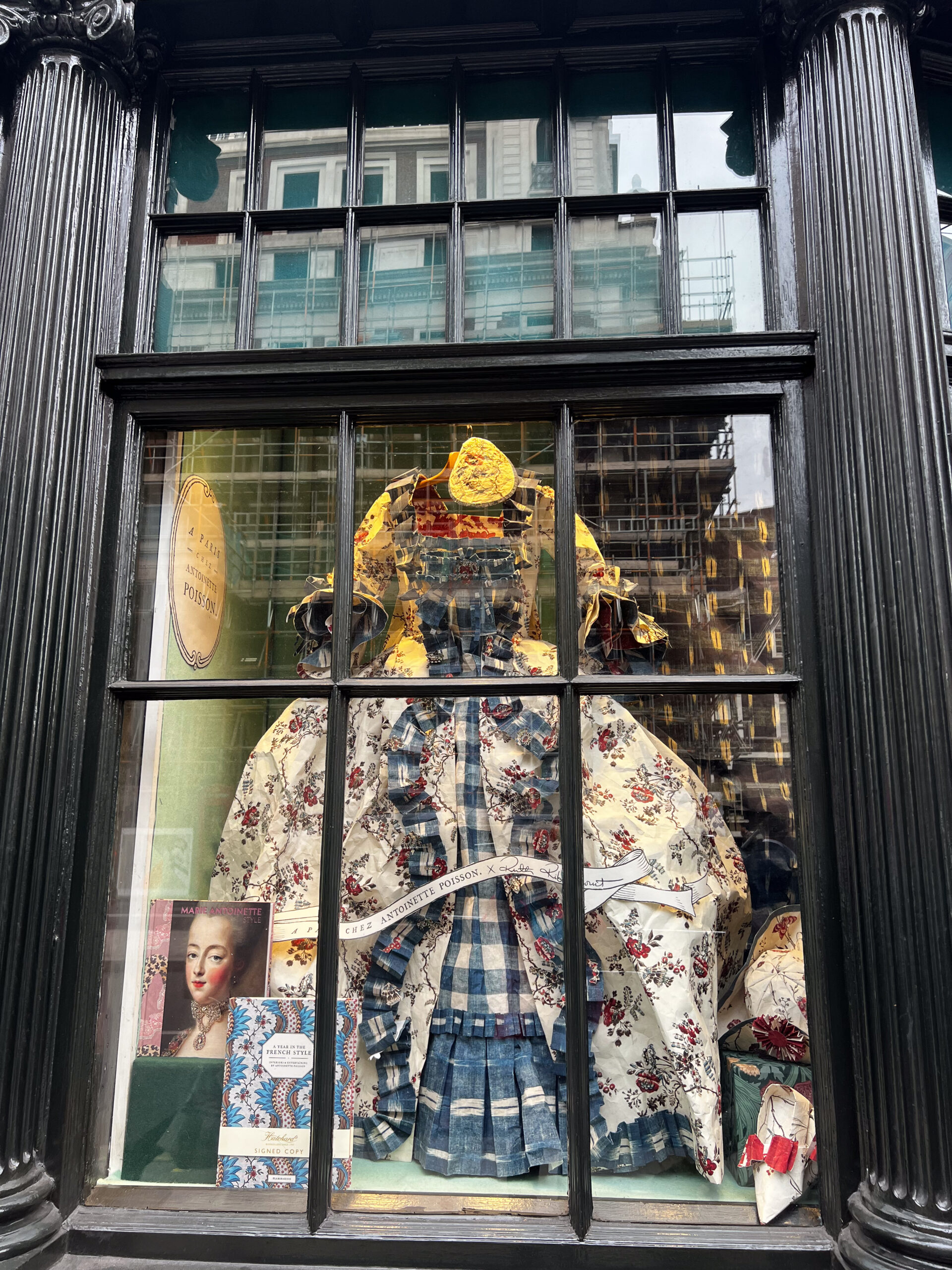
- The over-the-top fabrics, shoes and dresses in the Marie Antoinette Style show. Actually, I particularly enjoyed all of the fabrics that John and I saw during this entire trip and have written about in our previous blogs for the trip. Gorgeous tapestries in mansions like Polesden Lacey and in castles in Arundel and on upholstery in Knole. Needlepoints on kneelers in cathedrals. The muslin in Jane Austen’s shawl in her home in Chawten. The prints at Liberty’s of London, or in William Morris’s fabrics at the V&A Storehouse. The tweed in the jackets on Savile Row in London. And on a more personal and essential leve I particularly appreciated the quick-dry aspect of our modern day cycling jackets on days when we were soaked!!! I love and appreciate fabric arts.
- William Morris’s beautiful walls in the Morris cafe, the first ever museum cafe in the world.
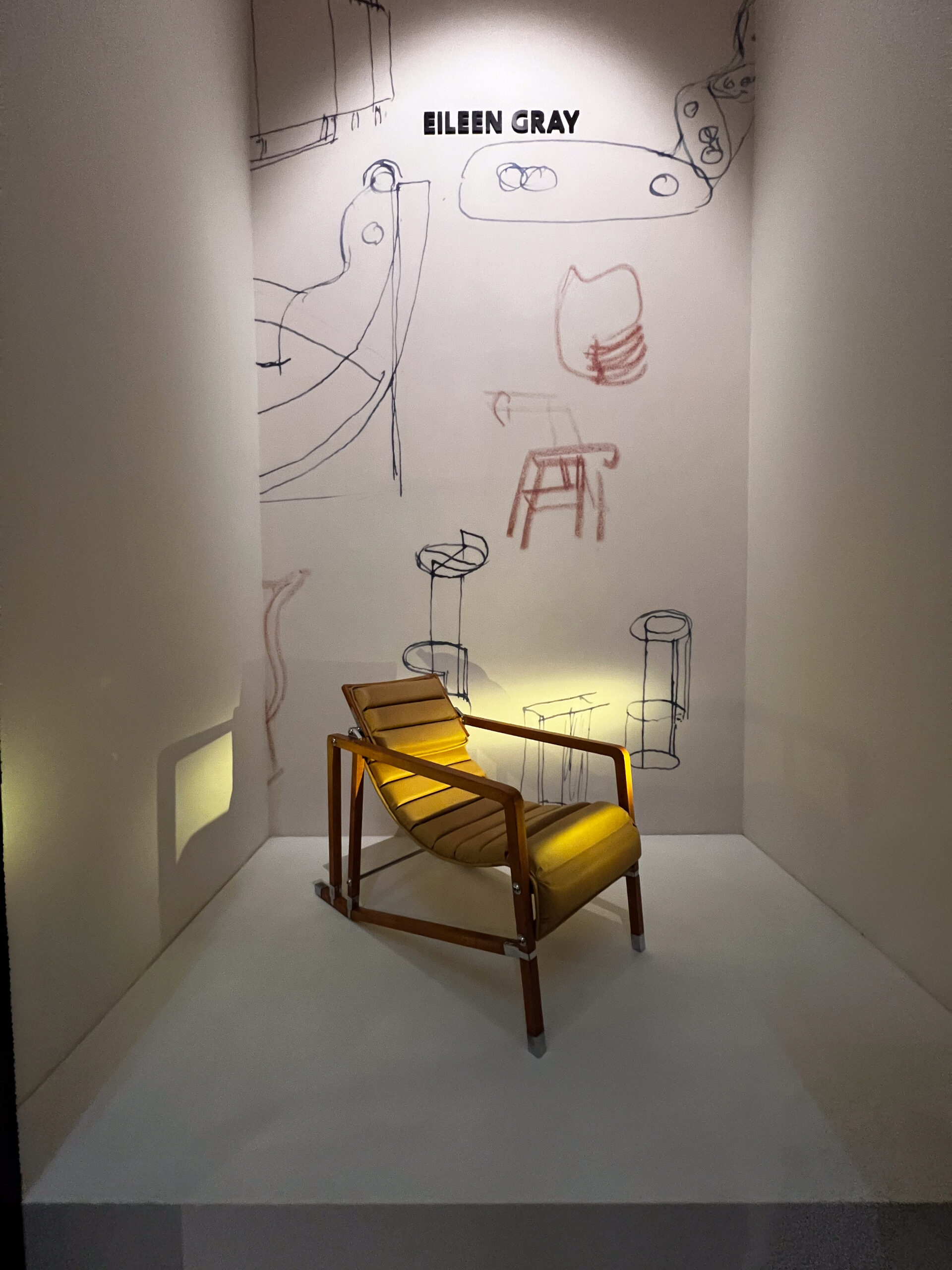
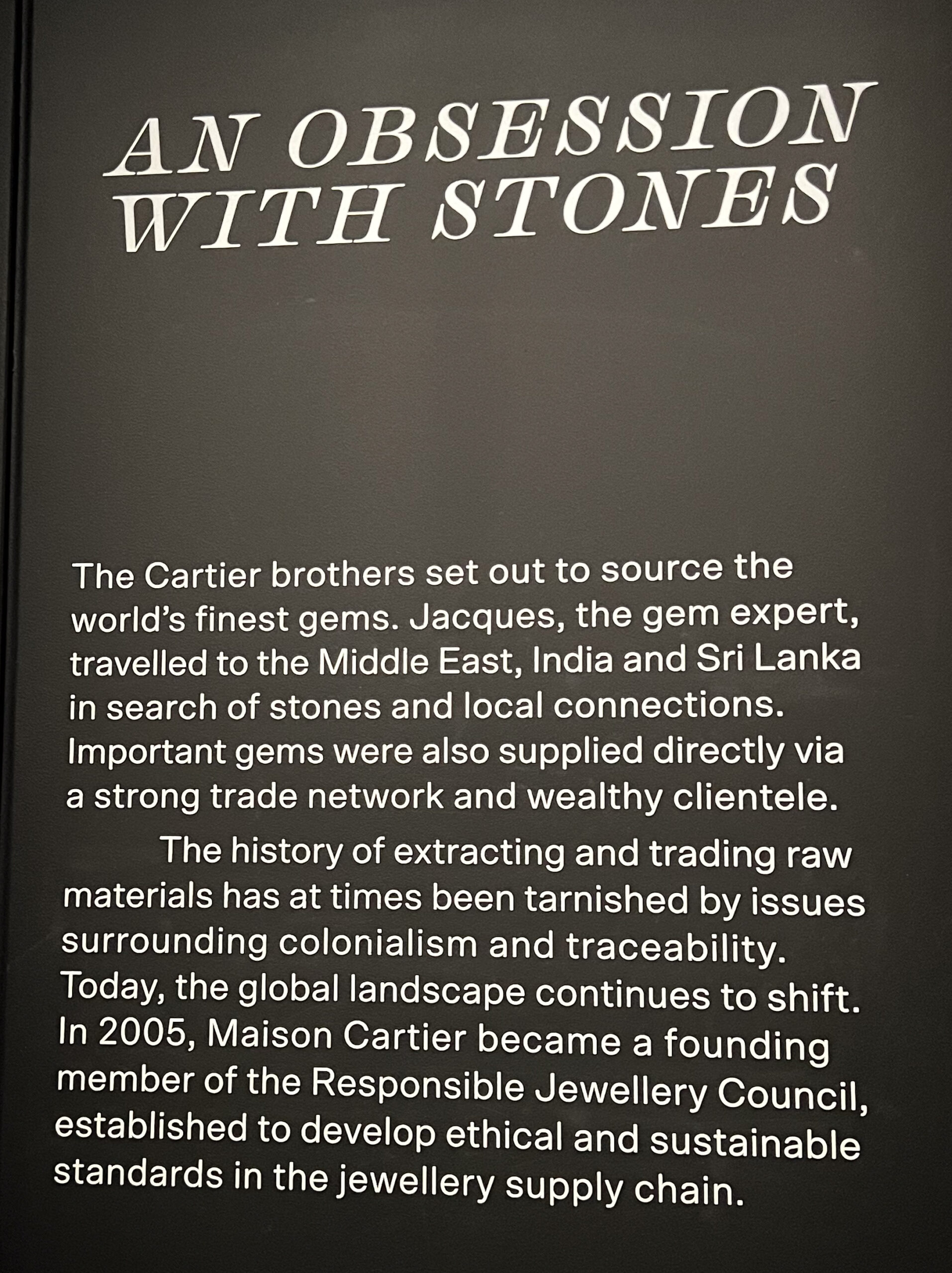
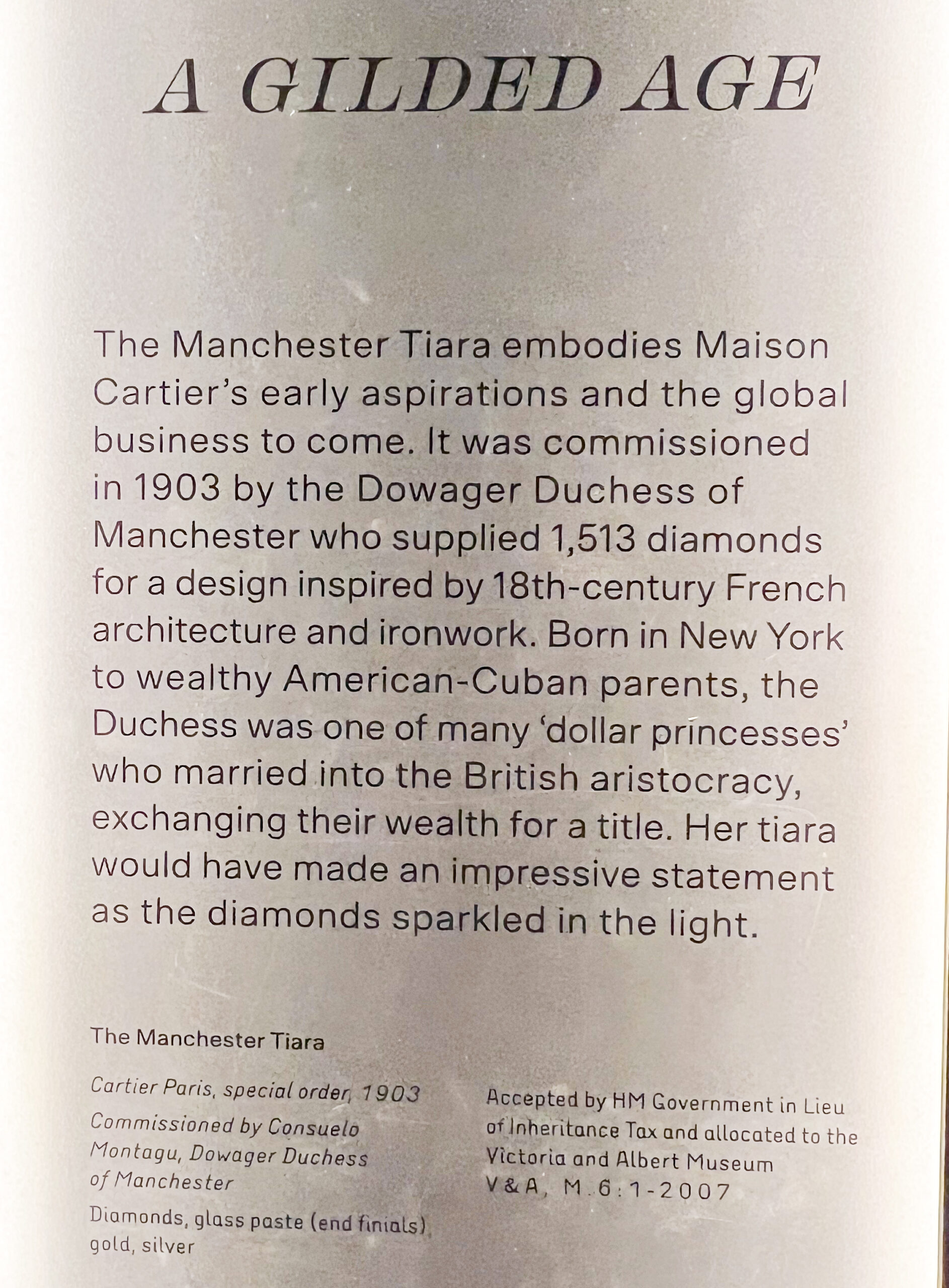
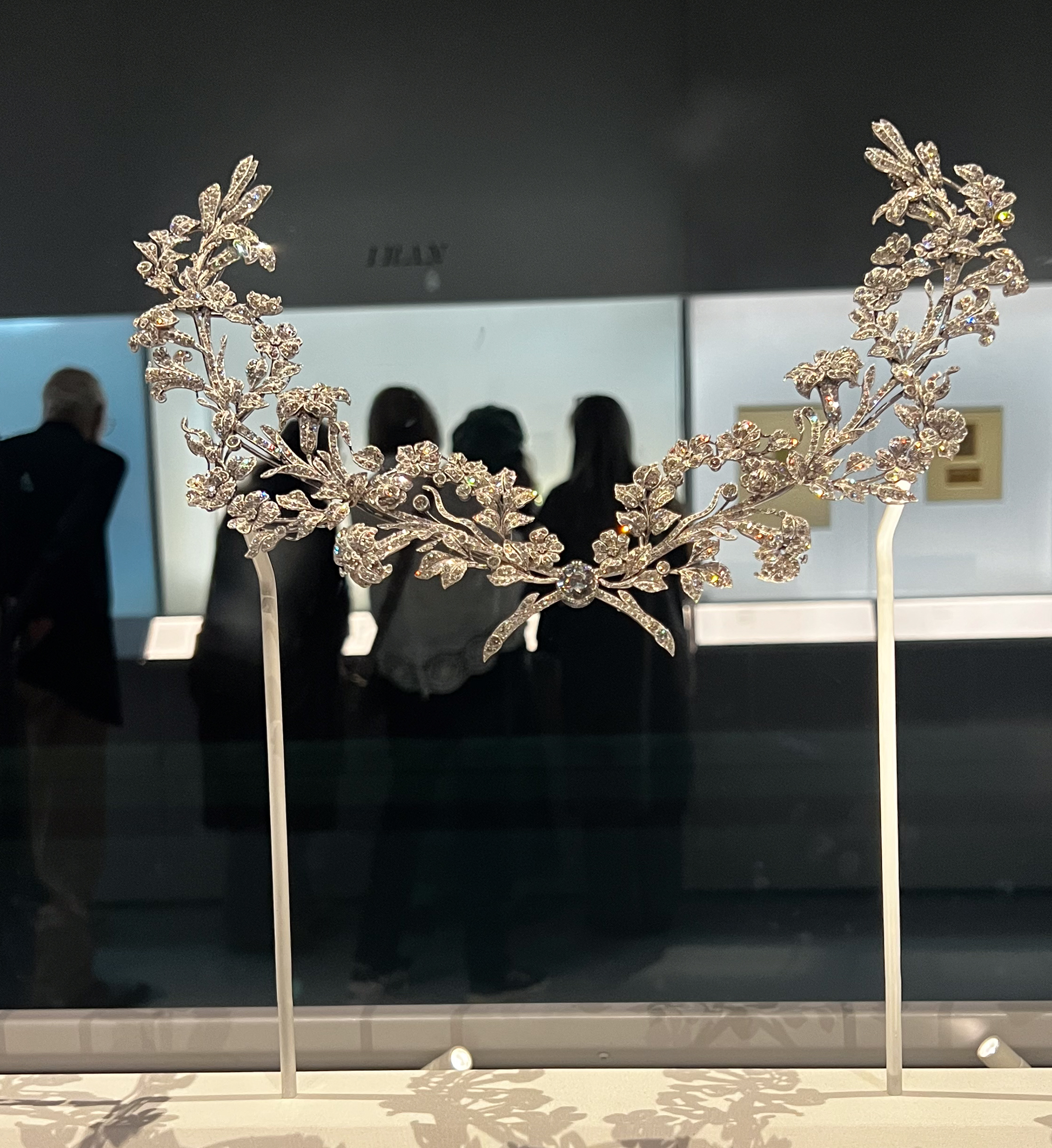
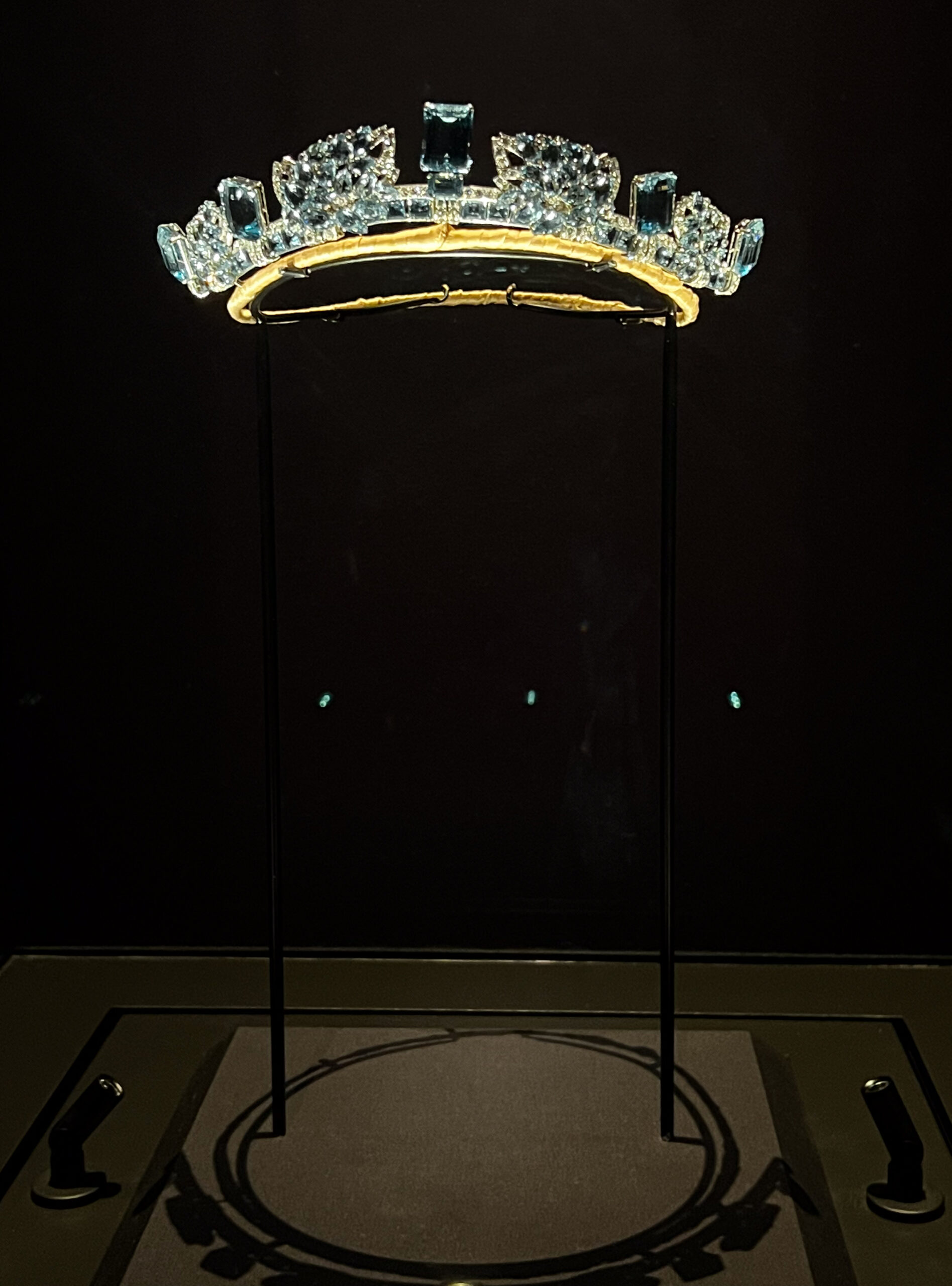
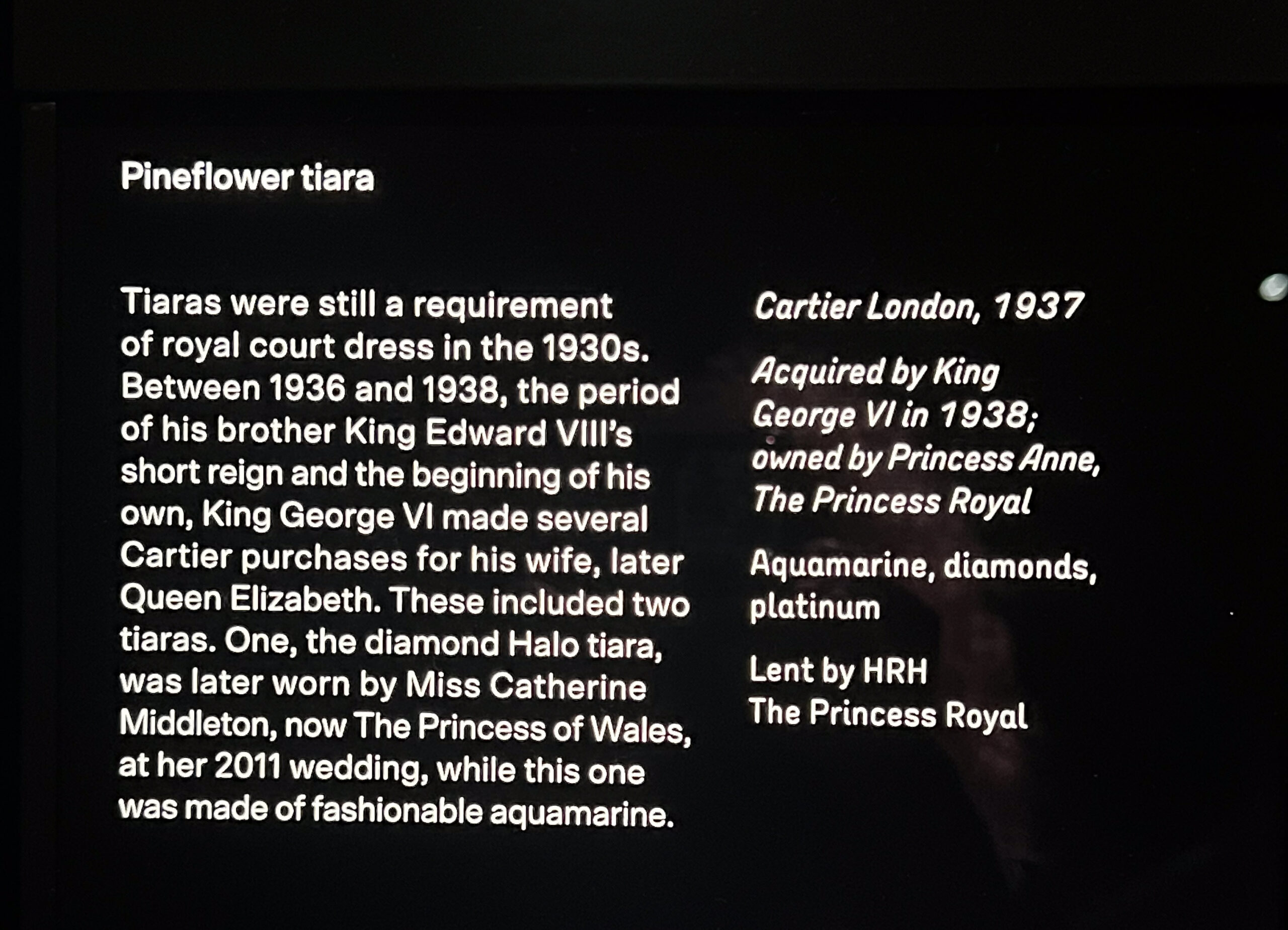
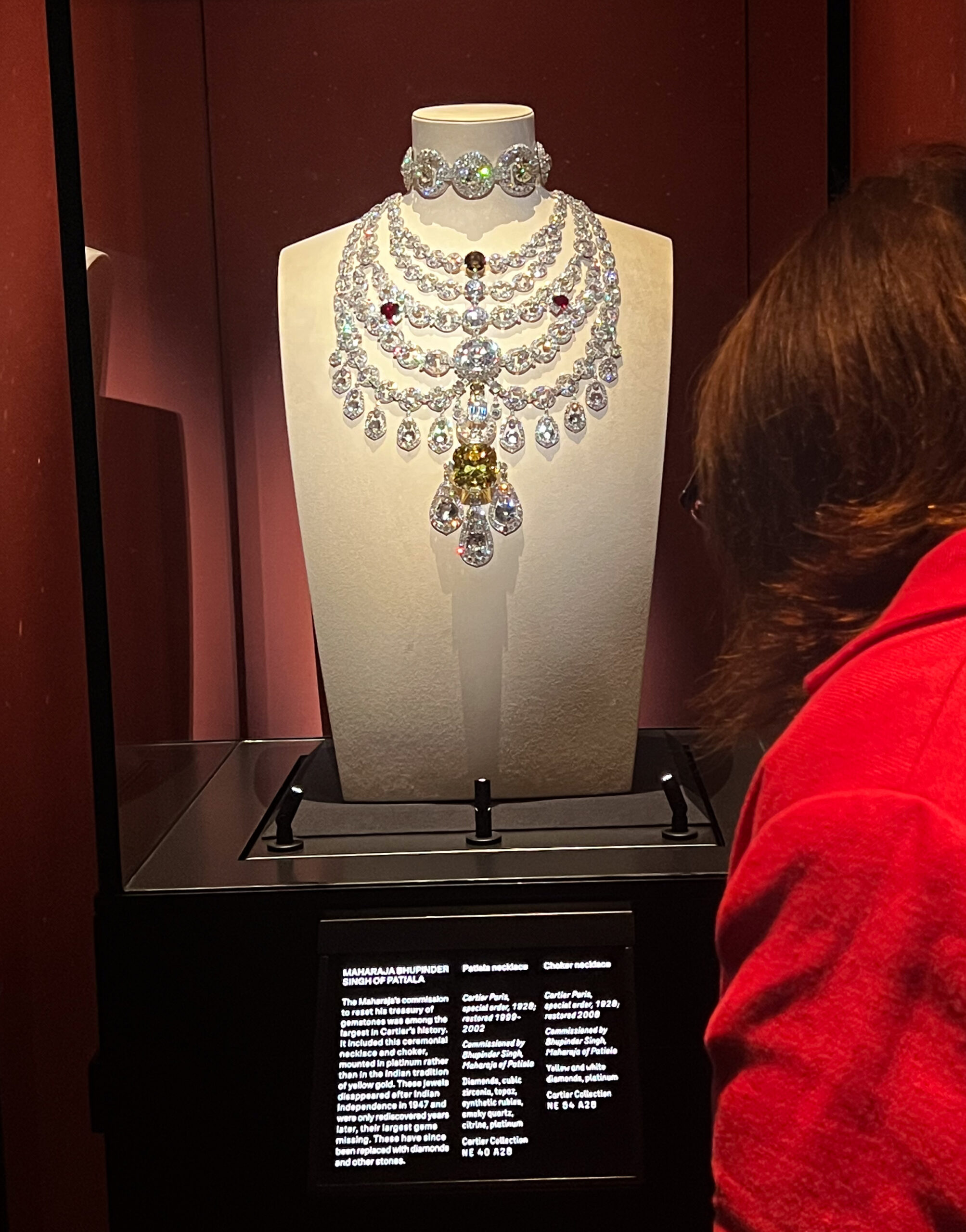
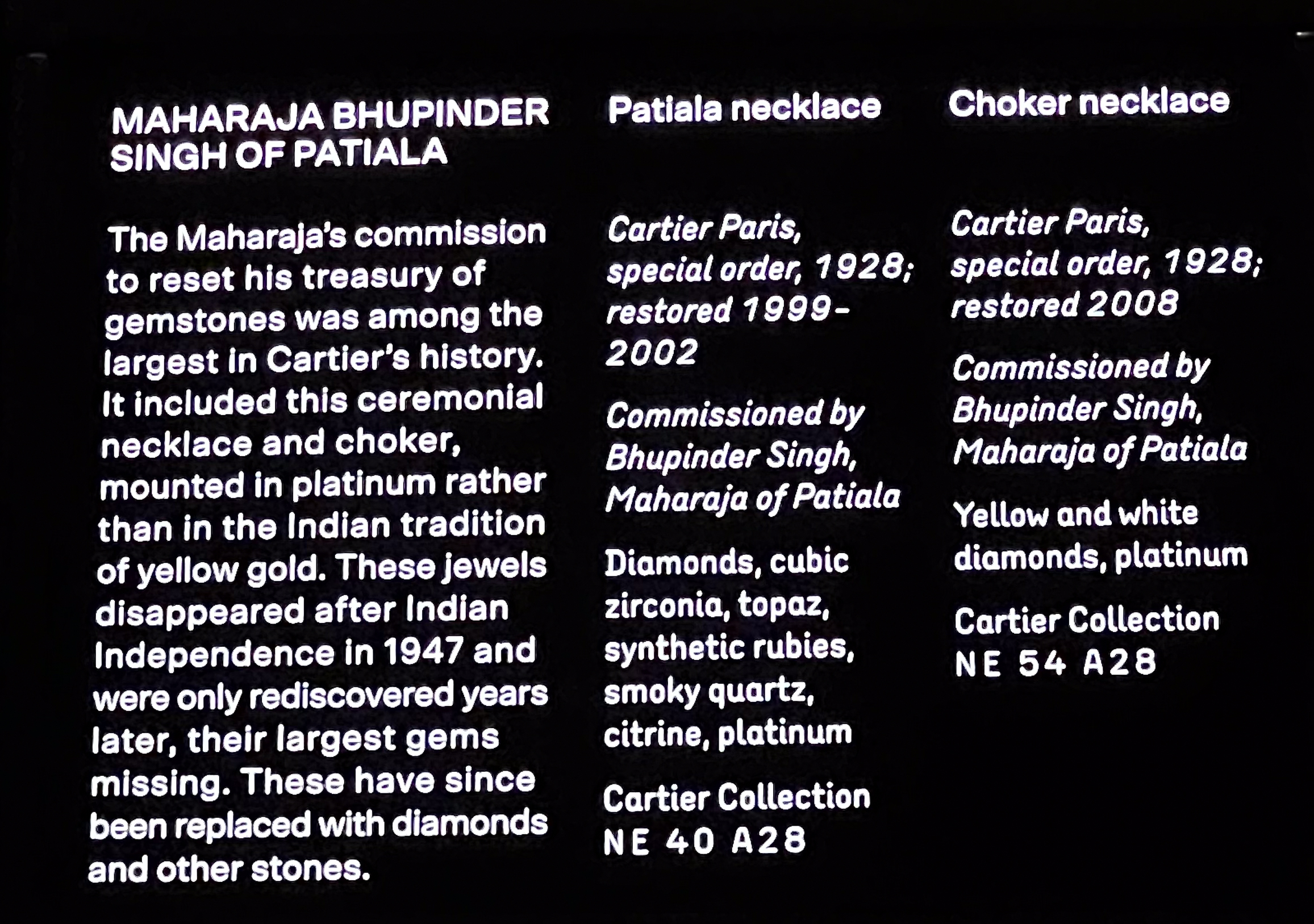
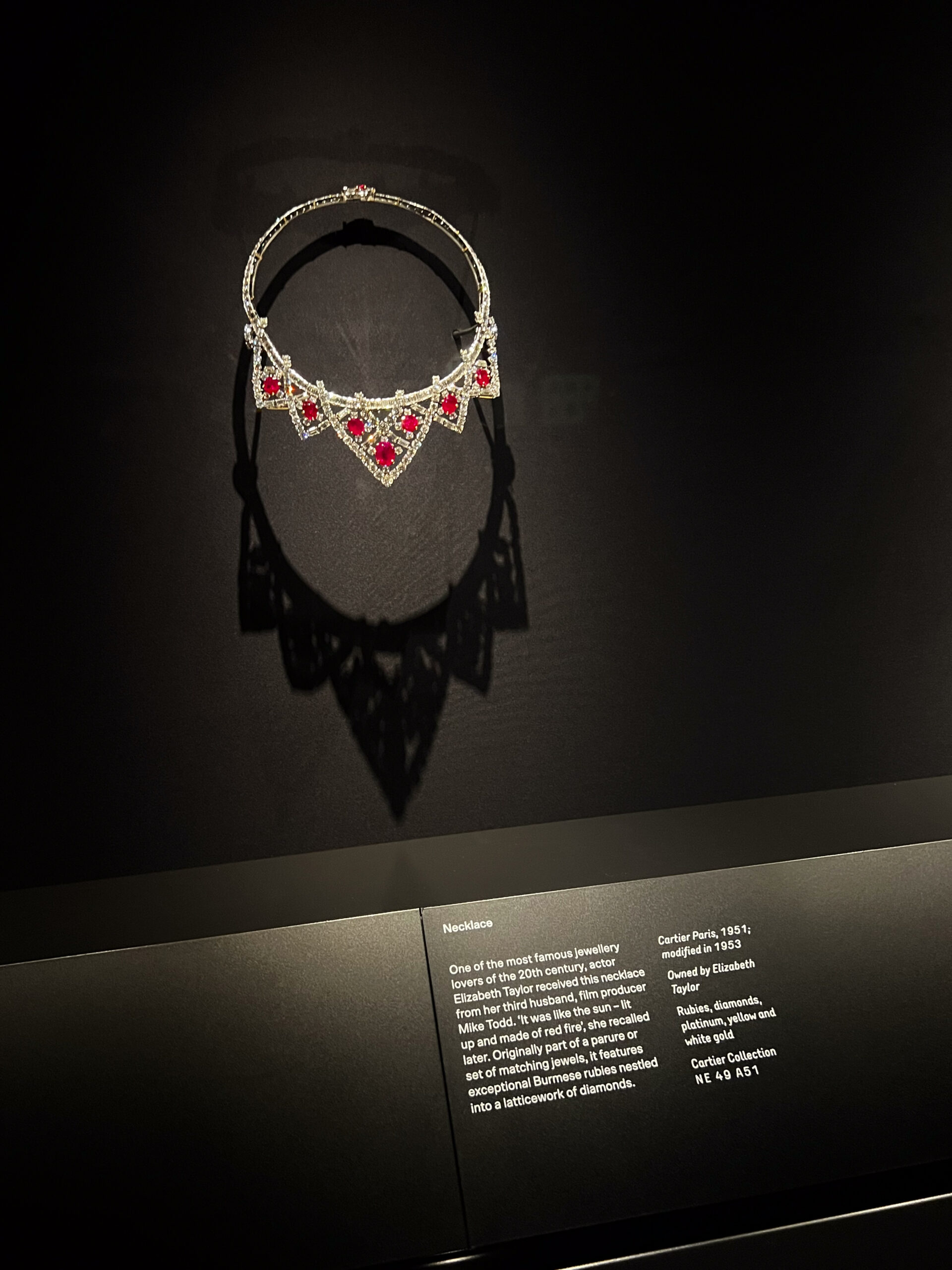
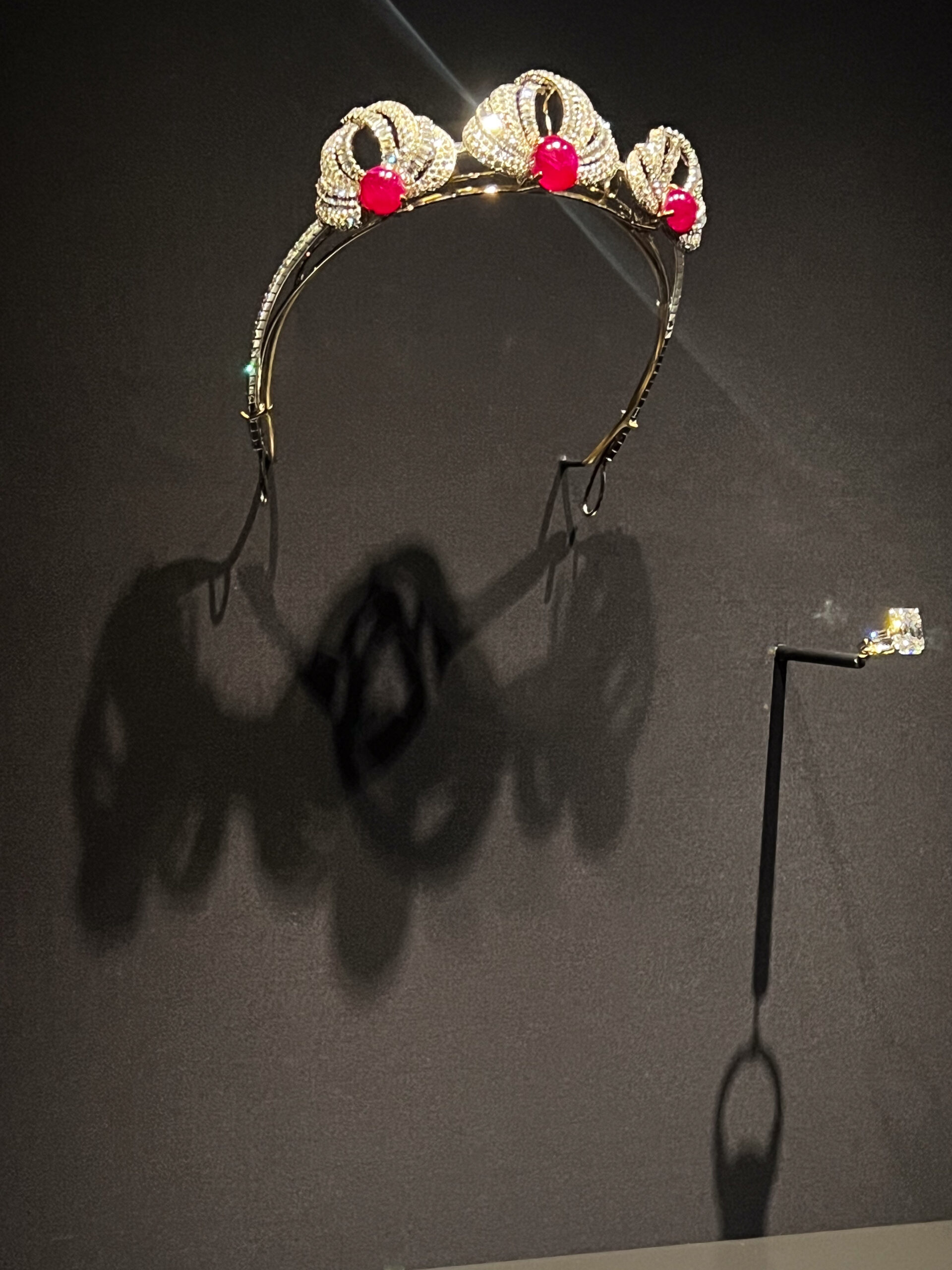
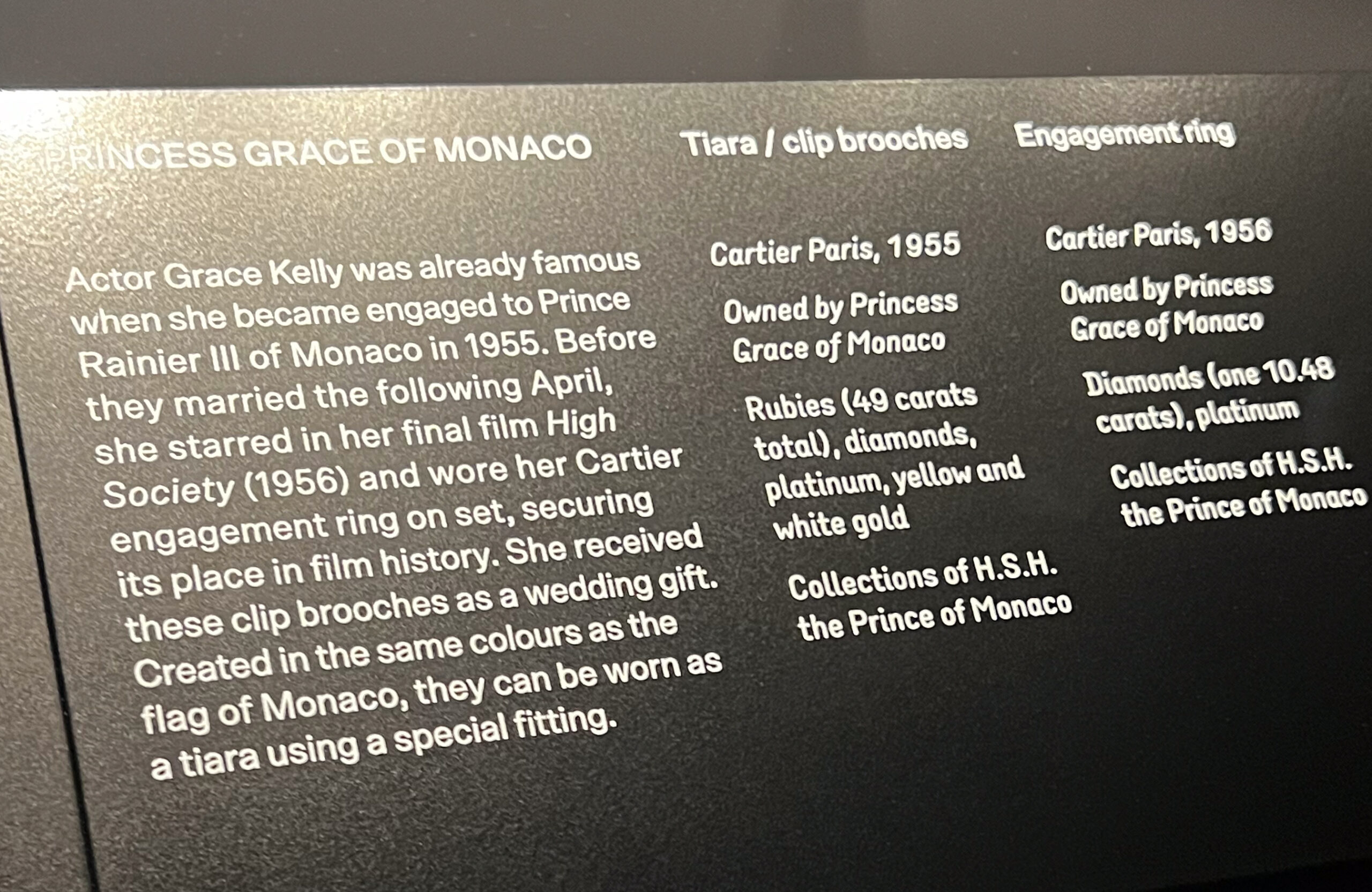
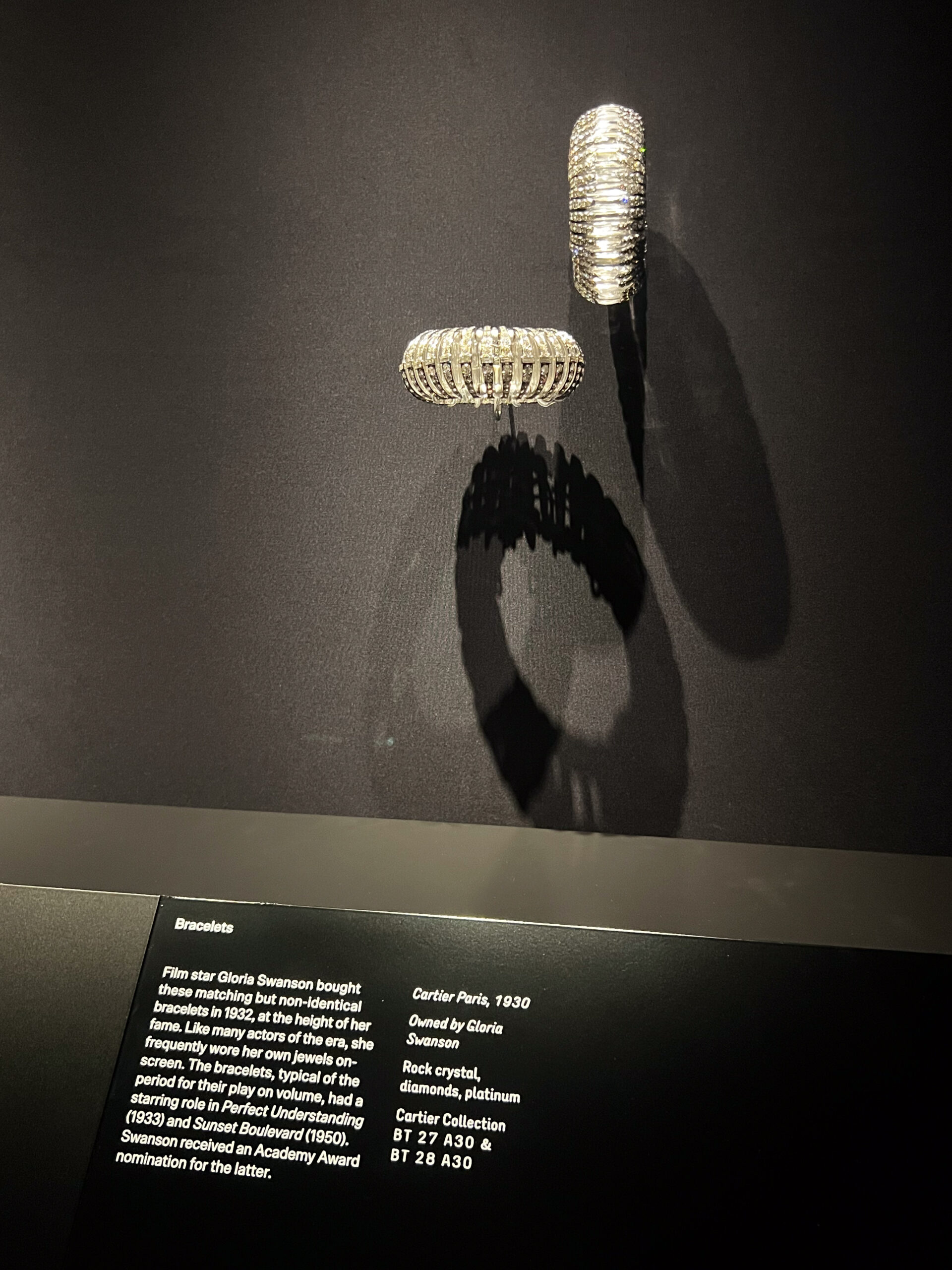
- Cartier jewelry owned by Gloria Swanson, Grace Kelly, Elizabeth Taylor, Elton John (b.t.w. he and his Scarborough born husband David Furnish have a long-time relationship supporting the V&A), Princess Anne, Queen Elizabeth, various maharajas, “Diana”, and assorted gilded age “dollar princesses” (wealthy young American women of the late 19th and early 20th centuries who married into titled British and European families, exchanging wealth for prestige. They were often the daughters of nouveau riche American tycoons whose families wanted to gain social standing.)
- the Casts Courts which brought the highlights of the world to London’s working class.
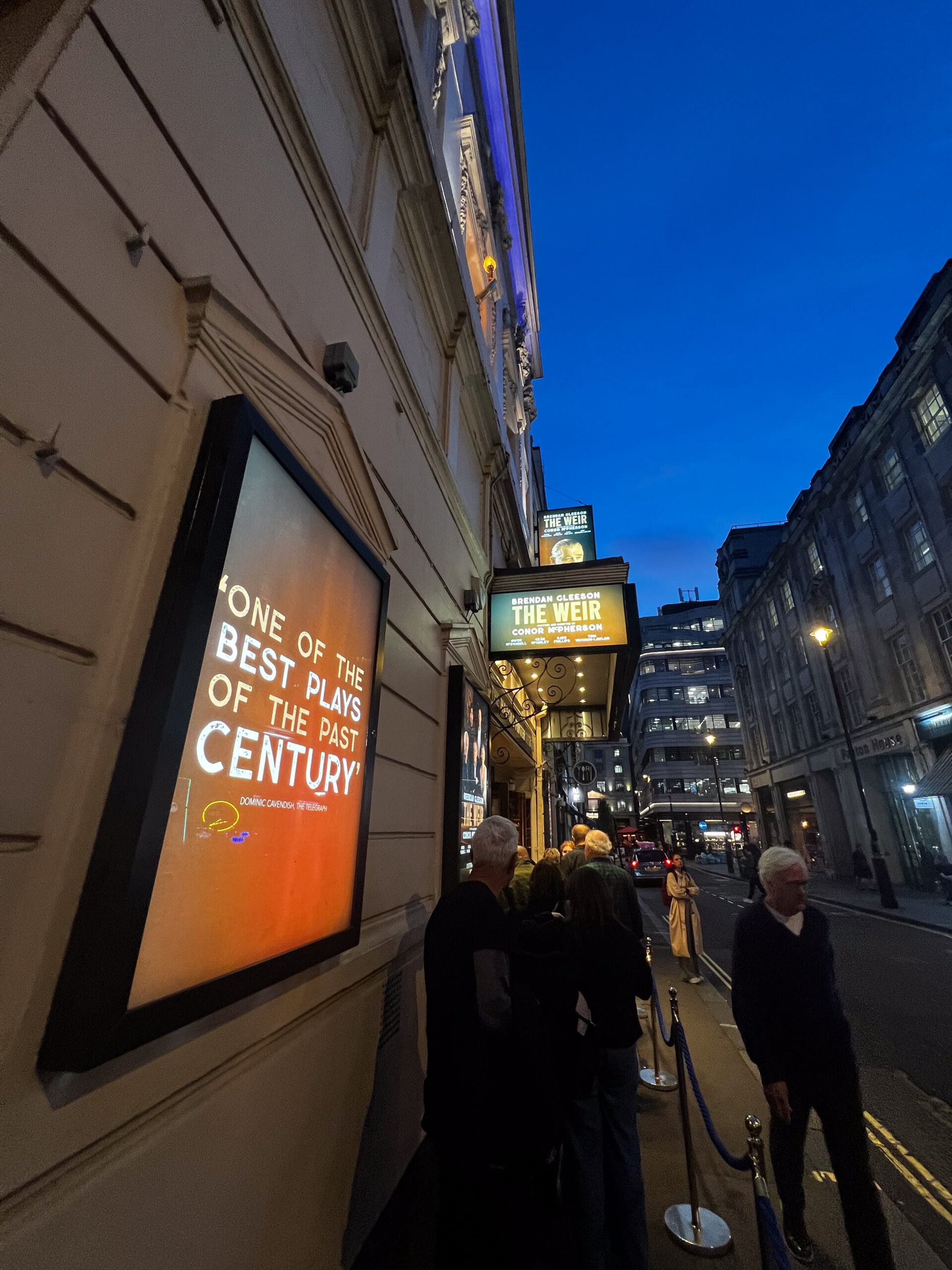
We whipped back to the hotel for a brief rest, then headed to Piccadilly Circus, grabbed a sad pizza (honestly, pathetic) at Pizza Express (once is enough, it’s a popular chain in the UK, clean washroom tho’…) and then saw a fabulous, very dark, Irish show at the Harold Pinter Theatre, The Weir, featuring Brendan Gleeson. Ends December 6. Highly recommended.
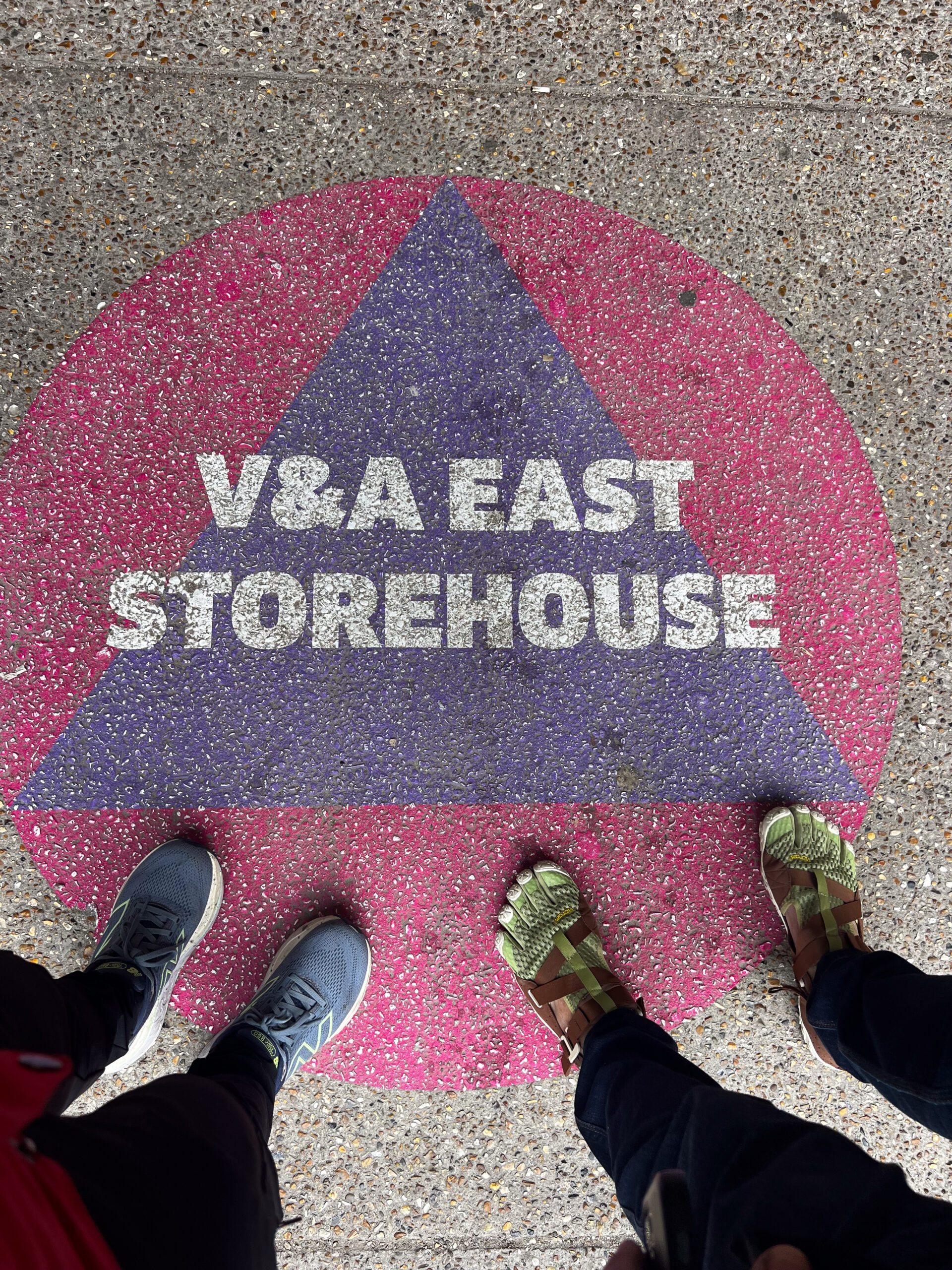
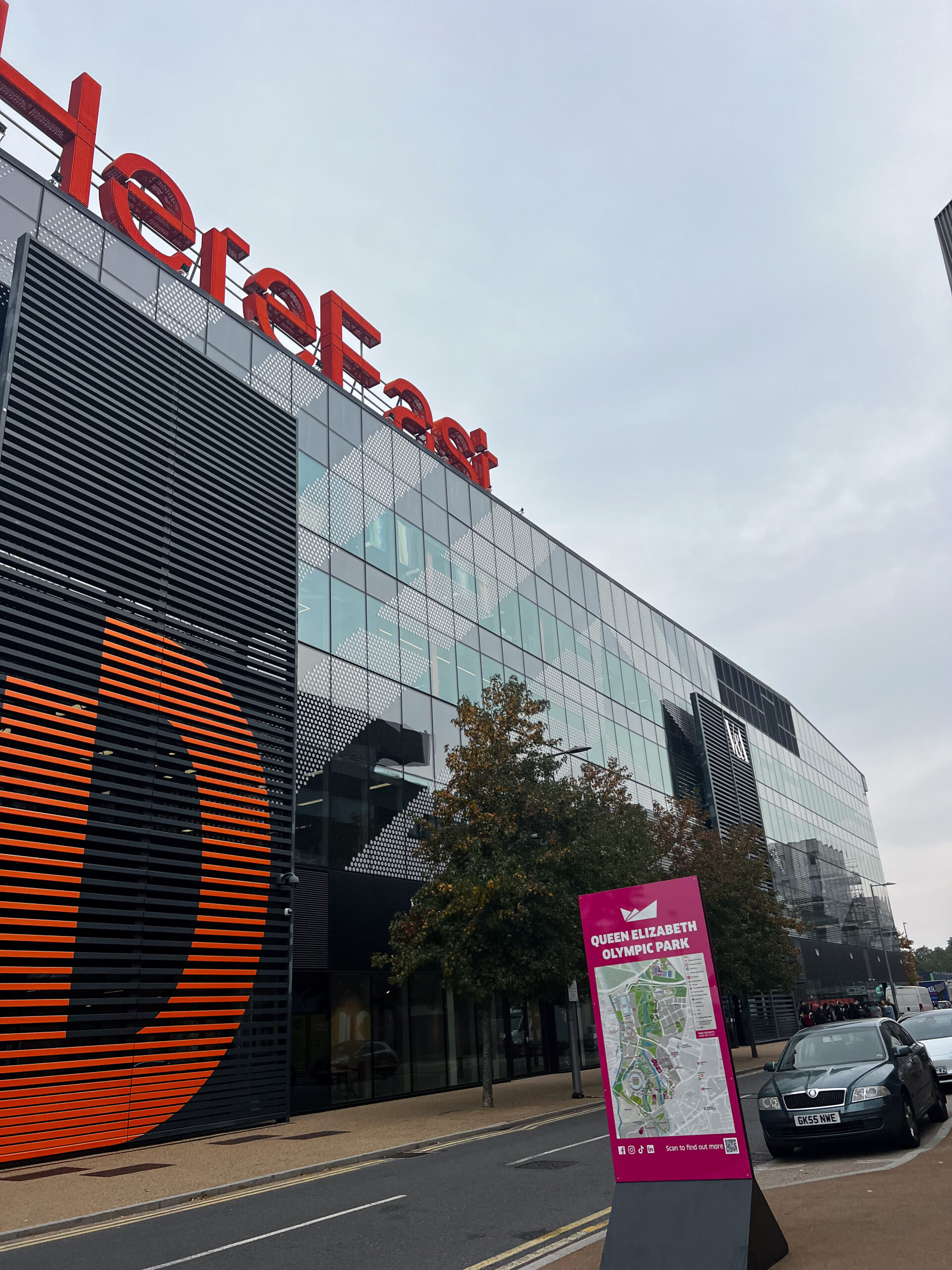
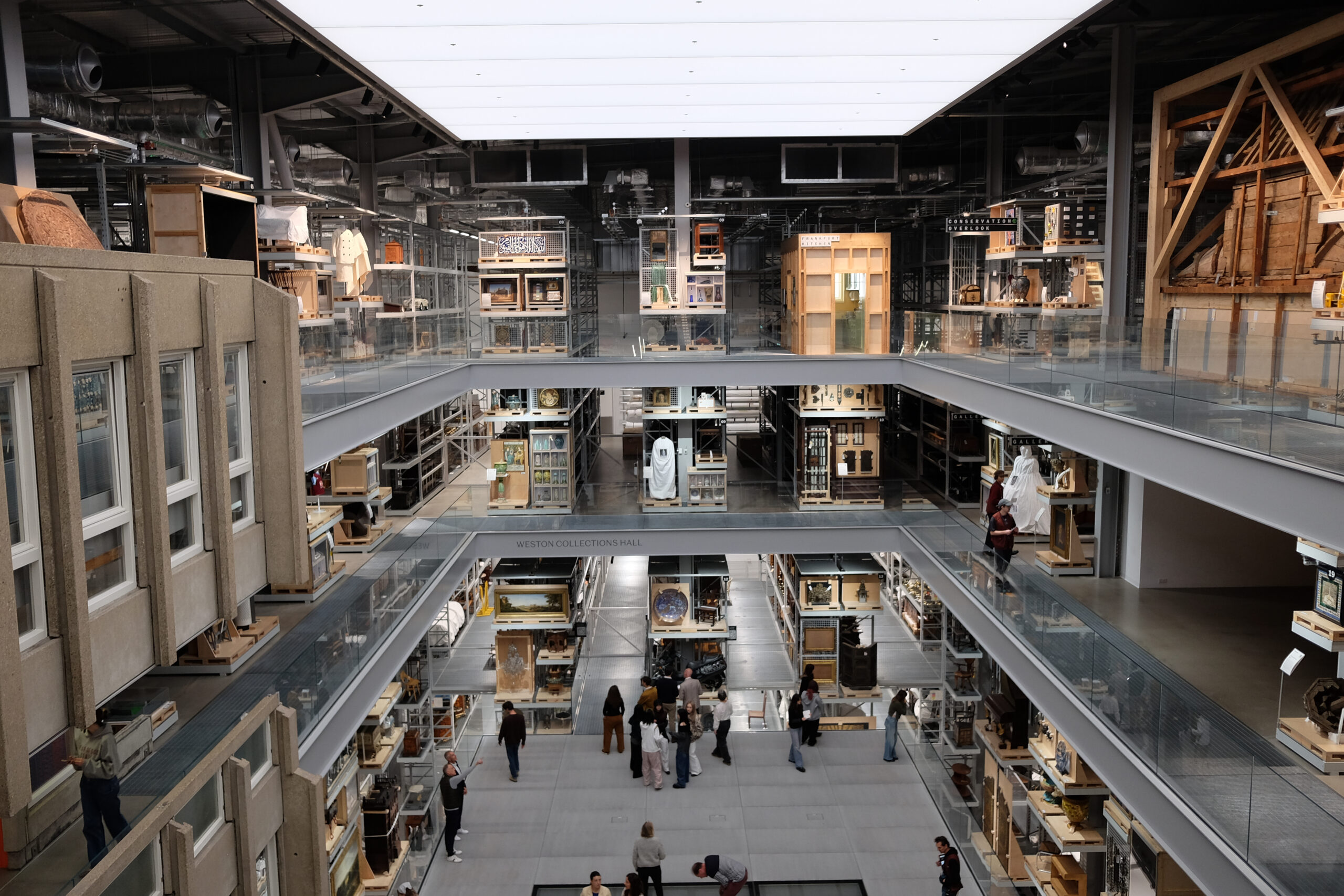
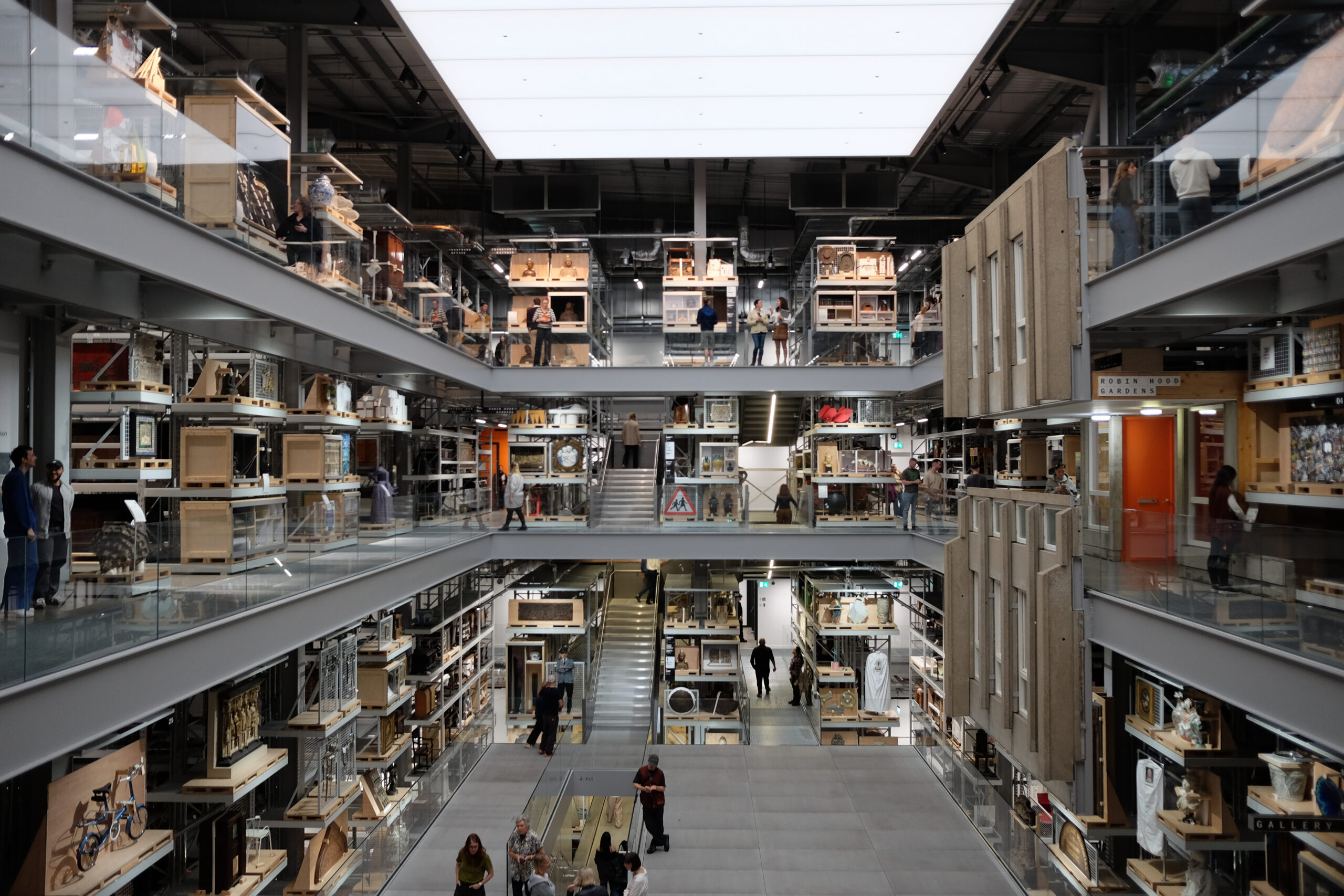
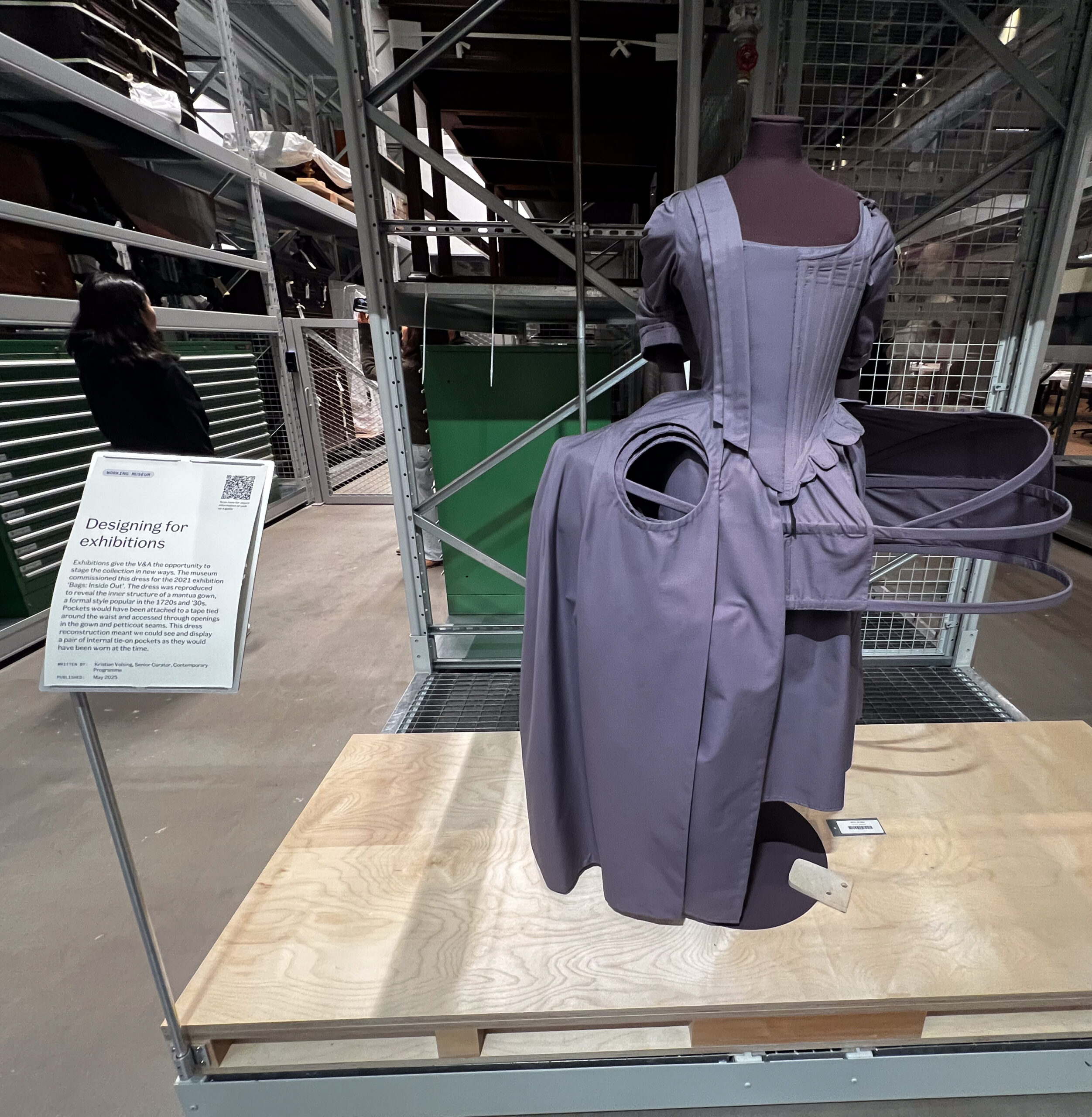
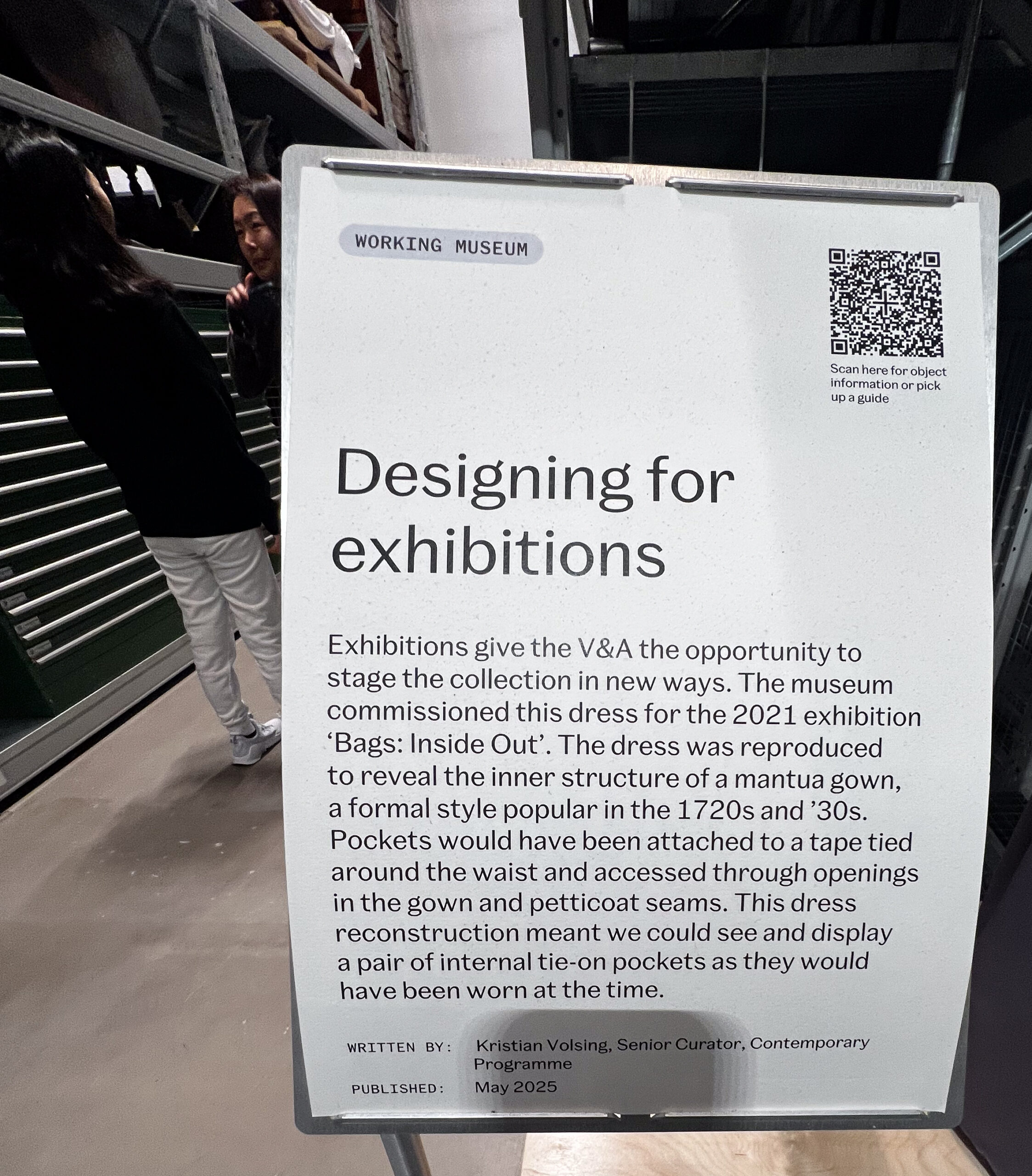
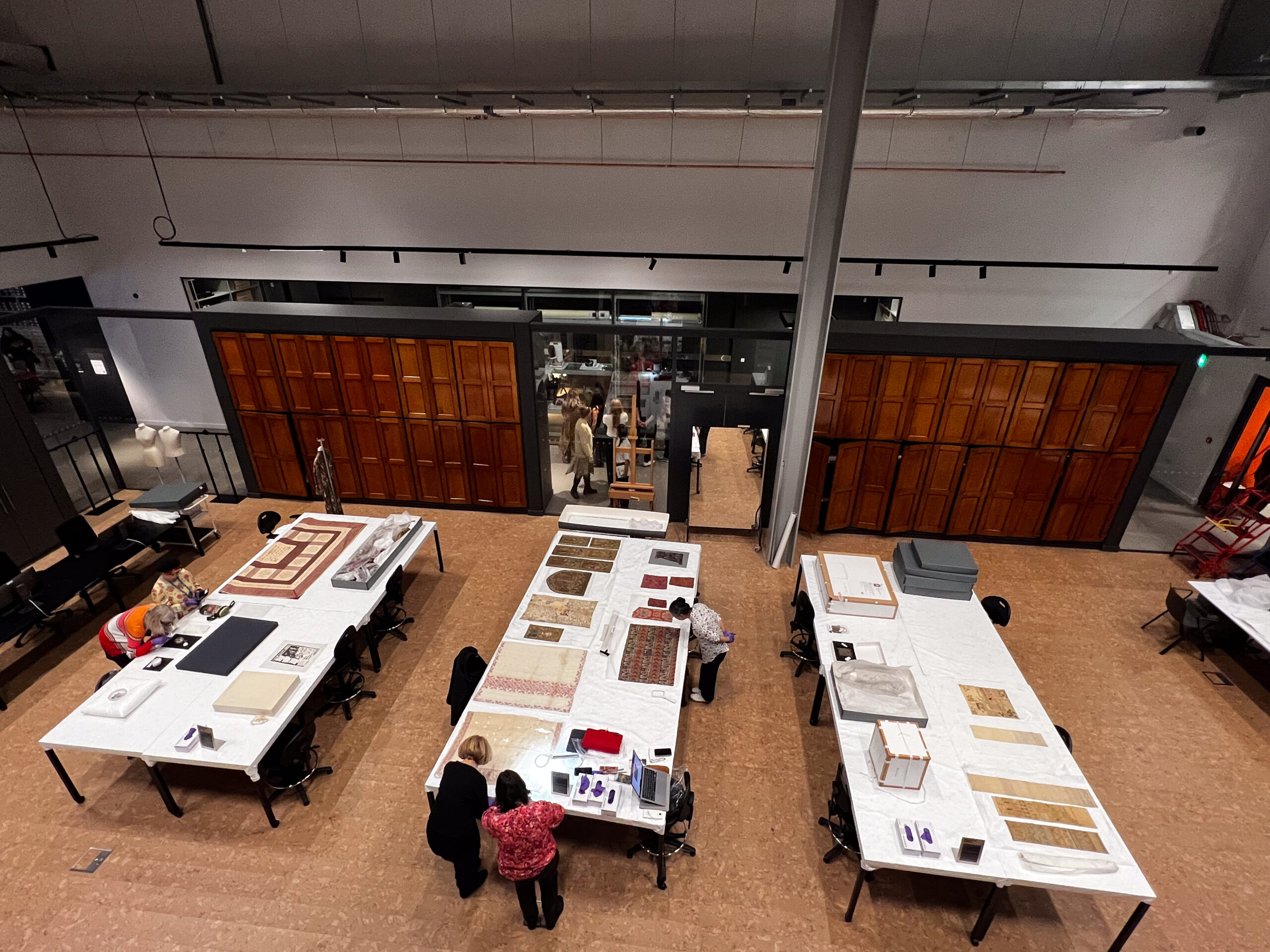
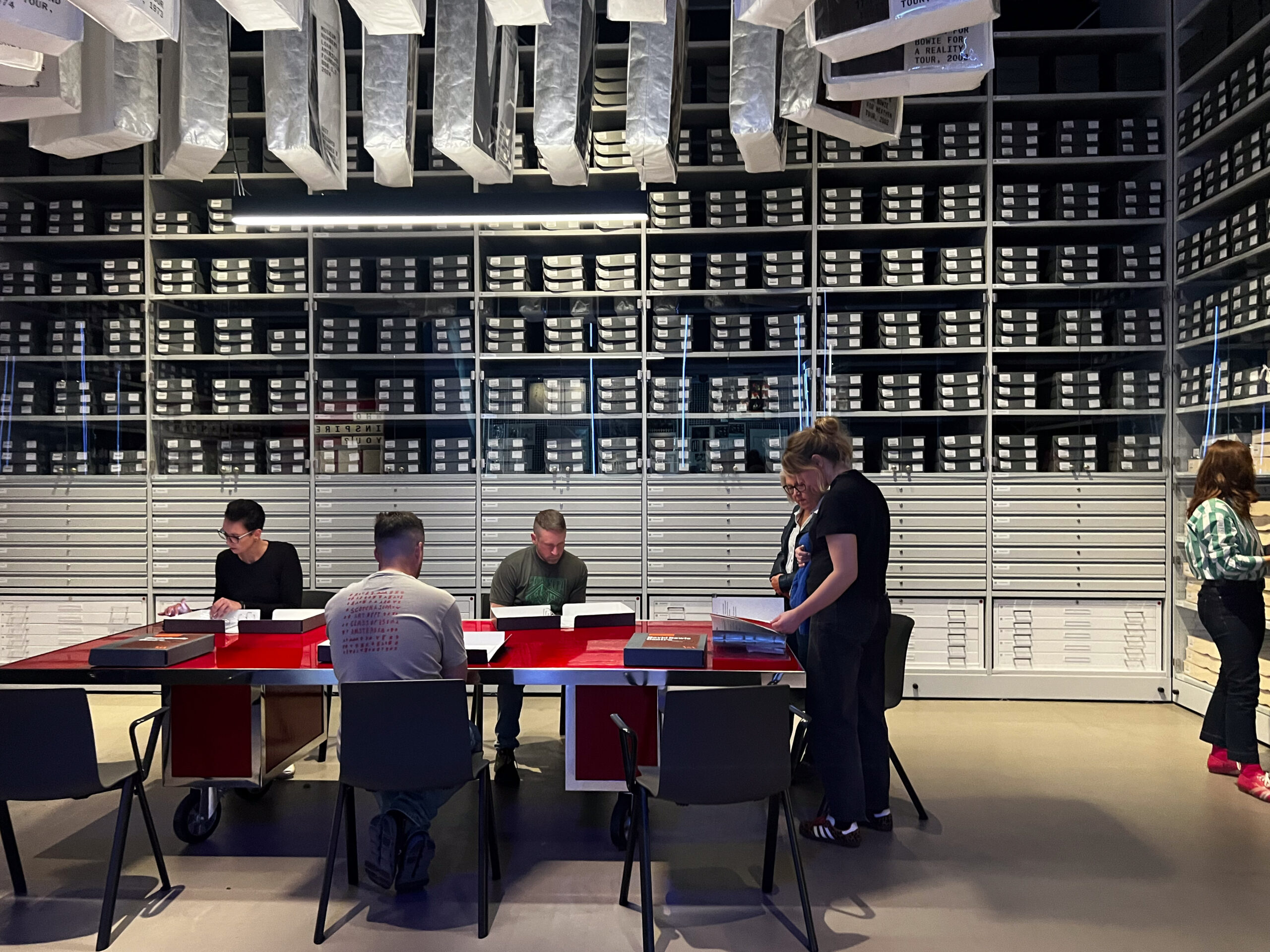
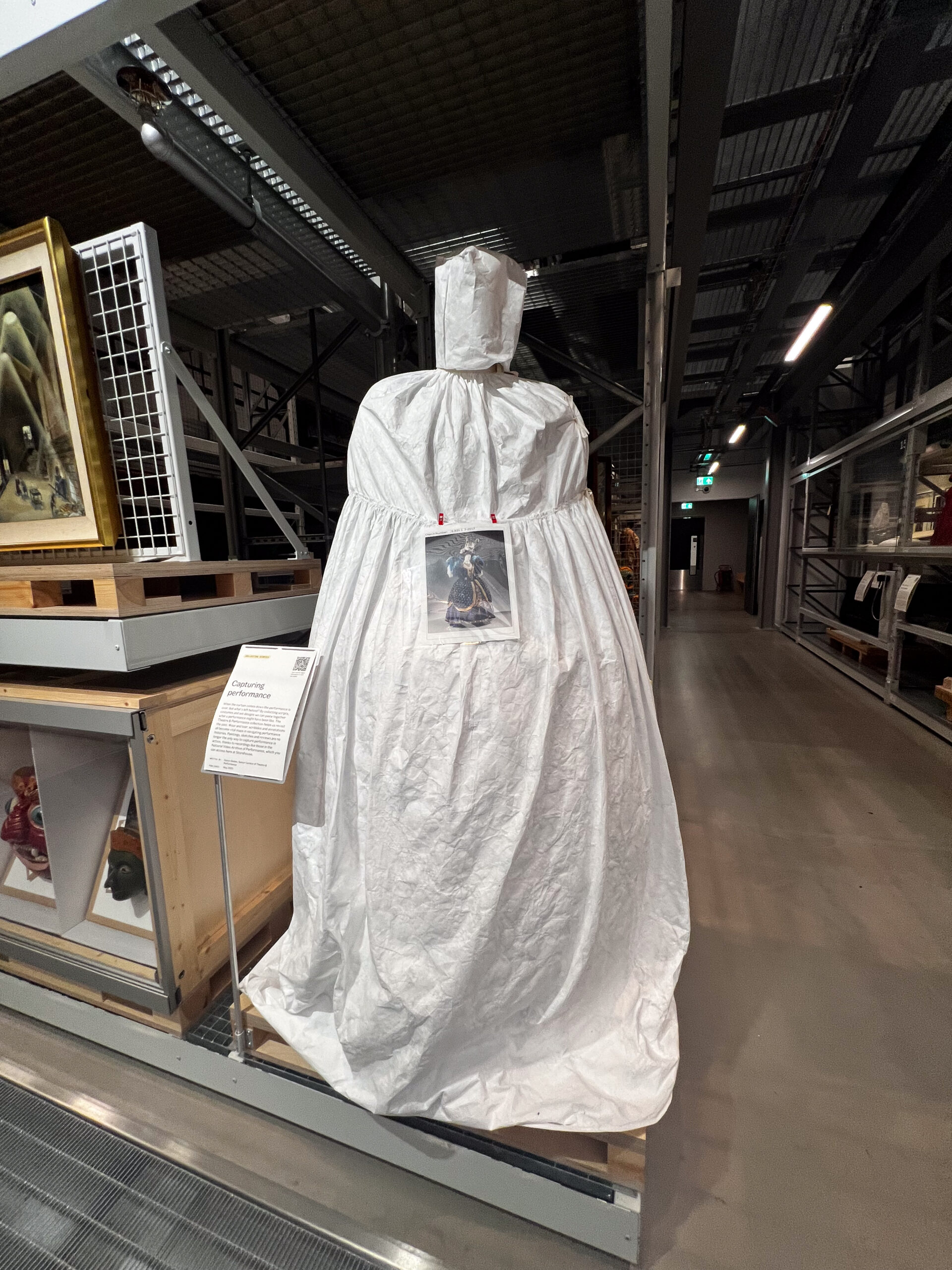
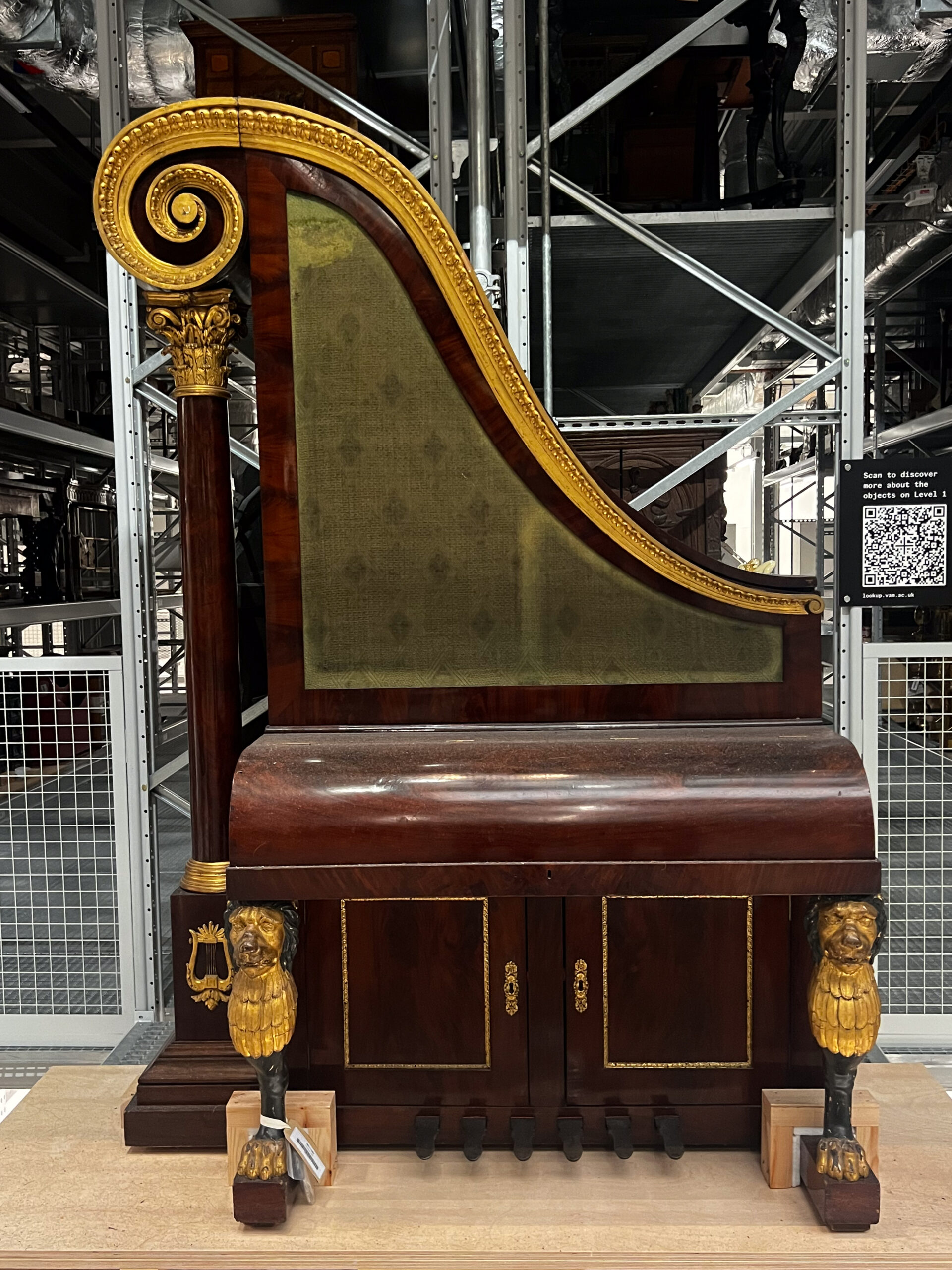
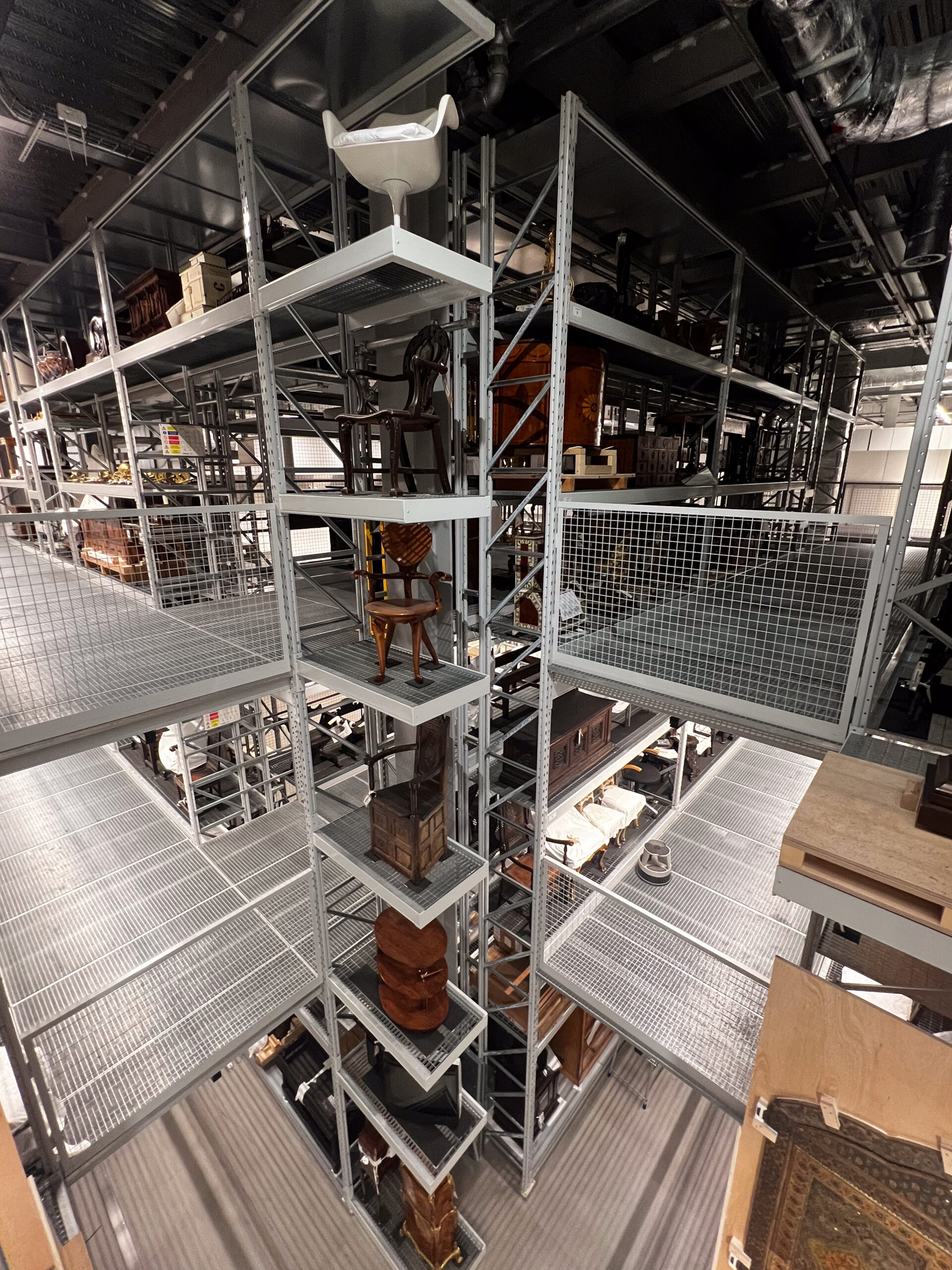
Thursday October 2nd, we jumped on the tube to North London’s Stratford station (not to be confused with Stratford-on-Avon, that is an entirely different city). From there we took a brisk walk to the The V&A East Storehouse which just opened on May 31st. The Storehouse was built to bring a large portion of the Victoria and Albert Museum’s unexhibited collection to East London, serving as both a working storage facility for over a quarter-million objects (that’s right…) and a public visitor attraction in the Queen Elizabeth Olympic Park which was purpose-built for the 2012 Summer Olympics and Paralympics.
By converting the former 2012 Olympic broadcast center, the project fulfills a vision of making the national collection more accessible, allowing visitors to view and interact with items previously kept in storage, a revolutionary concept for a national museum. (I told you the V&A’s founding premise was egalitarian…)
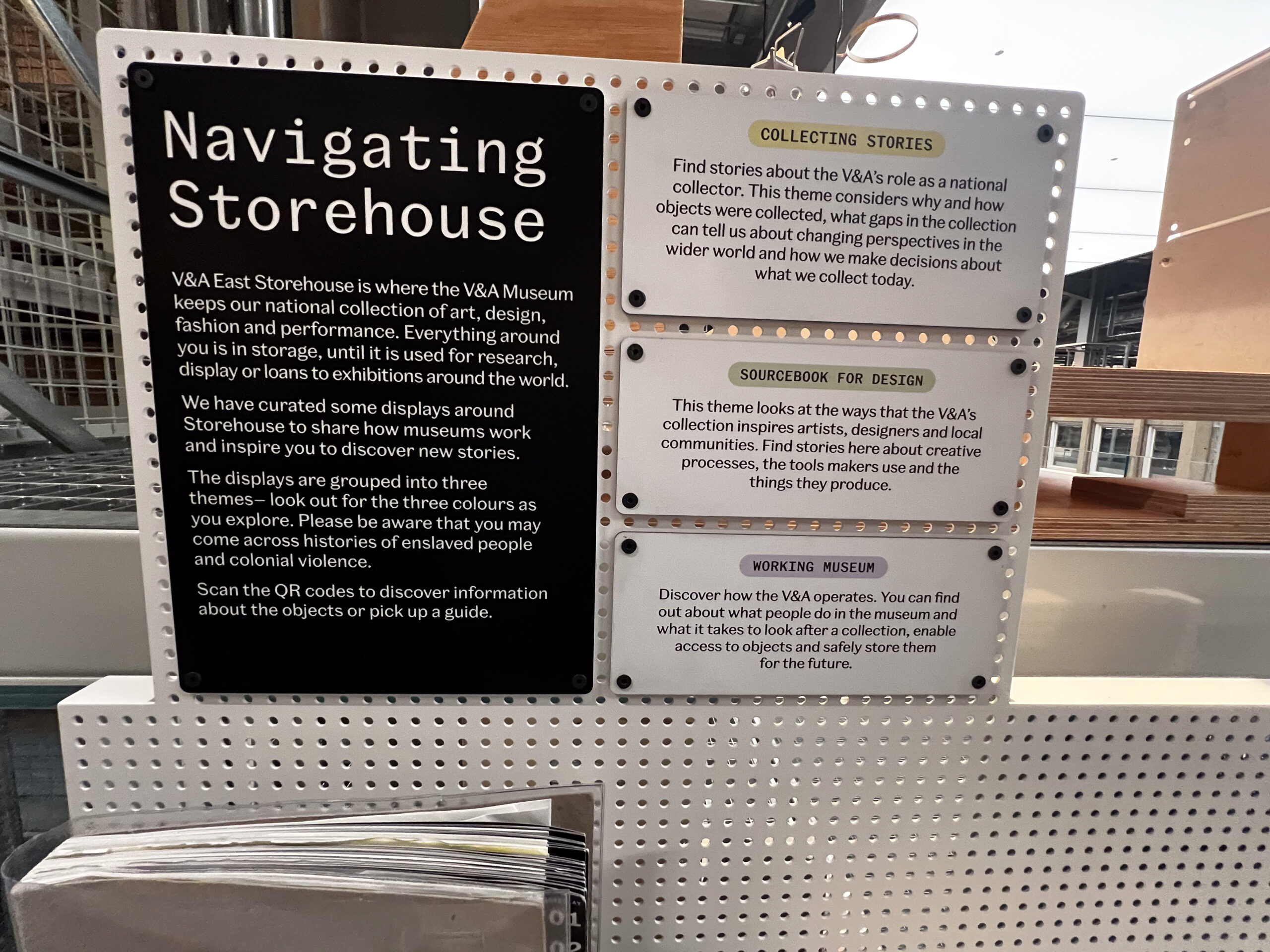
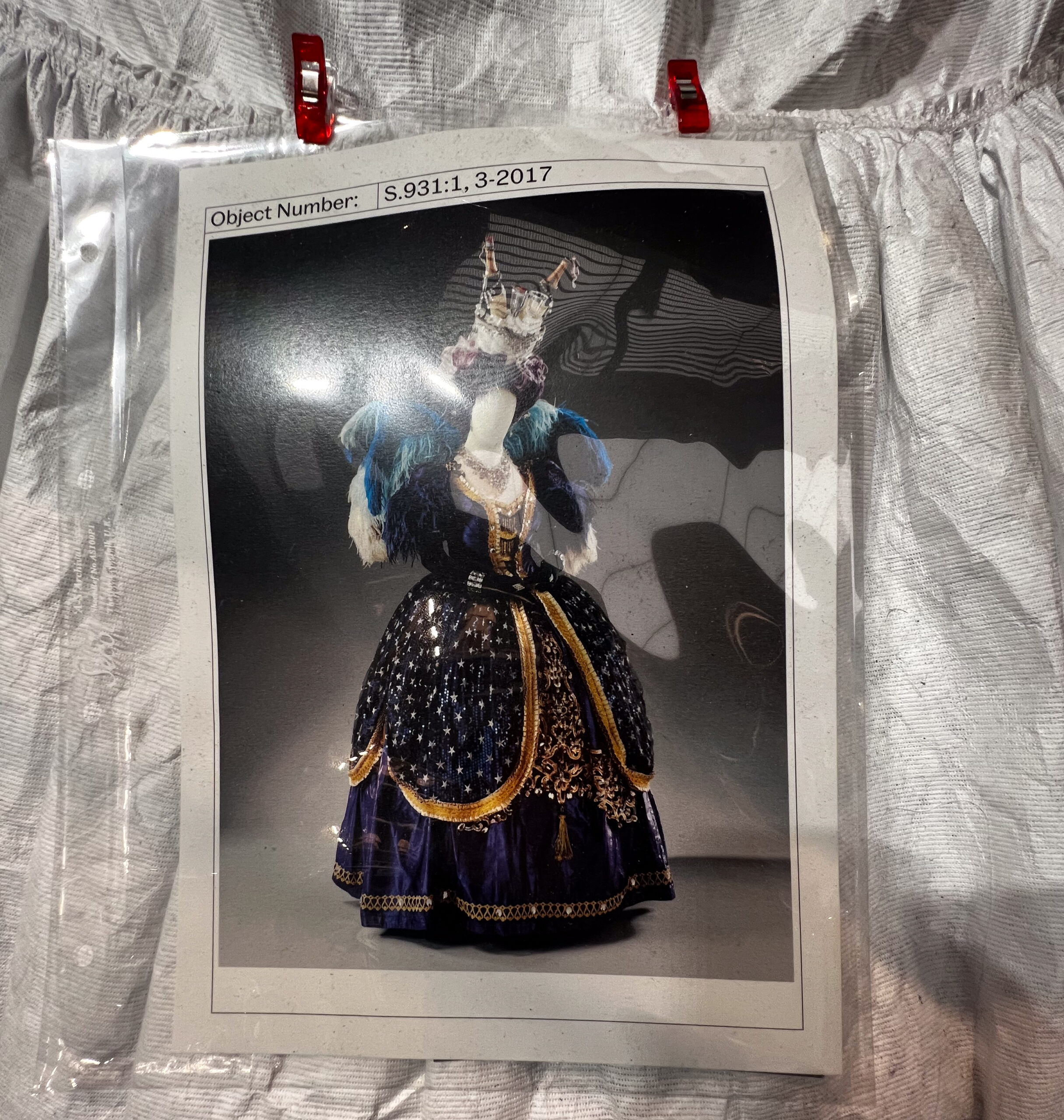
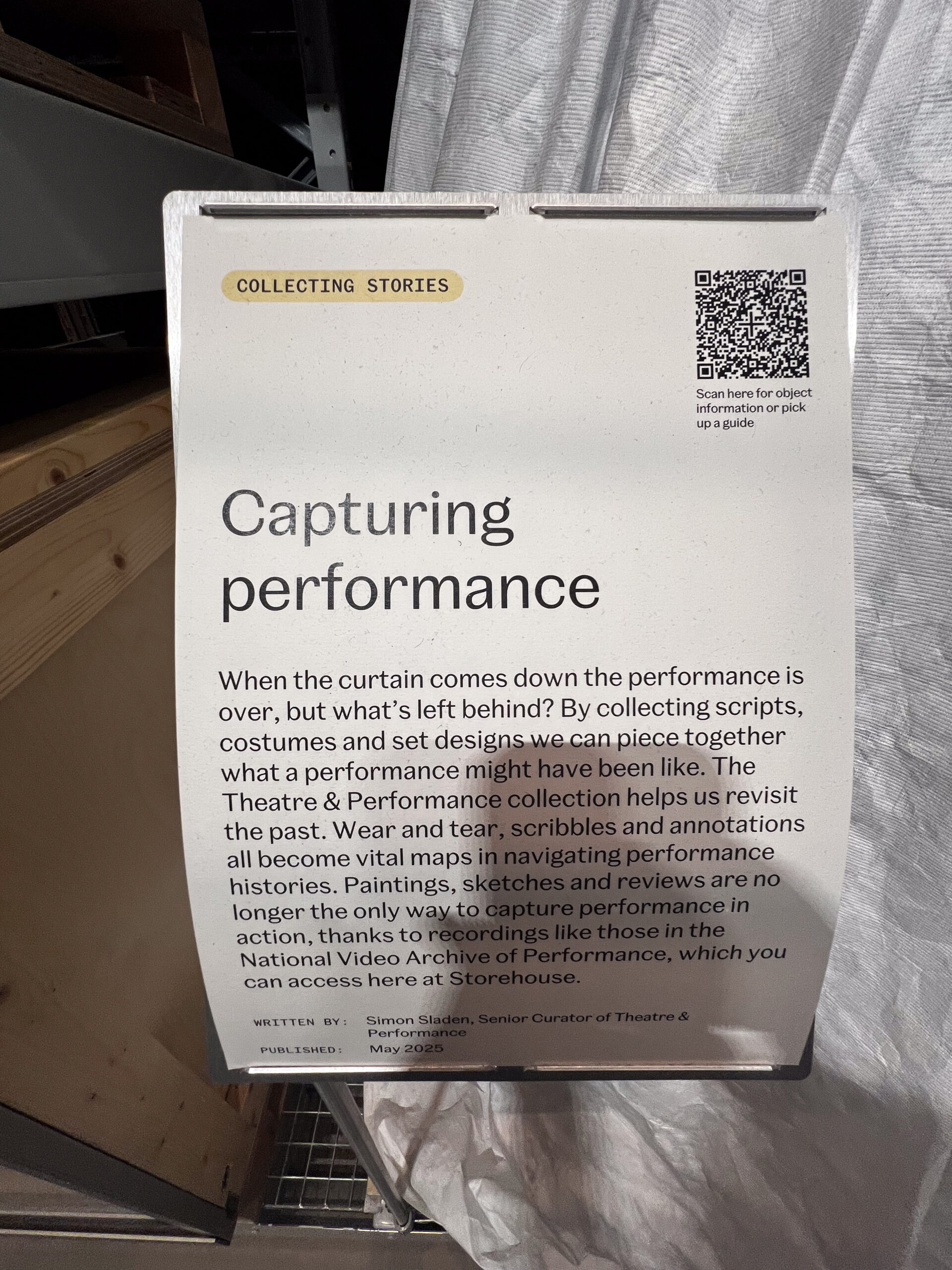
There are curated mini displays across all three levels of the storehouse. You can use your phone to scan the QR codes in each display to find out more about the objects using the V&A East Storehouse Lookup. In this respect I found the museum a little frustrating and would have appreciated a tour. John prefers a sheet of paper beside a item rather than having to use your phone to scan QR codes. (I liked the QR codes, but you get lazy and impatient waiting for data to load, so you give them, and then the opportunity is missed, so I don’t know if we’re just not their demographic, or if they’re a great solution…)
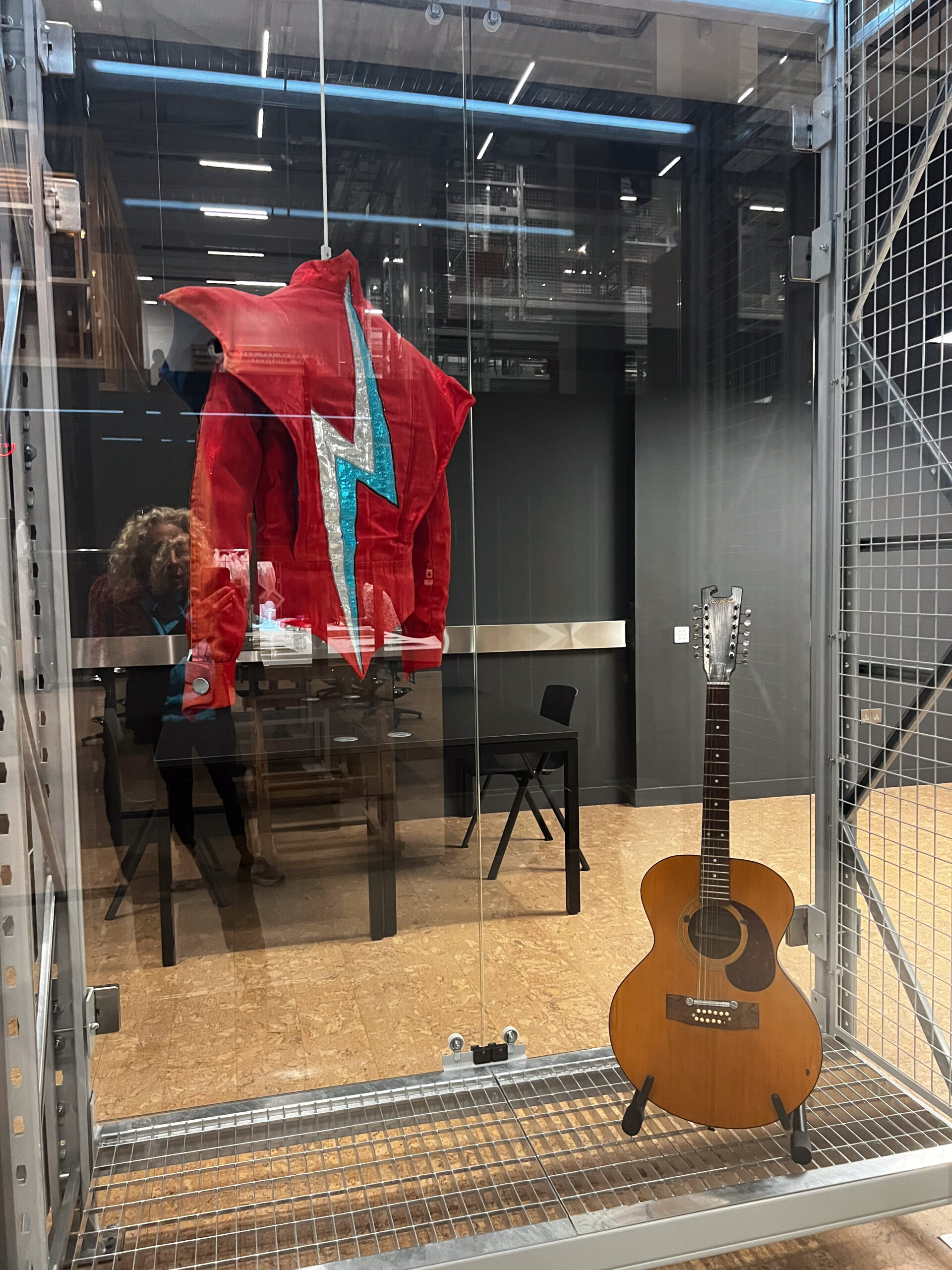
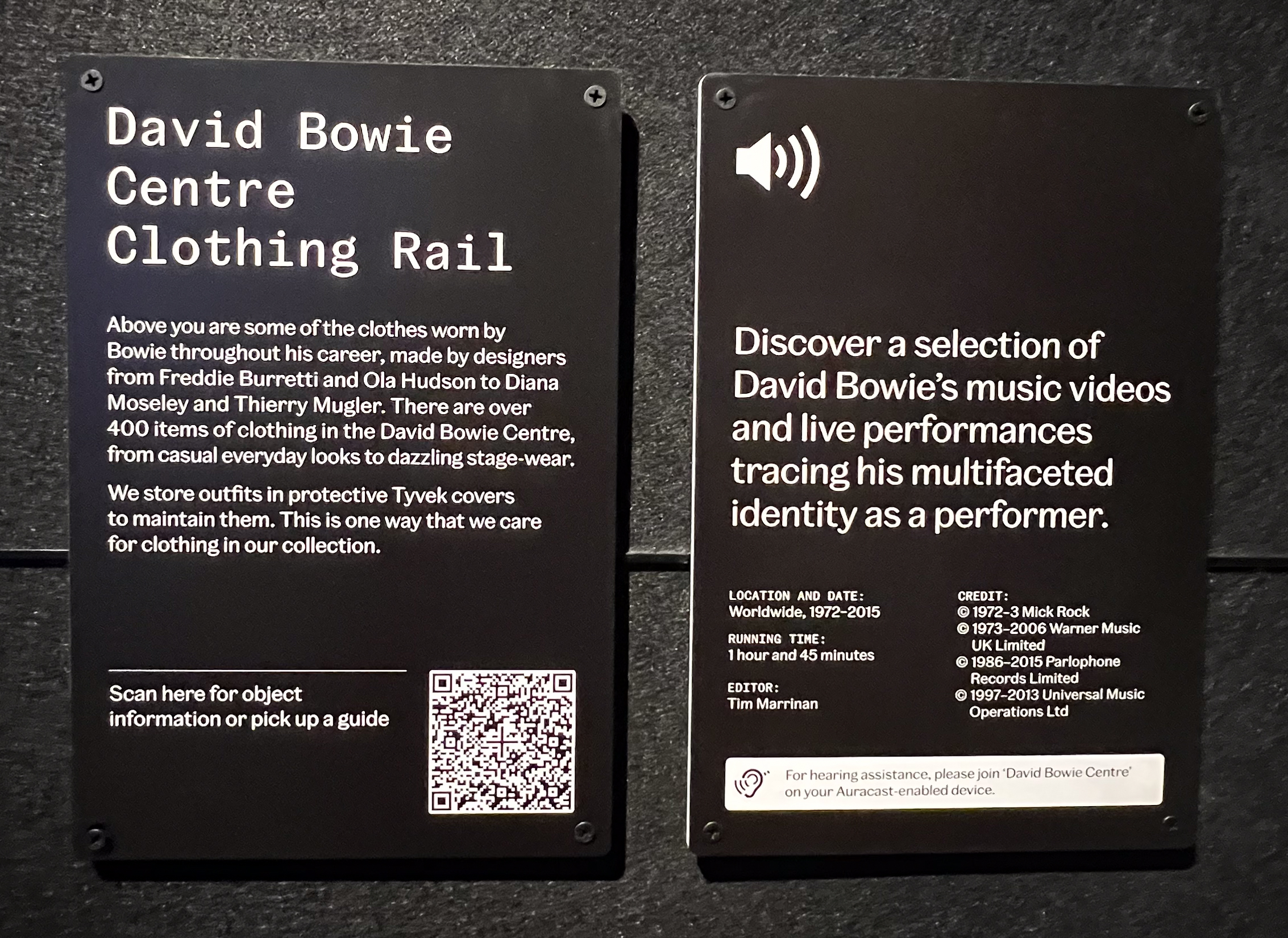
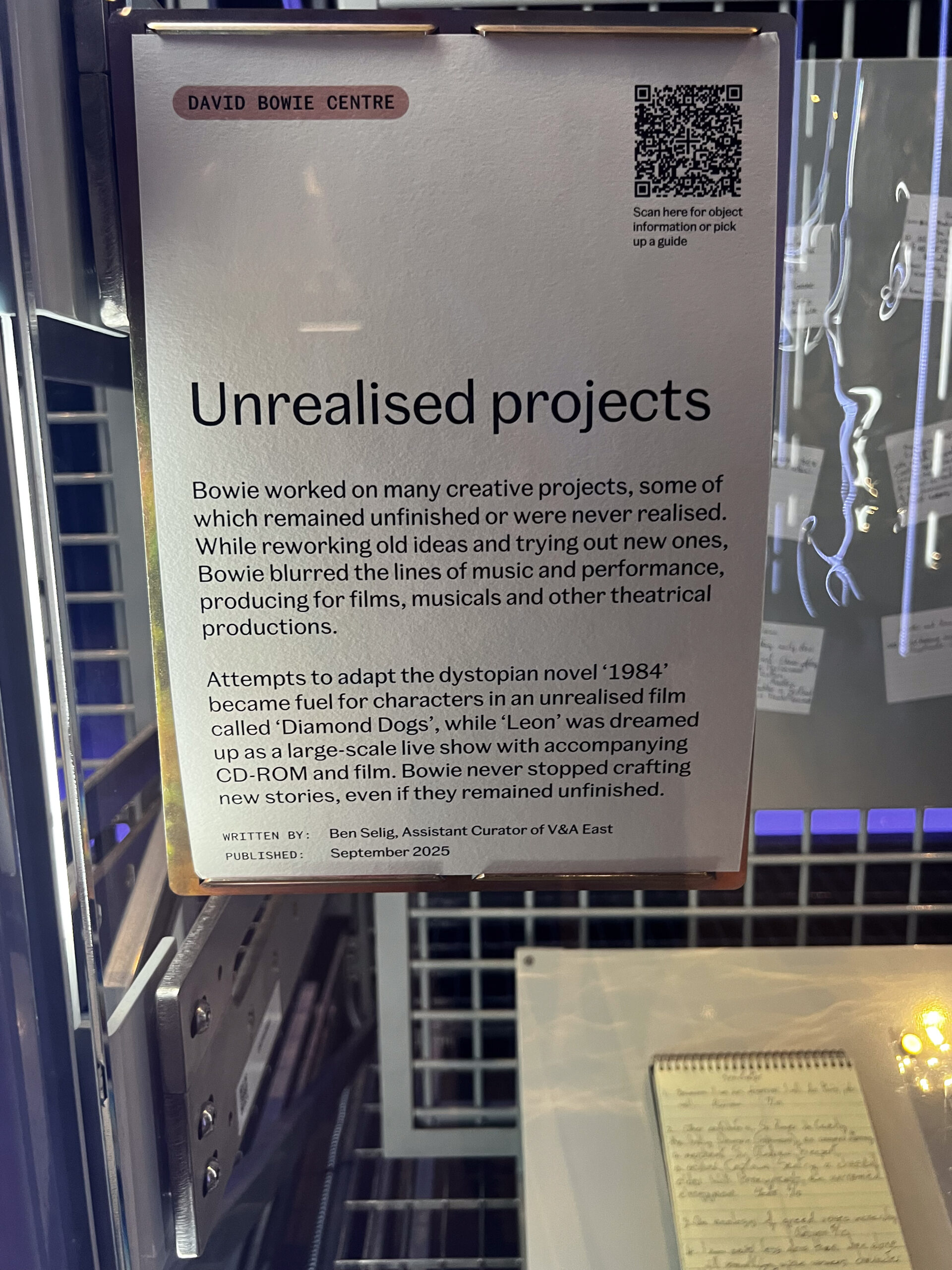
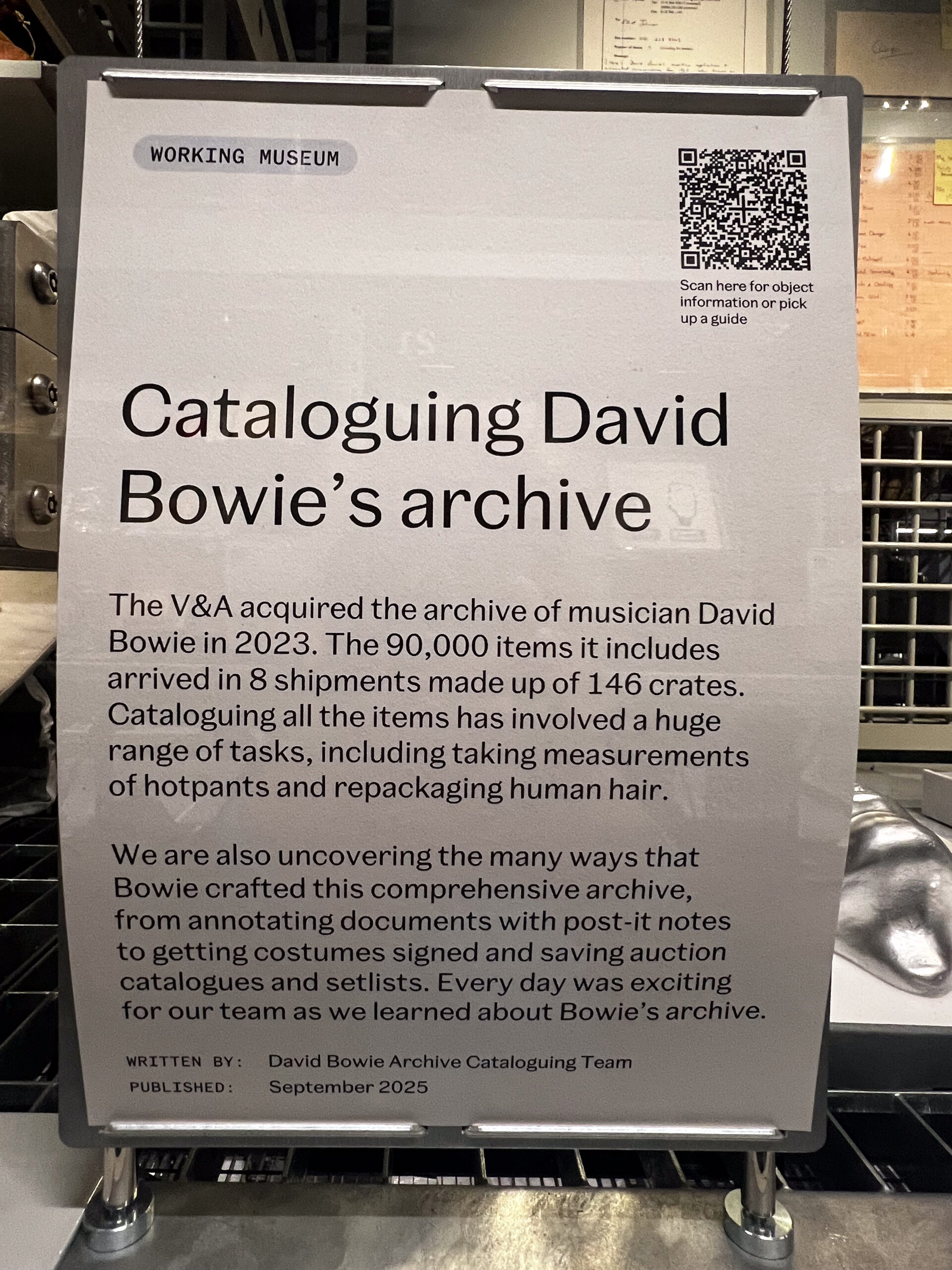
At any rate, this is where David Bowie’s 90,000 piece (!!!) collection of costumes, recordings, correspondence, instruments, post-it notes with ideas for future projects, etc. ended up, and they are all available for anyone’s perusal by requisitioning special items. (See photos.)
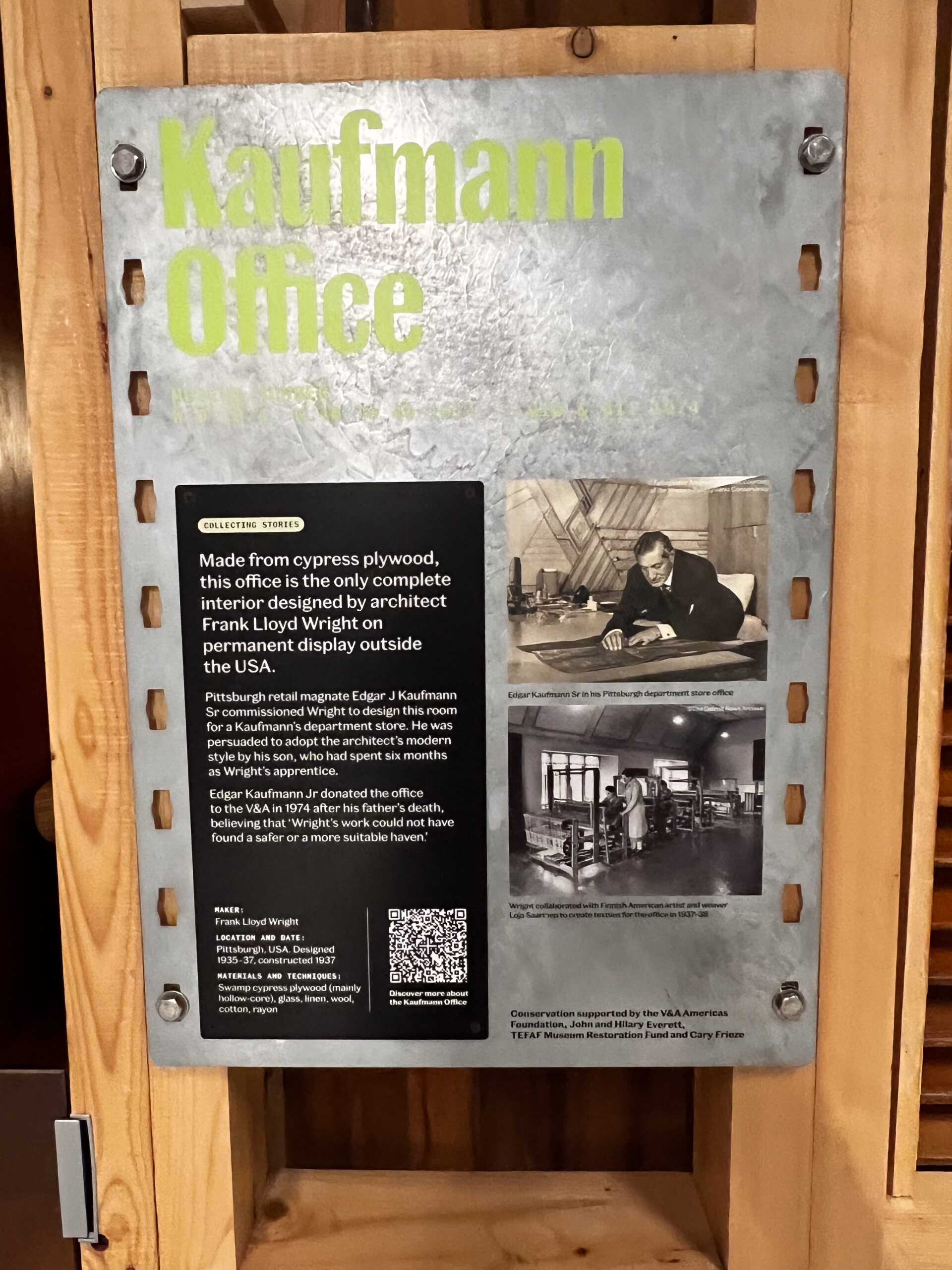
Highlights of our V and A East Storehouse visit (see photos in the gallery at the bottom of the page):
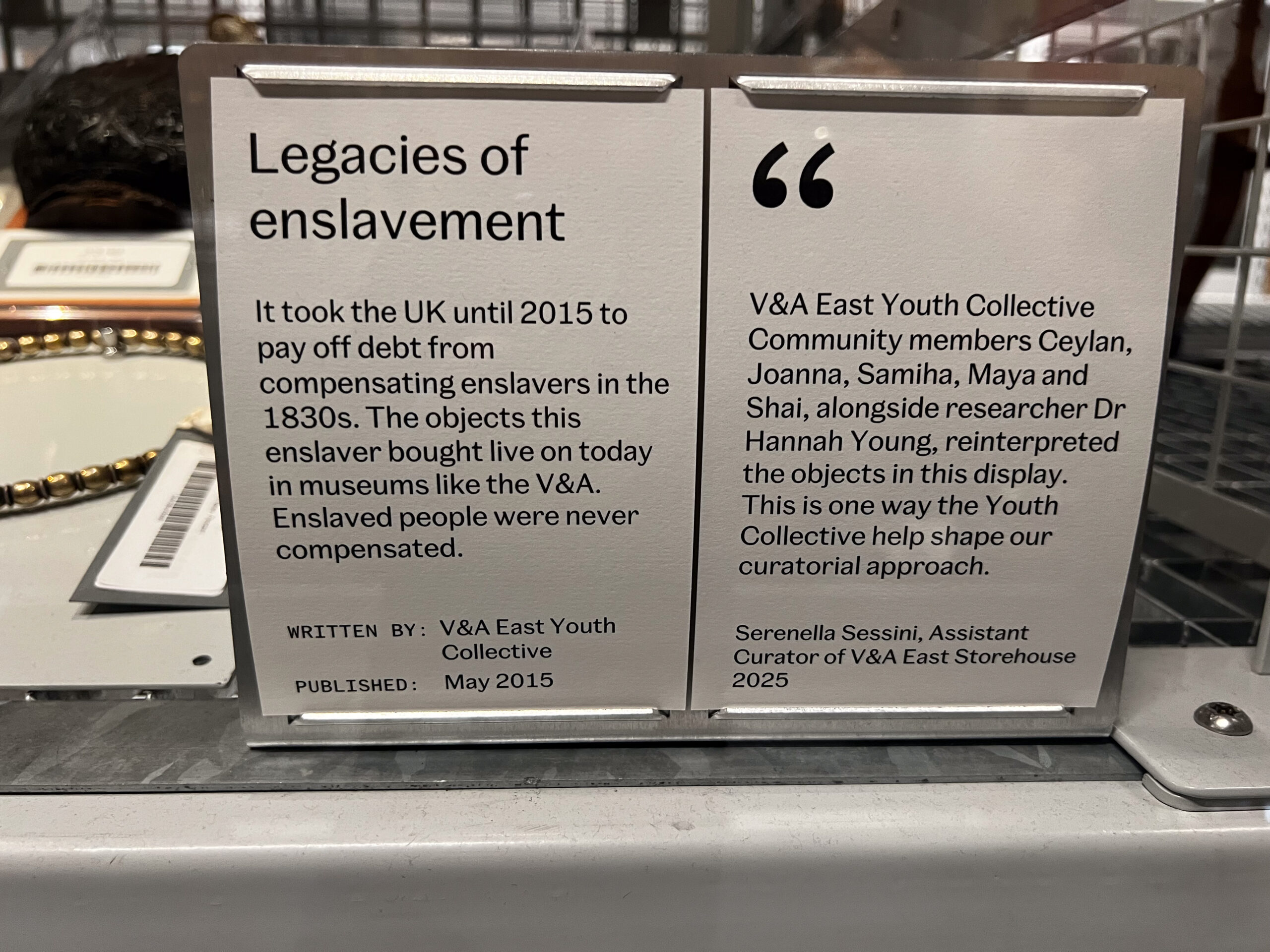
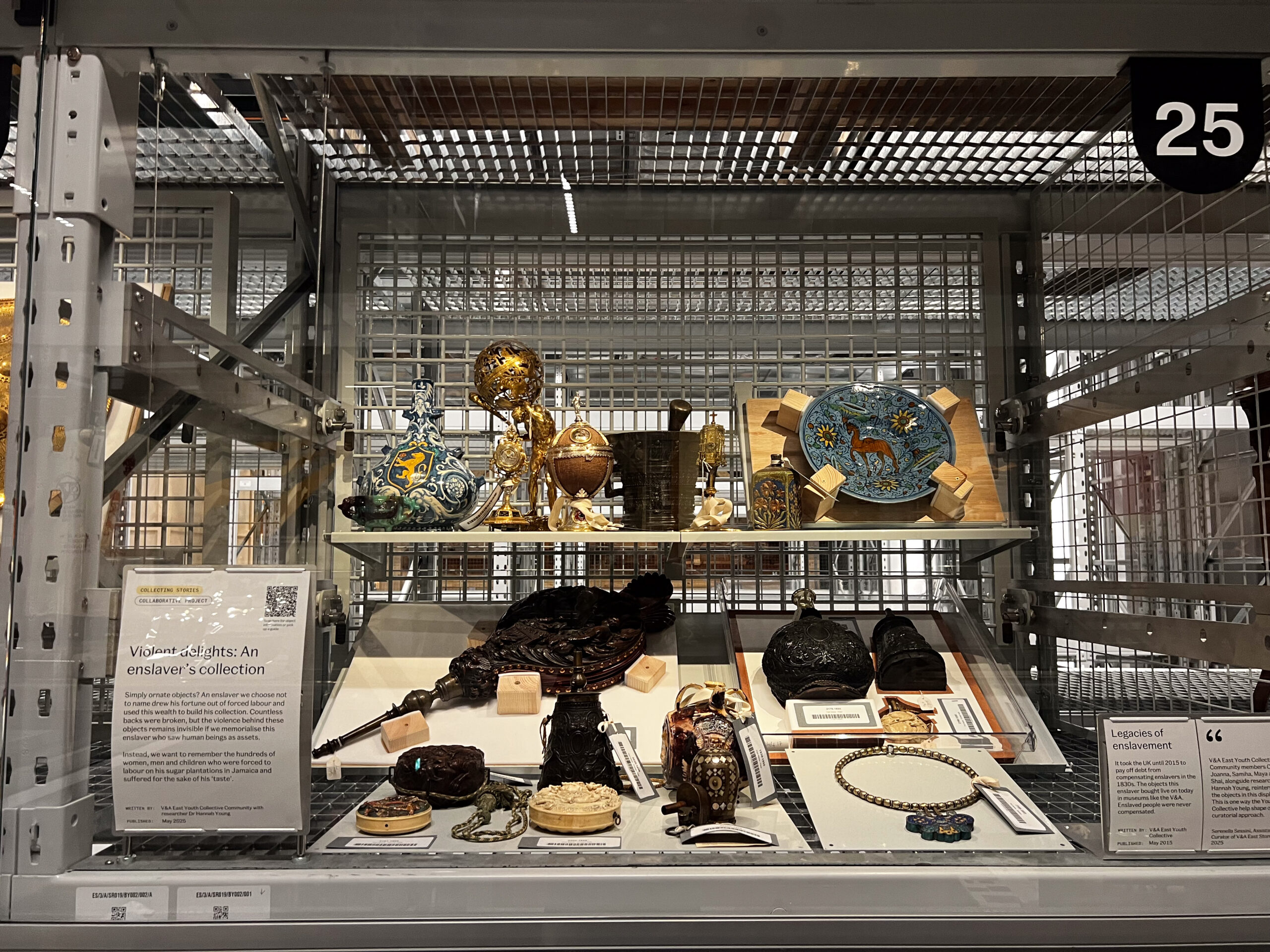
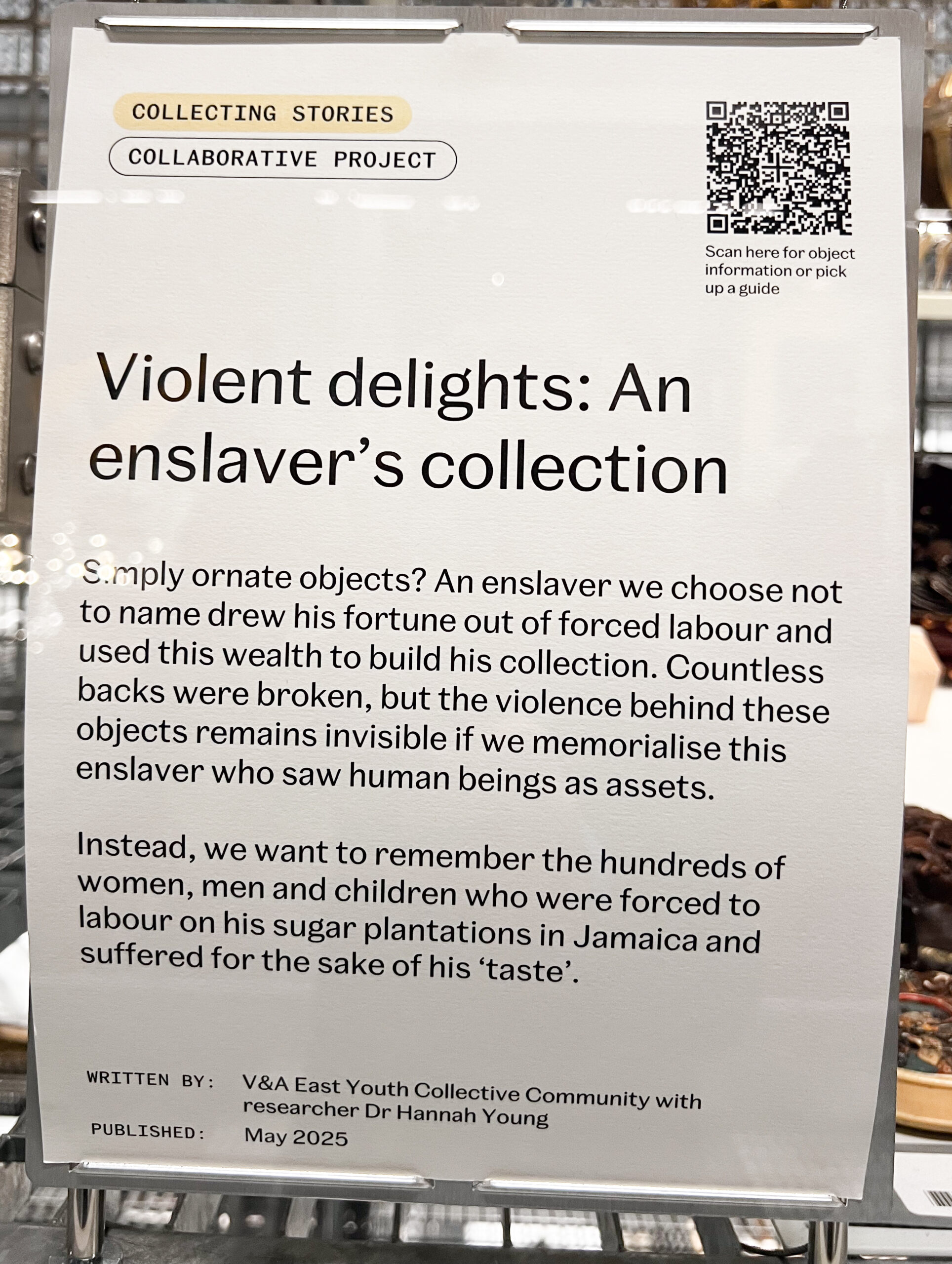
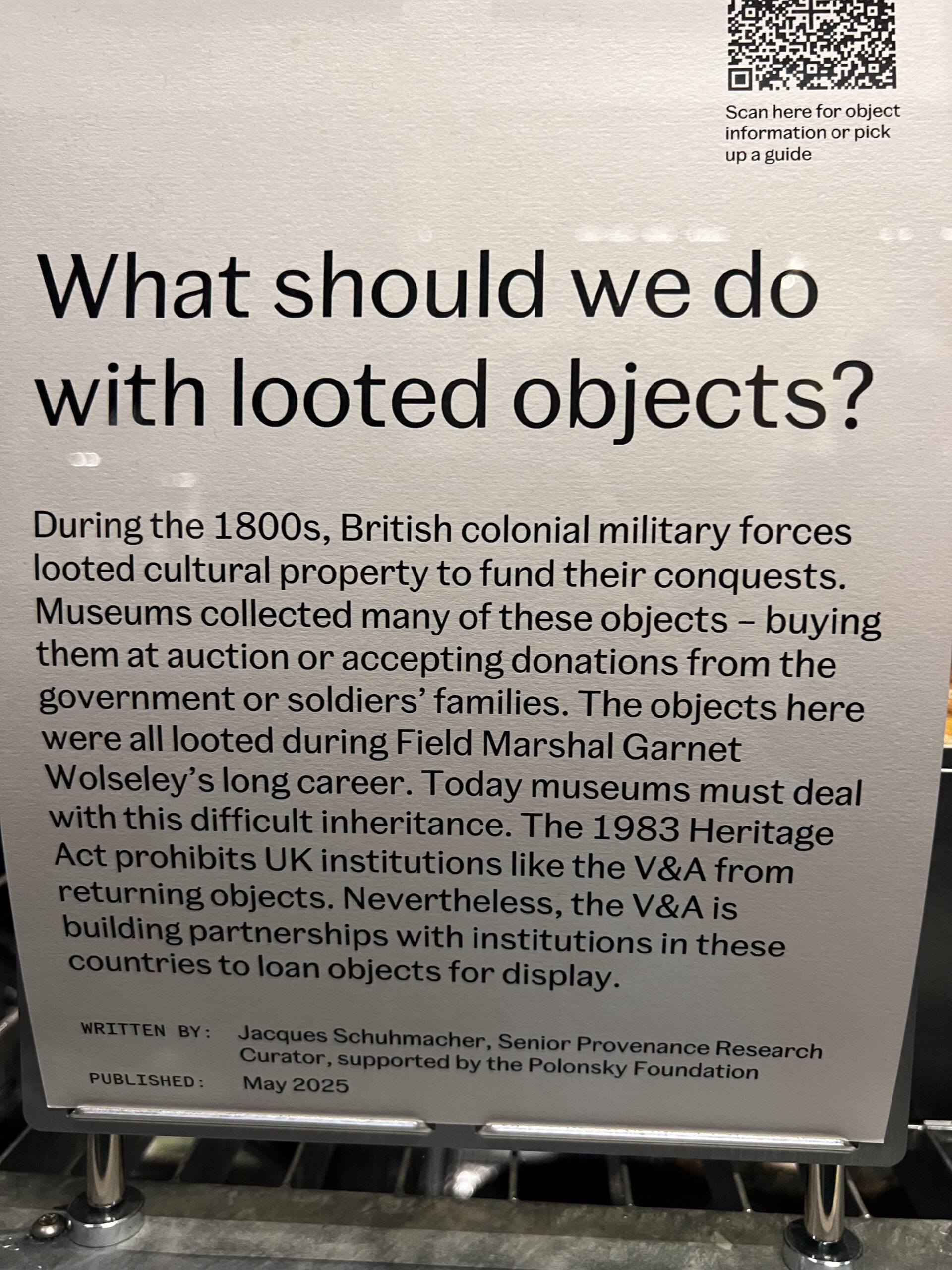
- plaques addressing the looted objects and objects acquired by the owners through profits made on the backs of slaves
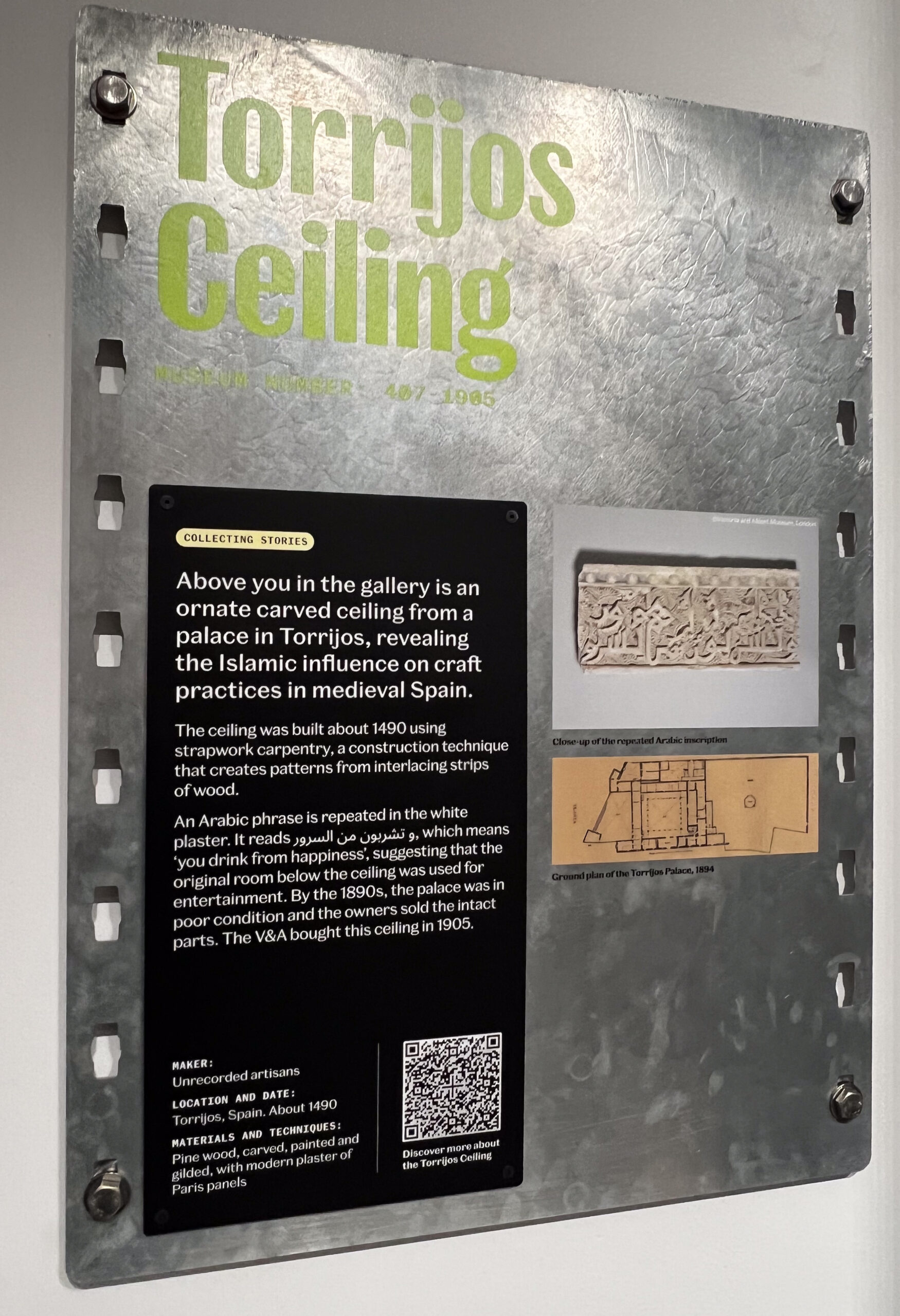
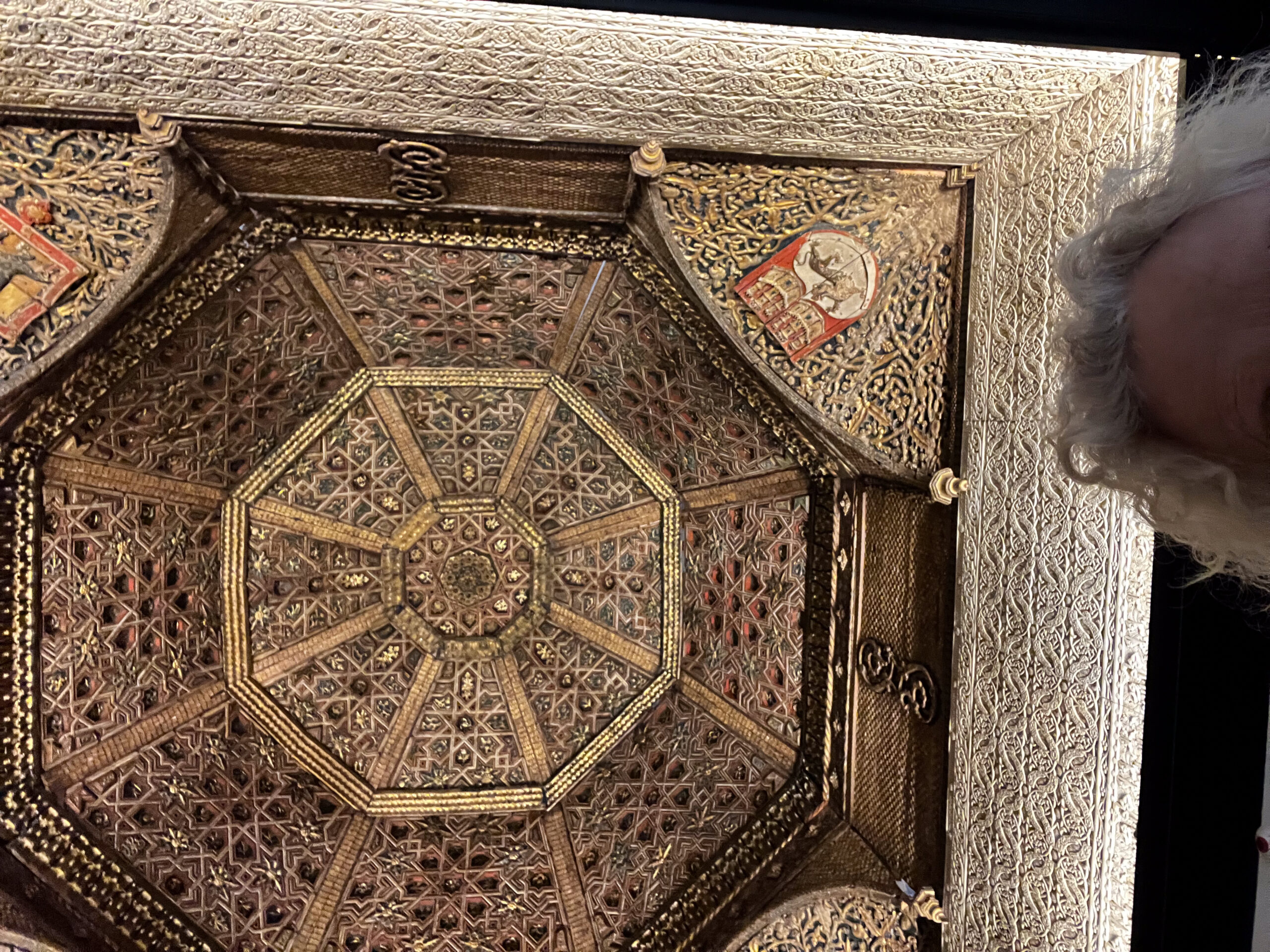
- the massive Torrijo Ceiling
- an entire Frankfurt kitchen
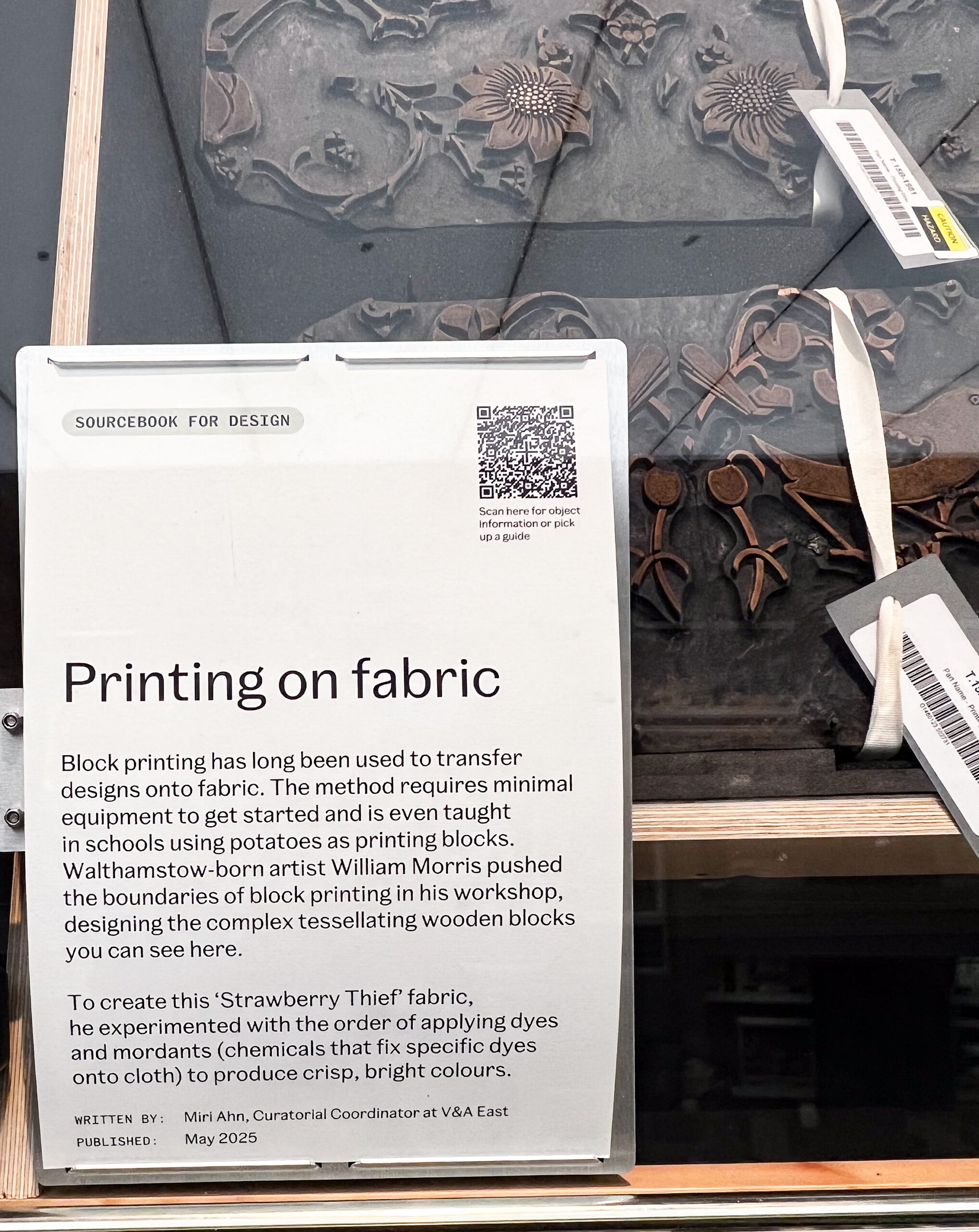
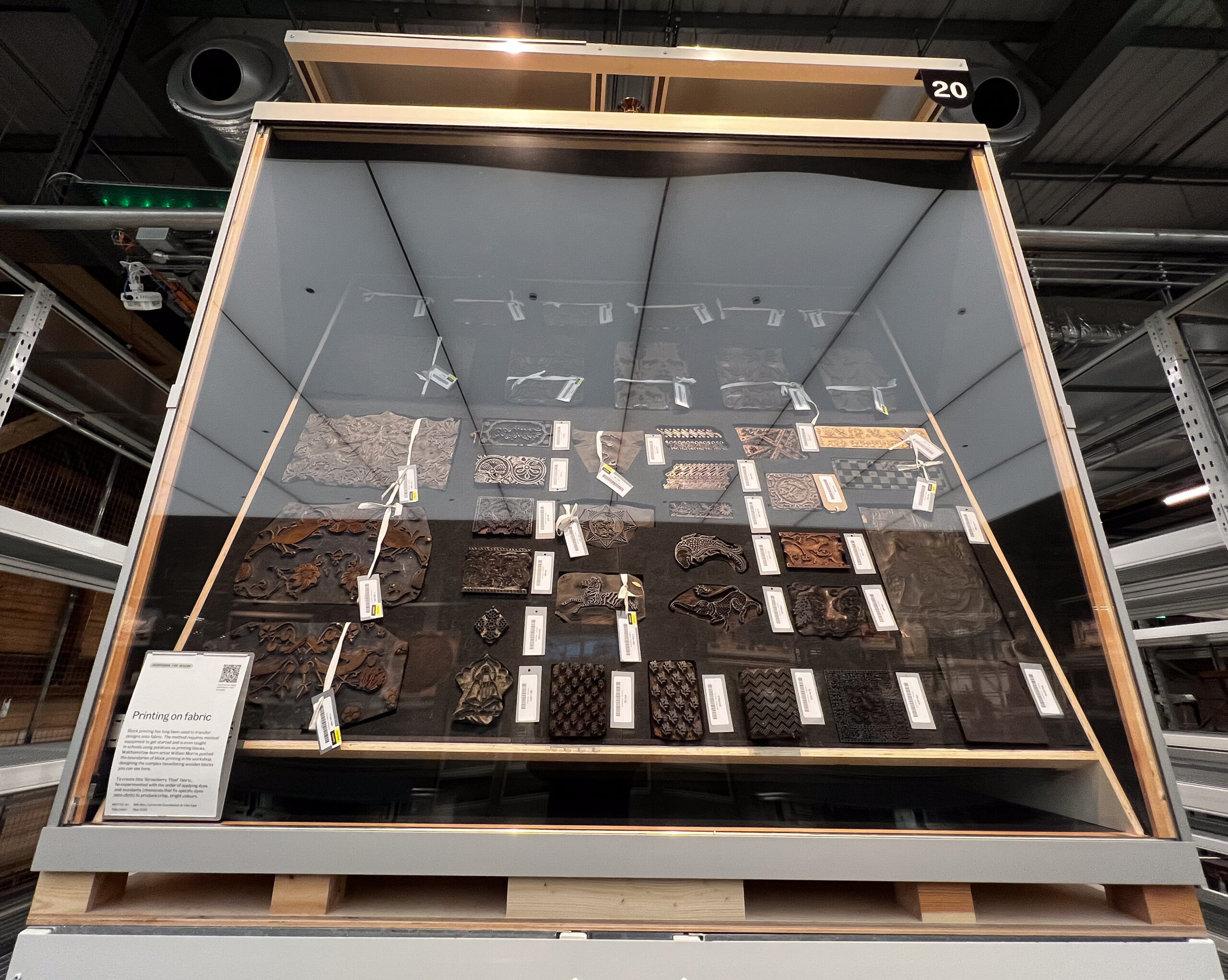
- William Morris’s typeset blocks and letters, and
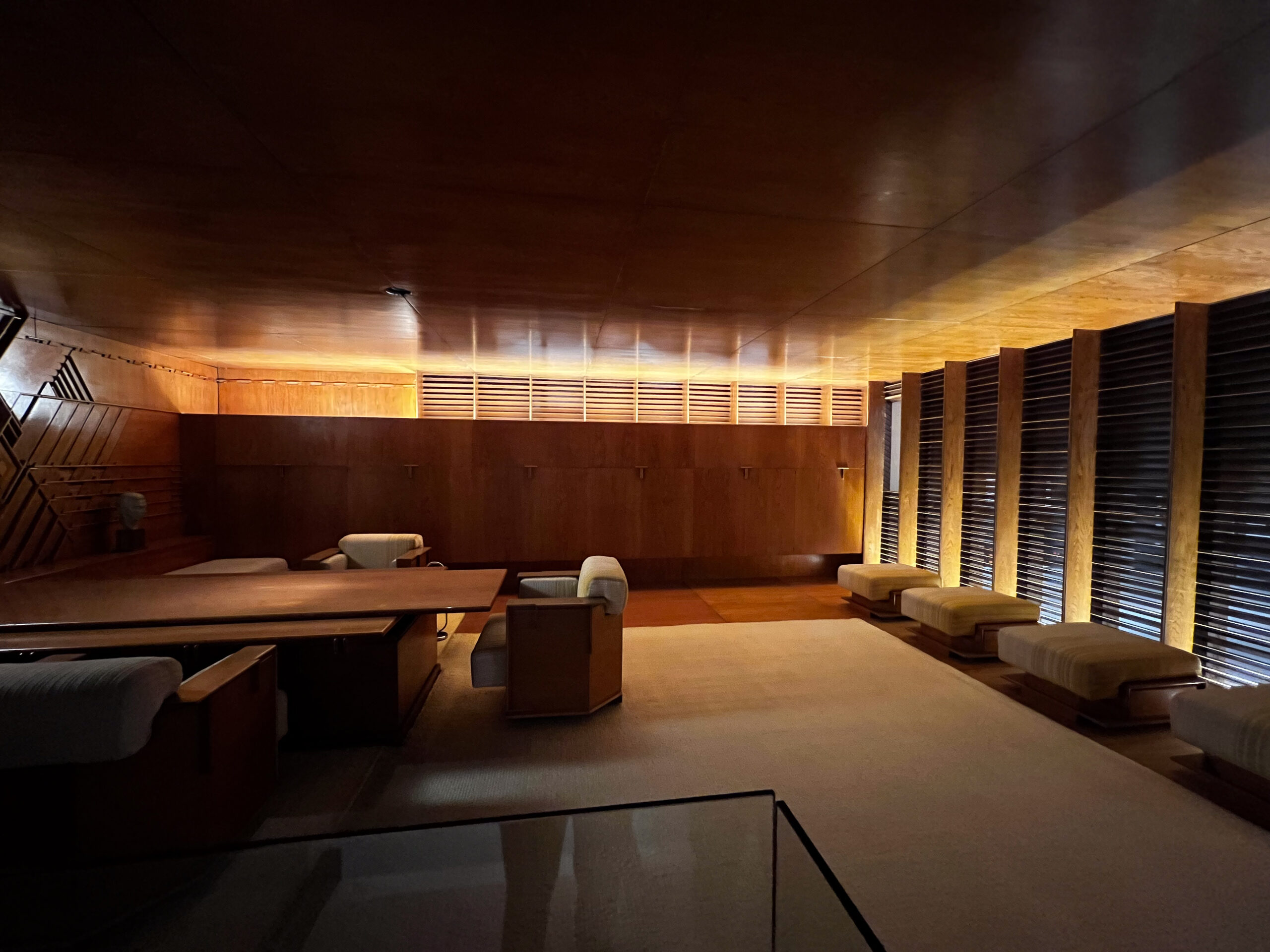
- an entire Frank Lloyd Wright office.
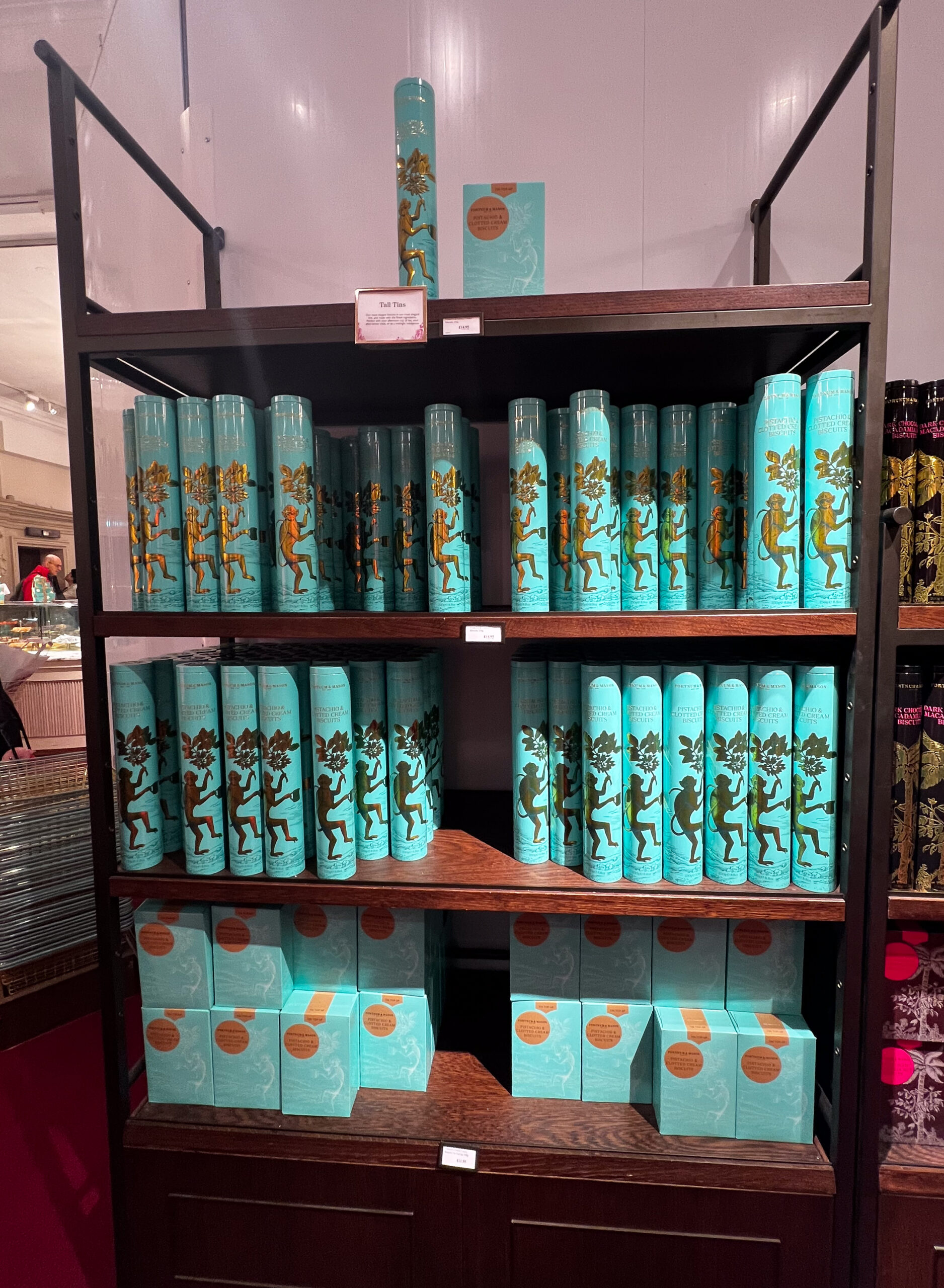
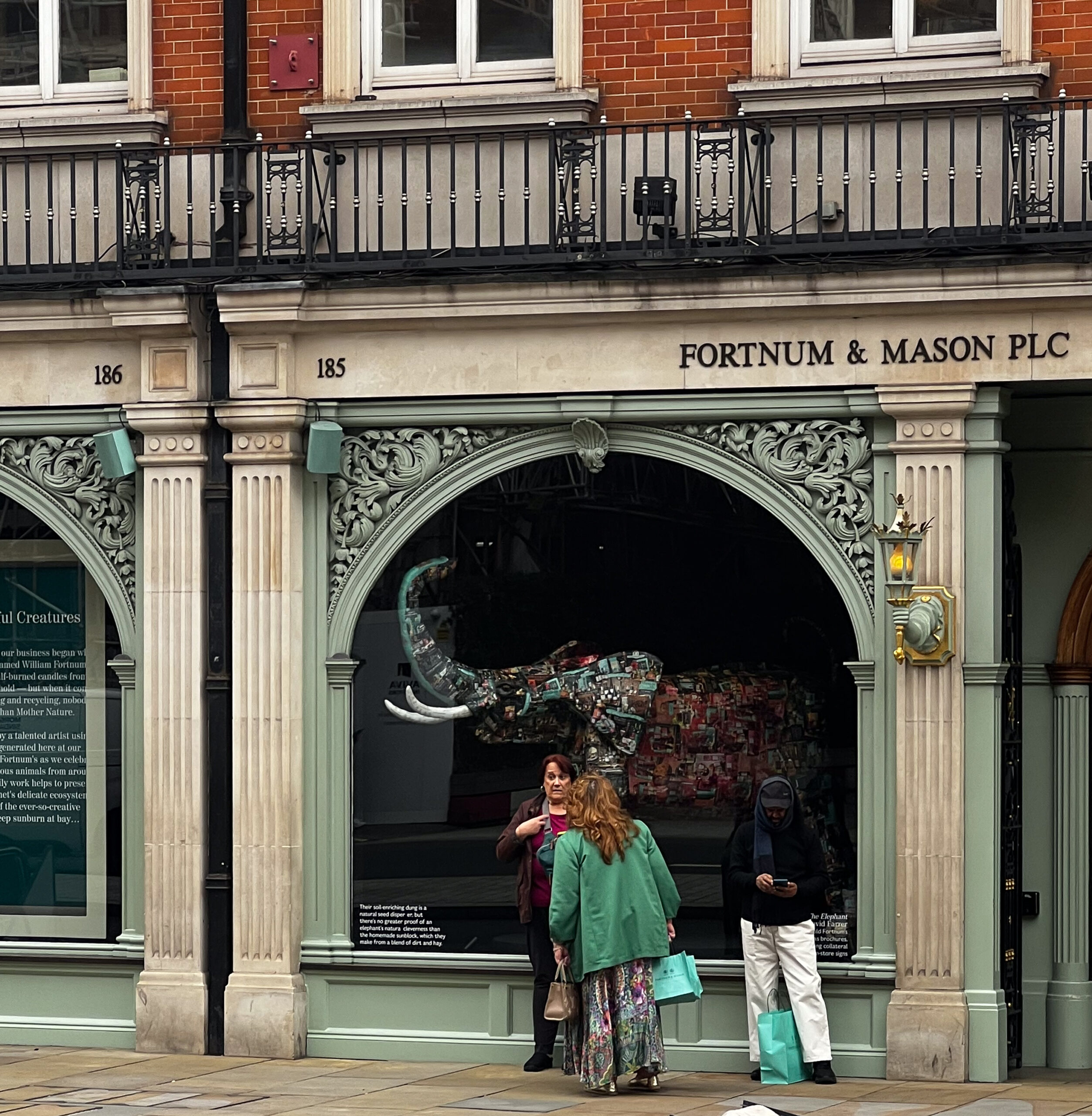
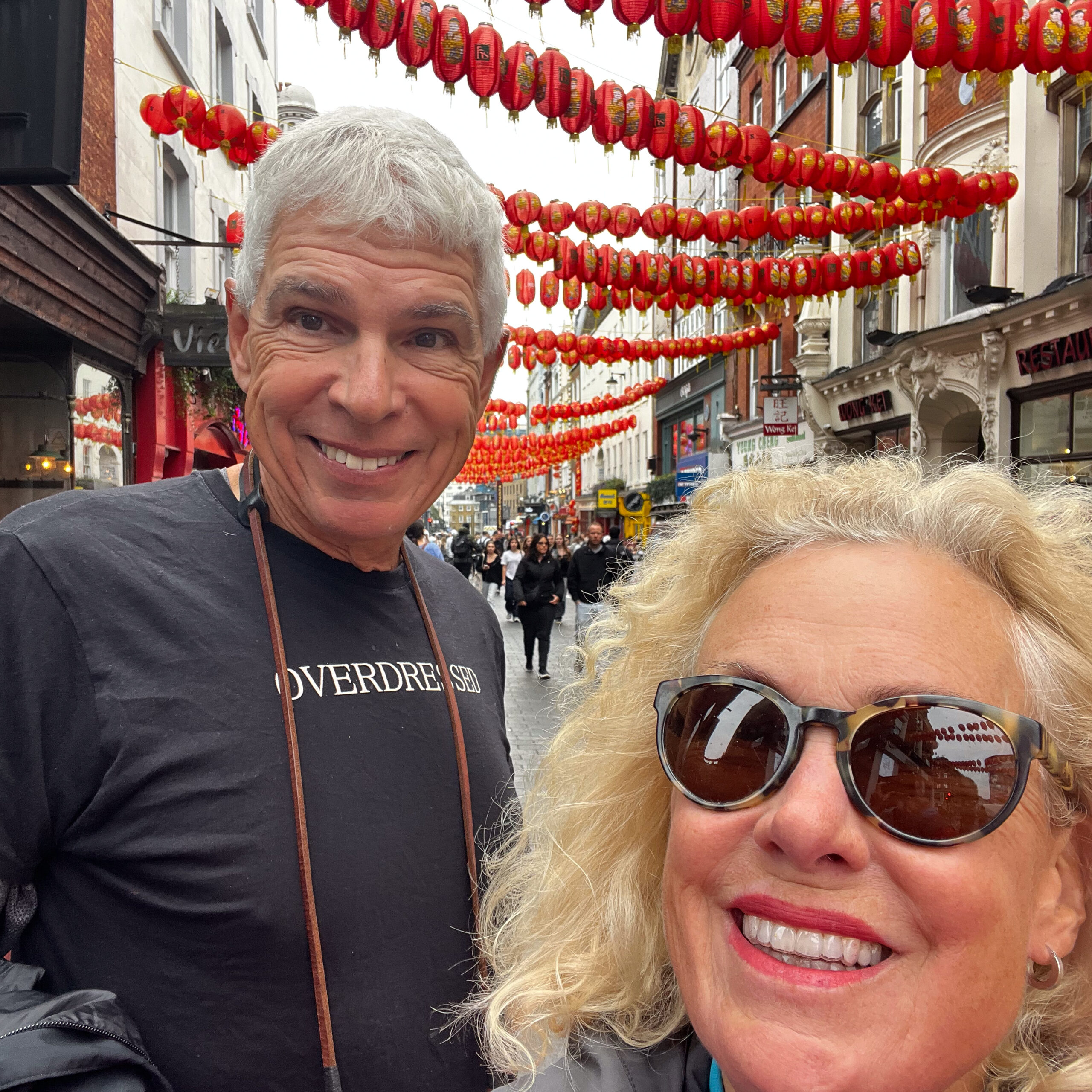
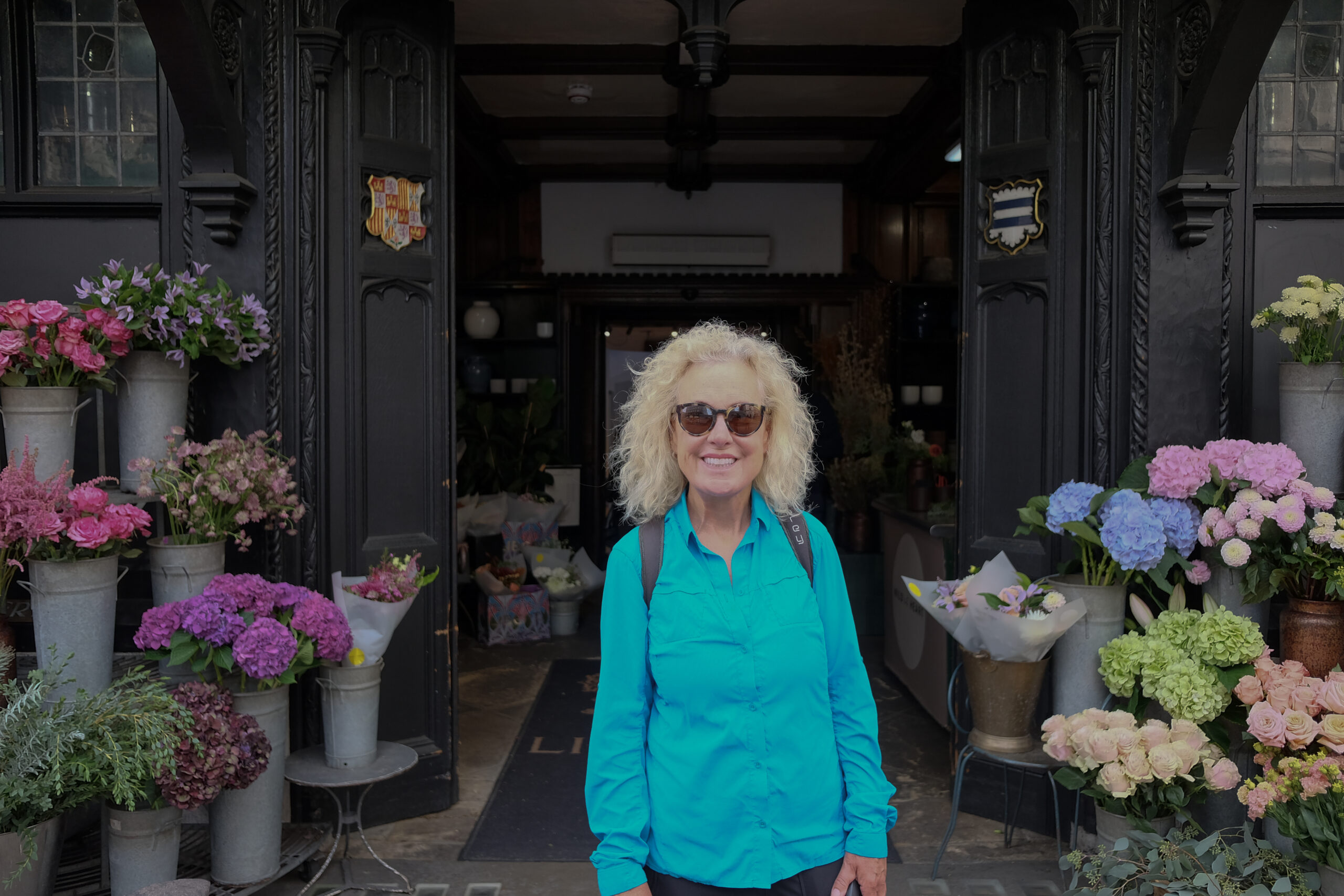
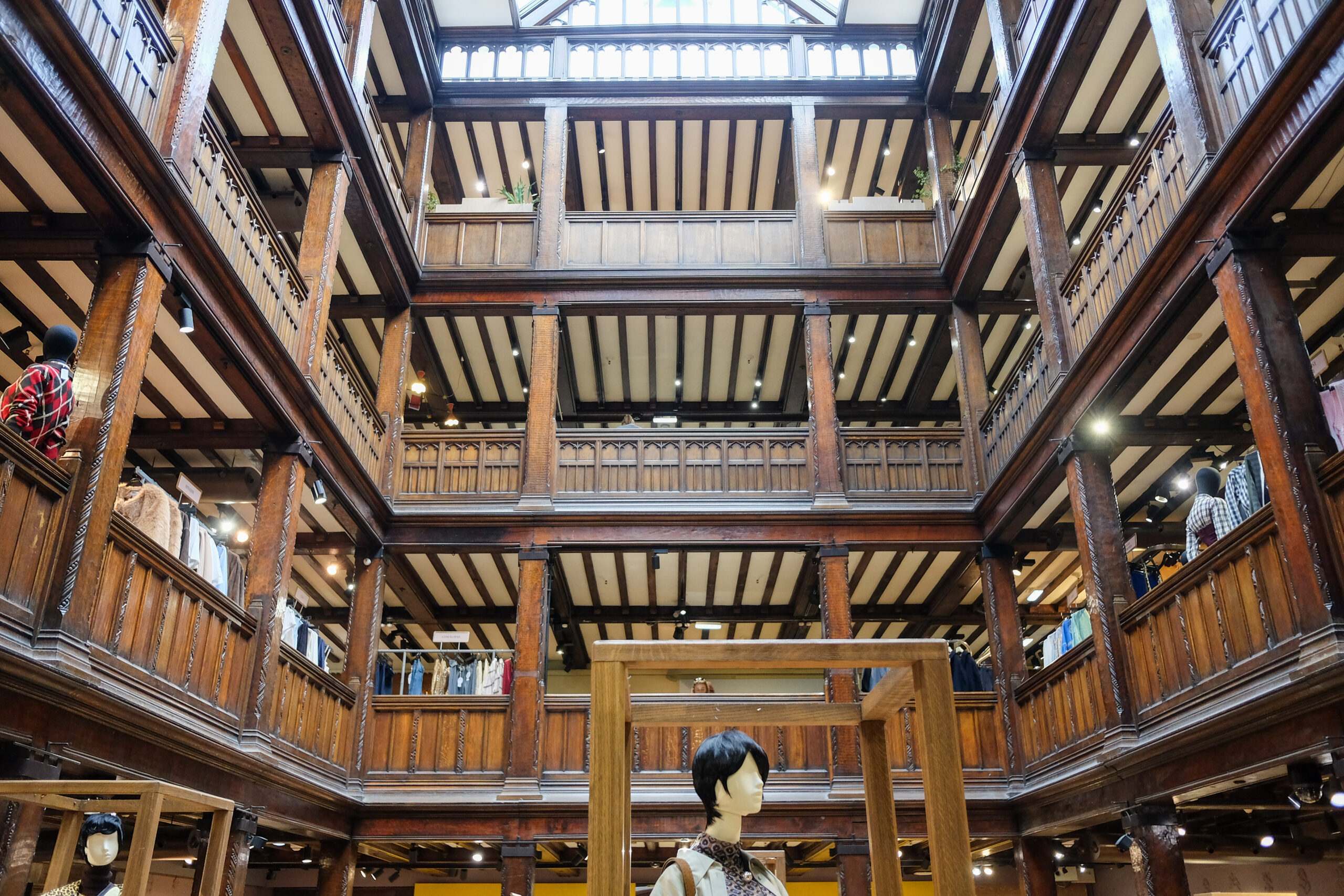
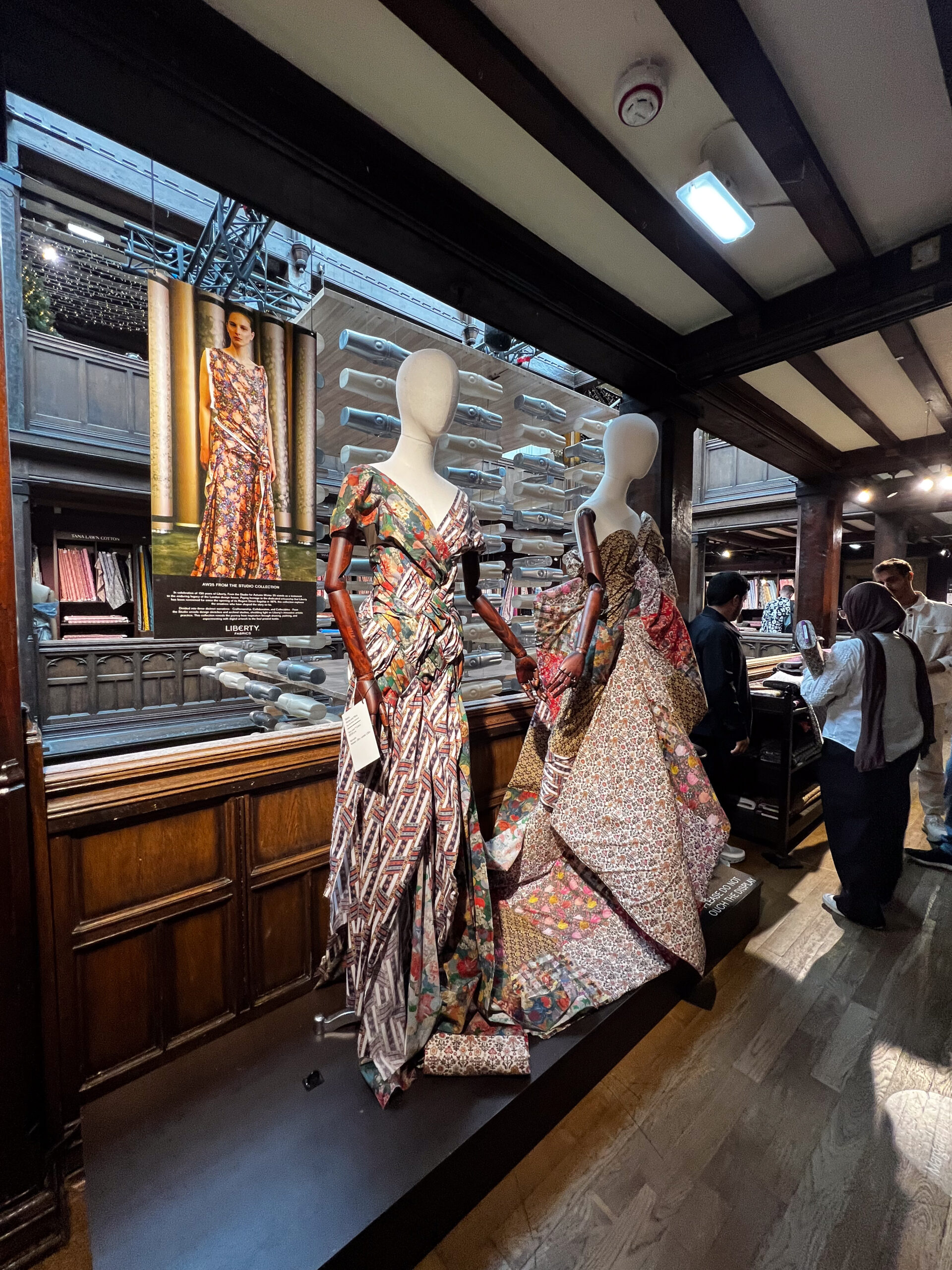
There was room in our panniers that could potentially be filled by a visit to Mayfair or Soho so we took the tube to Piccadilly Circus. We stopped in at Fortnum & Mason where we resisted gorgeously packaged ($40) canisters of cookies. We visited another British institution, Liberty of London, where I remembered, I don’t actually like buying, I just like looking. So, we moved on. Poor, long-suffering John. He just shrugs his shoulders. He has seen this before…
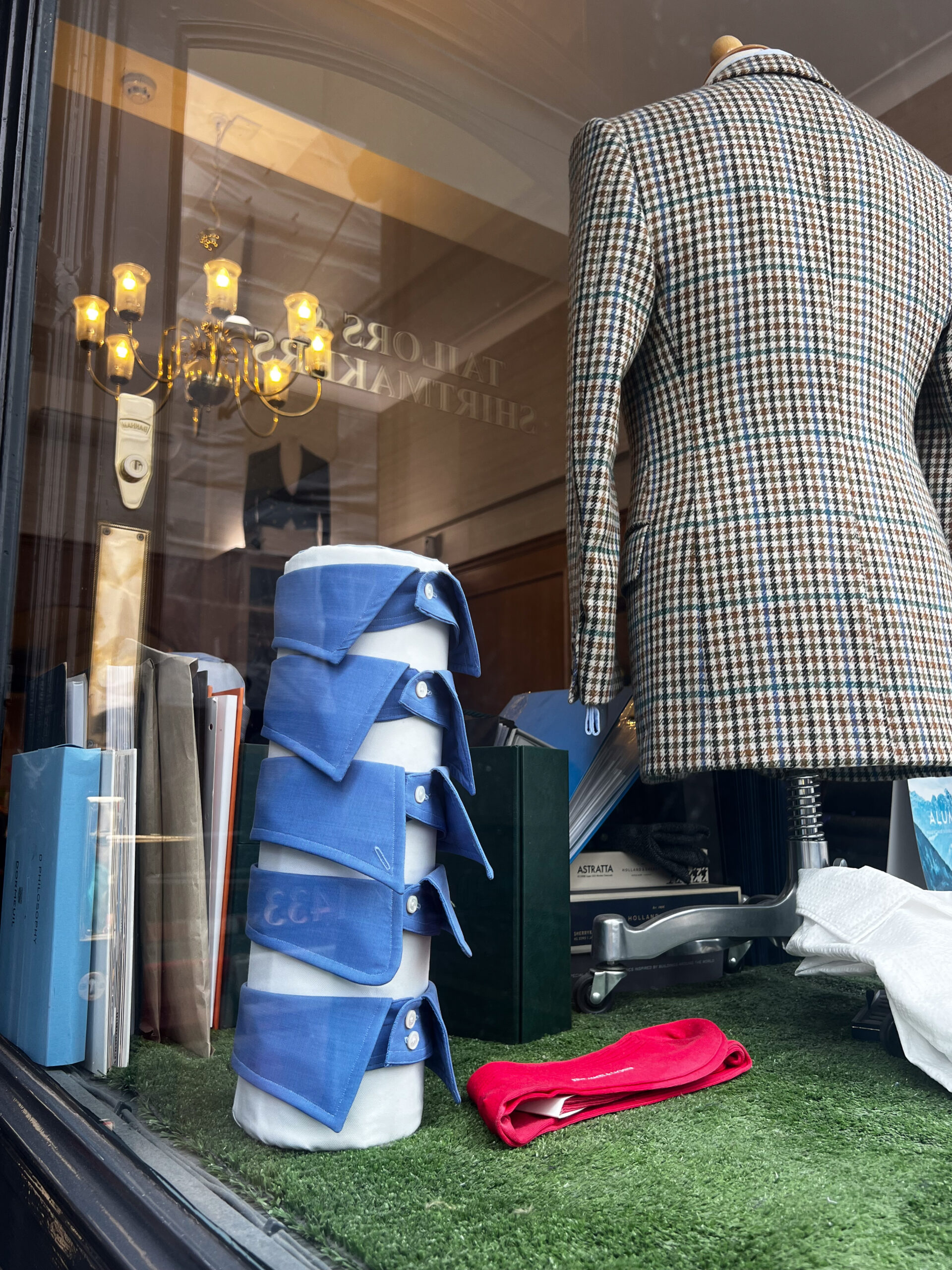
We passed by some beautiful, bespoke menswear tailors. I never knew there were so many types of collars. We left the whole retail area unscathed, wallet-wise.
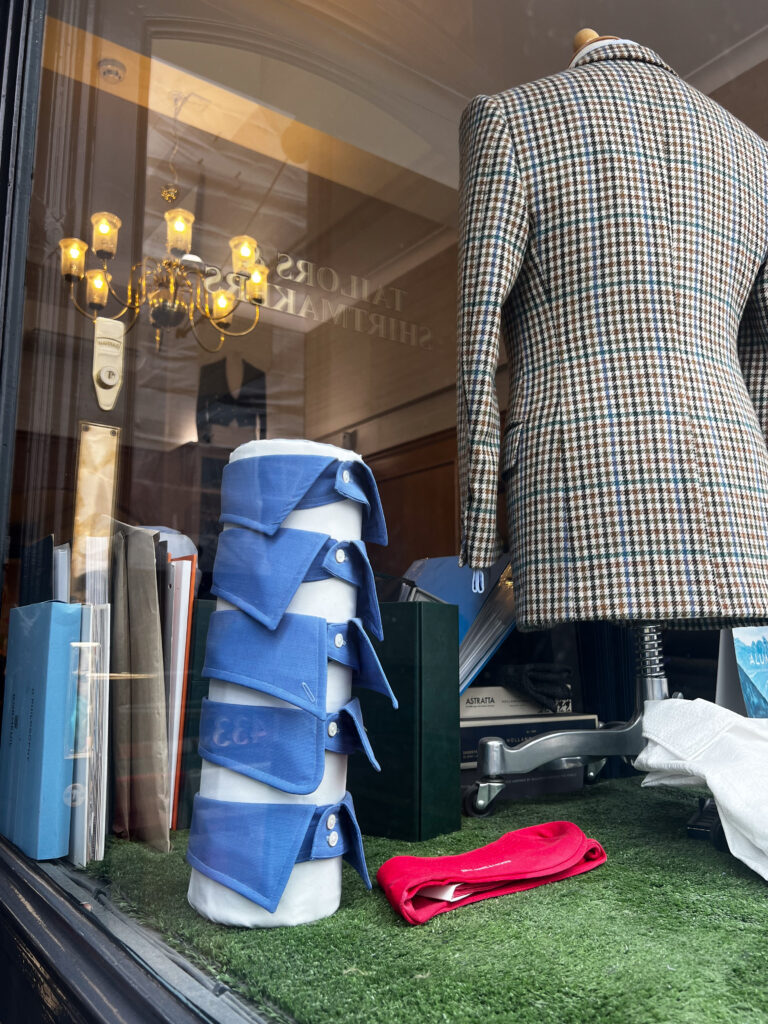
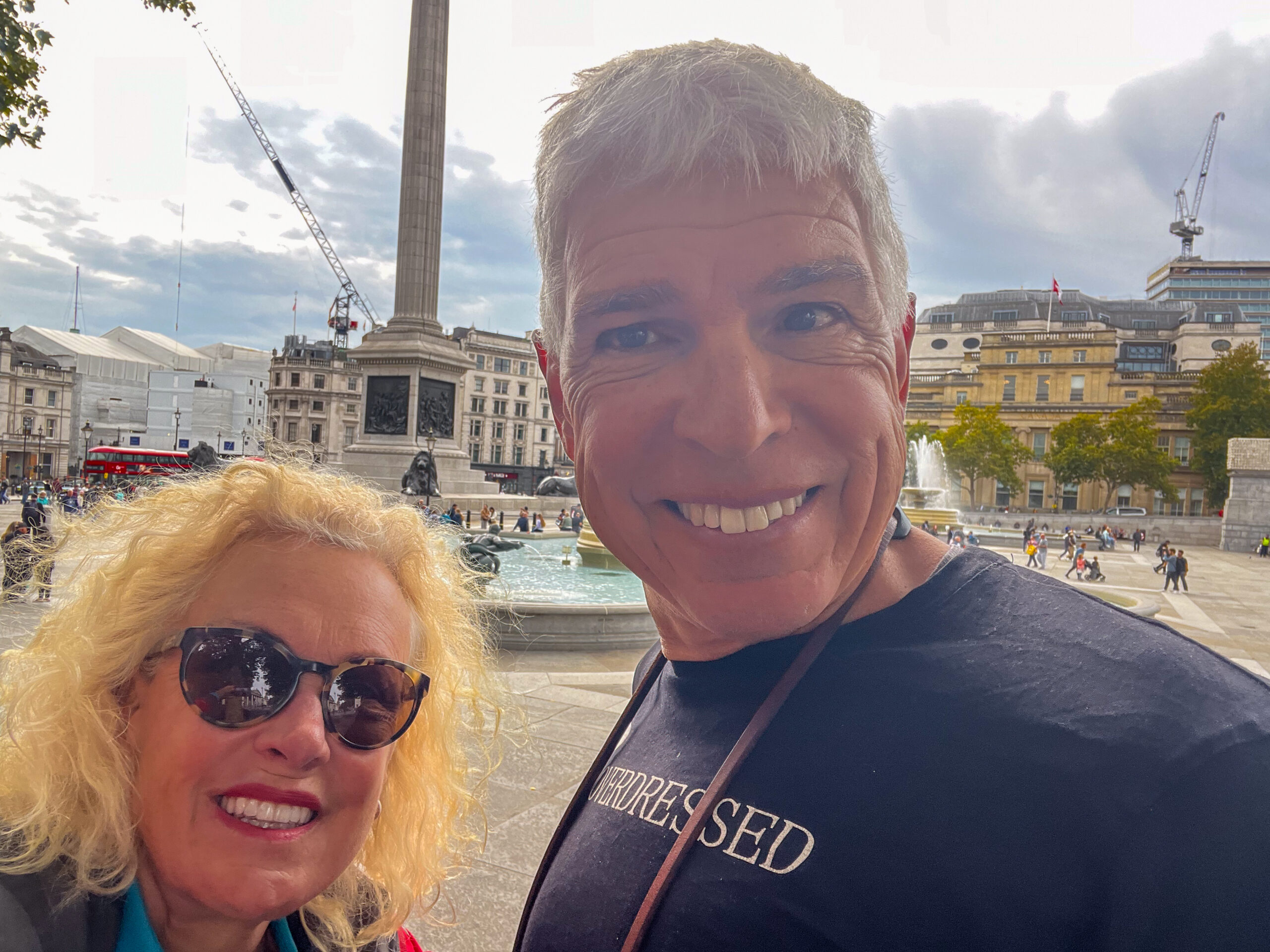
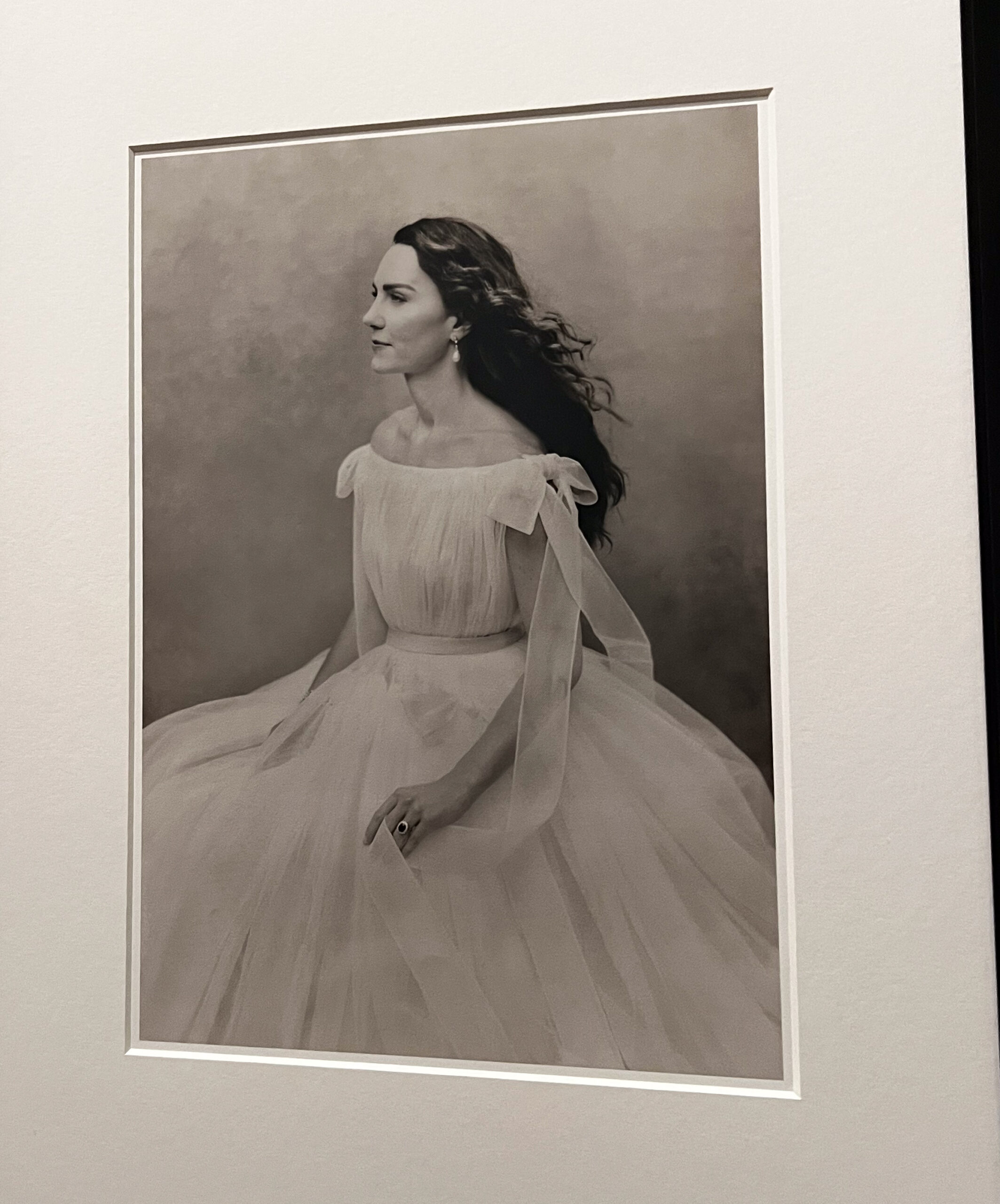
We decided that rather than go back to the hotel to put in time until our show (The Lady from the Sea), we’d just explore, so we headed south toward the Thames and …. boom… there was the National Portrait Gallery. I was thrilled, because the last time I tried to visit it, it was closed.
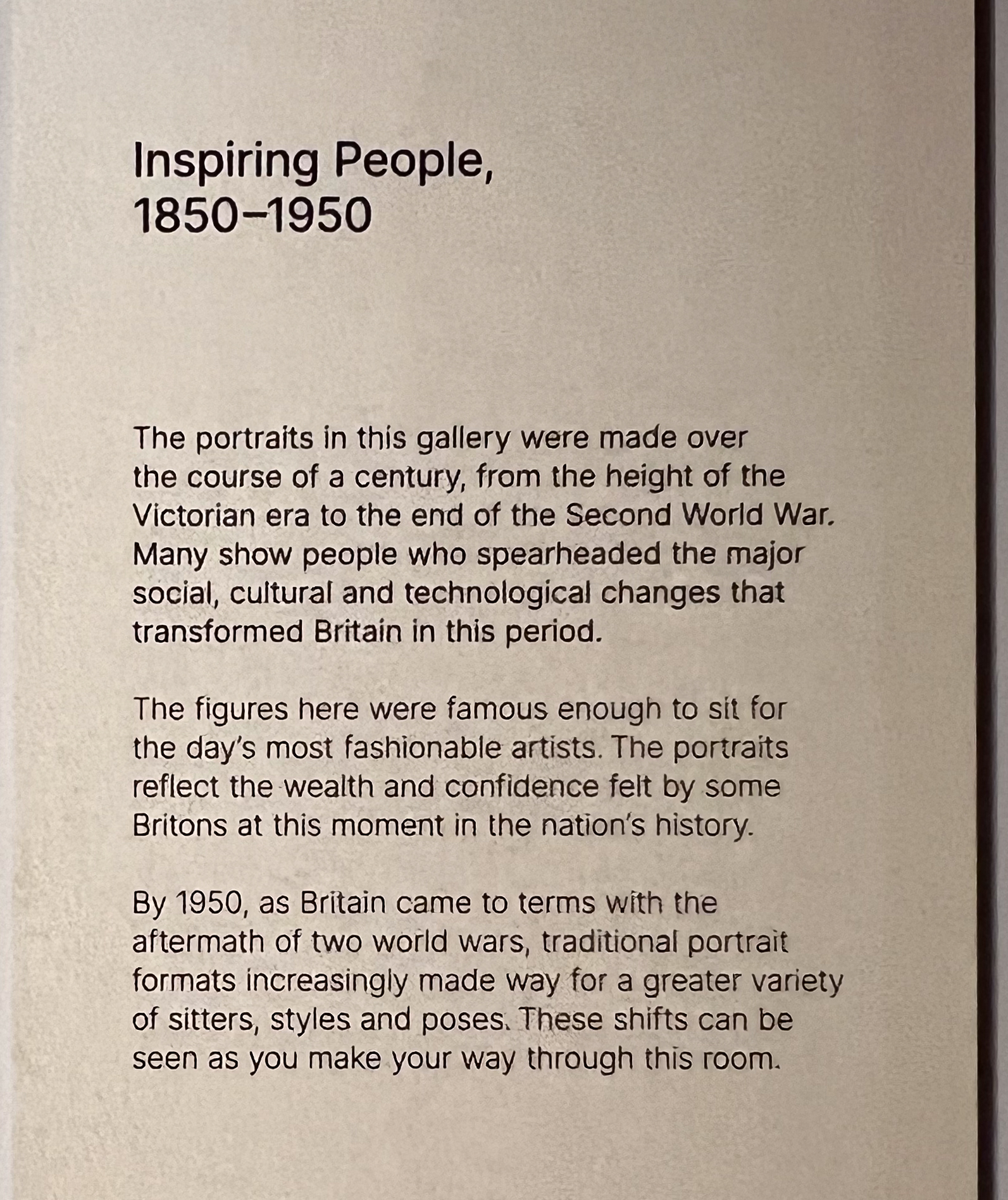
London’s National Portrait Gallery reopened on June 22, 2023 after a three-year closure for its “Inspiring People” refurbishment project. The extensive redevelopment project included refurbishing the building, creating a new entrance, establishing a learning center, and completely re-displaying the gallery’s collection of over 1,100 portraits. We were both blown away by the thoughtful curatorship in the Inspiring People gallery that we viewed. We only saw the 1850-1950 gallery, there are more.
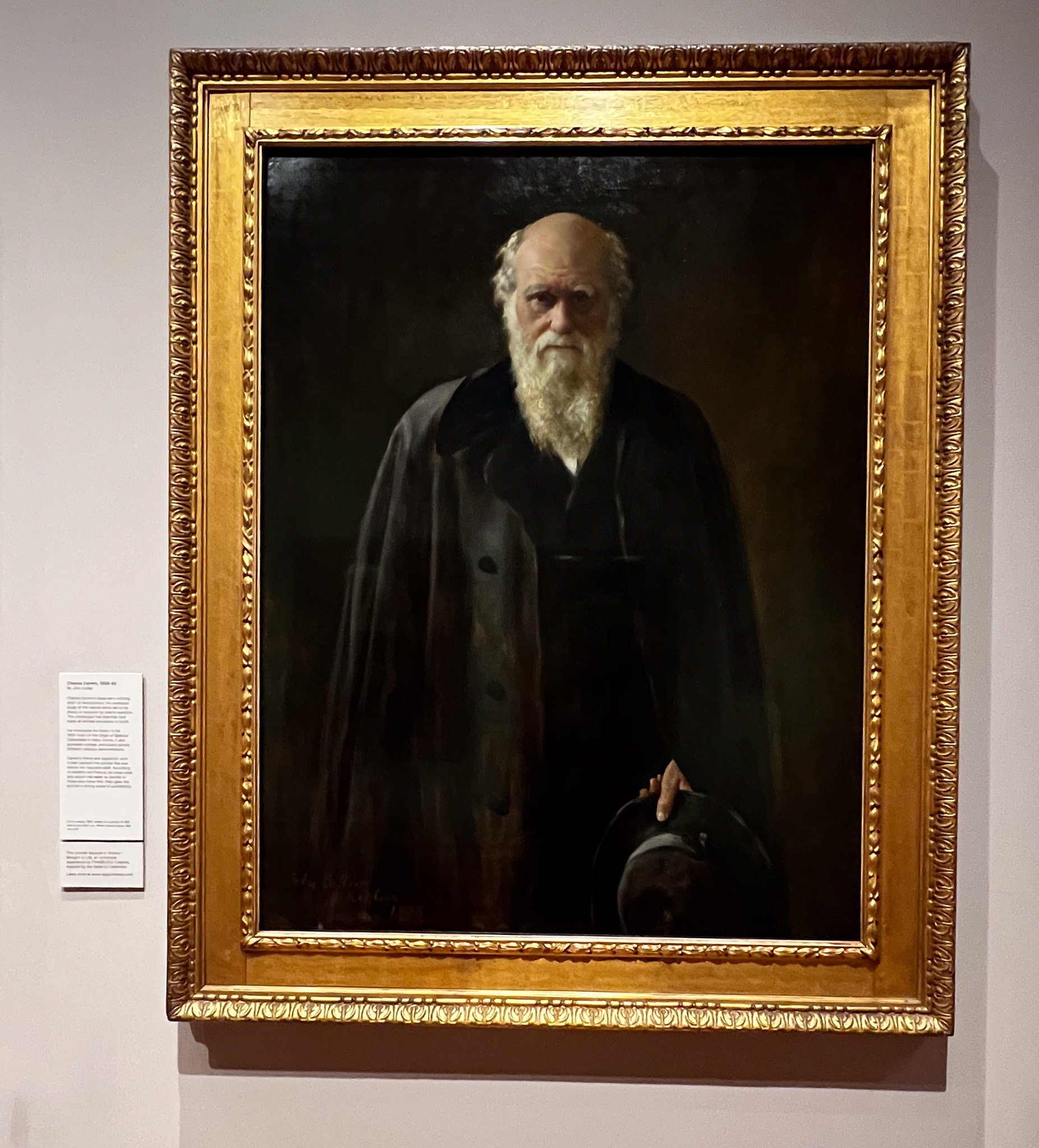
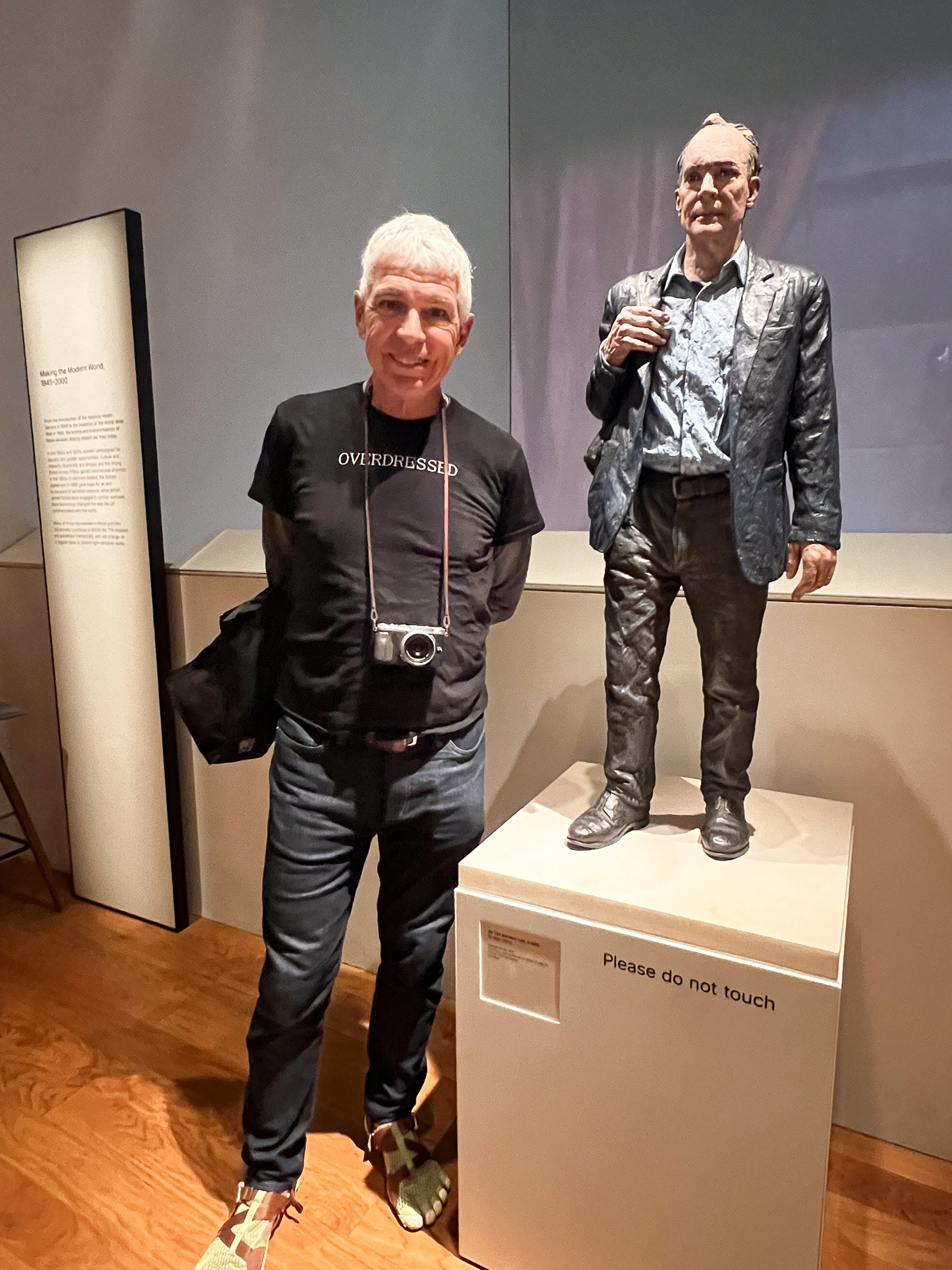
Highlights of our National Portrait Gallery visit (see photos in the gallery at the bottom of the page):
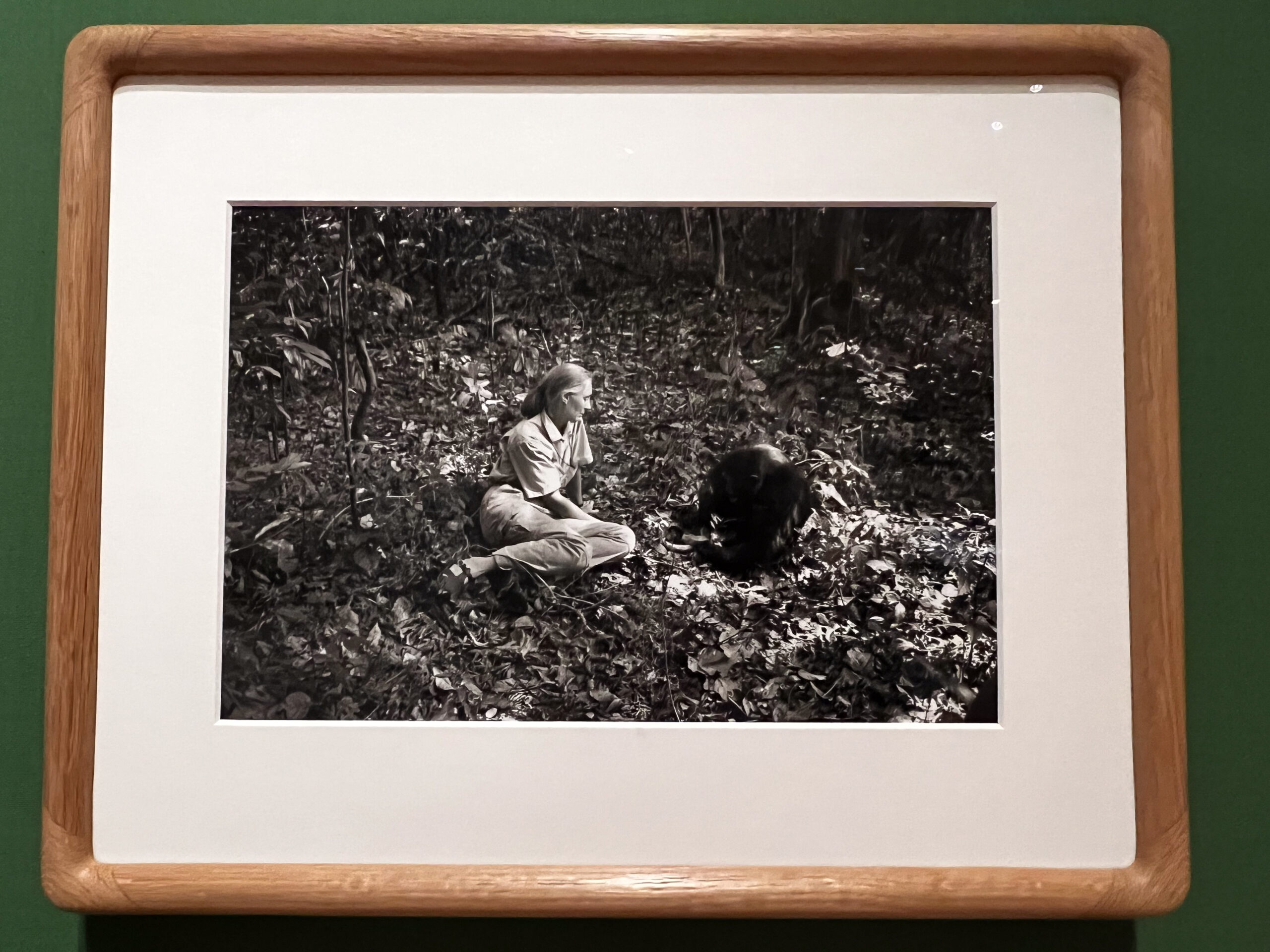
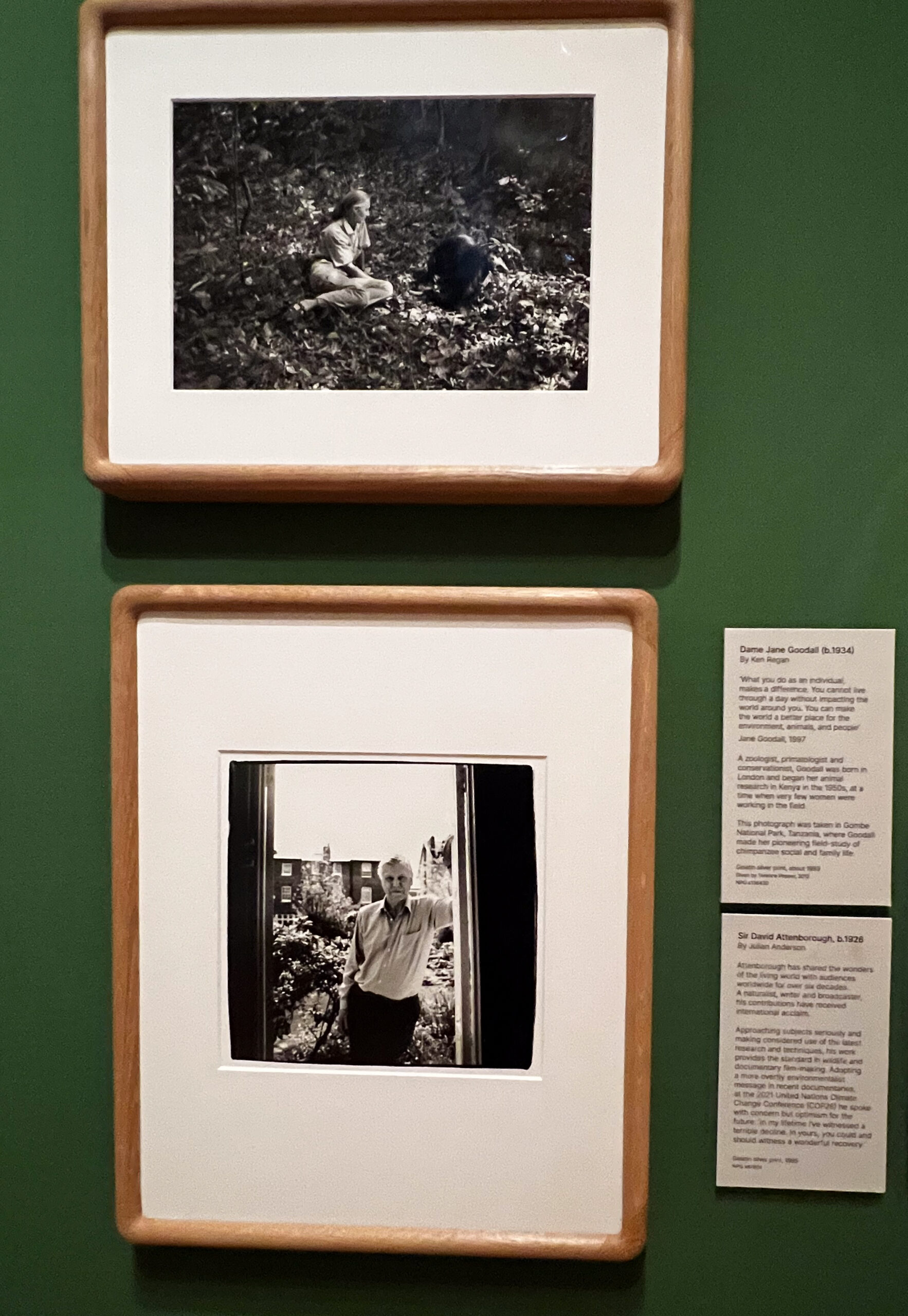
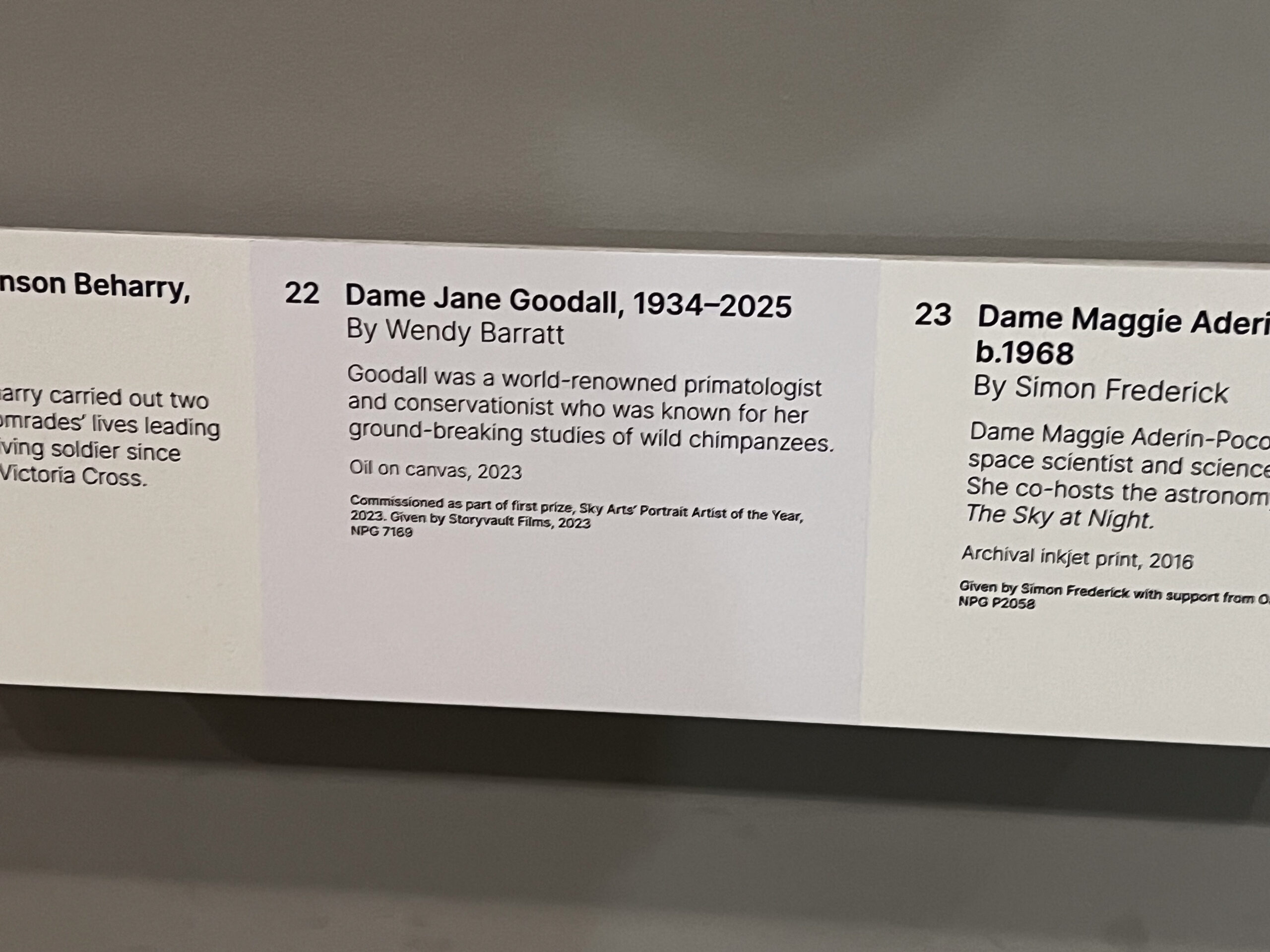
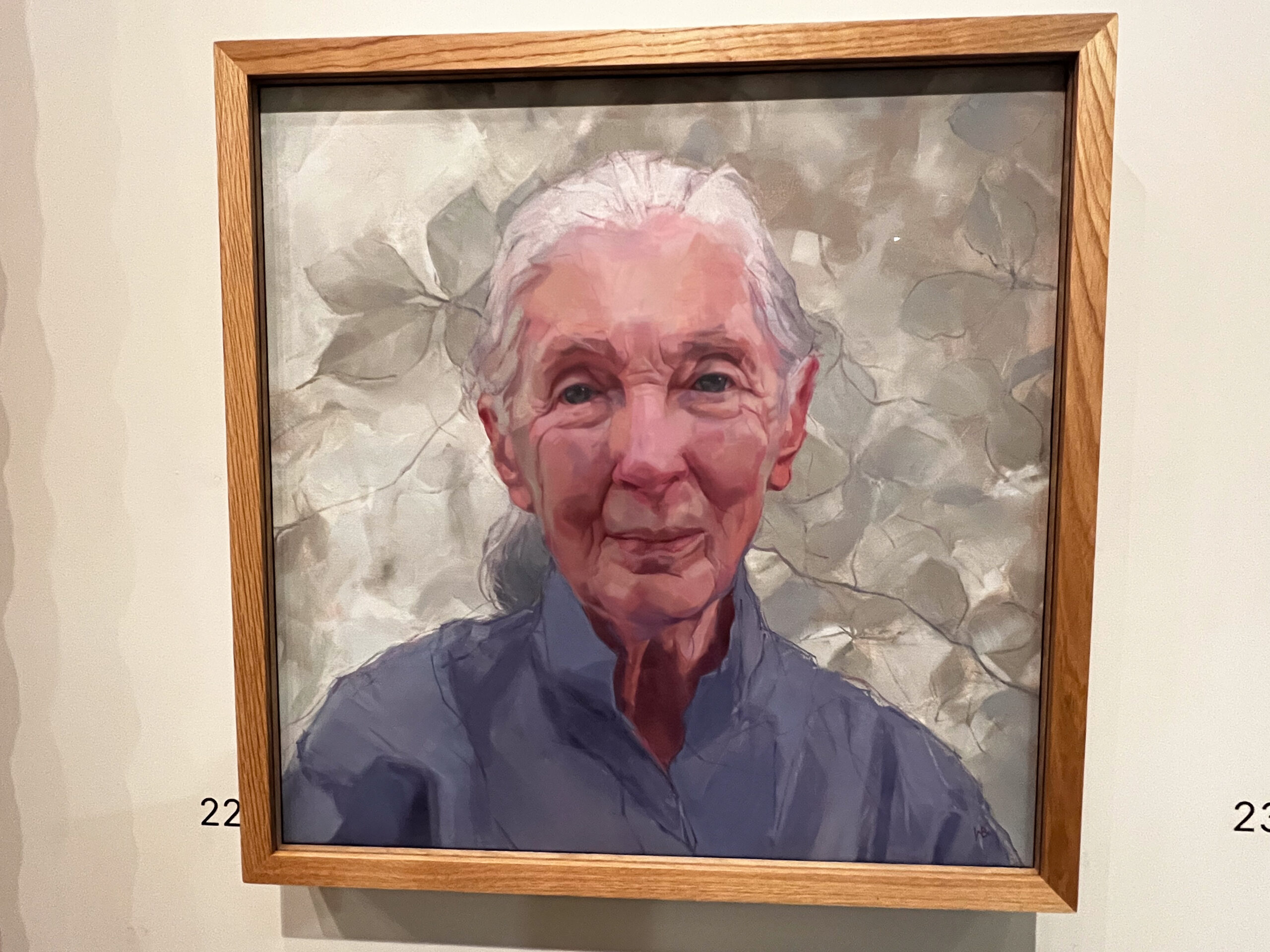
- Jane Goodall (who had just died the day before, but already they had changed the dates on the card beside her photograph – British efficiency)
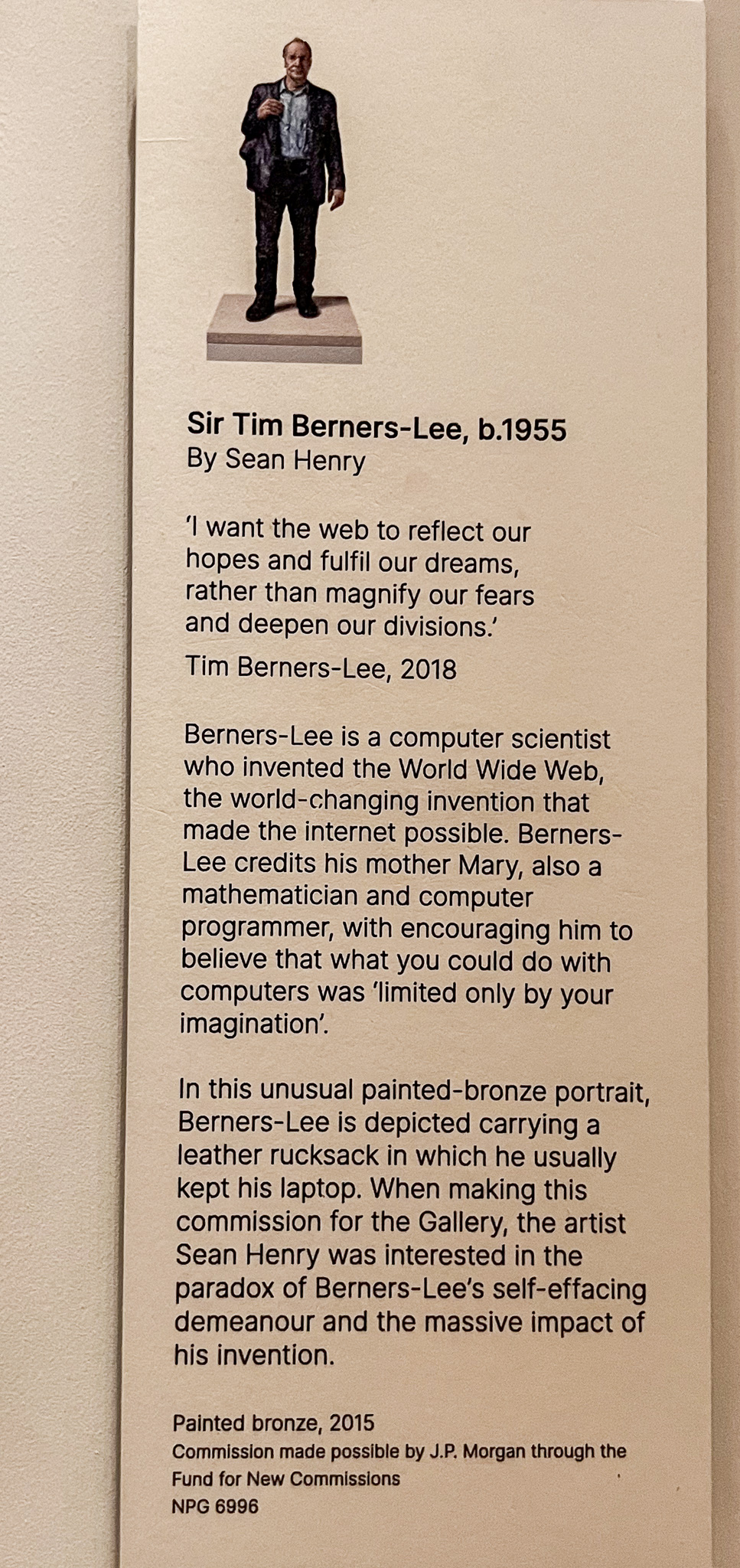
- Sir Tim Berners-Lee (inventor of the WWW), whose portrait stood, strategically, just opposite the arresting painting of …
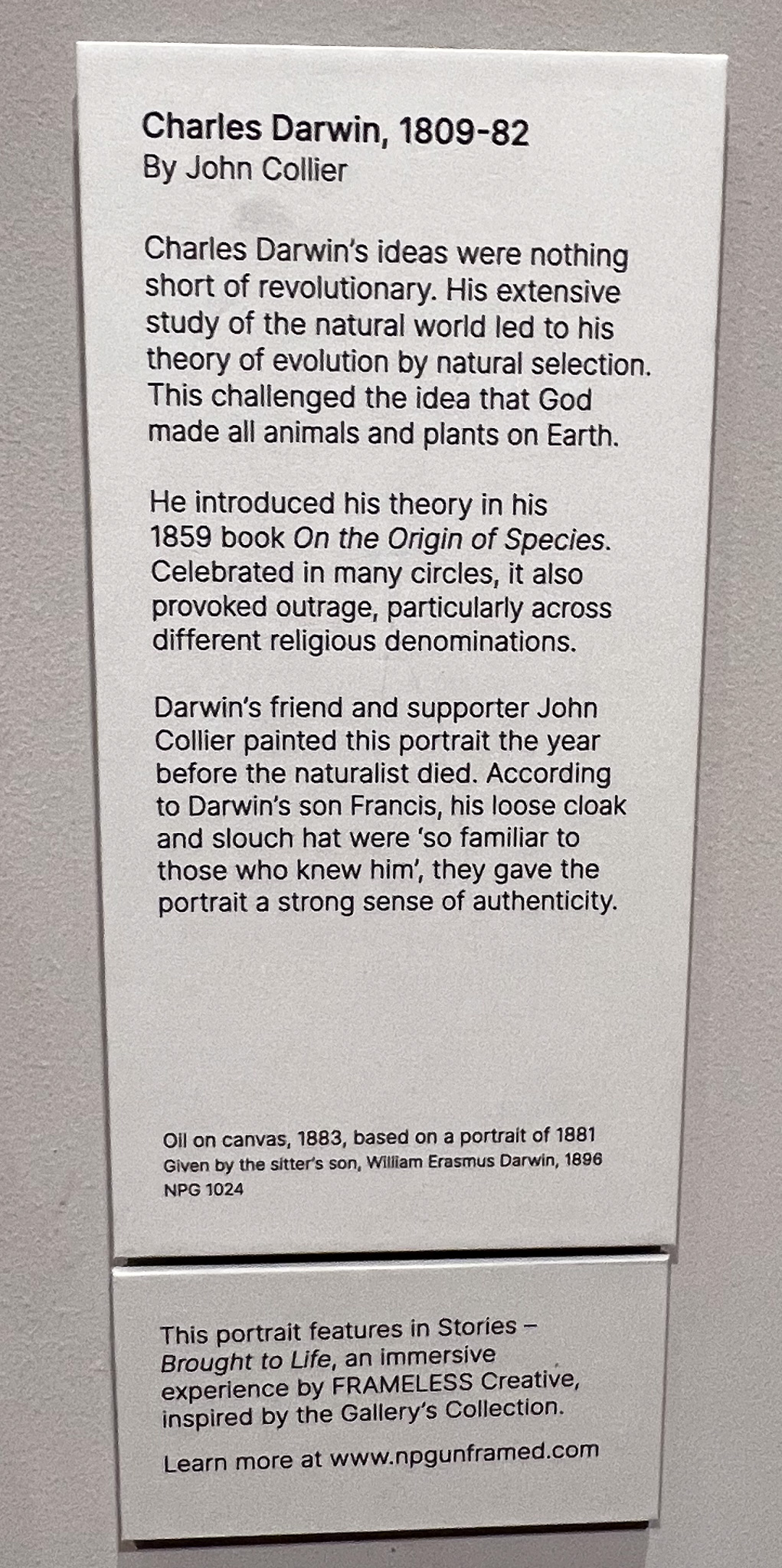
- Charles Darwin.
Walking south again, we crossed the Thames on the “Charing Cross Bridge”, specifically the Hungerford Bridge, a railway bridge. The railway line from the bridge leads into Charing Cross station. It is flanked by two newer pedestrian bridges known as the Golden Jubilee Bridges.
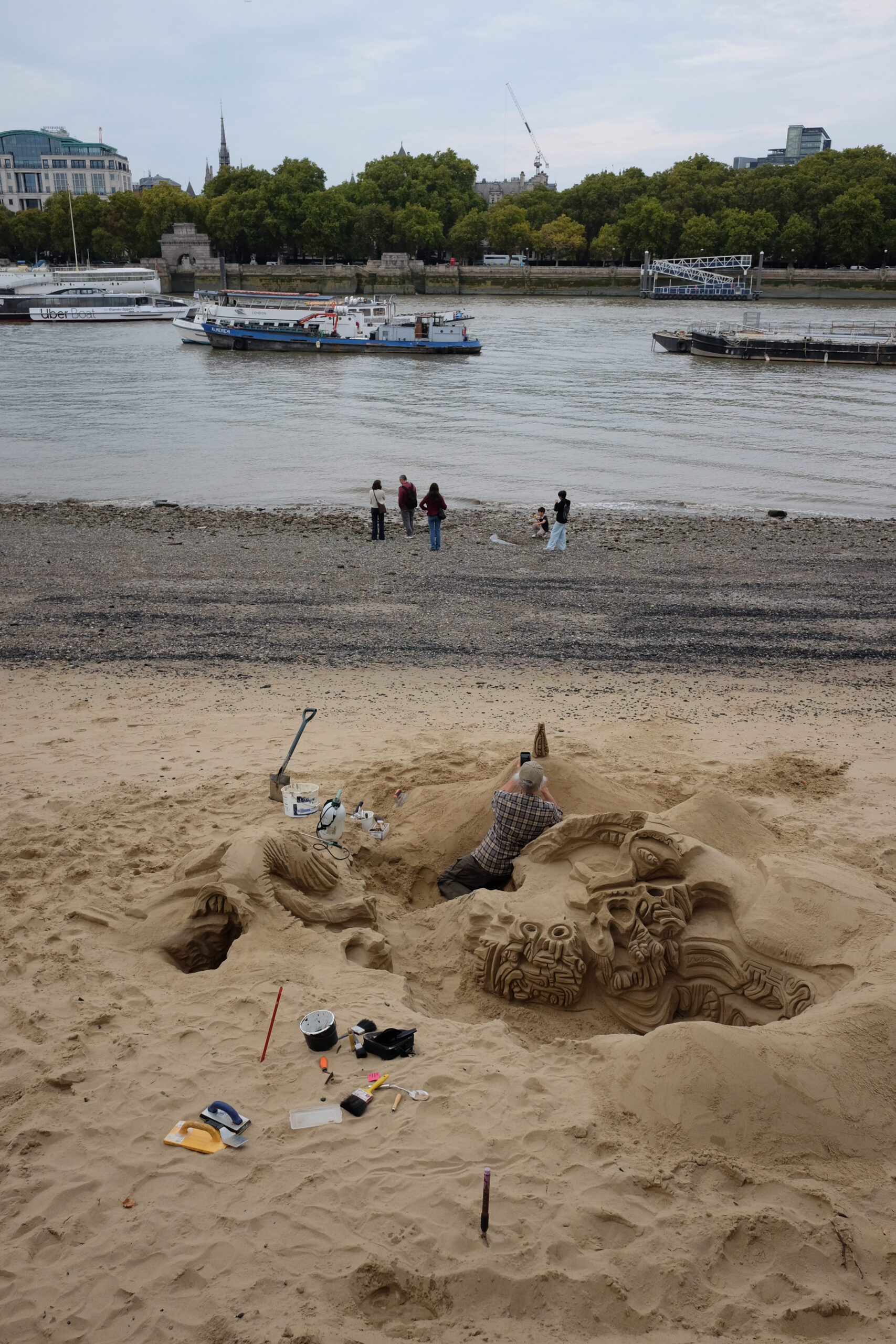
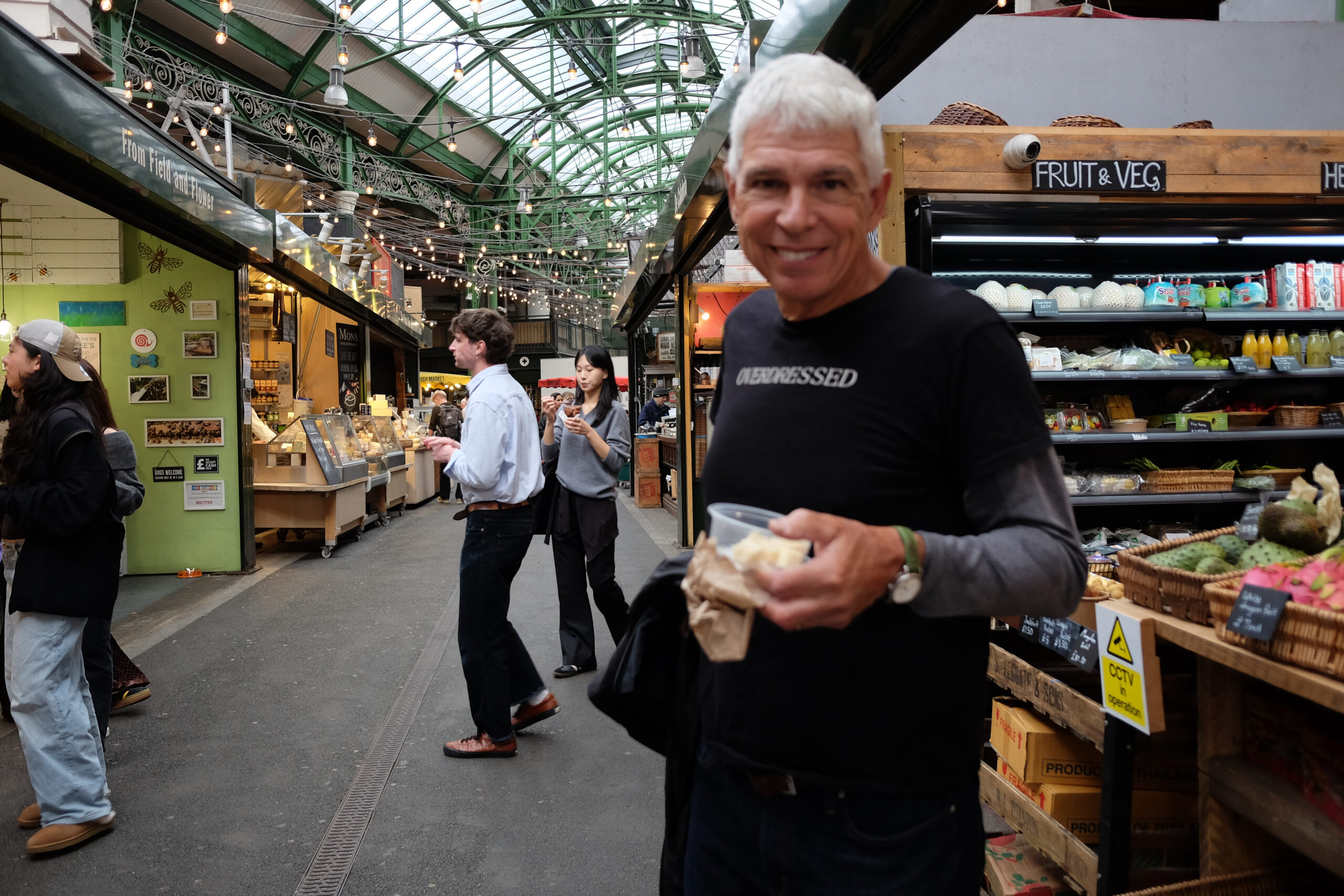
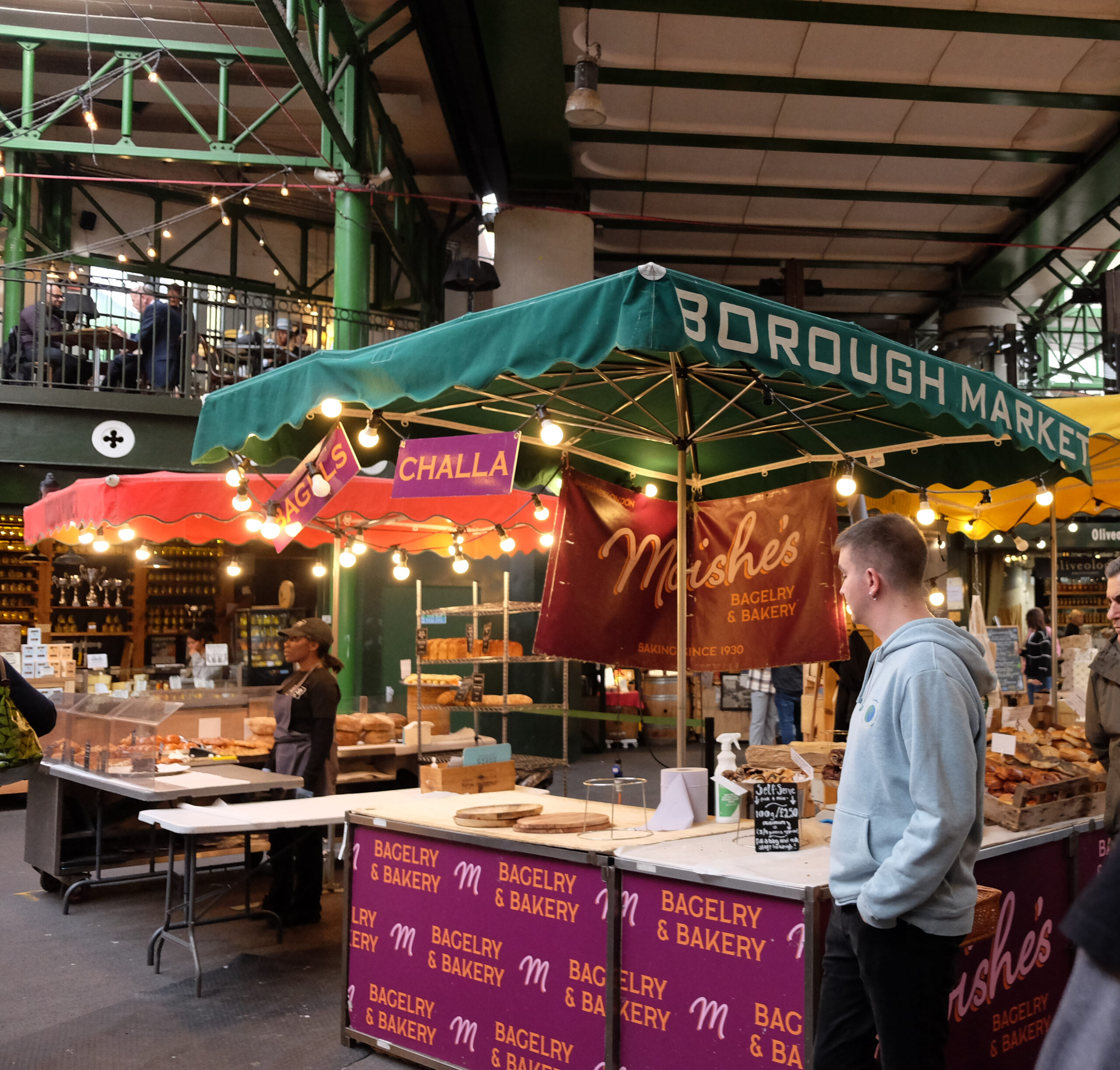
Then we walked east along the river on the Queen’s Walk South Bank, and Bankside pedestrian trails, dropped in at the Borough Market (Patti’s favorite) but it was distressingly busy. John grabbed a tub of assorted cheese cubes, we walked around and munched on those, then pushed on.
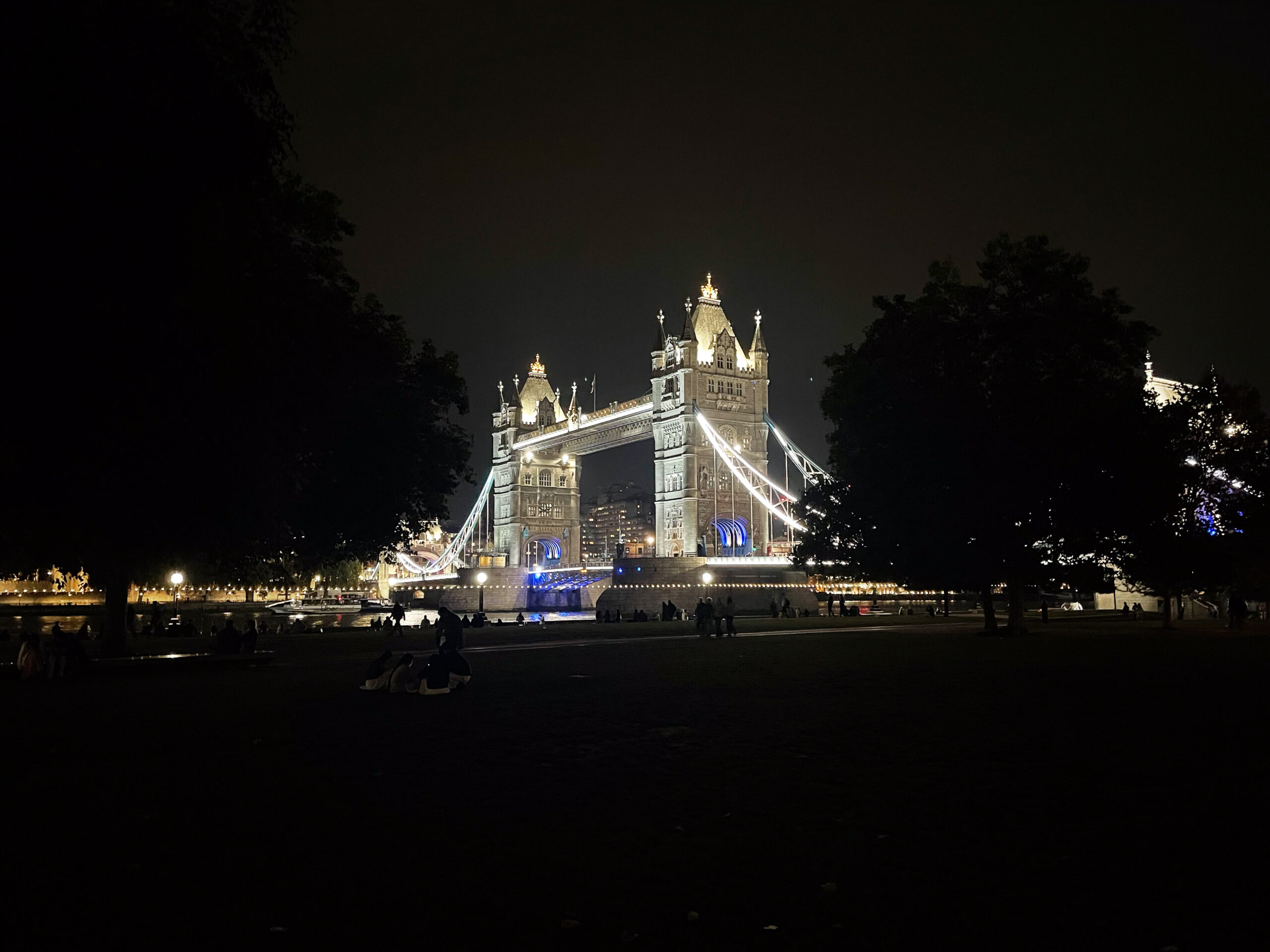
When we found The Bridge Theatre (right by “Potters’ Field”) we assessed where to eat (a cheap and cheerful East-Indian-owned Greek restaurant), made a reservation for 5:30, then walked across the Tower Bridge, looking for a famous installation of poppies. Couldn’t find them. (They were inside the tower grounds. I should’ve read the fine print.)
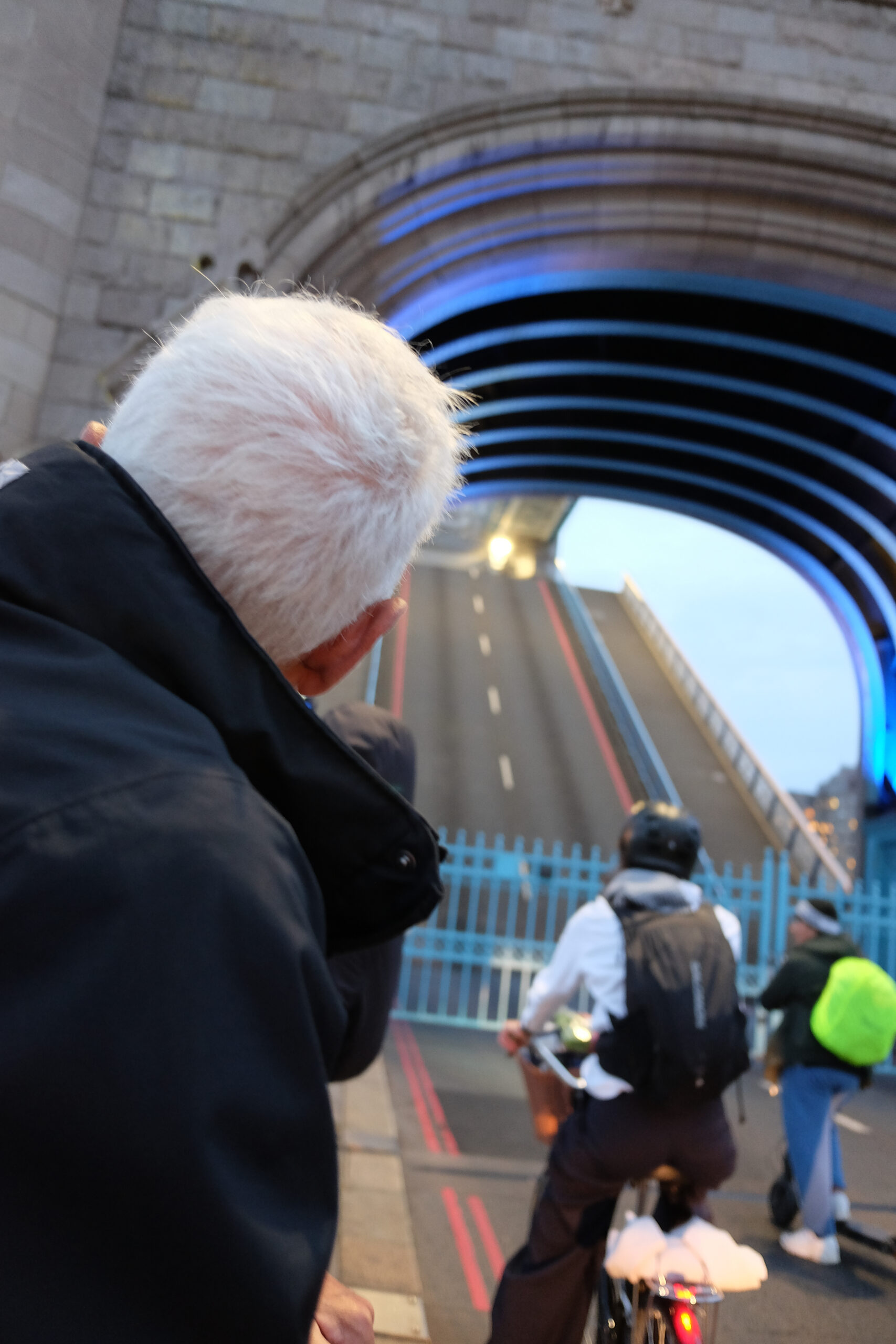
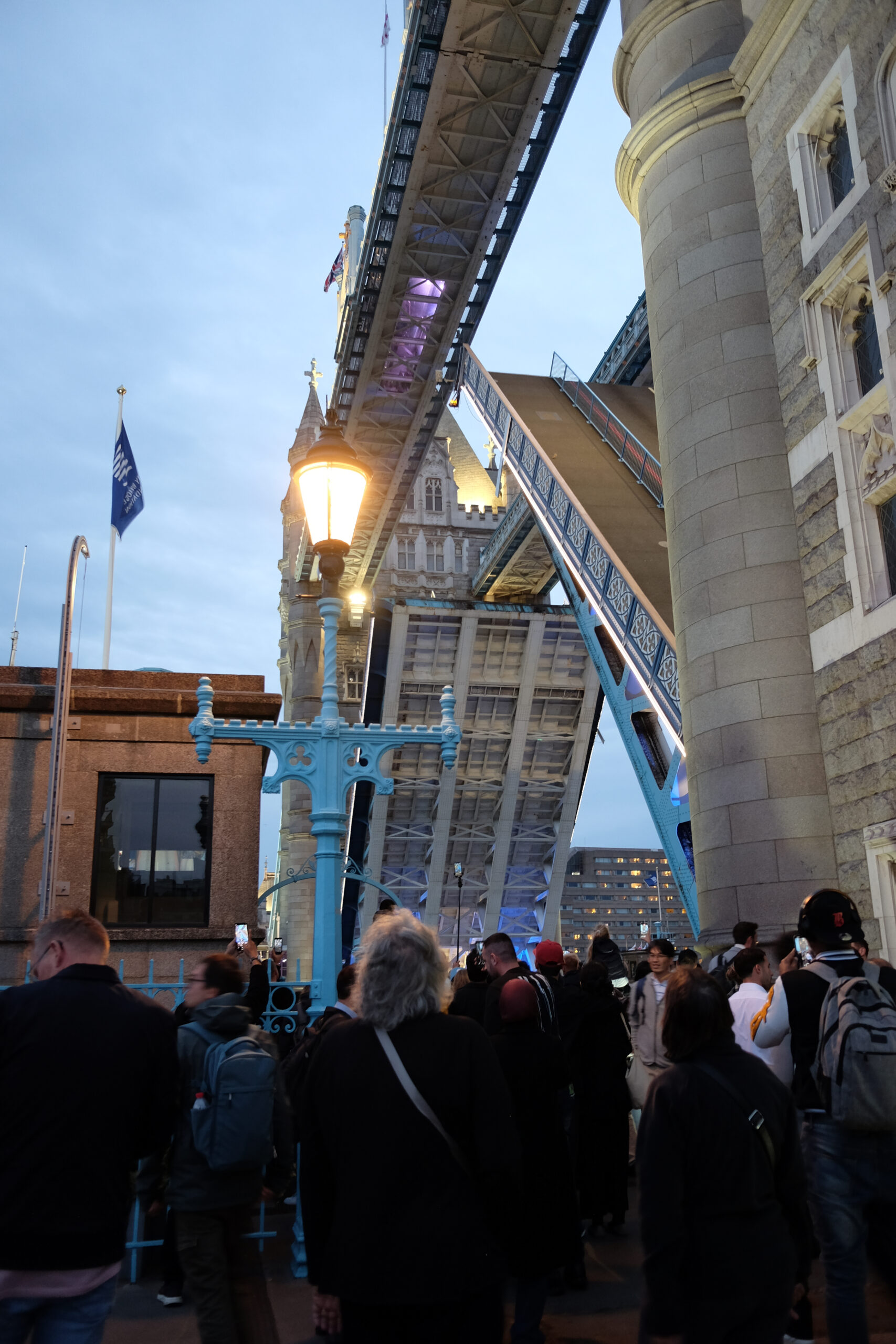
And then, buzzers sounded, lights went on, traffic stopped, and…. they raised the bridge for a couple of tall boats! It was a thrill to watch. (See photos.)
It started to drizzle, so we headed back and into the restaurant for dinner. While there, we noticed an Argos jersey on one of the patrons!!! Of course, we struck up a conversation. This gentleman was here from NS with his 10-year-old son? nephew? to sprinkle his mum’s ashes on her homeland of England, and he had been charged with the sweet duty of showing the kid the sights of London which his mum had hoped to be able to do in person, before she died, as she had for his older brother. It was a bittersweet moment.
The show – The Lady from the Sea – was astounding. That’s all I can say. John and I were both dumbfounded by what we saw on stage. We’d be happy to talk about it with you, but words on a page wouldn’t do it justice. And I’m not even an Ibsen fan….
Exiting the theatre we just followed the theatre crowd to the tube, found our way back to The Gyle, and fell into bed.
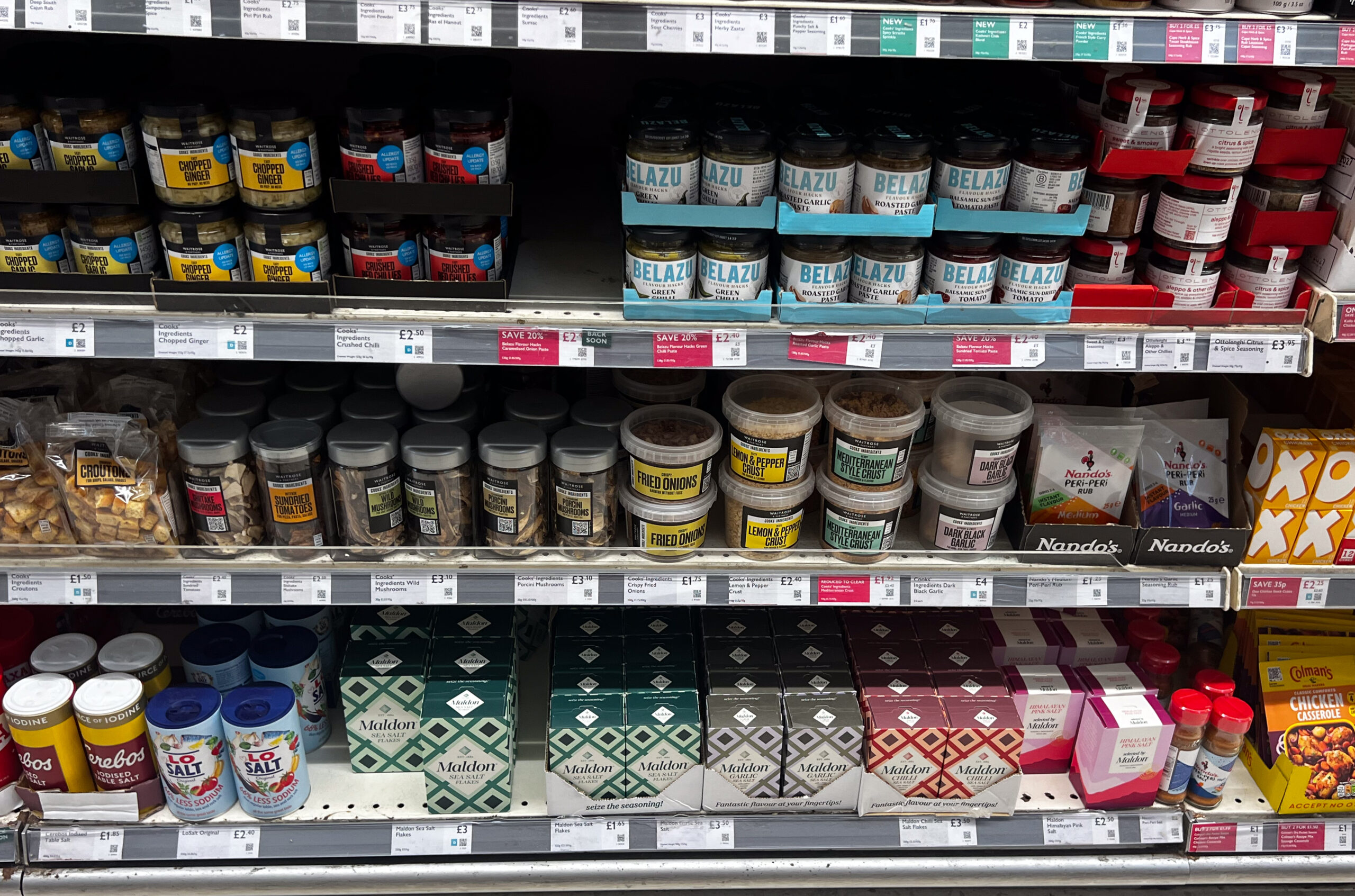
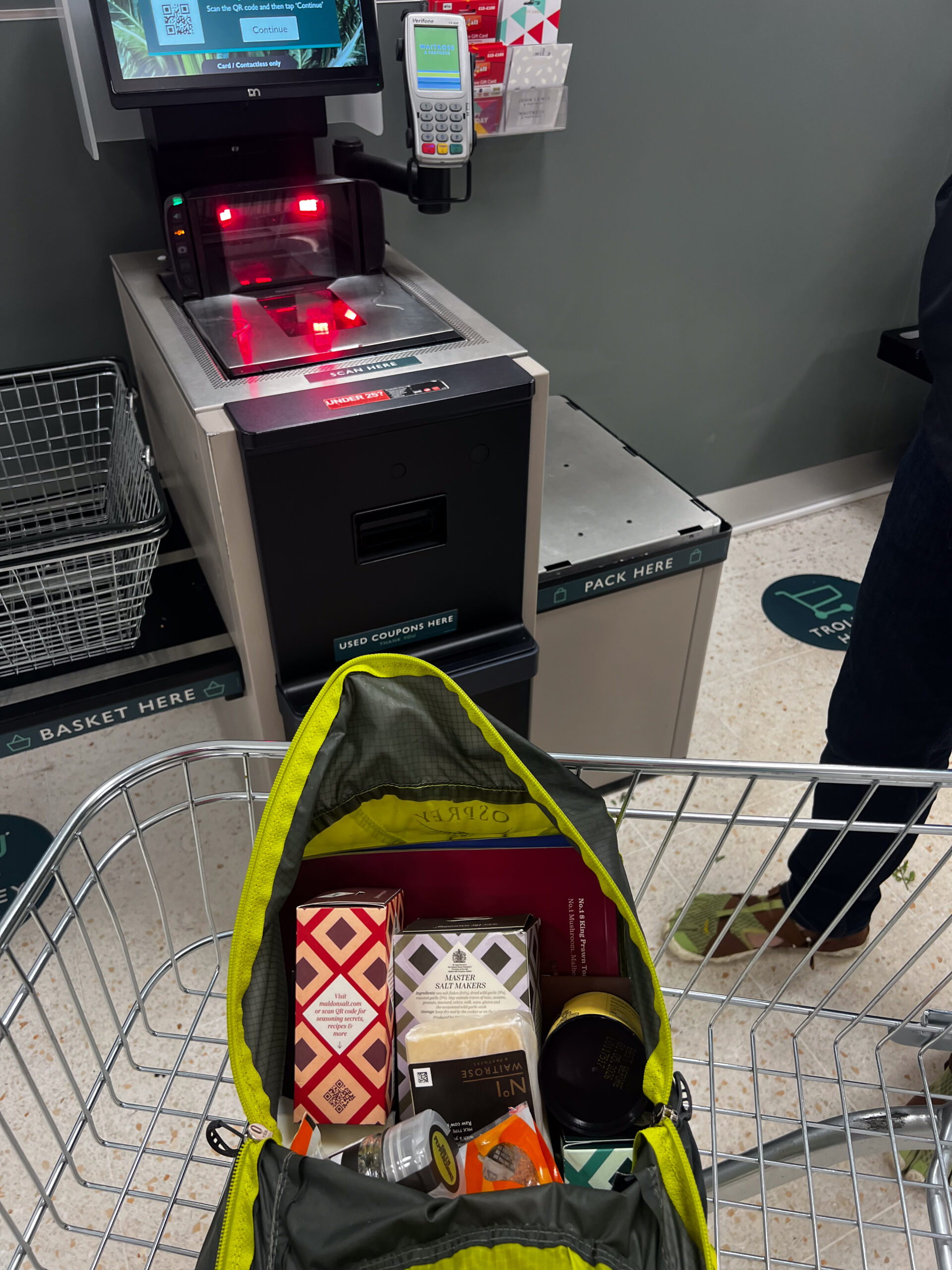
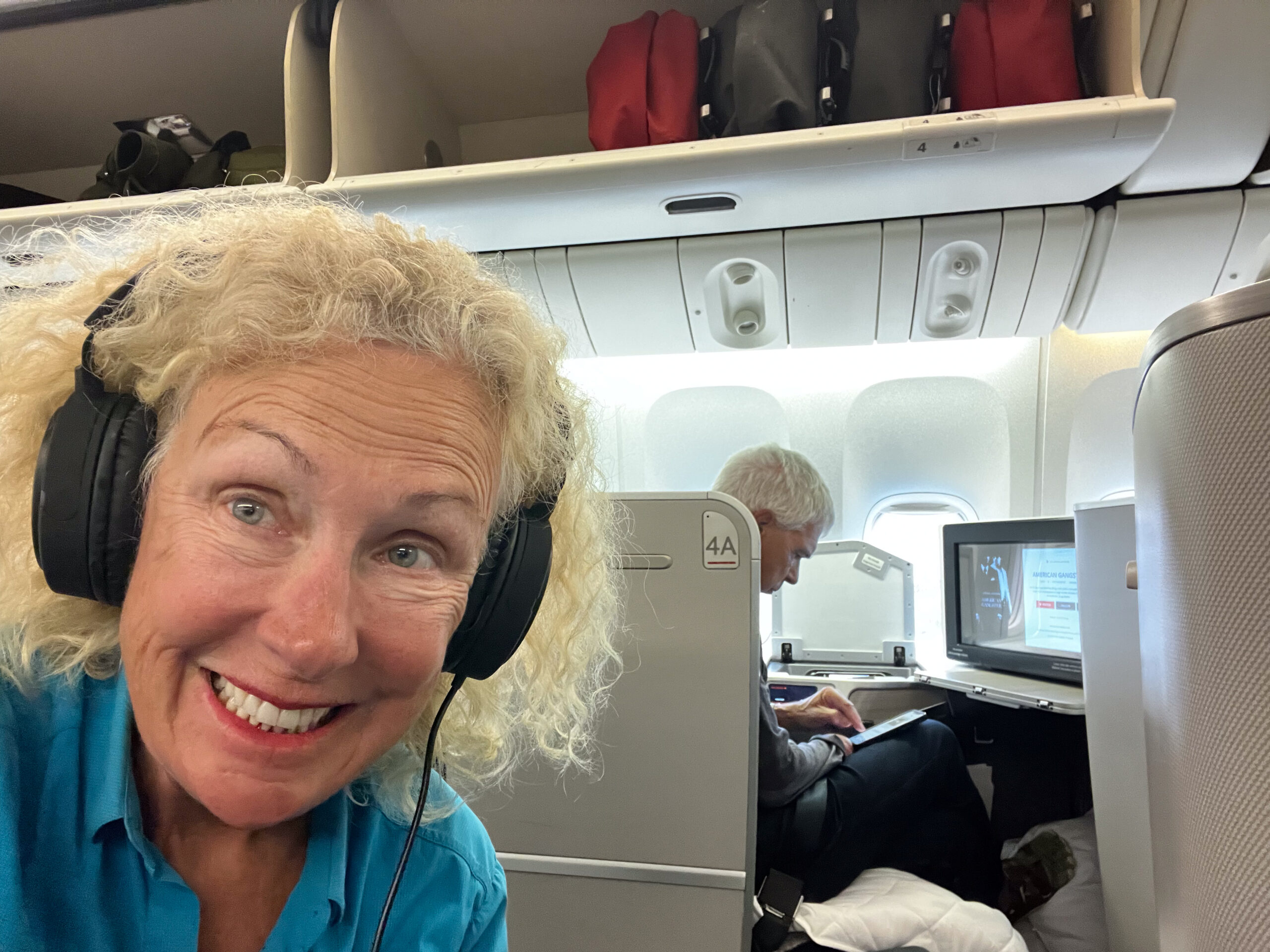
Friday morning. Our last morning. We packed up the panniers, parked them in the lobby of the hotel, I ate my last super-decadent-custard-filled-chocolate-dipped croissant (a heart attack on a plate, standard breakfast at The Gyle), and we set out on foot to loot the salt shelves at Waitrose. Maldon salt procured, we headed back to the hotel, stowed the souvenirs in our panniers, jumped on the Piccadilly line all the way from St. Pancras to Heathrow (slow, but cheap, and no transfers!), sailed through security to the lounge to the gate to our pods, flew across the Atlantic, jumped onto the UP Express in Toronto, then into a cab at Union Station and were home by around 8 p.m. We threw a load of laundry in the washer, jumped into the car and restocked at Loblaws, unloaded groceries, moved the first load of laundry into the dryer and then fell into bed.
Because….
Because…. on Saturday we had tickets for an Argos game.
Friends: I am chagrined to say that we left that game at halftime. Canadian Women’s Rugby raised the athletics bar so high for us that we can’t look at Canadian football and feel impressed anymore. (Although, John will always have a soft spot for them; he shared too many games with his dad, Roy, to let the Argos go, completely.) We came home (27 km return on our American-made and not nearly as satisfying-to-ride Catrikes recumbent* bikes), washed our Argos shirts and put them at the bottom of the closet.
Stand by for photos of red Canadian Women’s Rugby jerseys, once we can source some. They’re all out of stock!
So, that’s it for this Fall’s trip.
Next up, John’s looking at starting in St. Albans where our bikes are stored and heading north to Edinburgh. I’d be happy to follow him anywhere, especially if there’s haggis and bagpipe music involved.
Thanks for coming with us on this trip!
* Travellers’ tip: the bikes we ride in the UK and Europe are Ice Trikes. British engineering and manufacturing. They’re brill.






Wow you packed alot into a few days in London!
0
0
Wonderful blog and photos.
Welcome home looking forward to hearing more about your trip.
Glenn
0
0